
Where to bet on water polo online and how the odds actually work
 Available in US
Data current as of 30 October 2026, cross-checked against the Gambling Commission’s public register of remote operating licences.

Water polo does not headline a bookmaker’s front page, but every major British sportsbook lists it once a serious tournament is on. The interesting question is not whether a licensed site carries the sport; it is what the bettor is paying for the privilege of betting on it, and what the offer sitting next to the coupon actually does. Margins on niche sports are wider than on Premier League football, and bonus terms rarely bend for the smaller fixtures. This page looks at what online water polo betting costs in Great Britain, who the licensed bookmakers are, and where a punter’s pound ends up once a bet settles.
The shape of the market: a niche sport carried by a deep catalogue
Water polo sits in a category of sports that UK bookmakers treat as standard once an international tournament is on the calendar and as filler once it is not. The sport itself is older than most of the betting public might assume. Seven players per side take the water, four quarters decide the match, and the action stays confined to a pool deep enough that nobody can stand. World Aquatics runs the international game. Men’s water polo was among the first team sports at the 1900 Olympic Games, with the women’s event following at Sydney in 2000, so what looks like a niche on a Saturday coupon has been a fixture of world sport for over a century.

What changes the bettor’s experience is the calendar. A men’s World Championship has been staged every two to four years since 1973 within the World Aquatics Championships, and the women’s competition has run since 1986. Between those peaks, the domestic leagues in Hungary, Italy, Spain, Croatia, Serbia and Montenegro keep the sport ticking on the betting sites of licensed bookmakers. The matches are not always priced to deep markets — match winner, handicap, total goals — and outright winner markets on tournaments are where the picture thickens.
A practical consequence falls out of that pattern. A bettor who only checks the bookmaker on a tournament week will see a full coupon. A bettor who checks in February, when the Hungarian league is mid-season, will see match winner and a handful of totals on the bigger clubs, and not much else. The bookmaker is not hiding the sport; it is responding to demand that the calendar itself dictates.
What the law actually says about betting on water polo in Great Britain
Great Britain has no list of permitted sports, and no list of banned ones. The Gambling Act 2005 grants the Gambling Commission, a non-departmental public body sponsored by the Department for Culture, Media and Sport, the duty to license operators, not to whitelist fixtures. The licence categories are real: a remote general betting standard (real events) licence is what covers a sportsbook taking bets on water polo; a remote betting intermediary licence is what covers an exchange. The categories do not name the sport.
That matters because a Curaçao, Maltese or Gibraltar registration is not a substitute for a Commission licence once the operator’s remote facilities are used in Great Britain. Sections 33 and 36 of the 2005 Act, as amended by the Gambling (Licensing and Advertising) Act 2014, are the relevant provisions. The Commission’s public register, searchable by business name, trading name, domain or account number, is the whole test of whether a brand holds one. A licensed operator can run a .com or a .co.uk; the domain proves nothing either way.
There is no state monopoly, no statutory cap on the number of licences, and no statutory cap on stakes. Identity verification runs before the first deposit at any licensed site, with name, address and date of birth checked in line with the rule in force since 7 May 2019 — including where the first product is a free bet. A bettor who wants anonymity at the betting site is looking outside the licensed market, and the licensed market is the only one a reader of this page is being asked to compare.
A note on Northern Ireland
Northern Ireland runs on its own older legislation and is outside the Gambling Act 2005. A “Great Britain licence” or “GB-licensed” is the correct label; a GB licence does not regulate Northern Ireland, and a Commission-licensed site is not licensed there. Operators adapt their onboarding for the two jurisdictions separately.
What changes at 18, and what the operator must check
The minimum age is 18. The licensed bookmakers run age verification at signup, but the rules on identity go further than that. Since 7 May 2019 the Commission has required name, address and date of birth to be verified before a customer can deposit or gamble, and the rule applies even where the first product is a free bet or a bonus. The verification is a soft identity check for most customers and a harder one — passport scan, utility bill — for the rest. A bettor who keeps getting prompted past the welcome screen is not being singled out; the threshold is universal, and the system is built to flag anomalies rather than to inconvenience ordinary customers.
The same regulatory frame is the reason a credit card cannot fund a betting account. Since 14 April 2020, the LCCP has banned credit cards for gambling in Great Britain, and the ban extends to credit-card-funded e-wallet payments. Debit cards, bank transfers and most prepaid methods stay available. The rule is uniform, and the cost of ignoring it is the operator’s, not the customer’s.
What a licensed site must offer in safer gambling
The player-protection side of the licence is the part a bettor feels most directly. GAMSTOP, the national multi-operator online self-exclusion scheme, has been a mandatory licence condition for online operators since 31 March 2020; a customer who signs up for six months, one year, five years or a five-year auto-renewal is locked out of every participating site for the period chosen, and the exclusion stays in force for a further seven years after the minimum period unless the customer asks GAMSTOP to remove it. A licensed bookmaker also has to offer timeouts, deposit limits, reality checks, and access to GamCare, the National Gambling Helpline, GambleAware and the NHS gambling clinics, alongside links to peer support such as Gamblers Anonymous.
A financial vulnerability check, the LCCP condition 3.4.4, has applied to licensed remote betting since 30 August 2024, with a threshold active since 28 February 2025: once a customer’s deposits minus withdrawals exceed £150 in a rolling 30 days, the operator runs a public-record check covering matters such as bankruptcy or county court judgments. It is not a credit reference check, and it is not an income check. The wider financial risk assessments — the press’s “affordability checks” — are a separate staged plan, announced with no start date.
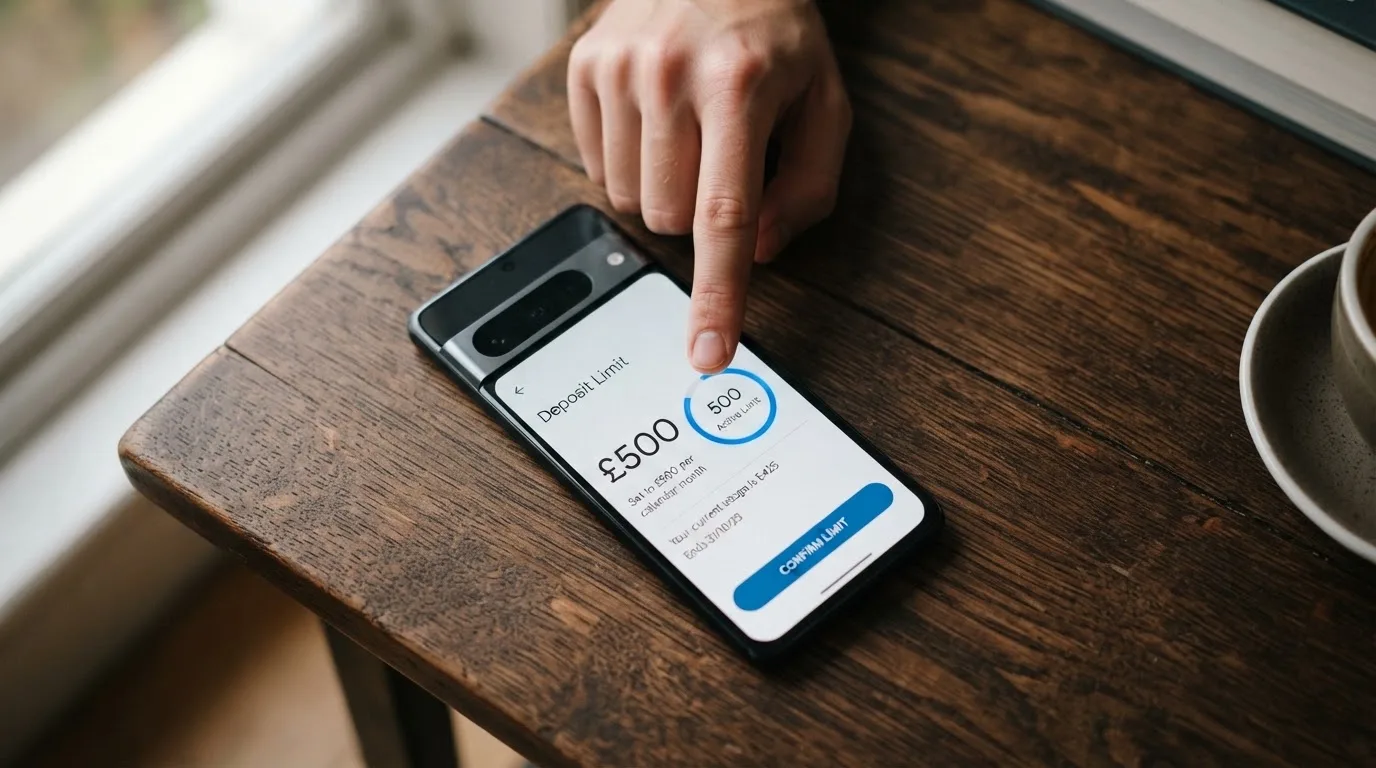
Deposit limits (RTS 12) require operators to offer a gross deposit limit on a fixed time frame. The first changes took effect on 31 October 2025, with a second phase postponed to 30 September 2026. The point for a reader: there is no state-set ceiling on deposits or losses, and the limits a customer can set are the customer’s own choice. Help is reachable from every licensed site, and a customer who wants to talk to someone outside the operator’s own staff can do so through GamCare or one of the registered charities.
What a water polo “bonus” actually pays back
A welcome offer is the most visible line on a sportsbook’s home page, and the least understood. Coral’s headline is a familiar shape: get £40 in free bets when you bet £20. The mechanic, in plain language, is a deposit and a first sports bet of £20 or more at minimum odds of 2.0 (1/1), after which £40 in free bets lands in the account within seven days, expiring seven days after issue, for new GB customers who opt in. The free bets are not cash; they are credits, and a winning free bet pays profit only — the stake is not returned. A successful £20 free bet at 3.0 returns £40 in profit, not £60.
BetMGM’s sports welcome offer for new UK customers takes a different shape: deposit £10 or more, place a sports bet within seven days, and receive four £10 free bets — two football accumulators of four or more selections and two sports multiples of two or more. Each free bet is valid for seven days, with a minimum odds rule and an opt-in. The headline value is £40 of free bets for a £10 deposit and a first bet, but the structure is more specific: the four bets have to be the types BetMGM names, and the seven-day clock is on each one separately.
The arithmetic behind a “free bet” is what separates an offer worth claiming from one worth ignoring. Where research gives the inputs, a free bet whose stake is not returned is worth the free-bet amount multiplied by the decimal odds minus one, divided by the decimal odds, multiplied by the market’s payout share. On an even-money market at decimal odds 2.0, with a payout share of 95% (a 5% margin), a £10 free bet is worth about £4.75 on average. The figure is an average, not a guarantee, and it assumes the bettor picks a market priced near the long-run average. A bettor who only spends free bets on a high-margin niche like water polo is giving up some of that value to the margin, which is wider than the headline sports average.
The other half of the offer sits in the small print. Since 19 January 2026, wagering requirements on bonuses at GB-licensed operators are capped at 10x, and mixed-product promotions that require gambling on two or more product types are banned. A £10 bonus at 50x needs £500 of qualifying bets; under the cap, no more than £100. The cap is the most consequential single change to UK bonus terms in years, and it is the reason a headline 100% match can no longer be buried under 50x turnover. Whether the cap applies to free bets with no wagering condition is not established in the public rules, and any cap on the bonus’s money value is not established either.
A worked example on a 1.90 / 1.90 market
A two-way market priced at decimal odds 1.90 on each side, the example the page’s research uses rather than a quoted price, gives a payout share of 1 ÷ (1/1.90 + 1/1.90) = 1 ÷ 1.0526 = 0.9500, a margin of about 5.0%. That is the band a sharp bookmaker runs on a well-priced two-way market. Niche markets such as water polo handicap and total goals typically run wider, in the 6% to 8% band, because the liquidity is thinner; outright tournament winner markets run wider still. The point of the example is the gap: a market at 5% margin keeps 5p of every pound; the same market at 7% keeps 7p, and over a season of small bets that difference compounds.
The margin is a property of the market, not the bookmaker. One bookmaker’s 1X2 on a Champions League final is not the next’s, and one operator’s outright on the Olympic tournament is not its 1X2 on a mid-table league match. The numbers on this page are illustrative because the licensed sites do not publish live margins event by event, and the audit that follows this page treats a stated margin as a snapshot, not a contract.
How odds are built, and what the difference between fractional and decimal really is
The bookmaker’s price is the bettor’s cost. A 5/1 shot in fractional odds is a 6.00 in decimal: 5 ÷ 1 + 1 = 6.00. A 1/2 shot, an odds-on favourite in British usage, is 1.50 in decimal. The conversion is the same formula whichever way it runs: decimal = a ÷ b + 1 where a/b is the fractional price. The return on a winning bet is stake multiplied by decimal odds, so a £10 stake at 6.00 returns £60, of which £50 is profit and £10 is the original stake. A losing bet returns nothing.
The combination bet, the accumulator or “acca” in British usage, multiplies the legs into a single price. Three legs at 2.0, 2.5 and 3.0 give a combined price of 15.00, and a £10 stake returns £150 if all three win. The trade-off sits in the margin: each leg carries its own overround, and the combined margin widens with each leg added. A two-leg acca is not twice the value of two singles; it is closer to the singles’ combined value minus a slice of extra margin. The bookmaker is happy to take the bet because the long shot on a combination of short shots compounds the bookmaker’s edge.
The same math underwrites the system bets — Trixie (four bets), Patent (seven), Yankee (eleven), Lucky 15 (fifteen), Super Yankee or Canadian (twenty-six), Heinz (fifty-seven), Goliath (two hundred and forty-seven). The total stake is the unit stake multiplied by the number of bets, so a Lucky 15 at £1 a bet costs £15, not £1. A bettor who treats a system bet like an accumulator will be surprised by the stake. A bettor who treats a system bet like a portfolio of singles, with a bonus for hitting combinations, will read the offer more honestly.
The bet builder, often branded Bet Builder, Bet Builder+ or same-game multi, is a single-match accumulator. The bookmaker prices each leg from the same fixture, sometimes with a small margin discount, and the combined price is the bet. The bettor who picks two goalscorer markets and a total at the same price a single would have given has paid the bookmaker for the privilege of staking the bet as one line. Some bet builders are priced tightly; many are not, and the gap shows up in the margin.
How a return is worked out, and what the bookmaker keeps
The payout on a winning bet is the stake multiplied by the decimal odds, the return is stake plus profit, and the profit is stake multiplied by odds minus one. The maths is simple and the conclusion is that the price is everything. A bettor who takes 2.10 instead of 2.20 on a one-off winner is not just giving up ten points; over a season of identical bets, the difference is the difference between a bookmaker’s 5% margin and a bookmaker’s 4% margin, and that compounds.
The bookmaker’s margin is what is left after the bettor’s full share of the market is priced. On a 1.90 / 1.90 market the implied probabilities are 52.6% on each side, summing to 105.3%; the overround is 5.3%, and the margin is 5.0%. A 1.95 / 1.95 market is 51.3% on each side, summing to 102.6%, a margin of 2.5%. The tighter the margin, the more the bookmaker pays back, and the harder it is for the bookmaker to make money from the bettor who shops around. A bettor who checks the same fixture at three licensed bookmakers before placing a bet is doing the only thing a margin-aware punter can do.
The margin is visible in the odds the moment a market opens, and it is the number a sharp punter reads first. The price comes second, and the size of the bet comes last. The order is the only one that matters.
What tournaments and fixtures are on the coupon
Water polo’s betting calendar peaks around the World Aquatics Championships, the Olympic Games, the European Championships and the World Cup, and the calendar is the same on every licensed bookmaker. The four-quarter match, with its halves running to eight minutes of actual time, is priced as match winner, handicap, total goals, and on the bigger bookmakers, quarter-by-quarter lines. Outright markets on the men’s and women’s World Championships sit on the coupon during the qualifying window and tighten as the tournament draws near.
The domestic leagues, the Hungarian OB I, the Italian Serie A1, the Spanish División de Honor, the Croatian Premier League, the Serbian Super League, the Montenegrin Prva A, and the United States NCAA, sit on the bigger bookmakers’ mid-week schedule. The depth of the market is thinner than for football — a typical midweek coupon on a Hungarian league match is match winner, handicap and total goals — and outright markets on the league winner are not always priced until the season’s second half. A bettor who wants outright on the Hungarian league is checking back in February rather than October.
A bettor who wants the most market depth picks the bigger bookmakers. A bettor who wants a price on a niche league in the middle of the season picks a specialist. The two are not always the same brand, and the choice depends on what is being asked of the bookmaker.
What cash out does, and what it costs
Cash out, available at most licensed bookmakers and described at Spreadex as one-click, auto and partial, settles a bet before the event finishes. The price is the bookmaker’s estimate of the bet’s current value, minus a margin, and the bettor who uses cash out on a long shot that is currently winning is paying the bookmaker twice — once on the original price, and once on the cash-out spread. The math is the same as any other market, and the bettor who understands margins sees the cost in the cash-out price the moment it appears. A bettor who sees cash out as a free option is missing the fee.
The same observation applies to partial cash out, where a fraction of the bet is settled and the rest stays open. The advantage is flexibility. The cost is the same margin, applied to the fraction settled. The mechanic is the bettor’s to use or not.
The bet builder, the price boost, and the small print
The bet builder is the same-game multi, and the price is the bookmaker’s take on the combination. A bettor who picks total goals and a player to score is paying a margin on the combination that is usually wider than the sum of the two singles — a 2.10 / 2.10 pair of singles might price at 4.20 as a builder, but the same pair at the same bookmaker’s underlying margin would price at 4.41. The difference is the builder’s slice. The bettor who values the convenience of one line is paying for it; the bettor who values the price is staking two singles and a small delay at settlement.
The price boost, branded Super Boost, Daily Boost, Profit Boost or Best Odds, is the bookmaker’s offer of an enhanced price on a selected market. The mechanic is simple: a boosted 3.0 instead of 2.5 is 50% more price on the same bet. The small print is that the boost usually has a maximum stake — bet365’s Super Boost, for example, runs at a fixed maximum stake, and the boost is the bettor’s to take or leave. A bettor who uses a boost on a market they would have bet anyway is gaining the difference between the boosted price and the un-boosted one, and a boost on a market they would not have bet is a marketing nudge dressed up as generosity.
Best odds guaranteed, BOG, is the racing-side cousin of the boost, and it has a long British history. The mechanic is that the bookmaker pays the starting price if the starting price is bigger than the price taken, and it usually applies to UK and Irish horse racing from a set time on race day. William Hill pays BOG from 8am on both single and multiple bets, with ante-post, tote and pari-mutuel bets excluded. QuinnBet’s BOG applies from 10:00am daily, on singles, multiples and system bets, with a maximum benefit of £150 per customer per race. BetVictor offers BOG on UK and Irish horse racing alongside an enhanced live race streaming service and a BetFinder feature for finding racing bets. The bettor who bets on UK and Irish racing with a BOG bookmaker is buying a known safety net, and the safety net is paid for by the bookmaker’s margin on the rest of the coupon.
The licensed bookmakers carrying water polo in Great Britain
Ten operators hold a Gambling Commission remote licence for general betting on real events and are within the comparison on this page. Several brands in the wider British market sit under the same licence holder — Ladbrokes and Coral under LC International Limited, Paddy Power and Betfair under PPB Counterparty Services Limited — and are treated as one operator for licensing purposes, even where the consumer-facing brands are separate. Every GB-licensed online operator takes part in GAMSTOP.
| Brand | Gambling Commission licence | What the operator’s own terms state |
|---|---|---|
| Fitzwilliam Sports | Remote licence 048760-R-335434-009 (Commission account 48760); holder SBKI Limited | Dublin bookmaker with capped membership; welcome offer is a High Stakes Welcome subject to compliance criteria; instant deposits, fast withdrawals, timeouts and deposit limits are available, with links to GambleAware, GamStop and Gamblers Anonymous |
| Spreadex | Remote licence 008835-R-104580-022 (Commission account 8835); holder Spreadex Limited | Fixed-odds and spread betting in one app; one-click, auto and partial cash out; Bet Builder across fixed odds or spreads; live streaming of UK and Irish horse racing, greyhounds, tennis, NFL and selected football; also regulated by the FCA for spread betting, where losses can exceed deposits |
| Coral | Remote licence 054743-R-330863-014 (Commission account 54743); holder LC International Limited | Sports welcome offer of £40 in free bets when you bet £20: deposit and sports bet of £20 or more at minimum odds of 2.0, with the free bets issued within 7 days and expiring 7 days after issue, for new GB customers who opt in |
| Betfair | Remote licence 039439-R-319330-013 (Commission account 39439); holder PPB Counterparty Services Limited | In-play betting, Bet Builder, free live streaming of UK and Irish horse racing and football within the app, plus a 90 Minute Payout market |
| BetVictor | Remote licence 039576-R-319370-028 (Commission account 39576); holder BV Gaming Limited | Best Odds Guaranteed on UK and Irish horse racing, enhanced live race streaming, BetFinder for finding racing bets, alongside Smart Stats |
| QuinnBet | Remote licence 061011-R-335683-004 (Commission account 61011); holder QuinnBet (Gibraltar) Limited | Best Odds Guaranteed on Irish and UK horse racing from 10:00am daily on singles, multiples and system bets, with a maximum benefit of £150 per customer per race |
| Geoff Banks | Remote licence 054095-R-330366-010 (Commission account 54095); holder GB Sports Advisors Limited | Live in-play prices and ante-post prices on future events |
| NetBet | Remote licence 039170-R-319343-032 (Commission account 39170); holder Netbet Enterprises Limited | Daily Boosts, Profit Boosts and free bet offers; Bet Builder with instant dynamic odds; sports stats for major leagues |
| Kalooki Sportsbook | Remote licence 057730-R-333396-005 (Commission account 57730); holder Kalooki Sportsbook Limited | Sportsbook operated by Kalooki Sports Book Ltd (company number 12938274); GAMSTOP member |
| BetMGM | Remote licence 039198-R-319450-029 (Commission account 39198); holder LeoVegas Gaming PLC | Sports welcome offer: four £10 free bets (two football accumulators of 4+ selections, two sports multiples of 2+) for new UK customers depositing £10 or more and placing a sports bet within 7 days; each free bet valid 7 days; minimum odds and opt-in required |
Two further brands sit in the wider licensed set and are useful context, though they sit outside the top-ten ranking on this page. bet365, the official global betting partner of the UEFA Champions League and the most downloaded sports betting app in the UK, offers Bet Builder+ across pre-match and in-play markets, Super Boosts, Winnings Boosts on Bet Builders and selected singles, daily Bet Boosts, in-play betting, live streaming worldwide, Bet Track, Match Live and a Live Golf Tracker. Midnite’s site cites Gambling Commission licence 101839 and shows in-play events, an acca builder, popular accas and price boosts with maximum-stake limits. Unibet, which states it has operated since 1999, runs its UK site under Platinum Gaming Limited, Gibraltar, with Gambling Commission account 45322. Lottoland UK’s app combines casino, lottery betting, sports betting and scratchcards and states it is licensed by the Gambling Commission for customers in Great Britain.
What the table does not show
The table shows the licence and the headline offer each operator names. It does not show the depth of the water polo coupon, the margin on a 1X2 on a mid-table Hungarian league match, the time it takes to withdraw, or the maximum stake on a boost. Those are the numbers a bettor checks on the operator’s own site, in the betting slip and in the published terms, before placing a bet. The comparison is a starting point, and the bettor’s decision is the closing one.
How the ten operators compare for a water polo punter
A ranking is not a licence, and a position in a top ten is not a recommendation. The list below sets out each brand and what it is best suited to. The bettor who wants depth on a niche market is not the bettor who wants a racing-focused bookmaker with a BOG safety net, and the two are not choosing from the same shortlist.
1. Fitzwilliam Sports. A Dublin bookmaker with capped membership and a High Stakes Welcome subject to compliance criteria. The fit is a high-stakes bettor who wants a personal relationship with the bookmaker and accepts that “capped membership” means a smaller customer base. The licensed protections, instant deposits, fast withdrawals, timeouts, deposit limits and links to GambleAware, GamStop and Gamblers Anonymous are standard for the set.
2. Spreadex. The only operator on the list that combines fixed-odds and spread betting under one app, with one-click, auto and partial cash out, Bet Builder across fixed odds or spreads, and live streaming of UK and Irish horse racing, greyhounds, tennis, NFL and selected football. The fit is a punter who wants the spread-betting option alongside a sportsbook, and who accepts that financial spread betting losses can exceed deposits. The FCA regulates the spread-betting side; the Commission regulates the fixed-odds side.
3. Coral. A £40-in-free-bets-when-you-bet-£20 welcome offer at minimum odds of 2.0, with seven days to issue and seven days to use, makes Coral a strong fit for a GB bettor who wants a familiar mainstream sportsbook with a published welcome. The licence holder is LC International Limited, which also runs Ladbrokes, and the safer-gambling infrastructure is the Ladbrokes Coral group’s standard set.
4. Betfair. The exchange, betting intermediary, sits alongside the sportsbook at Betfair, and a bettor who wants the exchange is a different bettor from a sportsbook customer. The 90 Minute Payout market, in-play betting, Bet Builder and free live streaming of UK and Irish horse racing and football inside the app are the additions. The fit is a bettor who wants the exchange plus a sportsbook and reads the commission rate on the exchange before trading.
5. BetVictor. Best Odds Guaranteed on UK and Irish horse racing, enhanced live race streaming, BetFinder for finding racing bets, and Smart Stats. The fit is a racing-led punter who also wants Smart Stats for football and other sports. The licence holder is BV Gaming Limited, and the safer-gambling set is the standard GB suite.
6. QuinnBet. Best Odds Guaranteed on Irish and UK horse racing from 10:00am daily on singles, multiples and system bets, with a maximum benefit of £150 per customer per race. The fit is a punter who bets on racing earlier in the day and likes system bets. The cap on BOG benefit is the small print a serious racing punter reads.
7. Geoff Banks. Live in-play prices and ante-post prices on future events, published by GB Sports Advisors Ltd. The fit is a bettor who bets on outright tournaments and ante-post racing and wants a smaller, specialist bookmaker. The sportsbook is a focused product, and the bettor who wants a wide pre-match coupon looks elsewhere.
8. NetBet. Daily Boosts, Profit Boosts and free bet offers, a Bet Builder with instant dynamic odds, and sports stats for major leagues. The fit is a bettor who wants the boost and builder mechanics and likes a sportsbook that prices a wide range of leagues. The licence holder is Netbet Enterprises Limited.
9. Kalooki Sportsbook. Operated by Kalooki Sports Book Ltd (company number 12938274), licensed under Commission account 57730, GAMSTOP member. The fit is a bettor who wants a UK-licensed sportsbook with a name attached to a UK-registered company. The published information is concise.
10. BetMGM. Sports welcome offer of four £10 free bets (two football accumulators of 4+ selections, two sports multiples of 2+) for new UK customers depositing £10 or more and placing a sports bet within seven days, with each free bet valid for seven days and minimum odds and opt-in required. The fit is a bettor who bets on football accumulators and likes a multi-leg free bet structure. The licence holder is LeoVegas Gaming PLC.
What a water polo bettor actually does
A bettor who wants the most water polo market depth chooses the larger generalist sportsbooks in the set: Coral, Betfair, BetVictor and QuinnBet all carry a deep sportsbook. A bettor who wants an outright tournament market on the next World Aquatics Championships checks the bigger generalists first, because outright markets on niche sports depend on the bookmaker’s risk team’s view of the field. A bettor who wants the best price on a 1X2 on a Hungarian OB I match uses Betfair’s exchange as the price reference and then shops the sportsbook price. A bettor who wants a price on a small domestic league the big bookmakers do not cover uses Geoff Banks or Kalooki as a starting point and accepts that the market depth is thin.
The common mistake is to pick a bookmaker by the welcome offer. The welcome is the most expensive line in the offer set, and the long-run cost of a bookmaker is the margin on the bets the punter actually places. A £40-in-free-bets-when-you-bet-£20 headline is good value if the bookmaker’s margin on water polo is competitive; it is poor value if the punter uses the free bets on a high-margin market. The offer is the entry; the margin is the relationship.
Tax in Great Britain: what the bettor pays, and what the operator pays
The bettor pays no tax on betting winnings in Great Britain. That is the headline, and the small print is that a professional gambler’s tax position is a question for HMRC or a tax adviser, not for a comparison page. The bookmaker pays General Betting Duty, currently 15% on gross profits from general betting, with a new remote betting rate of 25% set to apply from 1 April 2027 within the duty; remote bets on UK horse racing, self-service betting terminal bets, pool betting and in-person betting stay at 15%. The duty is the operator’s, not the player’s, and the operator decides whether to absorb it or pass it on. The bettor never sees a line for General Betting Duty on the betting slip.
Spread betting has its own rates, with financial spread betting at 3% and other spread betting at 10%, and financial spread betting is regulated by the FCA, not the Commission. The Commission’s own statutory levy is a separate charge and is not a tax.
What the bettor gives up by going offshore
A bettor who uses an offshore brand gives up the licensed protections: GAMSTOP coverage, the Commission’s complaints route, an approved dispute-resolution body, British consumer redress if funds are withheld, the 10x bonus cap, and the £150 vulnerability check. The bettor does not commit a criminal offence: no offence aimed at a customer who merely bets on an unlicensed site was found in the regulatory frame. The cost is the loss of protection, not the loss of liberty, and a bettor who reads the page as a comparison of brands is reading it correctly.
Enforcement against unlicensed operators runs through cease-and-desist notices, search-engine referrals, registrar and host work, and payment-provider action; the Commission has been given, or is about to receive, court-order DNS blocking powers, and is not yet operating an ISP block. The licensed market is the one a comparison page compares, and the unlicensed market is the one a comparison page does not.
What the bettor should check before placing a bet
A short, practical order. The bettor who follows it costs themselves almost nothing and gains a great deal.
- The licence. Search the Gambling Commission’s public register by business name or domain and confirm the licence status and the licence holder. The register is the whole test.
- The bonus terms. Read the minimum odds, the wagering requirement, the expiry, the maximum stake, and the cap on the free bet’s payout. The cap is the line that bites.
- The market depth. Confirm the water polo market the bettor wants is priced, and that the outright tournament market is priced before the tournament window opens.
- The withdrawal time. Check the operator’s published withdrawal time and the method’s processing time, and read the small print on first-withdrawal verification.
- The safer-gambling tools. Set a deposit limit on day one, link to GamCare if the bettor ever wants an outside conversation, and sign up to GAMSTOP if the bettor is past the point of setting limits.
A bettor who does all five is using the licensed market as it is meant to be used. A bettor who does none is gambling on a bookmaker’s good faith, which is a different kind of bet.
Frequently asked questions
How can a bettor check that a bookmaker holds a Gambling Commission licence?
The Commission’s public register is searchable by business name, trading name, domain or account number, and the register is the only place a licence is definitively confirmed. A brand with a Commission account number is licensed; a brand with a Curaçao, Malta or Gibraltar registration only is not licensed for Great Britain, regardless of how prominent the brand’s UK marketing looks.
How is the return on a bet worked out from the stake and the odds?
The return is the stake multiplied by the decimal odds, the profit is the stake multiplied by the decimal odds minus one, and the original stake is paid back on top of the profit. A £10 stake at decimal odds 3.0 returns £30 in total: £20 profit and £10 stake. A combination bet multiplies the legs into one price, and a £10 stake at 15.00 returns £150 if all legs win.
What is the bookmaker’s margin and how is it seen in the odds?
The margin is what is left after the bettor’s full share of a market is priced. On a 1.90 / 1.90 two-way market, the implied probabilities are 52.6% on each side, summing to 105.3%; the overround is 5.3%, and the margin is the same number. A market with a 2.5% margin keeps 2.5p of every pound; a market with a 7% margin keeps 7p, and the difference compounds across a season.
How do fractional odds such as 5/1 convert to decimal odds such as 6.00?
The conversion is a ÷ b + 1, where a/b is the fractional price. A 5/1 shot is 5 ÷ 1 + 1 = 6.00 in decimal. A 1/2 shot, an odds-on favourite in British usage, is 1 ÷ 2 + 1 = 1.50. The return on a winning bet is the same in both formats, and the price is the price whichever way it is written.
Which tools for controlling play does a licensed bookmaker have to offer?
A licensed bookmaker must offer GAMSTOP, timeouts, deposit limits, reality checks and access to GamCare, the National Gambling Helpline, GambleAware, the NHS gambling clinics, and peer support such as Gamblers Anonymous. A financial vulnerability check, a public-record check on matters such as bankruptcy or county court judgments, applies once a customer’s deposits minus withdrawals exceed £150 in a rolling 30 days. The financial risk assessments in the wider press are a separate staged plan, announced with no start date.
Are betting winnings taxed in Great Britain, and who pays General Betting Duty?
The bettor pays no tax on betting winnings in Great Britain; a professional gambler should ask HMRC or a tax adviser. General Betting Duty is the operator’s tax on gross profits, currently 15%, with a new remote betting rate of 25% from 1 April 2027, while UK horse racing remote bets, self-service terminal bets, pool betting and in-person betting stay at 15%. The duty is the operator’s, and the operator decides whether to absorb it or pass it on.
US & other team sports – systembetsguide.com
Content created by the «systembetsguide.com» team
