
How to bet on hurling without buying somebody else's certainty
 Available in US
The hurling season runs from the spring provincial championships through the All-Ireland Senior Hurling Championship final in July, and bookmakers run markets on every round in between. This is a guide to betting on the sport, not a tip sheet. The page that follows is built around the work a bettor does before placing a wager: reading form, weighing a price against the bookmaker’s margin, choosing a market that matches the question being asked, and sizing a stake against a bankroll that can absorb losing runs. No predicted scoreline on this page is worth the pixels it sits on, and the reader who treats it as such will lose. What follows is the analysis that turns an opinion into a defensible price — and the practical scaffolding around that work.

_Data current as of 30 October 2026 and checked against the Gambling Commission’s public register of licence holders._
The hurling season and the fixtures the bookmakers price
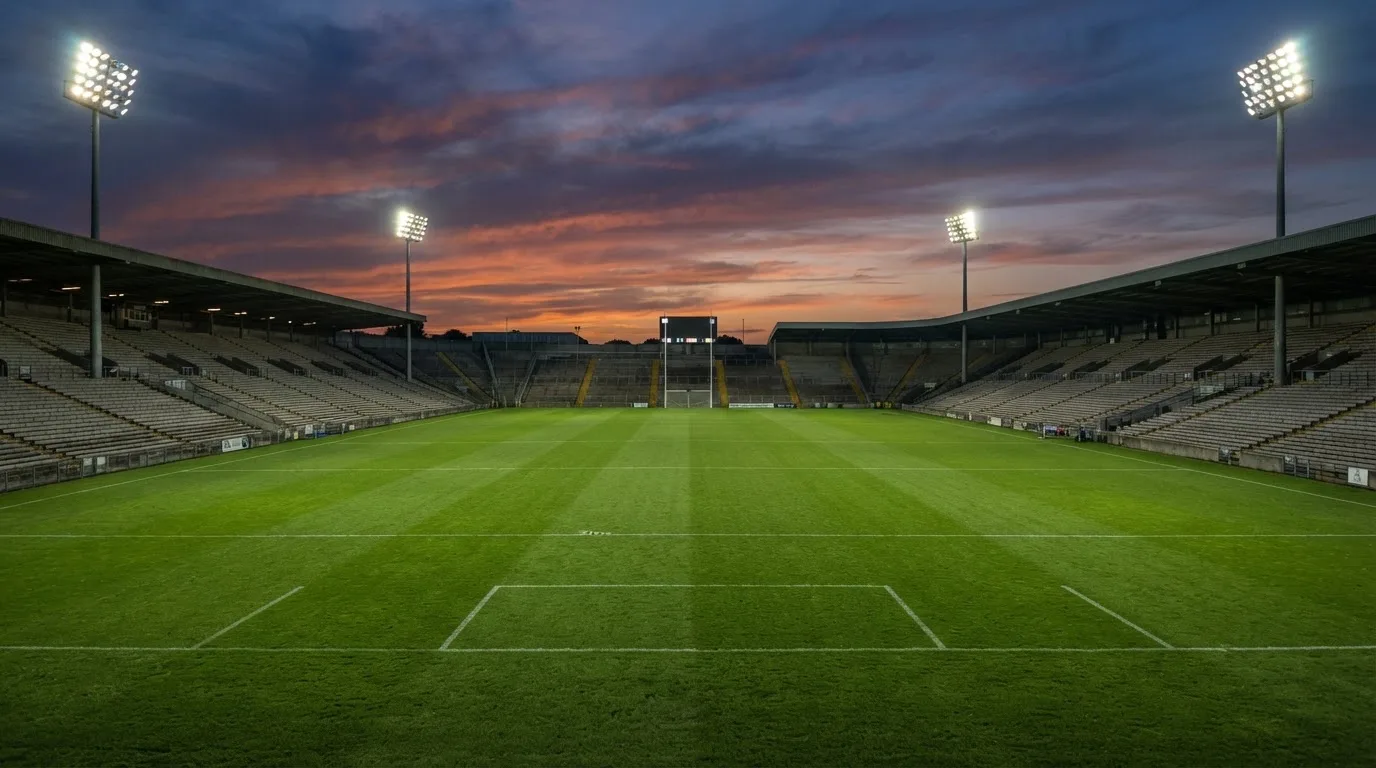
Hurling is the older of the two Gaelic games, played on a grass pitch about 145 m long and 90 m wide, with goals at each end shaped like a pair of posts joined by a crossbar set 2.5 m above the ground, and a rectangle extending from the goalposts. Fifteen players per side, including the goalkeeper, and the action is run by a referee, two linesmen and a sideline official. Senior inter-county matches last seventy minutes, two halves of thirty-five. The ball — a sliotar — is small and hard, struck or caught with a hurley, the wooden stick every player carries. Underneath those basics sits a structure most casual readers have never been given: the scoring itself, the way the championship is built, and the calendar that turns fixtures into markets.
A goal, the sliotar driven into the net under the crossbar, is worth three points. A point, struck or tapped over the crossbar between the posts, is worth one. A scoreboard of 1-14 therefore reads as seventeen points, not fifteen: three for the goal plus fourteen over the bar. Every bookmaker’s scoring market — winning margin, total points, handicap line — leans on that ratio, and a reader who treats the two units as interchangeable is going to misread lines all year.
The GAA, the Gaelic Athletic Association, governs the sport across Ireland and overseas. The provincial championships come first: Leinster and Munster, the two senior hurling provinces. Leinster had six teams in the 2026 All-Ireland Senior Hurling Championship, Munster five, and each provincial championship runs as a round-robin group. The top two in each province meet in the provincial final, and the third-placed team goes through to the All-Ireland quarter-finals. Beyond the two senior provinces, the Joe McDonagh Cup (the second tier) feeds the All-Ireland preliminary quarter-final, and the Christy Ring, Nickey Rackard and Lory Meagher cups cover the third tier down to county-level hurling. The All-Ireland Senior Hurling Championship proper is the showpiece: quarter-finals, semi-finals, and the final at Croke Park in Dublin in July. Limerick beat Galway in the 2026 final on 19 July 2026, the latest chapter in a county run that began in 2018. Tipperary won the 2025 All-Ireland Senior Hurling Championship.
That calendar decides the volume of markets a bookmaker offers. Provincial round-robin weekends in May and June carry the heaviest price lists, with five or six fixtures priced in a single round, plus the senior provincial finals at the back end of May and the start of June. The All-Ireland series from late June through to mid-July sharpens the focus to two or three games a week, but the prices are tighter and the form lines clearer. Off-season club hurling — the AIB All-Ireland Senior Club Hurling Championship, the Leinster and Munster club championships — runs from October to March and gives a reader who follows the game twelve months a year somewhere to bet. The point is not that the bookmaker is busier in summer; the point is that the question being asked is different in each window. Provincial round-robin weeks reward readers who know the reserve panels, because teams rotate heavily. The All-Ireland series rewards readers who know which match-ups cancel out form — the defence that neutralises a particular forward, the goalkeeper who unsettles a particular free-taker.
Every GB-licensed bookmaker routes prices through this calendar. A brand that carries the full GAA schedule — every Leinster and Munster round-robin game, every All-Ireland knockout — gives a reader a different surface from one that prices only the televised matches. The schedules, not the brand names, are what the choice actually turns on.
What the bookmakers’ list of brands actually lists
A bookmaker with a UK-facing site needs a Gambling Commission licence. Every operator on this page holds one, and that licence is the reason the brand is in the ranking. There is no league table of licences and no rank by licence date; the ranking order is the page’s editorial call, and the licence is the price of admission. The reviewer who tells a reader that brand X is “more licensed” than brand Y is talking nonsense.

The other thing the licence gets a reader is a working complaints route. The Commission runs an Alternative Dispute Resolution (ADR) arrangement, and every licensed operator has to point the customer at an approved ADR body when a complaint cannot be settled directly. The ADR ruling is binding on the operator and not on the customer, and the Commission itself will not arbitrate a complaint until the ADR route has been used. A reader who bets on an unlicensed site has none of this: no ADR, no Commission complaints route, and no protection if funds are withheld.
The ranking itself follows a single line of reasoning. The top of the list is where a bookmaker is doing several things well at once: a deep GAA price list, in-play markets on the bigger games, a Bet Builder, Best Odds Guaranteed on the racing product, and the safer-gambling tooling a Commission-licensed site is required to carry. Mid-list brands tend to do some of these well and not all. Lower in the list, a brand is doing fewer things at all, or doing them for a narrower reader. The verdict at the end of each write-up is where the page commits to what a brand is worth. The breakdown is below.
| Brand | Gambling Commission remote licence and holder | What the operator’s own terms state on the GAA product |
|---|---|---|
| William Hill | Account 39225, held by WHG (International) Limited | Deep GAA and GAA-in-play pricing; Best Odds Guaranteed on UK and Irish racing from 8 AM on the day on singles and multiples; Football Acca Boost with a cap of £10,000 per online bet, in force until 30 May 2027 |
| bet365 | Account 55148, held by Hillside (UK Sports) ENC | In-play and live streaming across the schedule; Bet Builder+, Super Boosts, Winnings Boosts and daily Bet Boosts; UEFA Champions League partner and the most-downloaded sports betting app in the UK |
| Paddy Power | Account 39439, held by PPB Counterparty Services Limited | Football, horse racing, boxing, rugby, tennis, golf, darts, snooker and F1 covered in the published app; GAA pricing tied to the same trading engine |
| BoyleSports | Account 39469, held by Boylesports Enterprise | A welcome structure offering free bets in exchange for an opening wager; GAA pricing across the championship and the club season |
| 888sport | Account 39028, held by 888 UK Limited | Pre-match and in-play markets, Cash Out, Bet Builder, racing streams, BetFinder form tools and daily boosted odds |
| Unibet | Account 45322, held by Platinum Gaming Limited, Gibraltar | Trading since 1999; GAA pricing tied to a long-established European sportsbook; Bet Builder and in-play on the bigger games |
| Fafabet | Account 57385, held by Taichi Tech Limited | Best Odds Guaranteed on UK and Irish racing win and each-way from 9 AM on race days; GAA pricing for the bigger fixtures |
| QuinnBet | Account 61011, held by QuinnBet (Gibraltar) Limited | Best Odds Guaranteed on UK and Irish racing from 10:00 AM daily on singles, multiples and system bets, capped at £150 benefit per customer per race |
| Bet600 | Account 44731, held by Tyche Tech Limited | Best Odds Guaranteed on racing, paying at the SP if the starting price exceeds the early or show price; a smaller brand with a tighter GAA price list |
| Swifty Sports | Account 58957, held by Swifty Global (UK) Ltd | Best Odds Guaranteed, Cash Out, daily price boosts, live streaming and in-play; Bet Builder is listed as coming soon |
Kalooki Sportsbook, held under account 57730 by Kalooki Sportsbook Limited, is a Commission-licensed brand and a GAMSTOP member but is not part of the top-ten ranking above; it is included here as a reminder that the licensed set is wider than any ranking can show. Spreadex, a separate product, is regulated by the FCA for spread betting and by the Gambling Commission for fixed-odds betting; spread betting losses can exceed the deposit, which is the shape of the FCA side and not the Commission side of the business. Lottoland UK combines a casino, lottery betting, sports betting and scratchcards in one app and is licensed by the Commission for customers in Great Britain. Fitzwilliam Sports offers instant deposits, fast withdrawals, timeouts and deposit limits, with links to GamCare, GAMSTOP and Gamblers Anonymous. Midnite’s site cites Commission licence 101839, lists in-play events, an acca builder, popular accas and price boosts with maximum-stake limits.
The list is not a tip. A reader who only opened an account with the brand at the top of the page would still be closing themselves off from price points elsewhere. The point of the ranking is to put the licensed set on a single page so that the next decision — which brand to open — can be made with the choice in front of the reader.
What a bet on a hurling match actually is
A single bet is a wager that one specific outcome happens. Stake against the price, the bookmaker takes the other side, and the wager settles when the match does. The price is the contract, and the reader is paid out at that price, not the price the bookmaker is offering now on the same selection, and not the price that ran during the match. A bet placed at 1.91 and a bet placed at 1.84 on the same selection settle at the same rate, and the bookmaker keeps the difference as margin, not as anything the bettor did.
A winning single returns stake times the decimal price. A £10 bet at 1.91 returns £19.10, made up of the £10 stake and £9.10 of profit. At fractional odds of 9/10 — the same price in the older British form — every £10 staked returns £19, the £10 stake plus £9 of profit, with the same decimal price. The two are the same number said in two different languages: a/b converts to a ÷ b + 1, so 9/10 becomes 9 ÷ 10 + 1 = 1.90. The reason this matters is that the bigger the price, the smaller the implied probability, and the bigger the potential return per pound staked. A 6.00 (5/1) bet returns six pounds per pound staked; a 1.50 (1/2) bet returns one pound fifty per pound staked. The bookmaker is saying the longer price is less likely to land, and the bettor is taking the other side of that view.
An accumulator — an “acca” — is a single wager that ties together several selections. Every leg has to win for the acca to land, and the prices multiply: a four-fold of selections at 1.50, 1.80, 2.10 and 2.50 carries a combined price of 14.18 (1.50 × 1.80 × 2.10 × 2.50 = 14.175). A £5 stake returns £70.88 if all four win and zero if any one of them loses. The longer the accumulator, the bigger the headline price and the smaller the chance of landing. Bookmakers run acca insurance on some sports — a refund of the stake as a free bet if one leg lets the acca down — but the marketing wraps a thin product: the refund is a free bet whose stake is not paid back, and the qualifying terms usually exclude some markets. The Football Acca Boost at William Hill covers accas of two or more legs with each selection at 1/5 or bigger, with a boost from 3% on a double to 200% on twenty or more legs, capped at £10,000 per online bet; the offer is in force until 30 May 2027 and is a marketing term the reader should read before assuming the cap is the headline.
A Bet Builder, same-game multi or Bet Builder+ on a single fixture, ties together several markets from the same match into one price. A bet on Galway to win, over 22.5 total points, and Conor Whelan to score 1+ point, all in one bet, is a Bet Builder. The legs are priced to give the bookmaker a margin on every selection, so the combined price is lower than three singles bought separately; that is the cost of having the bet treated as one. The upside is the convenience of one stake, one payout, one decision. The downside is the compounding margin and the difficulty of reasoning about correlation between legs. Bet Builder+ at bet365 lets the reader combine markets from one event pre-match or in-play.
Cash Out closes a wager before the event has settled. The bookmaker offers a value based on the current state of play and the original price, and the bettor can take it or leave it. The value offered is the bookmaker’s calculation, and the reader has no contractually agreed exit price until the button is pressed. The bettor who takes a £10 single at 1.91 and cashes out at half-time for £12 has locked in £2 of profit against a potential profit of £9.10. The mechanism rewards readers who are willing to settle for less than the full ticket and penalises readers who would have been better off holding. Cash Out is offered at William Hill, 888sport, Swifty Sports and most of the larger brands in the ranking; availability on hurling in-play markets varies and is worth checking in the betting slip.
How the bookmaker’s margin sits inside the price
Every price a bookmaker offers carries a margin, also called the overround. The margin is the slice of every pound bet that the bookmaker expects to keep. On a two-way market priced at 1.90 and 1.90, the implied probabilities add to 1.053 (1 ÷ 1.90 + 1 ÷ 1.90 = 1.053), and the margin is 5.3% of the stake (1.053 − 1 = 0.053). A 1.85 / 1.85 line is a 8.1% margin (1 ÷ 1.85 + 1 ÷ 1.85 = 1.081). The lower the margin, the more of every pound bet the bookmaker is paying back, and the better the long-run value for a bettor whose selections are well-chosen.
A useful example: a hurling 1X2 market, where 1 is a home win, X is a draw and 2 is an away win, priced at 2.10, 9.00 and 1.95 for a Limerick–Galway fixture. The implied probabilities add to 0.476 + 0.111 + 0.513 = 1.100, and the margin is 10.0% of the stake. A 1.91 / 1.91 line on the same fixture would be 4.7%. The reader who treats the same match at the same time on two different brands is looking at two different margins, and the second is the more rewarding game for the bettor who is right.
A value bet is a price that, after stripping out the margin, is bigger than the bettor’s estimate of the true probability. If a reader puts Limerick’s chance of winning at 60% — a long number, given Limerick’s run, but possible against weaker opposition — the fair decimal price is 1 ÷ 0.60 = 1.67. Anything above 1.67 is value, anything below is a price that does not reward the bettor’s view. The mistake is to call every favourite a value bet. A 1.40 price on a 70% chance is a 4.4% margin, the bookmaker’s take, and the bettor is buying at a fair rate, not at value. The mistake is also to call every outsider a value bet. A 6.00 price on a 12% chance is a 39% margin and a 12% implied chance, and the bettor who takes it is paying the bookmaker for the privilege of being wrong nine times in ten.
The illustration of a two-way market at 1.90 and 1.90 is exactly the case where the arithmetic is cleanest. The implied probabilities add to 1.053, the payout share is 1 ÷ 1.053 = 0.950 — ninety-five pence of every pound bet is paid back to bettors in the long run — and the margin is 5.3% of the stake. A 1.85 / 1.85 line, in contrast, pays back 92.5 pence in the pound and keeps 7.5 pence of margin. Reading the line in front of you the same way is the only way to compare one bookmaker to another. A 1.95 price on a hurling match with a 5% margin is a 95% payout share, and a 1.85 price on the same match with a 7% margin is a 93% payout share, and the difference is what the bettor is keeping out of every winning pound.
The trick is that the price is doing two jobs at once. The price is what the bettor is paid if the selection wins, and the price is the bookmaker’s estimate of how likely the selection is. The bookmaker’s estimate carries a margin. The bettor’s estimate should not. Reading the price as a probability and asking whether the probability the bookmaker has priced in is bigger or smaller than the probability the bettor believes is the entire game.
Choosing a market that matches the question
A match-result market — 1X2 — answers one question, which team wins in normal time. The bookmaker offers three outcomes and the bettor picks one. A handicap market, where a stronger team starts a goal or two down, answers a different question, which team covers the spread. A totals market, over or under a line on the combined score, answers a third question, whether the match is high- or low-scoring. A scoring market — first scorer, last scorer, anytime scorer, player total points — answers a fourth question, the contribution of a named player. The choice of market is the choice of question, and a bettor with a strong view on team form and a weak view on individual players is making a mistake if they are playing scoring markets.
In hurling specifically, the goal-to-point ratio is the question that most casual bettors get wrong. A goal-heavy match in the All-Ireland series can finish 3-18 to 0-21 — twenty-seven points to twenty-one — with a winning margin of six points, the same as 1-15 to 0-15. The handicap and totals markets on a goal-heavy fixture look very different from the same fixture played at a high-volume point-scoring pace. Reading form means reading the teams’ shot selection, not just the scoreboard.
In-play markets are a separate question, and a more interesting one. A 1X2 market on a match that has already started is a fresh price based on the current state of play. The bookmaker’s in-play trading engine updates the line as the score changes, the clock runs and a player is sent off, and the bettor who has a view on the next score is no longer betting on the full match but on a smaller window. In-play on a Leinster round-robin fixture is a different game from in-play on a Leinster final. The bigger the fixture, the more liquidity the bookmaker has to support the in-play book, and the tighter the prices. The smaller the fixture, the wider the prices, and the bigger the bettor’s edge on a well-reasoned view. In-play is offered by bet365, William Hill, 888sport, Swifty Sports, Midnite and most of the other licensed brands in the ranking.
Cash out, as set out above, is the bettor’s escape route from a market that is moving against them, and the bettor’s tax on a market that is moving with them. The bookmaker’s offered value is the bookmaker’s calculation, and the bettor has no contractually agreed exit price until the button is pressed. The bettor who is comfortable with the bet should hold; the bettor who is uncomfortable should accept the loss and move on. Cash out as a tool is a way of re-pricing a wager, and the bettor who uses it habitually is paying a premium on every position they take.
The settlement rule for hurling is the part most readers miss. At one large GB bookmaker, Gaelic games bets settle on the official result at the end of normal time including injury time; extra time does not count unless stated otherwise. The reader who bets on a Leinster round-robin fixture that ends level and goes to extra time, betting on a draw, has the bet settled as a draw if the score is level at the end of normal time. The reader who bets on Galway to win in extra time is asking for a market the bookmaker may or may not offer, and the reader who bets on Galway to win in normal time has the bet settled at the end of normal time. The rules section of the operator’s terms page is the place to read this, before the bet is placed.
The licensing frame a UK-facing bookmaker works inside
The Gambling Commission, set up under the Gambling Act 2005, regulates commercial gambling in Great Britain — England, Scotland and Wales. Northern Ireland is outside the 2005 Act and has its own older law, so a “GB licence” never regulates Northern Ireland. The Commission is sponsored by the Department for Culture, Media and Sport and is not a trade body. The Commission’s public register is searchable by business name, trading name, domain or account number and is the whole test of whether a brand holds a licence; the reader who wants to check a brand is one search away from an answer. Every brand in the ranking above is on the register.
A bookmaker that takes bets from customers in Great Britain needs a Commission licence wherever it is based. Sections 33 and 36 of the 2005 Act, as amended by the Gambling (Licensing and Advertising) Act 2014, set the rule. A Curaçao, Maltese or Gibraltar licence is not a substitute. The Commission’s licence categories cover remote general betting standard (real events), remote general betting standard (virtual events), remote general betting limited, remote pool betting and remote betting intermediary (the licence for betting exchanges). The brand’s own licence type is the line on the register that tells the reader which markets the brand is allowed to offer. Every brand in the ranking holds the remote general betting standard (real events) licence; the betting exchange brands hold the betting intermediary licence; the spread betting products at Spreadex are regulated by the Financial Conduct Authority for the financial side and by the Commission for the fixed-odds side.
Identity verification happens before the first deposit and before any bet, including a free bet or bonus. A licensed site cannot let a reader gamble anonymously. Name, address and date of birth are checked, and the check is on the operator. The reader who tries to bypass the check by using a different name or address is asking the operator to break the law, and a licensed operator will not.
Advertising is not licensed by the Commission; it is run through the CAP Code (non-broadcast) and BCAP Code (broadcast) by the ASA, alongside the Commission’s marketing conditions in the LCCP. CAP Code section 16: marketing must be socially responsible, must not be of strong appeal to under-18s, and no one who is or seems to be under 25 may be featured gambling or play a significant role, with an exception for marketing placed where a bet can be made directly. That rule is about who may appear in an advertisement, not who may bet. The “whistle-to-whistle” rule, that betting advertisements are not shown on TV from five minutes before a live sporting event to five minutes after, before the 9 PM watershed, is an industry code in force since 1 August 2019, not statute. The Premier League clubs’ voluntary withdrawal of gambling sponsorship from the front of matchday shirts from the 2026/27 season is not law; sleeves and hoardings remain.
Bonus and free-bet marketing has its own line. The promotion rules in force since 19 January 2026 cap wagering requirements on bonuses at 10x — a £10 bonus at 50x needs £500 of bets; under the cap no more than £100. Mixed-product promotions, an offer that requires gambling on two or more product types such as betting, casino, bingo and lottery, are banned. Whether the cap applies to free bets with no wagering condition and any cap on the money value of a bonus are not established, and the reader who is unsure should ask the operator before assuming the headline number is the whole story.
Tax sits on the operator’s side of the counter. General Betting Duty is the operator’s tax on gross profits, currently 15%; from 1 April 2027 a new remote betting rate of 25% applies within it, while remote bets on UK horse racing, bets on self-service betting terminals in licensed premises, pool betting and in-person betting stay at 15%. Spread betting has its own rates — 3% financial, 10% other. Until 1 April 2027 the remote rate stays at 15%, and whether operators pass duty on through odds is not established. The reader pays no tax on betting winnings in Great Britain, with the caveat that a professional gambler should ask HMRC or an adviser. The Commission’s statutory levy is a separate charge, not a tax.
Credit cards are banned for gambling in Great Britain, in force since 14 April 2020, including credit-card-funded payments through an e-wallet. Debit cards and bank-based payments are not covered by the ban. A British named-account rule, a state list of permitted payment methods and any rule for or against cryptocurrency deposits at licensed operators are not established; the reader who pays by an unusual method should check the operator’s terms. There is no state-set deposit or loss ceiling for betting; limits are the customer’s choice, set on the operator’s safer-gambling page.
Offshore is a different question. A GB licence is compulsory at the point of consumption. Providing gambling facilities in Great Britain without the licence the Act requires is an offence under section 33 of the Gambling Act 2005 — on summary conviction up to 51 weeks’ imprisonment, a fine up to level 5, or both; six months in Scotland. The offence is aimed at the operator, not the customer. The customer who bets on an unlicensed site loses the protections that go with the licence — no GAMSTOP coverage, no Commission complaints route, no approved dispute-resolution body, no British consumer redress if funds are withheld, and not bound by the 10x bonus cap or the £150 vulnerability check. Enforcement is disruption, not blocking — cease-and-desist notices, search-engine referrals, work with registrars, hosts and payment providers; the Commission has been given, or is about to receive, court-order DNS blocking powers, but the reader should not assume that ISP blocking is in operation. The honest framing is that licensed is checks, limits, GAMSTOP, the bonus cap and verification before the first bet, and unlicensed is none of those protections and possible loss of funds. Neither is “the safe choice” by default.
The safer-gambling tools a licensed site has to carry
A licensed site carries the safer-gambling tooling the Commission requires, not the safer-gambling tooling the site chooses. The reader who opens an account with a licensed brand is buying into a set of features the brand cannot remove.
GAMSTOP is the national multi-operator online self-exclusion scheme and a mandatory licence condition for online operators since 31 March 2020. A customer who registers with GAMSTOP is excluded from every licensed online operator for a period of their choice: six months, one year, five years, or five years with auto-renewal. After the minimum period the exclusion stays in place for a further seven years unless the customer asks GAMSTOP to remove it. GAMSTOP covers online sites and apps; betting shops use a separate service.
The financial vulnerability check (LCCP condition 3.4.4, in force since 30 August 2024) applies to licensed remote betting when a customer’s deposits minus withdrawals exceed £150 in a rolling 30 days, in force since 28 February 2025. It is a public-record check — for example, bankruptcy or county court judgments — not an income check and not a credit reference check. The financial risk assessments, the “affordability checks” of the press, are announced in a staged plan with a Commission article dated 7 July 2026, and there is no start date. The reader who reads the press will see “affordability checks in force”; the correct reading is “announced, staged, no start date”.
Deposit limits are required. Operators must offer a gross deposit limit on a fixed time frame. The first changes applied from 31 October 2025, a second phase was postponed to 30 September 2026, and whether that second phase is live is not established. There is no state-set deposit or loss ceiling for betting: limits are the customer’s choice, set in the safer-gambling section of the account.
The help lines are independent of the operator. GamCare runs the National Gambling Helpline, GambleAware is the information and research body, the NHS runs gambling clinics, and Gamblers Anonymous runs peer support. Fitzwilliam Sports links to GamCare, GAMSTOP and Gamblers Anonymous from the footer of the home page. The reader who is worried about their own play or about a family member’s is one call away from a starting point.
The point of listing these is that the reader who bets with a licensed brand is buying into a safety net the brand cannot quietly remove. A bookmaker that drops safer-gambling tooling without notice is breaching its licence, and the Commission can and does act on the breach.
How a tip is built, and why no tip is certain
A tip is a prediction. A betting tip is a prediction with a price attached: the tipster’s view, in numbers, that one outcome is more likely than the price the bookmaker is offering. The arithmetic is what turns an opinion into a tip, and the work is the same work the bookmaker does when it sets a line.
The starting point is form. Form is the recent record of a team or a player, weighted by the strength of the opposition. A team that has won five in a row against mid-table opposition is in a different shape of form from a team that has won five in a row against the bottom three, and the bookmaker’s line already knows that. Reading form is reading the schedule, the scoreboard, and the manner of the wins and losses. A team that has been winning by a single point every week is different from one that has been winning by eight.
Form is not the only input. Line-ups are the next, and a hurling team that names six changes from the team that won the previous round is a different proposition on paper from the team that won. Injuries and suspensions are tracked on the team pages of the provincial GAA sites. The bookmaker’s line reacts slowly to late changes, and a bettor who is close to the team news has a short window of value before the price moves.
Statistics are the third input. Shot conversion, possession in the opponents’ half, the ratio of goals to points, the discipline record (cards and frees conceded), the head-to-head record. None of these is a single number that decides a bet, and a bettor who treats a single ratio as a tip is over-fitting. The useful statistics are the ones that describe how a team wins, not just whether it does.
The bookmaker’s own line is the fourth input. A team at 1.40 is being priced at 71% implied probability before the margin; a team at 2.20 is being priced at 45% implied probability. A bettor who believes the team is 60% to win has value on the second price and not the first. The bookmaker’s line is the price of admission, and the bettor’s view is the question being asked of the line.
Staking and bankroll discipline are the fifth input, and the most often skipped. A bankroll is the total amount the bettor is willing to lose over a season. A stake is the bettor’s wager on a single event. A common rule is one or two per cent of bankroll per selection, which gives the bettor room to absorb losing runs without exhausting the bankroll. The bettor who bets 10% of bankroll on a single match is one bad week from quitting. The arithmetic is the same as the bookmaker’s margin, scaled down: the bettor’s edge is small, the variance is large, and the discipline is what keeps the bettor in the game.
The reason no tip is ever certain is that the inputs above are probabilities, not facts. A team that has won five in a row is more likely to win the next match than a team that has lost five in a row, and the bookmaker’s line says so. A bettor who believes the line is wrong is taking a position against a model that uses more information than the bettor has, and the bettor who is consistently right is the bettor who has a sharper model or sharper information. A tip is the bettor’s view, expressed as a number, staked at a price the bettor believes is too big. A tip is not a prediction in the sense of “Galway will win by four”; it is a position.
How the bookmakers on the page compare on the GAA product
A practical reader does not need every bookmaker on the page, but the reader who follows hurling across a season will end up with two or three accounts open. The choice is which two or three, and the answer depends on the question being asked of the account.
bet365 is a solid destination for a reader who wants every market the GAA calendar offers, in-play and pre-match, plus the live streaming the brand runs on selected events. The Bet Builder+ product lets the reader combine markets from one event pre-match or in-play, and the daily Bet Boosts and Super Boosts give the reader a reason to keep the app open. The price list on hurling in-play is the deepest in the licensed set, and the reader who follows the championship and the club season in parallel has one app for both. The brand is the UEFA Champions League partner, the most-downloaded sports betting app in the UK, and the home of Match Live and Bet Track for following bets in play.
William Hill is the right account for a reader who is following a Premier League accumulator and wants the same book to price the GAA. The Football Acca Boost, in force until 30 May 2027, is the headline product: a boost from 3% on a double to 200% on twenty or more legs, capped at £10,000 per online bet, on accas of two or more legs with each selection at 1/5 or bigger. The GAA pricing is part of the same trading engine, and the Best Odds Guaranteed on UK and Irish racing from 8 AM on the day, on singles and multiples, runs alongside the GAA schedule. The brand is the right home for a reader who mixes sports and wants a single account for both.
Paddy Power is the right account for a reader who treats price as the deciding factor. The brand is known for aggressive price boosts on the bigger markets, and the GAA product carries the same approach. The published app covers football, horse racing, boxing, rugby, tennis, golf, darts, snooker and F1; the GAA sits inside the football engine. The brand is the right home for a reader who reads the price list every morning.
BoyleSports is a top option for a reader who wants a larger welcome structure on a GB-licensed site. The sports welcome offer for UK players is £20 in free bets when a £10 bet is placed, with a parallel structure for Irish players. The free-bet stake is not paid back on a win, and the reader who reads the small print before claiming is reading the right document. The GAA pricing is part of the same trading engine, and the reader who follows the championship across the season has the brand as one of the two or three open accounts.
888sport is a strong contender for a reader who wants Cash Out and Bet Builder on the GAA in the same book. The brand lists pre-match and in-play markets, Cash Out, Bet Builder, racing streams, BetFinder form tools, a live bet feed and daily boosted odds on the published app. The GAA pricing is part of the same product set, and the reader who likes the same-game multi is at home.
Unibet is an ideal choice for a reader who wants a longer-established European sportsbook with a GB licence. The brand has traded since 1999, and the UK site is operated by Platinum Gaming Limited, Gibraltar, under Commission account 45322. The GAA pricing ties to the European trading engine, and the reader who follows European football and the GAA in parallel has a single account.
Fafabet, QuinnBet and Bet600 are the right accounts for a reader who wants Best Odds Guaranteed on horse racing alongside the GAA product. Fafabet pays BOG on UK and Irish racing win and each-way from 9 AM on race days; QuinnBet pays BOG from 10:00 AM daily on singles, multiples and system bets, capped at £150 benefit per customer per race; Bet600 pays BOG, paying at the SP if the starting price exceeds the early or show price taken. The GAA pricing is part of each trading engine, and the reader who mixes racing and GAA has a single account.
Swifty Sports is a good match for a reader who wants a brand with a fast-moving product list. The brand lists Best Odds Guaranteed, Cash Out on markets including horse racing and football, daily price boosts, live streaming and in-play, with Bet Builder listed as coming soon. The GAA pricing is part of the same engine, and the reader who is happy to keep an eye on the app for the next feature is at home.
Kalooki Sportsbook, account 57730 and a GAMSTOP member, sits outside the ranking but is on the register. The brand is a Commission-licensed operator and a practical pick for a reader who wants to back a smaller bookmaker with a GAA product. Spreadex is a firm choice for a reader who wants the spread-betting product alongside the fixed-odds product, with the FCA regulation on the spread side and the Commission regulation on the fixed-odds side; spread betting losses can exceed the deposit, which is the shape of the FCA side. Lottoland UK is an alternative for a reader who wants casino, lottery betting, sports betting and scratchcards in one app, licensed by the Commission for customers in Great Britain. Fitzwilliam Sports offers instant deposits, fast withdrawals, timeouts and deposit limits, with links to GamCare, GAMSTOP and Gamblers Anonymous; the brand is a Commission-licensed operator with a GAA product. Midnite cites Commission licence 101839 and lists in-play events, an acca builder, popular accas and price boosts with maximum-stake limits.
The point of the ranking is to put the licensed set on one page. A reader who only opens one account is buying into a single bookmaker’s view of the schedule, and the view is the price list the reader will see every morning. A reader who opens two or three is comparing those views every morning, and the comparison is the discipline.
Reading form: a worked example of how a tip is built
A worked example is the easiest way to show the work. Take Limerick, the 2026 All-Ireland Senior Hurling Championship winners, at home to a mid-table Munster opponent in late May. The bookmaker’s line is Limerick 1.40, draw 9.00, opponent 5.00. The implied probabilities, before margin, are 71% Limerick, 11% draw, 20% opponent, summing to 1.02, a 2% margin, which is a tight book.
The bettor’s work is to read the team news. If Limerick names six changes from the team that won the previous round, the bettor’s view of Limerick’s probability drops. If the opponent names a full team after a week off, the bettor’s view of the opponent’s probability rises. The work is to read the schedule: Limerick has a Munster final in three weeks, the opponent has nothing in the next month, the rotation question is open and the bookmaker’s line may not have fully priced it.
The bettor’s model: Limerick 65%, draw 13%, opponent 22%. The fair prices are 1.54, 7.69 and 4.55. The bookmaker is offering 1.40, 9.00 and 5.00. The bettor has value on Limerick at 1.54 against 1.40 (no value, the bookmaker is paying less than the bettor’s view), no value on the draw at 7.69 against 9.00 (the bookmaker is paying more, but the bettor’s view is also more uncertain), and value on the opponent at 4.55 against 5.00 (the bookmaker is paying more, and the bettor’s view supports it). The bettor’s stake on the opponent is 1% of bankroll, and the bettor holds a position on the match.
The work is the model. The bettor who does the work every week and ignores the marketing is the bettor who is still in the game at the end of the season. The bettor who follows a tipster without reading the work is paying the tipster for an opinion and betting on a price the tipster did not see.
Staking and bankroll discipline in practice
A bankroll is a fixed sum, decided before the season starts, that the bettor is willing to lose. A common rule is one or two per cent of bankroll per selection, with a cap on the number of open positions at any one time. The point is to keep variance survivable; a 1% stake at 2.00 prices on a 55% model is positive in the long run, but the bettor who hits a 10-bet losing streak on a 10% stake is out of the game.
The discipline is to keep the stake constant as a fraction of bankroll, not as a fixed sum. The bettor who is up at the end of a month and doubles the stake is the bettor who gives the gain back on the next losing run. The bettor who is down and halves the stake is the bettor who never recovers the loss. The rule is constant fraction; the work is to keep to it.
The bookmaker’s own offers complicate the rule. A free bet, paid as a stake-not-returned free bet, is worth less than its headline amount; the bettor who counts a £20 free bet as a £20 stake is over-stating the bankroll. The bettor who counts the free bet at its expected value, roughly £10 of real bankroll on a 2.00 price, is closer to the truth. A bonus with a 10x wagering requirement is a different kind of value, and the bettor who counts the bonus as cash is making the same mistake.
A second complication is the bookmaker’s stake limit. The brand may set a maximum stake on a market, and the bettor who wants to stake more than the limit has to lay the bet off on an exchange or scale down. The bettor who scales down keeps the discipline; the bettor who lays off on a different book is paying the second bookmaker’s margin on top of the first, and the price is no longer the price the model said was value.
The third complication is the bookmaker’s account restriction. A winning bettor is a customer the brand would rather not have, and the brand may limit the markets, the stake sizes, or close the account. The bettor who reads the operator’s terms is reading the document that says what the operator may do; the bettor who ignores the terms is surprised when the limits arrive. The bettor who spreads the bankroll across two or three licensed brands is buying some protection against the restrictions of any one brand.
Reading the page’s verdict on each brand
Each write-up above ends on a verdict — the page’s own judgement of the brand, given the brand’s licence, product, GAA pricing and safer-gambling tooling. The verdict is not “the best”; the verdict is what the brand is worth, and for whom, given the question the reader is asking.
bet365 is a top pick for a bettor who wants every market the GAA calendar offers. The site is not the best bet for a reader who is price-sensitive to the bookmaker’s margin on a single fixture; GAA odds run on that same engine, and the reader who chases the tightest line on a single game is shopping around.
William Hill is one to consider for a reader who mixes sports. This option is less suitable for a reader who is chasing the tightest GAA line; the GAA book is one book among many, and the GAA-only reader has better options.
Paddy Power is a solid pick for a reader who treats price as the deciding factor. This platform is not suited for a reader who wants the deepest in-play GAA book; the football engine is the engine, and the in-play is the in-play of a football book with GAA on top.
BoyleSports is a strong option for a bettor who wants a larger welcome structure on a GB-licensed site. The brand is the right home for a reader who is opening a first account and wants a few weeks of free bets to learn the schedule.
888sport is a solid choice for a fan who wants Cash Out and Bet Builder on the GAA in the same book. The brand is the right home for the same-game multi reader, and the racing streams and BetFinder form tools are the right tool for the racing-and-GAA reader.
Unibet is one to consider for a reader who follows European football and the GAA in parallel. This site is not the first stop for a reader who is past the welcome stage; the headline offer is a one-time product.
Fafabet, QuinnBet and Bet600 are worth the accounts for a reader who wants BOG on horse racing alongside the GAA product. The brands are the right homes for the racing-and-GAA reader who can read a BOG term and a BOG cap, and the GAA pricing is part of each engine. The brands are not the right accounts for a GAA-only reader; the GAA book is one book among many, and the GAA-only reader has better options.
Swifty Sports is a solid pick for a reader who wants a brand with a fast-moving product list. This service is not built for a reader who wants the deepest GAA book; GAA odds run on that same engine.
Kalooki Sportsbook is the right choice for a reader who wants to back a smaller bookmaker with a Commission licence. The brand is the right home for the smaller-bookmaker reader, and the GAMSTOP membership is the right mark of a Commission-licensed operator.
Spreadex is one to consider for a reader who wants the spread-betting product alongside the fixed-odds product, with the FCA regulation on the spread side and the Commission regulation on the fixed-odds side. The brand is the right home for the spread reader, and the spread-betting losses-can-exceed-deposit caveat is the right reading of the FCA side. This account is not ideal for a fixed-odds-only reader; the spread product is a different product with a different cost.
Lottoland UK is one to consider for a reader who wants casino, lottery betting, sports betting and scratchcards in one app, licensed by the Commission for customers in Great Britain. The brand is the right home for the multi-product reader. This account is not ideal for a GAA-only reader; the sports betting is a smaller engine.
Fitzwilliam Sports is one to consider for a reader who wants a Commission-licensed operator with a GAA product, instant deposits, fast withdrawals, timeouts and deposit limits, with links to GamCare, GAMSTOP and Gamblers Anonymous. The brand is the right home for the safer-gambling-conscious reader, and GAA odds run on that same engine. This operator is not focused on the reader who wants the deepest GAA book; the GAA book is a smaller book.
Midnite is worth the account for a reader who wants a Commission-licensed operator with in-play, an acca builder, popular accas and price boosts. The brand is the right home for the in-play reader, and the price boosts are the right tool. The brand is not the right account for a GAA-only reader; the GAA book is a smaller book.
The maths of a price: a 1.90 / 1.90 market as illustration
A two-way market priced at 1.90 and 1.90 — the same price for each side, in decimal form, equivalent to 9/10 in fractional form — is the cleanest illustration of where the bookmaker’s margin lives. The implied probability of each side is 1 ÷ 1.90 = 0.5263, or 52.63%. The two sides sum to 1.0526, not 1.000, and the gap is the overround. The overround is 5.3% of the stake, which implies a margin of 5.0%: a 1.90 / 1.90 market returns 95.0 pence in the pound to bettors in the long run (1 ÷ 1.0526 = 0.950), and the bookmaker keeps 5.0 pence in the pound.
The result is best read as a band, not a single figure, because the same two-way market can be priced anywhere from 1.85 to 1.95 depending on the bookmaker and the fixture. A 1.85 / 1.85 line carries a margin of 8.1% (implied probabilities sum to 1.081, payout share 92.5%, margin 7.5%); a 1.95 / 1.95 line carries a margin of 2.6% (implied probabilities sum to 1.026, payout share 97.5%, margin 2.5%). A reader who treats a 1.90 line as a single number is missing the 0.05 of price that the bookmaker is taking, and a reader who treats a 1.90 line as one of a band of prices is reading the line the way the bookmaker has priced it.
The illustration matters because every other market on the GAA book is the same arithmetic, with more outcomes. A 1X2 with three outcomes, a totals market with two sides, a handicap with two sides, a Bet Builder with several legs — each is a market where the implied probabilities sum to more than 1, and the gap is the margin. The reader who can read the gap is the reader who can compare two bookmakers’ prices on the same fixture, and the comparison is what the bet is built on.
The arithmetic is also the discipline. A reader who knows a 1.90 / 1.90 market has a 5.3% overround does not expect to make 5.3% on every bet. The bettor’s edge, the gap between the bettor’s view of the probability and the bookmaker’s, is a different number, smaller than the margin, and the reader who can read both numbers is the reader who can build a price. A 1.90 / 1.90 market at 5.0% margin is the canvas; the bettor’s edge is the brush.
Frequently asked questions
What is a value bet and why is no tip ever certain?
A value bet is a price that, after the bookmaker’s margin is taken out, is bigger than the bettor’s estimate of the true probability. If a bettor puts Limerick’s chance of winning at 60%, the fair decimal price is 1.67; anything above 1.67 is value, anything below is not. A tip is the bettor’s view, expressed as a number, staked at a price the bettor believes is too big. No tip is certain because the inputs are probabilities, not facts: form, line-ups, statistics, the bookmaker’s line. The bettor’s model is one view among many, and a tip is a position, not a prediction.
What is the bookmaker’s margin and how can it be seen in the odds?
The margin is the slice of every pound bet the bookmaker keeps. On a two-way market priced at 1.90 and 1.90, the implied probabilities add to 1.053, and the overround is 5.3%, which implies a 5.0% margin. The reader can see the margin by summing the implied probabilities of every outcome of one market and subtracting from 1. The lower the margin, the better the long-run value for a bettor whose selections are well-chosen, and a 1.85 / 1.85 line is a heavier margin than a 1.95 / 1.95 line on the same fixture.
How is the return on a bet worked out from the stake and the odds?
The return on a single is the stake multiplied by the decimal price. A £10 bet at 1.91 returns £19.10, made up of the £10 stake and £9.10 of profit. At fractional odds of 9/10, the same price, every £10 staked returns £19. For an accumulator, the prices of the legs multiply into one combined price; a four-fold at 1.50, 1.80, 2.10 and 2.50 carries a combined price of 14.18, and a £5 stake returns £70.88 if all four win and zero if any loses.
How can it be checked that a bookmaker holds a Gambling Commission licence?
The Commission’s public register is searchable by business name, trading name, domain or account number, and is the whole test of whether a brand holds a licence. The reader who wants to check a brand is one search away from the answer. Every brand in the ranking above is on the register, with the licence number, the licence holder, the licence category and the domain the licence covers. The Commission’s own register is the document; the brand’s marketing is not.
Which tools for controlling play does a licensed bookmaker have to offer?
A licensed site carries GAMSTOP, the national multi-operator online self-exclusion scheme, and a mandatory licence condition for online operators since 31 March 2020. The financial vulnerability check (LCCP condition 3.4.4, in force since 30 August 2024) applies when a customer’s deposits minus withdrawals exceed £150 in a rolling 30 days, in force since 28 February 2025. Deposit limits are required, with the first changes applied from 31 October 2025. GamCare, GambleAware, the NHS gambling clinics and Gamblers Anonymous are the independent help lines. The licensed site cannot quietly remove the tooling; doing so is a breach of licence.
How do fractional odds such as 5/1 convert to decimal odds such as 6.00?
The conversion is a divided by b, plus 1. So 5/1 becomes 5 ÷ 1 + 1 = 6.00, 11/4 becomes 11 ÷ 4 + 1 = 3.75, and 9/10 (odds-on) becomes 9 ÷ 10 + 1 = 1.90. The stake is added back into the decimal price, which is why a 5/1 shot is 6.00 in decimal, not 5.00. The reader who wants to read both forms is reading the same number in two different languages, and the price is the contract.
Rugby, cricket & Gaelic – systembetsguide.com
Content created by the «systembetsguide.com» team
