
Greyhound racing betting odds — what the bookmaker keeps, and where to find value
 Available in US
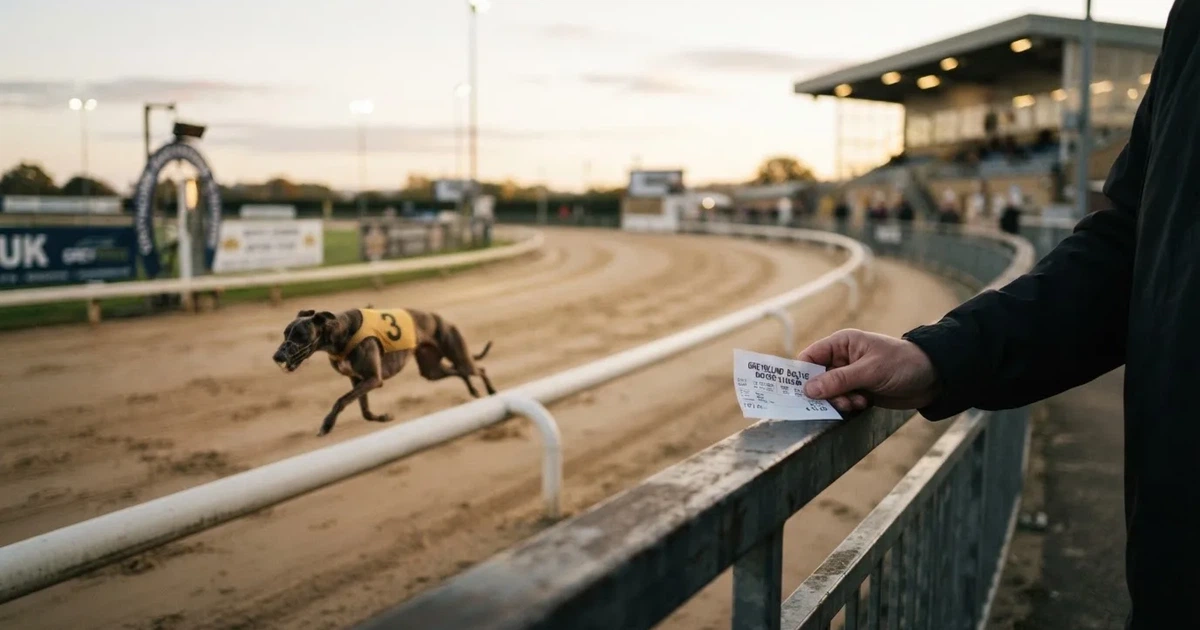
Greyhound racing is a short, mechanical sport: six dogs, an artificial lure on a rail, races measured in tens of seconds, and a starting price locked the instant the traps spring open. The betting around it is built on the same machinery as any other sport, but its rhythms are sharper. Eight traps at Belle Vue, twelve runners in an ante-post market for the English Greyhound Derby, a live market that ticks through three corners in under thirty seconds. Understanding greyhound racing betting odds means understanding what sits inside each price, how the margin compresses in tight contests, and where the difference between a 5/2 shot and a 3/1 shot actually lives. This guide walks through how odds are built on licensed British betting sites, what each bet type costs the punter, and where the choices genuinely diverge between operators.
Current as of 30 October 2026 against the Gambling Commission’s public register and each operator’s own published terms.
Why the price on a six-dog race moves before the traps open
A greyhound race is a small market by football standards. Six runners, sometimes eight, and three outcomes a serious layer cares about: the win, the place, and the forecast (first and second in order). The bookmaker’s margin, also called the overround, sits inside every price and is the cut the firm keeps from every pound staked before it pays out a winner. On a six-runner race priced in fractional odds at 2/1, 3/1, 5/1, 8/1, 12/1 and 16/1, the implied probabilities (1 divided by the fractional odds plus one) sum to well over 100%. The gap between that sum and 100% is the margin. The wider the gap, the more the bookmaker keeps on every unit bet.
A two-way market is the cleanest illustration. Take an illustrative match-bet quote at decimal odds 1.90 / 1.90 (fractional 9/10 each side). The implied probability on each side is 1 ÷ 1.90, which is roughly 52.63%. Summed across the market, that gives a payout share of about 105.26%, and a margin of 100% minus that share, which works out at about 5.26%. A typical greyhound race with six runners carries more: the margin runs higher because each additional leg the bookmaker must price widens the spread between true probability and quoted price. Where you see it depends on which bet type the price carries. The win market on a graded race is tighter than the forecast market, which is in turn tighter than the tricast (first, second and third in order) and the exotic combination bets layered on top.
Three things follow from this. First, the margin is a property of the market, not the brand: the same firm can run a 4% margin on a Premier League 1X2 and a 9% margin on a graded greyhound six-trap contest on the same afternoon. Second, comparing two prices without knowing what is being priced is comparing nothing — a 3/1 shot in a six-dog race is not the same value as a 3/1 shot in a five-runner horse race. Third, the margin is a statistical estimate of what the bookmaker earns across many bets, not a guarantee on any single race; it is the cost the punter pays on average for the service.
The whole pricing exercise is downstream of one rule. In Great Britain there is no statutory list of permitted sports, markets or bet types. The Greyhound Board of Great Britain (GBGB) supervises the stadia and the welfare of the animals across its 18 licensed tracks, but the markets you bet on are built by the bookmaker, licensed by the Gambling Commission under the operator’s own licence category, and offered under that firm’s own rules. Every licensed remote betting site in this guide carries a remote general betting standard (real events) licence on the Commission’s public register, and every market quoted on the dog-racing page of that site is offered under that licence. The margin, the minimum stake, the place terms, the maximum payout and the cash-out value are all operator choices inside that frame.
Mobile, app, browser: where the price reaches the punter
Three paths reach a licensed greyhound bet in 2026. The first is a native app downloaded from the App Store or Google Play; the second is the mobile browser on the same domain as the desktop site; the third, increasingly rare, is a desktop-only flow. The native app is the dominant path for live greyhound betting because the market ticks faster than the page can reload, and a betting app’s in-play stack keeps the price, the cash-out button and the bet slip in one place.

Fitzdares ships an app with cash out, accumulators, Lucky 15s, ante-post markets and in-play prices across horse racing, football, tennis, rugby, cricket, golf and American football; greyhounds are folded into the racing tab without a standalone lobby. Geoff Banks’ mobile build is published by GB Sports Advisors Ltd and offers live in-play prices alongside ante-post markets on future events. Paddy Power’s app covers football, horse racing, boxing, rugby, tennis, golf, darts, snooker and F1, with greyhound cards slotted into the racing section. Coral’s app carries the same racing structure and pairs it with the sportsbook’s Bet Builder and live streaming on selected events. Swifty Sports layers cash out on horse racing and football, daily price boosts and Best Odds Guaranteed, with a Bet Builder advertised as coming soon. Betmaster’s app covers football, cricket, horse racing, NFL and eSports, and greyhounds appear within the racing schedule. London Bet pairs sports and Pragmatic Play casino slots in a single app, with live in-play betting on the racing side. Bet Ahoy’s mobile build hosts its welcome and price-boost structure without a dedicated racing product page, and greyhounds are reachable through the racing link. Bar One Racing, now BAR 1 Betting, is an Irish bookmaker whose app is built around horse racing at Dundalk, Fairyhouse, Navan, The Curragh, Curraheen Park and Cork. Lottoland UK’s app combines casino, lottery betting, sports betting and scratchcards under one Gambling Commission licence, with greyhounds reachable through the sports tab.
The browser path is straightforward: the same domain as the app, no separate mobile site at most licensed firms, and the same login, deposit method and bet slip. Live greyhound betting works identically on both surfaces, and the cash-out value is calculated on the same server whether the request comes from the app or the browser. The only difference is latency: a native app keeps a connection open through push notifications, while a browser session reloads the price ladder on a timer. For a graded race with six runners and a thirty-second run, that timer matters. For an evening meeting with three-minute intervals, it does not.
Three mobile-specific points matter for greyhound betting. The first is push notifications for price moves and trap results: apps like bet365 and Paddy Power alert on selected events, and a punter watching ante-post prices for the English Greyhound Derby benefits from a drop notification more than a refresh button. The second is biometric login, which has become standard at licensed UK bookmakers and reduces the friction of placing an in-play bet while the race is in the first bend. The third is app-only price boosts, which several operators use to steer customers from the desktop site to the download — a bet builder boost or an enhanced place terms offer sometimes appears in the app first and only migrates to the desktop product later.
In-play greyhound markets and the cash-out button
Live greyhound betting is where the sport’s rhythm meets the operator’s technology. A graded race moves through four bends in roughly twenty-five to thirty seconds; the in-play market opens at trap rise, ticks through the first corner, suspends during the run, and resolves on the photo finish. A punter who wants to back a dog at 4/5 in-running is betting against the operator’s live trader, whose price reflects the position at the bend, the dog’s running style and the speed of the leader. The margin in-running is wider than the pre-race margin because the live price has more to react to, and the spread between back and lay prices on an exchange widens as the race unfolds.
Three bet types carry the in-play frame. The first is the win market, where the price moves from a pre-race 3/1 to a shorter price once the dog takes the lead and a longer price when it is boxed in on the first bend. The second is the place market, where a dog running third or fourth in-running becomes the second favourite once the leader folds. The third is the bet builder / same-game multi, which a handful of operators (bet365 with Bet Builder+, Coral, Fitzdares) extend into racing by combining the win, the place and a forecast on the same card. Bet Builder+ on bet365 combines markets from one event into a single bet, available pre-match and in-play, with Winnings Boosts on selected Bet Builders and singles.
Cash out sits on top of all three. A cash-out button reads the current price of the bet, applies the operator’s margin to it, and offers a value that is below the true mid-market price by the firm’s spread. On a £10 win bet at 3/1 that has moved to 5/2 in-running, the cash-out value sits below the £25 the bet would return at the original price. On a free bet that has moved into a winning position, the cash-out value is calculated on the free bet’s winnings only — the £10 stake is not returned with a win and is not returned with a cash-out settlement. Bet365, Fitzdares, Coral, Paddy Power, Swifty Sports, Geoff Banks and Bet Ahoy all offer cash out on selected racing markets, and a few extend it to the in-play greyhound card. Midnite carries price boosts with maximum-stake limits and an in-play sportsbook alongside its acca builder. The exact list is on each operator’s terms page.
Three limits apply across the live market. The first is the suspension window: most operators suspend the win market from roughly five seconds before the traps open until the result is confirmed, and the place market is suspended throughout. The second is the latency cap: a bet placed 0.4 seconds before the result is often refused, and a bet placed 0.4 seconds after the trap rise is often accepted at a worse price. The third is the maximum stake, which the operator sets per customer per market and which is rarely published. A punter who pushes against the maximum on a live greyhound market is likely to have the bet partially accepted or refused at the price the punter did not see.
Greyhound predictions, tips and the difference between a forecast and a system
“Tips” are forecasts. They name a dog, sometimes a trap number, sometimes a stake, and they are a forecast made by someone who has watched the form. “Systems” are rules. They take a piece of information — the dog’s last three runs, the trainer’s record at the track, the grade of the race, the going — and turn it into a bet. The two are different products. A tip is advice; a system is a rule. The punter pays for the former, builds the latter.
Three things help clear the noise. First, the form book for graded greyhound races is dense: every dog at a GBGB-licensed track has a public running style (early pace, middle, late), a grade (A1 to A8 at the top end, lower at smaller tracks), and a record at the track. A punter who reads the form before the race is operating with information a tipster is also operating with, and the question is whether the punter weighs it more carefully. Second, the market at a graded meeting is shaped by the on-course bookmakers and the SP (starting price), which is the odds on an entry in the on-course fixed-odds market when the race begins. SP applies to horse and greyhound racing and is the baseline the industry uses to settle each-way terms. A dog that drifts from 5/2 in the morning to 4/1 on course is a dog whose market information has moved; a dog that shortens from 6/1 to 4/1 is a dog whose market information has tightened. Third, the photo finish at the line is the settle; the in-running trader cannot see it, and the punter cannot see it either. A tip that names a dog that was third at the first bend is a tip on a dog whose chance improved as the race unfolded, and that is a different piece of information from a tip that names the favourite at the traps.
Where systems diverge from tips is on the stake. A system tells the punter how much to bet per race and on which dog, and the punter who follows it over hundreds of races learns what the system costs in average turnover and what it returns in average payout. A tip without a stake is a forecast without a price. A system without a price is a rule without a number. Three systems circulate widely in greyhound betting: the “lay the favourite” system, which bets against the shortest-priced dog in each race; the “Dutch the field” system, which backs every dog in a graded race at a stake sized to deliver the same return on any winner; and the “each-way value” system, which identifies dogs whose place terms look generous against the form. None of them is a winning system. Each is a rule, and the punter who follows it is the one who tests whether the rule holds over a sample.
Three warnings matter for anyone considering a tipster service or a paid system. First, the Gambling Commission’s rules on tipping are part of the LCCP and the CAP Code, and a tipster who sells advice without authorisation is in breach; a punter who buys advice from an unauthorised seller has no Commission route to a refund. Second, the affiliate disclosure rule (CAP Code section 16) applies to anyone marketing a tipster service: if a tipster is paid by a bookmaker for sending customers, that must be stated in the marketing. Third, a free betting system shared on social media is not a guarantee; the sample size behind the claim is rarely disclosed, and the back-test rarely matches the live performance.
A greyhound bet calculator is the other end of the spectrum. It takes a stake, an odds format (fractional, decimal), an each-way flag and a number of selections, and returns the return and the profit on a win, on a place, on an each-way basis, and on a combination bet. Bet365, Paddy Power, Coral, Fitzdares and Betmaster all host a calculator on the betting slip or in the help section. The calculator is a tool for the punter who has decided what to bet; it is not a tool for the punter who is deciding what to back.
What kind of bet, and how the odds settle
Greyhound betting odds are quoted in fractional form on most licensed UK racing sites, with decimal form available as a toggle. The conversion is straightforward: fractional odds a/b equal decimal odds a ÷ b + 1. So 5/1 is 6.00 in decimal, 11/4 is 3.75, evens (1/1) is 2.00, and odds-on at 4/6 is 1.67. The starting price (SP) is settled at the on-course fixed-odds market when the race begins, and the punter who took an early price against the SP is settled at the larger of the two — this is Best Odds Guaranteed (BOG), and Swifty Sports lists it on its app alongside cash out and daily price boosts.
Win. The simplest bet. The punter picks a dog; the dog finishes first; the bet pays the quoted odds. A £10 win bet at 5/1 returns £60 (£10 stake + £50 profit). The margin on the win market is the tightest of any market on the card.
Place. The punter picks a dog; the dog finishes in the places paid by the operator. Place terms vary by race and operator: in a six-runner race most operators pay the first two places at one-third of the win odds; in an eight-runner race the first three places at one-quarter; in a graded handicap the first three at one-quarter. The place market is settled separately from the win market and carries its own margin, which is wider than the win margin.
Each-way. Two bets of equal stake, so the stake doubles. A £10 each-way bet at 5/1 in a six-runner race is a £10 win bet and a £10 place bet, with the place paying one-third of the win odds (roughly 5/3 in fractional). The place pays if the dog finishes first or second; the win pays if the dog finishes first; both pay if the dog wins. The total stake is £20; the total return on a win at 5/1 is £60 on the win and roughly £26.67 on the place. The total return on a place only is £26.67 minus the £10 win stake, which loses. Each-way is a way of paying twice the stake to hedge a place finish.
Forecast. First and second in order. The punter picks two dogs in the order they finish. A straight forecast on dogs A and B pays if A wins and B is second; the reverse forecast pays if A is second and B wins, regardless of order. A tricast extends this to first, second and third in order, and is offered on the bigger graded meetings and the major stayers’ races. The forecast and tricast carry the widest margin on the card, often 25% or more, because the combinatorial difficulty of picking the order in a six-dog race is much higher than picking the winner.
Combination bets. Doubles, trebles, accumulators (“accas”), Trixies (4 bets), Patents (7), Yankees (11), Lucky 15s (15), Super Yankees / Canadians (26), Heinzes (57), Goliaths (247). The total stake is the unit stake multiplied by the number of bets, so a Lucky 15 at £1 is £15. The odds multiply into one price, but the margin accumulates with each leg: an accumulator with four legs carries roughly four times the per-leg margin. Acca insurance, offered by some operators, refunds the stake as a free bet if one leg lets the punter down; the refund is a free bet whose stake is not paid back with a win.
Ante-post. A bet placed before the final declarations are made, often weeks or months ahead of a named race. The English Greyhound Derby and the Scottish Greyhound Derby both carry ante-post markets that open months ahead. The non-runner rule applies: if the dog does not run, ante-post bets are usually void, and the punter’s stake is returned. Geoff Banks’ app offers ante-post prices on future events; Fitzdares hosts ante-post markets across its racing schedule; Coral and Paddy Power carry ante-post cards on the major festivals.
Spread betting. A separate instrument, not a fixed-odds bet, and licensed separately. Spreadex is regulated by the Financial Conduct Authority for spread betting and by the Gambling Commission for fixed-odds betting; losses on a spread bet can exceed the deposit, which is the firm’s own warning. A spread bet on the winning distance of a greyhound race quotes a range (say 1.5 lengths to 3.5 lengths); the punter buys at the higher quote or sells at the lower, and the winnings or losses are calculated against the actual margin. Spread betting is an FCA-regulated financial product for indices, shares and currency, and a Gambling Commission-regulated product on sports outcomes. The stake is the loss limit the punter sets, and a losing run on sporting spread bets can compound quickly.
Rule 4. A bookmaker’s rule applied when a runner is withdrawn from a race after the fixed-odds market has formed. The deduction is taken from the winnings of the remaining runners and varies with the withdrawn runner’s price. Rule 4 does not apply to ante-post bets unless the operator’s terms state otherwise, and it is not a feature of the place market on the same race.
Sports and tournaments: which meetings carry the deepest markets
Greyhound racing in Great Britain runs across the 18 licensed stadia supervised by the Greyhound Board of Great Britain. The deepest ante-post markets are reserved for the two flagship events: the English Greyhound Derby, run at Towcester over the summer, and the Scottish Greyhound Derby, run at Shawfield over the autumn. Both carry ante-post books months ahead, with each-way terms, forecast and tricast markets, and a graded open race alongside the headline event. Coral, Paddy Power, bet365, Fitzdares, Betfair and a handful of the independent bookmakers carry the English and Scottish Derby ante-post markets. Geoff Banks carries ante-post on future events as a published feature of its app.
The weekly graded meetings at the larger tracks (Belle Vue, Perry Barr, Hove, Doncaster, Oxford, Romford, Sunderland, Swindon, Yarmouth, Nottingham, Newcastle, Sheffield, Kinsley, Towcester, Wimbledon, Crayford, Sittingbourne and Central Park) carry the standard card: six-trap graded races, eight-trap graded handicaps, maiden races and puppy races. The market depth on a graded A1 at Belle Vue on a Saturday evening is wider than on a graded A8 at a smaller meeting on a Wednesday afternoon; the operator coverage follows the meeting.
Greyhound racing in New Zealand was a different product entirely. The Racing Industry (Closure of Greyhound Racing Industry) Amendment Act 2026, passed on 2 April 2026, ended the sport with a phase-out set for 1 August 2026. The announcement came from Winston Peters on 10 December 2024, and before the ban Greyhound Racing New Zealand (GRNZ) organised seven affiliated clubs: Auckland, Waikato, Whanganui, Palmerston North, Canterbury, Otago and Southland. The change matters for the punter only in that New Zealand greyhound markets no longer exist on licensed UK bookmakers after 1 August 2026; before that date, Australian and New Zealand meetings were covered on the major UK racing tabs the same way Irish meetings are.
The non-statutory limits on what is granted stake sit with the operator. There is no statutory cap on stakes in sports betting in Great Britain; the maximum stake on any market is the operator’s choice. A bookmaker may restrict a customer after a winning run, may cap stakes on a specific greyhound race, and may refuse bets on a specific dog if the operator judges the price is exposed. The punter who finds an unusual price on a small meeting is paying for that price with the risk that the operator will not let the stake through.
Ten UK bookmakers that take greyhound bets
The table below covers ten UK-licensed bookmakers that carry greyhound racing on their racing schedule. Each row shows the brand, the Gambling Commission remote licence number, the licence holder, and what the operator’s own terms state on greyhound racing. The licence numbers are quoted from the Commission’s public register and should be verified at the register before any account is opened; the terms summary is what each operator publishes, not what is implied.
| Brand | Gambling Commission remote licence | Licence holder | What the operator’s own terms state |
|---|---|---|---|
| Fitzdares | 000400-R-103839-030 (account 400) | Fitzdares Limited | Cash out, accumulators, Lucky 15s, specials and ante-post markets on horse racing, football, tennis, rugby, cricket, golf and American football, with in-play live odds; greyhounds within the racing tab. |
| Geoff Banks | 054095-R-330366-010 (account 54095) | GB Sports Advisors Limited | Live in-play prices and ante-post prices on future events, with a mobile app published by GB Sports Advisors Ltd. |
| Bar One Racing | 056516-R-332750-007 (account 56516) | Bar-One Racing Limited | Irish independent bookmaker with shops across Ireland and horse racing sponsorships at Dundalk, Fairyhouse, Navan, The Curragh, Curraheen Park and Cork; rebranded to BAR 1 Betting. |
| Bet Ahoy | 100094-R-341742-003 (account 100094) | Bet Ahoy Ltd | Welcome is a “Bet £10 & Get £10 in Free Bets”, made up of a £5 sports bet and a £5 acca; greyhound racing reachable through the racing link. |
| Fitzwilliam Sports | 048760-R-335434-009 (account 48760) | SBKI Limited | Dublin bookmaker with capped membership, instant deposits, fast withdrawals, timeouts, deposit limits and a “High Stakes Welcome” subject to compliance criteria; a GAMSTOP member. |
| Paddy Power | 039439-R-319330-013 (account 39439) | PPB Counterparty Services Limited | Football, horse racing, boxing, rugby, tennis, golf, snooker, darts and F1; greyhound cards in the racing section. |
| Coral | 054743-R-330863-014 (account 54743) | LC International Limited | Sports welcome is “Get £40 in Free Bets when you bet £20”: deposit and bet £20+ at minimum odds 2.0 (1/1), with £40 in free bets issued within 7 days and expiring 7 days after issue, for new GB customers who opt in. |
| London Bet | 066162-R-340278-004 (account 66162) | Thistle Bet Limited | Sports betting across football, tennis, horse racing, greyhounds, darts, golf, cricket, NFL, NBA, MLB and snooker, paired with Pragmatic Play casino slots and live in-play betting. |
| Betmaster | 065699-R-339929-002 (account 65699) | BM Solutions GB Ltd | Football, cricket, horse racing, NFL and eSports (League of Legends, Dota 2) betting; greyhounds within the racing schedule. |
| Swifty Sports | 058957-R-334734-006 (account 58957) | Swifty Global (UK) Ltd | Best Odds Guaranteed, cash out on horse racing and football, daily price boosts, live streaming, in-play betting and a Bet Builder advertised as coming soon. |
The exact greyhound market depth varies inside the headline. Fitzdares and Paddy Power carry the deepest ante-post books on the English Greyhound Derby and the Scottish Greyhound Derby; Coral runs in-play cards on the major graded meetings with cash out on selected markets; Geoff Banks builds its app around ante-post on the future events and live in-play on the day; London Bet and Betmaster pair a racing tab with casino and eSports content. Swifty Sports’ Best Odds Guaranteed applies to horse racing and is not separately confirmed for greyhound meetings, so the punter should check the operator’s terms on the day. Bet Ahoy and Fitzwilliam Sports are smaller independent operators whose racing schedule is narrower than the major firms, and Fitzwilliam Sports’ capped-membership structure means new accounts are subject to compliance criteria before a deposit is taken.
bet365 carries the deepest racing tab of any operator in the market and is the official global betting partner of the UEFA Champions League; it is not on the comparison list above because the section that follows ranks the ten covered here, and bet365’s greyhound product is reviewed separately as a benchmark. bet365’s Bet Builder+ combines markets from one event into a single bet, available pre-match and in-play, with Super Boosts, Winnings Boosts on Bet Builders and selected singles, and daily Bet Boosts. Midnite carries an in-play sportsbook, an acca builder, popular accas and price boosts with maximum-stake limits, and cites Gambling Commission licence 101839.
Fitzdares
Fitzdares is a long-established British bookmaker whose racing tab is one of the deepest in the independent tier. The Fitzdares mobile app carries cash out, accumulators, Lucky 15s, specials and ante-post markets across horse racing, football, tennis, rugby, cricket, golf and American football, with in-play live odds; greyhounds sit inside the racing tab rather than as a standalone product. The Gambling Commission remote licence is 000400-R-103839-030 (account 400), held by Fitzdares Limited. The ante-post book on the English and Scottish Greyhound Derbies runs alongside the horse racing book, and the firm’s specials on the major festivals extend to graded greyhound cards at the larger tracks. The verdict is the racing tab’s depth and the ante-post markets’ longevity: a punter planning weeks ahead for a named greyhound race will find the market here before it appears at the smaller firms.
Geoff Banks
Geoff Banks’ mobile app is published by GB Sports Advisors Ltd, and the product is built around two pillars: live in-play prices and ante-post prices on future events. The Gambling Commission remote licence is 054095-R-330366-010 (account 54095), held by GB Sports Advisors Limited. The greyhound offering leans on the ante-post book, which opens on the major festivals well ahead of the race, and on the in-play cards at the larger meetings. The app’s structure puts the racing card on a separate screen from the sportsbook, which suits a punter whose primary interest is the dogs. The verdict is the ante-post depth and the GB Sports Advisors operating company: this is an independent bookmaker that has chosen greyhounds and ante-post as its centre of gravity.
Bar One Racing
Bar One Racing rebranded as BAR 1 Betting and operates as an Irish independent bookmaker with shops across Ireland and horse racing sponsorships at Dundalk, Fairyhouse, Navan, The Curragh, Curraheen Park and Cork. The Gambling Commission remote licence is 056516-R-332750-007 (account 56516), held by Bar-One Racing Limited. The greyhound offering sits within a racing tab whose centre of gravity is Irish horse racing; greyhound cards on UK and Irish meetings are covered, but the depth is narrower than at a racing-led firm like Fitzdares. The verdict is the Irish-shop backing and the racing sponsorships, which give a punter access to a firm with a real high-street presence; for greyhound-first punters the racing tab is functional rather than central.
Bet Ahoy
Bet Ahoy’s welcome is a “Bet £10 & Get £10 in Free Bets” structure, made up of a £5 sports bet and a £5 acca. The Gambling Commission remote licence is 100094-R-341742-003 (account 100094), held by Bet Ahoy Ltd. The greyhound schedule is reachable through the racing link, and the operator does not run a standalone greyhound product page. The free bet structure has a wagering cap of 10x the bonus in force at licensed operators from 19 January 2026, and the £10 in free bets on a £10 qualifying bet is modest against the larger operators. The verdict is a smaller bookmaker with a simple welcome and a functional racing tab; the punter who wants a low-friction account on greyhounds alongside other sports will find it, and the punter who wants the deepest racing book should look elsewhere.
Fitzwilliam Sports
Fitzwilliam Sports describes itself as a Dublin bookmaker with capped membership, and its welcome is a “High Stakes Welcome” subject to compliance criteria. The Gambling Commission remote licence is 048760-R-335434-009 (account 48760), held by SBKI Limited. The firm offers instant deposits, fast withdrawals, timeouts, deposit limits and links to GambleAware, GamStop and Gamblers Anonymous, and is a GAMSTOP member. The greyhound schedule sits inside the racing tab and is functional rather than central; the capped-membership structure means new accounts are subject to compliance criteria before a deposit is taken, and a punter who is not accepted finds out before the first bet. The verdict is the compliance-led structure and the responsible-gambling tooling: this is a bookmaker built for the punter who values the safer-gambling framework over the depth of the racing tab.
Paddy Power
Paddy Power’s mobile app is published by Paddy Power PLC and covers football, horse racing, boxing, rugby, tennis, golf, darts, snooker and F1, with greyhound cards in the racing section. The Gambling Commission remote licence is 039439-R-319330-013 (account 39439), held by PPB Counterparty Services Limited. Paddy Power runs a separate exchange under the Betfair brand, but the greyhound markets on the sportsbook side are fixed-odds. The racing tab is deep, the ante-post book on the English and Scottish Derbies opens months ahead, and the in-play cards on the major graded meetings carry cash out on selected markets. The verdict is a major-operator racing tab with a strong greyhound schedule and the cross-product tooling of an exchange parent; the punter who wants a one-account, one-wallet path across sports, exchange and gaming has it.
Coral
Coral’s sports welcome is “Get £40 in Free Bets when you bet £20”: a deposit and sports bet of £20 or more at minimum odds of 2.0 (1/1), with £40 in free bets issued within 7 days and expiring 7 days after issue, for new GB customers who opt in. The Gambling Commission remote licence is 054743-R-330863-014 (account 54743), held by LC International Limited. The licence covers remote general betting standard (real events) and remote betting intermediary (the betting exchange licence), which Coral shares with Ladbrokes under the same operating company. The racing tab is wide, the in-play cards on the major graded greyhound meetings carry cash out, and the Bet Builder extends to racing on selected cards. The verdict is the major-operator welcome and the racing tab’s depth: this is a £40-in-free-bets entry for a punter betting £20 or more on the day, with the full weight of the Ladbrokes Coral operating company behind it.
London Bet
London Bet’s mobile app combines sports betting (football, tennis, horse racing, greyhounds, darts, golf, cricket, NFL, NBA, MLB, snooker) with Pragmatic Play casino slots and live in-play betting. The Gambling Commission remote licence is 066162-R-340278-004 (account 66162), held by Thistle Bet Limited. The greyhound offering is part of the racing tab and is functional rather than central; the cross-product structure (sports + casino in one app) suits a punter who splits the bankroll between racing and slots. The verdict is the cross-product structure and the live in-play cards: a punter who wants a single wallet across greyhound betting and casino play finds it here.
Betmaster
Betmaster’s mobile app is published by BM Solutions GB Limited and covers football, cricket, horse racing, NFL and eSports (League of Legends, Dota 2) betting, with greyhounds inside the racing schedule. The Gambling Commission remote licence is 065699-R-339929-002 (account 65699), held by BM Solutions GB Ltd. The racing tab is narrower than at the major operators, and the greyhound schedule is functional rather than central; the eSports offering is the distinctive feature, and a punter who splits the bankroll between greyhounds and League of Legends will find both on the same account. The verdict is the cross-sport structure and the eSports schedule: a smaller bookmaker with a clean racing tab and a separate eSports product, rather than a racing-first firm.
Swifty Sports
Swifty Sports offers Best Odds Guaranteed, cash out on horse racing and football, daily price boosts, live streaming and in-play betting, with a Bet Builder advertised as coming soon. The Gambling Commission remote licence is 058957-R-334734-006 (account 58957), held by Swifty Global (UK) Ltd. The greyhound schedule sits within the racing tab, and Best Odds Guaranteed applies to horse racing and is not separately confirmed for greyhound meetings. The in-play cards on the major graded meetings carry cash out on selected markets, and the daily price boosts apply across sports. The verdict is the BOG, cash out and live streaming combination on a smaller-operator licence; the punter who values the racing product features more than the racing tab’s depth will find them here.
How UK greyhound betting is regulated, and what the licence buys
Great Britain licenses the whole commercial market under the Gambling Act 2005. The Gambling Commission (UKGC), a non-departmental public body sponsored by the Department for Culture, Media and Sport, issues operating licences and remote licences, supervises the operators and publishes the public register. Since the Gambling (Licensing and Advertising) Act 2014 an operator whose remote facilities are used in Great Britain needs a Commission licence wherever it is based (sections 33 and 36 of the 2005 Act as amended); a Curaçao, Maltese or Gibraltar licence is not a substitute for a Commission licence at the point of consumption. There is no state monopoly and no cap on the number of licences. Northern Ireland is outside the Gambling Act 2005 and has its own older law, so a Great Britain licence does not regulate Northern Ireland.
The bookmakers in this guide hold a remote general betting standard (real events) licence on the Commission’s public register. Coral additionally holds a remote betting intermediary licence (the betting exchange category). The punter who wants to verify a licence looks up the business name, trading name, domain or account number on the register. The Commission’s search returns the licence number, the categories, the trading name and the operating company. The ten operators in this guide are all on that register.
What the licence buys is a layer of protection that an unlicensed operator does not provide. GAMSTOP is the national multi-operator online self-exclusion scheme and a mandatory licence condition for online operators since 31 March 2020; periods are six months, one year, five years, or five years with auto-renewal, and after the minimum period the exclusion stays in place for a further seven years unless the customer asks GAMSTOP to remove it. Every GB-licensed online operator takes part in GAMSTOP, and the punter who has self-excluded cannot open an account at any of them for the duration of the exclusion. Identity verification before the first deposit is mandatory (since 7 May 2019), including with a free bet or bonus. The credit card ban for gambling in Great Britain has been in force since 14 April 2020 (LCCP condition 6.1.2), including credit-card-funded payments through an e-wallet; debit cards and bank-based payments are not covered by that ban. The financial vulnerability check (LCCP condition 3.4.4, in force since 30 August 2024) applies to licensed remote betting when a customer’s deposits minus withdrawals exceed £150 in a rolling 30 days (since 28 February 2025): it is a public-record check (for example bankruptcy or county court judgments), not an income check and not a credit reference check. Deposit limits (RTS 12) are operator-implemented; the first changes have applied since 31 October 2025, a second phase was postponed to 30 September 2026, and whether it is live is not established.
The player pays no tax on betting winnings in Great Britain (general information, not tax advice; a professional gambler should ask HMRC or an adviser). General Betting Duty is the operator’s tax on gross profits, currently 15%; from 1 April 2027 a new remote betting rate of 25% applies within it, while remote bets on UK horse racing, bets on self-service betting terminals in licensed premises, pool betting and in-person betting stay at 15% (HM Government policy paper of 26 November 2025); spread betting has its own rates (3% financial, 10% other). Whether operators pass duty on through odds is not established.
The greyhound-specific regulation sits with the Greyhound Board of Great Britain (GBGB), which supervises the 18 licensed stadia. The GBGB’s role is welfare and race-day integrity; the betting markets are licensed by the Commission under the operator’s own licence category. There is no statutory list of permitted greyhound bet types; the market is built by the operator under its own licence conditions.
Offshore sites are a separate question. Providing gambling facilities in Great Britain without the licence the Act requires is an offence under section 33 of the Gambling Act 2005, aimed at the operator, with enforcement through cease-and-desist notices, search-engine referrals, registrar and payment-provider work, and the court-order DNS blocking powers the Commission has been given, or is about to receive. No offence aimed at a customer who merely bets on an unlicensed site was found. The honest framing is that a licensed site provides the checks, limits, GAMSTOP coverage, the 10x bonus cap and the Commission’s complaints route, while an unlicensed site provides none of those protections and may withhold funds with no British consumer redress. Neither is “the safe choice” by default; the licensed path is the path with the protections attached.
Responsible gambling on greyhound betting sites
Greyhound betting is fast, and the in-play market moves on a thirty-second race. The licensed framework around it is built to slow the punter down at the points where speed hurts. GAMSTOP is the first line: the punter who has self-excluded cannot open an account at any GB-licensed online operator for the chosen period. Betting shops use a separate offline self-exclusion service. The financial vulnerability check at £150 of net deposits in a rolling 30 days is a public-record check, not an income check; it surfaces financial markers that suggest the punter should be asked about their play. Deposit limits (RTS 12) are operator-implemented and the punter can set a gross deposit limit on a fixed time frame. Timeouts, reality checks, deposit limits and product restrictions are all part of the licensed operator’s safer-gambling toolkit, and Fitzwilliam Sports links to GambleAware, GamStop and Gamblers Anonymous on its home page.
The help routes for a punter who is worried about their play are well-established. GamCare runs the National Gambling Helpline. GambleAware funds research, treatment and education. The NHS runs gambling clinics across Great Britain. Gamblers Anonymous runs peer-support meetings. The punter who finds themselves raising stakes after a loss, chasing a graded meeting on a Wednesday evening because Tuesday’s losses have not settled, or moving from win bets to forecast and tricast bets to recover a deficit, has crossed a line and should reach out before the next bet is placed.
Three warnings matter for greyhound betting specifically. First, the speed of the in-play market magnifies the cost of a chasing impulse; a punter who has lost three graded A1s in an evening can recover on the fourth only if the fourth wins, and the in-play price is already shorter on the favourite. Second, ante-post markets are sticky: a bet placed weeks ahead is not checked at the moment the race is run, and the punter who has placed an ante-post bet on every major festival through the year has a book they cannot easily close. Third, combination bets accumulate the per-leg margin across every selection; a Lucky 15 with all four favourites has the look of safety but carries four times the margin of a single win bet, and the bookmaker earns the difference on the long run.
The advertising framework around greyhound betting is in the CAP Code (non-broadcast) and BCAP Code (broadcast), enforced by the ASA. CAP Code section 16: marketing must be socially responsible, must not be of strong appeal to under-18s, and no one who is or seems to be under 25 may be featured gambling or play a significant role (with an exception for marketing placed where a bet can be made directly); that rule concerns who may appear in the advertisement, not who may bet. The “whistle-to-whistle” rule (since 1 August 2019) excludes betting advertisements from TV from five minutes before a live sporting event to five minutes after it, before the 9pm watershed, with horse and greyhound racing excluded. The Premier League clubs’ withdrawal of gambling sponsorship from the front of matchday shirts from 2026/27 is voluntary, not law. Operators are responsible for marketing by their affiliates.
Bonuses, free bets and the cost of the welcome
A bonus is a sum the operator credits to a new account on the back of a deposit, a bet or both. A free bet is a stake the operator credits that pays the winnings only — the stake is not returned with a win. A “risk-free” bet refunded as a free bet is not a refund in money; it is a free bet whose value is the stake’s winnings, not the stake plus the winnings. A price boost is a single enhanced price the operator offers on a named selection for a window; an accumulator insurance refunds the stake as a free bet if one leg of an acca loses; a cashback is a percentage of net losses returned as cash or as a free bet over a window. Each type has its own cost. The bonus wagering cap in force at licensed operators from 19 January 2026 is 10x the bonus, so a £10 bonus at 50x needs £500 of bets; under the cap, no more than £100. Mixed-product promotions — an offer that requires gambling on two or more product types such as betting, casino, bingo and lottery — are banned.
The welcome structures in this market illustrate the variety. Coral’s sports welcome is “Get £40 in Free Bets when you bet £20”: a deposit and sports bet of £20 or more at minimum odds of 2.0 (1/1), with £40 in free bets issued within 7 days and expiring 7 days after issue, for new GB customers who opt in. Bet Ahoy’s welcome is “Bet £10 & Get £10 in Free Bets”, made up of a £5 sports bet and a £5 acca. Fitzwilliam Sports’ welcome is a “High Stakes Welcome” subject to compliance criteria. Bar One Racing, Geoff Banks, Betmaster, London Bet, Swifty Sports, Fitzdares and Paddy Power run their own welcome structures; each operator’s home page states the terms.
Three things matter in any welcome. First, the qualifying bet’s minimum odds: a welcome that needs a £20 bet at minimum odds 2.0 (1/1) rules out betting on a short-priced favourite and pushes the bet onto a market with a wider margin. Second, the free bet’s expiry: Coral’s free bets expire within 7 days of issue, and the punter who has not used them in that window loses them. Third, the form of the refund: a free bet that pays winnings only is worth less than a cash refund at the same headline value, because the stake is not returned with a win. The punter who treats a free bet as a stake to be played on a tight market at long odds is making the most of it; the punter who treats it as cash is overstating its value.
The matched-betting approach — using the free bet on one side of a market and laying the other side on an exchange to lock in a small profit — is one route through a welcome, and it relies on the free bet’s winnings being withdrawable after the wagering requirement. Whether a specific welcome supports a matched-betting approach is in the operator’s terms; the punter who plans it checks the terms first.
The ongoing value of an account is in the existing-customer offers: Best Odds Guaranteed on horse racing at Swifty Sports, Super Boosts and Winnings Boosts at bet365, price boosts with maximum-stake limits at Midnite, acca insurance at Paddy Power and Coral, daily price boosts across the racing and sports tabs at Swifty Sports. The punter who opens an account for a welcome and closes it after the welcome has used the offer; the punter who plans a book of accounts across the major operators extracts value from each.
How odds are built, and how the punter reads them
The margin inside every price is the gap between the implied probabilities and 100%. A two-way market at decimal odds 1.90 / 1.90 (fractional 9/10 each side) has an implied probability of 1 ÷ 1.90, or about 52.63%, on each side. The payout share — the proportion of every pound staked that the bookmaker returns to winning punters on average — is the inverse of the sum of the implied probabilities across the market: 1 ÷ (0.5263 + 0.5263), or roughly 95.0%. The margin is 100% minus the payout share, which works out at about 5.0% on this illustrative two-way market. The exact figure depends on the price: a tighter two-way market at 1.95 / 1.95 (roughly 9/10 each side, slightly firmer) carries a smaller margin, and a wider market at 1.85 / 1.85 carries a larger margin. The band for a competitive two-way sports market runs from about 2.5% on the tightest Premier League 1X2s to about 6% on the wider tennis and basketball lines. A typical greyhound six-runner win market carries a wider band, often 8% to 12%, and the forecast and tricast markets carry more.
The punter reads the margin in three moves. First, comparing two prices for the same selection: a 5/2 shot at one firm and a 3/1 shot at another is a 1.5-tick difference in decimal terms (3.50 versus 4.00), and the wider price is the better value on the same probability. Second, comparing the price to the SP: the punter who backs a dog at 4/1 and the dog drifts to 6/1 SP is settled at 6/1, which is the BOG effect, and the value is the difference between the two. Third, comparing the price to the model’s probability: a punter who has priced a graded A1 race and judges the favourite’s true probability at 40%, and the bookmaker offers 5/2 (implied 28.6%), is looking at a price that is shorter than the model; the value is on the outsider or on the place market, not on the favourite.
The punter who wants a quick check on the margin across a market divides 100 by the sum of the implied probabilities. The smaller the sum, the smaller the margin. The punter who wants a quick check on whether a price is in line with the market compares the price to the average of three operators on the same selection: a price noticeably above the average is a price worth backing; a price noticeably below the average is a price worth laying.
The path from deposit to first greyhound bet
Five steps carry a new punter from deposit to first greyhound bet at a licensed UK operator. First, account creation: name, address, date of birth and contact details, with identity verification before the first deposit (since 7 May 2019). Second, deposit: debit card or bank-based payment, no credit card, no cryptocurrency, no anonymous play. Third, qualifying bet: a stake or bet that satisfies the welcome’s terms, often at minimum odds 2.0 (1/1) or higher, on a market of the punter’s choice. Fourth, free bet or bonus credit: the operator credits the welcome’s free bet or bonus within the stated window (Coral within 7 days), and the free bet expires after the stated period (Coral 7 days after issue). Fifth, the first greyhound bet: an ante-post bet on the English Greyhound Derby weeks ahead, a win bet on a graded A1 at Belle Vue on a Saturday evening, or an in-play bet on the first bend of a graded handicap.
Three limits apply across the path. The first is the maximum stake, which the operator sets per customer per market. The second is the deposit ceiling, which the punter sets under the operator’s deposit-limit framework. The third is the wagering requirement on the bonus, which is capped at 10x under the LCCP rule in force from 19 January 2026. The punter who reads the operator’s terms before the deposit is the punter who is not surprised by the cap.
The licensed path is the path with the protections attached: GAMSTOP, deposit limits, identity verification, the financial vulnerability check at £150 of net deposits in a rolling 30 days, the bonus wagering cap, the ASA-supervised advertising, and the Commission’s complaints route if a withdrawal is delayed. The unlicensed path is the path without them. The punter who reads the terms before opening an account is the punter who has chosen knowingly.
Frequently asked questions on greyhound racing betting odds
How do I bet on greyhound racing?
Pick a licensed UK bookmaker from the Commission’s public register, open an account, complete identity verification before depositing, fund the account with a debit card or bank-based payment (no credit card), and pick a graded race at a GBGB-licensed track. The win market is the simplest entry, and a £10 win bet at 4/1 returns £50 in profit plus the £10 stake if the dog finishes first. The place market and the each-way bet are the next steps, and the forecast and tricast markets are for the punter who wants the wider prices.
How do I bet on greyhound dogs the same way I bet on horses?
Greyhound betting uses the same machinery as horse betting: fractional odds, decimal odds as a toggle, win and place markets, each-way bets (the stake doubles), forecast and tricast markets, ante-post markets on the major festivals, SP and BOG where the operator offers it. The differences are tactical: graded races are shorter (six to eight runners rather than a full field), the in-play window is shorter (the race runs in thirty seconds), and the ante-post book on the English and Scottish Greyhound Derbies is the headline meeting of the year.
How can a punter win at greyhound betting?
No system wins on a per-bet basis, and the punter who chases a winning system is chasing a forecast that nobody can verify in advance. The punter who reads the form, sizes the stake to the model’s confidence, backs at prices wider than the model’s probability, and accepts that the margin is the bookmaker’s edge is the punter who manages the bankroll. The bankroll survives the variance, and the long-run edge is the difference between the model’s probability and the price after the margin.
How can it be checked that a bookmaker holds a Gambling Commission licence?
Search the Commission’s public register by business name, trading name, domain or account number. The register returns the licence number, the categories, the trading name and the operating company. The ten operators in this guide are all on the register, and their licences are quoted in the comparison table. The punter who wants a real check uses the register; a domain is not proof of a licence, and a footer logo is not proof either.
How is the return on a bet worked out from the stake and the odds?
Return equals stake multiplied by odds. On a £10 win bet at fractional odds 4/1 (decimal 5.00), the return is £10 × 5.00, which is £50. The profit is the return minus the stake, which is £40. On a £10 each-way bet at 4/1 in a six-runner race (place paying one-third of the win odds), the total stake is £20; on a win, the return is £50 on the win leg and roughly £16.67 on the place leg, totalling £66.67; on a place only, the place leg pays £16.67 and the win leg loses £10, for a net return of £6.67. Decimal odds make the arithmetic simple: return = stake × decimal odds, profit = stake × (decimal odds − 1).
What is the bookmaker’s margin and how can it be seen in the odds?
The margin is the cut the bookmaker keeps on every unit bet on a market. It is the gap between the implied probabilities of all outcomes on the market and 100%. On an illustrative two-way market at decimal odds 1.90 / 1.90, each side has an implied probability of about 52.63%, the sum is about 105.26%, and the margin is about 5.0% on the round. A greyhound six-runner win market carries a wider margin, often 8% to 12%, and the forecast and tricast markets carry more. The punter who wants to see the margin divides 100 by the sum of the implied probabilities across the market: the smaller the sum, the smaller the margin, and the better the value for the punter.
Horse racing & greyhounds – systembetsguide.com
Content created by the «systembetsguide.com» team
