
Rugby league betting odds 2026: how to read them, where to bet them
 Available in US
The market for rugby league betting odds sits inside a small, well-defined corner of British bookmaking. Super League and the NRL drive most of the action, the World Cup rolls round every few years, and the Championship and Challenge Cup fill the gaps between Tests. This page is about the paths that exist for backing the 13-a-side code in 2026 — which bookmakers cover it well, what each market actually pays, and how a bettor decides between them.

*Current as of 30 October 2026 · Gambling Commission public register checked against operator terms.*
Fixture-driven betting: why rugby league rewards calendar literacy
A rugby league punter who treats fixtures as a steady stream rather than a calendar tends to overpay. The NRL season runs from March to October, Super League from February to late September, and the Challenge Cup, the 1895 Cup and the World Cup sit on top of those calendars rather than inside them. Ante-post markets on the Grand Final, the Super League title and the Challenge Cup trophy open months before the games; odds on them shift with injuries, salary-cap rulings and overseas recruitment weeks before a ball is kicked.
That cadence is what gives the code its betting rhythm. A fixture pile-up after the Four Nations or the State of Origin series produces short-priced favourites as tired sides rotate; the early rounds of Super League, by contrast, regularly throw up prices of 2/1 or longer on a home win when bookmakers are still feeling out a promoted side. A punter who knows which weekend sits in which window gets a different price from one who doesn’t.
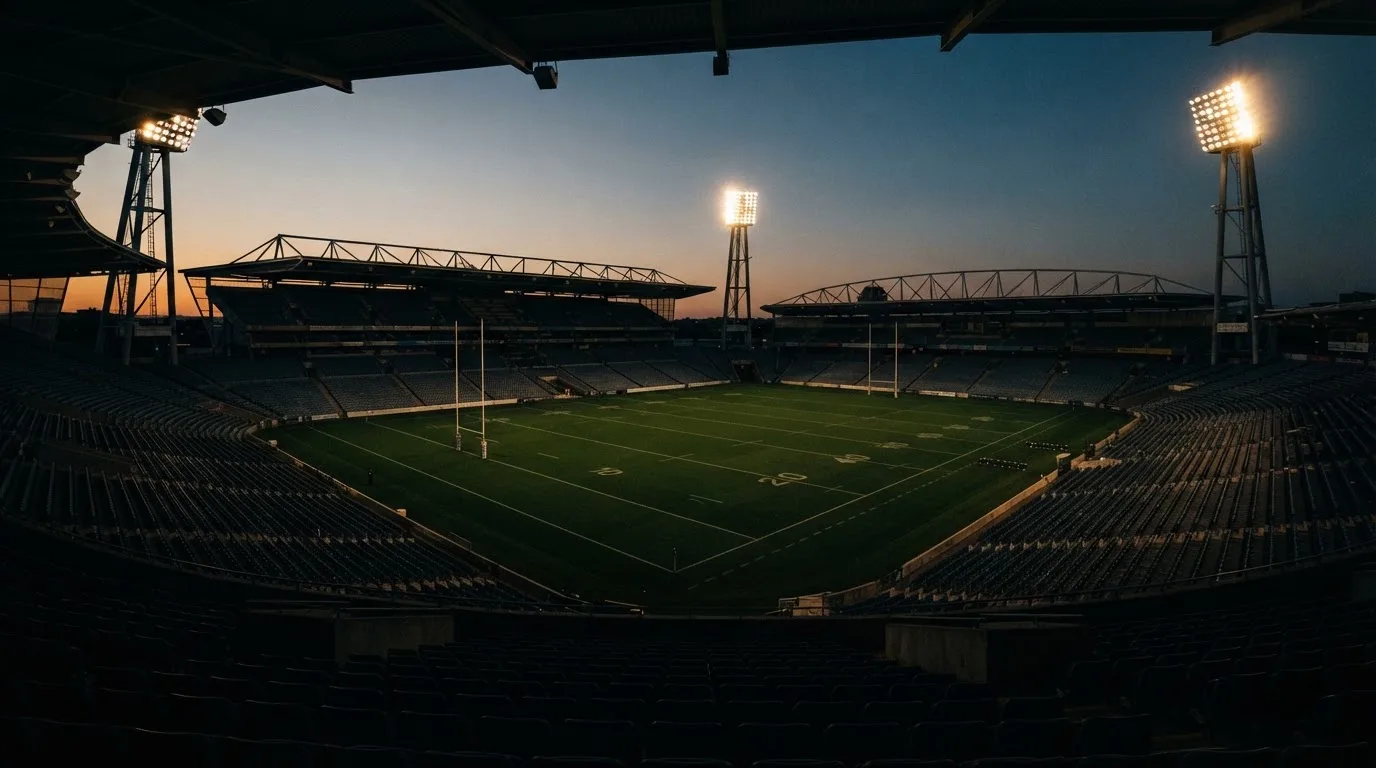
The same calendar logic applies to specials. Top try-scorer markets move on team news and weather (wet pitches favour heavier forwards crashing close-range tries; dry pitches favour outside backs on the edges); regular-season minor placings settle around round twenty rather than round one. None of this is prediction; it is just where the price lives at the moment a bet lands.
Where calendar meets kit: a few practical pointers that earn their place before a stake is placed.
- A handful of the year’s biggest fixtures are ante-post from launch, and the price you take is the price you keep. Some bookmakers offer a Best Odds Guaranteed concession on horse racing but not on rugby league; the same applies to extra-place offers and each-way terms — never assume.
- Squad rotation in the NRL is heavier than in Super League, particularly around State of Origin, because Origin selection pulls the same Australian-eligible stars out of their clubs for several weeks. Prices reflect that, but only after the team sheets are out.
- International rugby league plays in windows between domestic seasons, not inside them. Markets on a Test series can be thin — fewer bookmakers price them, and the ones that do often pull up the margin to compensate.
How a price is built, and why a 6/5 favourite is not the same as a 1.80 favourite
Most British bookmakers still publish rugby league odds in fractional form (5/1, 11/10, evens) and offer decimal equivalents (6.00, 2.10, 2.00) on the bet slip. The two systems describe the same price in different notation: a fractional price of *a/b* converts to decimal as *a ÷ b + 1*, so 5/1 becomes 6.00 and 11/10 becomes 2.10. Decimal odds quote the total return per unit staked; fractional odds quote the profit per unit staked.

That distinction matters at the betting slip. A £10 wager at 11/10 returns £21 (the £10 stake plus £11 profit) and reads as decimal 2.10. A £10 wager at 6.00 returns £60 (the £10 stake plus £50 profit). The stake comes back on a winning fixed-odds bet; on a winning free bet, it usually does not — see the section on bonuses below.
The return on any bet is the formula: return = stake × odds, with net profit = stake × (odds − 1) for decimal prices. For a combination bet — a double, a treble, an accumulator — the legs’ prices multiply into one. A £10 double at 2.10 and 3.00 has combined odds of 6.30 and returns £63 if both win, the stake included.
Where the margin sits
Inside every price a bookmaker keeps a slice of turnover, called the margin or the overround. Take a simple two-way match market at decimal prices of 1.90 / 1.90 (each side priced 9/10 or 10/11 depending on the rounding). The combined implied probability is:
> 1 ÷ 1.90 + 1 ÷ 1.90 = 0.5263 + 0.5263 = 1.0526
That is the payout share, the fraction of every pound staked that would come back if a punter backed both sides at the published price and both won exactly once. It sits above 100% because the bookmaker’s margin is built into both prices. The margin itself is 1 − payout share, or roughly 5.3% in this example — expressed as a band, about 5 to 6% on a typical two-way match market. That is the chunk of every pound staked that the bookmaker expects to keep, on average, across a very large number of bets.
That margin is why two bookmakers quoting the same fixture rarely quote the same number. A 1.83 / 1.83 line is a margin near 9%; a 1.95 / 1.95 line is a margin near 2.5%. Same fixture, same match — the difference is the price of running a sharper book. Match-result markets tend to sit tighter than handicap or totals markets, where outcomes are more numerous and the margin tends to widen.
Margins are statistical estimates, not promises. They are the average the bookmaker keeps across a large volume of bets on a given market; no single punter will see that average on their own settled bets, and a winning streak does not refund the overround.
Markets a rugby league bookmaker typically offers
The licensed British bookmakers in the comparison below all run a similar menu for rugby league, because the code is structured enough that the market list follows the fixture list. The exact depth varies: a Super League title race gets lines, set handicaps, team totals, first-try-scorer, half-time/full-time, winning margin and player markets; an early-round Championship tie may get a match result, a handicap and very little else.
The core menu looks like this.
- Match result (1X2 / home–away). Settled on 80 minutes of play; extra time is excluded unless the market explicitly says otherwise.
- Handicap. Settled on 80 minutes, including any whole-number handicap that lands exactly (which is refunded, in line with standard British rules).
- Total points. A line on the combined score, with over and under; margin here tends to be wider than on the match result.
- First try-scorer and anytime try-scorer. NRL markets in particular can run deep, with player pricing published a day or two out.
- Half-time / full-time. Settled on the official result at the break and at full time; tends to be a tighter market than totals.
- Winning margin. A band of point spreads, settled on the final 80-minute score.
- Team totals. Each side’s individual score line, with over and under.
- Player markets. Try-scorer, in some books metres-gained and tackle counts in NRL.
- Specials. First scoring play, race to 10 points, race to 20 points, and similar momentum markets.
The settle rule that catches most first-timers: Super League and NRL match betting and handicap betting settle on 80 minutes of play. Most other markets on the same fixture — outright winner markets, top try-scorer, half-time/full-time — settle on the official result, which can include extra time in knockout rugby. The exact wording sits in each operator’s rugby league rules, and it is worth reading before staking on anything that might go to extra time.
A quick word on postponed matches. Bets on a postponed Super League or NRL match typically stand for 48 hours from the original kick-off; after that they become void. That is a standard rule across the licensed set, but the exact hours and the trigger that starts the clock differ between operators, and again, the rules page settles it.
The major rugby league tournaments a punter can bet on
The four tournaments that move most of the volume on British licensed sites.
Super League. The top-flight club competition in Europe, run by the Rugby Football League and played from February through the Grand Final in late September. Sixteen teams, two divisions: Super League and the Championship, with promotion and relegation between them. The Super League title, the Grand Final, the regular-season minor placings and individual awards all carry outright markets for most of the year.
NRL. The National Rugby League in Australia and New Zealand, played from March to early October. Sixteen teams, State of Origin played mid-season as a representative series that pulls players out of their clubs. The NRL Grand Final is the biggest single betting event on the rugby league calendar outside of international tournaments. Markets are typically deep: line, handicap, total, first try-scorer, half-time/full-time and player markets are all common.
Challenge Cup. The knockout cup of British rugby league, run by the Rugby Football League, with rounds from February to the final at Wembley in early summer. Draw pricing matters here: knockout rugby means long-priced underdogs reach the final more often than in a round-robin competition, and ante-post on the trophy tends to have a wider margin than a Super League or NRL title.
World Cup. The international men’s and women’s tournaments, run by International Rugby League. Markets open on the tournament winner, group winners, top try-scorer and individual matches as soon as the draw is made; outrights tend to settle within minutes of the final in the betting markets, even though the trophy itself takes longer to lift.
State of Origin, Four Nations, Pacific Championships. Representative rugby and end-of-season international windows. Origin in particular pulls Australian-eligible stars out of NRL clubs for three games a year, and that absence is itself a market signal in the NRL club fixtures around it.
Championship, 1895 Cup, Championship Cup. The second tier and the secondary cups. Less market depth — a Championship tie between sides near the middle of the table may only get a match-result line and a single handicap price — but the prices on offer tend to be a touch sharper because the bookmakers are not trying to balance weight.
How to compare the licensed bookmakers for rugby league
The ranking that follows is not “best first”; it is “different first”. Each of the ten operators below holds a Gambling Commission remote licence for real-event betting in Great Britain, and each one approaches rugby league in a way that suits a particular kind of punter. The specifications that follow are written to let a reader pick which kind of operator they want to be.
The shared frame: every operator on the list is on the Commission’s public register under a remote general betting standard licence for real events, and the licence holder and account number are stated below. Some hold additional categories — Matchbook holds a remote betting intermediary (exchange) licence on top of its standard licence, which is why its product is structurally different from the others. Each brand’s own terms page is the place to confirm the rugby league market depth before staking.
A single landscape table sits below. Three columns, no more: the brand, the licence holder and account number, and what each operator’s own terms state about the relevant subject. The terms change, so the column is a snapshot at the register check date rather than a permanent record — and where a row reads “no on-market rule stated”, the reader checks the operator’s rules page for the wording that applies.
Landscape of licensed rugby league bookmakers in Great Britain
| Brand | Gambling Commission remote licence | What the operator’s own terms state on rugby league |
|---|---|---|
| 888sport | 039028-R-319297-014 · 888 UK Limited | Pre-match and in-play betting, Cash Out, Bet Builder, racing streams, BetFinder form tools, a live bet feed and daily boosted odds. |
| BoyleSports | 039469-R-319383-025 · Boylesports Enterprise | Sports welcome offer of £20 in free bets for a £10 qualifying bet; runs a deep Super League menu and prices ante-post on the Championship. |
| Matchbook | 039504-R-319407-024 · Triplebet Limited | A betting exchange where customers back and lay against other users; runs Bet Builder, multiples, in-play and live streams on racing. |
| VBet | 044662-R-324273-022 · SCGO Limited | Sports welcome offer of a £10 free bet if a first-ever £10+ bet loses; covers the standard rugby league menu pre-match and in-play. |
| Fafabet | 057385-R-333191-006 · Taichi Tech Limited | Best Odds Guaranteed on UK and Irish horse racing from 9am; standard rugby league menu with a focus on Super League and the NRL. |
| Betfred | 039544-R-319290-010 · Petfre (Gibraltar) Limited | The Betfred app covers 21 sports plus casino games; #PickYourPunt builder and a Super League outright market for most of the season. |
| Geoff Banks | 054095-R-330366-010 · GB Sports Advisors Limited | Live in-play prices and ante-post prices on future events; smaller brand focused on the major codes and representative fixtures. |
| Octobet | 062545-R-337248-006 · Octopus Game Limited | Sportsbook welcome offer of 50% back as a free bet up to £50 plus a £10 casino bonus for new customers; standard rugby league menu. |
| Tote | 054779-R-331321-008 · TDCO Limited | Pool-betting heritage; tote-style products on horse racing plus fixed-odds sportsbook pricing on Super League and NRL. |
| DAZN Bet | 048756-R-327274-019 · DZBT Limited | Deposits from £5 by debit card, Apple Pay, Paysafecard, Trustly and Skrill, and from £20 by PayPal; standard rugby league menu pre-match and in-play. |
This is not the whole market. The Commission’s register lists many more brands, and the ten named above are the operators in this comparison — every one a remote general betting standard licence holder, every one bound by the Commission’s licence conditions and codes of practice.
What the shared licence frame means in practice
A reader who has not bet with a Commission-licensed operator before will be asked for name, address and date of birth before the first deposit lands, and the operator will run a public-record check before the first bet. That has been the rule since May 2019 and applies to deposits and to free bets or bonuses. There is no anonymous play on a licensed site.
Every operator on the list is a member of GAMSTOP, the national multi-operator online self-exclusion scheme. A punter who self-excludes through GAMSTOP is barred from every licensed online operator, app included; betting shops run a separate service and are not in GAMSTOP. Periods are six months, one year, five years, or five years with auto-renewal.
Betting on credit is banned. Credit cards, and e-wallet top-ups funded from a credit card, are not accepted for gambling in Great Britain under LCCP condition 6.1.2. Debit cards, bank transfer and non-credit-funded e-wallets are not covered by the ban.
Promotions on licensed sites are capped. Wagering requirements on bonuses are capped at 10× since 2026 rules took effect, and mixed-product offers — a promotion that requires play on two or more product types, for example “bet on rugby league to get free spins” — are banned. The cap applies to bonuses with a wagering condition; how it applies to free bets with no rollover condition is not pinned down in the rules.
888sport
888sport sits in the middle of the British market by rugby league depth. The brand lists pre-match and in-play betting, Cash Out, Bet Builder, racing streams, BetFinder form tools, a live bet feed and daily boosted odds on its own app page. Super League, the NRL, the Challenge Cup and the World Cup all carry markets on a normal week; ante-post on the Super League title and the Grand Final is typically open from Christmas onwards. The boosted-odds feed runs on the headline fixture of the round, and BetBuilder covers Super League matches at most weekends during the season.
The licence sits with 888 UK Limited under Gambling Commission remote licence 039028-R-319297-014. The brand also offers casino and poker under the 888 umbrella, which is worth noting because the welcome offer routes between products and a punter who intends to bet only on rugby league should check that any free-bet credit isn’t locked behind casino play — the new bonus cap on mixed-product promotions takes that option off the table.
888sport is a fit for a punter who wants a mainstream menu with a steady flow of price boosts and a familiar Cash Out button on the slip. It is less of a fit for a sharp punter chasing the tightest margin on the match-result market — bigger books tend to run wider overrounds than specialist or exchange-led operators.
BoyleSports
BoyleSports runs a deep rugby league menu for a UK-facing bookmaker that grew out of an Irish high-street chain. The app lists Super League, the NRL, the Championship, the Challenge Cup and Ireland’s representative competitions, and prices ante-post on most of them for most of the year. The sports welcome offer for UK players is £20 in free bets on a £10 qualifying bet; the offer for Irish players runs at €30 in free bets on a €10 bet. BoyleSports’ strength on rugby league is depth on the Grand Final, the Super League title and the Challenge Cup trophy, with ante-post markets often open months before kick-off.
The licence sits with Boylesports Enterprise under Gambling Commission remote licence 039469-R-319383-025. BoyleSports also runs a separate Irish licence under a different holder — a reminder that the British and Irish regulatory frames are not interchangeable.
BoyleSports is a fit for a punter whose rugby league betting is a season-long affair: ante-post on the title, ante-post on the Grand Final, weekly multiples through the Super League season, and a regular each-way play on the Challenge Cup. It might not be the primary choice for a punter who only wants a sharp match-result price on the weekend’s televised game — BoyleSports’ margin on the match-result market tends to sit a touch above the specialist-only books.
Matchbook
Matchbook is structurally different. It runs as a betting exchange — customers back and lay against each other rather than against a bookmaker’s ledger — and the licence frame reflects that. The licence sits with Triplebet Limited under Gambling Commission remote licence 039504-R-319407-024, which lists both the remote general betting standard (real events) and the remote betting intermediary categories. The exchange runs Bet Builder, multiples, in-play betting and live streaming on horse racing and greyhounds. Commission on net winnings is how Matchbook earns, not a built-in margin on every price.
Exchange pricing has its own rhythm. A popular market runs deep — the Super League Grand Final winner typically has a back and a lay at every price point from evens to 50/1 — and the effective margin can sit well below the 5–6% band that a fixed-odds book runs on the match-result market. A less popular market, by contrast, can be thin: a midweek Championship tie may have no lay side at all, and the punter backs at the only available price.
Matchbook is a fit for a sharp punter who wants the tightest margin on a deep market and is comfortable placing lay bets as well as back bets. It is less of a fit for a recreational punter who wants a Cash Out button — Matchbook’s cash-out product is exchange-priced and depends on liquidity at the moment the punter presses it, which is a different experience from a fixed-odds bookmaker’s button.
VBet
VBet runs the standard rugby league menu for a UK-facing bookmaker with a thinner British heritage. The sports welcome offer is a £10 free bet if a new, verified customer stakes £10 or more on a first-ever bet that loses. Super League and NRL carry pre-match and in-play markets through the season; ante-post markets on the Super League title and the Grand Final tend to open later than at the longer-established books.
The licence sits with SCGO Limited under Gambling Commission remote licence 044662-R-324273-022. VBet also runs casino, virtual sports and esports under the same brand, and the welcome offer routes between them in places — again, the mixed-product promotion ban takes the cross-product welcome offer off the table for the British site, but a punter who only wants the £10 free bet on rugby league should read the qualifying terms to confirm where it lands.
VBet is a fit for a recreational punter whose betting is a weekend affair and who values a simple, single-product welcome offer. It is unlikely to suit a punter who wants the deepest ante-post market or the tightest margin on the match-result line.
Fafabet
Fafabet is a smaller UK-facing brand that runs a focused menu on Super League, the NRL and the major representative fixtures. The standout feature is a Best Odds Guaranteed concession on UK and Irish horse racing from 9am on race days, with the bigger of the original price and the starting price paid out on win and each-way bets. Rugby league itself runs the standard menu — match result, handicap, total, first try-scorer — without the depth that the bigger books offer.
The licence sits with Taichi Tech Limited under Gambling Commission remote licence 057385-R-333191-006. Fafabet is a smaller holder under the same licence conditions as the rest of the list, and a punter who wants a quieter bookmaker with a familiar racing concession will find it here.
Fafabet is a fit for a punter whose rugby league betting is light and whose racing betting is the bulk of the slip — the BOG concession on racing and the smaller bookmaker’s tighter menu on the football codes work together for that punter. It might not suit a punter who wants deep ante-post markets on the Super League title race or a long Challenge Cup each-way play.
Betfred
Betfred is one of the longer-established high-street names in British bookmaking, and the app covers 21 sports plus over 2,000 casino-style games. The rugby league menu runs deep on Super League and the NRL, with a #PickYourPunt-style builder and outright markets on the Super League title, the Grand Final and the Challenge Cup for most of the season. The Betfred app is published by Done Brothers (Cash Betting) Ltd under the trading name Petfre (Gibraltar) Limited, the licence holder; the remote licence is 039544-R-319290-010.
Betfred is a fit for a punter who bets across sports and wants one bookmaker account for football, horse racing and rugby league with a familiar builder and a long-standing brand. It may not be the first choice for a punter who only bets on rugby league and wants the tightest available margin — Betfred’s price on the headline rugby league fixture tends to be mainstream rather than specialist.
Geoff Banks
Geoff Banks is a smaller British brand whose app is published by GB Sports Advisors Ltd. The product runs live in-play prices and ante-post prices on future events, with a focus on the major codes and representative fixtures. The brand is named for its founder, a figure from British racing broadcasting, and the racing heritage shows in how the product feels — short markets, ante-post focus, and a thinner casino offering than the bigger books.
The licence sits with GB Sports Advisors Limited under Gambling Commission remote licence 054095-R-330366-010. Geoff Banks is one of the smaller holders on the list, and a punter who has not bet with a Commission-licensed operator before should expect the same verification, GAMSTOP and safer-gambling controls as anywhere else.
Geoff Banks is a fit for a punter who wants an ante-post book on Super League, the NRL and representative rugby and is happy to bet with a smaller brand. It is a departure for a punter who wants a mainstream sportsbook with a deep builder and a daily boosted-odds feed.
Octobet
Octobet runs a UK-facing sportsbook with a 50% back-as-a-free-bet welcome offer up to £50 plus a £10 casino bonus for new customers. The rugby league menu covers Super League, the NRL and the major representative fixtures at standard depth, with in-play markets on the televised games. The licence sits with Octopus Game Limited under Gambling Commission remote licence 062545-R-337248-006.
Octobet is a fit for a recreational punter whose welcome offer matters and who wants the standard rugby league menu. It is less of a fit for a punter who wants ante-post markets on major outrights like the Super League title and the Grand Final early in the year — Octobet’s outrights tend to open later than the longer-established books.
Tote
Tote runs a sportsbook on tote.co.uk alongside its pool-betting heritage. The brand runs tote-style products on horse racing (placepot, jackpot, scoops) and fixed-odds sportsbook pricing on Super League, the NRL, the Championship and the Challenge Cup. The pool-betting background makes the brand a different shape from the rest of the list: a punter who has used Tote pools on the Grand National will recognise the product, and a punter used to fixed-odds sportsbooks will recognise the rugby league menu.
The licence sits with TDCO Limited under Gambling Commission remote licence 054779-R-331321-008. Tote’s licence is a remote general betting standard licence for real events, and the same verification, GAMSTOP and safer-gambling controls apply.
Tote is a fit for a punter who likes the pool-betting product and wants a sportsbook to round out the account. It is less of a fit for a punter who only wants the tightest fixed-odds price on a Super League match result — Tote’s rugby league prices tend to sit in the mainstream band.
DAZN Bet
DAZN Bet is a sportsbook built around the DAZN streaming brand, with deposits from £5 by debit card, Apple Pay, Paysafecard, Trustly and Skrill, and from £20 by PayPal, with no processing fees stated on the help page. The rugby league menu covers the standard set of Super League, NRL, Championship and Challenge Cup markets, with in-play pricing on the televised fixtures.
The licence sits with DZBT Limited under Gambling Commission remote licence 048756-R-327274-019. DAZN Bet is a relatively newer holder on the British register and the deposit minimums sit a touch lower than some of the longer-established books, which is worth knowing for a punter whose stake size is small.
DAZN Bet is a fit for a recreational punter who wants a low minimum deposit, broad payment options and the standard rugby league menu. It is less of a fit for a punter who wants the deepest ante-post book or a specialist builder product.
Bonuses, free bets and what they actually cost a punter
Welcome offers on rugby league are nearly always free bets, not cash bonuses — a £10 free bet if a £10 first bet loses, or £20 in free bets on a £10 first bet, or 50% back as a free bet up to £50 on the sportsbook. The headline number is the headline, not the cost.
A free bet whose stake is not paid back is worth less than its face value, and the arithmetic is straightforward. The value of a free bet at decimal odds *o* with the market’s payout share *p* is:
> value = free bet × (o − 1) ÷ o × p
A £10 free bet at decimal odds of 4.00, on a market with a payout share of 95%, is worth £10 × (3 ÷ 4) × 0.95 = £7.13 on average — the stake is not returned, so a winning £10 free bet at 4.00 returns £40 (£30 profit), not £50. That is the headline marketing versus the on-average value, and it is the gap the bonus terms fail to name.
Wagering conditions on cash bonuses are capped at 10× under the 2026 promotion rules: a £10 cash bonus with a 10× rollover needs £100 of qualifying bets before the bonus converts to withdrawable cash. The qualifying bets typically have to be at or above a minimum price — odds of 1.5 (1/2), 2.00 (evens), or similar — and the clock on turnover runs out, typically within 7, 14 or 30 days of the bonus landing. A punter who reads only the headline and not the rollover will be surprised by how much betting the bonus takes.
A “risk-free” bet that refunds a losing first bet as a free bet is a refund in bet credit, not in money — and the same stake-not-returned rule applies to the refunded free bet. A “boosted odds” offer on the headline rugby league fixture is paid at the boosted price as a one-off, not as an ongoing concession; the next bet on the same selection reverts to the regular price.
Best Odds Guaranteed concessions — which several of the listed books run on UK and Irish horse racing — do not typically extend to rugby league. They are a racing concession, and a punter expecting BOG on a Super League match result will be disappointed.
The honest framing for any welcome offer: read the qualifying bet, the minimum price, the rollover, the deadline and the cap on free-bet winnings. A £20 free bet with a 7-day deadline, a minimum odds of 2.00 and no cap on winnings is a different offer from a £20 free bet with a 14-day deadline, a minimum odds of 1.5 and a £100 cap on free-bet returns. Same headline, different value.
Live betting, cash out and the way a rugby league match unfolds
In-play betting on rugby league is offered by every GB-licensed bookmaker on the list. The market depth depends on the fixture: a televised Super League or NRL match runs dozens of in-play markets, including next try-scorer, next scoring play, race to 10, race to 20, and team totals that update as the score moves; a midweek Championship tie runs the result and very little else.
The settle rule is the same as pre-match: Super League and NRL match betting and handicap betting settle on 80 minutes; most other markets settle on the official result. A punter betting in-play on a Super League match that goes to extra time needs to know which market they are in.
Cash Out is offered by most of the fixed-odds bookmakers on the list, and a punter with an open position on a multi can settle the bet early — taking a return that the bookmaker sets — rather than waiting for the legs to run. The price the bookmaker offers is its own, and it is rarely as generous as the cumulative price of the open legs. A Cash Out at £85 on a four-fold that would return £215 if it lands is a bookmaker-set offer, not a market price.
A few features that recur across the licensed set.
- Bet Builder. A single bet built from multiple markets on the same match. Most licensed books offer one; bet365 runs Bet Builder+ which combines markets from one event pre-match and in-play. Bet Builder is settled as one bet — a push on one leg typically voids the whole bet — and the margin is wider than on standalone markets.
- Cash Out and Partial Cash Out. Settling an open bet at the bookmaker’s price; partial cash out leaves a stake on the bet to run.
- Live streaming. Several books stream racing as standard; rugby league live streams are less common and tend to be limited to the headline fixture of the round.
- Price boosts and enhanced odds. A daily feed of boosted prices on the headline rugby league fixture; the boost is one-off and reverts to the regular price after settlement.
A punter who bets primarily in-play should test the operator’s in-play product before staking serious money — the screen updates faster on some books than others, the cash-out button settles more reliably on some than on others, and the suspension rules during a scoring event vary between operators. The book that wins on price can lose on suspension rules; the book that wins on suspension rules can lose on price. There is no shortcut around testing both.
Safer gambling: the controls a licensed bookmaker has to offer
A GB-licensed remote operator is bound by the Commission’s social responsibility code and licence conditions, and a punter has access to a defined set of controls. None of these are optional extras.
Deposit limits. Every licensed operator must offer a gross deposit limit on a fixed time frame. A punter can set a daily, weekly or monthly limit; the operator cannot lower the punter’s limit for a cooling-off period and can only raise it after 24 hours and with the punter’s consent. The state does not set a maximum stake or a maximum deposit — that is the punter’s choice — and the Commission’s announced-but-not-yet-in-force plans around financial risk assessments are still staged rather than in force as of the register check.
Time-out and self-exclusion. A punter can take a short time-out (24 hours to several weeks) without committing to self-exclusion. GAMSTOP self-exclusion is the heavier tool: it covers every licensed online operator, runs for six months, one year, five years, or five years with auto-renewal, and after the minimum period the exclusion stays in place for a further seven years unless the punter asks GAMSTOP to remove it.
Financial vulnerability checks. Once a punter’s deposits minus withdrawals exceed £150 in a rolling 30 days, the operator runs a public-record check (bankruptcy, county court judgments, similar). It is not an income check and not a credit reference check. The full financial risk assessment is staged and not yet in force.
Activity statements and reality checks. Operators have to provide the punter with a clear view of their betting activity — total deposits, withdrawals, net position, time spent — and prompt a reality check during long sessions.
Help. GamCare runs the National Gambling Helpline. GambleAware publishes information and routes to local support. The NHS runs gambling clinics in several regions. Gamblers Anonymous runs peer-support meetings.
The honest framing: licensed operators are bound by the safer-gambling controls above, and GAMSTOP is a genuine lever. Offshore operators — brands that are not on the Commission’s public register — are not bound by any of it, and a punter who bets with one has no GAMSTOP coverage, no Commission complaints route, no approved dispute-resolution body, and no British consumer redress if funds are withheld. The £150 vulnerability check, the 10× bonus cap, the safer-gambling controls — none of those apply offshore. That is the cost of the “no verification” pitch, and a punter weighing an unlicensed brand against a licensed one is weighing the loss of all of those protections against whatever the unlicensed brand is offering on price or welcome bonus.
Choosing between the licensed bookmakers: a short route
The honest summary of the ten operators above is that they all run a similar rugby league menu, because the code is structured enough that the menu follows the fixture list. What differs between them is the shape of the offer, the depth of the ante-post markets, the cash-out product and the welcome offer.
A punter whose rugby league betting is a season-long affair — ante-post on the title and the Grand Final, weekly multiples, an each-way play on the Challenge Cup — finds the longest-established British books (Betting shops include Betfred and William Hill; the licensed online books include Betfred, BoyleSports and 888sport) tend to have the deepest outright markets, with prices on the Super League title and the Grand Final open from Christmas. A punter whose rugby league betting is a weekend affair — a single on the televised match, a builder on the chosen markets, an in-play bet on the first try-scorer — finds the bigger mainstream books (888sport, Betfred, BoyleSports) tend to have the most reliable in-play product and the broadest builder. A sharp punter who wants the tightest margin on a deep market finds Matchbook’s exchange pricing tends to undercut the fixed-odds books on popular markets, at the cost of a thinner book on the less popular fixtures. A recreational punter whose welcome offer matters finds VBet, Octobet and BoyleSports run single-product sportsbook offers with simple qualifying terms; a punter who bets across sports and wants one account for football, horse racing and rugby league finds Betfred’s broader menu useful.
The honest route through the licensed set is to pick the operator whose shape matches the punter’s betting pattern, and to confirm the licence by searching the Commission’s public register by name or account number. A punter who has not already settled on an operator can start with the Commission’s register and pick the first book that matches; the welcome offers are similar enough across the set that headline price is not the deciding factor.
FAQ
How do I bet on rugby league?
Find a GB-licensed bookmaker, register an account, complete the identity verification (name, address, date of birth), pick a Super League, NRL or Challenge Cup fixture from the menu, choose a market — match result, first try-scorer, handicap, total — and stake on the selection. The bet settles when the market settles: match-result and handicap bets on Super League and NRL settle after 80 minutes of play; most other markets settle on the official result including extra time.
How can I check a bookmaker holds a Gambling Commission licence?
Search the Commission’s register by the brand’s name, by the licence holder’s name, by the trading domain, or by the account number. The register entry lists the licence type, the licence holder and the licensed activities. Every operator in this comparison is on the register under a remote general betting standard licence for real events.
How is the return on a bet worked out from the stake and the odds?
For a decimal price, return equals stake multiplied by the odds, and net profit is stake multiplied by odds minus one. A £10 bet at decimal 3.00 returns £30 with a £20 profit. A combination bet’s price is the product of the legs’ prices: a £10 double at 2.00 and 3.00 has combined odds 6.00 and returns £60 with a £50 profit.
What is the bookmaker’s margin and how does it show in the odds?
The margin is the slice of every pound staked that the bookmaker keeps, on average, across many bets. In a two-way market priced 1.90 / 1.90, the implied probabilities are 0.5263 plus 0.5263, giving a payout share of about 95% and a margin of about 5% — somewhere in the 5–6% band on a typical rugby league match-result market. A bookmaker that runs a sharper book sets a tighter margin, around 2–3%; a wider book runs higher.
How do fractional odds such as 5/1 convert to decimal odds such as 6.00?
A fractional price *a/b* converts to decimal as *a ÷ b + 1*. So 5/1 becomes 5 ÷ 1 + 1 = 6.00, 11/10 becomes 11 ÷ 10 + 1 = 2.10, and evens (1/1) becomes 2.00. The decimal form quotes the total return per unit staked; the fractional form quotes the profit per unit staked.
Rugby, cricket & Gaelic – systembetsguide.com
Content created by the «systembetsguide.com» team
