
New Betting Sites for 2026: How the Freshest UK-Licensed Bookmakers Stack Up
 Available in US
A “new” betting site in Great Britain has a precise legal meaning, and it is not what most marketing implies. Under the Gambling Act 2005, no operator can take a remote bet from a customer in England, Scotland or Wales without a licence from the Gambling Commission. The licence is the bright line. A site that recently received one is new in the sense that matters; a site that is merely new and holds none is an unlicensed offer whatever it calls itself.
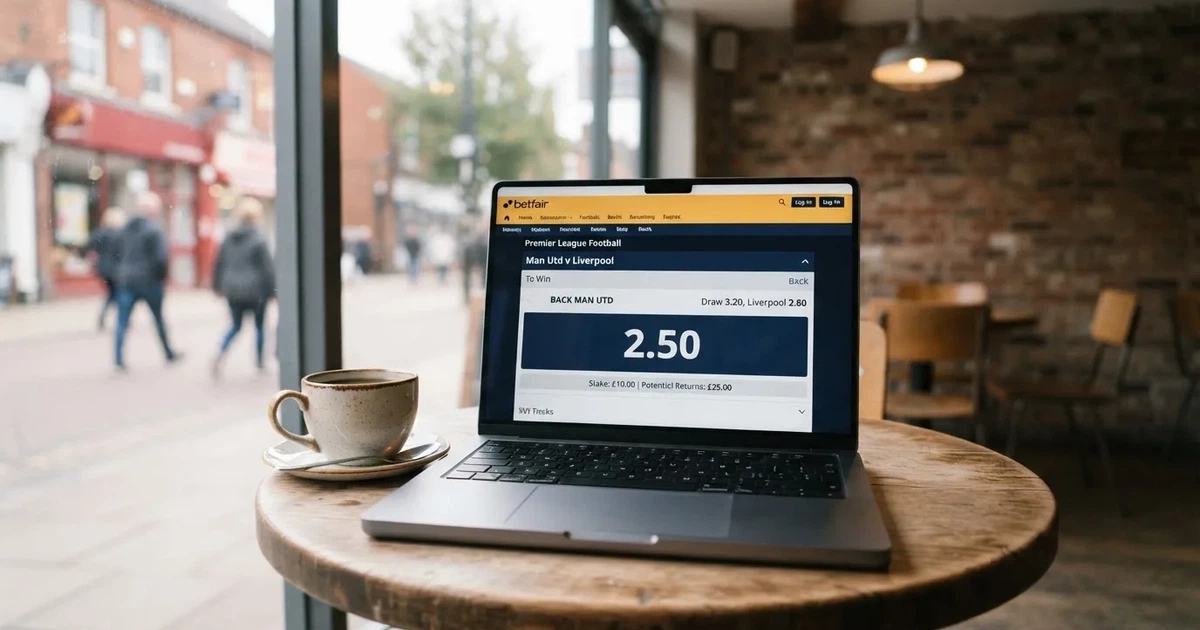
This guide walks the licensed side of that line. It covers ten operators that hold a current remote general betting licence (real events) and lays out what each one actually offers, what it costs the punter, and where it falls short. The shortlist is not the whole market — the Commission’s register lists hundreds more — and inclusion here is not an endorsement. Each write-up closes on a verdict of its own.
The data below was checked on 30 October 2026 against the Gambling Commission’s public register and against each operator’s own published terms.
What “New” Actually Means In Britain
A site launches when a business obtains a licence and turns its product on. Some on this list genuinely launched within the last few years; others have been live in other markets for far longer and have only recently opened to British customers. Both are “new” in the way a searcher usually means it, but the distinction matters for what to expect from a welcome offer, from safer-gambling tooling, and from the maturity of the in-play product.

A site’s licence proves three things, and nothing more. It proves that the Gambling Commission has vetted the operator’s ownership, finances and software. It proves that the operator sits inside the GAMSTOP self-exclusion scheme. And it proves that the operator is bound by the Licence Conditions and Codes of Practice, including the identity check before the first deposit and the credit-card ban. What it does not prove is that the odds are sharp, that the welcome offer is good value, or that withdrawals will be fast.
The fast-changing facts a reader checks first
Three facts change quickly enough that any page of this kind is out of date almost as soon as it is published. The first is whether a given operator still holds a live licence. The Commission revokes and surrenders licences without ceremony, and a site that read clean six months ago may now be on the register as lapsed. The second is whether a welcome offer is still on the same terms — bookmakers trim and re-shape these often. The third is the payment-method list, where additions (and removals) of e-wallets and instant-bank rails happen quietly.

The ten write-ups below note the licence number each one quotes on its own site. That number can be typed into the Commission’s online register to confirm it is still in force. If a brand refuses to put a licence number on its homepage, that is a thing to think about.
How This Page Picks Its Ten
Three filters, applied in order.
First, a Gambling Commission remote general betting licence (real events) under the operator’s own trading name, currently active. Without that, the brand does not get discussed.
Second, a working UK-facing product. Some licensed sites exist only on paper or run a skeleton homepage at the moment of writing. Those are noted for completeness but do not earn a place in the comparison table below.
Third, a degree of coverage. The ten that survive the first two filters are written up here in alphabetical order; nothing about alphabetical ordering implies a ranking. The table that follows is a comparison across licence, holder and offer shape, and it is read across, not down — pick the column that matches the question and let the rest go.
The angle of this page is choice. The ten sites cover a wide spread of what “new” can mean in Great Britain — a brand born in the UK, a brand imported from another regulated market, a brand with an exchange-shaped offer, a brand whose strength is in-play, a brand whose strength is the welcome offer. The aim is not to crown a winner but to help the reader pick the one that fits.
A Primer On Live Betting, Cash Out And The In-Play Market
Live betting is the wagering on events that have already started, with the bookmaker adjusting prices as the action unfolds. Cash out is a separate button: a bookmaker offering it will buy a bet back from the punter before the event has settled, at a price that reflects the current state of play. Together, these are the most volatile products a bookmaker sells, and the place where differences between brands tend to show.
How Live Betting Works
A bookmaker’s in-play service runs on a feed: a data provider or trader pushes prices, and those prices are reframed and shown to customers. The fresher the feed and the wider the coverage, the more markets a bookmaker can keep live at any given moment. A Premier League match will be priced by every licensed operator; the same is not true of a League Two match, a Challenger tennis event or a cricket county game.
The control a punter has over live betting is limited in two ways that a good page should say out loud. First, the price shown is the price available right now, and the price that books a second later may be different — especially for fast markets such as the next point in tennis. Second, when a market is suspended, the bet is held in the bet slip until the market reopens or is settled in another way; a “held” bet is not a lost one, but it can take a few minutes to clear. The operator’s own help pages walk through the exact mechanics for each site, and the differences between operators are mostly in how visible that suspension notice is.
Cash Out As A Second Bet, Not A Refund
Cash out looks like a refund because the money lands in the cash balance. It is not one. The bookmaker is laying a new bet against the punter’s existing position, priced from the same live feed. If the price is generous, the punter wins a fraction of the potential return for giving up the rest. If the price is miserly, the punter is paid less than the bet’s true mid-value. Which one happens depends on the bookmaker’s trading model, and that is exactly the thing the punter cannot see.
Two conditions determine whether cash out is worth pressing. The first is how close the event is to settling — the closer to the final whistle, the smaller the cash-out value wobbles relative to the bet’s potential. The second is how much the live price has moved. A bet at 2.00 that is now 1.50 will yield something close to two-thirds of the potential at fair value; a bet at 2.00 that is now 5.00 will yield much more. Sharp punters use the suspension window to test whether the cash-out price is moving with the feed.
A bookmaker that is slow to update its feed during a suspension is the one whose cash-out price is most likely to disappoint. A bookmaker that locks the bet slip when the price has frozen, and shows the resulting cash-out value to the punter before they confirm, is the one whose cash-out price is most likely to be reliable.
The In-Play Margin, In One Sentence
Like any other market, in-play carries a margin — the slice of every pound staked that the bookmaker keeps, on average, across the market. A snapshot of a top-flight football match may show margins of 4-6% for a major operator and 7-10% for a smaller one. The difference is not always visible in the headline price of one outcome; it usually shows up in the long tail of markets where the bookmaker is less confident.
A punt on a 1X2 market at a 5% margin pays back, on average, 95p for every pound staked. A punt on the same market at an 8% margin pays back 92p. Across hundreds of bets those few points are the gap between a small profit and a small loss.
The Sports, The Tournaments And What Each One Carries
The breadth of a bookmaker’s sportsbook is the first thing most readers look at. It is also the least informative. Every licensed operator covers football, horse racing, tennis, cricket and the major American leagues; the differences show up in the third tier of sports and in the depth of market within each fixture.
Football, Tier By Tier
The Premier League is priced by everyone. The Championship is priced by almost everyone. League One and League Two are priced by the major operators and by a handful of mid-sized ones. The National League is priced by a few. The pyramid below that drops off rapidly. The punter who follows lower-league football ends up with a small set of usable sites rather than a large one.
Tournament football is similar in shape. The World Cup and the European Championship are priced by every operator. The Copa América and the Africa Cup of Nations are priced by most. International qualifiers and U-21 fixtures are patchy. Women’s football is now mainstream at the top of the pyramid but inconsistent further down.
Horse Racing And The BOG Question
Best Odds Guaranteed is the most important difference between racing bookmakers and the rest. A BOG offer means that, from a set time on the morning of a race, the bookmaker guarantees the punter the bigger of two prices: the price at the moment they struck the bet, and the starting price at the bookmaker’s track. The starting price is the official on-course return; if it is bigger than the bet price, BOG pays the bigger one.
Not every operator offers BOG. Of the ten on this page, Fafabet states that it pays BOG on UK and Irish horse racing win and each-way bets from 9am on race days, paying the bigger of the original price or the starting price. For a punter who bets racing regularly, that single clause can move more money than any welcome offer.
The Sports That Matter Less Than They Look
Boxing, MMA, golf, darts, snooker and Formula 1 are priced by every major operator and most of the smaller ones. The depth varies: a boxing world-title fight will have every method-of-victory market; an undercard bout will have winner-only. The same is true of the WTA in tennis (priced widely) versus the ITF circuit (priced by a few). The punter who follows a niche sport should check the operator’s tournament list before assuming coverage.
Esports sit in a peculiar position. The Commission treats esports like any other event under a real-events licence; virtual events (computer-simulated races, computer-simulated football and the rest) sit on a separate licence category. The two are not interchangeable. Some operators hold both; many hold one.
The New Bookmakers — And Why Two Lists Are In Use
Search results show two different lists when a punter looks for “new betting sites uk 2026”. The first is the set of brand-new companies that have only recently obtained a Commission licence. The second is the set of established operators in other markets who have only recently opened to British customers under a new UK-facing brand or domain. Both are new in the way a searcher means; only one of them is new in the way a lawyer would mean.
Born-New Operators
Silkbet Limited is the clearest example on this page. Headquartered in Southampton under Ed Kelly, Silkbet holds three remote licences under the Commission’s account 101183 — for casino, general betting on real events, and general betting on virtual events — active from 7 May 2026. At the time of the snapshot the site had not yet gone live; punters looking at the licence early should treat it as a name to watch rather than a bookmaker to bet with.
A born-new operator usually has one of two profiles. Either it is a turnkey build, with the platform, the games and the back office all licensed from a single supplier (the Silkbet deal is described this way). Or it is a team with industry experience launching under a brand they own. Both can be competent; both can be shaky. The Commission’s check is necessary but not sufficient.
Imported-New Operators
An imported-new operator has been live in other regulated markets — usually Malta, Gibraltar or the rest of Europe — for years, and has obtained a GB licence to expand into the British market. The product is mature in the sense that the trading model, the casino games and the safer-gambling tooling have all been in use elsewhere. It is new in the sense that the British-facing site, the welcome offer and the customer-service operation may all be less than two years old.
Midnite is the closest example on this page. Its site carries a Commission licence and shows in-play markets, an acca builder, popular accas and price boosts with stake caps. NetBet Sport’s app lists Daily Boosts, Profit Boosts, free-bet offers, a Bet Builder with instant dynamic odds, and stats panels for the major leagues. Neither is a “new” technology; both are a fresh British face on a familiar stack.
Why The Distinction Matters
The two kinds of new operator handle their first year of customer complaints differently. An imported-new operator usually has a settled complaints process; it falls back to the Commission route only when that fails. A born-new operator is still building that process, and the first sign of trouble tends to be slower. The customer-service page on a new site tells the punter what to expect — if there is no clear complaints route, that is the thing to weigh before the first deposit.
A small third category exists in the gaps between. Sites that announce an imminent licence but are not yet trading. Sites that have a licence but no UK-facing product. Sites that have a UK-facing product but are licensed through an unrelated third party. None of these belong on a shortlist of bookmakers to bet with today.
The Comparison Table — Ten Licensed Operators At A Glance
The table below lists every reviewed operator with the licence number, holder and offer shape it quotes on its own UK-facing site or app. The “Offer shape” column is what each operator’s terms state about its headline offer, described qualitatively — not the offer itself, and not a code. Where an operator does not publish a headline offer, the column says so. The table reads across: pick the column that matches the question and ignore the rest.
| Brand | Licence number and holder | Headline offer shape |
|---|---|---|
| 888sport | 39028 (888 UK Limited) | Pre-match and in-play betting, Cash Out, Bet Builder, racing streams, BetFinder form tools, live bet feed and daily boosted odds |
| BetMGM | 39198 (LeoVegas Gaming PLC) | Casino and sports betting integrated in one app |
| Betmaster | 65699 (BM Solutions GB Ltd) | Sportsbook product under a Mediterranean operating entity |
| DragonBet | 64908 (DragonBet Ltd) | Welsh football and rugby markets, racing, American football, in-play and bet builder |
| Fafabet | 57385 (Taichi Tech Limited) | Best Odds Guaranteed on UK and Irish racing from 9am |
| Fitzwilliam Sports | 48760 (SBKI Limited) | Instant deposits, fast withdrawals, timeouts, deposit limits and links to safer-gambling bodies |
| Lottoland | 38991 (EU Lotto Limited) | Casino, lottery betting, sports betting and scratchcards in one app |
| NetBet | 39170 (Netbet Enterprises Limited) | Daily Boosts, Profit Boosts, free-bet offers, Bet Builder and league stats |
| Paddy Power | 39439 (PPB Counterparty Services Limited) | Football, horse racing, boxing, rugby, tennis, golf, darts, snooker and Formula 1 |
| VBet | 44662 (SCGO Limited) | Free bet for a new, verified customer staking on a first bet that loses |
The columns above are a deliberate cut: enough licence detail for a reader to verify each brand on the Commission’s register, and enough offer shape to tell one brand from the next. A reader using the table should pick two or three columns at a time — most useful are the licence column for a check, the holder column for an ownership signal and the offer column for a fit against what the reader already bets on.
The Ten Operators, Reviewed
Each write-up below stands on its own. None of the ten is a recommended first choice for every reader. The closing line in each is a verdict, not a salesperson’s pitch.
888sport
888sport sits under 888 UK Limited and holds Commission account 39028. The UK app publishes pre-match and in-play markets, a Cash Out button, a Bet Builder, racing streams, BetFinder form tools, a live bet feed and daily boosted odds.
The product is the broadest on this page. Racing streams alone put the brand in a smaller circle than most; price boosts are a daily feature rather than an occasional one, and BetFinder’s form tools are useful to a punter who leans on sectional data. The issue is depth: where 888sport is strong, it is strong; where it is weak, it is mediocre.
Verdict — strongest for racing and form-led punters; weak for esoteric sports.
BetMGM
BetMGM sits under LeoVegas Gaming PLC, a Malta-listed operator, under Commission account 39198. The app is published as a casino-and-sports-bundle, a structure that has its fans and its detractors. The sports product is the better half of the bundle; the casino product is large enough that finding the deposit and withdrawal options takes a couple of taps.
The combination has one sharp edge and one blunt one. The sharp edge is integration: a casino player can switch to a sports bet without a second login. The blunt edge is the same: a sports punter who wants nothing to do with casino is forced past casino marketing every time they open the app. Whether that matters depends on the reader.
Verdict — best for a punter who plays both; otherwise an offer to be compared with single-product rivals.
Betmaster
Betmaster is operated by BM Solutions GB Ltd, a Maltese-registered company, under Commission account 65699. The .co.uk domain fronts a sportsbook product rather than a casino-led bundle; the welcome shape is a sportsbook shape, not a casino-mixed one.
The brand’s profile is mid-market. The market coverage is standard — football, racing, the major American leagues — and the in-play product is functional rather than feature-led. The draw is the shape of the offer, not the breadth of the product. A punter who values a familiar sportsbook over a feature list may find it an easy fit; a punter who wants acca insurance, bet builders on obscure sports and racing streams should look elsewhere.
Verdict — a safe pick for a football-first punter; thin for in-play and racing.
DragonBet
DragonBet is operated by DragonBet Ltd under Commission account 64908. The Welsh connection runs through the brand — Welsh football and Welsh rugby are priced deeper than at most operators, and Welsh-language support appears on the app’s UK-facing surface. The product also covers horse racing, American football, in-play markets and bet builder markets.
The specialisation is not a gimmick. Welsh football in particular is priced at a level that most operators ignore — the Welsh Premier League, the JD Cymru South, the Cymru North and a handful of cup competitions. For a punter following the pyramid this is a real reason to have an account here. For everyone else it is a small bonus on top of an otherwise mid-range sportsbook.
Verdict — niche-strong for Welsh sport and pyramid followers; otherwise comparable with the rest.
Fafabet
Fafabet is operated by Taichi Tech Limited under Commission account 57385. The brand pays Best Odds Guaranteed on UK and Irish horse racing win and each-way bets from 9am on race days: if the starting price on the day is bigger than the price the punter struck, the bigger price is the one paid out.
BOG is the single highest-leverage feature a racing punter can have. The 9am cutoff is the standard one — several operators offer an earlier start — but the guarantee on both win and each-way bets covers the bulk of the racing card. The rest of the sportsbook is serviceable without standing out.
Verdict — first account to open for a racing-led punter; the sportsbook is decent on top of BOG.
Fitzwilliam Sports
Fitzwilliam Sports sits under SBKI Limited, trading as Fitzwilliam Sports, under Commission account 48760. The site’s homepage markets instant deposits, fast withdrawals, timeouts and deposit limits, alongside links to GambleAware, GamStop and Gamblers Anonymous.
The emphasis on payments and safer-gambling tooling is unusual. Instant deposits mean what they say — debit-card and instant-bank rails clear in seconds — and fast withdrawals, the natural counterpart, depend on the rail chosen. The safer-gambling page is structured for a punter who wants to set a limit on day one rather than discovering the controls after a problem. A sportsbook product sits behind this front end; the depth of market is narrower than the major operators, but the front end is the most thoughtful on this page.
Verdict — first choice for a punter who wants payment speed and safer-gambling tooling as a default, not an add-on.
Lottoland
Lottoland is operated by EU Lotto Limited under Commission account 38991. The UK app combines four products: casino, lottery betting, sports betting and scratchcards. The lottery side is what the brand built on; the sports side is a recent expansion.
Lottery betting at Lottoland means bets on the outcome of foreign draws rather than entries in the UK National Lottery. The product has its place. The combination with sports betting is, like BetMGM above, both an asset and a friction. A punter who wants a single app for every product they play will like it; a punter who wants a pure sportsbook will not.
Verdict — fit for a punt across products; thin as a sports-only account.
NetBet
NetBet is operated by Netbet Enterprises Limited under Commission account 39170. The app publishes Daily Boosts, Profit Boosts, free-bet offers, a Bet Builder with instant dynamic odds, and stats panels for the major leagues.
The boosts are the differentiator. A Daily Boost is a price lift on a single market for a single day; a Profit Boost is a multiplier on the winnings of a single accumulator. Together they form a feature set other operators also offer — but NetBet’s implementation is consistent and the markets it applies them to are popular ones. The Bet Builder with instant dynamic odds is a step on from the older “build a bet, accept a price” pattern; the punter sees the combined price update as they add a selection.
Verdict — fit for a punter who leans on boosts and accumulators; standard for straight singles.
Paddy Power
Paddy Power sits under PPB Counterparty Services Limited under Commission account 39439. The app covers football, horse racing, boxing, rugby, tennis, golf, darts, snooker and Formula 1 — nine sports, which is the union rather than the intersection of what Paddy Power offers.
The breadth is the draw, not the depth. Paddy Power is not the sharpest-priced bookmaker for football; it is rarely the deepest for racing form; it is not the largest for in-play. What it is, is reliable across an enormous range of fixtures, with a customer-service operation that has been honed over years. For a punter who spreads stakes across sports, this is a fair second account.
Verdict — best as a second account behind a sharper-priced operator; product breadth is the asset.
VBet
VBet is operated by SCGO Limited under Commission account 44662. The UK-facing offer is a free bet if a new, verified customer stakes £10 or more on a first-ever bet that loses — a losing-stake refund shape rather than a deposit-match or a deposit-bonus.
The shape matters. A losing-stake refund returns the stake as a free bet, not as cash; the free-bet stake is usually not paid back with any winnings. The math that follows from that is the same one every free-bet punter runs: the value of a free bet at odds of 3.00 is roughly two-thirds of its face value, before any market margin. A first bet of £10 at 2.00 that loses yields a £10 free bet whose expected value sits well below £10 in cash. VBet’s offer is standard on this dimension and the betting product sits behind it.
Verdict — the offer is what it is; the product is mid-range and the comparison is with the sportsbook behind, not the welcome shape.
The Legal Frame In Great Britain, Without The Slogans
The legal frame around a new betting site has more moving parts than most marketing copy admits. The next two sections walk through them in plain language.
What The Licence Actually Proves
A Gambling Commission operating licence under the Gambling Act 2005 covers any site that takes bets from customers in Great Britain. Sections 33 and 36 of the Act, as amended by the Gambling (Licensing and Advertising) Act 2014, make the requirement apply to operators based anywhere in the world — a Curaçao, Maltese or Gibraltar licence is no substitute. The Commission publishes a public register that can be searched by business name, trading name, domain or account number; that register is the whole test of whether a brand holds a current licence.
The licence categories that matter here are five: remote general betting standard (real events), remote general betting standard (virtual events), remote general betting limited, remote pool betting, and remote betting intermediary (the licence for exchanges). Each operator’s card on the Commission’s register lists the categories it holds. The brands reviewed on this page all hold the real-events category as a minimum. None of them holds an exchange licence.
What The Licence Does Not Prove
A licence proves that the operator has been vetted. It does not prove that the odds are sharp, that the welcome offer is generous, that the withdrawal is fast, or that the customer service is helpful. Those qualities are tested in the open market and they vary by operator.
A second thing the licence does not prove is that the operator’s offers are unrestricted. The Commission’s LCCP places two hard caps on bonuses that took effect on 19 January 2026: wagering requirements cannot exceed 10x the bonus, and mixed-product promotions that require gambling across two or more product types (such as a sports bet that unlocks casino free spins) are not allowed. A welcome offer that asks for anything beyond a 10x rollover on the bonus alone, or that hinges on gambling across products, is not compliant with the current LCCP.
The Identity Check And The Vulnerability Check
Since 7 May 2019, every licensed operator has run an identity check before a customer can deposit or gamble — including with a free bet. The check covers name, address and date of birth, and is mandatory even for the lowest-deposit account. The punter who wants to remain anonymous will not find that option at a licensed site.
A separate financial vulnerability check, in force under LCCP condition 3.4.4 from 30 August 2024, applies to licensed remote betting when a customer’s deposits minus withdrawals cross £150 in a rolling 30 days (since 28 February 2025). The check is a public-record one — bankruptcy, county court judgments and the like — and is not an income check or a credit reference. It does not stop anyone from betting; it flags an account for a closer look.
The Offshore Site, Plainly
A site that takes bets in Great Britain without a Commission licence is breaking section 33 of the Gambling Act 2005. The offence runs against the operator, not the customer: no offence aimed at a customer who merely bets on an unlicensed site was found in the public record. The practical question for the punter is what is lost — and the answer is most of the protections the licence brings.
An unlicensed site offers no GAMSTOP coverage. A punter who has self-excluded cannot enforce that exclusion on an unlicensed bookmaker, because the bookmaker has no obligation to honour it. The Commission complaints route is unavailable, the approved dispute-resolution body is unavailable, and British consumer redress if funds are withheld is unavailable. The 10x bonus cap and the £150 vulnerability check do not apply. None of that makes an unlicensed site illegal to use, and none of it makes it a safe one.
Enforcement is disruption, not blocking. The Commission has used cease-and-desist notices, worked with search engines, registrars, hosts and payment providers, and has been given (or is about to receive) court-order DNS blocking powers. None of that amounts to an ISP-level block today; describing it that way would overstate the position.
Safer Gambling, And The Help That Actually Exists
The subject of safer gambling is one that this page is honest about, in the way the words matter.
What Operators Must Offer
Every licensed remote operator sits inside GAMSTOP, the national multi-operator self-exclusion scheme. A punter who signs up to GAMSTOP is excluded from every licensed operator simultaneously, online and on app — separate service for betting shops. The exclusion periods are six months, one year, five years, or five years with auto-renewal; the minimum period is followed by a further seven years of exclusion unless the punter asks GAMSTOP to remove it.
The LCCP also requires operators to offer deposit limits, timeouts, product restrictions and self-exclusion of the customer’s own account. The first phase of RTS 12 — which sets gross deposit limits on a fixed time frame — has been in force since 31 October 2025; a second phase was postponed to 30 September 2026. Whether the second phase is now live is not established; the Commission has not announced it.
What The Punster Can Set
The Commission does not impose a state-set deposit or loss ceiling. The limits on an account are the customer’s choice, set through the operator’s safer-gambling page. A daily, weekly or monthly figure can be locked in; cuts take effect immediately, increases after a cooling-off period.
A punter who has been thinking about limits has three places to start. First, set a weekly deposit limit at a level that fits the budget before the next deposit. Second, set a session time limit if the punter finds themselves betting into the small hours. Third, register with GAMSTOP if the punter has been trying to recover from a session rather than enjoy one.
Where The Help Is
GamCare runs the National Gambling Helpline and offers one-to-one support, group therapy and online counselling. GambleAware funds the National Gambling Treatment Service. The NHS runs gambling clinics in several regions. Gamblers Anonymous runs peer-support meetings across the country. The Commission’s register links to each.
A licensed site carries links to these services on its safer-gambling page. A site that buries them at the bottom of a footer, or that requires two menus to reach them, is one the punter should weigh accordingly. Fitzwilliam Sports publishes the links on its homepage; that is the standard other operators should match.
Welcome Offers, Free Bets And What The Terms Actually Cost
A welcome offer is a marketing expense that the operator recoups from the punter’s expected losses. The arithmetic never says otherwise.
The Three Shapes Of Welcome Offer
Three shapes dominate the UK market. The first is a deposit match with a wagering requirement, where the operator matches the deposit up to a cap and the bonus must be wagered a set number of times before it withdraws. The second is a free bet, where the operator grants a stake that the punter can place on a market; the stake is usually not returned with any winnings. The third is a losing-stake refund, where the operator returns the first bet’s stake as a free bet if it loses. VBet’s shape above is the third.
Each shape has its own math. A deposit match with a 10x wagering requirement at a 5% market margin costs the punter, on average, 50% of the bonus in expected loss before the bonus is in cash — and that is the maximum the LCCP now allows. A free bet at 3.00 odds is worth about two-thirds of its face value, again before the margin bites. A losing-stake refund is, in expectation, a fraction of the stake.
The Hidden Condition
Three conditions show up on almost every welcome offer and change the math materially. The first is the minimum odds: the qualifying bet must be placed at odds of, typically, 1.50 to 2.00 or higher. The second is the qualifying market: the bonus stake cannot be used on certain markets, typically excluding system bets, each-way bets and a few other shapes. The third is the deadline: the bonus usually has to be wagered inside seven to thirty days, after which the balance is forfeit.
The deadline is the condition most often missed. A punter who cannot find the time to clear a bonus inside the window loses the bonus; the free bet had no value at all. The terms page on each operator lays all three conditions out; reading them before claiming is the rule.
The Offer Cap
The Commission capped wagering requirements on bonuses at 10x from 19 January 2026. A £10 bonus at 50x required £500 of bets before withdrawal; the same £10 bonus at the new cap requires £100. Mixed-product offers — promotions that require gambling across two or more of betting, casino, bingo and lottery — are not allowed at all.
The cap applies to wagering requirements. Whether it applies to free bets whose stake is not paid back with the winnings is not established in the Commission’s published guidance. What is established is that the cap applies to any qualification that asks the punter to wager bonus value more than ten times over.
Payments, Payouts And What Slows Each One Down
Payment speed is the most boring and the most important feature on a betting site. A welcome offer can be claimed in five minutes; a payout can take five days, and a punter with a sportsbook review to write or an ante-post position to move is the one who feels it.
Payment Methods On A Licensed Site
A licensed British site accepts debit cards and bank-based payments as standard. Credit cards have been banned for gambling in Great Britain since 14 April 2020, including credit-card-funded payments through an e-wallet; a deposit from a credit card, even indirectly, is a breach of the LCCP. The ban does not cover debit cards or instant-bank rails.
E-wallets, prepaid cards and cryptocurrencies vary by operator. Midnite accepts Visa, Mastercard, Apple Pay, Google Pay and Trustly — a mix of card and instant-bank, no e-wallet. Spreadex, regulated by the FCA for spread betting, takes a different payment set on the financial side. No licensed site offers cryptocurrency as a native deposit method at the time of writing; the Commission’s register does not list one.
The Three Stages Of A Withdrawal
Every withdrawal moves through three stages, and the wall-clock time of each stage varies independently. The first is the operator’s internal approval — the bookmaker’s payments team verifies the request, the documentation, and any active bonus conditions. The second is the funds leaving the bookmaker: a card refund, an e-wallet transfer, a Faster Payments instruction, a bank-wire. The third is the receiving bank or wallet clearing the funds into the punter’s account.
A typical licensed operator completes the first stage in a few hours to a day, the second in under an hour for an e-wallet and up to a day for a bank transfer, and the third instantly for most modern rails. The slow case is the bank transfer to an account at a small building society, where the receiving bank’s processing can push the whole thing into a second business day. The faster the rail the punter picks on the way in, the faster the same rail is on the way out.
KYC And Source Of Funds
The identity check before the first deposit means that withdrawals can be stalled by a verification query on day one. A punter who has not completed the source-of-funds check on deposits at a level the operator flags may find a withdrawal held while the operator asks for a bank statement. That is normal under the money-laundering rules, and it is not a sign of trouble.
A punter who keeps the operator’s safer-gambling and verification requirements tidy from the start — limits set, documents uploaded, the verified bank account held stable — is one whose withdrawals are not held up on a regular basis. A punter who hits a £150+ deposit net withdrawal mark in a rolling 30 days and is asked for a public-record check should expect that check to delay one withdrawal.
Frequently Asked Questions
Which betting sites give free bets to new users in the UK?
Most licensed operators offer a free bet as part of the welcome package; the shape varies from a deposit-matched free bet to a losing-stake refund. VBet, for example, refunds a first losing bet as a free bet for new, verified customers. NetBet lists free-bet offers, Daily Boosts and Profit Boosts on its app. The exact terms — minimum odds, qualifying markets and deadline — change the value materially, so the operator’s own terms page is the place to read.
How can a punter check that a bookmaker holds a Gambling Commission licence?
The Commission’s public register accepts searches by business name, trading name, domain or account number. Typing a brand’s name into the register returns the licence status, the licence category and the licence holder. If a brand refuses to put a licence number on its homepage, that is information in itself. A live licence on the register is necessary; it is not a guarantee of value.
How is the return on a bet worked out from the stake and the odds?
In decimal odds, the rule is: return equals stake multiplied by odds. A £10 bet at decimal odds of 2.50 returns £25 — the original £10 stake and £15 of profit. A combination bet’s total odds are the product of the legs’ decimal odds, and the same multiplication applies. The decimal odds form is the default at most licensed UK sites; fractional odds such as 5/1 can be converted by dividing the first number by the second and adding one (5/1 becomes 6.00 in decimal).
What is the bookmaker’s margin, and how does it appear in the odds?
The margin is the slice of every pound staked that the bookmaker keeps, on average, over the whole market. To take a 1X2 football market as the example, the payout share is one divided by the sum of one-over-each-decimal-odds. If the three outcomes are priced at 2.50, 3.40 and 2.80, the payout share is one divided by (0.40 + 0.294 + 0.357), or one divided by 1.051, which is roughly 0.952 — meaning a 95.2% payout share and a 4.8% margin. Higher margins come out as lower payout shares, and the punter’s expected return per pound, across many bets, is the payout share.
How do fractional odds such as 5/1 convert to decimal odds such as 6.00?
Fractional odds of a to b give decimal odds of a divided by b plus one. So 5/1 becomes five divided by one plus one, which is 6.00; 11/4 becomes eleven divided by four plus one, which is 3.75; evens (1/1) becomes two divided by two plus one, which is 2.00. Decimal odds show the total return per unit stake at a glance, which is why many licensed UK sites offer the form alongside fractional on the betting slip.
Do new betting sites in the UK pay tax on winnings?
No. In Great Britain, betting winnings are not taxed at the player level. The operator pays General Betting Duty on its gross profits — currently 15% on most activity, with a separate remote rate scheduled to apply from 1 April 2027 — but the punter keeps the full return on a winning bet. The position is a general one rather than tax advice; a professional gambler should ask HMRC or an adviser for the position that fits their circumstances.
What happens if a punter self-excludes from one new betting site?
Self-exclusion at a single licensed site only stops play at that site. To exclude from every licensed operator in Great Britain in one step, the punter registers with GAMSTOP — the national multi-operator self-exclusion scheme that every GB-licensed online operator joins. GAMSTOP exclusions run for six months, one year, five years or five years with auto-renewal, and the exclusion stays in place for a further seven years after the minimum period unless the punter asks GAMSTOP to remove it.
Closing The Loop
A new betting site in Great Britain is new in the way that matters when it holds a Gambling Commission licence and is operated by the holder of that licence. The ten brands reviewed here are read against that filter. They are not the whole market, and inclusion is not an endorsement. The Commission’s register is the only test that holds.
The licence guarantees a number of things — GAMSTOP coverage, the 10x bonus cap, the £150 vulnerability check, the identity check before the first deposit, the credit-card ban. It does not guarantee sharp odds, fast payouts or a generous welcome. Those qualities vary by operator and they are tested in the open. The write-ups above offer an open verdict on each.
For a punter comparing options today, the practical sequence is straightforward. Decide which two or three sports and markets matter most. Set a budget that fits the calendar. Pick two operators to open — one for the welcome shape, one for the long-term product. Verify the licence on the Commission’s register before the first deposit. Set a deposit limit on day one. Read the welcome terms before claiming. Read the safer-gambling page once. And if a session starts to feel like recovery rather than enjoyment, register with GAMSTOP or call the National Gambling Helpline before the next bet.
Betting sites & exchanges – systembetsguide.com
Content created by the «systembetsguide.com» team
