
Padel Betting Odds 2026: How They Are Priced, What They Cost, and Which GB Bookmakers Offer Them
 Available in US
Padel is no longer a curiosity booked by a handful of operators. The professional tour consolidated in 2024, the player base has spread past 35 million across more than 150 countries, and the bigger GB-licensed bookmakers now price the sport somewhere in their pre-match and in-play lists. What follows is a working guide to the odds those brands show, what sits inside the price, and what a wager on a Premier Padel event actually costs a British punter in margin.

Verified against the Gambling Commission’s public register and the operators’ own terms pages, as of 30 October 2026.
The Ten Bookmakers That Cover Padel for British Customers
Ten brands hold a Gambling Commission remote licence for real-event betting and publish a price book that includes padel. The list below is the comparison set for this page. A place in the table is a description, not a recommendation; a brand that quotes padel badly still holds the same licence as one that quotes it well. Where a column reads no-data, the operator’s own terms page is the place to check, because research did not pin a figure for that point to a verifiable source on the access date.

| Brand | Gambling Commission remote licence and holder | What the operator’s own terms say about padel |
|---|---|---|
| BetMGM | 039198-R-319450-029 (Commission account 39198), LeoVegas Gaming PLC | Standard real-event betting licence; sportsbook welcome offer stacks four £10 free bets tied to football accumulators and sports multiples — no padel-specific market terms published |
| Octobet | 062545-R-337248-006 (Commission account 62545), Octopus Game Limited | Standard real-event licence; welcome offer is 50 % back as a free bet to £50 plus a £10 casino bonus — padel coverage is part of the general sportsbook |
| Smarkets | 039173-R-319366-011 (Commission account 39173), Smarkets (Malta) Limited | Remote betting intermediary (the licence for an exchange); commission and market rules are stated in the trading terms, not a padel-specific page |
| LiveScore Bet | 056859-R-332720-005 (Commission account 56859), LiveScore Betting and Gaming (Gibraltar) Limited | Standard real-event licence; Bet Builder takes up to 10 selections across match result, both teams to score, corners, total goals, player scoring and cards — padel Bet Builder terms were not published at the access date |
| Betboro | 044181-R-324363-007 (Commission account 44181), Webmedia Development N.V. | Standard real-event licence; welcome offer is a 100 % matched free bet up to £25 on a first qualifying wager of £5–£25 with at least three selections at 3/5 (1.60) or higher |
| Bar One Racing | 056516-R-332750-007 (Commission account 56516), Bar-One Racing Limited | Standard real-event licence; Irish independent bookmaker with shops and racing sponsorships — padel terms and market depth are not stated separately from the wider sportsbook |
| VBet | 044662-R-324273-022 (Commission account 44662), SCGO Limited | Standard real-event licence; welcome offer is a £10 free bet on a first bet of £10 or more that loses, after verification |
| Bet Ahoy | 100094-R-341742-003 (Commission account 100094), Bet Ahoy Ltd | Standard real-event licence; welcome offer is a £5 sports free bet plus a £5 accumulator free bet on a first £10 stake |
| Midnite | 101839-R-342850-001 (Commission account 101839), Midnite Limited | Standard real-event licence; site cites account 101839, an in-play list, an acca builder, popular accas and price boosts with maximum-stake limits — padel pricing not stated in separate terms |
| Fitzdares | 000400-R-103839-030 (Commission account 400), Fitzdares Limited | Standard real-event licence; named sports are horse racing, football, tennis, rugby, cricket, golf and American football — padel is not listed among them in the published app description |
A licence is a permission, not a quality mark. The single fact a registered number settles is that the brand is regulated for real-event betting in Great Britain. How the price book is built, how wide the padel menu is and what features sit behind the markets — those live in the brand’s own terms, the betting slip and the price feed, and the rest of the page takes each one apart.
BetMGM: four free bets, narrow welcome
BetMGM’s UK sports welcome offer hands new customers four £10 free bets in exchange for a deposit of £10 or more and a first sports bet placed within seven days. The free bets split into two football accumulators with four selections or more and two sports multiples with two or more — padel is a “sports multiple” by category, not by name, so a four-leg padel multiple or a mix of padel and football picks will work in the same way. Each free bet is valid for seven days, carries a minimum price requirement and needs an opt-in at sign-up. The licence sits with LeoVegas Gaming PLC under Gambling Commission account 39198, and the brand runs as one bookmaker with one licence.
The welcome package is generous in headline value but narrow in shape. The two football accumulators force a padel punter to bet on football whether they want to or not, and the seven-day window on each free bet is tight against a Premier Padel calendar that may have only one event in that period. Outside the offer, BetMGM’s padel coverage sits inside the standard real-event licence: the menu is what the feed supplies and is not described in the operator’s own terms as a separate vertical.
Octobet: half back as a free bet, plus £10 for casino
Octobet’s welcome package returns 50 % of a first qualifying stake as a free bet, capped at £50, and pairs it with a £10 casino bonus. The licence holder is Octopus Game Limited under Commission account 62545. The 50 % shape is lighter than a matched free bet at a one-to-one ratio, but the cap at £50 means a punter staking more than £100 receives the same £50 free bet as a punter staking £100. The casino leg of the offer now falls under the same promotion rules as the rest of the market — mixed-product bonuses were banned from 19 January 2026 — so the £10 casino bonus is a separate component rather than a way to qualify for the sports free bet.
Padel itself is not named in Octobet’s published welcome terms; it sits inside the general sportsbook alongside football, tennis and the rest of the real-event menu. A padel punter reading the welcome offer for the first time needs to check the brand’s price feed on the day, because the offer rules do not name the sport.
Smarkets: an exchange, not a sportsbook
Smarkets runs on a Commission account 39173 licensed as a remote betting intermediary — the form an exchange, not the form a sportsbook. The difference is in who takes the other side. On a sportsbook the house prices every outcome and the punter bets against the book; on an exchange the punter backs and lays against other customers, and the operator earns a commission on net winnings. The licence holder is Smarkets (Malta) Limited.
For padel, an exchange is useful only when the liquidity is there. If the price feed carries a Premier Padel match at any meaningful depth, the back and lay prices on the two sides of the market can be tighter than a sportsbook’s equivalent because no margin is layered on top by the bookmaker. If liquidity is thin — and padel liquidity is thin outside the biggest events — the price sits wide and the commission the exchange charges on net winnings is paid on a thin price. Open-bank deposits from £10 to £10,000 settle instantly; withdrawals are processed within six hours from £10 up to £100,000; debit card deposits settle instantly from £10 to £15,000.
LiveScore Bet: a builder, but not yet for padel
LiveScore Bet’s Bet Builder takes up to ten selections from a single event into one combined bet, and the published menu covers match result, both teams to score, corners, total goals, player scoring and card markets. The licence holder is LiveScore Betting and Gaming (Gibraltar) Limited under Commission account 56859. The builder is the headline product; whether it covers padel in the same shape it covers football is the question the terms page does not answer on the access date. A padel punter who wants a same-game multiple should check the live builder feed before staking, because the operator’s own description names football markets, not padel ones.
The welcome offer is not described in research; the registered licence is the floor, not the ceiling. The builder tool itself is the feature, and a punter choosing between LiveScore Bet and a competitor is choosing between two shapes of menu.
Betboro: a small free bet at a clear price floor
Betboro’s sports welcome offer matches a first qualifying wager as a free bet up to £25, on a deposit of at least £10 by debit card and a first bet of £5 to £25 with three selections or more at 3/5 (1.60) or higher each. The licence holder is Webmedia Development N.V. under Commission account 44181. The conditions are tight in three places at once: the cap is low, the floor on the number of legs is high for a sport as thin as padel, and the price floor at 3/5 (1.60) excludes the kind of heavy odds-on favourite a padel event often throws up at the top of the market.
A punter whose first bet on a Premier Padel event is a single at 1.40 — a realistic favourite price — does not qualify, because the offer needs three legs at 1.60 or more. The free bet itself is the operator’s credit, with the stake not returned on a win, and the £25 cap means the headline value is £25, not £25 plus the stake.
Bar One Racing: an Irish bookmaker with British licence
Bar One Racing has rebranded to BAR 1 Betting and remains an Irish independent bookmaker with shops and horse racing sponsorships at Dundalk, Fairyhouse, Navan, The Curragh, Curraheen Park and Cork. The Gambling Commission licence sits with Bar-One Racing Limited under Commission account 56516. The published identity is horse racing and on-course sponsorship; padel is not a featured sport on the app description, and the welcome offer for padel is not stated separately from the wider sportsbook. A British punter holding an account here is holding a real-event licence for the sport, but the menu and the welcome bonus around it are not the brand’s headline.
VBet: a token free bet for a first loss
VBet’s published welcome offer is a £10 free bet if a new, verified customer stakes £10 or more on a first bet that loses. The licence sits with SCGO Limited under Commission account 44662, and verification is the precondition — the customer must pass the Commission’s identity checks before the free bet is unlocked. Verification is a precondition that always applies at a GB-licensed brand, but VBet’s wording makes it part of the offer terms rather than the standard onboarding.
The free bet pays only on a loss, which means the offer is, in marketing language, “risk-free” — a phrase the operator’s own copy uses to mean “we return your stake as a free bet if your first bet loses”. A free bet whose stake is not paid back on a win is not a cash refund; it is a credit that the punter must stake again at the operator’s price. A punter expecting a £10 refund in cash to withdraw will be disappointed.
Bet Ahoy: a £5 sports free bet and a £5 acca
Bet Ahoy’s welcome offer is “Bet £10 & Get £10 in Free Bets”, made up of a £5 sports free bet and a £5 acca free bet. The licence holder is Bet Ahoy Ltd under Commission account 100094. The headline is the same as VBet’s headline — a £10 free bet — but split into two halves and tied to different bet shapes: one is a single-or-multiple free bet, the other is an accumulator-shaped free bet that the punter can use on padel combinations or on anything else in the sportsbook.
A small welcome book is small for a reason. The operator is not paying out four £10 free bets the way BetMGM is; the headline value is £10 in credits on a £10 stake, and the punter is paid back in bet credits, not in cash. The two-shape split gives the punter two chances to use the credit, but each chance expires on the operator’s clock.
Midnite: in-play, acca builder and price boosts
Midnite runs on Commission account 101839 licensed for real-event betting, and the site shows an in-play list, an acca builder, a popular-accas feed and a set of price boosts with maximum-stake limits. The welcome offer is £25 in free bets and 50 free spins for new customers who bet £5 or more on pre-match odds of EVS (2.0) or greater within 14 days of sign-up; the free bets are valid for seven days.
The features are the reason a punter might choose Midnite over a brand with a thinner menu. An acca builder that takes padel legs and football legs together, price boosts that lift a padel favourite from 1.80 to 2.00 for a small window, an in-play feed that prices point-by-point — these are the tools that move a padel price from “available” to “tradeable”. The features are advertised; whether they cover padel as fully as they cover football is a question for the live product, not the licence.
Fitzdares: a premium bookmaker with named sports
Fitzdares’ app description names cash out, accumulators, Lucky 15s, specials and ante-post markets on horse racing, football, tennis, rugby, cricket, golf and American football, with in-play live odds. The licence sits with Fitzdares Limited under Commission account 400. Padel is not among the named sports, which means a padel punter looking at the app description alone sees no padel coverage; the live menu is the place to check, because the licence covers real events and the description is a marketing summary, not a market list.
For a punter whose betting is on football, horse racing and tennis, the Fitzdares menu is broad and the Lucky 15 and ante-post features are useful. For a padel punter, the same menu is a question mark. The licence does not restrict the sport; the published marketing simply does not name it.
What Padel Is and Why It Books Differently
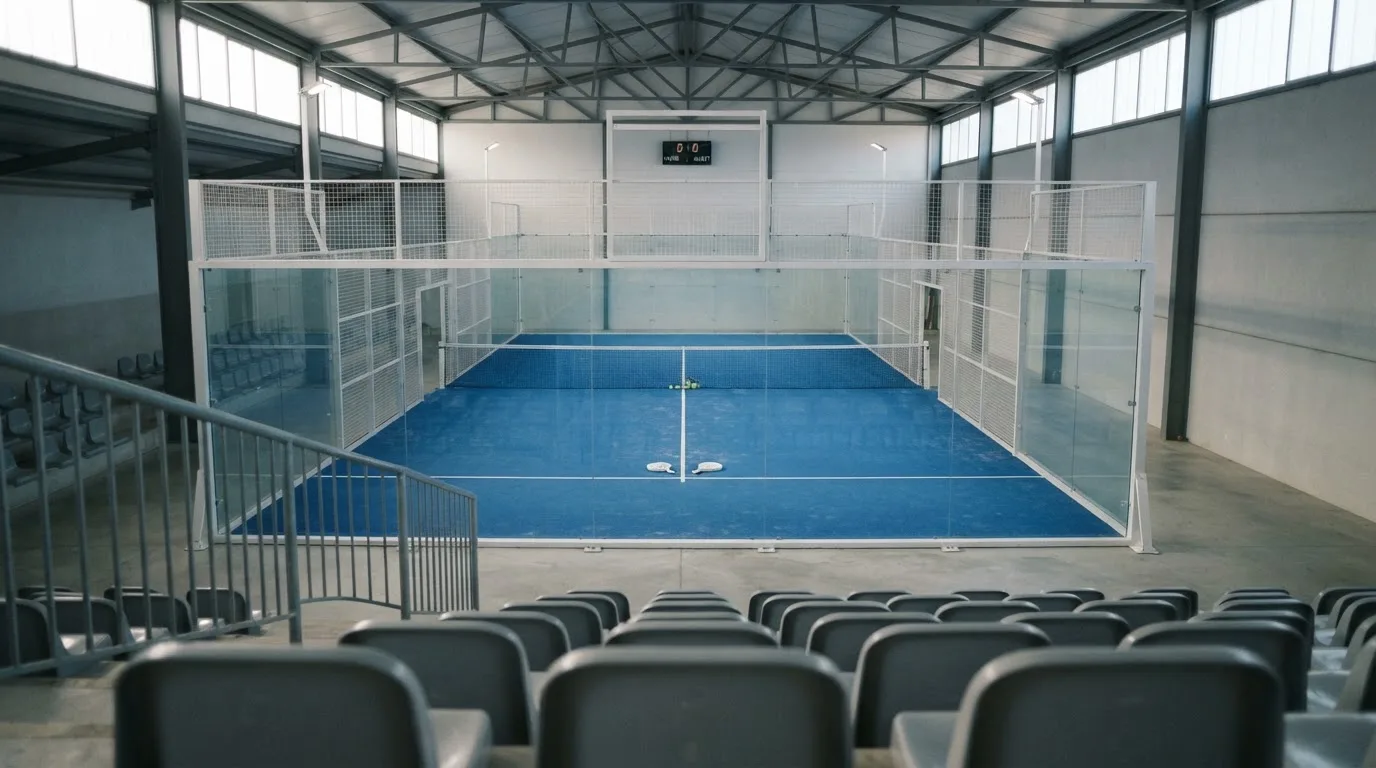
Padel is usually played as doubles on a 10 m by 20 m court enclosed by walls and fencing, with a net 88 cm high at the centre. Scoring follows tennis: games, sets, tie-breaks, with a golden point at deuce used at some major events in place of advantage. The walls turn the sport into something between tennis and squash: a player can run round a lob, the ball can come off the back glass, and rallies extend in a way they do not on a tennis court. A bookmaker pricing padel is pricing a sport in which momentum matters more than serve speed, and in which long rallies push a price around in a way serve-dominated sports do not.
The player base is now wide enough that the professional tour has consolidated. Premier Padel is the unified global tour formed after Qatar Sports Investments acquired the World Padel Tour in 2023 and took effect in the 2024 season. The International Padel Federation (FIP) states there are more than 35 million active padel players in more than 150 countries as of 2025. The numbers are large; the professional depth is shallower than tennis; the televised product is younger than the WTA or ATP tours.
A bookmaker pricing a padel match is pricing a market whose liquidity is thin and whose data feed is thin. The shape that follows is wider margins than the equivalent tennis match, especially outside the biggest Premier Padel events, and a tendency for prices to move sharply on a single point because no single piece of news carries the same weight as it does in tennis.
The shape of the padel market
Padel’s menu at a GB-licensed bookmaker breaks into three layers. The top layer is the outright winner market on a tournament: who wins the event, each-way terms on the major Premier Padel stops, and the outright on the FIP-ranked season. The middle layer is the match market: match winner, set winner, set score, total sets, handicap sets, total games. The bottom layer is the in-play market: next point, next game, server to win the game, total points in the game, race to three games.
The top layer is the one the bigger bookmakers cover with full pre-match pricing. The middle layer is where the menu narrows to the Premier Padel events and the late stages of the FIP circuit. The bottom layer is the one that depends on the live data feed — the faster the data, the wider the menu.
Why a padel price sits wider than a tennis price
A bookmaker’s margin is the share of every pound bet the bookmaker keeps on average, before the operator’s costs. On a tennis match at a major bookmaker, the margin on the match-winner market can sit between 4 % and 6 %. On a padel match at the same bookmaker, the same market often sits between 7 % and 10 %, and wider outside the biggest events. The reason is liquidity: a tennis match attracts a large volume of bets and the bookmaker can price close to the “true” probability and still earn a small margin; a padel match attracts a smaller volume, so the same margin would not earn enough to cover the operator’s cost of carrying the market, and the margin has to be wider.
A punter reading a padel price is therefore reading a price that already gives the bookmaker more headroom than the equivalent tennis price. The same price floor — “EVS” or “3/5” or “1.60” — does the same job in two sports but comes from two different starting points.
The pre-match and in-play split
The pre-match padel menu at a GB-licensed brand runs on the price feed the operator buys from a data supplier. The in-play menu runs on the same feed plus a faster live feed. The faster the feed, the tighter the in-play price can be, because the bookmaker can reprice as each point goes in. The thinner the feed, the wider the in-play price has to sit, because the bookmaker is repricing on less information.
A punter who wants to bet in-play on padel is choosing between a bookmaker with a fast feed and a bookmaker with a slow feed. The first gives tighter prices and faster updates; the second gives slower updates and prices that swing on individual points. The choice depends on what the punter is betting on: a next-point market needs a fast feed; a next-set market tolerates a slower one.
How the Gambling Commission Licences Bookmakers in Great Britain
A bookmaker taking bets from customers in Great Britain needs a Gambling Commission licence. Since the Gambling (Licensing and Advertising) Act 2014 the requirement applies wherever the operator is based: a Gibraltar-licensed, Malta-licensed or Curaçao-licensed operator serving GB customers still needs a Commission licence. A foreign licence is not a substitute. The framework is the Gambling Act 2005; the regulator is the Gambling Commission, a non-departmental public body under the Department for Culture, Media and Sport; Northern Ireland is outside the Act and runs on its own older law, so “Great Britain licence” or “GB-licensed” is the right phrase, not “UK-licensed”.
The Commission’s public register is the whole test of who holds a licence. The register can be searched by business name, trading name, domain or account number; the register entry lists the licence categories and the licence holder. Every operator on the comparison list above carries an entry on the register, and the table column gives the account number for each.
There is no state monopoly and no statutory cap on the number of licences. The Commission issues licences under the categories of the Act: remote general betting standard (real events), remote general betting standard (virtual events), remote general betting limited, remote pool betting and remote betting intermediary (the licence for an exchange). The first covers most sportsbooks; the last covers betting exchanges like Smarkets. Spread betting is a separate regime, regulated by the Financial Conduct Authority, not the Commission.
The minimum age to bet is 18. Identity is verified before a customer can deposit or gamble, including with a free bet or a bonus, and the verification covers name, address and date of birth. There is no anonymous play at a GB-licensed site.
What the licence does and does not guarantee
A Commission licence is a permission to take bets from GB customers under the Commission’s rules. It is not a quality mark on the price book, on the welcome offer or on the menu. A licensed operator can price padel with a wide margin; a licensed operator can run a small welcome offer with tight conditions; a licensed operator can carry padel in the live menu for a single Premier Padel event and drop it again the week after. The licence settles the question “is this brand allowed to take them”; it does not settle the question “is this brand good value for padel”.
The Commission’s rules do set floors: the marketing must be socially responsible and must not be of strong appeal to under-18s; no one who is or seems to be under 25 may be featured gambling in the advertisement; the operators must offer safer-gambling tools. The floor on price and product is the market’s, not the regulator’s.
What “no-data” means in the licence column
A licence column in the comparison table above is filled from the Commission’s public register, which is the source for the account number and the licence holder. The “what the operator’s terms say about padel” column is filled from each operator’s published terms and the registered licence categories. Where research did not pin a figure for a point, the table carries “no-data”; the operator’s own terms page is the place a punter checks next, because a brand’s terms change faster than the register does.
The register entry is also the source for whether the licence is “remote general betting standard (real events)” — the category under which padel falls — or one of the other categories. A brand licensed only for virtual events, for example, would not be allowed to take bets on a real Premier Padel match; the comparison list does not include any such brand.
What the Bookmaker Has to Offer on Safer Gambling
The Commission’s licence conditions put safer-gambling tools in front of every customer. GAMSTOP is the national multi-operator online self-exclusion scheme; periods run six months, one year, five years, or five years with auto-renewal, and after the minimum period the exclusion stays in place for a further seven years unless the customer asks GAMSTOP to remove it. GAMSTOP covers online sites and apps; betting shops use a separate service. Every GB-licensed online operator is in GAMSTOP. The deposit-limit requirement (RTS 12) means operators must offer a gross deposit limit on a fixed time frame, with the first changes live since 31 October 2025 and a second phase postponed to 30 September 2026.
A financial vulnerability check applies to licensed remote betting when a customer’s deposits minus withdrawals exceed £150 in a rolling 30 days: it is a public-record check (for example bankruptcy or county court judgments), not an income check and not a credit reference check. Financial risk assessments — the “affordability checks” of the press — were announced in a staged plan with no start date. There is no state-set deposit or loss ceiling for betting: the limits are the customer’s choice. Help is available through GamCare (National Gambling Helpline), GambleAware, NHS gambling clinics and Gamblers Anonymous.
The marketing rules sit alongside the safer-gambling rules. Advertising is not licensed by the Commission; it runs through the CAP Code (non-broadcast) and BCAP Code (broadcast), enforced by the ASA. CAP Code section 16: marketing must be socially responsible, must not be of strong appeal to under-18s, and no one who is or seems to be under 25 may be featured gambling or play a significant role. Promotion rules in force since 19 January 2026 cap wagering requirements on bonuses at 10x and ban mixed-product promotions. The whistle-to-whistle ban on TV ads around live sport is an industry code, not law, and runs from five minutes before to five minutes after a live event, before the 9 pm watershed.
What that means at the betting slip
A punter signing up at any GB-licensed brand in the comparison set above will be asked to set a deposit limit, will be asked to verify identity before the first deposit, will be enrolled in GAMSTOP if they later choose to self-exclude, and will be subject to a public-record vulnerability check if their net deposits cross £150 in 30 days. None of this is opt-out. A punter who wants a thinner onboarding goes to an unlicensed brand; the section on offshore brands at the bottom of the page covers what that loses.
Where a free bet stops being “free”
A free bet is a credit, not cash. A punter who wins with a free bet does not get the stake back — only the winnings — and the headline “£10 free bet” means a credit of £10 to stake again, not a refund of £10 to withdraw. The shape varies by operator; BetMGM splits four £10 free bets into two football accumulators and two sports multiples, each valid for seven days; Octobet’s 50 % back returns half the stake as a free bet to £50; Betboro’s matched free bet returns up to £25; Bet Ahoy splits £10 into £5 plus £5; Midnite’s £25 free bet comes with 50 free spins. The shape of the wagering requirement — minimum number of legs, minimum price, expiry window — is what makes the free bet cheap or expensive, not the headline.
The Tournaments Padel Punters Bet On
Premier Padel is the unified global tour, formed after Qatar Sports Investments acquired the World Padel Tour in 2023 and running since the 2024 season. The tour is the top tier of professional padel worldwide; the major Premier Padel events sit alongside the FIP circuit and the national federations’ own tours. The men’s and women’s draws run in parallel at most Premier Padel events, and the bigger stops offer both match markets and outright markets through to the final.
The FIP circuit and the national tours add a second layer underneath. The FIP circuit runs across more than 150 countries; the national tours run within a single country and feed the FIP ranking. A bookmaker pricing a Premier Padel event is pricing a market with full data feed; a bookmaker pricing an FIP-ranked event outside the Premier Padel calendar is pricing a thinner market with a smaller feed.
Where a GB bookmaker prices padel
The bigger GB bookmakers carry Premier Padel outright and match markets through the calendar. Match markets on Premier Padel events cover match winner, set betting, total sets and game handicaps; outright markets cover the tournament winner with each-way terms on the larger stops. In-play markets cover the next point, the next game, the server to hold and the total points in the game, and the data feed is the constraint. A bookmaker without a live padel data feed prices fewer in-play markets; a bookmaker with a faster feed prices more.
The national tour coverage varies. Some GB bookmakers carry the Spanish, Italian, Argentine and Brazilian national tours through the calendar; others restrict to Premier Padel and the major FIP events. The comparison list above does not pin a “what’s covered” list to each brand because the menu is updated by the week and the operator’s own terms do not enumerate padel in the way they enumerate football or horse racing.
Why the menu narrows below the top tier
A bookmaker’s menu follows liquidity. A Premier Padel event with a televised final attracts enough bets to support a full pre-match and in-play menu. A Premier Padel event on a non-televised court attracts enough bets for the match winner and the set betting. An FIP-ranked event outside the major stops attracts fewer bets, and the menu narrows accordingly. The same is true of any sport with a tiered calendar: the bigger the event, the bigger the menu.
A punter wanting to bet on a specific padel match checks the bookmaker’s live price feed, not the bookmaker’s terms page, because the feed is what carries the market. The terms page is the place the welcome offer is described, the safer-gambling tools are listed, and the licence categories are quoted; the feed is where the padel match sits or does not sit.
How the Odds Are Built and What the Margin Costs
A bookmaker’s price on a two-way market is built from two numbers: the implied probability the bookmaker attaches to each outcome and the margin the bookmaker layers on top. The implied probability is the inverse of the decimal price — a price of 2.00 corresponds to a 50 % chance, a price of 4.00 corresponds to a 25 % chance. The two implied probabilities are then summed, and the margin is the share of the unit stake the bookmaker keeps on average across the market.
The arithmetic: payout share = 1 ÷ (1/odds₁ + 1/odds₂ + … + 1/oddsₙ) over all outcomes of one market. Margin = 1 − payout share. On a two-way market priced at 1.90 and 1.90, the implied probabilities are 1/1.90 and 1/1.90, summing to 1.0526, giving a payout share of 1 ÷ 1.0526 = 0.95 and a margin of 0.05, or 5 %. The bookmaker keeps 5 pence of every pound bet on this market on average across many bets.
The same market priced at 1.80 and 1.80 gives implied probabilities of 1/1.80 + 1/1.80 = 1.1111, a payout share of 0.90 and a margin of 10 %. The bookmaker keeps 10 pence of every pound. The wider the price on each side, the wider the margin; the tighter the price on each side, the tighter the margin. The “true” probability of a 50/50 outcome sits at 2.00 and 2.00, where the margin is zero; the bookmaker always sits below the true probability, because the bookmaker always layers on top.
The same arithmetic applies to a three-way market like the 1X2 in football, with three implied probabilities summing to more than 1 and a margin equal to the surplus. The same arithmetic applies to a handicap market, a total-goals market, a set-betting market and an outright market. The shape varies; the principle is the same: the sum of the implied probabilities is 1 + margin, and the margin is the bookmaker’s expected share of every unit staked.
What the margin looks like at the betting slip
A punter looking at a padel match priced at 1.90 and 1.90 sees a market where the bookmaker is keeping 5 % on average. A punter looking at the same match priced at 1.80 and 1.80 sees a market where the bookmaker is keeping 10 % on average. The difference is 5 pence in the pound — the difference between a price feed that pushes the bookmaker close to the “true” probability and a price feed that gives the bookmaker more room.
The margin on a padel match varies by bookmaker and by event. The bigger bookmakers, with bigger price feeds and more liquidity, run tighter margins on Premier Padel events; the smaller bookmakers, with thinner feeds, run wider margins on the same events. A punter comparing two bookmakers on the same padel match is comparing two margins layered on top of the same starting point; the bookmaker with the tighter margin gives more back to the punter on every winning bet.
How the margin changes pre-match and in-play
The pre-match margin sits where the bookmaker is comfortable holding the book for the time it takes for bets to arrive. The in-play margin sits where the bookmaker is comfortable holding the book while each point goes in. In-play, the bookmaker is repricing on every point, and the margin can move in either direction — tighter if the book is balanced after a swing, wider if the book needs protection. A punter watching the in-play feed sees the price on each side move as the score moves; the margin is the gap the prices leave behind, even as they move.
A punter betting in-play on padel is paying a margin that is built into the live feed. The feed’s speed and the bookmaker’s tolerance are what determine how wide that margin runs. The arithmetic is the same; the cadence is faster.
What a Bet Returns and What a Free Bet Is Worth
The arithmetic of a single bet is simple: return = stake × odds; net profit = stake × (odds − 1). A £10 bet at 2.50 returns £25 — £10 stake plus £15 profit. A £10 bet at 1.50 returns £15 — £10 stake plus £5 profit. The combination bet works the same way on the multiplied price: a double at 2.00 and 3.00 has a combined price of 6.00, and a £10 stake returns £60. The bookmaker’s margin sits inside every transfer before the stake is multiplied in.
A free bet is the same arithmetic with a twist: the stake is not paid back on a win. A £10 free bet at 2.50 returns £15 — £0 stake plus £15 winnings, because the £10 stake was a credit. The headline value is the credit amount; the realised value is the winnings. On a market with a 5 % margin, the value of a £10 free bet at odds of 2.50 is £10 × (2.50 − 1) ÷ 2.50 × 0.95 = £5.70 on average across many bets. The free bet is worth less than the headline amount; the gap is the margin and the stake that is not paid back.
A “risk-free” first bet that returns the stake as a free bet on a loss is the same shape: a £10 stake at 2.50 that loses triggers a £10 free bet, which is worth £10 × (2.50 − 1) ÷ 2.50 × 0.95 = £5.70 on the same event at the same price, not £10 in cash. The marketing word “risk-free” is a description of the offer structure, not a description of the realised value.
What the wagering requirement costs
A wagering requirement is the turnover a bonus must be cleared through before the bonus money or the winnings can be withdrawn. The required turnover = bonus base × wagering factor, where the base is the bonus or the bonus plus the deposit and the factor is the multiplier the operator’s terms state. The promotion rules in force since 19 January 2026 cap wagering requirements on bonuses at 10x, so a £10 bonus at 50x — the kind of multiplier seen in older offers — is no longer allowed; under the cap, no more than £100 of bets are required.
Bets needed = required turnover ÷ stake per bet, where the stake per bet is the punter’s chosen unit stake. Only bets at or above the minimum price count; the minimum price is stated in the offer terms. The expected cost of clearing the offer is the required turnover × the margin of the market the bets are placed on. A £10 bonus at 5x wagering requires £50 of bets; at a 5 % margin, the expected cost is £50 × 0.05 = £2.50. The punter expects to lose £2.50 of the £10 bonus on the bets required to clear it, leaving £7.50 of expected net value.
What a welcome offer is worth on average
The arithmetic above gives the realised value of a free bet and the expected cost of clearing a wagering requirement. A welcome offer bundles these together — a free bet, a bonus, a wagering requirement — and the realised value is the sum of each component net of the cost. A punter comparing two welcome offers is comparing two realised values, not two headline amounts. The headline is the marketing word; the realised value is the arithmetic.
A punter at BetMGM with the four-£10-free-bet welcome has a headline of £40 in credits and a realised value that depends on how each free bet is used — the price, the market, the expiry. A punter at Octobet with 50 % back to £50 plus a £10 casino bonus has a headline of £60 plus the casino leg, and a realised value that depends on the same three points. A punter choosing between two offers is choosing between two arithmetic results, and the only way to make the choice is to do the arithmetic.
What “Offshore” Means and What a Punter Loses by Going There
A GB licence is compulsory at the point of consumption. An operator serving customers in Great Britain without the Commission licence the Gambling Act requires commits an offence under section 33 of the Act; the offence is aimed at the operator, not the customer. A customer who bets on an unlicensed site does not commit an offence under the Act, but loses the protections a GB licence brings: no GAMSTOP coverage, no Commission complaints route, no approved dispute-resolution body, no British consumer redress if funds are withheld, no 10x bonus cap, no £150 vulnerability check.
Enforcement runs through disruption, not through blocking. The Commission has issued cease-and-desist notices, made search-engine referrals and worked with registrars, hosts and payment providers. The Commission has been given, or is about to receive, court-order DNS blocking powers; it is not accurate to write that ISP blocking is in operation today. A punter who chooses an unlicensed brand chooses a thinner onboarding and a wider protection gap; the gap is the cost.
The honest framing: a licensed brand means identity checks, deposit limits, GAMSTOP, the bonus cap and the vulnerability check; an unlicensed brand means none of those and a possible loss of funds. Neither is “the safe choice” by default.
How a Punter Verifies a Bookmaker’s Licence
A punter checking a brand on the Commission’s public register searches by business name, trading name, domain or account number. The register entry lists the licence categories, the licence holder, the trading names and the registered domain. A brand that holds a Commission remote licence for real-event betting is allowed to take bets on real events; a brand that holds only a casino licence or a lottery licence is not.
The ten brands on the comparison list above all carry a remote general betting standard (real events) entry on the register, with the exception of Smarkets, which carries a remote betting intermediary entry. The register entries are the source for the account numbers in the table.
A punter who sees a brand advertising padel coverage should check the register first, because the register is the whole test of whether the brand is licensed. The trading names can change; the register updates when the licence changes. The register is the source.
How a Punter Works Out the Margin on a Pad el Market
The arithmetic is the same for any two-way market: implied probability of each side = 1 ÷ decimal price; sum the two; margin = sum − 1. The market prices at 1.90 and 1.90 give a margin of 5 %; the market prices at 1.80 and 1.80 give a margin of 10 %. The same shape on a three-way market — the set-betting market on a Premier Padel event, for example — gives the margin as the sum of three implied probabilities minus 1.
A punter who wants to compare the margin on a padel match between two bookmakers looks at the two prices on each side and does the arithmetic. The bookmaker with the tighter margin on each side gives more back to the punter on every winning bet. The arithmetic is a few seconds’ work; the comparison is the difference between a margin of 5 % and a margin of 10 % on every pound bet.
What the Page Has Established
Padel is a sport with a thin professional calendar and a wide player base, priced by GB-licensed bookmakers through a data feed that runs from full on Premier Padel events to thin on the FIP circuit. The ten brands on the comparison list all hold a Commission remote licence for real-event betting, and a GB punter comparing them is comparing price feeds, welcome offers and feature sets, not licence categories. The margin on a padel match is wider than the margin on the equivalent tennis match, and the gap between two bookmakers’ margins is the gap between two realisations of the same starting probability.
The page does not name a winner of any padel match, recommend a punter on a particular bet, or predict an outcome. The arithmetic is an estimate across many bets, not a guarantee on any one. A punter who uses the comparison set, the licence check and the margin arithmetic makes a decision on the information the page provides; the page provides the information, and the decision is the punter’s.
Frequently Asked Questions on Padel Betting Odds
Can you bet on padel in Great Britain?
Yes, on any bookmaker holding a Gambling Commission remote licence for real-event betting. The bigger GB-licensed brands carry match and outright markets on Premier Padel events and a narrower menu on the FIP circuit. A punter checks the live price feed on the day because the menu is updated by the week, and a brand licensed only for virtual events or for casino is not allowed to take bets on real padel matches. The padel calendar sits alongside tennis, football and the rest of the real-event menu at the sportsbooks listed above.
How is a bookmaker’s Gambling Commission licence checked?
By searching the Commission’s public register by business name, trading name, domain or account number. The register entry lists the licence categories, the licence holder and the registered domain, and is the whole test of whether a brand holds a licence. A brand that holds a Commission account is regulated for the licence category the entry lists; a brand that does not hold an entry is not. The register is updated when a licence changes, so a punter who checks once and then returns to the same brand sees the current state of the licence on each visit.
How is the return on a bet worked out from the stake and the odds?
Return = stake × odds; net profit = stake × (odds − 1). A £10 bet at decimal odds of 2.50 returns £25 — £10 stake and £15 profit. A combination bet multiplies the prices of the legs into one combined price, and the stake × the combined price is the return. The bookmaker’s margin sits inside every price before the multiplication: a market priced at 1.90 and 1.90 has a margin of 5 %, and the punter’s return is the stake × the price they took, regardless of the margin.
What is the bookmaker’s margin and how does it show in the odds?
The margin is the share of every pound bet the bookmaker keeps on average across many bets. On a two-way market the implied probability of each side is the inverse of the decimal price; the two implied probabilities sum to 1 + margin. A market at 1.90 and 1.90 has a margin of 5 %; the same market at 1.80 and 1.80 has a margin of 10 %. The bookmaker always sits below the “true” probability because the bookmaker always layers on top. The margin is the gap between the prices the punter sees and the prices a no-margin book would quote.
Which tools for controlling play does a licensed bookmaker have to offer?
Every GB-licensed online operator takes part in GAMSTOP, the multi-operator online self-exclusion scheme with periods from six months to five years with auto-renewal. Operators must offer a gross deposit limit on a fixed time frame under the deposit-limit requirement (RTS 12). A financial vulnerability check applies once a customer’s net deposits exceed £150 in a rolling 30 days. Timeouts, deposit limits, reality checks and self-exclusion at the operator level are also licence-condition features. Help is available through GamCare, the National Gambling Helpline, GambleAware, NHS gambling clinics and Gamblers Anonymous, none of which is run by the bookmaker.
Tennis, darts & cue sports – systembetsguide.com
Content created by the «systembetsguide.com» team
