
Horse racing betting predictions 2026 - a guide to building a price, not buying a tip
 Available in US
The expectation that lands on this page is the one most punters bring with them — that a tip sheet, a tipster subscription or a “best bet” line is the way to win at the racing. The pages that promise it, the apps that sell it and the X accounts that hawk it all keep the same word out of the picture: the margin. Every price on every race carries one, and it sits between what the horse is genuinely worth and what the bookmaker pays out. The guide below is what happens when that fact is taken seriously — what a prediction is built from, what it can and cannot say, what an each-way bet costs in two stakes instead of one, why a long-priced winner pays less than the same price sounds, and where a Great Britain bookmaker sits inside the law that wraps it. No system on this page wins the next race. What it can do is keep the next bet from looking like the last one.

Current as of 30 October 2026. Operator data was verified against the Gambling Commission’s public register and each brand’s own terms page.
Best horse racing bookmakers in GB for 2026 — and how this shortlist is built
Ten brands sit on the list. Each is licensed by the Gambling Commission for remote general betting on real events (a betting exchange sits under its own category, and the article carries that). The names are not ranked — a licence is not a place, a place is not a recommendation, and the same brand will suit one punter and disappoint another depending on what they actually bet. The order does not move with the day’s racing. What does move with it is whether a brand has the market the punter wants — a price on a 16-runner handicap at Kempton Park on a Tuesday evening, a Best Odds Guaranteed window that opens at 8 AM or 9 AM, a live stream of a course the punter has never been to, or simply a friction-light cash out on a place-only book the field is throwing up.
| Brand | Gambling Commission remote licence | Licence holder | What the operator’s own terms state on this page’s subject |
|---|---|---|---|
| Tote | 054779-R-331321-008 (account 54779) | TDCO Limited | Pool betting on British and Irish racing is the operator’s core product; tote.co.uk is the address for register cross-check |
| Fitzdares | 000400-R-103839-030 (account 400) | Fitzdares Limited | Cash out, accumulators, Lucky 15s, specials and antepost markets on horse racing and six other sports, with in-play live odds |
| Bar One Racing | 056516-R-332750-007 (account 56516) | Bar-One Racing Limited | Irish independent bookmaker with shops across Ireland and racing sponsorships at Dundalk, Fairyhouse, Navan, The Curragh, Curraheen Park and Cork; the app has re-launched as BAR 1 Betting |
| 10bet | 043173-R-322899-023 (account 43173) | Blue Star Planet Limited | Sportsbook covers football, tennis and horse racing, with Cash out, Bet Builder and Live Streaming |
| Fafabet | 057385-R-333191-006 (account 57385) | Taichi Tech Limited | Best Odds Guaranteed on UK and Irish horse racing win and each-way bets from 9am on race days; if the starting price is bigger than the original, the bigger odds are paid |
| DragonBet | 064908-R-339041-003 (account 64908) | DragonBet Ltd | Cash out both in-play and pre-match, and live streaming of racing |
| bet365 | 055148-R-331498-002 (account 55148) | Hillside (UK Sports) ENC | In-play betting and live streaming worldwide, plus Bet Track, Match Live and a Live Golf Tracker for following bets in play |
| Matchbook | 039504-R-319407-024 (account 39504) | Triplebet Limited | Betting exchange where customers bet against other users; Bet Builder, multiples, in-play betting and live streaming of horse racing and greyhounds |
| Smarkets | 039173-R-319366-011 (account 39173) | Smarkets (Malta) Limited | Two-factor authentication, live charts and an order book view, a quick trade-out option and 24/7 live chat support |
| Betboro | 044181-R-324363-007 (account 44181) | Webmedia Development N.V. | In-play markets and cash-out on football, racing and tennis, boosted odds on selected singles from £10 stakes, and deposit limits, reality checks and self-exclusion |
A few operators appear here for a reason specific to racing that the licence column cannot. Fafabet and the wider market carry a feature called Best Odds Guaranteed — and the time the offer opens is the practical difference between two brands. William Hill pays Best Odds Guaranteed from 8 AM on UK and Irish racing; Fafabet pays it from 9 AM. That hour matters most when the morning market moves against a horse the punter backed the previous evening. The whole BOG mechanic is the same — if the starting price is bigger than the original price taken, the bigger one pays — but the cut-off time decides whose punters get the upside. Two operators can quote the same price on the same horse and one of them, in effect, can still be the worse bet because the SP moved against the punter inside the gap the brand’s own window does not cover.
The list above is the comparison shape this guide actually uses. The criteria a punter will weight differently are at the foot of the table — what racing sponsorships the brand carries, what the live stream reaches, whether the price-horse window opens at 8 or 9, and whether the brand runs a betting exchange (where the punter backs and lays against other customers, against a margin that sits well below a traditional bookmaker’s) or a fixed-odds sportsbook. Two operators on the list — Matchbook and Smarkets — are exchanges under a different licence category, remote betting intermediary. The category is on the same register and binds the same protections; the product the punter sees is different, and so is the price. A traditional bookmaker quotes his own prices; an exchange shows what other customers want to back and lay at, and charges commission on net winnings. The BOG window that covers a fixed-odds book does not exist on an exchange, because the price is the punters’, not the operator’s.
Why the licence line matters more than it looks
Every brand on the list holds a current Commission remote licence. The licence number sits on the Commission’s public register, the register is searchable by name or account number, and the register’s own entry is the whole test of who holds one. A brand is licensed or it is not; nothing on the page between the cover and the verdict makes a third state. The licence does three things at once. It tells the punter the brand has passed fit-and-proper tests and can hold customer funds in a way the Commission supervises. It binds the brand to GAMSTOP, which is the multi-operator self-exclusion scheme a punter can register with once and which then blocks new account creation across every online GB operator for the chosen period. And it binds the brand to a consumer-protection regime — a complaints route the punter can use when funds are withheld, identity verification before the first deposit (in force since 7 May 2019 and extended to free bets and bonuses from the same date), and the £150 rolling-30-day vulnerability-check trigger introduced by the Commission in 2025.
The licence is also the route to the verification that costs the punter the only real friction a licensed bookmaker imposes: the date of birth, name and address check at sign-up, and the source-of-funds question at higher spend that the same money-laundering rules require. No anonymous racing account exists on a GB-licensed site.
Fundamentals — what a prediction is actually built from, and where the limits sit
A horse racing prediction is a forecast of probability. The output is a number between zero and one, dressed up as a price by the bookmaker, and the punter’s job — once the punter understands the bookmaker’s job is to set the price — is to spot when the forecast and the price disagree.
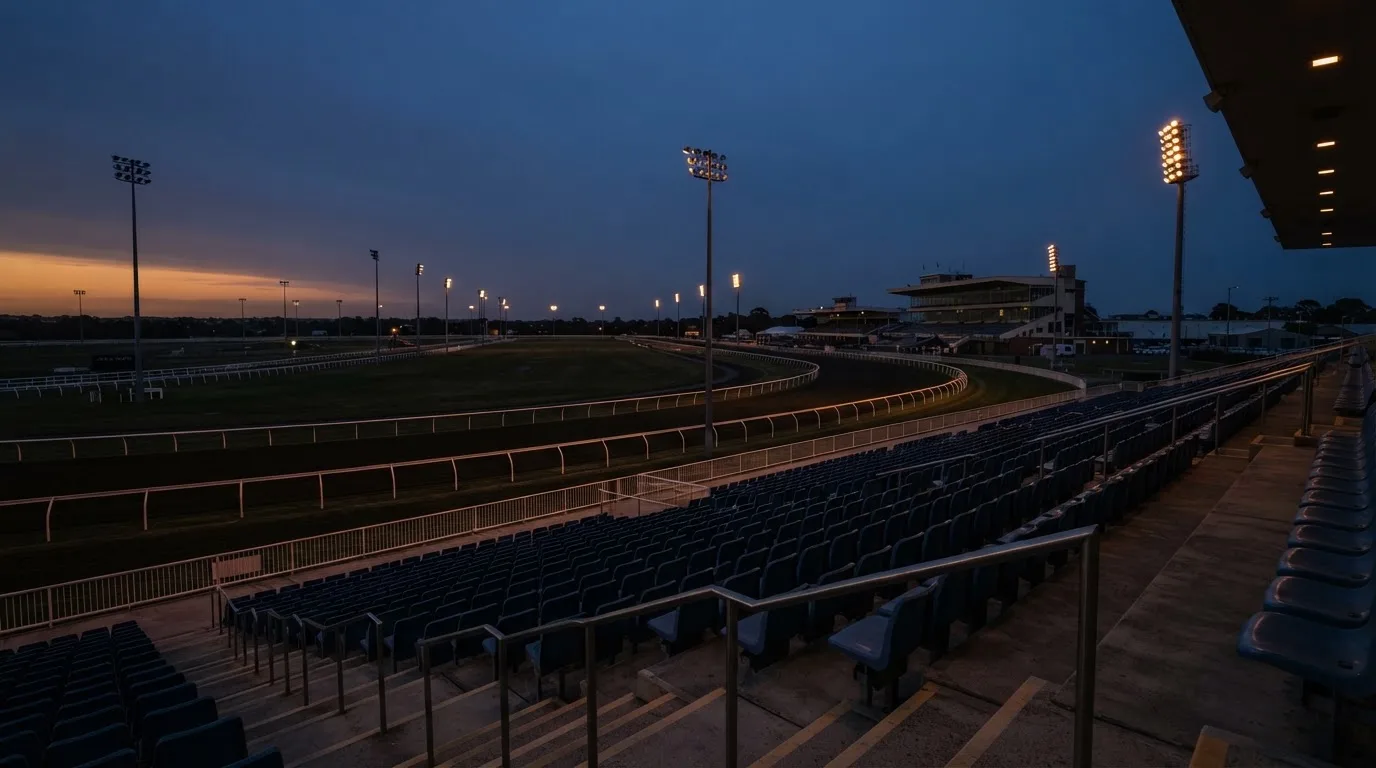
Three kinds of input sit underneath the forecast. Form is what the horse has done before: finishing position in past races, the class of those races (a Class 2 handicap at Ascot reads very differently from a Class 6 seller at Wolverhampton), the going (the going is the state of the surface, described as Firm, Good to Firm, Good, Good to Soft, Soft, Heavy, with some courses using Yielding), the distance (a horse that won over a mile and a half last time is not the same horse if dropped to six furlongs), the course (some horses travel well right-handed, others do not; some courses favour a prominent racer, others a closer), and the kind of race (a flat contest, a hurdle, a chase). Form is the loudest input and the one the racing press carries. Statistics are what form turns into once a punter stops reading running reports and reads the data — sectional times (the time a horse clocks over each furlong of a race, useful for measuring whether it ran green in the early part and improved), speed figures (the average speed a horse reached in past races, adjusted for going and class), career records over a specific course or distance, the trainer’s strike-rate at the meeting, the jockey’s record over the last fourteen days, the sire and dam (the horse’s parents and the bloodline behind them) and how their offspring tend to develop. Statistics are quieter than form but they survive longer — a trainer in form is a streak, and streaks end, while a trainer’s strike-rate over five seasons is a slower-moving number. Line-ups are what the race is actually going to look like: which horse drew which stall (in sprint races a high draw is sometimes worth several lengths), which trainer has entered two (which can mean the second string is going for place money), which jockey has switched from one yard to another this winter, and which horse is a non-runner (a horse taken out before the off, in which case the bookmaker’s Rule 4 deduction may apply — a reduction in the price paid on already-placed bets to account for the missing runner).
A value bet is a price that sits above the punter’s probability once the bookmaker’s margin is taken out. The punter thinks the horse is 40% to win; the bookmaker quotes 3/1 (4.00 decimal), which implies a 25% chance; the gap is the value, and the gap has to clear the margin before it is real. The opposite shape is a bookmaker favourite at 4/5 (1.80 decimal) that the punter agrees is the most likely winner — the punter is right and the bet still loses on average, because the margin is in the price and the punter paid for the privilege of being right without being paid for it.
No forecast is certain. A short-priced favourite at Newbury still wins less than half its races over a season; a 25/1 shot at Plumpton wins roughly one in twenty-six; the longest-priced winners of major handicaps in the last decade have paid more than 66/1. The shape of the numbers means a punter who picks a horse at random has the same chance of losing as a punter who has spent three days reading form — unless the punter’s forecast is, on average, sharper than the bookmaker’s. Sometimes it is; most weeks it is not. The honest framing is that the forecast is an edge in the long run, and the long run is longer than most bankrolls.
Where the market’s own odds do most of the work
Two pieces of information do more work than the rest. The starting price (SP) is the price the on-course bookmakers settle at when the race goes off, and is the price tote pools and Best Odds Guaranteed bets pay if it is bigger than the price taken. SP is published in the racing press; it is the market’s own consensus once the noise has settled. The market mover is the horse whose price has shortened most in the morning — a £25 horse at 9 AM that has drifted to 16/1 at 1 PM is telling the punter one thing (the money has gone elsewhere, the horse is friendless), and a £25 horse that has shortened to 6/1 by 1 PM is telling the punter another (the stable knows, the market knows, the price is real). The punter does not need to know which it is; the punter needs to know that the price did not move on a rumour alone.
Best Odds Guaranteed is the bookmaker’s promise that, if the SP is bigger than the original price taken, the bigger one is paid. The promise exists because the morning market on a horse can move and the punter who took 8/1 the previous evening does not want to find the horse went off at 12/1. Two operators on the list run different cut-off times. William Hill pays it from 8 AM on the day of the race. Fafabet pays it from 9 AM. The gap is one hour and the punter’s overnight positions are the only thing it changes.
Landscape — flat racing, jump racing, distances, weights and the shape of the field
British and Irish racing splits into two disciplines. Flat racing is run directly between two points around a straight or oval track, on the level. Jump racing is run over obstacles — fences in steeplechases, smaller hurdles in hurdling — and is called National Hunt in Britain and Ireland. The two codes do not meet; a flat horse does not run over hurdles without an unusual preparation campaign, and a hurdler does not drop back to the flat. The punter looking at a Wednesday card at Cheltenham in November and a Wednesday card at Newmarket in July is looking at two different sports.
Flat distances range from 440 yards (400 m) — sprint events run on the straight at courses such as Chester — to more than four miles (6.4 km) in the marathon end of the programme. The most common band sits at five to twelve furlongs (1.0 to 2.4 km), which is where the pattern races and the better-class handicaps sit. National Hunt distances sit in a tighter band — two miles to three miles two furlongs for chases, two miles to three miles for hurdles — with the marathon events at the Cheltenham Festival stretching beyond four miles. A punter reading form for a two-mile novice hurdle at Chepstow is reading a different section of the racing press than a punter reading form for a ten-furlong handicap at Ascot, and the section the punter reads decides what form means.
Weight is the second thing the racing card carries and the one the punter most often misses. Handicap races are run with each horse carrying a different weight, allocated by the official handicapper based on the horse’s past performances — a horse rated 100 carries more weight than a horse rated 85, and the difference is meant to equalise their chances. The system is imperfect and the punter who understands it has an edge. Conditions races give every horse the same weight, with allowances (a weight reduction) for younger horses, for fillies running against colts, and for horses that have not won before. The allowance structure is on the racecard; the punter who ignores it is betting on a race whose terms they have not read.
Race types the punter meets weekly
| Race shape | What it means for form reading | Common weight rule |
|---|---|---|
| Maiden | A horse that has not won; form reads for placed runs and beaten-fav status | Conditions — allowances for age and sex |
| Novice | A horse in its first season over hurdles or fences, or with limited flat starts | Conditions — sex and age allowances |
| Handicap | The official handicapper has allocated weights to equalise chances | Each horse carries a different weight |
| Group / Graded (Pattern) | The highest class of race — Group 1 is the top of the flat tree, Grade 1 the top of National Hunt | Weight for age and sex (a published scale of allowances depending on age and sex) |
| Listed | A step below Pattern races; the upper tier of non-Group or non-Grade racing | Weight for age and sex |
| Seller / Claimer | The horse is sold or offered to be claimed after the race; lower-class form | Conditions |
| Apprentice | The jockey holds a claim — a weight allowance tied to their experience | Reduced weights per the apprentice’s claim |
The British Triple Crown is the three-race series that takes a flat horse through its three-year-old season — the 2000 Guineas over a mile at Newmarket in early May, the Derby over a mile and a half at Epsom in early June, and the St Leger over a mile six furlongs at Doncaster in mid-September. The series has been won by three horses since 1970. The punter who watches the Guineas knows the rest of the campaign has just begun; the punter who backs a Guineas winner at long odds for the Derby is paying for a horse whose form has not yet been tested over the longer distance.
Statute — the legal frame for a Great Britain bookmaker in 2026
The Gambling Commission (UKGC) is a non-departmental public body sponsored by the Department for Culture, Media and Sport. It licenses the whole commercial market under the Gambling Act 2005, which covers Great Britain (England, Scotland and Wales). Northern Ireland is outside the 2005 Act and runs under its own older law. The split matters because a GB licence is not a UK-wide licence — Northern Ireland has its own regime, and the page treats the two as separate. Since the Gambling (Licensing and Advertising) Act 2014, an operator whose remote facilities are used in Great Britain needs a Commission licence wherever it is based. A Curaçao, Maltese or Gibraltar licence is not a substitute; it does not cover providing gambling facilities to a customer in Great Britain. Sections 33 and 36 of the 2005 Act (as amended) are the relevant provisions. The offence the section creates sits with the operator, not the customer — providing facilities without the licence the Act requires carries up to 51 weeks’ imprisonment, a fine up to level 5, or both on summary conviction, and six months in Scotland.

There is no state monopoly and no statutory cap on the number of licences. The Commission’s public register is searchable by business name, trading name, domain or account number. The register’s own entry is the whole test of whether a brand holds a licence. Several brands can run under one licensee — Ladbrokes and Coral, Paddy Power and Betfair — and the page never presents two such brands as independent operators. Licensed operators use .com as well as .co.uk; the domain proves nothing on its own.
Minimum age: 18. Identity verification — name, address, date of birth — runs before the first deposit and is required to extend to free bets and bonuses (in force since 7 May 2019). The verification is friction. It is also the route by which the operator meets its anti-money-laundering obligations, and the route by which a punter who has self-excluded through GAMSTOP cannot slip through a different brand.
What may be bet on, and what may not
No statutory list of permitted bets or markets exists. An operator holds a licence for a category — remote general betting standard (real events), remote general betting standard (virtual events), remote general betting limited, remote pool betting or remote betting intermediary — and offers markets under the operator’s own rules and the Licence Conditions and Codes of Practice (LCCP). In-play betting is offered by GB bookmakers and the controls are the operator’s licence conditions and the consumer-protection duties the LCCP carries; the page never writes in-play as “unrestricted” in a legal sense. Esports are treated as a real event for licensing purposes. Virtual events sit under their own licence category. Politics, TV shows and novelty markets are offered by GB bookmakers and no statutory prohibition was found.
A betting exchange sits under the remote betting intermediary licence category, which is what Matchbook and Smarkets hold. The product is different — customers back and lay against each other — and the price carries less margin than a traditional sportsbook, but the rates and commission the exchange charges are specific to that operator. The page treats exchanges and sportsbooks together because the Commission treats them together, but the punter should know that a BOG promise is a sportsbook concept; an exchange’s “best price” is the best the other customers are offering.
Financial spread betting is regulated by the Financial Conduct Authority, not the Commission, when the product is on a financial instrument. Spread bets on sports fall under the Commission’s regime. The page’s spread-betting reference — Spreadex’s FCA regulation for financial products and Commission regulation for fixed-odds betting — is the only place on it where the two regulators appear in one sentence. They are not interchangeable.
Off-course pool betting
Off-course pool betting on horse and dog racing is its own licence category and its own tax treatment. The Tote sits on this page as one of the ten operators for the reason — it is the operator the racing punter meets most often on a pool product, and the licensing line on the register reads remote pool betting as well as remote general betting standard (real events). A punter looking at the Tote’s licence sees both categories on the same register entry.
Offshore and the point-of-consumption rule
A GB licence is compulsory at the point of consumption. An operator whose remote facilities are used in Great Britain needs a Commission licence wherever it is based. Providing those facilities without the licence the Act requires is an offence under section 33 of the 2005 Act, aimed at the operator. No offence aimed at a customer who bets on an unlicensed site was found. The honest framing of the punter’s position is the loss of protection — no GAMSTOP coverage, no Commission complaints route, no approved dispute-resolution body, no British consumer redress if funds are withheld, not bound by the 10x bonus cap, not bound by the £150 vulnerability check. The page never writes that betting on an unlicensed site is “legal to use”. Enforcement against the unlicensed operator is disruption, not blocking: cease-and-desist notices, search-engine referrals, work with registrars, hosts and payment providers. The Commission has been given, or is about to receive, court-order DNS blocking powers — the page does not write that ISP blocking is in operation. Neither licensed nor unlicensed is “the safe choice” by default; the licensed route is the route that carries the protection, and the unlicensed route is the route that carries the price some punters think they are paying for.
Wellbeing — what a GB-licensed bookmaker must offer, and what the punter gets to use
A licensed bookmaker’s safer-gambling surface is not a courtesy. GAMSTOP has been a mandatory licence condition for online operators since 31 March 2020. The scheme lets a punter register once and exclude from every GB-licensed online operator and app for six months, one year, five years, or five years with auto-renewal. After the minimum period the exclusion stays in place for a further seven years unless the customer asks GAMSTOP to remove it. The scheme covers online sites and apps; betting shops use a separate offline service.
A financial vulnerability check sits inside the LCCP at condition 3.4.4 and has been in force since 30 August 2024 for licensed remote betting when a customer’s deposits minus withdrawals exceed £150 in a rolling 30 days (the £150 trigger has applied since 28 February 2025). The check is a public-record check (bankruptcy, county court judgments, similar), not an income check and not a credit reference check. Financial risk assessments — the “affordability checks” the press has been writing about for two years — were announced in a staged plan in a Commission article of 7 July 2026 with no start date, and the page writes the line as “announced, staged, no start date” rather than “in force”. Deposit limits under RTS 2023 stand at the operator level on a fixed time frame; the first changes have applied since 31 October 2025, a second phase was postponed to 30 September 2026, and whether the second phase is live is not established. There is no state-set deposit or loss ceiling for betting — limits are the customer’s choice.
The practical layer is the operator’s own. Unibet’s safer gambling tools — named here because research carries them as an example — include deposit limits, a Player Profile test, product restrictions and self-exclusion, with live chat support and links to BeGambleAware, GamCare, GAMSTOP, Gambling Therapy and the BGC. Betboro’s responsible-gambling surface includes deposit limits, reality checks and self-exclusion. The tools are not identical across the ten brands, but the licence binds them to the same minimum: GAMSTOP participation, deposit limits on offer, time-out and self-exclusion options, reality checks during play, and clear safer-gambling signposting in the account area.
The help the punter gets outside the operator sits with GamCare (the National Gambling Helpline runs through it), GambleAware, the NHS gambling clinics and Gamblers Anonymous. The first three are statutory or quasi-statutory; the fourth is the long-running mutual-aid route. The punter who has decided to step back from the betting account is not short of routes in Great Britain.
Marketing and the bonus cap that started applying in 2026
The promotion rules in force since 19 January 2026 cap wagering requirements on bonuses at 10x. A £10 bonus at 50x wagering needed £500 of bets before the cap; under the cap no more than £100. Mixed-product promotions — an offer that requires gambling on two or more product types such as betting, casino, bingo and lottery, for example a “bet on football to get free spins” — are banned. Whether the cap applies to free bets that carry no wagering condition, and any cap on the money value of a bonus, are not established. The page writes the cap where it bites, which is on the bonus that carries a wagering requirement; it does not extrapolate.
Advertising sits under the CAP Code (non-broadcast) and the BCAP Code (broadcast), enforced by the ASA, alongside the LCCP marketing conditions. CAP Code section 16 requires marketing to be socially responsible, not of strong appeal to under-18s, and no one who is or seems to be under 25 may be featured gambling or play a significant role (with an exception for marketing placed where a bet can be made directly). The rule concerns who may appear in the advertisement, not who may bet. Whistle-to-whistle is an industry code, not law — since 1 August 2019 betting advertisements are not shown on TV from five minutes before a live sporting event to five minutes after it, before the 9 pm watershed (horse and greyhound racing excluded). The Premier League clubs’ withdrawal of gambling sponsorship from the front of matchday shirts from 2026/27 is voluntary, not law; sleeves and hoardings remain. Operators are responsible for marketing by their affiliates. No promo code goes on this page.
Forecast — building the prediction in practice, and the discipline that decides whether it pays
A prediction is a number. A price is a different number. The work between them is the work that matters. The four-step shape below is what the model looks like in practice; the order is the order, and the punter who skips a step pays for the skip with the bet that was lost at the price the form did not support.
Step 1 — Shortlist. A shortlist of three or four horses from a twelve-runner field is the honest output of a form read; a shortlist of eight is a list of the field, not a shortlist. The punter reads the racecard for weight, distance, going, course and class, and writes the names that survive the read. The first cut is structural — a horse rated 65 in a Class 2 handicap is in the wrong race — and the second cut is pace — a horse whose best form is from the front is unlikely to win a race shaped for closers. The shortlist the punter writes at this point is the field the punter has narrowed; it is not the field the punter is betting.
Step 2 — Probability. Each horse on the shortlist gets a probability — 40%, 25%, 20%, 15% on a four-horse shortlist, the numbers forced to sum to 100%. The probabilities are the punter’s own and they are wrong, but the discipline of writing them down is what stops the punter from picking a horse because of the price rather than the form. A 40% horse at 5/2 (3.50 decimal) is a value bet; the same horse at 4/5 (1.80 decimal) is not, because the price already pays less than the probability.
Step 3 — Price. The punter checks the market — the bookmakers’ prices, the exchange’s prices if one is available, the SP from the morning’s trading — and compares. The bookmaker paying the bigger price is the bookmaker taking the bet. The exchange’s back and lay is the closest the market gets to a clean consensus, and the difference between the back price and the lay price (the spread) is the friction the exchange imposes on entering and exiting.
Step 4 — Stake. The stake is a percentage of the bank — the punter’s reserved betting fund — not a feeling. A flat 1% to 2% per bet is the standard bankroll discipline; the punter who varies the stake with confidence has not understood what the discipline does, which is to keep the punter betting after the inevitable losing run. The bank is finite; the discipline is what stops the punter from spending it.
The work is not the four steps. The work is what the punter does to keep the four steps honest — reading form, weighting the inputs, refusing to add a horse because the horse has a name the punter likes, refusing to drop a horse because the price is shorter than the punter expected. The discipline is the work.
Each-way bets, place terms and what the doubled stake buys
An each-way bet is two bets, a win bet and a place bet, and the stake is doubled. A £5 each-way bet costs £10. The place part pays out at a fraction of the win odds — the place terms — and the fraction depends on the race and on the operator. UK each-way place terms for handicaps with more than 15 runners are 1/4 odds for the first four places; 12 to 15 runners 1/4 for the first three; other races with more than 7 runners 1/5 for the first three; 5 to 7 runners 1/4 for the first two; fewer than 5 runners win only. A 10-1 horse at 1/4 place terms (3 places), with £10 each-way, costs £20: the win part returns £110 (stake + winnings) and the place part returns £35 if the horse wins, for £145 in total; if the horse finishes second or third the win part is lost and the place part pays 10/1 × 1/4 = 5/2 (3.50 decimal) on £10, which is £35. The doubled stake is the cost the punter pays for the place insurance, and the punter decides whether the insurance is worth the cost. A 4/1 shot in a five-runner race is the wrong place for an each-way bet — fewer than five runners means no place terms — and a 50/1 shot in a twenty-runner handicap is a better candidate.
The place terms above are the market-standard British terms. Some operators offer enhanced place terms — paying five places on a sixteen-runner handicap instead of four — and the operator’s racecard carries the actual terms the punter is betting under. The market-standard is the floor; an enhanced offer is the ceiling the operator is offering on that race.
The bookmaker’s margin — and the arithmetic that shows it in the price
The bookmaker’s margin is the cut the bookmaker takes on every market. It is built into the price — the prices on every outcome are slightly shorter than the true probabilities would suggest — and the punter who does not see it is paying it. The arithmetic is straightforward. A two-way market with decimal odds of 1.90 on each outcome has a payout share of 1 ÷ (1/1.90 + 1/1.90), which is 1 ÷ (2 × 0.5263) = 1 ÷ 1.0526 = 95.0%. The margin is 100% − 95.0% = 5.0%. The £100 the market collects on the race pays out £95 on the winner, and £5 is the bookmaker’s take. The same shape with 1.85 on each outcome gives a payout share of 92.5% and a take of 7.5%; with 1.95 on each outcome, 97.4% and 2.6%. The punter sees three markets a day, all narrow with a margin, and the picture the three margins paint is the bookmaker’s edge on the day’s racing.
The shape is sharper when the market is unbalanced. A race in which the favourite is at 2.50 and the next horse is at 6.00 with the rest of the field between 12 and 50 is a market in which the bookmaker has overcompensated on one side and undercompensated on the other. The punter’s edge, when it exists, is on the undercompensated side. The bookmaker’s margin is not the punter’s only tax — Rule 4 deductions on non-runners, the operator’s stake limits at the top of the field, and the difference between the price taken and the SP can all bite on a single bet — but it is the only tax that sits in every price every day.
Bankroll discipline — the part of the forecast that decides whether the punter keeps the bank
Bankroll discipline is the only part of the forecast the punter controls. The form read is uncertain, the price is set by the market and the SP is set by the on-course bookmakers. What the punter controls is the stake as a percentage of the bank, the number of bets per day, and the rule that decides when the punter stops.
A 1% stake on a 100-bet bank is £1 per unit of stake; a 2% stake is £2. The bank survives a ten-bet losing streak at 1% (about 90% of bank remaining), and is gone inside twenty bets at 5%. The punter’s actual results will include a ten-bet losing streak somewhere in the first hundred bets — variance is not a thing that happens to other people — and the stake discipline is what decides whether the punter is still betting at bet 200. The rule that decides when the punter stops is the same rule, written down before the punter starts: the punter stops after a fixed number of bets in a day, or after a fixed loss in the bank, or after a fixed time. The rule that is not written down is the rule that breaks.
The honest position at the end of a forecast
No forecast wins. A forecast with a positive expected value across a hundred bets has the punter ahead on average after a hundred bets; a forecast with a negative expected value has the punter behind on average. The punter’s actual results will fall on either side of the average, with variance, and the punter who has not written the stake discipline down is the punter who does not know which side the next hundred bets will land on. The page does not promise a win. What it promises is the shape of the work — form, statistics, line-ups, value, stake, bankroll — and the discipline that decides whether the work pays.
Best horse racing bookmakers in GB — the write-ups
Each write-up below closes on the punter the brand actually suits, not on a generic “for those who want…”. A licence number, a market coverage line and a verdict are the three things the section carries; the licence line is the floor on what the punter can rely on, the market coverage line is the offer the punter is paying for, and the verdict is what the punter reads last.
Tote
Tote sits on the Commission’s register under remote general betting standard (real events) and remote pool betting; the licence number is 054779-R-331321-008 and the holder is TDCO Limited. The product is pool — the Tote is the operator the punter meets on a course whose take is divided among the winning tickets at a dividend the operator announces after the race, rather than at a fixed price set in advance. The punter looking for a sportsbook on which to take a fixed price on the 3.10 at Ascot is on the wrong site. The punter looking to take a small stake on a place pool, or a jackpot across a meeting, is on the right one — and the pool product carries a transparency the fixed-odds book does not: the dividend is on the stake the pool has taken, less the operator’s take, divided among the winners. For the punter who bets small and bets to be in the race rather than to beat the price, the Tote is the place the racing press reads.
Fitzdares
Fitzdares (licence number 000400-R-103839-030, held by Fitzdares Limited) provides an app for cash out, accumulators, Lucky 15s, specials and antepost racing markets, alongside six other sports and in-play live odds. Antepost betting means placing a wager before the final field is confirmed, so the stake is lost if the horse does not run. Fitzdares’ depth on racing specials and its extensive sports list attract Saturday punters looking for a specific Champion Hurdle price. Its cash out on place markets allows returns to be locked in before the race goes off, providing the depth requested by consistent place-market players.
Bar One Racing
Bar One Racing (licence number 056516-R-332750-007, held by Bar-One Racing Limited) is an Irish independent bookmaker operating shops across Ireland and sponsoring racing at Dundalk, Fairyhouse, Navan, The Curragh, Curraheen Park and Cork; its app is branded as BAR 1 Betting. This brand is tailored for the punter seeking deep Irish market coverage rather than a standard British-focused sportsbook. Punters with interests in Dundalk and those tracking specific Irish meetings will find the brand’s racing sponsorships provide the market depth required.
10bet
10bet (licence number 043173-R-322899-023, held by Blue Star Planet Limited) offers a sportsbook covering football, tennis and horse racing, featuring Cash out, Bet Builder and Live Streaming. Its Bet Builder tool acts as a same-race multi, allowing punters to combine a win and place outcome, or multiple selections like Newbury and Kempton, into a single price, which is ideal for small Saturday accumulators. Punters seeking specialised Sunday morning racing depth at Newmarket may find the platform focused elsewhere.
Fafabet
Fafabet (licence number 057385-R-333191-006, held by Taichi Tech Limited) offers Best Odds Guaranteed on UK and Irish racing win and each-way bets from 9 AM on race days, paying the bigger odds if the SP exceeds the original price. The 9 AM cut-off distinguishes Fafabet from competitors like William Hill, whose window opens at 8 AM. This matters for overnight positions where horse prices drift between 8 and 9 AM; for those betting at 7:30 AM, however, the gap is academic as both windows are closed.
DragonBet
DragonBet (licence number 064908-R-339041-003, held by DragonBet Ltd) supports cash out options (in-play and pre-match) and live racing streams. Live streaming serves punters following meetings they cannot attend, although geo-blocking can occasionally impact access. Its cash out functionality remains consistent across both pre-match and in-play environments for those seeking operational depth.
bet365
bet365 sits on the register under remote general betting standard (real events); the licence number is 055148-R-331498-002 and the holder is Hillside (UK Sports) ENC. The product carries in-play betting and live streaming worldwide, plus Bet Track, Match Live and a Live Golf Tracker for following bets in play. The live streaming coverage and the in-play market depth are the offer the brand is built on, and the punter who wants a stream of a meeting in another jurisdiction, with the in-play markets running through it, has it. The racing-specific depth is part of a wider sportsbook rather than the centre of it, and the punter whose racing interest is a single meeting with a single bet is on a brand whose depth is wider than the punter’s interest.
Matchbook
Matchbook sits on the register under remote general betting standard (real events) and remote betting intermediary; the licence number is 039504-R-319407-024 and the holder is Triplebet Limited. The product is a betting exchange where customers bet against other users, with Bet Builder, multiples, in-play betting and live streaming of horse racing and greyhounds. The exchange carries a commission on net winnings instead of a margin in the price, and the punter who has learned the difference has it on the screen. The punter whose racing interest is a single bet at a single price, on a brand whose price the punter can compare with the exchange’s back and lay, has the comparison. The punter whose bet is on a market the exchange does not carry — a sportsbook-special — is on the wrong site.
Smarkets
Smarkets sits on the register under remote betting intermediary; the licence number is 039173-R-319366-011 and the holder is Smarkets (Malta) Limited. The product is the exchange — two-factor authentication, live charts and an order book view, a quick trade-out option and 24/7 live chat support. The two-factor authentication and the live order book are the operational depth the brand is selling, and the punter whose trades are running through the meeting has the order book on the screen. The 24/7 live chat is the support the punter paying commission on net winnings expects, and the brand carries it.
Betboro
Betboro sits on the register under remote general betting standard (real events); the licence number is 044181-R-324363-007 and the holder is Webmedia Development N.V. The product carries in-play markets and cash-out on football, racing and tennis, boosted odds on selected singles from £10 stakes, and responsible gambling tools (deposit limits, reality checks, self-exclusion). The boosted odds on selected singles are the practical feature — the punter with a single at a meeting with a boosted-odds market has the price on the screen — and the £10 minimum stake is the floor. The punter whose bet is below £10 has the boosted-odds market closed, and the next-bigger stake at the regular price is the trade.
Predictions and strategy — staking and bankroll in detail
The bankroll is the punter’s reserved betting fund — the money the punter has set aside for the purpose of betting, separately from the rest of the punter’s money. The bank is the only fund from which the punter bets; the rest of the punter’s money is the rest of the punter’s money, and the rule the punter writes down first is the rule that the punter’s other money does not enter the account.
The flat stake. A flat 1% to 2% per bet is the standard bankroll discipline. The stake does not change with confidence. The punter’s confidence in a bet is not the same as the punter’s edge on the bet, and the stake that follows the confidence is the stake that follows a feeling. The flat stake is the stake that follows the discipline. A 100-unit bank at 1% per unit of stake bets £1 per bet, regardless of the price, and the bank survives a long losing streak. A 100-unit bank at 5% per unit survives a short losing streak.
The value stake. A punter who has read the form and the price and concluded that one bet has a larger edge than another can vary the stake with the size of the edge, with the discipline that the stake never exceeds a fixed percentage of the bank. The Kelly criterion is a staking model that ties the stake to the size of the edge, and the practical form the punter uses is the fractional Kelly — a half or a third of the full Kelly stake, with the half or the third chosen so the punter is not betting the full Kelly, which is the stake that maximises the long-run growth rate at the cost of a long-run volatility the punter’s bank may not survive. The punter who uses fractional Kelly has decided the discipline, and the punter who has decided the discipline has the staking rule written down.
The bankroll cap. A cap on the punter’s losses in a session is the rule the punter writes down third. The rule is fixed — a percentage of the bank, a fixed sum, a fixed number of bets — and the rule does not move with the punter’s results in the session. The punter who has lost 5% of the bank in the first hour of the session has stopped, and the punter who has won 5% of the bank in the first hour has stopped, because the discipline is what the discipline does. The punter who has won and does not stop has stopped being a disciplined punter.
The record. Every bet is recorded: the race, the horse, the stake, the price taken, the SP, the result. The record is what the discipline is built on. The punter whose record is empty has not measured the edge; the punter whose record is full has measured it and the next bet is built on the last one.
The shape of a season
A punter betting 1% of the bank per unit of stake, on a 200-bet season with a 5% edge per bet, ends the season ahead by 10 units of stake (200 × 5% × 1% = 10 units). A punter betting 1% per unit on a 200-bet season with no edge ends the season where they started, minus the bookmaker’s margin, which is the same as ending the season behind. A punter betting 1% per unit on a 200-bet season with a -2% edge — the punter has not read the form as well as the bookmaker has — ends the season behind by 4 units of stake. The numbers are illustrative, not promised. They are what the discipline looks like over a season, and the discipline is what the punter controls.
Staking and bookmaker stake limits
A licensed bookmaker may set a maximum stake on a market — the operator’s own ceiling — and the ceiling can move on a race-by-race basis, on a horse-by-horse basis, and on a customer-by-customer basis. The ceiling the punter sees on the betting slip is the ceiling the punter is betting under. The ceiling is not the punter’s stake discipline; the punter’s stake discipline is the punter’s own. The two can conflict — a punter whose discipline says 2% of the bank and whose bookmaker says £20 max on the horse — and the lower of the two is the stake. The punter who bets over the bookmaker’s ceiling does not have the bet; the punter who bets over the discipline does not have the bank.
Frequently asked questions
What is a value bet and why is no tip ever certain?
A value bet is a price on a horse that sits above the punter’s own probability of winning — the gap between what the horse is worth to the punter and what the bookmaker is offering. The gap has to clear the bookmaker’s margin before it is real, and the punter’s probability is itself an estimate that is wrong on most individual races. No tip is certain because every horse race is a sample of one outcome from a population of uncertain runners, and the punter’s forecast is an estimate of the probability that the horse wins the race. A punter who has read form, statistics and line-ups has a sharper estimate on average than a punter who has not; both sharp estimates are wrong on most races, and the long run is longer than most bankrolls.
What is the bookmaker’s margin and how can it be seen in the odds?
The bookmaker’s margin is the cut the bookmaker takes on every market. It is built into the price — every outcome is priced slightly shorter than the true probability would suggest — and it shows up in the arithmetic of the prices. A two-way market at 1.90 / 1.90 has a payout share of 95.0% and a margin of 5.0%. The £100 the market takes pays out £95 on the winner and £5 is the bookmaker’s cut. The shape is sharper on markets with longer-priced runners — the favourite at 2.50 with the second favourite at 6.00 carries a margin the punter can read from the same arithmetic.
How is the return on a bet worked out from the stake and the odds?
For a win single at decimal odds, the return is stake × odds and the net profit is stake × (odds − 1). A £10 single at 4.00 returns £40 (£30 profit). For a combination bet the legs’ odds multiply into one price — two legs at 3.00 and 4.00 combine to 12.00, and £10 at 12.00 returns £120. For an each-way bet the stake is doubled — £10 each-way costs £20 — and the place part pays at a fraction of the win odds (the place terms). The 1/4 place terms on a 10/1 horse pay 3.50 on the place part.
How can it be checked that a bookmaker holds a Gambling Commission licence?
The Commission’s public register is the whole test. It is searchable by business name, trading name, domain or account number. The register’s own entry carries the licence number, the categories on the register, and the licence holder. The ten brands on this page are listed in the table earlier in the write-up with their licence numbers; the same licence numbers are on the register, and the register is the cross-check. No print, no press release, no operator’s own homepage is a substitute for the register.
Which tools for controlling play does a licensed bookmaker have to offer?
GAMSTOP is the multi-operator self-exclusion scheme a punter can register with once and which then blocks new account creation across every GB-licensed online operator for the chosen period (six months, one year, five years, or five years with auto-renewal; a further seven years after the minimum period unless the punter asks for the exclusion to be removed). Deposit limits are the punter’s own ceiling, set on a fixed time frame; the operator’s first changes have applied since 31 October 2025, a second phase was postponed to 30 September 2026, and whether the second phase is live is not established. Time-out, reality checks, product restrictions and access to safer-gambling support (GamCare, GambleAware, the NHS gambling clinics, Gamblers Anonymous) are the other routes the punter can use. A financial vulnerability check (LCCP condition 3.4.4) runs when deposits minus withdrawals exceed £150 in a rolling 30 days; financial risk assessments are announced, staged, with no start date.
How do fractional odds such as 5/1 convert to decimal odds such as 6.00?
The conversion is fractional odds a/b → decimal odds a ÷ b + 1. A 5/1 shot becomes 5 ÷ 1 + 1 = 6.00; an 11/4 shot becomes 11 ÷ 4 + 1 = 2.75 + 1 = 3.75; evens (1/1) becomes 1 ÷ 1 + 1 = 2.00. The decimal form is what the punter multiplies the stake by to get the return; £10 at 6.00 returns £60. The inverse — what decimal odds imply as a probability — is 1 ÷ decimal odds: 6.00 implies 16.7%; 3.75 implies 26.7%; 2.00 implies 50%.
Horse racing & greyhounds – systembetsguide.com
Content created by the «systembetsguide.com» team
