
Horse racing betting tips — reading form and finding value
 Available in US
“Tips” are somebody’s picks for a race. The page the reader has actually landed on is a guide to how those picks get built — and how to tell when a tip is worth following, when the price on offer has nothing to do with the horse, and when the only useful thing to do is to skip the race and keep the bank intact.
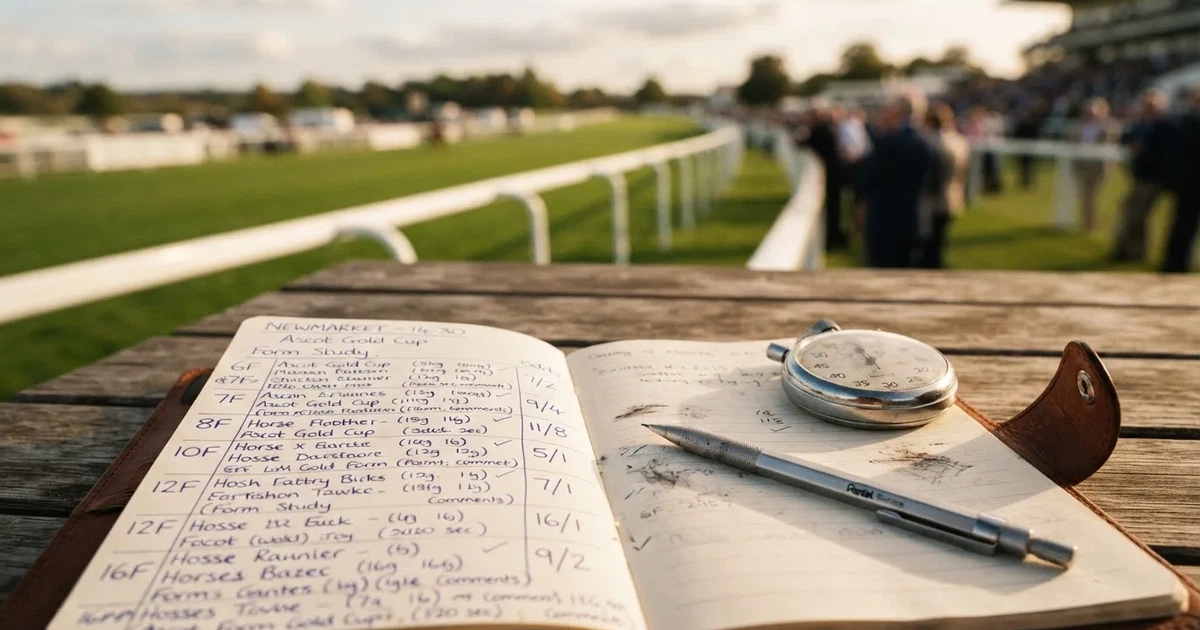
The reader’s question, underneath the search for tips, is whether betting on horse racing is something they can approach with method rather than guesswork. The honest answer runs in two directions. There is a method — form, statistics, market signals — and the method has real edges. There isn’t a method that produces certain winners, because no published rating, no computer system and no tipster can see through a 12-furlong race run on changing ground to a certainty, and the bookmaker’s margin sits inside every price before a bet is even struck.
Current data: 30 October 2026 · cross-checked against the Gambling Commission’s public register.
Crypto and anonymity at GB-licensed horse racing sites
Horse racing bettors who want to pay in crypto, or who value some privacy in how they fund an account, run into a structural fact the moment they open the register: every brand on the reviewed list is licensed by the Gambling Commission for use in Great Britain, and the Commission’s customer-verification regime applies before a customer can deposit or gamble. That step is identity verification under money-laundering rules — name, address, date of birth. There is no GB-licensed horse racing bookmaker that takes crypto deposits and skips that check.
What that means in practice for the reader curious about paying with Bitcoin or Ethereum is shaped by two things the licence frame determines. First, the payment methods each operator accepts are the operator’s own choice, and the listing for them lives on each site’s banking page; research did not find a GB-licensed racing bookmaker that shows a crypto deposit method on its published terms. Second, even where a debit-card rails system or an e-wallet sits on top of a card purchase, a credit card cannot be used at all for gambling in Great Britain since 14 April 2020 — the ban covers credit-card-funded e-wallet top-ups too.
The honest summary is short. A British punter shopping the reviews for a crypto-accepting horse racing bookmaker is shopping for an offshore site, and an offshore site sits outside the cover this article lists: no GAMSTOP, no Commission complaints route, no British recourse if funds are withheld, no application of the 10x bonus cap and the £150 vulnerability check that a licensed operator runs. The choice is not between “crypto here, no crypto there” — it is between two regulatory frames, and the crypto frame that the search describes is the one outside British consumer protection.
Where the reader wants some discretion without giving up the British safety net, the answer sits elsewhere: a debit card, an open-banking transfer or a UK-recognised e-wallet. The betting account itself is verified, but the everyday banking that funds it does not need to be advertised.
Bonuses and free bets on horse racing — what the marketing word costs
A “free bet” is the most heavily marketed term in British racing and the one most often misread. The price it promises to fix is the stake: most free bets credit winnings only — the stake is not returned — and the headline figure is capped by a maximum payout, an expiry window and a price restriction that quietly shrinks the field of races the offer can be used on. A reader treating a free bet as cash will treat the next ten offers the same way.

The arithmetic at the centre of the analysis is built from these conditions. Where the offer is a £10 free bet at minimum price 1/2, at decimal odds of, say, 3.00, on a market whose bookmaker margin is 5%, the average return over many such bets is £10 × (3.00 − 1) ÷ 3.00 × 0.95, which is £6.33. The reader who reads “£10 free” and imagines ten pounds in their hand is reading a £6.33 headline.
Dabble’s published welcome terms are a worked example of how the marketing reads against the small print. New customers deposit and stake a qualifying £10 to receive £10 in free bets, with minimum odds applying, a seven-day expiry on the free bets, and the stake not returned with a win. The £10 figure on the landing page is the size of the credit on the account, not the size of the banknote in the punter’s pocket on settlement day. BetMGM’s published terms move the same way: four £10 free bets for new UK customers who deposit and place a qualifying bet within seven days, two of them restricted to football accumulators of four or more selections and two to sports multiples of two or more, each free bet valid for seven days with minimum odds and an explicit opt-in. The headline is “£40 in free bets”; the practical ceiling is set by how many of those four credits a customer can actually clear inside a week, on the markets the offer names.
The promotion frame the licence conditions impose is worth stating on its own. Since 19 January 2026, wagering requirements on bonuses at GB-licensed operators are capped at 10x, and mixed-product promotions — an offer that requires gambling on two or more product types such as betting and casino combined — are banned. A free-bet welcome on the racing side stands within that frame; a casino-plus-bonus hybrid welcome does not exist in the same form any more. The cap, the reader should note, sits on wagering requirements, not on the headline size of a free bet. The credit can be larger; what cannot exceed ten times the credit is the volume of betting needed to release anything from it.
The capped stake and the minimum price deserve their own paragraph because they are the conditions most often glossed over. A £10 free bet on a 1/10 shot pays back £1 in the expected case — a credit marketed at ten pounds returning a fraction of that. A racing-specific boost with a maximum stake of £5 is half the credit, at a quarter of the marketing reach. The combination of restrictions is the offer, and the headline is the wrapper.
What the offer is actually worth, summed across the conditions the operator publishes, is the average value from the calculation above rather than the advertised credit. The racing-specific offers from BoyleSports and Fafabet illustrate how the conditions are stacked rather than the headline being misleading. BoyleSports Acca Insurance is opt-in, requires a £5 stake, minimum odds of 1/2 and refunds up to £20 as a free bet expiring in seven days when one leg of an accumulator fails, on bets placed and settled on the same day. Fafabet’s Best Odds Guaranteed pays on UK and Irish horse racing win and each-way bets from 9 AM on race days, paying the bigger of the price taken and the starting price. Ladbrokes publishes an odds-boost feature on horse and greyhound bets alongside Best Odds Guaranteed, in-play and acca boosts. Each one is shaped: the insurance applies only when an acca loses one leg, the BOG applies only when the SP is bigger than the price taken, the boost applies only to the named races the operator prices up. The reader who treats them as a windfall has not read the small print.
What the reader should look at before claiming any racing free bet is the same checklist every time. The minimum odds. The expiry. Whether the stake is returned. Whether payment is in cash or as another free bet. The market eligibility, since some credits work on win singles only and others on accumulators or multiples. And whether the wagering requirement, if any, fits the £100 ceiling the licence cap now imposes on a £10 bonus. With those answered, the free bet becomes a tool — used once on a price that justifies the conditions — rather than a marketing word the reader can bank.
Mobile and app horse racing betting — the touchscreen, the betting shop in the pocket
The GB app market for racing is dense, and the density itself is the reader’s first clue that the differentiator sits in product detail rather than in whether a horse racing app exists at all. William Hill, bet365, Ladbrokes, Coral, Paddy Power, Betfair, BetMGM, BetVictor, BoyleSports — every name a punter has heard of in British racing has an iOS and an Android app, and so do a dozen mid-tier brands the high street never names. The question is not “which app” but “which app does what the reader needs”.
Two structural features shape the picture before any individual brand is named. First, every GB-licensed operator runs the same identity check on app signup that the desktop site runs: the licence conditions demand verification before the first deposit, and a phone is a thinner place to enter an address than a laptop. The on-screen flow that asks for a photo of a passport and a proof of address is on every legitimate app and is the first signal the reader is at a licensed site rather than a lookalike. Second, racing is one of the few sports where the in-app product has historically led the desktop product rather than trailed it. Best Odds Guaranteed was a bookmaker-counter feature long before it was a website one; place terms and Rule 4 tables were familiar to anyone who used a betting shop; the betting slip on a phone is closer to a shop slip than a website page.
The Bet Tracker and Live Tracker features inside the bet365 app are an example of the in-app layer having more utility than the desktop page for an in-play punter — the page holds the live odds, the live stream, the cash-out button and the running commentary in one screen, and “Match Live” is specifically built for following multiple bets at once. The same app builds accumulators and same-game multis through an acca builder, runs Best Odds Guaranteed on UK and Irish racing, and offers partial cash-out on settled legs. None of this is unique to bet365 in absolute terms; most large operators offer an acca builder and partial cash-out in 2026. What changes between brands is the polish of each feature, and the polish is something the reader can only feel by trying two or three apps on the same race.
Ladbrokes and Coral run on shared licence-holder infrastructure within the Entain group, but the apps are separate products and the racing shelves look different — Ladbrokes’ app emphasises its acca boosts and racing-specific Best Odds Guaranteed, while Coral’s app emphasises in-play and RequestABet. Paddy Power and Betfair run on the Flutter group infrastructure, again with shared licence-holder and separate racing UX. The reader looking for racing product depth at a known brand will see roughly similar feature lists across these four names and should pick on the small surfaces — how quickly the BOG reconciles, whether the cash-out button is offered early enough on the race, the latency between SP and the screen on tote-style markets.
Smaller apps carry sharper niches. BetMGM’s app integrates sportsbook with casino in one wallet, and its £40-free-bet welcome is broken into four £10 credits each with sport and selection rules — useful to a racing punter only on the half of those credits that fit horse racing markets. Dabble’s social-style app lets customers copy and follow other punters’ bets, with a £10 free bet welcome gated by minimum odds and a seven-day expiry. Spreadex combines fixed-odds and spread betting on horse racing in one product, regulated by the FCA for the spread side and the Commission for the fixed-odds side, with the published warning that spread betting losses can exceed the deposit. Each brand’s app reads differently, and the variety is an asset to a reader who wants a tool rather than a default.
The practical test of any racing app is whether the markets the reader actually wants to bet on are priced and settled at the same speed as the desktop site. A punter who bets each-way on handicaps needs the place-terms table on the bet slip, the Rule 4 deduction applied automatically on non-runners and a cash-out button that updates in-play rather than locking at the off. An app that holds all three is among the top tier; an app that holds one or two is workable with workarounds. None of the listed apps is functionally unusable on racing in 2026, and the differences live at the edge — the latency, the reconciliation, the size of the price-boosted singles on UK and Irish racing. The reader should not pick on the brand name alone.
Live betting and cash out — the racing product mid-race
Live betting on horse racing is a smaller product than live betting on football, and the smallness is structural. A race has a defined start and a defined finish. The order of runners at the off is the order on the betting exchange five seconds before the off, and ten seconds after the start the prices are reflecting a race in motion rather than a market. By the time the field turns into the straight, the price on the leader is a function of running position more than original form, and the backable price on the leader reflects a probability closer to the true one than the pre-race price did. Racing is, in this sense, the most efficient live market in British sport.
Cash out is the product that lets a punter lock in a position on a race that is already running. The bookmaker offers a price on the bet, at a margin to the true value, and the punter accepts the cash out rather than waiting for the result. The product has matured in 2026. Most GB-licensed bookmakers offer full and partial cash out on singles and accumulators; some offer auto cash out at a price the punter sets. The margin the bookmaker keeps on a cash-out offer is not published, but the offer is always worse to the punter than holding to the result in expectation, because the bookmaker would not offer the button otherwise.
The live betting shows feature runs alongside the cash-out product, and the GB app market is dense on it: bet365’s live streaming is worldwide and covers horse racing, with the in-play tracker built for following the state of the race and the state of the bet at the same time. The Fitzdares app describes the same product set on a smaller scale — cash out, accumulators, Lucky 15s and in-play live odds on horse racing, football, tennis, rugby, cricket, golf and American football. Each in-play product is the same idea from a different operator: the race unfolds, the price moves, the bettor can exit.
In-play is unrestricted as a British legal matter, but the controls on it are the licence conditions and consumer-protection duties rather than any statutory list — the same product is offered under the operator’s published rules, and the market price itself is the discipline. The reader betting in-running on a race should treat the in-play price as the most efficient the market has been on that race that day, and should resist the habit of treating cash out as a hedge. Closing the bet before the result closes the upside along with the downside, and the bookmaker’s margin on the cash-out offer is paid either way.
The cash-out landscape on horse racing at mid-race is dominated by liquidity rather than product. A £5 each-way bet on a 20/1 outsider offers very little cash-out value at the start; the same bet on a 2/1 favourite offers a cash-out price close to the original price within the first two furlongs. The “in-running” market is two markets, not one: a market on the leaders and a market on the back-markers, and the products offered to each differ in how much the bookmaker is willing to pay out before the finish. The reader who holds to the result on 20/1 shots and uses cash out on the 2/1 favourites is betting on which side of the in-running market has the slimmer bookmaker margin, which is the right shape.
Predictions and the bankroll — what a tip is worth
No tip is certain. The reason is simple, and the reason is what every other claim on this page rests on: a horse race is run on the day, on the ground that morning, by a horse that has its own mood and a jockey who has his own plan, and the running of the race is not knowable in advance with certainty by anybody. What a tip is is a probability expressed as a price. What a tip is worth is the difference between that price and the book’s true probability after the margin is taken out.
The practical bankroll rules for racing fall out of that framing, and they have not changed in decades. Bet a fixed percentage of the bank — commonly 1% to 3% — on every selection, regardless of how confident the tipster sounds. The reason is mechanical: a tipster with a 15% strike rate on longshots will have losing runs of fifteen or twenty bets in a row, and a 10% stake loses half the bank in fifteen bets without recovery. With a 1% stake, twenty consecutive losers cost 18.3% of the bank; with a 3% stake, twenty consecutive losers cost 45.6%. The reader’s stake discipline is the difference between a losing streak that survives and a losing streak that empties the account.
The value bet is the framing that connects the form book to the price. A horse at 6/1 has an implied probability of 1/7 (14.3%) on a no-margin market. If the tipster’s model says the horse’s true probability of winning is closer to 20% — based on form, going, draw, jockey booking, head-to-heads against today’s rivals — then the price is one of value. The calculation: 0.20 × 7 = 1.4 units of return per unit staked, on average, against the £7 back price. The bet is a value bet. The same horse at 4/1 has an implied probability of 20% — the same model would call the price fair rather than value. The same horse at 10/1 has implied 9.1% — the model would call the price terrible; the tip is wrong.
What tips are not is a substitute for the form book. There are hundreds of tipsters, free and paid, and the variance between a tipster who identifies value at 8% ROI and one who identifies value at -3% ROI is invisible to a reader who reads three weeks of tips. The honest framing is that published tipsters are unverified in their strike-rate and yield claims, and the only way to find one a reader can trust is to track the recorded tips to settled results on a betting tracker, over hundreds of selections, and confirm the yield lies where the marketing says it does. That is a project; it is not a subscription.
Staking and bankroll discipline are the unglamorous end of horse racing betting. They are the difference between the form-reader who makes a slow profit over years and the punter who reads one good week and pays for it over the next ten bad ones. A reader who cannot keep a record of every bet — selection, price, stake, result, profit and loss running total — is betting without information, and the tip is not the missing piece.
Bet types and odds — what a bet is, on a racing page
The British horse racing bettor meets a denser vocabulary than the football or tennis punter, and the density comes from a century of bookmaking practice. Win. Each-way. Place only. Straight forecast. Tricast. Accumulator. Lucky 15. Trixie. Yankee. Heinz. The reader is offered these in the bet slip on most racing apps, but the difference between an each-way bet and a place-only bet is the kind of detail that separates a punter who knows what they have bought from a punter who has bought the marketing.
An each-way bet is two bets of equal stake on the same selection: a win bet and a place bet, with the place terms set by the bookmaker and the race conditions. A £5 each-way bet costs £10 in total — £5 on the win part and £5 on the place part. If the horse wins, both parts pay out. If the horse places, only the place part pays out. If the horse finishes out of the places, both bets lose. The cost is doubled against a win bet, the upside is the place part returning something when the horse runs well but does not win, and the place terms set how many places are paid and at what fraction of the win odds.
UK each-way place terms vary by race type and field size. Handicaps with more than fifteen runners pay 1/4 odds for 4 places. Handicaps with 12–15 runners pay 1/4 for 3 places. Other races with more than 7 runners pay 1/5 for 3 places. Races with 5–7 runners pay 1/4 for 2 places. Races with fewer than 5 runners pay only on win. The reader betting each-way on a small-field non-handicap is paying the doubled stake for a place payout at 1/5 — the each-way bet is closer to a win bet with the place side carrying the doubled stake at a fraction. The place terms are the place terms the bookmaker publishes; the reader should know them for the race they are betting on.
A worked each-way example from the reference data makes the arithmetic plain. A £10 each-way bet on a 10/1 horse at 1/4 place terms and three places costs £20 total. The win part pays £110 on a win (£10 × 10 + £10 stake returned). The place part pays £35 (£10 × (10/4) + £10 stake returned). The total on a win is £145; the total if the horse only places is £35. The reader who walks into the bet without knowing the place terms sees £10 each-way and a horse at 10/1, walks out having spent £20 and analyses the result against the wrong expectation.
The accumulator, or “acca”, is a bet where every leg must win for the bet to pay. The number of legs multiplies the odds — three legs at 4/1, 3/1 and 5/2 multiply into a price of 4 × 3 × 3.5 = 42.00 (1/1 × 3/1 × 3/2 → 2 × 4 × 2.5 in decimal = 20.00, so on a decimal-style accumulator read as 20.00/1 — using the decimal multiplication the bets share = (2 × 4 × 2.5) = 20.00 — which is roughly 19/1). The reader building an acca on six short-priced favourites multiplies a long-shot’s payout out of a small-stake bet. The bet365 acca builder and the BoyleSports acca insurance are betting on the same multiplication, with BoyleSports’ insurance paying out a free bet up to £20 (seven-day expiry) when one leg loses on an acca that meets the £5 minimum stake, 1/2 minimum odds and same-day settlement rules.
Lucky 15, Trixie, Yankee, Heinz and Goliath are the multi-line bets with named combinations. A Lucky 15 is 15 bets: four singles, six doubles, four trebles and one four-fold accumulator, on four selections. A Trixie is 4 bets on three selections: three doubles and one treble. A Yankee is 11 bets on four selections: six doubles, four trebles and one four-fold acca. A Heinz is 57 bets on six selections, a Goliath is 247 bets on eight. The total stake is the unit stake multiplied by the number of bets — a £1 Lucky 15 costs £15, a £1 Yankee costs £11, a £1 Heinz costs £57, a £1 Goliath costs £247. The Lucky 15’s appeal in racing is the single-bet return on a non-runner: a horse scratched before the off returns the stake on the singles and doubles it appeared in, and the bet can survive one non-runner better than a straight accumulator.
The other racing-specific market is the straight forecast (picking the first two in order), the tricast (first three in order) and the place-only markets the big operators offer on feature races. Forecasts and tricasts are hard markets because the field matters and the prices reflect that. A four-runner race forecast pays 3/1 on the two favourites; a twenty-runner handicap forecast pays multiples of 100/1 on the same idea. The reader building a forecast or tricast should treat the bet as a premium-priced lottery ticket rather than a value bet. The set-up supports the bet as entertainment, not as a method.
Tournaments and the racing calendar — what is actually run
The British horse racing calendar runs almost every day of the year. Flat racing runs from late March to early November; jump racing runs from late October to late April; all-weather flat runs every day of the year at Wolverhampton, Lingfield, Kempton, Newcastle and Southwell; Irish racing runs alongside British racing at Dundalk, Fairyhouse, Navan, The Curragh, Curraheen Park and Cork. The punter is offered a card every afternoon and three or four evening meetings a week, with the volume peaking at the May, June and July festivals.
Three British races matter more than the rest of the calendar combined. The 2000 Guineas and the 1000 Guineas, run at Newmarket in early May, are the first Classics of the flat season. The Derby, run at Epsom in early June, is the most famous flat race in the world. The St Leger, run at Doncaster in September, closes the British Triple Crown of the 2000 Guineas, the Derby and the St Leger. The Grand National at Aintree in April and the Cheltenham Festival in March are the equivalent peaks of the jump calendar. The page does not need to explain why the Grand National matters; the betting market explains it on its own.
National Hunt racing is the British and Irish name for jump racing — steeplechase and hurdle races run over obstacles. The discipline, the courses and the festivals are different from flat racing, and the form book reads differently because the horse’s ability to jump is part of the form. A flat horse moving to hurdles is a different kind of runner for the punter to assess; the tipster who ignores the discipline distinction is a tipster whose advice is partial.
Races vary in distance from 440 yards (5 furlongs in sprinting) to more than four miles (just over 6.4 km) in long-distance staying races. The most common race distances are five to twelve furlongs, covering sprinting, middle distances and the Classic distances. Sprinters are specialist horses with specialist form; stayers are a different kind of horse; the form book treats the two separately. The race distance is the first thing a punter reads on the racecard, and the second thing is the going (good, soft, heavy), and the third is the field size. A tip on a staying race by a sprint-form horse is a tip to bet against.
Handicap races are races where each horse carries a different weight, allocated by the handicapper based on past ability; conditions races give horses the same weight with allowances for younger horses and fillies. Handicap races are the bread-and-butter of British racing — they make up the bulk of any afternoon card — and they are the easiest markets to find an edge in because the handicap ratings are public and the conditions are known. A tipster who specialises in handicaps is a tipster with a smaller bag of tools but a sharper one.
The top 10 horse racing bookmakers in 2026
The reviewed ten all hold a Gambling Commission remote licence, all accept customers in Great Britain, and all run on the same regulatory frame. None is the “only” licensed brand; the Commission’s register lists them among hundreds. What differs between them is product, scale and racing depth.
| Brand | Gambling Commission remote licence | What the operator’s own terms state |
|---|---|---|
| Tote | 054779-R-321-008 (account 54779) — TDCO Limited | Pool betting on UK and Irish racing, SP-equivalent product, tote-only markets |
| Bar One Racing | 056516-R-750-007 (account 56516) — Bar-One Racing Limited | Irish independent bookmaker, shops across Ireland, racing sponsorships at Dundalk, Fairyhouse, Navan, The Curragh, Curraheen Park and Cork |
| Fitzdares | 000400-R-839-030 (account 400) — Fitzdares Limited | Cash out, accumulators, Lucky 15s, antepost and in-play on horse racing, football, tennis, rugby, cricket, golf and American football |
| bet365 | 055148-R-498-002 (account 55148) — Hillside (UK Sports) ENC | In-play and live streaming worldwide, Bet Tracker, Match Live, racing same-game multi, BOG from 8 AM on UK and Irish racing on both singles and multiples |
| Dabble | 065677-R-363-005 (account 65677) — Dabble Sports UK Ltd | £10 free bet welcome with minimum odds, 7-day expiry, stake not returned; social-style copy-and-follow product |
| BetMGM | 039198-R-450-029 (account 39198) — LeoVegas Gaming PLC | £40 free-bet welcome (four £10 credits) split across football accas and sports multiples; 7-day validity; minimum odds and opt-in apply |
| BoyleSports | 039469-R-383-025 (account 39469) — Boylesports Enterprise | Acca insurance with £5 minimum stake, 1/2 minimum odds, £20 maximum refund as a free bet (7-day expiry), same-day settlement |
| Ladbrokes | 054743-R-863-014 (account 54743) — LC International Limited | Odds boosts on horse and greyhound bets, Best Odds Guaranteed, in-play and Acca Boosts |
| Fafabet | 057385-R-191-006 (account 57385) — Taichi Tech Limited | Best Odds Guaranteed on UK and Irish horse racing win and each-way bets from 9 AM on race days |
| Fitzwilliam Sports | 048760-R-434-009 (account 48760) — SBKI Limited | Phone and live-chat support, office open 09:00–21:00 seven days a week, messenger response inside 90 seconds |
Tote — pool betting on the racing day
Tote’s offer to the racing punter is the only one of its kind at meaningful scale on the GB list: pool betting, where the bets are placed into a pool with other punters, divided by stake after the operator takes its cut, and paid out per unit stake. The Tote has been the official pool operator for British racing for decades, and the GB-licensed tote product runs alongside the fixed-odds bookmakers on a racing card.
The pool product is not the same as fixed-odds betting; the dividend is only known at the end of the race, and the unit return depends on the pool size. The British punter using the Tote bet is buying into the most pure form of pari-mutuel product on the GB market. The bookmaker-style win market at fixed odds is on the Tote site alongside the pool product, and the pricing on the two is comparable but not identical. The Tote’s USP is the pool product — it is the operator a punter with a feel for placepot and Jackpot combinations comes to use, and the brand sits on the racing-day page rather than the football page in the reader’s habits.
The Tote’s licence footprint is a standard GB remote general betting licence under TDCO Limited. The racing product is licensed under the standard real-events category and pool betting terms; the platform is the same as any other licensed GB bookmaker in terms of verification and safer-gambling controls. A Tote customer is a GAMSTOP customer and a Commission-protected customer.
Bar One Racing’s offer is sharper to read. An Irish independent bookmaker with shops across Ireland and racing sponsorships at Dundalk, Fairyhouse, Navan, The Curragh, Curraheen Park and Cork, Bar One is a regional book with a national racing brand rather than a high-street bookmaker. The operator has rebranded to BAR 1 Betting across the App Store and digital channels. For a UK punter who wants a non-Ladbrokes, non-Paddy Power racing bookmaker with an Irish focus, Bar One’s site is the place the comparison points to. The licence footprint is a Commission remote general betting standard licence (real events) under Bar-One Racing Limited.
Bar One’s product is fixed-odds racing on UK and Irish racing, with the Irish race meetings dominating because that is where its brand sits. The pool and BOG product is for the British side. The product is licensed, the racing is licensed, the brand is Irish — the page describes a niche bookmaker the reader may not have heard of rather than a primary racing bookmaker.
Fitzdares — the racing-led premium book
Fitzdares’ licence is the oldest remote betting licence still active in Britain: account 400, dating back to the early days of remote betting regulation. The Fitzdares product is racing-led, and the racing product is treated as the front of the house in a way most multi-sport bookmakers do not match. The Fitzdares app offers cash out, accumulators, Lucky 15s, specials and antepost markets on horse racing alongside football, tennis, rugby, cricket, golf and American football, with in-play live odds across the same set.
The Fitzdares USP is the racing brand and the racing customer. The premiun tagline on the app listing, the antepost specials and the racing-first marketing position the brand with the punter who bets mostly on horses and likes a multi-line bet. The fee structure is comparable to other premium bookmakers; the service is closer to a private bookmaker than a high-street one.
Fitzdares’ suitability is for a racing reader who wants a bookmaker focused on racing rather than a bookmaker with a racing tab. The fit is sharper for multi-line bettors, smaller for singles-only punters, and misses a football-first or a casino-first reader entirely.
bet365 — the racing scale and the in-play depth
bet365’s licence is one of the largest in British online betting; the Hillside (UK Sports) ENC entity behind the brand has grown into the dominant GB-facing racing book. The product on racing is the deepest in the market: in-play betting and live streaming of racing events worldwide, with Bet Tracker, Match Live and a Live Golf Tracker for following bets in play. Best Odds Guaranteed is paid on UK and Irish racing from 8 AM on the day of the race, on both single and multiple bets, and does not apply to ante-post, tote or pari-mutuel bets. The acca builder is built into the bet slip, and the cash-out button is offered full and partial on most races.
bet365’s fit is the racing punter who wants depth. The punter who bets in-running on racing — which is a much smaller market than in-running on football — finds bet365’s product unmatched. The punter who bets singles on the day’s racing finds the platform standard but the price competitive. The punter who bets ante-post on the major festivals finds a market that is shaped to support it. The reader’s choice comes down to whether racing depth is worth having on a brand whose product is racing-deep, football-shallow and casino-thin.
The brand’s verdict: for the racing punter who wants in-play and live stream, bet365 is the platform on the list with no peer on those features. The fit is weaker for a reader who wants a more interesting racing-shop product (Fitzdares) or a sharper place-terms publication (Fitzdares and BoyleSports again). The price itself is bookmaker-shaped, with the BOG layering over the top.
Dabble — the social-style racing app
Dabble’s licence is held by Dabble Sports UK Ltd. The product is a social-style betting app where punters follow and copy each other’s bets — a feature modelled on the social trading apps in finance, applied to sports betting. The welcome offer on the App Store is “Bet £10, Get £10 in Free Bets” on a first deposit for new customers, with minimum odds applying, a 7-day free bet expiry and the stake not returned.
The social-side product is what makes Dabble different from the larger racing bookmakers. A new punter to racing can copy a tipster whose record is publicly visible on the app and place the same bet for the same stake, with the tipster’s stake and selection visible to the follower. The tipster model has its own problems — the strike-rate record is self-reported and the follower has no audit of the strike rate — but it is a different kind of onboarding than the fixed-odds bookmaker site.
Dabble’s fit is for a punter with a small budget who wants to follow experienced racing tipsters into a bet without building a form book. The £10 welcome is a sensible trial. The reader should not treat a 7-day-followed tipster as a system, and the rest of the brand’s bookmaker product (BOG, in-play, accas) is mid-tier rather than best-on-list.
BetMGM — the transatlantic racing book
BetMGM’s licence is held by LeoVegas Gaming PLC on the UK side, with the brand running on LeoVegas’ product infrastructure and a casino-and-sports product integration. The UK racing product is competitive — BOG, in-play, acca builder — and the £40 free-bet welcome for new UK customers who deposit £10 or more and place a sports bet within seven days is broken into four £10 credits, two of them restricted to football accumulators of four or more selections and two to sports multiples of two or more, with each free bet valid for seven days, minimum odds and an explicit opt-in. The bank credit is split across conditions that favour the multi-bet punter rather than the racing single bettor.
The BetMGM USP is the casino-sports wallet integration: a customer who plays slots or live casino and bets on racing shares one wallet, one set of safer-gambling controls and one identity verification. The racing-only punter pays the same price as at any other bookmaker but inherits the casino product’s safer-gambling tripwires (deposit limits, time-out, reality checks) across both products.
The fit is for a punter who plays both sides and wants one wallet. The fit is weaker for a racing-only punter who does not want the casino product sitting on the same balance. The free-bet welcome’s four-credit split is a working bet for the football accumulator bettor and a wasted four of ten for the racing punter.
BoyleSports — the racing product with acca insurance
BoyleSports’ licence is held by Boylesports Enterprise. BoyleSports’ racing product is the IR and UK racing product of an Irish-strong bookmaker; the brand’s high-street presence is large on the Irish side and growing on the UK side. The acca insurance is the headline feature: opt-in, minimum stake £5, minimum odds 1/2, maximum refund £20 as a free bet expiring in seven days, with bets placed and settled on the same day. The reader placing a six-leg acca where one leg loses gets a £20 free bet credit rather than the loss — a partial insurance against the multi-bet’s most common failure.
The best-odds-guaranteed product on BoyleSports’ UK side is offered alongside the racing specials and the same-game multi. BoyleSports’ market on Irish racing is the deepest of any GB-licensed bookmaker, with most Irish meetings priced from early in the declarations stage. The price competitiveness on British racing is mid-tier rather than best-on-list.
BoyleSports’ fit is the punter who bets accas on racing and wants the one-leg insurance. The punter who bets singles only does not see the insurance kick in; the punter who bets heavily on Irish racing sees a deeper BoyleSports product than the rest of the list. For a reader weighing BoyleSports against bet365, the choice is racing depth (bet365) versus acca insurance and Irish racing depth (BoyleSports).
Ladbrokes — the racing scale with boosts
Ladbrokes’ licence is held by LC International Limited, the joint entity behind Ladbrokes and Coral within the Entain group — and any Ladbrokes customer is also a Coral customer under the same licence-holder umbrella. The racing product on Ladbrokes’ side is the high-street-side racing product: odds boosts on horse and greyhound bets, Best Odds Guaranteed on UK and Irish horse races, in-play and Acca Boosts. The Coral side offers a different set of racing specials at the same licence-holder.
Ladbrokes’ fit is the mid-tier racing punter who wants scale, BOG and a brand they have used in a shop. The odds-boost product is the kind of feature a BOG-comfortable punter will treat as free value; a sharp racing reader will see the boost on already-short-priced favourites more clearly than the boost on longshots. The Coral side of the licence-holder offers roughly equivalent features under different marketing.
The brand’s verdict is unchanged on the high-street bookmaker model: a reliable mid-tier platform with strong racing scale, weaker customisation than bet365 and weaker racing niche positioning than Fitzdares. For a reader who bets racing most days, Ladbrokes is at the table; for a reader who bets racing only on weekends and festivals, the comparison’s other names carry more product.
Fafabet — the smaller bookmaker with BOG
Fafabet’s licence is held by Taichi Tech Limited. Fafabet’s product is a smaller bookmaker product with BOG on UK and Irish horse racing from 9 AM on race days, paying the bigger of the price taken and the starting price on win and each-way bets. The brand is mid-tier on racing scale and competitive on price for the BOG-comfortable punter.
The Fafabet USP is sharper than the brand’s size would suggest: BOG published at 9 AM on the day of the race is competitive with bet365’s 8 AM and ahead of some smaller bookmakers, and the racing-first marketing positions the book with the day-of-race punter rather than the ante-post specialist.
The fit is the mid-tier punter who wants BOG and does not need the in-play and live-stream depth of bet365. The brand is licensed, regulated and GAMSTOP-covered, and the racing product on offer is competitive with the mid-tier comparators without being best-on-list.
Fitzwilliam Sports — the phone-led racing bookmaker
Fitzwilliam Sports’ licence is held by SBKI Limited. The product is a phone-and-live-chat racing bookmaker: the office is open 09:00 to 21:00 Monday to Sunday, with messenger replies generally inside 90 seconds. The platform is racing-led, and the racing customer is treated to a phone-and-chat service rather than the digital-first product the larger operators run.
The Fitzwilliam USP is the personal service. A racing punter wanting a phone-and-chat bookmaker for a same-race conversation, a stake negotiation or an ante-post enquiry is the customer Fitzwilliam is built for. The product is licensed, the racing is licensed, the service is older-style than the high-street bookmakers, and the fit is sharper for a punter who wants the conversation than for one who wants the app.
The verdict on Fitzwilliam: a niche bookmaker for the racing punter who bets enough to warrant the conversation. The fit is sharper for a punter betting each-way on handicaps than for a punter betting singles on the day’s racing — the latter finds the digital product of bet365 a faster match.
Reading a horse race — what form actually tells you
The form book is the body of past race results a horse has run, and it is the bettor’s first working tool. A horse with five straight wins at the same distance, on the same going, at the same course is a horse with a specific form profile that may or may not transfer to today’s race, and a horse with nine straight losses is a horse whose form the trainer and jockey are trying to fix. The first question a reader asks of form is not “what is the strike rate” but “what kind of race has this horse been winning”.
Distance, going, course, class and field size are the variables the form book tracks. A horse winning three times at five furlongs on good going at Wolverhampton is a different runner at twelve furlongs on soft going at Ascot, even with a perfect strike rate, and the punter should price the form as a same-kind race. The same is true in reverse: a horse running badly on firm going may run very differently on soft, and the form book treats the two as different races. The “this horse has won three from five” claim is only as good as the three wins being transferable.
Head-to-heads and jockey bookings are the second layer. A horse whose regular jockey has won on it three times is a different bet than a horse whose regular jockey has been replaced by a 7lb-claimer. The jockey’s record on the horse matters because the partnership has been built up; a new jockey does not transfer the partnership directly. The trainer’s record at the course and at the distance is the next layer; trainers with a 22% strike rate at a particular course are not the same bet as trainers with a 6% strike rate there.
The market signals are the third layer. The bookmaker’s odds shift between the morning and the off as the betting weight lands; a steady drift from 5/1 to 8/1 is a money-against signal that some informed money thinks the price is wrong. A steady firming from 8/1 to 5/1 is a money-for signal. The market signals are not certainties, but they are signals, and an information-only punter who treats them as one input among many has an edge on a punter who treats them as gospel.
The market signals are also where the bookmaker’s margin lives. The overround on a market — the total implied probability of all the runners — is greater than 100%, and the gap is the bookmaker’s edge. A market with 12 runners priced at a cumulative implied probability of 115% is one where the bookmaker keeps 15/115 = 13.0% of every pound staked on the market. A market with 8 runners priced at 108% keeps 8/108 = 7.4%. The punter who reads the overround before placing the bet is reading the cost of the bet. The market with the tighter overround is the cheaper market to bet on, in margin terms.
The form book, the market signal and the bookmaker’s margin are the three inputs the punter brings to the value-bet calculation. None of them is a tip. None of them produces a certainty. The tip is the result of taking those three inputs and pricing the horse against them. The 1% to 3% stake is the consequence of pricing the horse and finding that the average expectation justifies a stake of that size in the punter’s bankroll management.
The bookmaker’s margin and how it lives in the odds
The bookmaker’s margin is the difference between the true probability of all outcomes of a market and the implied probability in the prices. A market with five runners, priced at 4/1, 3/1, 5/1, 6/1 and 8/1, has implied probabilities of 1/5, 1/4, 1/6, 1/7 and 1/9 — total 0.200 + 0.250 + 0.167 + 0.143 + 0.111 = 0.871. The punter should notice: 0.871 is less than 1, and the bookmaker’s margin on a market is the *extra* the bookmaker takes over 100%, not the missing amount. The correct framing on a margin is: if the implied probability totals 110%, the margin is 10/110 = 9.1%. If the implied probability totals 87%, the market is mispriced as if it had a negative margin, and at least one of the prices is wrong.
The simplest two-way case is the example the page has been built around. Take a market at 1.90 / 1.90 in decimal. The implied probability on each side is 1/1.90 = 0.5263. Two sides sum to 1.0526, so the implied probability is 105.26%. The margin is 5.26/105.26 = 5.0%. The payout share for the punter is the inverse: 100 − 5.0% = 95.0%. That is what the bookmaker pays out, on average, of every £1 staked on this two-way market. The bookmaker keeps 5p.
The same two-way market at 1.85 / 1.85 has implied 0.5405 + 0.5405 = 1.0811. The margin is 8.11/108.11 = 7.5%. The 5p difference in the odds book is a 2.5-percentage-point difference in margin, and the punter’s expected return over many bets at 1.85 is 2.5% lower than at 1.90. The marginal gap between two roughly-similar-looking prices is significant; the punter who treats the gap as small is treating the value as small.
In horse racing, the margin on a 12-runner handicap is normally in the 18% to 30% range — much wider than the 5% margin on a football 1X2 market. The cost of betting on every runner in a handicap is the bookmaker taking roughly a quarter of every pound staked on the race as a cut. A punter who prices a value bet against the book’s margin is pricing against a 22% margin on a 12-runner handicap, and the tip that “the horse is value at 6/1” is value only if the horse’s true probability is greater than 1/7 = 14.3%, after the margin.
The bookmaker’s margin sits on top of every price, on every market, on every app, and on every desktop page. The way to see it is to add up the implied probabilities of all the runners on a race — the total is greater than 100%, and the gap is the margin. The smaller the gap, the cheaper the market is to bet on. The punter who wants the cheapest prices on racing bets the books with the smallest overround on the markets offered — usually the racing-focused mid-tier operators on ante-post markets and the major operators on day-of-race markets.
The odds — what they say, and what they don’t
British racing odds are quoted in fractional form by tradition. The convention is to print the profit over the stake — 5/1 means a £1 stake returns £6 (£5 profit + £1 stake returned), 11/4 means a £1 stake returns £3.75 (£2.75 profit + £1 stake), 1/2 (or “evens, take one”) means a £1 stake returns £0.50 profit and £1 stake. Decimal odds are quoted as the total return per unit stake — 6.00, 3.75, 1.50 respectively. British punters with a betting-shop habit read fractional; those with a smartphone betting app read decimal; the conversion is a/(b) → a/b + 1 in decimal.
The shorter the odds, the smaller the profit-per-stake and the larger the implied probability. 1/2 means the horse has an implied probability of 1/(1+0.5) = 0.667 of winning (on a no-margin market); 5/1 means 1/(1+5) = 0.167. A punter betting on a 1/2 shot has a 66.7% chance of being paid by the market; a punter betting on a 5/1 shot has a 16.7% chance. The payout difference reflects the probability difference: most 1/2 shots win, few 5/1 shots win, but the rare wins pay out more on the 5/1 shot.
The market’s “starting price” (SP) is the price on the horse at the moment the race starts, fixed by the on-course bookmaker market and reconciled into the betting apps at the same moment. The Best Odds Guaranteed feature means that if the price the punter took was shorter than the SP, the SP is paid instead; the punter gets the better of the two prices, automatically, on qualifying bets. William Hill’s published BOG terms cover UK and Irish racing from 8 AM on the day of the race, single and multiple bets; ante-post, tote and pari-mutuel bets are excluded. Fafabet’s published BOG terms cover the same UK and Irish races from 9 AM. Ladbrokes offers BOG alongside its racing odds-boost and acca-boost products.
The SP itself is the closest the market gets to a no-margin price on the day of the race; the on-course bookmakers compete away most of the margin in the last two minutes before the off. The SP-printed dividend on the starting-price market is the cheapest price the punter can get on the race. The SP-comfortable punter waits for the off and takes the SP; the punter who wants a price now takes it and carries the BOG cover.
The legality frame for British horse racing betting
The Gambling Act 2005 regulates commercial betting in Great Britain (England, Scotland and Wales); Northern Ireland sits outside the Act and is governed by older legislation, so a “GB licence” never extends to Northern Ireland and vice-versa. The Act requires an operator whose remote betting facilities are used in Great Britain to hold a Gambling Commission licence, whatever the operator’s country of incorporation — a Curaçao, Maltese or Gibraltar licence is not a substitute. Since the Gambling (Licensing and Advertising) Act 2014, the licence obligation is at the point of consumption, not the point of incorporation. No state monopoly exists; there is no cap on the number of licences. Betting licence categories include remote general betting standard (real events), remote general betting standard (virtual events), remote general betting limited, remote pool betting and remote betting intermediary (the exchange licence).
The bookmaker a British punter bets with therefore must hold a Commission licence. The register of licences is published on the Commission’s site and is searchable by business name, trading name, domain or account number; this is the whole test of whether a brand holds a GB licence. The reviewed ten brands in this comparison all hold such a licence, and their account numbers and licence-holder entities are on the public register. The Commission’s licences are not endorsements; they are permissions to operate, and the entitlement carries with it licence conditions and codes of practice (LCCP).
A few licence conditions matter to a racing punter reading this page. Minimum age is 18. Name, address and date of birth are verified before a customer can deposit or gamble, and the verification applies to free bets and bonuses as well. The financial vulnerability check (LCCP condition 3.4.4, in force since 30 August 2024) applies once a customer’s deposits-minus-withdrawals exceeds £150 in a rolling 30-day period (active since 28 February 2025); the check is a public-record check (bankruptcy, county court judgments) and is not an income check or a credit reference check. Financial risk assessments were announced in a staged Commission plan (article of 7 July 2026), with no operational start date, and should be written as “announced, staged, no start date” rather than “in force”. Deposit limits under RTS 12 require operators to offer a gross deposit limit on a fixed time frame, with first changes in force since 31 October 2025 and a second phase postponed to 30 September 2026; whether the second phase is live is not established.
Credit cards are banned for gambling in Great Britain since 14 April 2020 (LCCP condition 6.1.2), and the ban covers credit-card-funded payments through an e-wallet. Debit cards and bank-based payments are not covered by the credit-card ban. E-wallets and bank transfer sit alongside debit cards at the licensed operators; the customer who has lost access to a debit card can deposit through bank transfer. No state list of permitted payment methods exists.
The player pays no tax on betting winnings in Great Britain — a long-standing rule that has not changed, and the rule applies to racing as to anything else. The General Betting Duty is the operator’s tax on gross profits, currently 15%, with a new remote betting rate of 25% from 1 April 2027, while remote bets on UK horse racing, in-person betting and self-service betting-terminal bets stay at 15%. Spread betting has its own rates (3% financial, 10% other). The Commission levy is a separate charge on operators, not a tax. The duty is the operator’s cost; whether operators pass it on through the odds is not established; the player is not charged duty.
In-play betting on racing is offered under the operator’s licence conditions, with the consumer-protection duties inside those conditions providing the controls. The reader betting in-play on racing should treat the in-play price as the most efficient market price of the day, because the bookmaker’s margin is thinnest and most competitive on the running price. There is no statutory prohibition on any specific market category; the markets the operator offers are governed by the operator’s own terms and the LCCP.
Playing it safer — the British racing punter’s controls
The safer-gambling tools at GB-licensed operators run deeper than at any other regulated market, and they are required by the licence conditions. Deposit limits let the punter cap the daily, weekly or monthly deposit; the cap is the customer’s choice and is honoured by the operator. Time-outs put the account on hold for a defined period (24 hours, 7 days, 30 days, etc.). Self-exclusion blocks the account for a longer period. Reality checks prompt the punter during a long session to confirm how long they have been playing. Product restrictions block specific products (casino, slots, etc.) even with the account open.
GAMSTOP is the national multi-operator self-exclusion scheme. It is a mandatory licence condition for online operators since 31 March 2020, and every GB-licensed remote operator is a GAMSTOP member. The scheme covers online sites and apps; betting shops use a separate system. Self-exclusion periods are six months, one year, five years, or five years with auto-renewal. After the minimum period the exclusion stays in place for a further seven years unless the customer asks GAMSTOP to remove it. A punter who self-excludes through GAMSTOP is excluded from every GB-licensed operator for the chosen period; there is no opt-out partway through.
The financial vulnerability check is the new layer. Since 28 February 2025, when a customer’s deposits minus withdrawals exceeds £150 in a rolling 30-day period, the operator must run a public-record check for bankruptcy, county court judgments and similar markers. The check is not an affordability check; the punter’s income is not asked. The check identifies a small set of customers who are already in financial difficulty by other criteria and triggers enhanced monitoring. A punter who passes the £150 threshold sees the check; the check passes most customers in the same day. For a punter running on a tight budget, the £150 threshold can be reached quickly, and the punter should know the check is automatic.
Affordability checks — or “financial risk assessments” in the Commission’s language — were announced in the Commission’s plan published on 7 July 2026. The plan lays out stages, with no start date; the page should not write “affordability checks are in force”, because they are not. When implemented, the assessments will check a punter’s income and outgoings before allowing higher-spend betting. Until the start date, the punter’s deposit limit is the only spend-control rule that applies at the operator’s discretion.
The help services the operators signpost to are the path the punter with a problem should follow. GamCare runs the National Gambling Helpline (0808 8020 133, 24 hours a day). GambleAware funds treatment and education. The NHS runs gambling clinics in several cities. Gamblers Anonymous runs meetings in person and online. The licensed operators signpost to all four; an unlicensed operator signs post to nothing. The reader who recognises a problem in their own punting — a chase pattern, a stake above what they can afford, a session length they’ve lost track of — should self-exclude first and call second.
The bookmaker’s offer — the calculation behind the marketing word
The free bet’s expected value is built from four inputs: the size of the free bet, the odds the punter takes, the minimum price restriction, and the payout share of the market the bet is on. The arithmetic for a £10 free bet at decimal odds of 3.00 with no minimum price restriction and a market payout share of 95% is £10 × (3.00 − 1) ÷ 3.00 × 0.95 = £10 × 0.667 × 0.95 = £6.33. The £10 credit is worth £6.33 on average across many such bets; the punter’s bank balance grows by £6.33 per free bet cleared at those odds on that payout share.
The same £10 free bet at decimal odds of 5.00 on a market with an 88% payout share (a 12% overround race) is worth £10 × (5.00 − 1) ÷ 5.00 × 0.88 = £10 × 0.800 × 0.88 = £7.04. The price the punter takes matters more than the credit size in this calculation. A £10 free bet at 5.00 odds is worth £7.04; a £40 free bet (BetMGM’s headline figure, broken across four credits) at 1.80 odds on a 95% payout market is worth £10 × (1.80 − 1) ÷ 1.80 × 0.95 per credit, or £10 × 0.444 × 0.95 = £4.22 per credit, with four credits at the same terms adding to £16.89 across the four free bets of the welcome. The punter chasing headline free-bet size is chasing a smaller real value than the punter using smaller credits at higher odds.
The range across the four credit splits is wide. A £10 free bet at minimum-odds 1/2 (decimal 1.50) on a 95% payout market is worth £10 × (1.50 − 1) ÷ 1.50 × 0.95 = £10 × 0.333 × 0.95 = £3.17. The same £10 free bet at odds 10/1 (decimal 11.00) on a 90% payout market is worth £10 × (11.00 − 1) ÷ 11.00 × 0.90 = £10 × 0.909 × 0.90 = £8.18. The £10 credit varies in expected value from £3.17 at minimum-odds short-priced bets to £8.18 at long-odds bets, on realistic payout shares. The punter reading “£10 free” without reading the conditions is missing a range of 2.6× in expected value across the betting volume they can clear within the terms.
The free-bet welcome offer’s expected value at the highest realistic odds on a normal payout share is around £7–£8 per £10 credit, and the four-credit BetMGM-style welcome’s expected value is therefore around £30 at the optimistic end of the conditions. A punter chasing the welcome’s headline at the cost of the conditions is chasing £30 of expected value rather than £30 of credit, and the difference is what the expiry window, the minimum price and the eligibility market absorb.
Handbook for the racing punter — a method rather than a tip
A racing punter’s method sits on three layers, and the layers are sequenced. The form book first. Distance, going, course, class, field size, recent form, head-to-heads, jockey booking, trainer’s record at the course and at the distance — every variable the form book tracks. The market signals second. Drift, firming, money-against, money-for, the movement between morning and the off on the betting exchanges and the bookmaker apps. The pricing third. The overround on the market, the margin, the implied probability, the price the punter is taking versus the price the model says is fair.
The method’s outputs are a list of horses with prices, and a stake plan per horse. The stake plan runs from 1% to 3% of the bank per bet, depending on the punter’s edge over the bookmaker’s margin. The punter with a confirmed 5% edge over the margin on a market prices the horse and stakes 2–3%; the punter without a confirmed edge prices the horse and does not bet. The difference between a punter who makes a slow profit and a punter who reads tips is the edge being confirmed rather than assumed.
The bankroll discipline comes from a record. Every bet — selection, price, stake, result, profit and loss. A punter with a record of 400 bets knows the strike rate and the yield on their method; a punter without a record is guessing. The record is the method’s audit, and the absence of a record is the most common reason a punter thinks they are winning when they are not.
The non-runner and Rule 4 deductions are the routine costs. A horse scratched before the off gets the stake returned on singles and most multi-bet components; a horse withdrawn after a betting market is set triggers a Rule 4 deduction — a deduction from the winning dividend, applied to all bets on the race, calculated as a function of the withdrawn horse’s odds. The deduction is published on the bookmaker’s racecard in real time; a punter who reads the Rule 4 deduction has read the payout they can expect.
An A–Z of racing markets and prices
Accumulator: a bet on four or more selections, each leg on a different race (or different sport). All legs must win for the bet to pay.
Ante-post: a bet placed before the final declarations are known, at a longer price and a smaller field. The risk is non-runners.
Best Odds Guaranteed: a feature paying the larger of the price taken and the starting price on qualifying bets, run by major GB bookmakers.
Cash out: settling a bet mid-race at a price the bookmaker offers, at a margin to the true value.
Decimal odds: the total return per unit stake (5.00 means a £1 stake returns £5). British bookmakers also publish fractional odds.
Each-way: a bet with two equal-stake legs, a win bet and a place bet. The stake is doubled.
Forecast: a bet on the first two horses in the correct order, on a specific race.
Fractional odds: the profit per unit stake (5/1 means a £1 stake returns £6 total). The traditional British format.
Furlong: an eighth of a mile, 220 yards. Five furlongs is 1,100 yards, twelve furlongs is 2,640 yards.
Going: the condition of the racecourse surface, ranging from firm (hard) through good, soft to heavy (waterlogged). Affects form.
Handicap: a race where horses carry weights set by the official handicapper to level the field.
Lucky 15: a 15-bet combination on four selections (4 singles, 6 doubles, 4 trebles, 1 four-fold acca).
Patriarch: a Prix de l’Arc de Triomphe at Longchamp in early October — the most prestigious middle-distance flat race in Europe, a major betting race for a GB punters’ portfolio.
Place: a finishing position paying out at a fraction of win odds under the each-way place terms.
SP (starting price): the on-course bookmaker price at the off, the official price published on the race result.
Tote: pool betting through the Tote, with dividend-based payouts.
Tricast: a bet on the first three horses in the correct order, on a specific race.
Winning each-way: each-way bets that win the place part as well as the win part — the full payout.
How to read the day’s racing market
The day’s racing market is the live product on the racing page of every GB-licensed bookmaker. The page lists every race on the day’s cards (UK, Irish and some international), the runners in each race, the prices on each runner, the going and the field size. The punter reads the page in three steps: scan the cards for races with the overround they want to bet against, identify the value bets inside those races, and place the stake. The card itself is a free research tool: the racecard on each operator’s app lists the form, the jockey, the trainer, the going and the weight.
The day’s racing market is also the home of in-play and live streaming on racing. The punter watching the race and betting cash out or in-running is in the day’s racing market across the operator’s app. The customer who only watches the page without betting is using the racing card as a research tool.
Where the page leaves the reader
The horse racing punter who finishes this page with a working vocabulary has the base for the work the rest of their punting life depends on. The forms, the prices, the markets, the bookmaker’s offers and the operator set are the inputs to value bet identification; the stake discipline is the input to bankroll management; the safer-gambling controls are the safeguard that keeps the activity intact on the days the edge is not there.
What the page does not promise is the win. The number of punting days a racing reader goes through with the bank intact is the product of the methods above, applied on a record, with an edge confirmed over many bets — and the absence of those is the cost of every racing tip the page has not given. The day’s racecard at bet365, Betfair, Paddy Power, Coral, Ladbrokes, William Hill, BoyleSports, BetVictor, BetMGM or BetUK is the start of the day’s work; the day’s audit is the bank balance at midnight and the record that fed it.
Frequently asked questions
How do I actually place a bet on a horse race?
Open an account with a Gambling Commission-licensed bookmaker, verify your identity (name, address and date of birth are checked before the first deposit), deposit via debit card or bank transfer, navigate to the day’s racing, pick a race, pick a horse, choose the bet type (win, each-way, place, forecast), enter the stake and confirm. The bet is settled at the off or at the SP if you have taken the price earlier.
How is the return on a horse racing bet worked out?
Take the stake and multiply by the decimal odds, and that figure is the total return including the stake. For an each-way bet the stake is doubled across two legs, with the place leg paying at a fraction of win odds under the published each-way place terms. A worked example: a £10 win bet at 6/1 (decimal 7.00) returns £70; a £10 each-way at 10/1 with 1/4 place terms (3 places) costs £20 and pays £145 on a win.
How do betting odds work on horse racing?
Fractional odds show profit per unit stake — 5/1 means a £1 stake returns £6 total (£5 profit plus £1 stake returned). Decimal odds show total return per unit stake — 6.00 means £1 returns £6. A horse at 5/1 has an implied probability of 1/6 = 16.7% on a no-margin market; a horse at 1/2 has an implied probability of 1/1.5 = 66.7%. The implied probabilities of all runners on a race sum to more than 100%, and the gap is the bookmaker’s margin.
What is a value bet, and why is no tip ever certain?
A value bet is a bet whose price is greater than the price that reflects the horse’s true chance of winning. If a horse’s true probability of winning is 20% and the bookmaker’s price is 5/1 (decimal 6.00, implied 16.7%), the bet is value — the punter’s expected return on many such bets exceeds the stake. No tip is ever certain because races are run on the day, on the ground, and the running is not knowable in advance by anybody — the form book, the market signals and the bookmaker’s margin are the inputs to identifying a value bet, and the inputs are imperfect.
What is the bookmaker’s margin, and how can I see it in the odds?
The bookmaker’s margin is the share of every pound staked on a market the bookmaker keeps on average. To see it, add up the implied probabilities of all the runners in a race and subtract from 100% — a market with 12 runners each at fractional prices implied 110% in total has a 9.1% margin (10/110). The margin is widest on handicap and ante-post markets, narrowest on day-of-race and SP-driven markets. The punter betting on the market with the smallest margin pays the bookmaker the least per pound staked.
Horse racing & greyhounds – systembetsguide.com
Content created by the «systembetsguide.com» team
