
Where to Bet on Horse Racing Online in 2026 — and What Each Bookie Actually Costs
 Available in US
A horse race settles in seconds. The bet that funds it does not. By the time the stalls open, a punter has already chosen a bookmaker, decided which market to use, accepted or declined a price boost, weighed each-way place terms, and accepted (or not) a free bet that comes with a turnover rule. That order matters: every later step is read in the light of the first. A bookmaker with a thin racing card and the brightest free-bet headline is still a thin racing card.
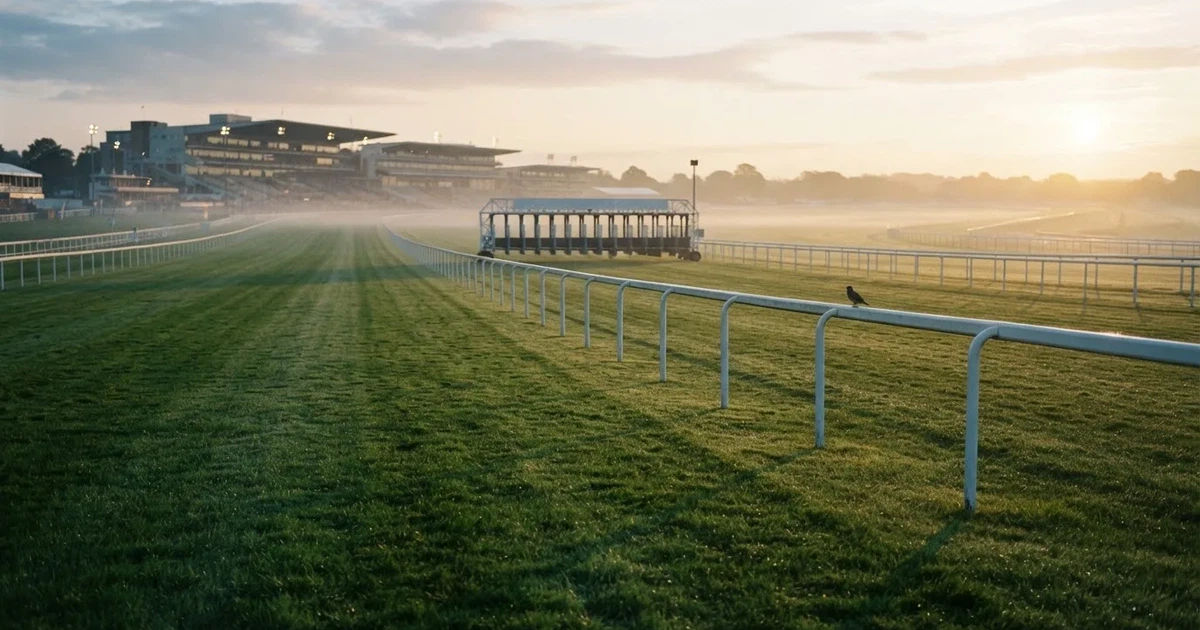
What follows is a comparison of ten bookmakers that each hold a Gambling Commission remote licence for Great Britain. The aim is choice, not a recommendation: each operator suits a different kind of punter, and the angle here is which path through the market costs what, and for whom. The cluster order — crypto handling, bonuses, mobile, live and cash out, predictions, bet types, the sport itself, the ranking, an overview of how it all fits together, the legal frame, and safer gambling — sets out those paths one at a time.
Current as of 30 October 2026. Operator licences, terms and offers were checked against the Gambling Commission’s public register and each operator’s own published terms.
Crypto & Anonymity: What Crypto Actually Changes at a UK-Licensed Bookmaker
A licensed bookmaker does not run on cash and it does not run on anonymity. Credit cards have been banned for gambling in Great Britain since 14 April 2020, and identity verification — name, date of birth, address — happens before a customer can deposit or place a bet, including with a free bet. Crypto does not change that. A punter who sends bitcoin from a non-custodial wallet to a bookmaker that accepts it is still naming themselves, still being checked against GAMSTOP, and still being asked source-of-funds questions when spend rises.

So the term “crypto horse racing betting” refers to a payment rail, not a privacy layer. The bookmakers in this comparison that publish crypto handling do so alongside debit cards and bank transfer; the bet is placed and settled against the same markets, the same odds, and the same verification gate. Anyone reading a “pseudonymous” label on a horse racing page should read it as “the deposit path”, not as “the customer is untraceable”. At a licensed site the customer is the opposite: traceable, verified and on a register.
The cluster also runs into a hard edge. Crypto at licensed operators is rare. Several of the ten brands below do not advertise crypto deposits at all; those that mention it describe it in passing on the cashier page and qualify it with the same verification and source-of-funds checks that apply to a bank transfer. The register of permitted payment methods at a licensed site is the operator’s own list, not a regulator’s. A punter comparing crypto handling across bookmakers is comparing how each operator’s cashier works, not how a coin settles.
That last point is the practical one. A deposit that arrives in twenty minutes is useful only if the race is still on the card. A withdrawal that lands back into a private wallet inside a day is useful only if the operator has run the withdrawal checks first. The brands that publish crypto handling publish the speed; none of them publish the path around the verification queue. Read the cashier page before the race, not at payout.
A second note on this cluster sits behind the choice of bookmaker: a licence is what makes a complaint route possible. The Gambling Commission does not resolve individual disputes, but an approved ADR body does, and a Curaçao-licensed brand running crypto rails is not on that route. A punter who values crypto for the deposit and withdrawal speed should weigh that against what is given up when the operator is not in the Commission’s register.
Bonuses & Free Bets: Reading the Marketing Without Reading the Bet
Three words carry most of this cluster, and each of them is doing more work than its letters suggest: “free”, “guaranteed” and “boosted”. A free bet is a free credit, not a free win — the stake is usually not returned with a winning bet, so a £10 free bet at odds of 5.00 pays £40, not £50. “Best odds guaranteed” is a rule, not a promise of value: it means the bookmaker pays the bigger of the price at bet placement and the starting price, and only on the markets the rule lists. “Boosted” odds are a single price on a single market, paid at the new number, often with a stake cap and sometimes with a settlement rule that does not survive a Rule 4 deduction.

The wagering rule is where the arithmetic lives. Since 19 January 2026, wagering requirements on bonuses at GB-licensed operators are capped at 10x. A £10 bonus with a 50x requirement is a £500 turnover rule; under the cap no licensed operator can ask for more than £100 of qualifying bets to clear a £10 bonus. A free bet with no wagering condition is not affected by the cap. Mixed-product offers — a sportsbook bonus that also requires casino play — are banned. Each of those rules shapes the real value of a headline. A punter who sees “100% matched bonus” should read the small print for the base the percentage is applied to, the wagering factor, the minimum odds on qualifying bets, and the deadline.
What a bonus costs the punter, in one sentence
The expected cost of clearing a bonus is the required turnover multiplied by the margin of the market the qualifying bets are placed on. The number that matters for the punter is not the headline percentage but the product of turnover and margin. A small bonus at a low margin can be cheaper to clear than a large bonus at a heavy one. The cluster’s working example, used elsewhere on this page as a worked margin, takes a market at 1.90/1.90 — the calculation below states what that market keeps, and any bonus cleared on it pays that margin.
Several of the ten brands below publish welcome offers. Each is described only in the language of the offer itself — its shape, its trigger, its qualifying condition. The token that unlocks it is not printed here, because the value of an offer is what it costs the punter who claims it, not the letters the punter types to claim it.
The dead heat between a bonus and a price
A bookmaker that prices its racing markets tighter than its rival can afford to be more generous with a free credit, because the margin taken on each bet is already smaller. A bookmaker with a wide margin cannot match that generosity without giving the margin back. The relationship is mechanical: every offer is paid for by the prices the punter takes once the offer is cleared. Read the small print, then read the odds.
A second relationship sits in the time of day. “Best odds guaranteed” at a major bookmaker typically turns on from a stated time on the day of the race; ante-post, tote and pari-mutuel bets are usually excluded. A punter who places an early price the night before and forgets to check the on-time window is paid at SP, not at the bigger morning number. The “guaranteed” word is doing its work only inside the rule’s own bounds.
Mobile & App: What a Horse Racing App Does That the Desktop Does Not
The mobile cluster is the one cluster where the differences between the ten brands below are most concrete. A horse racing bettor opens an app on a racecourse, on a train, on a sofa at ten past one. The product they meet is a touchscreen card, a bet slip, a one-tap each-way toggle, a cash-out button, and — at the racing-focused brands — a meeting-by-meeting view that drops the irrelevant sports.
What the cluster is not about is platform loyalty. The same customer can hold two apps and use one for racing, the other for football. The brand a punter picks for a long product does not have to be the brand that prices a 2.10 favourite best.
The practical test of a horse racing app is four things, and only four:
- Racecard depth. Form, going, distance, draw bias, jockey and trainer stats, and (at the racing-focused brands) a sectional view. An app that carries only runners and odds is not a racing app.
- Bet slip speed. Placing a £5 each-way on three horses from the same meeting should take three taps. Anything slower than that loses the price.
- In-play on racing. The in-play section is sparse on racing compared to football: many meetings settle before the market is suspended, others run on a trackside feed with a price ladder that updates every few seconds. The app that handles that well is rare.
- Cash out at the right price. A cash-out button that quotes a price the rest of the market is not quoting is worth less than no button at all. The button’s value is in the price, not the click.
Beyond those four, two features make a real difference. Apple Watch and Quick Glance notifications are useful for a punter with a bet already placed and a race already started; they are not a substitute for watching the market. Face ID or fingerprint login is now standard and should be the default; a punter who can place a bet without typing a password can also place a bet on impulse, which is a feature on a Saturday and a hazard on a Monday.
The fastest route to a verdict on any single app is the App Store rating, the last update date, and the reviews from the racing-focused punters (not the casino ones). The fastest route to a verdict on the brand is the next section.
Live Betting & Cash Out: How a Live Horse Race Differs From a Live Football Match
In-play betting on horse racing is not in-play betting on football. A football match runs for ninety minutes with a market that moves on every shot; a horse race runs in seconds with a market that is suspended at the off and reopens afterwards, if it reopens at all. The punter’s experience of “live” on a racing meeting is closer to a sequence of pre-off markets separated by a result than to a continuous live market.
Two practical consequences follow.
- Pre-off is the show. Most racing in-play volume is at the off and in the minutes before it. The price a punter takes is the price the bookmaker shows at the moment of the tap. Live “odds” on a race are usually the SP or near-SP, with a few tap-up moves if the market reopens.
- Cash out is the exit. Because the market is short, the cash-out button is the punter’s main tool during a race. A bookmaker that prices cash out tightly (a few percent either side of mid-market) is the one that gives the punter a real exit. A bookmaker that prices cash out wide is paying for the button with the punter’s edge.
A racing-focused brand that publishes a cash-out feature with a single number per runner is closer to the market’s behaviour than a sportsbook that publishes a cash-out feature with a fluctuating ladder on every market. Read the brand’s racing page, not the brand’s home page, before judging.
A live show on racing is rare outside the major festivals. The bookmakers that stream racing typically stream one or two meetings a day, and the bigger brands carry the bigger fields. A punter who relies on a live show is relying on the meeting list, not the technology. The schedule is the offer.
Two brand-level features change the live picture. Bet Builder, which combines markets from one event into a single bet, is rare on racing because a horse race is one outcome; the brands that carry it on racing usually carry it across the meeting’s other sports instead. Accumulators are common, and acca insurance — a refund as a free bet if one leg lets the punter down — is a separate offer that does not survive a Rule 4 deduction in most small prints.
A useful worked example sits in the cluster below. The market margin is the share a betting reader keeps on each market, and the figure it produces is the price a punter pays for being on the bookmaker’s side of the bet.
Predictions & Strategy: What Tips, Systems and Forecasts Cost the Punter
A tip is a tip. A system is a tip wrapped in arithmetic. A strategy is the punter’s own rules, applied to whatever the next race puts in front of them. The three have different costs.
- A tip costs the price. The tipster’s record is a separate question, and the market’s price for a horse is set without reference to the tipster’s email list. A tip on a 5.00 shot that wins is paid at 5.00; the price does not rise because the tip arrived.
- A system costs the price, plus a Rule 4 risk. A staking plan that places each bet at the same unit does not survive a non-runner. The punter’s exposure to Rule 4 deductions is mechanical: when a horse is withdrawn, the bookmaker takes a fraction of the price, and the punter’s expected return drops accordingly.
- A strategy costs the price, plus the discipline to leave the meeting. The punter who has a rule for stopping is the punter who keeps the bankroll. The punter who has a rule for placing more bets is the punter who funds the bookmaker’s margin.
The cluster’s working vocabulary is the punter’s, not the tipster’s. Bankroll is the stake the punter has set aside for the meeting, separate from rent. Forecast is a bet on first and second in order (or in any order). Analytic is whatever the punter brings to the form — sectional times, going, draw, jockey booking — and the word is doing more work than the word “form” usually does. Each of these words is a tool, not a promise. A punter who treats them as tools can pick the bookmaker that fits the tool; a punter who treats them as promises is the customer the bookmaker’s welcome offer is built for.
A second practical point sits behind this cluster. Racing is the sport where the each-way bet matters most, and an each-way bet costs twice the stake of a win bet. The punter’s bankroll for a meeting of six races, with three selections at £5 each-way, is £30 of stake (six bets, doubled), and the return on each is set by the place terms. The cluster on bet types below is where the place terms live.
A third sits behind the betting strategy. Ante-post is the price before the final declarations, and the bet is settled at the price taken if the horse runs. A non-runner voids the bet (most brands). The punter who likes the price a week out is paying for the chance to be wrong about the horse running, and that is the cost of ante-post value.
Bet Types & Odds: What a Horse Racing Bet Actually Is
A bet on a horse race is one of four shapes, and each shape costs a different thing. A win bet is a bet on the horse to finish first. A place bet is a bet on the horse to finish in a place, where “place” is set by the bookmaker’s place terms. An each-way bet is two bets of equal stake, one win and one place. A forecast or a tricast is a bet on the order of the first two (or three) finishers.
The math of a single bet is straightforward. A £10 bet at decimal odds of 5.00 returns £50 (£10 stake plus £40 profit). A £10 bet at fractional odds of 5/1 returns the same £50. The decimal form is the working number for the punter who is comparing two bookmakers on the same selection; the fractional form is the working number for the punter who has learned the trade that way. The two forms describe the same price.
The math of a combination bet is the math of multiplication. A double at 3.00 and 4.00 is one bet at 12.00; a treble at 3.00, 4.00 and 5.00 is one bet at 60.00. The punter’s audit places the stake on the combined price, not on each leg. A multiple that prices at 60.00 with a £1 stake returns £60 if all three legs win. A multiple that loses one leg returns £0.
The cluster has three working tools. A bet calculator is a small piece of arithmetic a punter runs to confirm the return from a given stake and odds. A bet builder is a feature at some bookmakers that combines markets from one event into a single bet — more useful on football than on racing. A spread bet is a different product altogether, priced by Spreadex and others under a separate FCA-supervised regime, in which the punter’s winnings and losses are both open-ended.
The math of an each-way bet is the math of two bets at the same stake. A £5 each-way bet on a 10.00 shot at 1/4 place terms costs £10, returns £50 if the horse wins (the win bet at 10.00 pays £50) and £11.25 if the horse places (the place bet pays the win stake of £5 plus a quarter of the win odds, which is 10.00 × 1/4 = 2.50, on £5, which is £12.50; in this worked example the place stake is part of the calculation; the precise formula is in the next paragraph). A £5 each-way bet on a 5/1 horse at 1/4 place terms costs £10, returns £30 if the horse wins (£5 × 6 = £30 for the win part, £5 × 6/4 = £7.50 for the place part) and £7.50 if the horse places only.
The formula is: place return = place stake × (1 + (win odds − 1) × place fraction). At 1/4 place fraction on a 10/1 shot, the place return is £5 × (1 + 9 × 0.25) = £5 × 3.25 = £16.25. At 1/5 place fraction on a 5/1 shot, the place return is £5 × (1 + 5 × 0.2) = £5 × 2 = £10. The punter’s working number is the win odds, the place fraction and the stake — three numbers in, one number out.
UK place terms are set by the race and the number of runners:
- 16 or more runners, handicap: 1/4 odds, 4 places.
- 12 to 15 runners, handicap: 1/4 odds, 3 places.
- 8 or more runners, non-handicap: 1/5 odds, 3 places.
- 5 to 7 runners: 1/4 odds, 2 places.
- Fewer than 5 runners: win only.
Each-way terms are set by the bookmaker in some bookmakers, by the race conditions in others, and the punter’s small print is the place terms page on the bookmaker’s site.
The cluster’s last working tool is the margin — the share a betting reader keeps of every unit bet on a market, which is 1 minus the payout share. The formula and a worked example are in the next section, where the subject sits naturally beside the bet types that produce it.
The margin of a market, worked
Take a two-way market priced at 1.90 / 1.90. The payout share is 1 ÷ (1/1.90 + 1/1.90) = 1 ÷ 1.0526 = 0.95 — that is, 95 percent. The margin is 1 − 0.95 = 0.05, or 5 percent. The bookmaker keeps 5p of every £1 staked on this market. A market priced at 1.80 / 1.80 has a payout share of 1 ÷ (1/1.80 + 1/1.80) = 1 ÷ 1.1111 = 0.90, and a margin of 10 percent. A market priced at 1.95 / 1.95 has a payout share of 1 ÷ (1/1.95 + 1/1.95) = 1 ÷ 1.0256 = 0.9751, and a margin of about 2.5 percent.
The 1.90 / 1.90 example is illustrative, not a quoted price, and the margin is a band: typical horse racing margins fall between about 2.5 and 12 percent depending on the market and the bookmaker, with a win market on a major meeting sitting closer to the lower end and a longshot market on a minor meeting sitting closer to the upper end. The punter’s audit places each market’s margin beside the market itself, not as a single number attached to the sport. One bookmaker’s 2.5 percent on a Saturday is the same as another’s 5 percent on a Tuesday — the punter’s stake is the same in pounds, but the bookmaker keeps a different share.
A market margin of 5 percent on a £10 bet is the bookmaker’s expected take of 50p. A market margin of 10 percent on the same £10 bet is £1. The arithmetic is mechanical. The punter’s working number is the margin, and the margin is the difference between the bookmakers that price racing tightly and the ones that price racing widely.
Sports & Tournaments: Horse Racing as a Sport, and Where It Happens
Horse racing is two sports: flat racing and jump racing. Flat racing is run directly between two points around a straight or oval track; jump racing (steeplechasing and hurdling) is called National Hunt racing in Great Britain and Ireland. Flat races range from 440 yards (400 m) to more than four miles (6.4 km), with five to twelve furlongs (1.0 to 2.4 km) the most common distances. Jump races are longer and run on different going.
The British Triple Crown consists of the 2000 Guineas, the Derby and the St Leger. The Grand National is the most famous jump race in the British calendar, and the Cheltenham Festival is the festival of jump racing in March. Each of these is a fixture, and each has a different bookmaker treatment. The Derby has every major bookmaker on the card; the Grand National has every bookmaker plus the pools; a midweek handicap at Wolverhampton has fewer.
In handicap races each horse is assigned a different weight to carry based on its ability; in conditions races, horses carry the same weight with allowances for younger and female horses. The handicap system is what makes a 20-runner field price the favourite at the kind of number a punter actually bets at. The conditions system is what makes the Classics a level playing field for three-year-olds.
The bookmakers in this comparison run a racing card every day of the year. The card’s depth is the difference. A bookmaker that prices every UK and Irish meeting, every Australian meeting, and the major American and Hong Kong meetings is the racing-focused brand. A bookmaker that prices the UK and Irish meetings only is the football-focused brand that also takes racing.
The cluster’s working vocabulary is racing’s, not the punter’s. Going is the state of the ground, from heavy to firm. Draw is the stall position, relevant on turning tracks. Sectional times are the splits a horse runs at. Class is the level of the race, from Class 1 (the top) to Class 7 (the bottom). Form is the horse’s recent record. Each is a tool, and each is read off the racecard the bookmaker publishes.
A punter who reads the racecard well and writes the bet that pays for it is the punter who keeps the bankroll. A punter who reads the racecard badly and writes the bet the bookmaker wants is the customer the welcome offer was built for. The cluster sits in the middle: between the bookmaker’s product and the punter’s discipline.
Ten Licensed Bookmakers Compared
The table below sets out the ten brands this page reviews. Each holds a Gambling Commission remote licence for Great Britain; the licence numbers and the licence holders are taken from the Commission’s public register. The “what the operator’s own terms state” column carries the relevant headline from each operator’s published terms or app listing, in the language of the operator itself; the column is a snapshot, not a recommendation.
| Brand | Licence number and holder | What the operator’s own terms state |
|---|---|---|
| Tote | 054779-R-331321-008 — TDCO Limited | Pool betting on British and Irish racing; SP-only on a wide racing card. |
| Star Sports | 009177-R-104555-019 — Star Racing Limited | Racing-focused; phone-based account opening and customer support. |
| Fitzdares | 000400-R-103839-030 — Fitzdares Limited | Premium positioning; racing, football and a handful of other sports; in-play and cash out. |
| London Bet | 066162-R-340278-004 — Thistle Bet Limited | Sports and casino combined; racing and greyhounds alongside football and tennis. |
| Betboro | 044181-R-324363-007 — Webmedia Development N.V. | Welcome offer: 100% matched free bet up to £25 on the first qualifying wager, debit card deposit of £10 minimum, first bet £5–£25 with three or more selections at 3/5 (1.60) or higher. |
| Kalooki Sportsbook | 057730-R-333396-005 — Kalooki Sportsbook Limited | Racing-focused; GAMSTOP member; UK identity verification before first deposit. |
| Paddy Power | 039439-R-319330-013 — PPB Counterparty Services Limited | Multi-sport app covering horse racing, football, boxing, rugby, tennis, golf, darts, snooker and F1. |
| BoyleSports | 039469-R-319383-025 — Boylesports Enterprise | Welcome offer for UK players: £20 in free bets for a £10 qualifying bet. |
| Octobet | 062545-R-337248-006 — Octopus Game Limited | Welcome offer: 50% back as a free bet up to £50 plus a £10 casino bonus. |
| Matchbook | 039504-R-319407-024 — Triplebet Limited | Betting exchange; customers bet against each other; live streaming of horse racing and greyhounds. |
The licence number is the audit. Each row’s number can be checked against the Gambling Commission’s public register, searched by account number, business name or trading name. A licence number that does not resolve against the register is not a licence at all, and a brand at that ceiling is not a brand this page reviews.
Tote — the pool operator
Tote is a different shape of bookmaker. It runs pool betting on British and Irish racing, with the dividend set by the pool rather than a margin set by a trader. A punter who wants the SP-equivalent price on a wide racing card, and is comfortable with the way a pool pays, has found the brand for them. A punter who wants a price boost on a Saturday meeting has not.
The verdict: Tote suits the punter whose stake is small and whose selection is a value pick on a wide card. It is not the brand for the punter who wants a price boost or a free bet; it is the brand for the punter who wants a price the rest of the market is not setting.
Star Sports — the phone-based racing shop
Star Racing Limited runs a racing-focused product with a phone-based account opening line and a customer support line reachable on the same number. A punter who wants to speak to a trader before placing a bet, or who wants a brand that does not put the customer behind a chat window, has found the brand for them. The racing card is the main product.
The verdict: Star Sports suits the punter whose relationship with the bookmaker is a relationship, not a tab in a browser. The phone-based model costs the punter a few minutes of setup; the cost is paid for in the product.
Fitzdares — the premium racing brand
Fitzdares runs a premium product across horse racing, football, tennis, rugby, cricket, golf and American football, with cash out, accumulators, Lucky 15s, specials and ante-post markets. The position is “premium” in the brand’s own language. The punter whose stake is large and whose selection is across several meetings has found the brand for them.
The verdict: Fitzdares suits the punter who wants the brand the racing press writes about. The premium position is the price; the punter decides if the brand’s service justifies the cost.
London Bet — the sports and casino combined product
London Bet is a sports and casino combined product, with sports betting on football, tennis, horse racing, greyhounds, darts, golf, cricket, NFL, NBA, MLB and snooker, alongside Pragmatic Play casino slots and live in-play betting. The punter whose betting and casino play is on the same account has found the brand for them. The punter whose betting is separate has not.
The verdict: London Bet suits the punter who wants one wallet. The combined product is a single identity check and a single cashier; the punter decides if the convenience is worth the brand’s specific selection.
Betboro — the matched free bet brand
Betboro’s welcome offer is a 100% matched free bet up to £25 on the first qualifying wager. The qualifying bet is £5 to £25 on three or more selections each at 3/5 (1.60) or higher, with a debit card deposit of £10 or more. The matched free bet is paid as a free bet; the stake is not returned with a winning free bet. The punter whose first deposit is the right shape has found the brand for them; the punter whose first bet is a single at 1.50 has not.
The verdict: Betboro suits the punter whose first bet is a small accumulator at short odds. The qualifying bet is a constraint, not a feature; the punter’s stake on the qualifying bet is the price of the free bet, and the price is a small one.
Kalooki Sportsbook — the racing-focused brand with GAMSTOP
Kalooki Sportsbook is operated by Kalooki Sports Book Ltd (company number 12938274), licensed by the Gambling Commission under account 57730, and is a GAMSTOP member. The identity verification happens before the first deposit, and the racing card is the main product. The punter who wants a racing-focused brand that is on the GAMSTOP register has found the brand for them.
The verdict: Kalooki Sportsbook suits the punter who wants a racing-focused brand at a smaller scale than the majors. The product is smaller than the bigger racing-focused brands; the price is a smaller welcome offer and a smaller racing card.
Paddy Power — the multi-sport brand with a money-back special
Paddy Power runs a multi-sport product across horse racing, football, boxing, rugby, tennis, golf, darts, snooker and F1, with a money-back special on the big racing meetings that is the brand’s signature. The punter who wants a brand that runs a money-back offer on the big meetings has found the brand for them. The punter who wants a quiet racing-focused product has not.
The verdict: Paddy Power suits the punter who likes a brand that runs promotions. The promotions are the marketing; the cost of these offers is reflected in the brand’s pricing structure.
BoyleSports — the £20 free bet brand
BoyleSports’ welcome offer for UK players is £20 in free bets for a £10 qualifying bet (€30 in free bets for a €10 qualifying bet for Irish players). The qualifying bet is a single bet of £10 at minimum odds of 1/2 (1.50) or higher. The free bet is paid as a free bet; the stake is not returned with a winning free bet.
The verdict: BoyleSports suits the punter whose first bet is a single at short odds. The qualifying bet is a constraint, and the punter’s stake is paid for the £20 free bet. The free bet’s expected value is the free bet’s stake multiplied by the margin the punter bets into, and the punter’s audit is on the size of the qualifying stake relative to the free bet, not on the headline.
Octobet — the half-back brand
Octobet’s welcome offer is 50% back as a free bet up to £50, plus a £10 casino bonus. The offer is half-back rather than matched; the punter’s deposit is £100 to claim the full £50 free bet. The punter whose deposit is the right size has found the brand for them; the punter whose deposit is small has not.
The verdict: Octobet suits the punter whose first deposit is large. The half-back shape is a larger ceiling than a matched offer at the same headline; the punter’s deposit is the price of the free bet, and the price is the deposit.
Matchbook — the betting exchange
Matchbook is a betting exchange; customers bet against each other rather than against the bookmaker. The platform carries a bet builder, multiples, in-play betting and live streaming of horse racing and greyhounds. The punter who wants to take the other side of a bet — to lay a horse rather than back it — has found the brand for them. The punter who wants a traditional bookmaker’s welcome offer has not; the exchange does not run a welcome offer in the same shape.
The verdict: Matchbook suits the punter who wants to lay or to take a price the bookmakers are not quoting. The exchange’s price is the backer’s price and the layer’s price, both visible; the punter pays for the platform in the commission on net winnings, not in a margin on each bet. A punter who has not used an exchange before should start small and learn the platform’s settling and commission rules before staking at scale.
Overview: How a Horse Racing Bet Fits Together
A horse racing bet is a chain, and each link is owned by a different actor. The bookmaker sets the market and prices the runners. The punter selects a runner and chooses the bet type. The race settles the bet. The bookmaker pays the return. The chain runs on a licence, an identity check, a payment rail, a settlement system, and a complaint route if the chain breaks.
The overview is the section that names the chain in one pass, so the rest of the page can take each link apart. A punter who has read this far has met the bookmakers, the bonuses, the apps, the live markets, the bet types, the sport itself and the legal frame. Each of those is a link.
A licensed bookmaker is the start of the chain. The licence is the test: a bookmaker without a Gambling Commission remote licence is not licensed to take bets from customers in Great Britain, and a punter who bets with one has no GAMSTOP coverage, no Commission complaints route and no approved ADR body. The chain’s first link is the licence register.
A betting exchange is a different chain. Matchbook is licensed as a betting intermediary; the price a punter takes is set by another punter, and the exchange takes a commission on net winnings. The chain’s first link on an exchange is the platform’s own commission schedule.
The race is the middle of the chain. The race settles the bet; the bookmaker pays the return; the punter receives the return. The race is the only link the punter does not write. The punter’s stake is the punter’s only contribution to the race itself.
The bet type is the punter’s choice: win, place, each-way, forecast, tricast, accumulator. Each bet type is a separate bet; an each-way bet is two bets of equal stake. The punter’s stake on an each-way bet is doubled. The bet type is the punter’s only contribution to the way the bet is read.
The odds are the bookmaker’s choice: win odds, place terms, each-way terms, ante-post, SP, BOG. Each is a price, and each price has a margin. The punter’s stake at the odds is the punter’s contribution to the price.
The settlement is the bookmaker’s choice: SP, BOG, Rule 4, dead heat, non-runner. Each is a rule, and each rule has a number. The punter’s audit is on the rule and the number, not on the rule and the page.
The return is the punter’s receipt: stake plus profit, paid in pounds, in the punter’s account, on the bookmaker’s timeline. The return is the punter’s only contribution to the chain’s end.
The chain runs on a payment rail: debit card, bank transfer, e-wallet. Credit cards are banned at licensed operators. Crypto is a rare payment rail at licensed operators. The punter’s audit is on the rail’s speed and the rail’s fee, not on the rail’s name.
The chain runs on a complaint route: the bookmaker’s customer service, an approved ADR body, the Gambling Commission (which does not resolve individual disputes but will hold a licensed operator to its licence conditions), and (for Northern Ireland and offshore brands) the routes the punter has at the brand’s own jurisdiction. The punter’s audit is on the route’s existence, not on the route’s name.
The chain runs on a safer gambling frame: GAMSTOP, deposit limits, timeouts, financial vulnerability checks. The punter’s audit is on the frame’s existence, not on the frame’s name.
The chain has eleven links and ten bookmakers. The punter’s stake is on each link’s cost, not on the chain’s name.
Legality & Regulation: The Gambling Commission’s Public Register
The Gambling Commission (UKGC) is a non-departmental public body sponsored by the Department for Culture, Media and Sport, and it licenses the whole commercial market under the Gambling Act 2005. The Act covers Great Britain (England, Scotland and Wales); Northern Ireland is outside the Act and runs on older law. A punter in Northern Ireland is reading a GB-licensed brand’s product; the brand’s licence does not regulate Northern Ireland.
Since the Gambling (Licensing and Advertising) Act 2014 an operator whose remote facilities are used in Great Britain needs a Commission licence wherever it is based. A Curaçao, Maltese or Gibraltar licence is not a substitute. Sections 33 and 36 of the 2005 Act are the relevant clauses; the offence is at the operator, not the customer. No offence aimed at a customer who merely bets on an unlicensed site was found.
The Commission’s public register is the whole test of who holds a licence. It can be searched by business name, trading name, domain or account number, and it is the audit tool a punter runs before staking. The licence numbers in the table above are account numbers; each one resolves against the register. A licence number that does not resolve is not a licence.
The register’s five betting licence types: remote general betting standard (real events), remote general betting standard (virtual events), remote general betting limited, remote pool betting and remote betting intermediary (the exchange licence). Each of the ten brands in this comparison holds a remote general betting standard (real events) licence; Matchbook additionally holds a remote betting intermediary licence.
Minimum age is 18. Name, address and date of birth are verified before a customer can deposit or gamble, including with a free bet. The verification is in force since 7 May 2019 and is the reason no anonymous play exists at a licensed site. Credit cards are banned for gambling in Great Britain since 14 April 2020, including credit-card-funded payments through an e-wallet.
Betting duty is the operator’s tax. General Betting Duty is currently 15% of gross profits; from 1 April 2027 a new remote betting rate of 25% applies within it, while remote bets on UK horse racing, bets on self-service betting terminals in licensed premises, pool betting and in-person betting stay at 15%. The duty is the operator’s cost, and whether operators pass it on through odds is not established. A punter in Great Britain pays no tax on betting winnings.
Enforcement against unlicensed operators runs through cease-and-desist notices, search-engine referrals, work with registrars, hosts and payment providers, and (recently, or about to be) court-order DNS blocking powers. ISP blocking is not in operation at the time of writing. A punter who bets with an unlicensed brand has no Commission complaints route and no approved ADR body.
The legal frame is the cage the market runs in. The punter’s stake is on what the cage holds, not on the cage’s name.
Responsible Gambling: The Tools That Protect the Punter
GAMSTOP is the national multi-operator online self-exclusion scheme. It is a mandatory licence condition for online operators since 31 March 2020; every GB-licensed bookmaker takes part. A punter who self-excludes through GAMSTOP is excluded from every GB-licensed online operator for the period they choose. Periods are six months, one year, five years, or five years with auto-renewal; after the minimum period the exclusion stays in place for a further seven years unless the customer asks GAMSTOP to remove it. The scheme covers online sites and apps; betting shops use a separate service.
Deposit limits are the customer’s choice at every licensed operator. A punter can set a daily, weekly or monthly limit on the gross deposits paid into the account. The first changes to the operator-side deposit limit regime have applied since 31 October 2025; a second phase was postponed to 30 September 2026, and whether it is live is not established. Limits are not state-set; the customer sets them, and the operator enforces them.
A financial vulnerability check applies at licensed remote betting when a customer’s deposits minus withdrawals exceed £150 in a rolling 30 days (since 28 February 2025). The check is a public-record check — bankruptcy, county court judgments — not an income check and not a credit reference check. Financial risk assessments, the “affordability checks” of the press, are announced in a staged plan (Commission article of 7 July 2026), with no start date.
Timeouts are a customer-set short break from a single brand. A timeout of 24 hours, 48 hours or one month is set in the account settings; the timeout takes effect immediately and cannot be reversed early. A punter who wants a longer break sets a self-exclusion at the operator and registers with GAMSTOP.
Help is free. GamCare runs the National Gambling Helpline. GambleAware funds treatment and education. NHS gambling clinics operate in several regions. Gamblers Anonymous runs peer-support meetings. The help is for the punter who asks, and it is the same help at every licensed operator.
A punter who reads the safer gambling frame as a customer, not as a brand feature, has read it right. The frame is the punter’s; the brand is the bookmaker’s.
The Maths Behind the Margin: What the Punter Pays the Bookmaker
A bookmaker’s margin is the share of every unit staked on a market the bookmaker keeps, on average. It is 1 minus the payout share, and the payout share is the sum of the reciprocals of the prices, inverted. For a two-way market at 1.90 and 1.90:
payout share = 1 ÷ (1/1.90 + 1/1.90) = 1 ÷ (0.5263 + 0.5263) = 1 ÷ 1.0526 = 0.95.
The margin is 1 − 0.95 = 0.05, or 5%. For a three-way market at 2.50, 3.50 and 4.50:
payout share = 1 ÷ (1/2.50 + 1/3.50 + 1/4.50) = 1 ÷ (0.4000 + 0.2857 + 0.2222) = 1 ÷ 0.9079 = 1.1014 — over 100%, which means the margin is negative, which means the bookmaker is offering worse than a fair market on that race. A market at 2.80, 4.00 and 6.00:
payout share = 1 ÷ (1/2.80 + 1/4.00 + 1/6.00) = 1 ÷ (0.3571 + 0.2500 + 0.1667) = 1 ÷ 0.7738 = 1.2923 — a margin of −29%, even further from fair. A market at 3.00, 4.50 and 7.00:
payout share = 1 ÷ (1/3.00 + 1/4.50 + 1/7.00) = 1 ÷ (0.3333 + 0.2222 + 0.1429) = 1 ÷ 0.6984 = 1.4318 — a margin of −43%.
The takeaway is mechanical: the smaller the prices, the tighter the margin, and the closer the market is to fair. A two-way market at 1.90 / 1.90 keeps 5p of every £1 staked. A two-way market at 1.50 / 1.50 keeps 1 − 1 ÷ (0.6667 + 0.6667) = 1 − 0.75 = 25p of every £1 staked. A two-way market at 1.20 / 1.20 keeps 1 − 1 ÷ (0.8333 + 0.8333) = 1 − 0.6 = 40p of every £1 staked.
The punter’s working number is the margin, and the margin is the difference between the bookmakers that price racing tightly and the ones that price racing widely. A racing-focused bookmaker on a major meeting runs the win market at about 2.5 to 5 percent. A football-focused bookmaker that takes racing as a secondary product runs the win market at about 5 to 8 percent. The 1.90 / 1.90 example is illustrative, and the margin is a band: typical horse racing margins fall between about 2.5 and 12 percent depending on the market and the bookmaker.
A useful worked example sits in the cluster on bet types above. The market margin is the share a betting reader keeps on each market, and the figure it produces is the price a punter pays for being on the bookmaker’s side of the bet.
The expected cost of clearing a bonus is the required turnover multiplied by the margin of the market the qualifying bets are placed on. A £10 bonus with a 10x wagering requirement at a 5 percent margin costs the punter an expected £5 (100 × 0.05). A £10 bonus at a 10 percent margin costs £10. A £10 bonus with no wagering requirement and no minimum odds costs the punter only the expected loss on the free bet itself.
The arithmetic is mechanical. The punter’s audit is on the product of turnover and margin, not on either number alone.
Frequently Asked Questions
How do I place a bet on horse racing?
Open an account with a bookmaker that holds a Gambling Commission remote licence, pass the identity check, deposit with a debit card or bank transfer, navigate to the racing tab, pick a race and a runner, choose win, place or each-way on the bet slip, enter the stake, and confirm. The bet is placed at the price shown at the moment of confirmation. A best-odds-guaranteed rule may upgrade the price to the SP if SP is higher.
How do I work out what a horse racing bet pays?
For a win bet at decimal odds of D and stake S, the return is S × D and the profit is S × (D − 1). For an each-way bet the stake is doubled (S each-way costs 2 × S) and the return has two parts: the win part at full odds, the place part at the place fraction of the win odds. The place fraction is set by the race and the bookmaker; the worked example is in the bet types section above.
How do betting odds work in horse racing?
Odds are the price the bookmaker pays per unit staked. Decimal odds (3.50) and fractional odds (5/2) describe the same price; decimal is the working form for comparison. Each-way odds apply the win odds and the place fraction together. The starting price (SP) is the industry price set at the off; best odds guaranteed (BOG) pays the bigger of the price taken and the SP, on the markets the rule covers.
How can I check that a bookmaker holds a Gambling Commission licence?
Search the Commission’s public register by business name, trading name, domain or account number. The register is the only test; a brand’s own claim to a licence is not. The ten brands reviewed on this page each carry an account number that resolves against the register. A licence number that does not resolve is not a licence, and a brand at that ceiling is not a brand this page reviews.
How do I work out the return on a bet from the stake and the odds?
The return is stake × decimal odds. A £10 bet at 5.00 returns £50 (£10 stake plus £40 profit). The same £10 bet at fractional odds of 4/1 returns the same £50. The decimal form is the working number for comparison; the fractional form is the working number for racing’s traditional vocabulary. The two forms describe the same price.
What is the bookmaker’s margin and how do I see it in the odds?
The margin is the share of every unit staked the bookmaker keeps, on average. It is 1 minus the payout share, which is the sum of the reciprocals of the prices, inverted. A two-way market at 1.90 / 1.90 has a margin of 5 percent; a market at 1.80 / 1.80 has a margin of 10 percent; a market at 1.95 / 1.95 has a margin of about 2.5 percent. The punter’s audit is on the margin, not on the price. The margin is the price of being on the bookmaker’s side of the bet.
Horse racing & greyhounds – systembetsguide.com
Content created by the «systembetsguide.com» team
