
Where to Bet on Greyhound Racing Online in 2026
 Available in US
Betting on greyhound racing in Great Britain runs through bookmakers who hold a Gambling Commission remote licence, and the choice is wider than the headline list suggests. Some punters want a phone-first book with live streaming from Belle Vue and Towcester; others want a tightly capped membership that won’t take a six-figure account; still others want a price-boosted welcome that pays in free bets the same afternoon. This page sorts those choices out, with the figures each operator publishes in its own small print and the questions a serious greyhound bettor asks before parting with a stake.

Standings current as of 30 October 2026, cross-checked against the Gambling Commission’s public register and each bookmaker’s published terms.
Greyhound Betting Apps: What a Mobile-First Punter Actually Gets
Most greyhound bets in Great Britain are placed on a phone. The GBGB’s eighteen licensed stadia run meetings almost every evening, and the betting app has become the racecourse: pick a card, build a slip, settle before the traps open.
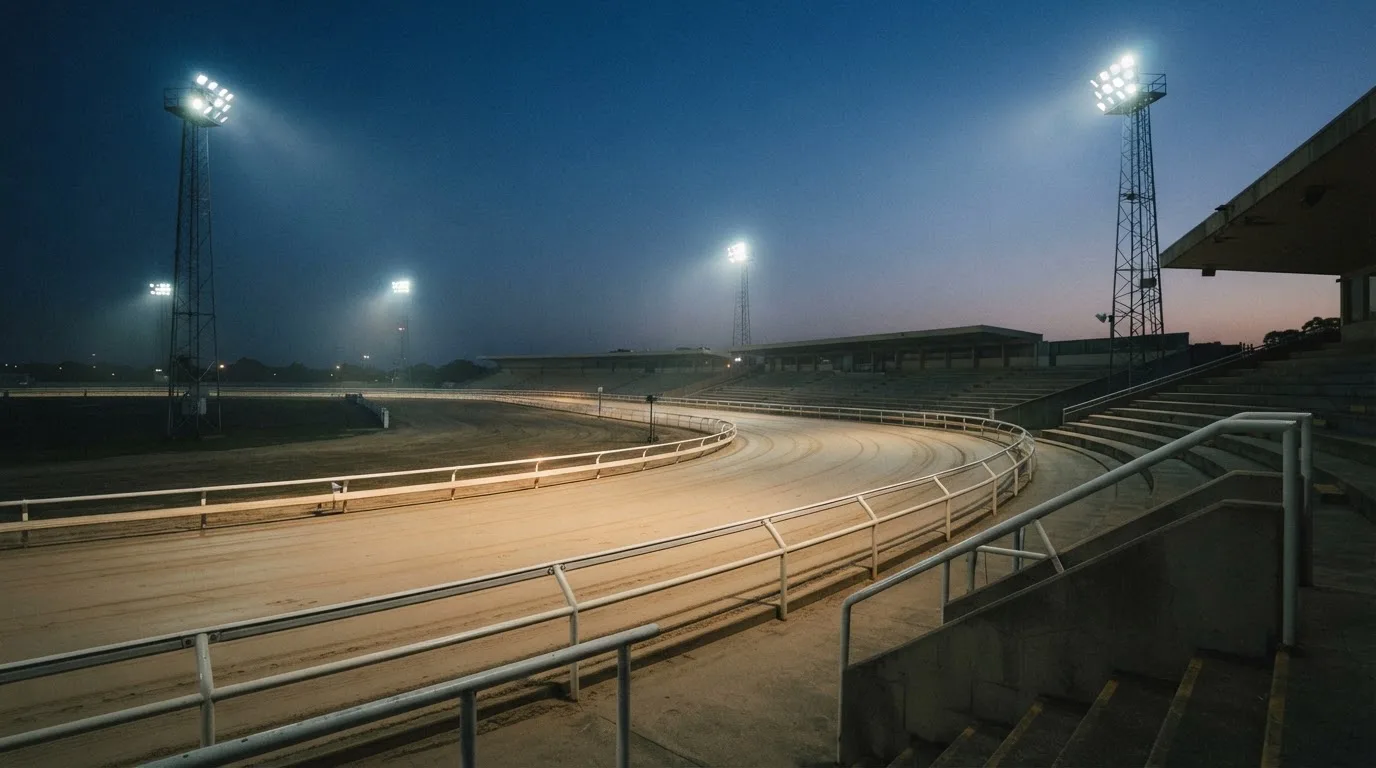
A greyhound betting app is a bookmaker’s full product squeezed into a touchscreen. The features that matter for the sport are quick navigation between meetings, in-play markets from race to race, and a bet slip that accepts each-way stakes without protest. Several reviewed brands push beyond the basics.
bet365’s app is described in its GB App Store listing as the most downloaded sports betting app in the UK, and it pairs greyhound cards with live streaming, in-play betting and a Bet Builder that can fold markets from one event into a single slip. Bet Builder+ is the named variant for combined-event betting, available pre-match and in-play, and the in-play product sits alongside Match Live and a Live Golf Tracker (the latter is horse-racing-irrelevant but illustrative of the depth).
Fitzdares publishes a premium app offering cash out, accumulators, Lucky 15s, specials and antepost markets across horse racing, football, tennis, rugby, cricket, golf and American football, with in-play live odds throughout. Greyhound coverage sits inside that antepost and specials envelope.
NetBet Sport’s app carries Daily Boosts and Profit Boosts alongside a Bet Builder with what it describes as instant dynamic odds, plus sports stats for major leagues; greyhound cards run inside the same event browser.
Bar One Racing’s app carries the rebrand to BAR 1 Betting — an Irish independent bookmaker with shop windows as far south as Curraheen Park and as far north as Dundalk — and accepts greyhound bets from UK customers within its GB app presence.
Where an app is thin, the mobile browser is the safety net. Several bookmakers run a responsive site that mirrors the app’s race card and bet slip, and a punt at the traps through a phone browser counts as the same bet as the app version, settled on the same starting price.
What separates the apps for greyhound punters
Three features decide which greyhound betting app a regular punter keeps on their home screen.

Race-card speed is the first. A card for Crayford or Perry Barr should load before the previous race’s winning time is announced. The reviews that matter here are the ones punters write on app stores about stutter, not the ones marketing teams write about smooth scrolling.
In-play depth is the second. Greyhound cards are short-cycle events: six runners, thirty seconds of action, settled before the trap doors close again. An app that offers a win market and a place market only is doing the minimum; one that opens trap-by-trap prices, a forecast market and an in-running each-way option is doing the sport justice.
Cash-out coverage is the third. Where an app offers cash out across all greyhound markets — including forecasts and tricasts — the punter can close a position before the leader hits the winning line. Where cash out is restricted to win and each-way markets, the same punter is locked in until the judge signals.
Beyond the apps, build a browser habit as well. A betting site that loads cleanly in mobile Safari or Chrome is the fallback when an app update misbehaves or when a bettor is on a device that hasn’t installed the app yet. The two routes are not interchangeable in practice — push notifications only fire from the app, and the app’s biometric login is faster than typing a password into a browser — but neither is dispensable.
Live Greyhound Betting and Cash Out: The In-Play Question
Live greyhound betting means placing a bet after the traps have opened and the race is underway. Bookmakers settle the in-play price on the result the judge signals; a bet struck at the third bend pays at the in-play odds, not the pre-race price, regardless of where the leader stood when the bet was confirmed.
The greyhound in-play product has matured. Where once it meant a win-or-lose market with one or two seconds to react, the current generation offers:
- In-running win odds that update with the leader at each bend.
- In-running place odds on the first two traps across the line.
- Forecast and tricast markets that can be struck mid-race at compressed prices.
- Cash out on singles and multiples, with the cash-out figure computed against the current in-play price and the bet’s original stake.
Cash out and what it really costs
Cash out is the bookmaker’s offer to settle a bet before the event concludes, at a figure derived from the current in-play odds. The price is always worse than the true fair value — the book keeps a margin inside the cash-out quote the way it keeps one inside the pre-race price.
For a single bet struck at decimal odds of 4.00 (£10 returns £40, profit £30), an in-play price of 3.00 with the bet looking comfortable produces a cash-out figure near £30. That looks generous. It is not. A fair cash-out at true odds of 3.00 would be £30; the book offers less, and the difference is the cash-out margin.
The honest framing is that cash out is a tool for closing a position when circumstances change — a punter wants the profit banked and the stake freed, or wants to cut a loss before it grows — and not a tool for beating the closing price. Where the in-play product is shallow, cash out is unavailable and the bet stays live until the judge signals.
Some books exclude certain markets from cash out — forecasts and tricasts are the common exclusions — and the bettor who plans to use cash out as part of their routine should check the operator’s terms before the first bet rather than at the third bend.
Greyhound Betting Tips and Strategy: What Punters Actually Do
Greyhound betting tips, greyhound racing betting strategy and greyhound betting systems are three different things, and the difference matters.
A tip is a prediction of which dog will win a specific race, usually written by a tipster with a service behind it. A strategy is a method for choosing bets across many races — staking plans, market selection, price filters. A system is a formal set of rules that produces bets from inputs (form, grade, trap, going) without human discretion.
What the form book does
Every greyhound race in Great Britain carries a form line. The columns that matter:
- Recent finishing positions at the same track or grade.
- Trap draw — the box the dog runs from, which on tight tracks biases the result.
- Time figures — sectional times, not finishing times, since grade differences scramble the latter.
- Race conditions — the distance, the grade, the going, the field size.
The form book is a tool for narrowing a field from six runners to two or three, and it works the same way for greyhounds as for horses. Where it stops is at the prediction of an outcome. Form reading reduces the number of races a punter bets on; it does not turn losers into winners.
Staking plans
A staking plan is a rule for how much to bet on each selection. The simplest are:
- Level stakes — the same amount on every bet, win or lose.
- Progressive staking — increase the bet after a loss, decrease after a win.
- Percentage staking — bet a fixed percentage of the current bank.
Each plan has a known failure mode. Level stakes survive a run of losers but cap the upside. Progressive staking can chase losses into a bank that cannot sustain them. Percentage staking compounds a winning bank and contracts a losing one. None of them changes the expected value of a bet, and that expected value is the only thing that decides whether a punter wins over the long run.
A staking plan is a tool for managing a bankroll, not a tool for beating the book. The punter who treats it as the latter is treating the symptom.
What the page does not do
No system wins at greyhound betting in the sense of producing a profit on every bet or on every series of bets. The bookmaker’s edge is built into the price, and the only way to overcome it is to find prices that are genuinely out of line with probability — which is hard, which is rare, and which is not something a tipping service can promise.
Tipping services charge for predictions; their record is their own to publish, and the punter who buys a service should weigh the price of the service against the edge it claims to deliver. A service that promises a winner per day is promising something the form book cannot deliver.
Greyhound Bet Types and Odds: How the Markets Work
Greyhound betting odds are presented in fractional form on most UK bookmakers’ sites — 5/2, 11/4, evens — with decimal equivalents beside them. The conversion is a/b → a ÷ b + 1, so 5/2 becomes 3.50 and evens becomes 2.00.
The starting price (SP) is the odds on an entry in the on-course fixed-odds market when the race begins. Bookmakers settle at SP if the punter did not take an early price, and SP applies to both horse and greyhound racing under the same convention. Best odds guaranteed (BOG) is the bookmaker’s promise to pay the higher of the early price taken or the SP — a feature worth having on a greyhound bet where late money can move the price sharply.
The markets on a greyhound card
A standard greyhound betting card carries:
- Win — the dog finishes first.
- Place — the dog finishes in the first two (or first three, depending on the field size and the operator).
- Each-way — two equal bets, one on the win and one on the place, so the stake doubles.
- Forecast — picking the first two in order.
- Tricast — picking the first three in order.
- Ante-post — betting on a race before the final declarations are made, at longer odds and with the risk of a non-runner.
Forecast and tricast payouts can be substantial on long-priced winners, and a £1 tricast on a 20/1, 33/1 and 50/1 result can pay four figures. The each-way bet is the bread and butter of greyhound betting: the place portion often returns the stake even when the dog fails to win, and the win portion carries the upside.
A greyhound bet calculator is the tool for working out what a forecast or tricast returns at a given set of prices, and most major bookmakers publish one in their help section. The arithmetic is straightforward; the calculator is a convenience, not a mystery.
Margin and what it costs the punter
The bookmaker’s margin is the share of every pound bet on a market that the book keeps, on average, over many bets. It is built into the odds as the difference between the true probability and the implied probability.
For an illustrative two-way market at decimal odds of 1.90 and 1.90 (fractional 9/10), the implied probability of each outcome is 1 ÷ 1.90 = 0.5263, and the two probabilities sum to 1.0526. The margin is 1.0526 minus 1.0000, expressed as a share of the stake: 5.26%.
That 5.26% is what the book keeps, on average, from every unit bet on this market. A six-runner greyhound race carries a larger margin than a two-way market, because more runners mean more chances for the implied probabilities to overshoot 1.00, and a typical greyhound card shows margins in the 8% to 15% range depending on the race and the book.
A punter who reads the margin into a card before placing a bet is reading the price more honestly than one who reads the odds alone. The odds say what a winning bet returns; the margin says what every losing bet costs.
Greyhound Racing: Stadia, Meetings and Where to Find the Cards
Greyhound racing in Great Britain runs under the Greyhound Board of Great Britain (GBGB), which licenses eighteen stadia. The sport runs almost year-round, with meetings several nights a week at the larger tracks and afternoon cards at the smaller ones.
The major stadia — Belle Vue, Perry Barr, Towcester, Crayford, Hove, Monmore — stage graded racing, with the top grades carrying the best form lines and the longest odds on outsiders. Smaller tracks stage lower-graded racing, where form is shorter and favourites win more often, and where a punter with a sharp eye for a class drop can find prices out of line with probability.
Tournaments and feature meetings
The greyhound derbies are the sport’s championship meetings. The English Greyhound Derby and the Scottish Greyhound Derby both attract antepost markets months in advance, with the bookmakers offering enhanced odds on the early declarations and tightening the price as the final fields firm up. A derby antepost bet carries a non-runner risk that the punter should price in — a dog withdrawn before the final reduces the field but does not void the bet.
Outside the derbies, feature meetings at Catford, Wimbledon and Shelbourne Park (the last across the Irish Sea) draw the bigger fields and the bigger pools.
Where the cards appear online
Every reviewed bookmaker publishes a greyhound card from a GBGB-licensed track each evening. The card lists the race number, the scheduled start time, the trap draw, the runners and the current odds, and updates in real time as the betting market moves.
A punter who wants to bet across several meetings at once can do so from a single slip on most reviewed books — selecting race 4 at Belle Vue, race 6 at Towcester and race 8 at Crayford, building an accumulator across the three races with a single stake. The accumulator’s odds multiply into one price, and the payout follows the formula in the next section.
Top 10 Greyhound Betting Sites: The Reviewed Brands
The brands below are the ten featured operators from this site’s review set, each a holder of a Gambling Commission remote licence for Great Britain. They are presented as reviewed bookmakers, not as a ranking: one of them may suit a punter who wants a £5 stake on a Crayford place; another may suit a punter who wants a six-figure account at a tightly capped membership. The choice depends on the bettor.
The table below lists each brand’s Gambling Commission licence number and holder, and what the operator’s own terms state on the key question of greyhound markets, offers and limits. Where a brand’s terms do not cover a point, the cell reads “not stated”.
| Brand | Gambling Commission remote licence number and licence holder | What the operator’s own terms state on the key’s subject |
|---|---|---|
| Bar One Racing | 056516-R-332750-007, Bar-One Racing Limited | Irish independent bookmaker rebrand as BAR 1 Betting, with shop sponsorship at Dundalk, Fairyhouse, Navan, The Curragh, Curraheen Park and Cork |
| BetGoodwin | 002927-R-327985-008, Goodwin Racing Limited | Sports welcome is a £10 stake triggering £15 in free bets, split as a £5 sports bet, a £5 acca and a £5 Sub-Cover bet |
| Fitzdares | 000400-R-103839-030, Fitzdares Limited | Premium app offering cash out, accumulators, Lucky 15s, specials and antepost markets, with in-play live odds |
| Coral | 054743-R-330863-014, LC International Limited | £20 sports bet at minimum odds of 2.0 (1/1) triggers £40 in free bets, issued within 7 days and expiring 7 days after issue |
| Kalooki Sportsbook | 057730-R-333396-005, Kalooki Sportsbook Limited | Operated by Kalooki Sports Book Ltd (company number 12938274), GAMSTOP member |
| Betmaster | 065699-R-339929-002, BM Solutions GB Ltd | Football, cricket, horse racing, NFL and eSports (League of Legends, Dota 2) coverage; greyhound markets not stated on the App Store listing |
| Sky Bet | 067370-R-341330-005, SBG Sports Limited | Free bets expire 30 days after crediting, singles and each-way only (multiples excluded), virtuals excluded, non-withdrawable, stake not returned with winnings |
| 10bet | 043173-R-322899-023, Blue Star Planet Limited | Football, tennis and horse racing coverage with cash out, Bet Builder and live streaming; greyhound markets not stated on the App Store listing |
| NetBet | 039170-R-319343-032, Netbet Enterprises Limited | Daily Boosts, Profit Boosts and free bet offers, Bet Builder with instant dynamic odds, plus sports stats for major leagues |
| Fitzwilliam Sports | 048760-R-335434-009, SBKI Limited | Dublin bookmaker with capped membership and a “High Stakes Welcome” subject to compliance criteria; instant deposits, timeouts and deposit limits; links to GambleAware, GamStop and Gamblers Anonymous |
What the table shows is the spread of business models behind the GB licence. Bar One Racing is an Irish independent with shop heritage. Fitzdares is a premium-priced bookmaker. Coral is part of a major multi-brand group — LC International Limited also operates Ladbrokes — and the licence number is the proof, not a coincidence. Sky Bet is the bookmaker’s bookmaker for free-bet-heavy welcome offers, and the published expiry and exclusion list is the proof. Fitzwilliam Sports is a closed-membership bookmaker, with the “High Stakes Welcome” as its route in for the larger punter.
What the table cannot show is which of these suits a particular greyhound bettor. The reviews below carry that judgement.
Bar One Racing — the Irish independent with GBGB greyhounds on the card
Bar One Racing runs as BAR 1 Betting on the App Store and carries a Gambling Commission remote licence as Bar-One Racing Limited. The Irish heritage — shop windows at Dundalk, Fairyhouse, Navan, The Curragh, Curraheen Park and Cork — gives the brand a racing-first sensibility, and greyhound cards run alongside the horse racing product.
For a punter who wants a bookmaker with shop-level familiarity with greyhound form and a GB-licensed product, Bar One Racing sits comfortably in the comparison. The brand’s published welcome is not in the App Store listing reviewed, so the punter checks the BAR 1 Betting welcome terms for the free-bet structure before claiming.
The verdict: a solid choice for the greyhound bettor who appreciates established trackside heritage, with the antepost markets offering a traditional feel.
BetGoodwin — the small-stake welcome with three free bets
BetGoodwin’s sports welcome offers three free bets for a single qualifying stake: a £10 sports bet unlocks a £5 sports free bet, a £5 acca free bet and a £5 Sub-Cover free bet. The structure rewards a punt who plans to use the free bets across three different market types rather than rolling them into one accumulator.
The split welcome is unusual. Most bookmakers offer a single free bet or a matched free bet; BetGoodwin splits the credit across three formats, and a punter who understands the difference between a sports free bet, an acca free bet and a Sub-Cover free bet extracts more value than one who treats them as interchangeable.
The verdict: a distinctive offer for punters who prefer a tiered free-bet structure over a single large credit, keeping the Sub-Cover option as a primary draw.
Fitzdares — the premium bookmaker with cash out and Lucky 15s
Fitzdares runs a premium-priced app offering cash out, accumulators, Lucky 15s, specials and antepost markets. The brand’s positioning is the high-stakes end of the market, and the antepost greyhound markets are part of that envelope.
A Lucky 15 is a 15-bet combination covering four selections in singles, doubles, trebles and a four-fold accumulator. For a greyhound punter who bets across four meetings, the Lucky 15 structure is one way to add an accumulator dimension to a card of singles.
The verdict: a fit for the larger-stake greyhound punter who values the antepost product and the Lucky 15 format, less suited to a casual bettor who wants a £5 stake.
Coral — the big-brand welcome with a £20 trigger and £40 payout
Coral’s sports welcome is “Get £40 in Free Bets when you bet £20”: a £20 deposit and sports bet at minimum odds of 2.0 (1/1) unlocks £40 in free bets, issued within seven days and expiring seven days after issue. The terms apply to new GB customers who opt in.
The Coral offer is the simplest shape in the comparison: one qualifying bet, one payout, one expiry. A punter who wants a clear welcome without the multi-step structure of BetGoodwin’s split free bet has Coral’s structure.
The verdict: a straightforward welcome for new accounts, backed by the reliability and infrastructure of the larger LC International Limited group.
Kalooki Sportsbook — the GAMSTOP-member operator with a single betting product
Kalooki Sportsbook is operated by Kalooki Sports Book Ltd (company number 12938274) and licensed under Gambling Commission account 57730. The brand is a GAMSTOP member and runs a single betting product without the casino, poker or bingo extras that several larger brands carry.
The single-product focus is a fit for a punter who wants a bookmaker without a casino side-product pulling at the bankroll. The greyhound product is part of the racing offering; the casino product is not part of the offering at all.
The verdict: focused on a distraction-free experience, this operator simplifies the betting process by stripping back secondary products like casino games.
Betmaster — the football-and-eSports bookmaker with greyhound markets not stated
Betmaster is published by Bm Solutions Gb Limited (BM Solutions GB Ltd on the register) and covers football, cricket, horse racing, NFL and eSports (League of Legends, Dota 2). The App Store listing reviewed does not state greyhound coverage, so a greyhound bettor checks the Betmaster site for the greyhound product before opening an account.
A bookmaker that runs eSports and horse racing without a published greyhound product is not necessarily greyhound-free — most GB-licensed books run at least a win and place market — but the bettor who cannot confirm the card should not assume the same depth as a racing-first bookmaker.
The verdict: a possible choice for a greyhound bettor who is also an eSports punter and wants a single account for both, with the greyhound product to be verified on the Betmaster site before the first bet.
Sky Bet — the free-bet-heavy bookmaker with explicit stake rules
Sky Bet’s free bets expire 30 days after crediting, are usable only on single or each-way markets (multiples excluded), exclude virtuals, are non-withdrawable and do not return the stake with winnings. The published rules are the most explicit in the comparison and the most useful to a punter who plans a calendar of qualifying bets.
The non-return of stake is the headline. A £10 free bet at decimal odds of 4.00 returns £40 in profit, not £50 in return — the £10 stake is gone whether the bet wins or loses. The expiry is the second headline: a 30-day window is generous by comparison with Coral’s 7-day window, but a punter who fails to use the free bet inside that window loses it.
The verdict: designed for systematic bettors who value transparent terms and conditions, particularly given the extended 30-day window for using free bet credits.
10bet — the football-and-tennis bookmaker with cash out, Bet Builder and live streaming
10bet’s sportsbook covers football, tennis and horse racing, with cash out, Bet Builder and live streaming. The App Store listing reviewed does not state greyhound coverage, so a greyhound bettor checks the 10bet site for the greyhound product.
The combination of cash out, Bet Builder and live streaming is the strongest feature set in the comparison, and a book that carries those three on greyhound markets — which the bettor verifies on the 10bet site — gives the punter the in-play tools discussed earlier.
The verdict: well-suited for punters who prioritize in-play analytics, provided the specific greyhound card aligns with their betting preferences.
NetBet — the Daily Boost and Bet Builder bookmaker with instant dynamic odds
NetBet Sport’s app carries Daily Boosts, Profit Boosts and free bet offers, a Bet Builder with what the brand describes as instant dynamic odds, and sports stats for major leagues. The greyhound product runs inside the same event browser.
The instant dynamic odds on the Bet Builder is a feature worth a second look. Most Bet Builders present a price that updates as the punter adds legs; NetBet’s claim is that the update is faster than the market norm, and a greyhound punter who builds a forecast or tricast across two races gets the price quicker than on a book that recomputes the slip manually.
The verdict: a strong option for users who frequently employ Bet Builder tools, where the rapid price updates offer a tangible efficiency for building exotic bets.
Fitzwilliam Sports — the capped-membership bookmaker with a “High Stakes Welcome”
Fitzwilliam Sports describes itself as a Dublin bookmaker with capped membership. The welcome is a “High Stakes Welcome” subject to compliance criteria, and the platform offers instant deposits, fast withdrawals, timeouts and deposit limits, with links to GambleAware, GamStop and Gamblers Anonymous.
The capped membership is the headline: this is a bookmaker that does not accept every applicant, and the “High Stakes Welcome” is the route in for the larger punter. A casual bettor with a £10 stake does not fit the membership criteria; a bettor with a serious bankroll and a compliance-friendly profile does.
The verdict: a fit for the larger-stake greyhound bettor who values a tightly capped membership, not a fit for the casual punter. The compliance criteria are the gate; the welcome is the reward for passing through it.
Greyhound Betting in Great Britain: How the Sport and the Law Sit Together
Greyhound racing in Great Britain is regulated by the Greyhound Board of Great Britain (GBGB), which licenses eighteen stadia. The GBGB’s role is the welfare and integrity of the sport — licensing tracks, doping controls, grading — and the betting product that runs alongside the racing is regulated separately, by the Gambling Commission.
The Commission’s framework is the Gambling Act 2005. A bookmaker serving customers in Great Britain needs a remote operating licence — the kind that covers remote general betting standard (real events) — wherever the bookmaker is based. Since the Gambling (Licensing and Advertising) Act 2014, a Curaçao, Maltese or Gibraltar licence is not a substitute for a Commission licence at the point of consumption. The Commission’s public register is the whole test of who holds one, and it is searchable by business name, trading name, domain or account number.
There is no statutory list of permitted bets or markets. An operator holds a licence for a category and offers markets under its own rules and the Licence Conditions and Codes of Practice (LCCP). The greyhound card a punter sees on a GB-licensed site is a product of the operator’s choice, the LCCP’s social responsibility code, and the GBGB’s rules on what races may be staged.
Offshore sites and what they don’t give a punter
A GB licence is compulsory at the point of consumption. Providing gambling facilities in Great Britain without the licence the Act requires is an offence under section 33 of the Gambling Act 2005 — on summary conviction up to 51 weeks’ imprisonment, a fine up to level 5, or both (six months in Scotland) — aimed at the operator.
For a punter, the practical question is what an unlicensed site does not provide: no GAMSTOP coverage, no Commission complaints route, no approved dispute-resolution body, no British consumer redress if funds are withheld, not bound by the 10x bonus cap or the £150 vulnerability check. A punter who bets on an unlicensed site does not commit an offence under the Act, but loses the protections the licence brings. Honest framing: licensed means checks, limits, GAMSTOP, the bonus cap and verification before the first bet; unlicensed means none of those protections and possible loss of funds.
Verification and what it costs the punter in time
Name, address and date of birth are verified before a customer can deposit or gamble at a GB-licensed site. The rule has been in force since 7 May 2019 and applies to free bets and bonuses as well as to cash deposits. A punter who opens an account and tries to deposit before verification is blocked; the verification is the gate.
The verification is what makes GAMSTOP workable. A punter who has self-excluded through GAMSTOP cannot open a new account at a GB-licensed site, because the verification step rejects the new account when the GAMSTOP record matches.
Responsible Gambling: Limits, Self-Exclusion and Help
GAMSTOP is the national multi-operator online self-exclusion scheme, and a mandatory licence condition for online operators since 31 March 2020. Exclusion periods are six months, one year, five years, or five years with auto-renewal, and after the minimum period the exclusion stays in place for a further seven years unless the customer asks GAMSTOP to remove it.
GAMSTOP covers online sites and apps. Betting shops use a separate service. The distinction matters: a punter who self-excludes through GAMSTOP is not excluded from a betting shop, and a punter who self-excludes through the shop service is not excluded online.
The financial vulnerability check
Since 28 February 2025, a financial vulnerability check has applied to licensed remote betting when a customer’s deposits minus withdrawals exceed £150 in a rolling 30 days. The check is a public-record check — bankruptcy or county court judgments — not an income check and not a credit reference check.
A punter whose deposits-minus-withdrawals stay below £150 will not see the check; a punter whose betting crosses the threshold will. The check is the operator’s first line of defence for the financially vulnerable customer, and it is separate from the announced financial risk assessments (the “affordability checks” of the press), which are announced in a staged plan with no start date.
Deposit limits
Operators must offer a gross deposit limit on a fixed time frame. The first changes have applied since 31 October 2025, a second phase was postponed to 30 September 2026, and whether it is live is not established. There is no state-set deposit or loss ceiling for betting: limits are the customer’s choice.
A punter who wants a hard ceiling sets it through the operator’s responsible-gambling page. The ceiling is the punter’s, not the regulator’s, and a punter who sets a £50 weekly deposit limit and then asks the operator to raise it after a losing week is asking the operator to override the punter’s own choice.
Where to get help
GamCare runs the National Gambling Helpline. GambleAware funds treatment and research. NHS gambling clinics operate in several regions. Gamblers Anonymous runs peer-support meetings.
Fitzwilliam Sports’s site, as an example, links to GambleAware, GamStop and Gamblers Anonymous from its responsible-gambling page — a standard layout across the reviewed brands, with the brand’s own responsible-gambling page the first port of call for a punter who wants to set a limit or self-exclude.
Greyhound Betting Offers and Free Bets: What They Cost
A greyhound betting offer is a bookmaker’s incentive to open an account, place a first deposit or place a first bet. The shape varies across the reviewed brands.
Coral’s offer is “Get £40 in Free Bets when you bet £20”: a £20 deposit and sports bet at minimum odds of 2.0 (1/1) unlocks £40 in free bets, issued within 7 days and expiring 7 days after issue.
BetGoodwin’s offer is “Bet £10 & Get £15 in Free Bets”, split as a £5 sports free bet, a £5 acca free bet and a £5 Sub-Cover free bet.
Sky Bet’s free bets expire 30 days after crediting, are usable only on single or each-way markets (multiples excluded), exclude virtuals, are non-withdrawable and do not return the stake with winnings.
NetBet Sport offers Daily Boosts, Profit Boosts and free bet offers across the platform.
The marketing word for these is “free”. The arithmetic word is “conditional”. A free bet is a credit that pays the profit, not the stake; the stake is the price of the credit. A £10 free bet at decimal odds of 4.00 returns £40 profit, not £50 return, because the £10 stake is gone whether the bet wins or loses.
What a free bet is worth
For a free bet whose stake is not paid back, the value is the free-bet amount multiplied by (odds minus 1) divided by odds, then multiplied by the payout share of that market.
A £10 free bet at decimal odds of 4.00 on a market with a 95% payout share returns approximately £10 × (4.00 − 1) ÷ 4.00 × 0.95 = £7.13 in expected value. That £7.13 is what the free bet is worth on average across many bets at that price on that market; a single bet at those odds wins or loses based on the outcome.
Wagering requirements and the 10x cap
Promotion rules in force since 19 January 2026 cap wagering requirements on bonuses at 10x. A £10 bonus at 50x wagering required £500 of bets; under the cap no more than £100 of wagering is required.
The cap does not apply to free bets with no wagering condition, and the cap on the money value of a bonus is not established. A punter who sees a bonus offer reads the wagering requirement and checks whether it is capped; an uncapped 50x bonus is now a non-standard game, and a punter who values certainty of cost picks the capped version.
Mixed-product promotions
Mixed-product promotions — an offer that requires gambling on two or more product types such as betting, casino, bingo and lottery — are banned since 19 January 2026. A punter who sees a “bet on football to get free spins” offer does not see one at a GB-licensed bookmaker.
Enhanced odds and price boosts
Enhanced odds and price boosts are bookmaker-side adjustments to the price of a specific market. A typical boost takes a horse from 5/1 to 10/10 (or from 6.00 to 11.00 in decimal form), and the boosted stake is usually paid in free bets or capped at a small qualifying stake.
The boosted price is genuine value where it crosses the true probability — a boost from 5/1 to 10/1 on a 9/1 shot is a 10% edge before the bookmaker’s margin — but rare. Most boosts land inside the margin the book already keeps, and the punter who reads the margin before the boost sees the same shape at a higher number.
Greyhound Racing Outside Great Britain: The New Zealand Phase-Out
Greyhound racing in New Zealand was ended by the Racing Industry (Closure of Greyhound Racing Industry) Amendment Act 2026, passed on 2 April 2026, with the phase-out set for 1 August 2026. The closure followed an announcement by Winston Peters on 10 December 2024 that greyhound racing in New Zealand would be banned and phased out by 2026.
Before the ban, Greyhound Racing New Zealand (GRNZ) organised seven affiliated clubs: Auckland, Waikato, Whanganui, Palmerston North, Canterbury, Otago and Southland. The clubs’ tracks hosted the racing meetings; the betting product was the TAB and the on-course bookmakers.
For a UK punter, the New Zealand phase-out is relevant only as context. Greyhound racing in Great Britain continues under the GBGB; the New Zealand closure does not affect the GBGB-licensed meetings or the greyhound betting product at GB-licensed bookmakers. The two jurisdictions run on different laws.
A punter who bets on New Zealand greyhounds through an international bookmaker should check the bookmaker’s terms on the affected meetings after 1 August 2026. Markets will be suspended, settled void or settled on the last completed meeting depending on the bookmaker’s house rules.
Payouts, Payments and the Mechanics of a Greyhound Bet
Working out the return
For a single bet, the return is the stake multiplied by the odds. A £10 bet at decimal odds of 4.00 returns £40, with £30 net profit (the £10 stake plus £30 winnings). At fractional odds of 5/2, the return is £10 × (5 ÷ 2 + 1) = £35, with £25 net profit.
For a combination bet, the odds of the legs multiply into one price. A two-leg accumulator at decimal odds of 3.00 and 4.00 has combined odds of 3.00 × 4.00 = 12.00, and a £10 stake returns £120 with £110 net profit if both legs win. The combined odds are not the sum of the legs; they are the product.
For an each-way bet, the stake doubles. A £10 each-way bet is £10 on the win and £10 on the place, total stake £20. The place portion pays at a fraction of the win odds (typically 1/4 or 1/5, depending on the field size), and the win portion pays in full. A £10 each-way bet at 5/1 with 1/4 place terms returns £10 × (5 + 1) = £60 if the dog wins (win portion) plus £10 × (5/4 + 1) = £22.50 if the dog places in the first two (place portion), total return £82.50, with net profit £62.50 against the £20 total stake.
Margin and what it says about a market
The margin of a market is 1 minus the payout share. The payout share is 1 divided by the sum of the implied probabilities — 1/odds₁ + 1/odds₂ + … + 1/oddsₙ — over all outcomes of one market.
For the two-way example at 1.90 and 1.90, the payout share is 1 ÷ (1/1.90 + 1/1.90) = 1 ÷ 1.0526 = 0.9500, and the margin is 1 − 0.9500 = 0.0500, or 5.00%.
For a six-runner greyhound race at decimal odds of 4.00, 5.00, 6.00, 8.00, 12.00 and 26.00, the implied probabilities sum to 1/4.00 + 1/5.00 + 1/6.00 + 1/8.00 + 1/12.00 + 1/26.00 = 0.2500 + 0.2000 + 0.1667 + 0.1250 + 0.0833 + 0.0385 = 0.8635, and the payout share is 1 ÷ 0.8635 = 1.1580 — which is greater than 1, meaning the odds are worse than fair. The margin is 1.1580 − 1.0000 = 0.1580, or 15.80%.
That margin of around 15.8% is typical for a greyhound card. A six-runner race with a 5/4 favourite on top of the card carries a smaller margin (around 8% to 10%); a six-runner race with a long-priced outsider on top carries a larger one.
What the punter does with the margin
A punter who reads the margin on a card is deciding whether the price is worth taking. A market at 5% margin is a thin book — the punter pays 5p in book edge for every pound staked, and a small edge on probability lands the punter ahead. A market at 15% margin is a fat book — the punter pays 15p in book edge, and the edge on probability has to be larger to overcome it.
The honest framing is that most greyhound betting markets sit between 8% and 15% margin, and the punter who beats the margin consistently is doing something the form book alone cannot explain.
Spread betting on greyhounds
Spread betting is a separate product from fixed-odds betting. Spreadex, for example, is regulated by the FCA for spread betting and by the Gambling Commission for fixed-odds betting. Spread betting on greyhounds works through a quoted spread (a “sell” price and a “buy” price), and the punter’s profit or loss is the difference between the spread and the result, multiplied by the stake.
Spreadex’s site states that spread betting losses can exceed the deposit. The statement is the regulatory requirement for spread-betting products, where the punter’s loss is not capped at the stake the way it is for fixed-odds betting.
A punter who chooses spread betting on greyhounds accepts the loss-can-exceed-deposit exposure. A punter who wants the fixed-odds cap on losses stays with the fixed-odds product.
Payment Methods at Greyhound Betting Sites
Credit cards are banned for gambling in Great Britain since 14 April 2020, including credit-card-funded payments through an e-wallet. Debit cards and bank-based payments are not covered by the ban.
A British named-account rule, a state list of permitted payment methods and any rule for or against cryptocurrency deposits at licensed operators are not established. Payments are described qualitatively from each operator’s terms.
The reviewed brands accept debit cards as the baseline, with several accepting bank transfer and e-wallets. The e-wallet landscape changes frequently — providers come and go, and a punter who relies on a specific wallet checks the operator’s banking page before opening the account.
Identity verification before the first deposit means no anonymous play at a licensed site. A punter who prefers anonymity accepts that GB-licensed operators do not offer it.
Betting Tax in Great Britain
The player pays no tax on betting winnings in Great Britain. General Betting Duty is the operator’s tax on gross profits, currently 15%; from 1 April 2027 a new remote betting rate of 25% applies within it, while remote bets on UK horse racing, bets on self-service betting terminals in licensed premises, pool betting and in-person betting stay at 15%. Until 1 April 2027 the remote rate stays at 15%.
Whether operators pass duty on through odds is not established, and a punter never assumes the duty is passed on. The duty is the operator’s, not the punter’s.
The Commission’s statutory levy is a separate charge, not a tax.
Advertising and the Greyhound Betting Product
Advertising is not licensed by the Commission; it runs through the CAP Code (non-broadcast) and BCAP Code (broadcast), enforced by the ASA, alongside the LCCP marketing conditions. CAP Code section 16: marketing must be socially responsible, must not be of strong appeal to under-18s, and no one who is or seems to be under 25 may be featured gambling or play a significant role.
The “whistle-to-whistle” rule is an industry code, not law: since 1 August 2019 betting advertisements are not shown on TV from five minutes before a live sporting event to five minutes after it, before the 9pm watershed. Horse and greyhound racing are excluded from the rule, which is why greyhound betting ads appear on racing channels during live coverage.
Operators are responsible for marketing by their affiliates. A punter who clicks an affiliate banner and lands on a GB-licensed site is on a GB-licensed site, and the responsible-gambling protections apply regardless of the route in.
Frequently Asked Questions
How is a bet placed on greyhound racing?
Pick a bookmaker from a licensed list, open an account, complete the verification step (name, address, date of birth), deposit by debit card or bank transfer, navigate to the greyhound card, select the race and the trap, choose the market (win, each-way, forecast, tricast), enter the stake, and confirm the bet before the off. The book settles at SP if no early price was taken, or at the early price if BOG applies and the SP is lower.
How is a bet placed on greyhound dogs?
The mechanics are identical: a bet on a greyhound is the same as a bet on a horse, in the same slip, with the same odds format and the same stake. The difference is the card layout — trap number instead of stall number, six runners instead of a larger field — and the form book columns, which include trap bias at tight tracks. The punt is the same: pick a price, place a stake, settle on the judge’s signal.
How is a greyhound bet won?
A greyhound bet is won when the selection finishes in the position the market pays for. A win market pays on first place; an each-way bet pays on first place (win portion) and on first or second (place portion, at the place fraction of the win odds); a forecast pays on the first two in the correct order; a tricast pays on the first three in the correct order. The form book does not turn losers into winners; it narrows the field. The bet is won or lost on the result.
How can it be checked that a bookmaker holds a Gambling Commission licence?
The Commission’s public register is searchable by business name, trading name, domain or account number. The register is the whole test of who holds a licence. A punter who sees a licence number on a bookmaker’s site enters it into the register and confirms the holder, the licence categories and the status. The register is the proof, not the licence number on the bookmaker’s marketing page.
How is the return on a bet worked out from the stake and the odds?
For a single bet at decimal odds, the return is stake multiplied by odds. A £10 stake at decimal odds of 4.00 returns £40, with £30 net profit (the £10 stake plus £30 winnings). For a combination bet, the odds of the legs multiply into one price, and a £10 stake on a two-leg accumulator at 3.00 and 4.00 returns £120 with £110 net profit if both legs win. For an each-way bet, the stake doubles — £10 each-way is £20 total — and the place portion pays at a fraction (typically 1/4 or 1/5) of the win odds.
What is the bookmaker’s margin and how can it be seen in the odds?
The margin is the share of every pound bet on a market that the book keeps, on average. It is built into the odds. For a two-way market at 1.90 and 1.90, the implied probabilities (1/odds for each outcome) sum to 1.0526, and the margin is 5.26% — the book keeps 5.26p from every pound staked on average. A six-runner greyhound race carries a margin between 8% and 15% depending on the price distribution. The margin is the bookmaker’s edge, the price is the punter’s cost.
Horse racing & greyhounds – systembetsguide.com
Content created by the «systembetsguide.com» team
