
Cycling betting tips 2026: how to read form, find value, and stake without overpaying the bookmaker
 Available in US
Cycling betting is a market of small fields and long shots. Twenty-three teams roll out of a Grand Tour start village, a yellow jersey changes hands across three weeks, and the headline price on the favourite is shorter than the true chance of winning. Tips sheets tend to skip that gap. This guide works through it: how a prediction is built, what a value bet is, how the bookmaker’s margin sits inside every price, and what the UK’s licensing and safer-gambling rules do to the way a punter should bet. The aim is a reader who can read a market, judge whether the price is fair, and walk away when it isn’t.
Data current as of 30 October 2026 and cross-checked against the Gambling Commission’s public register.
Top 10 UK bookmakers for cycling betting at a glance
Ten operators hold a Gambling Commission remote licence for Great Britain and are reviewed below. Each one lines up cycling in different ways — some through outright markets on the Grand Tours, some through daily stage or head-to-head prices, a handful through bet builders on a stage, and a few through outright winner markets that stay open for months. The table sets them side by side on the points a cycling punter actually checks first.
| Operator | Gambling Commission licence | What the operator’s own terms state on cycling |
|---|---|---|
| Spreadex | Remote general betting standard (real events) — account 8835, held by Spreadex Limited | Fixed-odds and spread betting in one app; Best Odds Guaranteed and live streaming are tied to horse racing, greyhounds, tennis, NFL and selected football — cycling is not in the streamed set |
| BAR 1 Betting (formerly Bar One Racing) | Remote general betting standard (real events) — account 56516, held by Bar-One Racing Limited | An Irish independent bookmaker with shops across Ireland and racing sponsorships at Dundalk, Fairyhouse, Navan, The Curragh, Curraheen Park and Cork; the listed specialism is horse racing |
| Smarkets | Remote betting intermediary — account 39173, held by Smarkets (Malta) Limited | A betting exchange; cycling is offered as back and lay markets with rates and rules stated in the exchange’s own terms |
| William Hill | Remote general betting standard (real events) — account 39225, held by WHG (International) Limited | Best Odds Guaranteed runs from 8 AM on the day of a UK or Irish horse race on single and multiple bets; cycling is not covered by the BOG rule |
| BetMGM | Remote general betting standard (real events) — account 39198, held by LeoVegas Gaming PLC | A welcome package of four £10 free bets for new UK customers who deposit £10 and place a sports bet within 7 days; no cycling-specific terms surfaced in the operator’s stated conditions |
| Midnite | Remote general betting standard (real events) — account 101839, held by Midnite Limited | A £25 free-bet and 50 free-spins welcome for new customers betting £5 at EVS (2.0) or greater within 14 days; in-play events, an acca builder and price boosts with maximum-stake limits |
| Paddy Power | Remote general betting standard (real events) — account 39439, held by PPB Counterparty Services Limited | Coverage across football, horse racing, boxing, rugby, tennis, golf, darts, snooker and F1; the operator’s own terms name those sports without flagging cycling as a featured line |
| Betboro | Remote general betting standard (real events) — account 44181, held by Webmedia Development N.V. | A 100% matched free bet up to £25 on the first qualifying wager, debit card deposit of at least £10, first bet of £5 to £25 with at least three selections at 3/5 (1.60) or higher |
| Octobet | Remote general betting standard (real events) — account 62545, held by Octopus Game Limited | A 50% back-as-free-bet welcome up to £50, plus a £10 casino bonus for new customers |
| BetVictor | Remote general betting standard (real events) — account 39576, held by BV Gaming Limited | Best Odds Guaranteed on UK and Irish horse racing, enhanced live race streaming, a BetFinder for racing bets and Smart Stats; cycling is not in the streaming or BOG scope |
The same warning sits underneath every row: the licence number is one fact, and the cycling offering is a different one. A brand can hold every Commission permission for remote betting and still be thin on stage-race markets. The right test is the operator’s own sportsbook in the week before a Grand Tour — and the table shows what the operators’ own stated terms say today.
The fundamentals every cycling tip rests on
A cycling tip is a probability dressed up as a price. Strip the costume and the work is the same as for any other sport: form, course, line-up, market.
Form is the recent shape of the rider. For a Grand Tour, that means the last ten to fourteen days of racing, not the last result on a spring classic. A rider who podiumed at the Dauphiné a fortnight before the Tour is a different proposition to one who rested into July. Track racing, time trials and one-day races each weight form differently; a punter who treats them as one number pays for the confusion.
Course is the second leg. A flat opening week in the Tour de France tilts the GC picture towards sprinters and rouleurs; a mountain block from stage four is a different race, and any price set before the route was confirmed is stale. The 2026 Tour started in Barcelona with a team time trial and finished on the Champs-Élysées over 21 stages and 3,245 km — that route profile is itself a tip, because a TTT opener compresses the GC gap before the mountains do their work.
Line-up is the third leg and the one most often skipped. Twenty-three teams, eight riders each, and a Grand Tour leader rarely rides into form for free — domestique work costs watts. UAE Team Emirates built the 2026 Tour win around Tadej Pogačar, his fifth Tour victory, and the way the rest of that squad rode was the line-up in action. A punter who backs a leader without checking who is in their support roster is pricing the jersey, not the team.
Market is the fourth leg. Every bookmaker offers the same race but not the same prices, and the spread between the best and the worst outright on the day the race starts is wide enough to change a value bet into a poor one. The trick is to read the market, not the team sheet.
What a value bet actually is
A value bet is a price that is larger than the true chance of the outcome. If a rider has a 25% chance of winning a stage and the bookmaker offers 5.00, the implied probability is 20% — the price is larger than the chance, and the bet is value. If the same rider is 6.00 elsewhere, the implied is 16.7% and the value is wider still. If the price is 3.50, the implied is 28.6% and the bet is a loser before the wheels turn.
The arithmetic is the same in every market, from a Grand Tour outright to a head-to-head on a single stage. The bookmaker’s margin sits on top of the true probabilities, and a value bet is one where the price beats that margin and then some. A tipster who tells a reader to back a winner is selling certainty; a tipster who names a price and a probability is selling an edge. The first is worthless; the second is the only thing worth paying for.
Why no tip is ever certain
A stage race is twenty-one days long and three weeks of weather, crashes, illness and form swings. Even a 1.50 shot on a dominant rider can lose to a Tuesday in the rain. The bookmaker’s margin guarantees a long-run profit to the house, not to the punter, and any tip that promises a winner is selling a story the maths won’t back. The honest version: place a value bet, stake what the bank allows, and treat the win as a probability, not a promise.
How the bookmaker’s margin sits inside every price
The margin is the cut the bookmaker keeps on every market, and it is the one number a cycling punter should learn to see. It is hidden in the prices, and it is what turns a fair coin into a losing one.
Take a two-way market at decimal odds 1.90 / 1.90 — the same price on each side. The implied probability on each side is 1 ÷ 1.90 = 52.63%, and the two probabilities add to 105.26%. The 5.26% over 100% is the overround, and the margin is 1 − (1 ÷ 1.0526) = 4.76% to 5.26% depending on how the rounding is done. A betting exchange with no margin on either side would be 1.90 / 1.90 with the two probabilities adding to 100%, and the difference between that and what a bookmaker offers is what the bookmaker keeps.
A wider market carries a wider margin. A Grand Tour outright with twenty-three teams priced up is a 23-way book, and a margin of 30% to 40% is normal before the race starts; even a “competitive” outright rarely drops below 20%. A two-way head-to-head on a single stage will be closer to 5% to 8% on a quiet day. The same race, two different markets, two different margins — and the value bet, where it exists, sits in the one with the thinner margin.
The arithmetic works on every market, but the conclusion does not. A margin of 5% on a two-way market is a band, not a point — the rounding of the price pushes the result a few basis points either way. State the band and the condition; do not pin a single percentage on a market whose true margin moves with the book.
Staking and bankroll: what survives a losing run
A bankroll is the amount a punter has set aside to lose. The stake on any single bet is a fraction of that bankroll, and the fraction is the difference between a long-run edge and a short-run wipeout.
The two rules that work for cycling:
- A flat unit of 1% to 2% of the bank on any bet. The unit is the same whether the bet is a 6.00 shot on a domestique for the stage or a 1.50 shot on the GC favourite. Flat staking removes the temptation to chase a price, and it is the staking plan most often recommended by the maths.
- A stop-loss at the session or the day. Cycling is concentrated in three Grand Tours and a handful of one-day races; the temptation to load the bank onto a single Tour stage is real, and a stop-loss at 5% to 10% of the bank is the way to keep the rest of the season alive.
An each-way bet doubles the stake for the place half, so the unit on an each-way bet should be half the unit on a single. A bet builder on a single stage takes the same unit as any other single. A combination bet — a treble across three stages — multiplies the prices and the risk; the stake stays at the unit, and the reader is paid once at the multiplied price, not three times at the leg price.
A note on what a winning bet pays back. A £10 stake at 4.00 returns £40 (a profit of £30), and the return includes the original stake. A £10 each-way at 4.00 with one-quarter the odds for the place is two £10 bets, total stake £20, and the return is the win part plus the place part. The each-way doubles the stake and pays in two halves — useful on a Grand Tour where the favourite drifts on a bad day, expensive on a stage where the favourite wins by a wheel.
What the licence really means
A Gambling Commission remote licence is permission to take bets from customers in Great Britain, and the Commission’s public register is the whole test of who holds one. The licence does not rate the bookmaker; it does not rank the brand; it does not say which bookmaker has the best cycling offering. It says the brand has passed the Commission’s checks on identity, money-laundering, social responsibility and financial probity, and that a customer who has a complaint can take it to an approved dispute-resolution body.
The licence also says what a customer does not get from an unlicensed site. An unlicensed site is not bound by the 10x bonus wagering cap, the £150 financial-vulnerability check or the GAMSTOP self-exclusion scheme; it does not have a Commission complaints route; and a punter whose funds are withheld has no British consumer redress. The “loss of protection” framing is the honest one. A licensed site is not “the safe choice” by default — it is the choice that comes with the Commission’s consumer-side machinery, and a punter who wants that machinery takes the licence.
The honest framing matters more for cycling than for some other sports. Stage races run for three weeks at a time, and the temptation to chase a bad week into a worse one is real. A bankroll limit, a stop-loss and a GAMSTOP self-exclusion if the chase takes hold are the tools that come with the licence. The tools are not on the page of an unlicensed site.
What the licence does not do
A licence does not guarantee the odds are sharp, the market is deep or the price is value. The Commission’s job is consumer protection, not market efficiency. A licensed bookmaker can still offer a thin cycling book with a 35% margin on the outright, and a licensed exchange can still carry a wide spread on a domestique’s stage price. The licence is the floor; the price is the test.
Responsible gambling: the rules that sit behind the licence
The safer-gambling machinery at a UK-licensed site is built from three layers.
The first is GAMSTOP, the national multi-operator self-exclusion scheme. GAMSTOP is a mandatory licence condition for online operators, and a customer who signs up is excluded from every GB-licensed online site and app for six months, one year, five years, or five years with auto-renewal. After the minimum period the exclusion stays in place for a further seven years unless the customer asks GAMSTOP to remove it. The exclusion is online only; betting shops use a separate service.
The second is the financial vulnerability check. Since 28 February 2025 a licensed remote betting operator runs a public-record check (bankruptcy, county court judgments) on any customer whose deposits minus withdrawals exceed £150 in a rolling 30 days. The check is not an income check and not a credit reference check — it is a public-record check. A financial risk assessment (the “affordability check” of the press) has been announced in a staged plan, with no start date.
The third is the deposit limit. Operators must offer a gross deposit limit on a fixed time frame; the first changes applied from 31 October 2025, a second phase is scheduled for 30 September 2026, and whether that phase is live today is not established. There is no state-set ceiling on deposits or losses: limits are the customer’s choice.
The help line is GamCare’s National Gambling Helpline, with GambleAware, the NHS gambling clinics and Gamblers Anonymous as further routes. A punter who notices a chase pattern — bigger stakes, longer sessions, bets placed to recover earlier losses — is the person the help line is for. The line is free, confidential, and there is no shame in using it before the cycle gets worse.
The cycling calendar and where the prices move
The road season is a sequence of one-day races in the spring, a series of stage races building to the Grand Tours in summer, the Vuelta in late summer, and the Worlds in the autumn. The markets follow the calendar, and the price on the same rider is a different number in March, June and September.
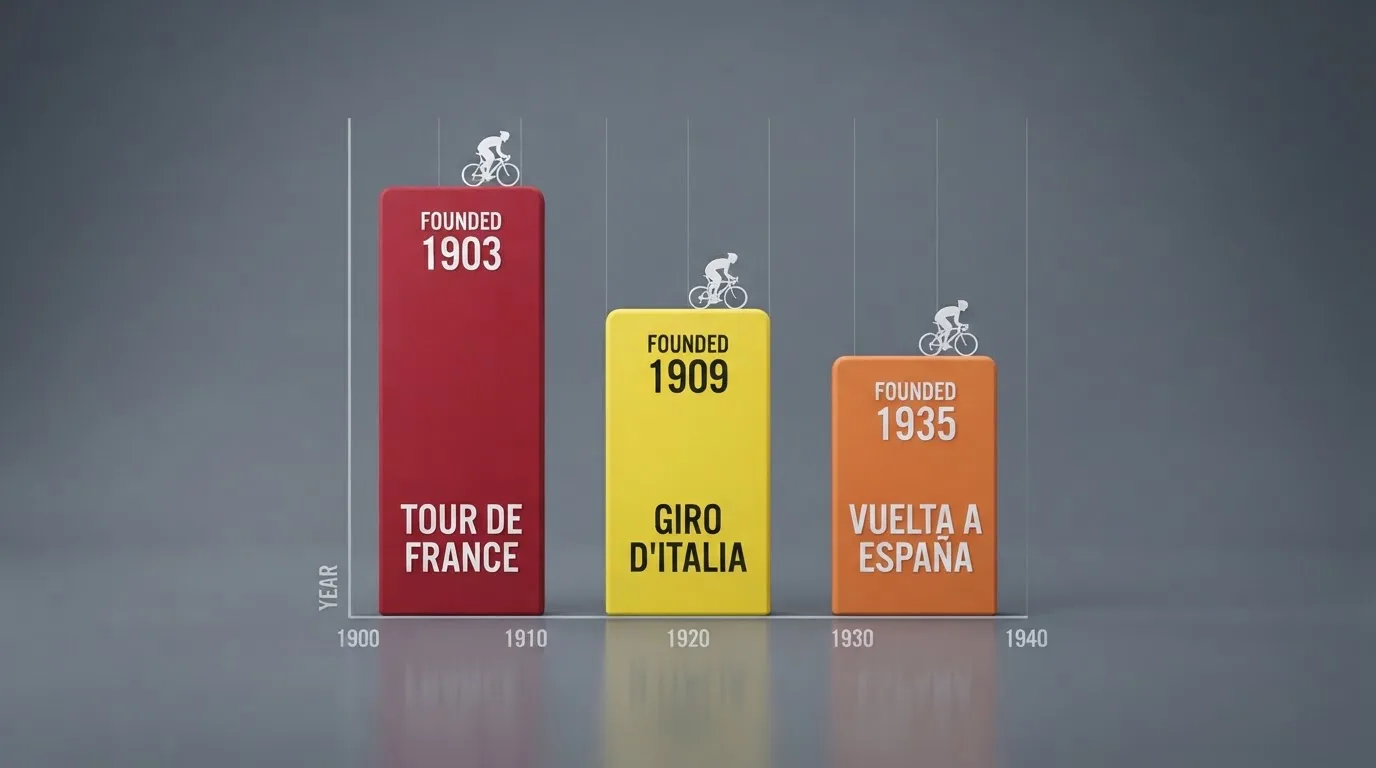
The three Grand Tours are the Giro d’Italia (first held 1909), the Tour de France (1903) and the Vuelta a España (1935). UCI rules allow Grand Tours to last 15 to 23 days, and the leaders’ jerseys are pink in the Giro, yellow in the Tour and red in the Vuelta. A Grand Tour usually includes two rest days, and the winner is the rider with the lowest cumulative time.
The 2026 Tour de France ran from 4 to 26 July 2026, starting in Barcelona with a team time trial and finishing on the Champs-Élysées in Paris, over 21 stages and 3,245 km, with 23 teams. Tadej Pogačar (UAE Team Emirates, Slovenia) won, his fifth Tour victory. The 2026 calendar also includes the Giro (May), the Vuelta (August-September) and the Worlds in the autumn; each one carries outright markets from the autumn of the year before, and a punter who watches those markets from open to start finds the value the closer-to-the-race punters do not.
The UCI WorldTour, created in 2005 as the ProTour and renamed the WorldTour in 2011, is the top tier of the road calendar. It includes the Grand Tours and the other major stage races, and the season-long ranking feeds the team allocations for the following year. The market on a one-day WorldTour race in February is a thinner market than the one in April, and the prices move as the form picture fills in.
Stage markets versus outright markets
The outright on a Grand Tour is the most popular cycling bet, and the one with the widest margin. A 23-way book on the eve of the Tour will carry a margin of 30% to 40% on the day, and a value bet on the outright is rare. The stage markets are a different story: a flat stage is a sprinters’ market with a thinner book, a mountain stage is a climbers’ market with a thinner book still, and a time trial is a specialist market with a thin book and a tight price.
The each-way terms on a Grand Tour stage vary by bookmaker and by the number of runners; a head-to-head on a stage is a different question, and a bet builder on a stage is a third. A punter who reads the stage market first and the outright second is the one who finds the value, because the bookmaker’s margin on a sprint finish is a quarter of the margin on the GC.
What a head-to-head really is
A head-to-head is a two-way market on which of two riders finishes higher on the stage or in the GC. The price on each side is the bookmaker’s view of the relative chance, and the margin on a two-way market is closer to 5% to 8% than the 30% to 40% on the outright. The head-to-head is the right market for a punter who has a strong view on one rider but no view on the rest of the field, and it is the right market for a value bet when the prices disagree.
The bet builder on a stage
A bet builder on a single stage combines two or more markets from the same stage into a single bet. The prices multiply, the stake is the unit, and the bet wins only if every leg wins. The margin on a bet builder is the sum of the margins on the legs, and a bet builder of three sprint markets is wider than a bet builder of two. A punter who uses the bet builder for the convenience of a single slip should check the multiplied price against the same legs priced separately, because the slip is rarely the cheaper route.
The ten bookmakers reviewed
The order of the ten is the order of the Commission’s register, not a ranking. A licence is a permission, not a quality mark, and the order here is the order the cards were drawn in research. Each review carries the licence line, the cycling offering as the operator’s own terms state it, and a verdict on what the brand is worth to a cycling punter.
Spreadex — fixed odds and spread betting in one app
Spreadex is regulated by the FCA for spread betting and by the Gambling Commission for fixed-odds betting, and the operator states that spread betting losses can exceed the deposit. The Commission licence is held by Spreadex Limited under account 8835 for remote general betting standard (real events). The app combines fixed-odds and spread betting in one place, with one-click, auto and partial cash out, a Bet Builder that works across fixed odds or spreads, and live streaming of UK and Irish horse racing, greyhounds, tennis, NFL and selected football. Cycling is not in the streamed set; the operator’s stated terms tie Best Odds Guaranteed and live streaming to horse racing, greyhounds, tennis, NFL and selected football.
The spread-bet side is the differentiator. A spread on the Tour GC is a position on the margin of victory, not on the winner, and a punter who reads the spread as a price on the gap between the favourite and the rest of the field has a market no other bookmaker in this set offers. The risk is the FCA line: spread betting losses can exceed the deposit, and a GC licence does not change that. Investors who already trade spreads and want a GC-licensed venue for the Tour GC will find this platform suitable; for the outright specialist, the market is narrower than the fixed-odds options.
BAR 1 Betting (formerly Bar One Racing) — an Irish bookmaker with shops
Bar One Racing rebranded as BAR 1 Betting and runs as an Irish independent bookmaker with shops across Ireland and horse racing sponsorships at Dundalk, Fairyhouse, Navan, The Curragh, Curraheen Park and Cork. The Commission licence is held by Bar-One Racing Limited under account 56516 for remote general betting standard (real events). The listed specialism is horse racing, and the operator’s own terms name the Irish racecourses without flagging cycling as a featured line.
The shape of the brand is an Irish high-street bookmaker that has added a remote licence for the UK market. The punter who bets on Irish racing has the brand’s full attention; the punter who wants cycling markets will find the offering thin. Irish racing enthusiasts who want a GB-licensed app on race days will find the platform useful, whereas cycling fans should be aware the coverage is minimal.
Smarkets — a betting exchange
Smarkets holds a Commission licence as a remote betting intermediary under account 39173, held by Smarkets (Malta) Limited. The exchange runs back and lay markets, and cycling is offered as back and lay on the Grand Tours and selected stage races. UK open-bank-transfer deposits are instant from £10 up to £10,000, withdrawals are processed within 6 hours from £10 up to £100,000, and UK debit card deposits are instant from £10 up to £15,000. The exchange model is the differentiator: the back price is one punter’s offer to another, the lay price is the other side, and the spread is the exchange’s commission, not a margin on every market.
A punter who can lay a result as well as back it has a tool no traditional bookmaker offers. The exchange’s commission is the cost, the prices are the market’s own, and the value bet on a stage is found by reading the back and lay books side by side. Cycling punters who want an exchange model with a Commission licence and fast withdrawals will find this exchange appropriate, provided they understand the mechanics of back and lay betting.
William Hill — Best Odds Guaranteed on UK and Irish racing
William Hill pays Best Odds Guaranteed on UK and Irish horse racing from 8 AM on the day of the race, on both single and multiple bets; the rule does not apply to ante-post, tote or pari-mutuel bets. The Commission licence is held by WHG (International) Limited under account 39225 for remote general betting standard (real events). Cycling is not covered by the BOG rule, and the operator’s stated terms on Best Odds Guaranteed name horse racing only.
The brand is a high-street name that has run a remote book for decades, and the BOG rule is the centrepiece of the horse racing offering. The cycling offering is the broader sportsbook line, with outright and stage markets around the Grand Tours. Existing William Hill customers who want to use the same slip for cycling will find this convenient; however, for those shopping on price, the margin on the outright is higher than the market average.
BetMGM — a four-free-bet welcome
BetMGM’s sports welcome offer for new UK customers who deposit £10 or more and place a sports bet within 7 days is four £10 free bets — two football accumulators of 4+ selections and two sports multiples of 2+ — valid for 7 days with minimum odds and opt-in required. The Commission licence is held by LeoVegas Gaming PLC under account 39198 for remote general betting standard (real events). No cycling-specific terms surfaced in the operator’s stated conditions.
The welcome is a paid-in-acca package, and the all-sports shape means cycling legs are eligible for the multiples rather than a cycling-specific market. The punter who values the welcome on its own terms is the punter who bets football accas with the occasional cycling leg folded in. Football acca players including a cycling leg on the slip will find this package useful, though those focusing on cycling events may be disappointed by the lack of dedicated markets.
Midnite — a free-bet welcome and an acca builder
Midnite’s sports welcome offer: new customers who bet £5 or more on pre-match odds of EVS (2.0) or greater within 14 days of sign-up receive £25 in free bets and 50 free spins, valid for 7 days. The site cites Commission licence 101839 and shows in-play events, an acca builder, popular accas and price boosts with maximum-stake limits. The licence is held by Midnite Limited for remote general betting standard (real events).
The shape is a modern sportsbook with an acca builder and price boosts, and the welcome is a £25 free-bet package for a £5 qualifying bet. A punter who values the acca builder has a tool for stage-race multiples, and the price boosts with maximum-stake limits are a separate market on the headline prices. Acca players wanting a Commission-licensed book with a thin welcome qualification will find this attractive; the £5 at EVS (2.0) is a competitive threshold for a beginner.
Paddy Power — a broad sportsbook with a strong price-boost line
The Paddy Power Sports Betting app is published by Paddy Power PLC and covers football, horse racing, boxing, rugby, tennis, golf, darts, snooker and F1. The Commission licence is held by PPB Counterparty Services Limited under account 39439 for remote general betting standard (real events). The operator’s own terms name those sports without flagging cycling as a featured line, and the price-boost line is a known strength of the brand.
The brand’s centre of gravity is football and horse racing, with the price boosts as the marketing line. The cycling offering sits in the wider sportsbook and is more complete than a thin book, but it is not a featured line in the operator’s own terms. Bettors using the Paddy Power sports list with a cycling leg on the slip are the target audience; outright cycling specialists may find the market lacks depth.
Betboro — a matched free bet with a qualifying accumulator
Betboro’s sports welcome offer is a 100% matched free bet of up to £25 on the first qualifying wager, requiring a debit card deposit of at least £10 and a first bet of £5 to £25 with at least three selections each at 3/5 (1.60) or higher. The Commission licence is held by Webmedia Development N.V. under account 44181 for remote general betting standard (real events). The qualifying bet is an accumulator, and the matched free bet is the headline figure.
The shape is a small matched-free-bet welcome with a qualifying accumulator requirement. The minimum price of 3/5 (1.60) on each leg is the constraint, and the £5 to £25 range on the qualifying bet is the band. Football punters who would bet a £10 acca on the weekend anyway will appreciate the matched free bet; those specifically looking for cycling opportunities will find other books more comprehensive.
Octobet — 50% back as a free bet
Octobet’s sportsbook welcome offer is 50% back as a free bet up to £50, plus a £10 casino bonus for new customers. The Commission licence is held by Octopus Game Limited under account 62545 for remote general betting standard (real events). The welcome splits between sports and casino, and the headline figure is the £50 sports free bet.
The shape is a 50% back-as-free-bet welcome with a casino bonus attached. The punter who values the headline figure has £50 to clear in the sports book, and the casino bonus is a separate line on the casino side. Those seeking a £50 free-bet headline on a first deposit will find this suitable; however, the bookmaker does not feature cycling as a priority market.
BetVictor — Best Odds Guaranteed and live racing streaming
BetVictor offers Best Odds Guaranteed on UK and Irish horse racing, enhanced live race streaming and a BetFinder feature for finding racing bets, alongside Smart Stats. The Commission licence is held by BV Gaming Limited under account 39576 for remote general betting standard (real events). Cycling is not in the streaming or BOG scope, and the operator’s stated terms name horse racing as the centre of gravity.
The brand is a racing-led book with a Smart Stats tool and a BetFinder for the racing markets. The cycling offering is the wider sportsbook, and the BOG and streaming lines do not extend to it. Racing-led punters who want a Commission-licensed book with Smart Stats and live streaming will find this well-positioned; those prioritising cycling over horse racing should look elsewhere for deeper coverage.
Frequently asked questions about cycling betting
How is a cycling tip actually built?
A cycling tip is a probability dressed up as a price, and the work is form, course, line-up and market. Form is the rider’s recent shape; course is the route profile; line-up is the team; market is the price the bookmaker offers against the true chance. A tip that names a price and a probability is selling an edge; a tip that names a winner is selling a story.
Can you bet on cycling at a UK-licensed bookmaker?
Yes. UK-licensed bookmakers offer outright markets on the Grand Tours, stage markets on individual stages, head-to-head markets on rider matchups, and bet builders on single stages. The Grand Tours (Giro d’Italia, Tour de France, Vuelta a España) carry the deepest books; one-day WorldTour races carry thinner books; lower-tier races carry the thinnest.
What is a value bet, and why is no tip ever certain?
A value bet is a price that is larger than the true chance of the outcome. A 25% chance at decimal odds 5.00 is a value bet, because the implied probability is 20% and the price beats the chance. No tip is ever certain because a stage race is twenty-one days long, and weather, crashes, illness and form swings move the result around. The bookmaker’s margin guarantees a long-run profit to the house, not to the punter.
What is the bookmaker’s margin, and how can it be seen in the odds?
The margin is the cut the bookmaker keeps on every market, and it is hidden in the prices. A two-way market at 1.90 / 1.90 has an implied probability of 52.63% on each side, adding to 105.26%; the 5.26% overround is the margin, and the band runs from about 4.76% to 5.26% depending on rounding. A wider market carries a wider margin — a Grand Tour outright with 23 teams will carry 30% to 40% on the eve of the race.
How is the return on a bet worked out from the stake and the odds?
A £10 stake at decimal odds 4.00 returns £40 (a profit of £30), and the return includes the original stake. A combination bet multiplies the prices: three legs at 2.00, 3.00 and 4.00 give a multiplied price of 24.00, and a £10 stake returns £240. The each-way bet doubles the stake and pays in two halves — the win part at the full price, the place part at the place terms. The calculation is the same in every market; the result is what the multiplied price says it is.
Combat & motorsport – systembetsguide.com
Content created by the «systembetsguide.com» team
