
Rugby union betting tips: how a price is built, and what it costs
 Available in US
A “tip” sounds like a recommendation. In practice, every tip sits on top of two things the bettor has to absorb first: the bookmaker’s margin, which keeps a slice of every market regardless of who wins, and the difference between a price and a probability. The Rugby World Cup runs every four years — the next edition is in Australia from 1 October to 13 November 2027, with 24 teams in six pools of four and 52 matches across the tournament — so a value bet on rugby union only matters while the market around it is still taking money. Everything below is built around that single distinction: between what a tip looks like, and what it is once the margin is taken out.

30 October 2026 — figures cross-checked against the Gambling Commission’s public register.
Reading a tip in 2026: what a prediction actually is
A prediction is not a forecast of the future. It is a probability the tipster has assigned to one outcome — a statement such as “France has a 60% chance of winning at Twickenham”. The price the bookmaker offers is its own probability estimate, with a margin bolted on. Where the two diverge, the bet is called a value bet: the tipster’s probability is higher than the implied probability the price carries, and that gap is the edge.
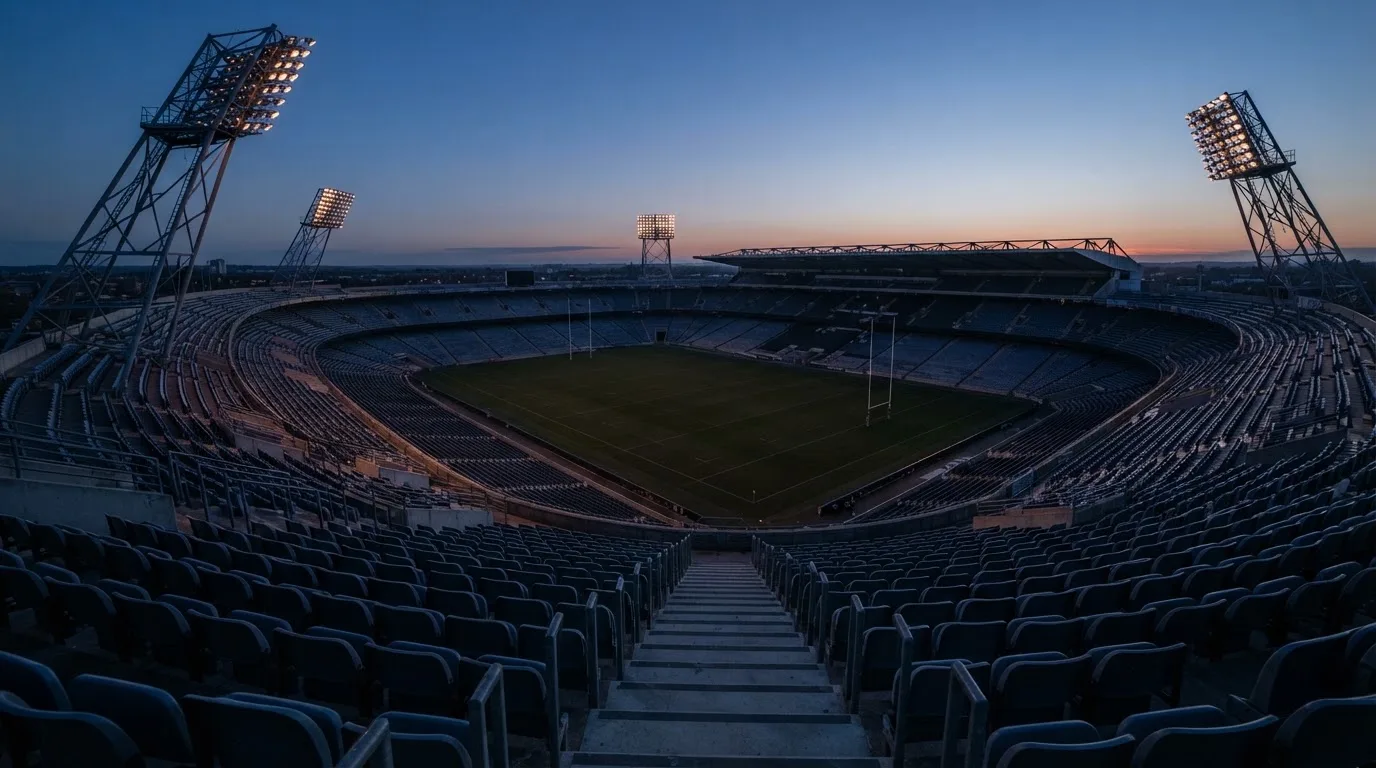
Bookmakers do not sell tips. They sell odds, and the odds embed a margin that pays for the operation. A tip published in a newspaper or on a podcast is one trader’s read of the same match; a tipster sells opinions, not certainty, and the reader pays for the opinion whether or not it lands. That is the framing this whole page keeps: tips point, prices move, margins keep a slice of every market in either direction.
The first job is to separate form from noise. World Rugby has governed the sport since 1886, and international rugby has run on a long enough record that team form over the last five or six Tests tells a sharper story than any single result. Domestic leagues — the Premiership in England, the United Rugby Championship spanning Wales, Ireland, Italy and South Africa, the Top 14 in France, Super Rugby across the southern hemisphere — feed national squads and the World Cup cycle below them. The 2023 final went to South Africa over New Zealand; the 2027 tournament starts with the holders in the field. Each of those is a fact a tipster carries into the next price.
Three layers feed into any prediction:
- Form and fixtures. Wins and losses over the last block of matches, home and away, against the kind of opposition a team meets in the tournament ahead. Form over three or four games means more than form over one.
- Line-ups. A side without three of its starting XV is a different side; the team sheet published on Friday changes the price the market clears at on Saturday. A flanker rested for the bench is a different bet from the same flanker starting.
- Conditions and venue. Weather, altitude, and the surface affect kick-heavy sides differently from forward-heavy ones. Twickenham in November is not Eden Park in July.
These are inputs the tipster brings to the price. The bookmaker brings the same inputs plus a margin; the tip becomes “value” only when the tipster’s probability is higher than the implied probability of the price.
Why no tip is ever certain
No tipster can see the future. The reason a prediction is never guaranteed is not that tipsters are dishonest — most lay out the reasoning behind a call — it is that the probability the prediction assigns is exactly that, a probability. A 60% tip lands four times out of ten on a long enough run, and a punter who treats it as eight out of ten loses money on every false favourite the bookmaker offers.

The second reason is the margin. A market at 1.90 / 1.90 (9/10) is a market where the implied probability of each side is 52.6%. Add the two and you get 105.3% — the bookmaker pays out 100 units on every 105.3 units staked, and keeps the rest. A 60% tip on the favourite only beats the bookmaker when the price is 1.85 or longer; a 60% tip at 1.50 is a long-run loser whatever happens on the day. The most useful thing a tip tells a reader is not who wins; it is at what price the bet becomes a bet worth taking.
Skepticism is the default. Tipsters pay for themselves across hundreds of bets, not one, and a single rugby accumulator paying out at 500/1 is the kind of result that funds a tipster’s marketing for a year. The arithmetic of a margin, the variance of a result, and the discipline of a stake budget together replace the marketing.
Staking, bankroll and discipline
A bankroll is the amount set aside for betting. A stake is the share of the bankroll risked on a single bet, usually 1% to 5% depending on the tipster’s confidence and the punter’s appetite. Two rules hold across every approach:
- The stake on any one bet stays small enough that the punter can keep betting after ten losers in a row.
- The bankroll is separate from rent, food and the bills; a deposit limit set with the bookmaker reinforces the cap rather than fighting it.
The honest version: a tipster with a 5% edge over the market makes about £5 for every £100 staked on average. That is the ceiling most long-run punters ever earn from someone else’s opinion. Most tipsters publish their record, and a tipster who refuses to show settled stake-by-stake P&L is one the punter treats with the same caution as a betting tip offered without odds or context.
Stake, Odds, Return — What a Bet Actually Pays
Once a price is on the slip, the arithmetic is short. A bet of £10 at decimal odds 3.50 returns £35 if it wins — £25 of profit on top of the £10 stake. A bet of £10 at fractional odds of 5/2 returns £35 the same way. Decimal form is what the bookmaker shows the slip in; fractional form is what the page carries when the market is set. Both are the same number.
The calculation breaks into three pieces:
- Return = stake × decimal odds. A £10 bet at 3.50 returns £35 gross; £10 at 1.50 returns £15.
- Profit = return − stake. The £35 return carries £25 of profit; the £15 return carries £5.
- Each-way doubles the stake. An each-way bet is two bets at the stake shown; the place half pays at a reduced price and the win half pays at full price if the selection places.
A combination bet multiplies the prices of its legs together, with one obvious trap. A four-fold of short-priced favourites — 1.30, 1.25, 1.40, 1.20 — multiplies to a 2.73, which looks attractive on the slip and quietly carries the bookmaker’s margin four times. Each leg of an accumulator carries its own overround, and the cumulative margin inflates the apparent value of the price the punter sees. A combination bet that “looks” 60% likely on paper is often 45% likely once the margin is restored.
Free bets follow the same maths, with one rule the marketing rarely shouts about. The stake is usually not returned with a win: a £10 free bet at 3.50 returns £25 of profit, not £35. Multiply by the market payout share and you get the free bet’s expected value to the punter. A £10 free bet on a 1.91 market with a 5% margin is worth about £4.55 on average — less than half its headline value. That is the figure the marketing words are quietly hiding.
The Bookmaker’s Margin, and How it Shows in the Odds
The margin is the slice of every market the bookmaker keeps on average, regardless of which selection wins. The arithmetic is straightforward:
- A two-way market at 1.90 / 1.90 carries implied probabilities of 52.63% on each side, summing to 105.26%.
- The overround is 5.26% — the margin on the market.
- A market at 1.80 / 2.20 carries implied probabilities of 55.56% + 45.45% = 101.01%, a margin of 1.01%.
The market margin is the figure a sharp punter watches. A 1.01% margin on a market this close carries almost no tax; a 10% margin says the bookmaker is keeping a tenth of the market no matter who wins, and a long-priced outsider (say 100/1) may carry a margin above 25% on its own. The headline price of the favourite is not what the market costs; the spread of the prices is.
A margin on a single market reads as around 1% to 12% on most rugby union markets at licensed UK bookmakers, with the lower end on match winner markets and the higher end on player props and combination markets. Outright tournament markets — the winner of the 2027 World Cup, for example — carry heavier margins than match markets because the bookmaker faces longer exposure. A punter who compares margins market by market rather than price by price is reading the same set of odds everyone else sees and reading them more sharply.
Handicap markets carry their own edge. A handicap of −7.5 on the favourite prices a margin attached to a synthetic spread the bookmaker sets; the punter is essentially betting on a margin of victory chosen by the bookmaker, not on the underlying match. The price looks higher than a 1X2 price on the same fixture precisely because the synthetic spread shifts the implied probability around and lets the bookmaker reset its margin.
Outright markets are different again. A World Cup winner market two years out carries bigger margins because the bookmaker exposes itself across a long period and several fixture lists; closer to the tournament the margin tightens as the field shrinks. The 2023 World Cup went to South Africa over New Zealand in the final; the 2027 tournament has 24 teams in six pools of four and 52 matches across five weeks, and the outright market in October will look nothing like the outright market the day before the final.
The Law, the Licence and the Register
Every bookmaker taking money from customers in Great Britain needs a Gambling Commission licence under the Gambling Act 2005, wherever the operator is based. The Gambling (Licensing and Advertising) Act 2014 closed the route around the rule: a Curaçao, Maltese or Gibraltar licence is not a substitute. The Commission’s public register is the only place to check whether a brand is licensed, and the register can be searched by business name, trading name, domain or account number. The same register lists the licence holder, which is not always the name the punter sees on the site.
A licence is one of three things the player is buying, not the third. The first is the GAMSTOP self-exclusion scheme that every licensed online operator takes part in, mandatory since 31 March 2020 — six-month, one-year and five-year exclusions with a further seven-year tail before removal is even an option. The second is the complaints route. An unlicensed brand offers none of those. The third is the bonus cap that limits wagering requirements on offers at licensed brands to 10x since 19 January 2026. A brand licensed in Curaçao or Malta answers to none of those rules.
The Commission is also clamping down on what a licensed bookmaker can offer. Since 7 May 2019 a customer cannot deposit or gamble until name, address and date of birth are verified; that holds for free bets and bonus claims too. The Commission’s financial vulnerability check on deposits above £150 in a rolling 30 days, in force from 28 February 2025, runs a public-record check (bankruptcy, county court judgments), not an income or credit check. A separate financial risk assessment regime — the press calls them “affordability checks” — has been announced in stages, with no start date, and writing that it is “in force” mis-states where the regulator has got to.
On the offer itself, the rules since 19 January 2026 are simple. Wagering requirements are capped at 10x (a £10 bonus at 50x, capped, is now £100 of bets). Mixed-product promotions — an offer that asks the customer to bet on football to claim free spins on slots — are banned at licensed brands. The terms cover licensed sites only; an offer on a non-licensed site answers to the operator’s house rules.
Player winnings are not taxed in Great Britain. General Betting Duty is the operator’s tax on gross profits at 15% currently, with a new 25% remote rate applying from 1 April 2027 inside that duty. Whether operators pass duty through into lower odds is not established and is not safe to assume. The page does not say “tax-free betting” because nobody earns a wage from it, but it does say no HMRC claim on a winning stake.
Offshore brands — Curaçao, Malta, Gibraltar — are accessible from a UK address but not licensed for it. Section 33 of the Gambling Act 2005 makes providing facilities in Great Britain without a Commission licence an offence; the punishment is on the operator, not the customer who bets with one. The honest framing: an offshore brand is bigger margins, no GAMSTOP coverage, no Commission complaints route, no approved dispute-resolution body, no British consumer redress if funds are withheld. None of that means the customer is prosecuted. It means the customer is unprotected.
Safer Gambling and Where to Get Help
A safe bet is one the punter can afford to lose before it is placed. The tools licensed brands offer are not a substitute for that, and they do not protect a budget that was never set:
- Deposit limits. A gross limit on deposits over a fixed period (daily, weekly, monthly). The punter chooses the level; the operator enforces it. Limits the operator allows to be raised immediately, with no cool-down, are the ones the punter sets and never raises back.
- Time-out. A short break, from 24 hours to several weeks, that the operator enforces across every product it offers.
- Product restrictions. Excluding a product type or a market entirely. Useful when one sport has become the problem rather than the bet itself.
- Self-exclusion. A six-month, one-year or five-year exclusion at the operator that the operator cannot lift on its own. Across operators, GAMSTOP holds a six-month, one-year and five-year exclusion with a further seven-year tail before removal is even an option.
The 18+ age rule is non-negotiable. Identity is verified before the first deposit, and a free-bet or bonus claim does not get around it. Where a household has a child or a young adult, device-level blocking software — Net Nanny, Qustodio, the parental controls on the home router — protects the moment of weakness a deposit limit does not.
Help beyond the operator comes from:
- GamCare, the National Gambling Helpline, for confidential 24/7 support.
- GambleAware, the information and signposting service funded by the voluntary industry levy.
- NHS gambling clinics, in person across regions of England for harm already done.
- Gamblers Anonymous, the mutual-help fellowship running meetings in towns across Britain.
A punter who reads this page and skips the safer-gambling section is the punter the section was written for. Set a deposit limit before the first bet; set a second one at the operator’s lowest tier the moment that limit feels too generous.
What the Bonus and Free Bet Markets Carry, and What They Cost
Promotions are the loudest part of every licensed UK bookmaker’s marketing. Their arithmetic is the quietest. A free bet at £10 headline value is worth closer to £4.55 on a 1.91 market with a 5% margin, because the stake is rarely returned with a win and the implied probability sits below 100% in the market the offer applies to. A matched deposit bonus carries a wagering requirement — the number of times the bonus (or bonus plus deposit) has to be bet before any winnings come out as withdrawable cash.
The 10x cap on wagering requirements, in force since 19 January 2026, has changed the shape of offers at licensed brands but it has not removed them. A £10 bonus at 10x is £100 of qualifying bets before the bonus clears; a £50 bonus at 10x is £500. The punter pays for the bonus across the qualifying bets through the margin, and the expected cost of clearing is roughly the turnover multiplied by the margin of the qualifying markets. On a £100 turnover at a 5% margin, the expected cost is £5 — the same as one losing bet on the same stake. The bonus is a marketing tool; the turnover is what makes it pay for itself.
Free bets sit in three shapes at licensed UK bookmakers:
- Stake-not-returned free bets. A £10 free bet at 3.50 returns £25 of profit, not £35. The headline value is the stake, not the expected value.
- Stake-returned free bets. A £10 free bet at 3.50 returns £35 of profit. Less common at UK bookmakers and usually restricted in minimum odds or market.
- Risk-free bets. A refunded stake as a free bet rather than cash — the original stake is returned only if the bet loses, and only as a free bet that carries the stake-not-returned rule. A “risk-free” bet refunded as a free bet is not a refund in cash.
Each-way free bets work as two parallel bets; the free bet is split across win and place and each half is settled on its own.
Promotions exempt from the 10x cap — enhanced odds that pay out in cash at no turnover cost, acca insurance that refunds losing stakes as free bets — are in a separate category and remain common at licensed brands. What has ended is the free-spin-gated-by-a-bet pattern, the “bet on football to claim a casino bonus” pattern, and any wagering chain above 10x.
A punter reading a bonus offer pays attention to:
- The wagering requirement, in turns of the bonus or bonus-plus-deposit.
- The minimum odds for qualifying bets. A bonus that counts only bets at 1.50 or longer is a bonus that punishes short-priced accumulators.
- The expiry of the free bet. Most free bets expire in 7 or 14 days; a bigger free bet on a market the punter does not follow is a smaller free bet in practice.
- The exclusion of certain markets. Some bonuses exclude outright and each-way markets, the markets on which the punter planned to use the offer.
- Whether the offer is one-off or recurring. A “welcome” offer applies once; a recurring offer is part of the weekly book.
The honest framing: a promotion is a marketing expense the bookmaker prices into the margin across the rest of the market. A punter who takes the bonus when it suits them and skips the bonus when it does not keep the same edge as a punter who never looks at the bonus page.
Live Betting and Cash Out on Rugby
Live betting has become the centre of mass at the sportsbook. The score, the clock, the team sheet and the momentum of the game itself move into the price the bookmaker offers, second by second, and a punter with an opinion on a Test match after 50 minutes has just as much to bet on as a punter who locked in a price before kick-off. The bookmaker’s in-play offering at licensed UK brands covers every major rugby union fixture — Premiership, URC, Top 14, Super Rugby, the Six Nations, the Rugby Championship, the World Cup — usually with a market depth comparable to the pre-match offering.
The price on an in-play market moves faster than the punter can always keep up. Several mechanics are worth knowing:
- Suspended markets. The bookmaker suspends a market at key moments — after a try is scored, after a yellow card, at a water break — and the price is briefly unavailable while the algorithm recalculates.
- Cash Out. A bookmaker offering settles an open bet early at a price it sets, locking in profit or limiting loss. The cash-out price is the bookmaker’s, and it is almost always below the true mid-market value of the position.
- Bet Builder, in-play. Most licensed brands allow a Bet Builder on a live match, combining selections into a single market the algorithm prices as one synthetic spread. Margin is set higher than on standalone markets.
Cash Out is the mechanic most worth understanding. A punter who took 2.00 on a side that is now 1.50 has a position worth £100 of profit on a £100 stake. The bookmaker offers £80 to cash out. The 80% ratio is the bookmaker’s haircut; the position is theoretically worth more, but the haircut is the cost of liquidity now. A punter who is happy to hold the bet into the final ten minutes may collect more; a punter who needs the profit on the punt’s bankroll now accepts £80 because £80 is real and £100 is conditional.
A risk-free live bet refunded as a free bet, in the standard pattern, returns the stake as a free bet on a losing wager only. A losing live bet on a heavily-favoured pre-match price that goes against the run of play is the typical trigger for an “accident insurance” promotion. The free bet follows the stake-not-returned rule and carries its own minimum-odds clause.
In-play betting is not the same market as pre-match, and the punter who knows why the price is moving — a red card, a sin-bin, a key substitution — is the punter who reads the live market rather than guessing it.
Foundations of Rugby Union: What the Market Bets On
The sport itself is older than the Commission and simpler than the market. A rugby union team fields 15 players; a match is two 40-minute halves with stoppage time, and games usually run longer than 80 minutes because the clock runs while play continues. Scoring carries four shapes — 5 points for a try, 2 for a conversion that follows the try, 3 for a penalty and 3 for a drop goal — and most match markets price combinations of them.
The international fixture list runs on a fixed rhythm:
- Six Nations. England, Scotland, Wales, Ireland, France, Italy, February to March.
- The Rugby Championship. New Zealand, Australia, South Africa, Argentina, August to September.
- Autumn internationals. Northern-hemisphere sides host southern-hemisphere sides, November.
- Summer tours. Southern-hemisphere sides tour the northern hemisphere, June/July.
- Rugby World Cup. Every four years. The 2027 tournament is in Australia from 1 October to 13 November 2027, with 24 teams in six pools of four and 52 matches across the five-week window.
The domestic club calendar runs alongside:
- Premiership Rugby. English top flight, 10 clubs.
- United Rugby Championship (URC). Welsh, Irish, Italian and South African clubs, 16 teams split across four regional pools.
- Top 14. French top flight, 14 clubs.
- Super Rugby. Southern-hemisphere franchise competition involving teams from New Zealand, Australia, Fiji, Samoa, Tonga, Argentina and Japan.
Outright markets and handicaps. The win, the margin, the first scoring play, the half-time score, the player to score first, the team to score first, the player of the match, the number of tries scored, the winning margin in points, the half with the most points, the team to score 10+ points first. Each of those markets exists at every licensed UK bookmaker with its own margin profile and minimum-stake rule. The combination markets at bigger margins are the ones worth flagging; the 1X2 win market is the one worth measuring the book’s overall margin against.
The Rugby World Cup has run since 1987 in Australia and New Zealand, with New Zealand winning the inaugural title. South Africa hold the 2023 title. The 2027 tournament takes the field with 24 teams and the same six-pool structure that became standard from 1999 onwards. A World Cup year is the year the outright market is open for two years before it starts — the period when a long-priced outsider trades at its widest margin.
Statutory Frame: What the Law Actually Says
The legal frame behind a UK bookmaker’s licence reads as follows.
- Gambling Act 2005. The statute that licenses the British commercial gambling market.
- Gambling (Licensing and Advertising) Act 2014. Closed the route to using overseas licences for British customers. Sections 33 and 36 of the 2005 Act, as amended.
- The Commission’s LCCP. The Licence Conditions and Codes of Practice — the day-to-day rule book every licensed operator follows.
- Remote Technical Standards (RTS). The technical standards inside the LCCP, including RTS 12 on deposit limits.
- GAMSTOP. Mandatory online self-exclusion across every licensed online operator since 31 March 2020.
The financial controls layered onto the licence:
- LCCP 3.4.4, in force since 30 August 2024: a public-record financial vulnerability check on deposits minus withdrawals above £150 in a rolling 30 days, in force since 28 February 2025.
- The financial risk assessment regime: announced in stages by the Commission on 7 July 2026, no start date.
- Credit cards banned for gambling in Great Britain since 14 April 2020 (LCCP 6.1.2), including credit-card-funded e-wallet deposits.
- Identity verification before any first deposit since 7 May 2019, including with a free bet or bonus.
On the marketing side:
- CAP Code (Committee of Advertising Practice, non-broadcast) and BCAP Code (broadcast) enforced by the ASA.
- CAP Code section 16: marketing socially responsible, no strong appeal to under-18s, no one who is or seems to be under 25 featured gambling or playing a significant role.
- “Whistle-to-whistle” is industry code, not law, since 1 August 2019.
- Betting, Gaming and Lotteries Commission levy is a statutory charge on operators.
- The Premier League clubs’ voluntary withdrawal of gambling sponsorship from the front of matchday shirts from 2026/27 onwards is voluntary, not law.
The frame may look like a long list. It is one that affects the punter in three places only: the licence check, the bonus cap and the safety tools. Everything else is the regulator’s job to enforce.
The Ten Operators Reviewed
A shortlist of ten bookmakers licensed in Great Britain and operating a sportsbook covering rugby union. Each carries a Gambling Commission remote licence; each accepts Great Britain customers under it. The order is editorial, not a ranking; the maths and the offers differ by brand.
888sport
Gambling Commission remote licence 039028-R-319297-014 under 888 UK Limited. Sportsbook with pre-match and in-play betting, Cash Out, Bet Builder, racing streams, BetFinder form tools, a live bet feed and daily boosted odds. The BetFinder form tools and the racing streams are the features the brand leans on, and the daily boosted odds are the most visible cross-market marketing hook. A punter who wants in-play rugby, a Bet Builder, and a daily boost on a long-priced selection across any sport has what 888sport offers. The verdict: a broad bookmaker covering all the basics for a casual rugby punter, with the boosted odds the visible reason to use it.
Spreadex
Gambling Commission remote licence 008835-R-104580-022 under Spreadex Limited. A combined fixed-odds and spread-betting bookmaker; Spreadex is regulated by the FCA for spread betting and by the Gambling Commission for fixed odds, and it warns that spread betting losses can exceed deposits. Spreadex is the brand for a punter who wants fixed-odds rugby alongside a spread-betting market on the same match — the unique combination on the licensed shortlist. The verdict: the only bookmaker on the shortlist that runs both products under one roof, with the spread side carrying the higher risk the regulator requires it to flag.
Sporting Index
Gambling Commission remote licence 027343-R-308898-011 under Sporting Index Limited. A spread-betting specialist with a small fixed-odds side. Spread betting on rugby’s total match points or the winning margin gives the brand its identity; the fixed-odds product is there as a familiar entry point. This brand provides a unique access point for spread punters who want to keep fixed-odds and spread-betting markets in one account.
Copybet
Gambling Commission remote licence 053774-R-330743-010 under Copybet UK Limited. Best Odds Guaranteed all day, every day, on all UK and Irish racing, and pays first past the post on horse racing even if a horse is later disqualified. The racing specialism is the offer the brand leads with. It is best suited to the racing specialist rather than the rugby punter.
VBet
Gambling Commission remote licence 044662-R-324273-022 under SCGO Limited. Bet Builder, pre-match and in-play betting, live streaming and a live calendar with results and stats. Live streaming of rugby alongside a deep Bet Builder market is the offering that sets VBet on the shortlist. The verdict: a brand for the punter who wants live streams and a Bet Builder on the same match, with in-play markets across the major rugby competitions.
Bet600
Gambling Commission remote licence 044731-R-323941-016 under Tyche Tech Limited. Best Odds Guaranteed on horse racing: if the starting price is bigger than the early or show price taken, the bet is paid at the SP. Rugby is supported as part of the wider sportsbook. The verdict: a brand shaped around its racing promise, useful on rugby in play and outright, not on racing alone.
William Hill
Gambling Commission remote licence 039225-R-319373-015 under WHG (International) Limited. Best Odds Guaranteed on UK and Irish horse racing from 8 AM on race days, single and multiple bets, excluding ante-post, tote and pari-mutuel. William Hill is the long-standing high-street name that has run a UK betting shop chain alongside its online product for decades. The verdict: a long-established brand combining high-street presence with an online sportsbook; it is not the cheapest on margin but it covers every rugby competition in the calendar.
Fafabet
Gambling Commission remote licence 057385-R-333191-006 under Taichi Tech Limited. Best Odds Guaranteed on UK and Irish horse racing win and each-way bets from 9am on race days. A newer-licence sportsbook with rugby as part of a multi-product offering. The verdict: a newer brand with a familiar racing promise and a sportsbook built for rugby accumulators and outright markets.
Paddy Power
Gambling Commission remote licence 039439-R-319330-013 under PPB Counterparty Services Limited. Bet Builder+, Popular Bet Builders, Super Sub (a bet rolls over to the replacement if a selected player is substituted), expanded Win More markets and player and ACCA stats. The Paddy Power and Betfair brands run under PPB Counterparty Services Limited, and either name appears at the same licensed operator. The verdict: the Super Sub mechanic is the strongest punter-side feature on this shortlist for rugby, where substitutions happen with the bench. A rugby punter who likes player markets and accas has what Paddy Power offers.
Kalooki Sportsbook
Gambling Commission remote licence 057730-R-333396-005 under Kalooki Sportsbook Limited. Operated by Kalooki Sports Book Ltd (company number 12938274) and a GAMSTOP member. The brand advertises instant withdrawals by bank transfer within minutes, Best Odds Guaranteed on UK and Irish horse racing, in-play betting, daily boosts and extra place races. The verdict: the brand leans on its payout speed as its USP, and “instant withdrawals by bank transfer within minutes” is the strongest cash-out timeline on this shortlist — a real differentiator for a punter who wants their rugby winnings fast rather than pending for a working day.
Picking from the Shortlist by What the Punter Wants
| Brand | Gambling Commission Remote Licence & Holder | Key Terms & Features |
|---|---|---|
| 888sport | 039028-R-319297-014 (888 UK Limited) | BetFinder form tools and daily boosted odds |
| Spreadex | 008835-R-104580-022 (Spreadex Limited) | Combined fixed-odds and spread betting |
| Sporting Index | 027343-R-308898-011 (Sporting Index Limited) | Spread betting specialist |
| Copybet | 053774-R-330743-010 (Copybet UK Limited) | Racing Best Odds Guaranteed |
| VBet | 044662-R-324273-022 (SCGO Limited) | Live streaming and Bet Builder |
| Bet600 | 044731-R-323941-016 (Tyche Tech Limited) | Best Odds Guaranteed (racing) |
| William Hill | 039225-R-319373-015 (WHG (International) Limited) | High-street and online hybrid |
| Fafabet | 057385-R-333191-006 (Taichi Tech Limited) | Best Odds Guaranteed (racing) |
| Paddy Power | 039439-R-319330-013 (PPB Counterparty Services Limited) | Super Sub and player stats |
| Kalooki Sportsbook | 057730-R-333396-005 (Kalooki Sportsbook Limited) | Instant bank transfer withdrawals |
The shortlist is not a ranking. Three ways a punter chooses from it:
- In-play and Bet Builder coverage. VBet, Paddy Power and 888sport cover the live calendar with a Bet Builder on the bigger rugby matches; William Hill and Fafabet cover the same matches with a less deep Bet Builder.
- Margin profile. A market-by-market comparison shows the licensed shortlist trading in similar ballparks — 1% to 12% across match markets — with the 1X2 margin slightly tighter on William Hill and Paddy Power and the outlights wider than the match markets everywhere.
- Payout speed. Kalooki Sportsbook advertises instant withdrawals by bank transfer; the rest of the shortlist settles bank transfers in 1 to 3 working days.
A punter who reads the brands above and finds a single offer that suits a single fixture has the margin left to price elsewhere. The arithmetic of the comparison has been laid out: the market margin is in the prices, the bonus cap is in the wagering requirement, the safety tools are in the safer-gambling page at the licensed brand.
Frequently Asked Questions
How does rugby union betting work in the UK?
A punter opens an account at a bookmaker licensed by the Gambling Commission for Great Britain, deposits by debit card or bank transfer (credit cards have been banned for gambling since 14 April 2020), and places a single bet, a combination bet, an each-way bet or a Bet Builder before kick-off or in play. The bookmaker settles the bet at the price taken; an in-play bet is settled at the price at the moment it was struck. The bookmaker keeps a margin on every market, the punter keeps whatever sits above the price once the result is in. No tax is paid on winnings in Great Britain; the operator pays General Betting Duty on its gross profits at 15% (rising to a 25% remote rate from 1 April 2027 inside the duty).
How do I bet on rugby union?
Pick a licensed UK bookmaker from the Commission’s public register, complete the verification (name, address, date of birth, since 7 May 2019), set a deposit limit before the first deposit, and choose a market from the rugby union page. The most common entry point is the 1X2 (home win, draw, away win) — note that union fixtures can end in a draw, unlike football’s 90-minute draw which is graded out as a draw at most licensed UK sites for a small subset of competitions — the handicap line, or an outright on a tournament. Confirm the stake and place the bet before the market is suspended for kick-off. The arithmetic of what the bet returns is given in the table above; the figure is stake × decimal odds.
What is a value bet and why is no tip ever certain?
A value bet is one where the punter’s probability of the outcome is higher than the implied probability of the bookmaker’s price once the bookmaker’s margin is taken out. A 1.91 price on a two-way market has 52.36% implied probability after a 5% margin; a punter who thinks the true probability is 60% has a value bet at 1.91. A tip is one trader’s probability assignment; it is never certain because the assignment is a probability, not a result. A 60% tip lands six times out of ten over a long run. The arithmetic across hundreds of bets is what makes a tipster “good” or “bad”, not any single result.
What is the bookmaker’s margin, and how can it be seen in the odds?
The margin is the slice of every market the bookmaker keeps on average. A two-way market at 1.90 / 1.90 (9/10 each side) has an implied probability of 52.63% on each side, summing to 105.26%; the 5.26% gap is the bookmaker’s overround. A market at 1.80 / 2.20 has 55.56% + 45.45% = 101.01%, a margin of 1.01%. The margin is what the prices carry regardless of which side wins. A punter who wants to see the margin turns every decimal odds figure into its implied probability — 1 divided by the odds — and adds the probabilities across one market. The closer the sum to 100%, the tighter the margin.
How is the return on a bet worked out from the stake and the odds?
Return = stake × decimal odds; profit = return − stake. A £10 bet at decimal odds 3.50 returns £35 and carries £25 of profit; a £10 bet at 1.50 returns £15 and carries £5 of profit. Each-way doubles the stake across a win bet and a place bet. A combination bet multiplies the prices of the legs into one and settles as a single bet. The figure the marketing shows on a price boost or accumulator is the price, not the return — what the bet pays back to the punter’s wallet is calculated from stake × odds.
How can I check that a bookmaker holds a Gambling Commission licence?
The Commission’s public register is the only place to check. Search by business name, trading name, domain or licence account number; the register lists the licence type (a remote general betting standard licence is the one to look for), the licence holder, and the domains covered. The same register is where the licence categories are listed, and the domains can include .co.uk and .com addresses at the same licensee. A brand named on this page is named because the register lists it as licensed under a remote betting licence for Great Britain; a brand not on the register is not licensed to take money from customers in Great Britain.
Rugby, cricket & Gaelic – systembetsguide.com
Content created by the «systembetsguide.com» team
