
Online Cricket Betting
 Available in US
30 October 2026 · verified against the Gambling Commission’s public register and each operator’s own terms.

Cricket is one of those sports a British punter can bet on at virtually every shop-window brand on the Commission’s register, yet it sits oddly between football and horse racing in how it gets priced. Long matches, three formats, the weather in the middle — none of it looks like the model the betting pages were built around. The pages ahead close that gap: which markets a cricket-friendly bookie actually runs, how the odds are constructed, what the live offering looks like in an innings break, what a bonus asks of you on a Twenty20 market, and which of the ten brands reviewed here earn their place on a shortlist. The constant is the framework everything sits in: a Gambling Commission remote licence, debit-card deposits, GAMSTOP coverage and the 10x bonus cap. Once those are in place the rest is a set of choices, and the job here is to lay those choices out clearly.
Apps and Mobile Builds: Where Cricket Lives on a Phone
Cricket punting in Great Britain happens on a phone more often than not. The bookmakers listed on the Commission’s register put their full sportsbook — not a stripped-out mobile build — into native apps that drop straight into the Apple App Store and Google Play. The user journey is the same whether the punter finds the brand through search, an advert or the store’s own ranking: install, register, pass the identity checks the Act requires, deposit, bet.

What separates a competent cricket app from a basic one is not the look of the home screen but what the app does at the moment a market is most unsettled. The Hundred and T20 franchise leagues throw up forty or fifty markets per match, and the strongest apps let the punter string those into a same-game multi without leaving the fixture page. Cricket scores — not the pre-match line but the actual ball-by-ball feed — are the second test. A punter who wants to cash out partway through an ODI needs the app to track the over count, the wickets and the asking rate in real time; the firms reviewed below either provide that feed in-house or sit on top of a third-party data provider that does. The third test is weight: a full pre-match coupon, live odds, an acca builder and a casino lobby should not make the app stutter on a three-year-old handset.
For a punter who only bets on cricket at the weekend, browser access through the operator’s mobile site is enough — the Commission’s licensing regime does not require an app, and most brands run a full responsive site. The trade-off is push notifications (price alerts, settled bets, bonus credits arrive faster on an app than in an inbox) and the small touches: biometric login, a saved bet slip, partial cash out without re-entering the stake.
The ten firms reviewed further down each run a cricket programme; the differences are in breadth and in how the app handles a long live session. Apps that grew up around football tend to treat cricket as a second-class citizen in the in-play menu; specialist firms and the brands with a deep horse-racing heritage tend to do cricket better when the match is in progress.
What the Strongest Cricket Apps Carry
A full pre-match coupon for at least the men’s international and franchise calendar (IPL, The Hundred, Big Bash, SA20, CPL, PSL), live odds with a settled-or-running indicator on every market the app shows pre-match, a same-game acca builder, partial and full cash out and a clearly labelled settlement feed are the baseline. Some apps go further: video streams of selected matches embedded alongside the odds, a player-props tab for batter and bowler markets, and a price-boost panel reserved for cricket.
The Punter Who Would Rather Not Install an App
The Commission’s regulated brands all run a mobile site at the address on the licence register, and there is no requirement to download anything. The mobile site will show the same coupon, the same live odds and the same deposit methods as the app; it loses the push feed and the biometric login, and it occasionally lags behind the app on price updates. For a casual punter who bets once a fortnight that gap does not matter.
Live Cricket Betting and Cash Out: How It Works Mid-Match
Cricket is unusually well suited to in-play betting. A Twenty20 innings is roughly ninety minutes long and rarely settles before the last over, so a punter who reads the wicket well has a long window to get a price. ODIs are longer but the powerplay and death overs create the same pattern. Test cricket is the exception: a Test can drift for two days and the odds barely move, which is why most brands offer fewer in-play markets on the longer format and concentrate the menu on the white-ball game.
In-play on a Cricket market behaves like in-play on any other market under a GB licence: the price is the bookmaker’s live quote, the bet is struck at that price and the result is settled by the operator’s own match feed once the event is over. There is no statutory list of which markets may be offered in-play and which may not — the controls sit in the operator’s licence conditions and customer-protection duties, not in primary legislation. What that means for the punter is that the menu varies brand by brand. A typical mid-match menu on a Twenty20 fixture shows match winner (sometimes called “winner” or “moneyline”), next over total (over or under X runs), method of next dismissal (caught, bowled, run out, stumped, hit wicket, other), next batter to be dismissed, innings runs at the fall of the next wicket, total match runs and a handful of player-props based on the batter on strike. As the innings wears on and the overs get more expensive to bowl the runs lines shorten, which matters for the punter who backed over earlier.
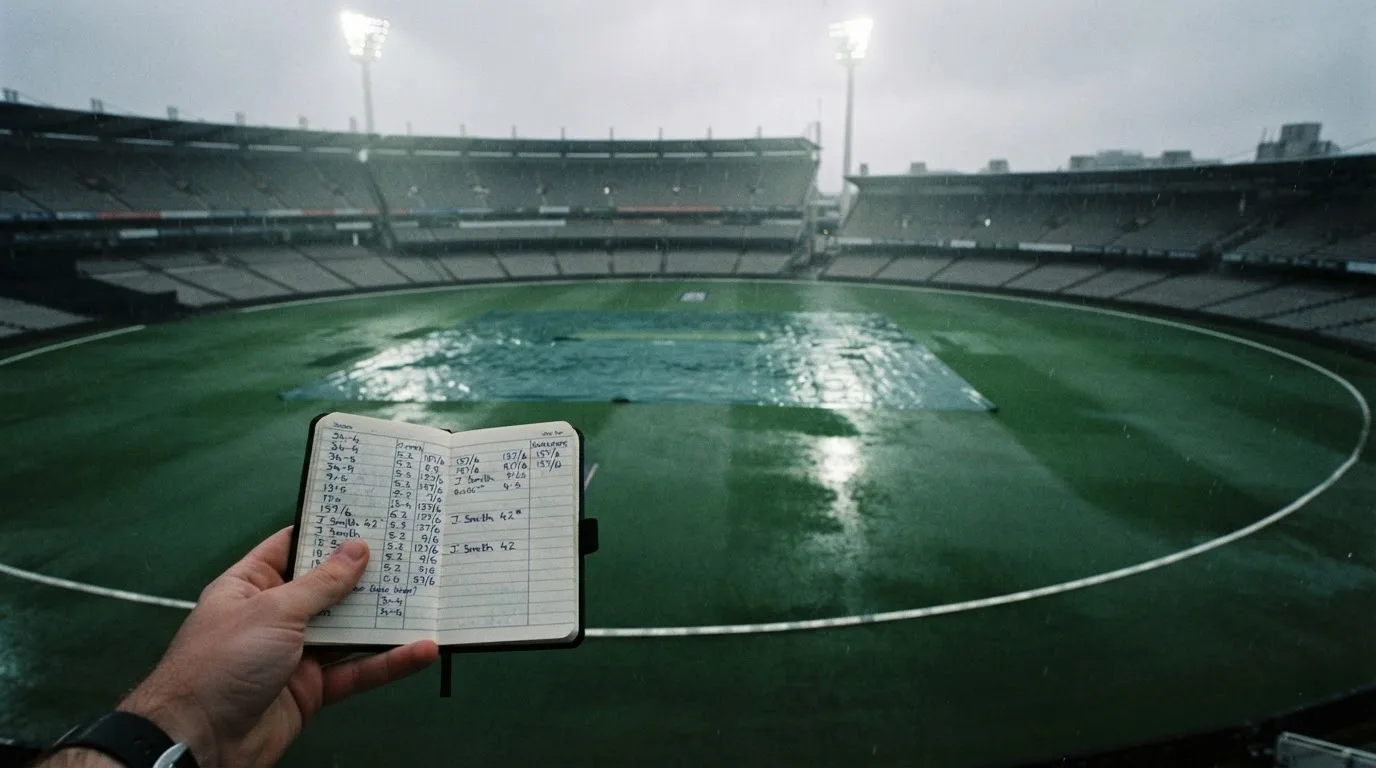
Cash out is the lever that turns a long innings into something manageable. Full cash out settles the bet at the bookmaker’s current quote for the unclosed position; partial cash out does the same for a chosen fraction of the original stake. In a Twenty20, a backer of the batting side can take cash out after a quiet powerplay and bank a small profit before the innings accelerates; in a Test, a backer of the draw has the entire fourth innings in which to read the situation and lock in money. Partial cash out sits behind a stable quote — the price the book offers has to keep moving and has to stay quoted — and the better in-play books on cricket do both. A brand that goes quiet during a rain delay or after a flurry of wickets will show no cash-out value even when the market is still live; that is a feeds problem, not a regulation problem.
What Changes the Live Quote
The bookmaker’s live feed is the price the firm quotes when the wickets fall, the over rate slows or the asking rate climbs. The punter sees the price move, presses the cash-out button and the bet is settled at that price. Three things move the quote on a cricket market: the in-game state (runs on the board, wickets in hand, balls remaining), the bookmaker’s own margin on that market and the time the punter takes to confirm the bet. The first two are visible to anyone watching; the third is what a slow connection or a hesitant punter gives up.
The Trade-Off Behind Cash Out
Full cash out exits the bet; partial cash out keeps a fraction of the stake running at a settlement that has not happened. A punter who partial-cashes a Twenty20 bet after a fast start, with 80 runs needed off 60 balls, has kept the upside but paid the spread for the privilege — the cash-out value is always lower than the theoretical fair value because the book keeps its margin on the way out. The arithmetic is the same one that runs in the pre-match market, only it is settled before the match is over.
Predictions and Strategy: What the Markets Cannot Promise
Cricket betting tips, predictions, free tips and forecasting sit at the centre of the search interest around this sport, and they are also the part of the subject where the page has least to say. A free tip cannot change the structure of a cricket market: it cannot reduce the bookmaker’s margin, give the punter earlier information or push the odds in the punter’s favour once the bet is placed. What it can do is frame a matchup in a way the punter had not seen. The pages below explain how the markets work and what each market costs to enter; what a tipster does with that information is the punter’s own business to judge.
The honest framing is this: a prediction is one input among several, and the punter’s job is to give it the right weight. The bookmaker’s margin sits inside every price on the coupon; the punter who only backs favourites loses slowly to that margin regardless of how well they read the cricket. Tips do not overcome margins, because the margin is the price of admission to the market and nothing the punter does on the sideline changes it.
What a Bankroll Plan Looks Like in Practice
A bankroll plan is the closest thing cricket betting has to a strategy that survives the variance. The shape is: pick a unit (often 1–3% of the bank), stake that unit on each selection regardless of confidence, stop for the session when the bank is down by a set amount and walk away. Cricket’s structure — long matches, natural breaks between innings, a settled feeling at stumps — fits a unit-staking plan better than football’s compressed fixture list does. None of this changes the odds; it changes how the punter’s money survives the weeks when the picks do not come in.
Reading Form Within One Match
Cricket rewards reading what is in front of the punter. The asking rate in a chase, the wickets in hand, the bowler’s pace at the death and the pitch’s behaviour in the second innings are inputs the punter can watch without buying a data feed. What the punter cannot watch, and what a tip simply restates, is whether a player is carrying a niggle or whether the team sheet has been changed an hour before the toss. Those last two pieces of information often decide the bet before the ball is bowled.
Bet Types, Odds and How a Cricket Market Is Priced
The odds on a cricket match are built the same way odds on any other sport are built: the bookmaker assigns a probability to every outcome, turns that into a decimal price and trims the book so the prices sum to more than 100% of the stake. The amount by which they exceed 100% is the margin, also called the overround, and it is the operator’s gross profit before running costs and duty. The math is the standard bookmaker math, not a cricket-specific trick, and once the punter sees it the whole coupon becomes legible.
A worked example from a fixture research does not name is illustrative, not a quoted price. Take a two-way market priced at 1.90 / 1.90 in decimal odds. The implied probability of each side is 1 ÷ 1.90, or roughly 52.63%. Add the two and the book totals 105.26% — the 5.26 percentage points above 100% is the book’s margin. As a band, depending on how the book weights the two sides, an evenly-priced cricket match market will run with a margin in the low-to-mid single digits in percentage points; markets with three or more outcomes (a Test match outcome with home win / draw / away win, or a top-batter market) carry a higher margin because the punter has to pay for the extra outcomes. The exact margin for a real event is what the punter sees when the prices are quoted, and the punter who wants to compare brands should read the prices not the headlines.
The same idea scales to a combination bet. Two selections at 1.90 and 1.90 combine to a single price of about 3.61 if each leg goes in; the per-unit payout is the same as a single but the bookmaker’s overall margin compounds, so a combination of two legs costs the punter roughly twice the margin of a single bet on one market. That compounding is the reason a long-priced accumulator looks so attractive on the slip and so punishing in the long run.
The cricket-specific markets add a layer without changing the underlying arithmetic. Method of dismissal pays more for a run out than for a bowled dismissal because run outs are rarer in the bookmaker’s model; top batter pays more for a tail-ender than the form suggests because the field will not be set for them; the player-prop markets carry more margin than the match-winner market because the data feed and the team-sheet variable make them harder to price. None of this is sharp practice — it is how odds work when the inputs are uncertain — but the punter should know that a player-prop market costs more to enter than a match-winner market, on average, across the season.
The Decimal and Fractional Forms the Punter Sees
The odds on a GB-licensed betting site are quoted in decimal form by default: 1.90 means a £10 stake returns £19 (£10 winnings and £9 profit), 6.00 means a £1 stake returns £6 and an odds-on price like 1.50 means a £10 stake returns £15. Fractional odds say the same thing in a different grammar: 9/10 reads as £9 profit on a £10 stake, equivalent to 1.90 in decimal. The book offers both because the older horse-racing audience reads fractions and the wider sports audience reads decimals; the price the bet is struck at is the same either way, and a £10 stake at 1.90 is the same bet as a £10 stake at 9/10.
Settling What Each Market Means
Match winner in a Twenty20 or ODI is a two-outcome market and the punter backs one side. In a Test match the same coupon shows three outcomes — home, draw, away — and the draw is the bookmaker’s hedge against a long match settling into a stalemate. Tied match (the scores level in an ODI) is a separate outcome on most books; top batter is a market on the player who scores the most runs in an innings for their side; method of dismissal is a market on how the next batter to be out is dismissed. Each market pays at the price quoted at the time the bet is struck; the operator’s settlement rules decide what “most runs” means when rain has cut the innings short, and those rules are on every operator’s terms page.
Cricket Itself: Formats, Tournaments and What the Calendar Looks Like
Cricket in Great Britain has three international formats and one calendar that folds all three together. Test cricket, the oldest format, is the multi-day game: each side bats twice, with up to five days of play, and a match that neither side wins is a draw. Twenty20 (T20) is the shortest: each side bats twenty overs (120 legal deliveries), a bowler may bowl no more than four of those overs, and a tied match is decided by a super over. One Day Internationals (ODI) sit between the two: each side bats fifty overs and a tied match is a tie, not a super over (except in tournaments that have adopted one for knockouts). Rain interference in an ODI is handled by the Duckworth-Lewis-Stern method, which recalculates the target to reflect the overs available to the chasing side; if too few overs are played the match is usually a no result.
The international calendar is organised by the International Cricket Council. Twelve ICC full members hold Test status — India, Australia, England, South Africa, New Zealand, the West Indies, Pakistan, Sri Lanka, Bangladesh, Zimbabwe, Afghanistan and Ireland are the twelve. The World Test Championship began in 2019 and runs across a two-year cycle. The white-ball calendar is denser: bilateral series, the Cricket World Cup (the men’s ODI World Cup, the women’s equivalent and the T20 World Cup), the Champions Trophy and a growing list of franchise leagues.
The franchise leagues are where the modern punter’s calendar lives. The Indian Premier League (IPL) is the largest by broadcast audience; the Big Bash in Australia, SA20 in South Africa, the Pakistan Super League (PSL), the Caribbean Premier League (CPL) and The Hundred in England round out the major Twenty20 leagues. England’s domestic system adds The Vitality Blast (T20), the Metro Bank One-Day Cup (List A, fifty overs a side) and the County Championship (first-class, four-day cricket). The Hundred is a separate English format that uses 100-ball innings; most books price it as a T20-style fixture even though the rules are slightly different.
The 2026 ICC Men’s T20 World Cup ran from 7 February to 8 March 2026, co-hosted by India and Sri Lanka, with twenty teams; India beat New Zealand by ninety-six runs in the final. The next men’s T20 World Cup sits further out; the next men’s ODI World Cup sits behind that; the World Test Championship has a final scheduled with a date the punter can find on the ICC’s site. None of those dates matters for the coupon until the book builds the markets, and the book typically opens prices several weeks ahead of the first ball.
Why Formats Matter to the Punter
The format changes the menu. A Test match lives or dies on the draw market: a long-format bet on the favourite who is batting out a draw loses to itself, and a backer who forgets the draw market finds their money tied up for five days. An ODI has the most markets on a single fixture: match winner, top batter, top bowler, method of first dismissal, total runs, opening partnership and a dozen player props all sit on the same page. A Twenty20 has the fastest in-play: the ask rate is high and the over count short, so the live markets churn faster and the punter who waits two balls to take a price gets a different quote than the one at the start of the over. The Hundred sits in between, with a menu that looks like a Twenty20 menu on most books even though the underlying rules are different.
The Ten Bookmakers: A Comparison of the Brands on the Commission Register
Ten firms sit on this page’s shortlist. Every one of them holds a Gambling Commission remote licence for real-event betting, every one of them runs cricket markets and every one of them is on GAMSTOP. None of these facts makes any of them “the only” licensed brand — the Commission’s register lists several hundred — and none of this is a recommendation. The job of the table is to show what each firm actually offers on the same axes so the punter can pick the firm that matches what they want to do.
The licence number and licence holder below are what the Commission’s public register shows as of the snapshot date. Punters who want to verify the licence for themselves should search the register by name, domain or account number; the punter who bets at a brand whose name does not appear on the register has stepped outside the GB framework and lost the protections that come with it.
The terms column carries the headline feature research has actually confirmed, in the punter’s own words: welcome-offer type, in-play availability, the presence of a bet-builder or Best Odds Guaranteed, anything that distinguishes one firm from the next on the cricket programme specifically. Where the terms column shows a feature research has confirmed the firm carries but has not given a cricket-specific figure for, that is the editorial limit — the punter who wants the cricket specifics for that firm should check the firm’s own cricket page.
| Brand | Gambling Commission remote licence | What the operator’s own terms state on the key’s subject |
|---|---|---|
| Fitzdares | Remote licence 000400-R-103839-030 (account 400), held by Fitzdares Limited. | A premium-positioning sportsbook whose app carries cash out, accumulators, Lucky 15s, specials and antepost markets across horse racing, football, tennis, rugby, cricket, golf and American football, with in-play live odds. |
| Geoff Banks | Remote licence 054095-R-330366-010 (account 54095), held by GB Sports Advisors Limited. | An independent sportsbook whose app publishes live in-play prices and ante-post prices on future events; the trading side of the firm is the brand’s calling card. |
| BetVictor | Remote licence 039576-R-319370-028 (account 39576), held by BV Gaming Limited. | A long-established sportsbook that runs Best Odds Guaranteed on UK and Irish horse racing, enhanced live race streaming, a BetFinder racing feature and Smart Stats; the cricket menu sits inside a wider racing-and-football coupon. |
| DAZN Bet | Remote licence 048756-R-327274-019 (account 48756), held by DZBT Limited. | A newer sportsbook built on DAZN’s media platform, with deposits from £5 on most methods (£20 on PayPal) and no processing fees; the in-play and bet-builder side of the menu is the established offering. |
| William Hill | Remote licence 039225-R-319373-015 (account 39225), held by WHG (International) Limited. | The high-street heavyweight, whose terms run Best Odds Guaranteed on UK and Irish horse racing from 8 AM on the day of the race (single and multiple, no ante-post, tote or pari-mutuel); the cricket programme sits alongside the racing core. |
| NetBet | Remote licence 039170-R-319343-032 (account 39170), held by Netbet Enterprises Limited. | A sportsbook with Daily Boosts, Profit Boosts and free bet offers, a Bet Builder with instant dynamic odds and sports stats for major leagues; the cricket coupon leans on the same promotion engine. |
| Coral | Remote licence 054743-R-330863-014 (account 54743), held by LC International Limited. | A generalist sportsbook with a “Get £40 in Free Bets when you bet £20” sports welcome offer — a deposit and sports bet of £20 or more at minimum odds of 2.0, £40 in free bets issued within 7 days and expiring 7 days after issue, for new GB customers who opt in. |
| Midnite | Remote licence 101839-R-342850-001 (account 101839), held by Midnite Limited. | A newer sportsbook with a £5 / EVS-minimum welcome offer that pays £25 in free bets and 50 free spins (seven-day validity); the in-play, acca builder and price-boost panels are the main user-facing features. |
| Star Sports | Remote licence 009177-R-104555-019 (account 9177), held by Star Racing Limited. | A racing-led firm that also runs a phone-trading line on 08000 521 321 for opening an account, placing bets and queries, with email support at [email protected]; the cricket programme sits behind the racing front. |
| Paddy Power | Remote licence 039439-R-319330-013 (account 39439), held by PPB Counterparty Services Limited. | A generalist sportsbook whose app covers football, horse racing, boxing, rugby, tennis, golf, darts, snooker and F1; cricket is one of several sports on the coupon rather than a stand-alone product. |
Fitzdares Reviewed
Fitzdares has run a sportsbook since the late 1940s and its modern online presence is one of the older names in the comparison. The mobile app carries the full pre-match and in-play menus: cash out, accumulators, Lucky 15s, specials, antepost markets, in-play live odds across the listed sports. Cricket sits inside a horse-racing-and-football core — the firm is better known for its racing service — and the menu is competitive rather than market-leading. The premium positioning shows through in the design and the personal service rather than in raw market depth, and a punter who wants a settled, well-built sportsbook with a long history gets one here. This operator suits a punter who prefers racing heritage and wants cricket included in the same wallet, though it is not a dedicated cricket specialist.
Geoff Banks Reviewed
Geoff Banks is an independent sportsbook published by GB Sports Advisors Ltd. The app publishes live in-play prices and ante-post prices on future events, and the trading side of the firm — how aggressively it prices the next race or the next match — is the brand’s calling card. Cricket is a smaller menu than at the racing-led giants but the prices reflect that the firm is trying to compete on value rather than menu depth. This is a strong independent alternative for a punter who prioritises odds-value over menu depth, noting the smaller-bookmaker feel and the occasional thinning of in-play markets on niche fixtures.
BetVictor Reviewed
BetVictor’s terms carry the clearest features of the firms in this comparison: Best Odds Guaranteed on UK and Irish horse racing, enhanced live race streaming, a BetFinder racing feature and Smart Stats. The cricket menu sits inside that wider racing-and-football offering rather than as its own product. BetVictor is the choice for a punter whose cricket activity complements a racing portfolio; the racing features are the priority, and the cricket coverage is secondary but competent.
DAZN Bet Reviewed
DAZN Bet is the newer sportsbook the comparison carries, built on DAZN’s media platform. The headline is the deposit method: £5 minimum on debit card, Apple Pay, Paysafecard, Trustly and Skrill; £20 minimum on PayPal; no processing fees on any of them. The deposit floor sits below most of the older firms and the no-fees line is the kind of detail a punter who deposits small amounts regularly will check. The cricket menu, in-play and bet builder are the established offering and sit alongside the established DAZN broadcast. This firm is suitable for a punter who prioritises a low deposit floor and a transparent no-fees policy over cricket-specific menu depth; the cricket offering is functional, and the price of entry is highly competitive.
William Hill Reviewed
William Hill’s Best Odds Guaranteed terms show the cost of the rule from the punter’s side: the offer covers UK and Irish horse racing from 8 AM on the day of the race, applies to single and multiple bets, and does not apply to ante-post, tote or pari-mutuel bets. A punter who backs a horse the morning of the race gets the better of the price they took and the starting price; a punter who backs a horse three weeks out gets the price they took and nothing more. The cricket programme sits behind that racing offer, and a punter whose interest splits between racing and cricket gets both in one wallet. This is a heavyweight option for a punter interested in a strong racing pedigree, and comfortable with cricket as one of several sports within a large, established coupon.
NetBet Reviewed
NetBet’s terms run Daily Boosts, Profit Boosts and free bet offers on the coupon, a Bet Builder with instant dynamic odds and sports stats for major leagues. The promotion engine is the firm’s headline feature: a punter who values a daily boost and a Bet Builder with an instant-odds slider gets both here. Cricket leans on the same engine and shows the boosted odds on the major fixtures. NetBet serves a punter who prioritises price boosts and an interactive Bet Builder, provided they check the bonus terms to see which cricket markets qualify for the promotion.
Coral Reviewed
Coral runs a “Get £40 in Free Bets when you bet £20” offer on the sports side: a £20 deposit and sports bet at minimum odds of 2.0, with £40 in free bets issued within seven days and expiring seven days after issue, for new GB customers who opt in. The headline mechanics are clear: minimum stake, minimum odds, time to issue, time to use. The cricket programme sits inside the wider sportsbook and is competitive across the major fixtures. Coral suits a punter looking for a two-bet welcome offer and a recognised brand name, bearing in mind the seven-day windows on each side of the offer are tight given the intermittent nature of cricket calendars.
Midnite Reviewed
Midnite’s welcome offer is the smallest minimum on the page: £5 or more at pre-match odds of EVS (2.0) or greater within fourteen days of sign-up returns £25 in free bets and 50 free spins, all valid for seven days. The in-play, acca builder and price-boost panels are the main user-facing features on a newer sportsbook; the welcome mechanic is generous against the rest of the comparison. This is a suitable choice for a punter who prefers occasional, small-stake cricket betting, with a generous entry point and a clear welcome mechanic that rewards selective play.
Star Sports Reviewed
Star Sports’ distinctive feature is the phone-trading line: 08000 521 321 for account openings, bets and customer queries, alongside email support at [email protected]. The cricket programme sits behind a racing-led front and the menu is best on horse racing; cricket is there but is not the headline. This operator is a solid alternative for a punter who wants a person on the other end of the phone and values the older-style racing-shop service, accepting that cricket gets a smaller share of the menu than at the racing-and-football giants.
Paddy Power Reviewed
Paddy Power’s app covers football, horse racing, boxing, rugby, tennis, golf, darts, snooker and Formula 1; cricket sits inside that generalist menu rather than as its own product. The price-boost panels and the in-play menus on football carry across to cricket on the major fixtures, and the cash-out coverage is wide on the same sports as the pre-match coupon. The verdict is that this is the firm for a punter whose cricket betting is one of several sports in a generalist wallet — Paddy Power is not the place to go for a niche cricket market, and it is the place to go for a price boost on a Hundred fixture alongside a Saturday racing card.
The Regulatory Framework: What a GB Licence Buys the Punter
The Gambling Commission regulates commercial gambling in Great Britain under the Gambling Act 2005. The framework is a licensing one, not a permissive one: the Commission issues operating licences, sets licence conditions and codes of practice, and runs a public register where every licence-holder is listed. A bookmaker that wants to take bets from customers in Great Britain needs a Commission licence wherever the firm is based; since the Gambling (Licensing and Advertising) Act 2014 an offshore firm is not exempt just because it holds a licence elsewhere. A Curaçao, Maltese or Gibraltar licence alone is not a substitute.
The licence categories matter for the menu. A remote general betting standard (real events) licence covers sports betting on real matches; a remote general betting standard (virtual events) licence covers simulated events; a remote betting intermediary licence covers betting exchanges. Some firms hold multiple categories; some hold one. The punter does not need to memorise the categories but should know that betting exchanges run under a different licence than a standard sportsbook and that virtual events are a separate category from real cricket.
Minimum age is 18. Name, address and date of birth are verified before a customer can deposit or gamble on a GB-licensed site — including with a free bet or a bonus, since the verification rule applies to the account, not to the size of the stake. The verification is what makes anonymous play impossible on a licensed site and what makes licensed operators a less attractive route for problem gamblers. The trade-off is that registration takes longer than at an unlicensed site and that a punter whose name has multiple spellings, who has recently moved or who is registering with a thin paper trail may need to wait while the firm checks the document.
Player protection has several layers. GAMSTOP is the national online self-exclusion scheme and is a mandatory licence condition for every online operator — periods are six months, one year, five years, or five years with auto-renewal, and after the minimum period the exclusion stays in place for a further seven years unless the customer asks GAMSTOP to remove it. A separate offline service covers betting shops. The deposit limits in the Remote Technical Standards are operator-set within a Commission framework; the framework itself is being rolled out in phases, with the first changes applying since 31 October 2025 and a second phase that was postponed to 30 September 2026 and whose live status is not established at the time of writing.
Advertising is policed through the CAP Code (non-broadcast) and the BCAP Code (broadcast), enforced by the ASA, alongside the LCCP marketing conditions. Wagering requirements on bonuses are capped at 10x. Mixed-product promotions — an offer that requires gambling on two or more product types such as betting, casino, bingo and lottery, for example “bet on football to get free spins” — are banned since 19 January 2026. The Advertising Standards Authority’s rule that no one who is or seems to be under 25 may be featured gambling or play a significant role concerns who may appear in the advertisement, not who may bet; the rule on strong appeal to under-18s concerns the content, not the punters.
The player pays no tax on betting winnings in Great Britain. The tax that funds the regulatory regime is the operator’s General Betting Duty, a percentage of gross profits that the operator charges itself into the price; the punter who backs a winner at 3.00 receives £30 on a £10 stake with no deduction at the bookmaker’s end. A punter who is classed as a professional gambler by HMRC has a different position and should ask HMRC or an adviser; the odds on the slip do not change with that classification.
On the Matter of Offshore and Unlicensed Brands
A GB licence is compulsory for any operator whose remote facilities are used in Great Britain. Providing gambling facilities in Great Britain without the licence the Act requires is an offence under section 33 of the Gambling Act 2005 — on summary conviction up to fifty-one weeks’ imprisonment, a fine up to level 5, or both; six months in Scotland. The offence is aimed at the operator; the punter who bets on an unlicensed site is not, on the face of it, committing an offence by doing so. What the punter loses by betting on an unlicensed site is the set of protections the framework guarantees: GAMSTOP coverage, the Commission’s complaints route, the approved dispute-resolution route if funds are withheld, the British consumer-protection regime, the 10x bonus cap, the £150 vulnerability check. Enforcement against unlicensed operators is disruption, not blocking: cease-and-desist notices, search-engine referrals, work with registrars, hosts and payment providers; the Commission has been given, or is about to receive, court-order DNS blocking powers. The honest framing is that licensed and unlicensed each carry their own risk: the licensed route trades away anonymity and adds verification friction, the unlicensed route trades away protection. Neither is “the safe choice” by default.
Responsible Gambling: What the Licence Asks of the Operator and the Customer
The Licensing Conditions and Codes of Practice set the social-responsibility side of every GB remote licence. The Commission’s stance is that safer gambling is a licence condition, not a marketing slogan, and the punter sees the practical effects in three places: deposit limits, timeouts and self-exclusion.
Deposit limits are the operator’s interface to the requirement that the punter set some kind of ceiling on what they can put into the account. The first phase of the Commission’s deposit-limit framework has applied since 31 October 2025 and the second phase was postponed to 30 September 2026. The limits are an operator-set thing inside a Commission-defined ceiling; the punter who wants to lock in a limit picks an amount, the firm honours it and the limit takes effect across all deposit methods.
Timeouts are the operator’s cool-off tool: a twenty-four-hour, a one-week or a one-month break on the account, set by the punter from the safer-gambling page. A timeout does not carry the same permanence as a GAMSTOP registration and the punter can lift it themselves when the period ends.
Self-exclusion runs through GAMSTOP. The six-month minimum is the shortest period on the register; one and five years sit beyond it, with five years carrying the option of auto-renewal for a further five. After the minimum period the exclusion stays in place for a further seven years unless the punter asks GAMSTOP to remove it. Every GB-licensed online operator is on GAMSTOP — a self-excluded punter cannot open a new account at any of them, on the same identity, during the period of exclusion. The punter who self-excludes through GAMSTOP is also asking the firms on the register to close any account that punter has open in the same identity; that step is automatic at the firms reviewed below.
Help for a punter whose gambling has stopped being fun is available from GamCare (which runs the National Gambling Helpline), GambleAware (which funds treatment and education), NHS gambling clinics (which run face-to-face support in several regions) and Gamblers Anonymous (which runs peer-support meetings). The firms reviewed below link to several of these from their safer-gambling pages. None of them is a substitute for a conversation with a GP, and a punter whose gambling has changed in character — bigger stakes, longer sessions, money missing from the household budget — will get more from a clinical referral than from a helpline alone.
Bonuses and Free Bets on Cricket: The Offer and the Cost
Cricket betting offers, free betting and free bets are the search phrases that put this subject in front of the punter, and the offers are real, listed and capped at 10x wagering on the bonus amount under the Commission’s rule that came into force on 19 January 2026. The shape of an offer is the same across the firms reviewed: an entry bet on the sportsbook, a free-bet payout or a boosted-odds token, and a set of terms that decide what the punter has to do for the bonus to be paid and what the bonus itself pays back.
The entry-bet welcome offers vary in their mechanics. Coral’s “Get £40 in Free Bets when you bet £20” carries a minimum stake (£20), a minimum odds (2.0), a stake window (the bet must be placed and settled), a payout window (£40 in free bets issued within seven days) and an expiry on the free bets (seven days after issue) — for new GB customers who opt in. Midnite’s “Bet £5, Get £25 in Free Bets + 50 Free Spins” carries a smaller minimum stake (£5), the same minimum odds (2.0, expressed as EVS), a wider stake window (fourteen days from sign-up) and the same seven-day expiry on the bonus — the offer runs on the sports side of the account and the free spins are a separate casino-side credit.
The £40-or-£25 number is a headline and the wagering cap is the regulation behind it. Under the 10x cap a £40 bonus takes £400 of qualifying bets to clear; a £25 bonus takes £250; the punter who backs at minimum odds still loses the bookmaker’s margin on every turnover bet. The promotion reads generous because the headline is “Free Bets”; the maths reads modest because the turnover costs the punter a margin the offer does not mention. Each firm’s terms page lists the qualifying markets, the minimum odds on turnover bets, the contribution of different bet types (a same-game acca typically counts more than a single) and the cap on what the bonus pays back; a punter who has not read these terms has not finished reading the offer.
Free bet stakes are not always returned with a win. A £40 free bet at 4.0 pays £160 of winnings (£40 stake does not return with the win); a £40 cash equivalent would have paid £200. This is the single costliest clause in most free-bet offers and the one most often missed. Some firms offer “stake returned” free bets as a bonus-on-bonus; most do not, and the punter who treats a free bet as the same as a stake from the wallet loses roughly the stake fraction of every win.
Mixed-product promotions are banned outright — the 19 January 2026 rule closed the door on offers that cross product types, so a free-spins bonus for a sportsbook bet is no longer available, and a sports-bet bonus for a casino registration is no longer available. The ban did not end free bets with a wagering condition; it ended the cross-product sweetener that smaller firms used to make their headline offer look bigger.
What an Offer Costs the Punter in Practice
A punter who takes the Coral offer — bet £20 at minimum odds 2.0, receive £40 in free bets, wager £40 at 10x (£400) — has put £420 of qualifying bets through the account (£20 cash + £400 bonus turnover) to clear the bonus. Each of those bets sits inside a market with a margin; the punter loses an amount equal to the margin times the turnover on average across many repetitions of the bet. The headline is “£40 free”; the cost is the £400 turnover and the margin the turnover carries. The Commission’s 10x cap limits how bad this can get, not whether it costs anything. Promotions are a marketing expense to the operator and a margin cost to the punter; both can be true at once.
Where the Cricket Programme Changes the Offer
Cricket’s calendar gives the punter the room to be selective. The Hundred runs for a few weeks in the summer, the IPL runs for two months in the spring, the men’s international calendar sits behind that. The punter who wants to use a free bet on cricket does not need a fixture every weekend; the punter who uses the bonus on a same-game acca during the World Cup has time to pick the match they want. The offer’s expiry is the timing pressure: a seven-day free-bet window is short against a cricket calendar that runs in waves, and the punter who lets the free bet lapse loses the offer without losing the turnover cost.
An Illustration of the Margin in a Cricket Market
The margin research works to is a figure the punter can read off the prices on the page. With the illustrative two-way market at 1.90 / 1.90 (fractional 9/10) the implied probability of each side is roughly 52.63%, summing to 105.26%. The 5.26 percentage points above 100% is the book’s gross margin before running costs and duty; the band — low-to-mid single digits in percentage points, depending on how the book weights each side and what the underlying market offers — is what a punter should expect on a single, evenly-priced cricket match market at a GB-licensed sportsbook. Markets with three or more outcomes (home / draw / away in a Test, or a top-batter field of eight names) carry more margin because the punter pays for the extra outcomes, and a same-game acca multiplies that margin because the per-leg margin compounds. The exact figure for a real fixture is the one on the slip at the time the bet is placed; the calculation here shows the mechanism, not a real price.
Frequently Asked Questions
How does betting on cricket work?
A punter backs one of the outcomes on a cricket market at the decimal price the book quotes, stakes an amount they choose within the bookmaker’s minimum and maximum, and waits for the market to settle. A match winner pays out at the price the punter took; a same-game acca pays the combined price if every leg wins; a free bet pays the winnings without returning the stake. The bookmaker’s identity is verified before the first deposit and the punter cannot place a bet on a licensed site without it.
How do I bet on cricket online?
The route is to pick a firm on the Gambling Commission’s public register, install its app or open its mobile site, register, pass the identity check, deposit by debit card or another method the firm lists, and pick a market on a live or upcoming fixture. Each step has a window: identity verification can take minutes or several days, deposits are usually instant on cards and e-wallets, and the market list updates as fixtures are added or suspended.
How can a punter win at cricket betting?
No system of tips or staking can overcome the bookmaker’s margin, which is the cut the book keeps off every market regardless of the outcome. A punter can improve their long-run results by reading form, understanding the format and pace of the match, picking the markets that suit their knowledge, and staking a fixed unit of their bank on each bet rather than chasing losses. The win that does not happen often enough is the one the punter would have backed on every Saturday — the bookmaker has priced that bet, the margin has been taken and the rest is what the punter makes of it.
How can a punter verify a bookmaker’s Gambling Commission licence?
The Commission’s public register can be searched by business name, trading name, domain or account number. A punter who sees a brand and wants to check it types the name or the domain into the register and confirms that the licence category covers the product the brand is offering (a remote general betting standard real events licence for a sportsbook, for example). A licence that does not appear on the register is not a GB licence; the punter who deposits at such a brand has stepped outside the GB framework.
How is the return on a bet worked out from the stake and the odds?
The decimal price on the slip is the multiplier for the stake. A £10 stake at 1.90 returns £19 (£10 winnings and £9 profit on top of the £10 stake); a £5 stake at 6.00 returns £30; a £20 stake at 4.50 returns £90. A free bet does not return the stake — a £40 free bet at 4.00 returns £160 of winnings, not the £200 a cash bet would have paid. A combination bet multiplies the prices of each leg into one: two legs at 1.90 and 1.90 combine to about 3.61 if both win.
What is the bookmaker’s margin and how does it appear in the odds?
The margin is the percentage the book keeps of every unit bet on a market before running costs and duty. On a two-way market the prices sum to more than 100% of the stake once the implied probabilities are added: a market priced at 1.90 / 1.90 implies a 5.0% margin. A market with more outcomes (home / draw / away in a Test, or a top-batter field) carries a higher margin, and a same-game acca compounds the per-leg margin. The price the punter sees is the price the margin has already been trimmed into.
Rugby, cricket & Gaelic – systembetsguide.com
Content created by the «systembetsguide.com» team
