
Boxing Betting Odds 2026
 Available in US
A short line lands after the lead: a bettor who walks to a boxing market without knowing what the price hides loses more often than the one who does — and most of that loss is built into the price itself. This page works through what an odds figure on a UK boxing card actually means, how the licensed market prices it, and where each of the routes a punter can take leads. Everything below has been checked against the current data as of 30 October 2026, with licence claims verified against the Gambling Commission’s public register.

Where Crypto Fits in Boxing Betting
The shortest way to frame crypto in boxing betting: it is a payment question, not a betting one. A bet is settled by the bookmaker you place it with, in whatever currency that operator pays out — and at every brand licensed in Great Britain, that currency is pounds sterling, paid to a verified account. Crypto never changes who holds the licence, never changes the price you are quoted, and never gives the bettor a legal status the law does not already grant.
What crypto does change is the rail the money travels on before it reaches the operator. A punter who holds bitcoin, ether or USDT and wants to bet on a Saturday-night heavyweight title fight has a small set of routes: convert the coin to pounds on an exchange, deposit by debit card or bank transfer at a UK-licensed bookmaker, and bet as if the coin had never existed; or look for an operator that accepts coin deposits directly. The second route, in the British market, runs almost entirely outside the Gambling Commission’s licence net — because the Commission’s identity-verification rules (since 7 May 2019, name, address and date of birth must be confirmed before the first deposit) and the credit-card ban (since 14 April 2020) were built around fiat rails, and the few operators that accept coin have generally settled offshore. A punter who uses that route gives up GAMSTOP coverage, the Commission’s complaints route, the 10x bonus cap, and the £150 financial vulnerability check that is part of the safer-gambling frame for licensed remote operators.

The numbers attached to crypto betting on boxing are not different from those at any other bookmaker. The margin is built into the same two-way or three-way market; the price quoted on a Fury–Usyk undercard fight sits at 1.90 / 1.90 the way it would at any licensed firm, because that is what the market for that fight looks like, not because the deposit arrived via a particular chain. The point where the coin matters is the moment the punter wants to cash out — and that moment carries the same friction at every operator, coin-funded or not, because the operator pays in pounds either way. Where the rail is offshore, the friction is heavier: no approved dispute-resolution body, no British consumer redress if funds are withheld, no guarantee the operator holds any licence at all.
For the punter who wants to keep crypto in the picture without leaving the British frame, the practical sequence is straightforward: hold the coin in a wallet, sell to pounds on a regulated exchange, withdraw to a UK bank account, deposit at a UK-licensed bookmaker, bet, withdraw back the same way. The boxing market, the prices, the markets offered, and the safer-gambling protections are the ones the operator’s licence requires. The coin is reduced to a funding choice, and the punter keeps the protections the British frame gives. That sequence is dull, and it is also the one the law expects.
For the punter who wants the coin to stay in play through the bet, the trade-off has to be read plainly. The British frame gives checks, limits, GAMSTOP and a bonus cap; the offshore route gives none of those, and the only thing it adds is that the deposit was a coin. The page does not say one route is “right” — it says which protections sit behind which door, so the punter chooses with the door in view.
What Boxing Bonuses and Free Bets Actually Cost
A welcome offer at a UK-licensed bookmaker is built to look like the operator is paying the punter to turn up. It almost never is. The shape varies, but the arithmetic underneath is the same: a small bonus, a list of conditions, and a margin in the market that quietly takes most of it back. The page describes what an offer is worth, not how to claim one.
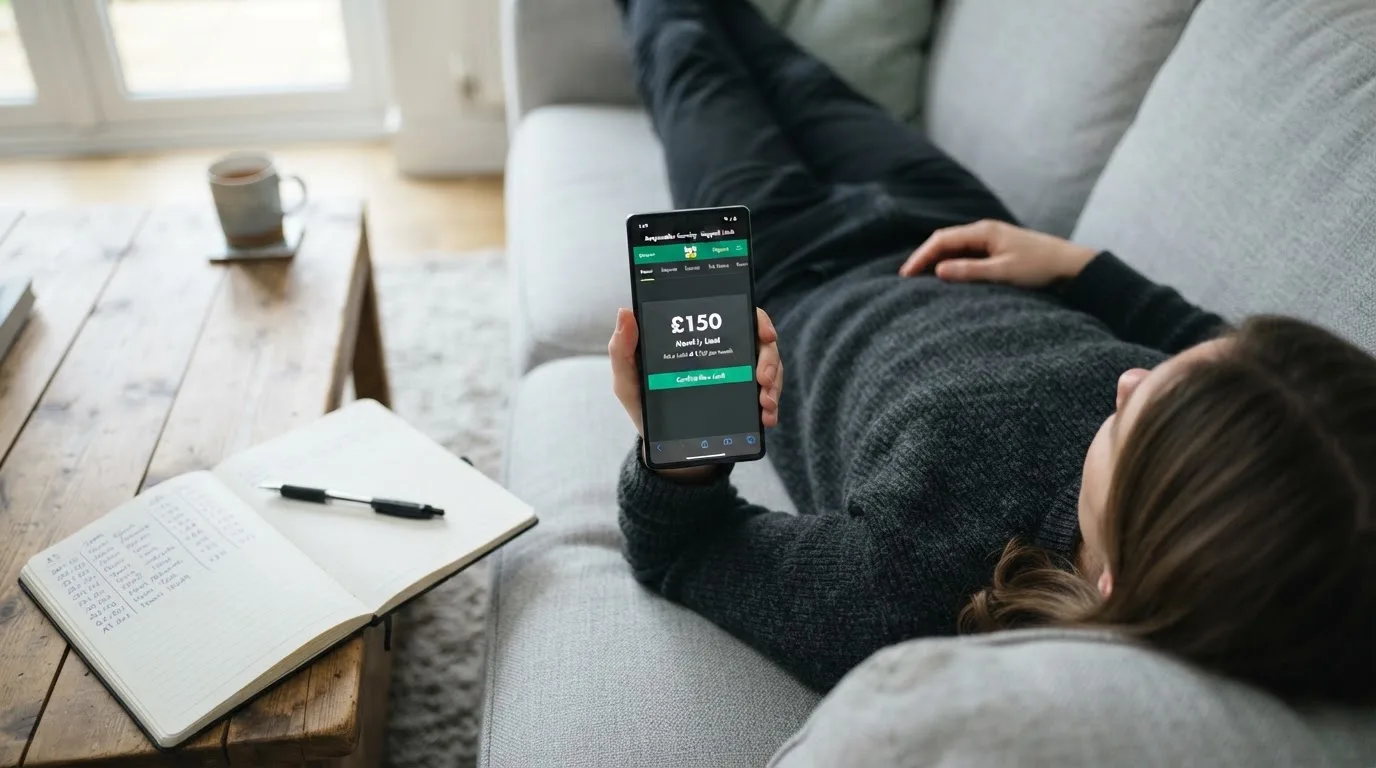
The cleanest example of how the cost works sits in the rule that took effect on 19 January 2026: wagering requirements on bonuses are capped at 10x. That is a hard ceiling on how much the punter has to turn before a bonus becomes withdrawable. A £10 bonus at 50x would have needed £500 of qualifying bets to clear — a rate that was once common and is now illegal at any licensed operator. Under the cap, no bonus requires more than £100 of qualifying turnover for every £10 of bonus issued. That ceiling changes what a promotion can ask of the punter, and the change is large enough that the headline number on the offer is no longer the most important figure on the page. The condition is.
A second rule sits beside it: mixed-product promotions are banned. An offer that asks the punter to bet on football to get free spins on a slot, or to place a sports acca to unlock a casino bonus, is no longer licensable in Great Britain. That sounds like a niche point, but it shapes what a UK-licensed boxing welcome offer can actually look like in 2026 — it has to stay inside sports betting, or inside one product, rather than chain the punter across product types.
Free bets work differently from cash bonuses, and the difference matters. A £20 free bet, settled as a free bet, returns the winnings only — the £20 stake is not paid back. A £20 cash bonus, settled as cash, returns the stake and the winnings, but only after the qualifying turnover is done. The two are easy to confuse because both arrive labelled “free”, and the punter who treats them as the same product finds out which one they got when the first bet settles.
The condition that does the most damage, when it appears, is the minimum price for a qualifying bet. An offer that gives £40 in free bets after a £20 bet at minimum odds of 2.0 (1/1) is a different product from one that gives the same £40 after a £20 bet at 1.50 (1/2). The first requires a real price; the second lets the punter grind through low-margin markets. The headline figure on both is identical, and the first costs the operator more. The punter who reads the minimum price before the headline number knows which one is in front of them.
The deadline is the second condition that bites. Free bets at UK-licensed bookmakers often expire within seven days of issue, and a punter whose week runs differently from the operator’s clock loses the offer to the calendar. The headline number does not say that; the small print does.
One figure does not appear in any welcome offer, because it is the one the operator would prefer the punter not to see: the margin in the market the qualifying bet is placed in. A free bet worth £20 cleared on a market with a 5 % margin costs the punter, on average, £1 of that £20 in the act of clearing it. That is not a charge the operator levies — it is a charge the price hides. The offer does not list it because the offer did not build it; the market did.
The expected cost, in plain prose: a £20 free bet cleared on a market at decimal odds of 1.90 / 1.90 carries an average margin of 5 % per unit wagered, and at 10 units of qualifying turnover that is £1. A £40 cash bonus with 10x wagering carries £400 of qualifying turnover at the same margin, which is £20 of expected cost against £40 of bonus — the bonus half survives. The sharper the market the punter clears on, the more of the bonus they keep. The duller the market, the more of the bonus the margin takes back.
The order in which a punter should read an offer, in 2026: the wagering requirement, the minimum price, the deadline, the markets that count, the stake-not-returned clause if it is a free bet, and only then the headline number. That order turns the offer from a marketing line into a costed product.
Boxing Betting on Mobile and Through Apps
The British boxing market in 2026 is, for most punters, an app market. The bet is placed on a handset, in the moments after a fighter walks to the ring, on a market the bookmaker has priced on the same screen. The shape of that screen decides what the punter can do, and a few details about the shape are worth saying out loud.
A boxing betting app is a thin wrapper over three things: the sportsbook’s price feed, the bet slip, and the cash-out screen. The price feed is the same one the desktop site uses; the app is the route to it. The bet slip is where the punter sets the stake and confirms the price; the slip locks the price the moment the bet is placed, and any movement between the slip and confirmation is the punter’s problem. The cash-out screen is the in-running tool that lets the punter settle a bet before the fight ends, at a price the operator is setting at that moment. Those three screens are the app.
The apps that name boxing as a market carry different strengths. Some carry in-play markets with a live feed; some carry a bet builder that lets the punter combine markets on the same fight into one price; some carry live streaming, so the punter can watch and bet on the same device. The punter who wants one of these features needs an app that has it; the punter who wants none of them can use any of them.
The app’s licence is the operator’s licence. The Gambling Commission’s public register does not list apps; it lists operating companies and the domains and apps they publish. A punter who wants to know whether an app is licensed looks up the operating company on the register, not the app name in the app store. The app store listing is marketing; the register is the law.
A practical note on app-versus-site: a punter whose phone is older, whose connection is slow, or whose hands are full at the start of a round finds the app heavier than the mobile browser. The mobile site carries the same prices and the same markets; the app carries them in a form the handset was built for. Neither is faster than the other at the same price, because the price comes from the same feed.
The punter who bets on boxing from a phone in 2026 is betting on the same market as the punter at a desktop, with the same prices and the same licence conditions, through a route that suits the moment. The choice between app and mobile site is a choice about the screen, not about the bet.
Live Boxing Betting and Cash Out
In-play betting on a boxing fight is the most volatile market the punter will meet on the card. The price moves with every landed combination, every cut, every clinch the judges will see later — and the punter who watches the screen and the screen moves faster than the fight is, for those few seconds, holding a position in a market that is repricing itself continuously. The mechanics of that market are worth describing before the punt is placed.
A live boxing market offers the same three outcomes the pre-fight market offers — fighter A, fighter B, draw — plus, on some operators, a method-of-victory market (knockout, decision, draw) and a round-grouping market (in rounds 1 to 3, 4 to 6, 7 to 9, 10 to 12). The price moves on a feed the operator controls, and the feed is calibrated to the same margin as the pre-fight market. The margin does not shrink in play; if anything, it widens, because the operator is repricing into uncertainty.
Cash out is the operator’s tool for closing a position before the fight ends. The punter who placed a back bet on fighter A at 1.80 and wants to lock in a profit before the championship rounds can hit the cash-out button and take whatever the operator is offering at that moment. The cash-out price is set by the operator, on the operator’s terms, and it is rarely as good as the price the punter would have got by holding the bet to settlement. The cash-out screen is a tool for the punter who has changed their mind, not a tool for the punter who wants to maximise the value of a winning position.
The punter who bets in play on boxing without a plan tends to lose. The market is too fast, the screen is too close, and the prices move too sharply for instinct to beat. The punter who bets in play with a plan — a price at which the bet is placed, a price at which the bet is cashed out if the opportunity comes, a price at which the bet is held — has a chance, because the plan lets them sit through the moments the screen is asking them to react. The plan is the tool. The screen is not.
Live streaming is a separate feature, not a betting one. A punter who can watch the fight on the operator’s app and bet on the same screen has an information advantage over a punter who has to switch between screens; that advantage is real, and it is the reason live streaming is the feature operators push hardest. The punter who bets in play without watching the fight is betting on a screen; the punter who bets in play while watching it is betting on what they can see. The latter is not always right, but they are not blind.
In-play betting on boxing is not for every punter. The market moves too fast for the punter who places a bet and walks away; the cash-out screen is not for the punter who does not want to make a second decision in the same fight; the live feed is not for the punter whose connection cannot keep up. The market rewards the punter who is at the screen, with a plan, on a connection that holds.
Boxing Predictions, Tips and Strategy
The word “prediction” in boxing betting has a precise meaning the punter should hold onto: it is a forecast about a future event, not a claim about a future result. A punter can know that fighter A has a 60 % chance of winning, place a bet at decimal odds of 1.80, and still lose the bet — because the bet is on the fight, not on the probability. The punter who confuses the two loses more than the price.
The cheapest discipline in boxing betting is reading the form. A fighter’s last five opponents, the method of victory in each, the rounds stopped in, the judges’ scores when the fight went the distance — that information is public, and it is the same information the bookmaker used to set the price. The punter who reads it and disagrees with the price has a position; the punter who reads it and agrees has no position. Either is a fine outcome; the third option — not reading it at all — is the one that loses.
The second discipline is reading the market. A price that has shortened from 2.50 to 1.80 between Monday and Friday is a price that has moved on money; the punter who takes 1.80 on Friday is taking the price the market has set, not the price the form suggested on Monday. The punter who took 2.50 on Monday is in a different position. The punter who did not bet on Monday and wants 1.80 on Friday has to decide whether the price is still worth taking at the new number.
The third discipline is reading the margin. A two-way market at decimal odds of 1.90 / 1.90 carries a margin of about 5 %; a three-way market at 1.50 / 4.00 / 7.00 carries a margin closer to 8 %. The punter who shops between operators for the same fight can sometimes find a price 0.05 better than the next operator; that 0.05 is the difference between a market with a 5 % margin and a market with a 4 % margin, and over a season of bets it is the difference between a punter who breaks even and a punter who does not.
Tips sold as predictions are a different category, and a more cautious one. A tipster service that charges for a selection is selling a forecast, not a result; the punter who pays for tips is paying for someone else’s reading of the form, not for a guaranteed outcome. The tipster service that quotes a strike rate — “70 % winners” — is quoting a figure that is only honest if the service records every selection, including the losers, and the punter who sees only the winners has a partial view. The tipster service that does not record losers is not a tipster service; it is marketing.
A strategy the punter can run without buying tips: only bet when the punter has read the form and has a position the form supports; only bet at a price the punter has decided on before the form was read; only bet on markets the punter has priced themselves, not on markets the operator has named and the punter has not; and walk away from the card if those conditions are not met. That strategy is dull, and it is also the one the arithmetic supports.
The punter who treats tips as one input among several — alongside the form, the price, and the market the punter has priced themselves — has a working method. The punter who treats tips as the input, and the rest as decoration, has bought marketing.
Boxing Bet Types, Markets and How Odds Are Built
A boxing card at a UK-licensed bookmaker offers more markets than the pre-fight three-way line, and the punter who knows which market suits which question has an edge the punter who bets the headline line does not. The mechanics of those markets are not complicated, but they are easy to confuse, and a confused punter is one the price has already beaten.
The three-way market is the headline: fighter A, fighter B, draw. The price on each outcome is set so that the implied probability across the three outcomes adds up to more than 100 %; the excess is the margin, and the margin is the operator’s edge. A market priced at 1.50 / 4.00 / 7.00 implies probabilities of 67 %, 25 %, and 14 % — totals 106 %, with the 6 % the operator keeps on every unit bet on the market. The punter who backs any of the three outcomes is paying that 6 %.
The method-of-victory market is the second most common. The punter backs a fighter and a method — fighter A by knockout, fighter A by decision, fighter A by disqualification. The price is set on each combination, and the margin sits across the full grid, not across the headline fight. The punter who backs a method they think the form supports — fighter A by decision because fighter A has gone the distance in the last three fights — has a more specific position than the punter who backs fighter A to win. The price on the specific method reflects the specificity.
The round-grouping market is the third. The punter backs fighter A to win in rounds 1 to 3, or 4 to 6, or 7 to 9, or 10 to 12. The price is set on each group, and the price on the early rounds is usually heavier (the price reflects the chance of an early stoppage, which is lower than the chance of a late stoppage). The punter who backs the early rounds is paying for the specificity; the punter who backs the late rounds is paying less per unit but expecting a less common outcome.
The bet builder, also called a same-game multi, lets the punter combine markets on the same fight into one bet. Fighter A to win by decision, in rounds 10 to 12, with over 8.5 total rounds — that combination is one bet, one price, one stake. The price is the multiplication of the implied odds on each leg, less a margin the operator builds in across the combination. The punter who builds a bet builder is paying for the convenience of a single slip, and the convenience costs a margin.
Each-way betting is a horse-racing term that has crept into boxing at some operators. The bet is two equal bets: one on the fighter to win, one on the fighter to “place” — usually to win or draw. The stake is doubled; the place terms are set by the operator. The punter who bets each way on boxing is paying twice the stake for half the certainty, and the value of the trade depends on the place terms the operator quotes. Boxing cards rarely have a place market as deep as a horse race, so the place terms tend to be tight.
An each-way bet on boxing works like this. Place a £10 each-way bet at decimal odds of 4.00 (3/1). The total stake is £20 — £10 on the win, £10 on the place. If the fighter wins, the win half pays £40 profit and the place half pays according to the place terms (often 1/4 or 1/3 of the win odds). If the fighter places but does not win, the win half loses and the place half pays. If the fighter loses outright, both halves lose. The total stake is the same either way; the place terms are what change.
The exchange is a different kind of market. The punter is not betting against the operator; the punter is betting against another punter, and the operator takes a commission on winning bets. The price is set by the punters backing and laying, and the margin is the commission rather than the overround. Matchbook runs as an exchange in Great Britain; the punter who uses it can both back and lay a fighter, and the punter who lays is taking the operator’s side of the bet at a price the punter has set.
The punter who bets on boxing in 2026 has, in short, three broad routes: the sportsbook with the operator-set price and the operator-set margin; the bet builder on the sportsbook with a multiplied price and a combined margin; the exchange with a peer-set price and a commission on winnings. Each is built for a different kind of punter, and the choice between them is the choice of which trade-off the punter prefers.
Boxing as a Sport — Bouts, Sanctions and Where the Fights Sit
Professional boxing is a small sport with a long calendar, and the calendar is the first thing the punter should know before placing a bet. A title fight happens roughly every few weeks on one of the four world sanctioning bodies; a non-title card happens every weekend somewhere in the world. The punter who bets on a Saturday-night fight has, in most cases, a week of pre-fight markets; the punter who bets on a Tuesday-night undercard in Eastern Europe has, in many cases, a market that has been priced an hour before the bell.
Bouts are scheduled to a length the sanctioning body sets: ten rounds for a non-title fight, twelve rounds for a world title fight, four rounds for a fighter new to the professional ranks. Each round lasts three minutes, with a one-minute rest between rounds. The punter who bets on the round-grouping market needs to know the scheduled length, because the round-grouping market is built on it. A twelve-round fight offers more groups; a four-round fight offers one. The price reflects the schedule.
A bout is decided by knockout, technical knockout (the referee, doctor or corner stops the fight), a decision on the judges’ scorecards, or disqualification for fouls. A draw is the result when the judges’ scorecards give both fighters equal scores; the draw is one of the three outcomes on the three-way market, and it is the outcome the punter most often forgets. A draw on a card with no obvious contender pays 8.00 or higher, and the punter who has not thought about the draw is the punter who is surprised by it.
The four sanctioning bodies that award world championships are the WBA, WBC, IBF and WBO. Each maintains its own belt, its own rankings, and its own schedule of mandatory challengers; a fighter who holds all four is the undisputed champion of the weight class, and the fights that unify belts are the ones the public calendar notices most. The punter who bets on a unification fight has, in most cases, a card with two champions and one belt at stake; the market the operator offers reflects that.
The British boxing calendar sits inside the wider world calendar. A fight card in Manchester, a fight card in Riyadh, a fight card in Las Vegas — the location does not change the sanctioning body, but it does change the broadcast, the undercard, and the time the markets open. The punter who bets on boxing in 2026 is betting on a sport with a global calendar and a British evening, and the bookmakers’ markets open and close around both.
A bout that is announced but not yet scheduled — a “target date” rather than a venue — is the kind of fight the ante-post market is built for. The punter backs the fight weeks or months ahead, at a price the operator has set on the announcement, and the bet is settled when the fight happens or void if it does not. The ante-post market carries its own rules, and the punter who bets ante-post should read them.
Ten UK-Licensed Boxing Bookmakers Compared
The table below compares the ten operators the Gambling Commission’s public register lists as holding a remote general betting licence relevant to boxing in Great Britain. The licence number is the Commission’s account number, the holder is the company named on the register, and the right-hand column records what each operator’s own published terms state about boxing betting. None of the brands is the only licensed option; several licences are held by groups that operate more than one brand, and the table does not separate them.
| Brand | Gambling Commission licence | Holder | Operator’s own terms on boxing |
|---|---|---|---|
| BoyleSports | 39469 | Boylesports Enterprise | Sports welcome offer of £20 in free bets when a £10 bet is placed; standard sportsbook markets. |
| Hollywoodbets | 53028 | Hollywoodbets International UK Limited | First qualifying losing acca stake returned as a free bet of up to £30 on accumulators with 3+ legs at 4/1 or greater, settled within 7 days. |
| Bet600 | 44731 | Tyche Tech Limited | Best Odds Guaranteed on horse racing only; boxing market structure follows the standard sportsbook. |
| Tote | 54779 | TDCO Limited | Best Odds Guaranteed on UK and Irish racing from 8 AM on race day, on singles and multiples; not on ante-post or pari-mutuel bets. |
| Unibet | 45322 | Platinum Gaming Limited | £40 in free bets on a £20 qualifying bet at minimum odds of 2.0 (1/1), expiring within 7 days; operator has traded since 1999. |
| Coral | 54743 | LC International Limited | £40 in free bets on a £20 qualifying bet at minimum odds of 2.0 (1/1), issued within 7 days and expiring 7 days after issue; also licensed as a betting intermediary. |
| DragonBet | 64908 | DragonBet Ltd | App published by the operator; markets listed include in-play betting, bet builder and racing; Welsh football and rugby are a stated focus. |
| DAZN Bet | 48756 | DZBT Limited | Deposits from £5 by debit card, Apple Pay, Paysafecard, Trustly and Skrill; from £20 by PayPal; no processing fees. |
| Matchbook | 39504 | Triplebet Limited | Betting exchange with peer-set prices; bet builder, multiples, in-play and live streaming of horse racing and greyhounds. |
| Betfred | 39544 | Petfre (Gibraltar) Limited | Sports, casino and games app covering 21 sports and over 2,000 casino-style games. |
The table is a record of what the licences and the operators’ own pages state, and the value of the table is in the rows that are different from each other. BoyleSports and Hollywoodbets offer free-bet welcome packages of similar headline size, but the qualifying conditions are not the same: BoyleSports offers £20 in free bets on a £10 bet, while Hollywoodbets returns the first losing acca stake as a free bet of up to £30 on accas with 3+ legs at 4/1 or greater. The two products are different shapes, and the punter who treats them as the same offer is mistaken. Unibet and Coral both offer £40 in free bets on a £20 qualifying bet at minimum odds of 2.0; the conditions match almost exactly, and the difference between them is the operator, not the offer. The punter who chooses between them is choosing on the operator’s other terms — the sportsbook, the in-play markets, the cash-out screen.
Three of the operators in the table carry licences that include the betting intermediary category: Coral and Matchbook are listed on the register under that category, alongside their general betting standard licence. That makes them eligible to run an exchange-style product within the British frame, and Matchbook operates as an exchange. Coral’s intermediary licence is part of the group’s wider structure rather than the front-of-house product.
Bet600 and Tote both offer Best Odds Guaranteed, and both restrict it to horse racing. The punter who bets on boxing does not get the benefit of BOG on either product; the feature is racing-only, and the boxing market is priced the same way it is priced everywhere else.
BoyleSports
BoyleSports trades under Boylesports Enterprise on the Gambling Commission’s register, and the operator’s UK sports welcome offer is £20 in free bets when a £10 bet is placed. The headline number is small, the qualifying bet is small, and the operator’s wider sportsbook is the place most of the value sits. The punter who wants a small welcome, a standard sportsbook, and a brand with a long British high-street presence gets a product that does not try to be more than it is.
For the punter who values a wide range of markets and is comfortable with the standard sportsbook shape, BoyleSports is a fair choice. The welcome offer is modest and the conditions are simple, and the operator does not build the brand on a headline bonus.
Hollywoodbets
Hollywoodbets is operated by Hollywoodbets International UK Limited on the Gambling Commission’s register. The sports welcome offer for UK customers is a stake-back as a free bet on the first qualifying losing accumulator — a deposit of £10 or more by card, a first acca bet of £10 or more on 3+ legs at odds of 4/1 or greater, settled within 7 days, and the stake returned as a free bet of up to £30 if the acca loses. One free bet per customer.
The product is built for the punter who likes accumulators. The punter who bets singles has a smaller benefit from the offer; the punter who bets accas gets the structure the operator has built. For the punter who places one large acca a week, the offer is generous; for the punter who places twenty singles, it is irrelevant.
Bet600
Bet600 trades under Tyche Tech Limited on the Commission’s register. The operator publishes a Best Odds Guaranteed promotion on horse racing: a bet taken at the early or show price is paid at the starting price if the SP is bigger. The promotion is racing-only, and the boxing market is priced as a standard sportsbook.
For the punter who bets mainly on boxing, the racing-only BOG is not the relevant feature. For the punter who bets on both sports, it is. The operator is a fair choice for a punter who wants a single account across both markets, and the boxing offering is part of a wider sportsbook rather than the centre of it.
Tote
Tote is operated by TDCO Limited on the Commission’s register. The operator’s BOG is on UK and Irish horse racing from 8 AM on the day of the race, on singles and multiples; the promotion does not apply to ante-post, tote or pari-mutuel bets. The boxing market is priced as a standard sportsbook.
The punter who bets on boxing and uses Tote is using the operator for the racing and the sportsbook together, and the BOG is the racing-specific feature. The boxing market is not the operator’s headline; the operator is a fair choice for a punter whose calendar is split between racing and boxing, with neither as the only sport.
Unibet
Unibet has traded since 1999 and is run in the UK by Platinum Gaming Limited, Gibraltar, under Gambling Commission account 45322. The sports welcome offer is £40 in free bets on a £20 qualifying bet at minimum odds of 2.0 (1/1), with the free bets expiring within 7 days of issue and the offer open to new GB customers using a debit card or instant bank transfer.
For the punter who values a long-established brand with a standard sportsbook shape and a clear welcome offer, Unibet is a fair choice. The minimum odds on the qualifying bet are 2.0, which is a real price; the punter who clears the offer on a market at that price or above pays the market’s margin, not a hidden extra. The free bets expire in 7 days, and the punter whose week does not match the operator’s clock loses the offer to the calendar.
Coral
Coral is operated by LC International Limited on the Commission’s register, with both a general betting standard licence and a betting intermediary licence. The sports welcome offer is £40 in free bets on a £20 qualifying bet at minimum odds of 2.0 (1/1), with the free bets issued within 7 days and expiring 7 days after issue; new GB customers opt in.
Coral sits in the same group as Ladbrokes, and the welcome offer is similar to Unibet’s in headline size and condition. The punter who chooses between Coral and Unibet is choosing on the operator’s other terms — the in-play markets, the sportsbook depth, the cash-out screen — rather than the welcome. For the punter who likes the Ladbrokes-Coral group’s wider offering, Coral is a fair choice.
DragonBet
DragonBet is operated by DragonBet Ltd on the Commission’s register. The operator’s app, published by dragonbet ltd, lists markets including Welsh football and rugby, racing, American football, in-play betting and bet builder. The brand’s focus is regional, and the boxing market is part of a wider sportsbook with a Welsh flavour.
For the punter who values a regional operator with a stated focus on Welsh sport, DragonBet is a fair choice. The boxing market is not the headline; the operator is built for a punter whose interests sit in the regional calendar alongside boxing.
DAZN Bet
DAZN Bet is operated by DZBT Limited on the Commission’s register. The operator’s published deposit methods start at £5 by debit card, Apple Pay, Paysafecard, Trustly and Skrill, and at £20 by PayPal, with no processing fees. The low deposit floor is a feature the punter with a small bankroll notices; the punter who bets in larger stakes does not.
For the punter who values a low deposit floor and a wide range of payment methods, DAZN Bet is a fair choice. The boxing market is priced as a standard sportsbook, and the operator’s sportsbook is the product.
Matchbook
Matchbook is operated by Triplebet Limited on the Commission’s register, with both a general betting standard licence and a betting intermediary licence. The product is a betting exchange where customers bet against each other; the operator takes a commission on winning bets rather than building a margin into the price. The exchange offers bet builder, multiples, in-play betting and live streaming of horse racing and greyhounds.
For the punter who wants to back and lay at peer-set prices, Matchbook is the only exchange in the table. The price is set by the market the punters make, not by the operator’s traders; the commission is the operator’s cut. The punter who values the exchange model gets a market the others do not offer.
Betfred
Betfred is operated by Petfre (Gibraltar) Limited on the Commission’s register. The operator’s app, Betfred Sports, Casino & Games, is published by Done Brothers (Cash Betting) Ltd and covers 21 sports plus over 2,000 casino-style games. The product is a combined sportsbook and casino, and the boxing market is part of a wider offering.
For the punter who wants a single account across sports and casino, Betfred is a fair choice. The boxing market is a standard sportsbook product, and the wider offering is the reason the punter chooses the operator.
Boxing Betting in the British Legal Frame
The Gambling Commission, a non-departmental public body sponsored by the Department for Culture, Media and Sport, licenses the commercial market under the Gambling Act 2005. The Act covers Great Britain — England, Scotland and Wales. Northern Ireland sits outside the Act, with its own older law; a GB-licensed bookmaker does not serve Northern Ireland under the GB licence. The page writes about Great Britain; the punter in Northern Ireland needs to read a separate one.
Since the Gambling (Licensing and Advertising) Act 2014, an operator whose remote facilities are used in Great Britain needs a Commission licence wherever it is based. A Curaçao, Maltese or Gibraltar licence is not a substitute. The Commission’s public register is the test of who holds a GB licence, and the register can be searched by business name, trading name, domain or account number.
The licence categories relevant to boxing are remote general betting standard (real events) and, for exchanges, remote betting intermediary. The brands in the comparison table sit under one or both of these. Several brands sit under a group — Ladbrokes and Coral under LC International, for example — and the page does not present them as independent operators.
There is no statutory list of permitted sports or markets. Boxing is not listed or excluded by statute; the operator holds a licence for a category and offers markets under its own rules and the Licence Conditions and Codes of Practice. The punter who bets on boxing at a GB-licensed bookmaker is betting on a market the operator has chosen to offer under a licence the Commission has granted.
The minimum age is 18. Since 7 May 2019, name, address and date of birth are verified before a customer can deposit or gamble, including with a free bet or bonus. The credit-card ban has been in force since 14 April 2020 and applies to credit-card-funded payments through an e-wallet as well as direct credit-card deposits.
In-play betting on boxing is offered by GB bookmakers, and the controls are the operator’s licence conditions and customer-protection duties. The page does not write that in-play is unrestricted as a legal conclusion; the controls are real and they sit in the LCCP.
A punter at a GB-licensed bookmaker has the protections the British frame gives: GAMSTOP for self-exclusion across all GB-licensed online operators; the Commission’s complaints route; an approved dispute-resolution body; British consumer redress if funds are withheld; the 10x bonus cap; the £150 financial vulnerability check that applies to deposits minus withdrawals in a rolling 30 days. The punter at an offshore site has none of these. The page does not say one route is “safe” by default; it says which protections sit behind which door.
The player pays no tax on betting winnings in Great Britain. General Betting Duty is the operator’s tax on gross profits, currently 15%; from 1 April 2027 a remote betting rate of 25% applies within it, while remote bets on UK horse racing, pool betting and in-person betting stay at 15%. Whether operators pass duty on through odds is not established; the page does not write that the player is charged duty.
Offshore is a sharper term than “unlicensed”. A GB licence is compulsory at the point of consumption: providing gambling facilities in Great Britain without the licence the Act requires is an offence under section 33 of the 2005 Act, aimed at the operator. No offence aimed at the customer who merely bets on an unlicensed site was found. Enforcement is disruption rather than blocking — cease-and-desist notices, search-engine referrals, work with registrars, hosts and payment providers — and the Commission has been given, or is about to receive, court-order DNS blocking powers. The page does not write that ISP blocking is in operation.
A licensed punter has the British frame; an unlicensed punter does not. The choice is at the player’s own risk, and the page sets it out plainly.
Safer Gambling on Boxing Markets
The safer-gambling frame at a UK-licensed bookmaker is built around a few tools, and the punter who uses them is not admitting a problem — the punter is using the product the way the product is built to be used. The page describes the tools; it does not recommend the punter use them, because that is a decision the punter makes.
GAMSTOP is the national multi-operator online self-exclusion scheme, and a mandatory licence condition for online operators since 31 March 2020. A punter who registers with GAMSTOP is excluded from every GB-licensed online operator for the period they choose — six months, one year, five years, or five years with auto-renewal. After the minimum period the exclusion stays in place for a further seven years unless the punter asks GAMSTOP to remove it. GAMSTOP covers online sites and apps; betting shops use a separate service.
A financial vulnerability check applies to licensed remote betting when a customer’s deposits minus withdrawals exceed £150 in a rolling 30 days, since 28 February 2025. The check is a public-record check — bankruptcy, county court judgments — and not an income check or a credit reference check. The check is the operator’s duty, not the punter’s request.
Financial risk assessments are the affordability checks of the press. The Commission has announced a staged plan, with no start date, and the page does not write that the check is in force. The announcement is the announcement; the start date is not yet set.
Deposit limits are the operator’s tool: the punter sets a gross deposit limit on a fixed time frame. The first changes have applied since 31 October 2025, and a second phase was postponed to 30 September 2026. There is no state-set deposit or loss ceiling; the limit is the customer’s choice.
Help is available outside the operator. GamCare runs the National Gambling Helpline; GambleAware funds treatment and research; NHS gambling clinics offer specialist support in England; Gamblers Anonymous runs peer-support meetings across the country. The punter who wants help has routes that do not start at the bookmaker.
The page writes about safer-gambling tools as features of the British frame, not as recommendations. The punter who uses them is using them; the punter who does not is making a different choice. The frame is the frame either way.
How a Margin on a Boxing Market Works
The arithmetic of a margin belongs on the page because the page is about what the price hides. A two-way market at decimal odds of 1.90 / 1.90 is the cleanest example, and the example is illustrative — it is not a price quoted on any specific fight.
A £10 stake on either outcome at 1.90 returns £19 — the £10 stake plus £9 of profit. The implied probability on each outcome is 1 ÷ 1.90, or about 52.6 %. The two probabilities add to 105.3 % — and the 5.3 % above 100 % is the margin. The margin is what the operator keeps, on average, on every unit bet on the market. It is not a charge the operator levies; it is the difference between what the punter pays and what the punter would pay on a perfectly fair market.
The payout share is the inverse: 1 ÷ 1.053, or about 95 %. The punter gets back, on average across many bets at this margin, 95 pence for every pound staked. The other 5 pence is the operator’s take.
The same arithmetic on a three-way market — fighter A at 1.50, fighter B at 4.00, draw at 7.00 — gives implied probabilities of 67 %, 25 %, and 14 %, totalling 106 %. The margin is 6 %, the payout share is 94 %.
The margin is the figure that does the work on the page, because the margin is the figure the punter pays. A 5 % margin is a tighter market than a 6 % margin; the punter who shops between operators for the same fight sometimes finds 0.05 of price between them, and that 0.05 is the difference between a 5 % margin and a 4 % margin. Over a season of bets, that difference is the difference between a punter who is roughly even and one who is not.
The expected cost of clearing a bonus, in the same terms: a £40 cash bonus with 10x wagering requires £400 of qualifying turnover. At a 5 % margin, the expected cost is £400 × 0.05 = £20 — half the bonus. At a 6 % margin, it is £24 — more than half. The margin the punter clears on changes what the bonus is worth.
The margin is not the operator’s profit on the punter’s bet. The operator’s profit on the bet depends on the outcome as well as the margin. The margin is the operator’s edge across the market as a whole, and it is the figure the punter can see in the price.
The punter who reads the price as a probability — and remembers the probabilities add to more than 100 % — has read the price correctly. The punter who reads the price as the probability of a single outcome has read only half of it.
Frequently Asked Questions
How do I bet on boxing?
A punter on a licensed British bookmaker opens an account, verifies name, address and date of birth, deposits by debit card or bank transfer, and selects a fight from the boxing tab. The bet is placed at the price shown on the slip at the moment of confirmation, and the slip locks the price. The bet is settled by the operator after the fight; the method of settlement is the result on the night, and the operator pays winning bets according to its own settlement rules.
How does boxing betting work in the UK?
Boxing betting in the UK is licensed by the Gambling Commission under the Gambling Act 2005. Bookmakers offering markets to customers in Great Britain hold a remote general betting standard licence, and the register lists every licensed brand. The player pays no tax on winnings; the operator pays General Betting Duty. In-play betting is permitted, with the operator’s licence conditions and safer-gambling duties applying throughout.
How do I bet on boxing online?
The punter registers with a GB-licensed bookmaker, completes the identity verification (a legal requirement since 7 May 2019), deposits by debit card or bank transfer, and selects a boxing market. The bet is placed at the price on the slip. The punter can bet pre-fight or in play, depending on what the operator offers; the punter can settle the bet before the fight ends if the operator offers cash out.
How can I check that a bookmaker holds a Gambling Commission licence?
The Commission’s public register can be searched by business name, trading name, domain or account number at the Gambling Commission’s website. The register lists the licence holder, the licence number, the licence categories, and the dates the licence is in force. The register is the test of whether a brand holds a GB licence; the app store listing is not.
How is the return on a bet worked out from the stake and the odds?
The return is stake × decimal odds. A £10 stake at decimal odds of 1.90 gives a return of £19 — the £10 stake plus £9 of profit. For a combination bet, the odds of the legs multiply into one price, and the return is stake × the multiplied odds. The return is what a winning bet pays back, not what a losing bet costs.
What is the bookmaker’s margin and how can it be seen in the odds?
The margin is the percentage the bookmaker keeps, on average, on every unit bet on a market. It is calculated as 1 minus the payout share, where the payout share is 1 divided by the sum of the reciprocals of the odds on every outcome. A two-way market at 1.90 / 1.90 gives a payout share of about 95 % and a margin of about 5 %. The margin is hidden in the prices the operator quotes, and the punter who wants to see it does the sum above on the prices the operator shows.
Combat & motorsport – systembetsguide.com
Content created by the «systembetsguide.com» team
