
Choosing Where to Place an MMA Bet in 2026
 Available in US
Combat sports betting has grown up. What was once a niche offered by two or three sportsbooks is now standard across the British market, with most Gambling Commission-licensed bookmakers carrying deep UFC, Bellator and PFL cards, round and method-of-victory markets, and live in-play pricing that updates between rounds. The choice for a UK bettor in 2026 is not whether to bet on it but where, and the answer depends on which markets matter, how the bettor wants to access the site and which bonus structure the bettor can actually clear. This guide walks through ten Gambling Commission-licensed bookmakers, explains how MMA odds and markets work, and lays out the rules that govern this corner of the British market — from credit card bans and the 10x wagering cap to the GAMSTOP self-exclusion register.

A snapshot of the data: as of 30 October 2026, every licence number quoted on this page was checked against the Gambling Commission’s public register, and the app-store descriptions and operator terms cited below were taken directly from each brand’s own pages and listings on the same date.
Crypto and Anonymity at MMA Bookmakers
The advertising tells one story; the licence register tells another. Every brand on the shortlist that follows is licensed by the Gambling Commission for customers in Great Britain, and every GB-licensed remote operator has verified a customer’s name, address and date of birth before their first deposit since 7 May 2019. That requirement, set out in the Licence Conditions and Codes of Practice, ends any prospect of an anonymous account at a licensed bookmaker, and the introduction of a financial vulnerability check on deposits over £150 in a rolling 30 days (in force since 28 February 2025) closes off the route that once let a bettor stay below the threshold indefinitely.

There is no British named-account rule that names or bans specific payment methods for betting, and the Commission’s published material does not list cryptocurrency as either permitted or prohibited at licensed operators. What that means in practice is that the choice sits with each bookmaker’s own terms. Bitcoin and other cryptocurrencies are not a feature of any of the ten reviewed operators in 2026; none of them markets a bitcoin MMA betting product or accepts crypto deposits through a public, GB-facing cashier, and the standard rail at every brand reviewed is the debit card, the instant bank transfer and, in some cases, an e-wallet such as PayPal. A bettor who wants to fund an MMA bet with bitcoin will, in this market, be moving onto an offshore site that does not hold a Gambling Commission licence, and that change carries consequences the user gets no help with from the Commission if anything goes wrong.
For most readers the more useful comparison is not crypto versus pounds but what each licensed brand requires before a customer can place a first bet. The standard flow at a UK-licensed operator runs through a Know Your Customer check on sign-up, a deposit by debit card or instant bank transfer, and an in-app prompt for a photo of an ID document. That is friction a bettor either accepts or does not, and the friction is identical at Betfred, Fitzdares, DragonBet, BetUK, Spreadex, BetTom, BetVictor, Unibet, Fitzwilliam Sports and Geoff Banks.
The framing that follows treats crypto and offshore play as a separate decision rather than a parallel option, and concentrates on what a GB-licensed operator actually delivers in markets, prices and access. A reader who would rather not hand over ID at all is reading the wrong article; a reader who has accepted that requirement and now wants to know which licensed brand does the best job on an MMA card is reading the right one.
MMA Betting Offers and What a Free Bet Really Costs
The British market has cleaned up its bonus terms. Since 19 January 2026 the Gambling Commission has capped wagering requirements on bonuses at 10x, banned a promotion that mixes two or more product types (such as “bet on football to get free spins”) and restricted the marketing copy that operators can put in front of new customers. The headline numbers on welcome offers have not disappeared, but the spend required to turn bonus funds into withdrawable cash has come down across the industry, and the worst excesses of the early 2020s — fifty-times turnover on a small free bet — are no longer available at a licensed brand.
A welcome offer at a UK-licensed bookmaker in 2026 typically takes one of three shapes. The first is a matched free-bet bundle, where a first deposit and a qualifying bet at a minimum price unlocks a set of free bets; Unibet’s “bet £20, get £40 in free bets” and BetUK’s four £10 free bets after a £10 qualifying wager both fit this pattern, with the free bets expiring seven days after issue and the qualifying bet carrying its own minimum price. The second is a “50% back” structure, where BetTom returns half of a first-day loss as a free bet (capped at £50) alongside a matching casino free-spins or slot-funds component — the latter is the kind of mixed-product promotion the new rule catches, so a bettor should expect the betting arm of that welcome to be governed by the 10x cap. The third is the high-stakes welcome aimed at a smaller customer base, where Fitzwilliam Sports applies its own compliance criteria and reserves the right to scale an offer to the size of the account.
A free bet is not the same thing as a cash bonus. A free bet is paid out as winnings only — the stake does not come back — so a £10 free bet at decimal odds of 3.00 returns £20 in winnings (stake × (odds − 1)), not £30. A cash bonus, where the bonus amount itself is added to the balance and can be withdrawn once wagering conditions are met, behaves differently: it is the bonus amount that is the stake, and a £10 cash bonus at odds of 3.00 turns into a £30 return if the wagering requirement has been cleared. The two are easy to confuse, and the difference matters when calculating how much a bonus is actually worth.
The value of a free bet at average market margin is the free-bet amount multiplied by (odds − 1) divided by odds, then by the payout share of the market. On a market with a 5% margin and a payout share of 95%, a £10 free bet at decimal odds of 3.00 is worth roughly £10 × (3.00 − 1) ÷ 3.00 × 0.95, which works out to about £6.33 in expected value. At odds of 5.00 the value rises because the implied win is larger against the same stake; at odds of 1.50 the value shrinks because most of the price is already in the implied probability. The bettor who picks the highest qualifying odds they can find on a free bet will clear more value than the bettor who uses the free bet on a short-priced favourite.
The wagering requirement is the line item that decides whether a bonus is worth claiming at all. At the 10x cap a £10 bonus requires £100 of qualifying bets; at the old 50x rate the same bonus required £500 of bets, and the expected loss of clearing that bonus at a market margin of 5% was £25 — most of the bonus gone before it was ever paid out. Under the new cap the expected loss on a £10 bonus at a 5% margin is £5, which leaves the bettor in positive territory even before considering the value of the bonus itself. The 10x cap is not a marketing claim; it is a licence condition, and it is enforced by the Commission.
The qualifying bet on most UK welcome offers carries a minimum price, written as fractional odds (“evens” or “1/1”) or as decimal odds (“2.00”). Bets placed below that minimum price do not count towards the wagering requirement, and any free bets that would otherwise have been issued are not issued. A bettor who plans to clear a bonus at minimum stake on heavy favourites should check the qualifying-odds line first; the cheapest qualified bet on a Premier League match is rarely the most exciting one to place.
The expiry date on free bets is the second condition that catches bettors out. Seven days is the standard window at most reviewed brands, and the bettor who has not used the free bets by the end of that window loses them. A bonus that looked generous on day one is worth nothing on day eight. The best practice is to plan the qualifying bet and the use of the free bets together, not separately, and to check whether the welcome offer can be cleared inside the bettor’s normal betting week rather than their normal betting month.
MMA Betting Apps on iPhone and Android
The MMA bettor’s app is rarely the only reason to choose a bookmaker, but it is the first thing most readers use. Each of the ten reviewed brands ships an iOS app through the UK App Store, and most also publish an Android app through Google Play. The differences between them are in what sits on the home screen, how fast the in-play prices refresh and whether the bet builder and cash-out features are reachable inside one tap rather than three.
Betfred’s app covers 21 sports and over 2,000 casino-style games. The sports section is laid out around football, horse racing and greyhounds at the top, with MMA usually two taps down in a “more sports” menu; the in-play tab updates prices between rounds, and the bet builder is available on selected events. Betfred is a heritage high-street name that has invested heavily in mobile, and the app feels like a finished product rather than a mobile wrapper around a desktop site.
Fitzdares’ app pitches itself as premium. The home screen leads with horse racing and football, with tennis, rugby, cricket, golf and American football behind a sport selector; in-play live odds update alongside the live-streaming tab, and the cash-out and accumulator features are presented as part of the same product. The Lucky 15 and specials markets sit at the racing end of the app, and the antepost markets for major events are arranged in their own section. Fitzdares is the closer fit for a bettor who treats horse racing and football as the main sports and MMA as a serious but secondary interest.
DragonBet’s app is published by DragonBet Ltd and leads with Welsh football and rugby, with American football, racing and in-play markets behind. The bet builder is built into the event page, and the in-play tab sits at the bottom of the screen. DragonBet’s positioning as a Welsh-focused bookmaker does not crowd out MMA, and the standard UFC card is available on the main sports page.
BetUK’s app follows the LeoVegas Gaming PLC template that powers several UK-facing brands, with the four-£10-free-bets welcome offer as the first thing a new customer sees after sign-up. The sports section is broad, with MMA covered under the combat sports heading alongside boxing, and the bet builder and cash-out features sit on the event page rather than in a separate menu.
Spreadex’s app is the only one on this list that combines fixed-odds and spread betting in a single interface. The same app handles a standard sportsbook bet on a UFC fight and a spread position on the same fight’s round totals, and the one-click, auto and partial cash-out controls work on both. Spreadex is regulated by the Financial Conduct Authority for the spread-betting element and by the Gambling Commission for the fixed-odds element, and the dual regulation is reflected in the app’s mixed-presentation of the two products. A bettor who wants to use spread betting should expect the Spreadex app to take more setup than a fixed-odds-only brand.
BetTom’s app carries a smaller sports menu than the bigger brands, with the welcome offer (50% back as a free bet of up to £50, plus a matching casino arm) the focus of the front page. The app is functional rather than feature-rich, and a bettor who values a clean interface over a broad sports menu will find the design easy to use.
BetVictor’s app centres horse racing, with Best Odds Guaranteed on UK and Irish racing as the headline feature and a BetFinder tool for locating qualifying bets alongside Smart Stats. The app’s live-race streaming is enhanced relative to most competitors, and the in-play tab handles MMA and other sports in the same interface. BetVictor has been one of the British high-street names for decades, and the app reflects that heritage.
Unibet’s app is the deepest on this list by feature count, with the £40-in-free-bets welcome as the entry point and a broad sports menu behind it. The bet builder, the live streaming and the cash-out controls are all present, and the app handles in-play MMA markets with the same template it uses for football and tennis. Unibet is the closest fit for a bettor who wants a single app for every sport.
Fitzwilliam Sports’ app reflects its Dublin bookmaker positioning, with capped membership and a high-stakes welcome for customers who pass the compliance criteria. The interface is uncluttered, with racing, football and a smaller set of other sports. A bettor who values a quieter, less promotional experience will find Fitzwilliam Sports a change of pace from the bigger brands.
Geoff Banks’ app is published by GB Sports Advisors Ltd and carries live in-play prices alongside antepost markets on future events. The product is more focused than the mainstream brands and the customer base is correspondingly smaller, which is reflected in the depth of markets on any given UFC card.
For the MMA bettor, the practical choice between these apps is not about which has the most sports but which has the deepest MMA tab, the fastest in-play refresh and the cleanest bet builder for method-of-victory and round markets. A first-time customer should download two or three apps, place a minimum-stake wager on the next UFC card at each, and judge the experience for themselves. The Commission’s public register confirms the licence; the app is what the bettor uses day to day.
Live MMA Betting and Cash Out
Live betting is where MMA prices move fastest. A fight can swing from one fighter being a heavy favourite to a near pick’em between rounds, and the price on the next round, the method of victory and the fight-to-go-the-distance market all update as the round plays out. Every reviewed brand carries in-play MMA markets in 2026, and the depth of the in-play tab varies from a single moneyline market to a full board of round, method and combination bets.
The legal status of in-play betting in Great Britain is straightforward. There is no statutory prohibition on betting on a sporting event as it happens, and the controls on in-play markets are the operator’s licence conditions and customer-protection duties, set out in the LCCP. A bettor who has set a deposit limit cannot exceed it during an in-play session; a bettor who has self-excluded through GAMSTOP cannot place an in-play bet at a licensed brand; and an in-play bet, once placed and confirmed, is settled under the operator’s terms regardless of any subsequent price movement. The Commission does not write rules about which markets an operator must offer live; it writes rules about how an operator must treat the customer who bets on them.
Cash out is the feature that turns in-play betting from a one-way decision into a running trade. A bettor who has backed a fighter at decimal odds of 2.50 before the fight can cash out the bet during round one for a fraction of that price if the fighter is winning, or for a smaller fraction if the fighter is losing; the exact price depends on the live market at the moment of cash out. Full cash out closes the bet entirely; partial cash out closes a share of the stake and leaves the rest running. Auto cash out triggers a full or partial close at a price the bettor has set in advance, which is the closest the retail market gets to a stop-loss order.
Spreadex’s app carries the deepest set of cash-out controls, with one-click, auto and partial cash out on both fixed-odds and spread positions. Fitzdares, Betfred, BetVictor, Unibet, DragonBet, BetUK, BetTom, Fitzwilliam Sports and Geoff Banks all carry full and partial cash out on selected markets; the exact list of markets varies by operator and changes as the live event develops. A bettor who plans to use cash out heavily should check the operator’s in-play tab during a live fight before committing to a brand on the strength of the welcome offer.
The cost of cash out is the second-order price the bettor pays. The cash-out price offered by a bookmaker is below the true fair value of the bet at that moment, because the operator needs to lock in a margin on the close as well as on the open. The gap is usually small — one or two per cent on liquid markets — but on thin MMA markets it can widen, and on markets that have just moved sharply (a knockout in the last ten seconds of a round, for example) the cash-out price can stay at the pre-event level for several seconds while the live market catches up. The bettor who uses cash out as a stop-loss on a long shot should accept that the price offered is a haircut on the live market, not the live market itself.
The interaction between in-play betting and deposit limits is the part of live betting that bettors most often miss. A deposit limit is a gross deposit limit on a fixed time frame, set by the customer and enforced by the operator; it does not cap stake size, win size or the live bettor’s time on the app, and it cannot be raised without a cooling-off period. A bettor who has set a £200 weekly deposit limit and uses cash out to lock in a series of small wins during a UFC card can find that the cumulative deposits over the week have hit the limit even though the cumulative stake on any single fight is small. The limit is on the money in, not on the bets placed.
A live betting session on a UFC card has its own pace, and the pace is faster than a session on a football match. The card typically runs over three hours with twelve fights, and the bettor who plans to bet live on every fight should expect to make around twenty decisions in that window. The discipline is to set a stake per fight in advance and to use cash out only on the fights where the bettor has a clear reason to close early, not on every fight where the price moves. A cash-out button is a tool, not a strategy.
MMA Betting Tips, Predictions and the Word “Value”
“Tips” and “predictions” are the words the search volume turns up most often, and they are also the words most often used by services selling a tip to a bettor. The honest framing is that nobody can know who will win a fight before it happens, and a service that promises otherwise is selling certainty it does not have. The pages on this subject that are worth reading are not the ones with a winner for every fight; they are the ones that explain how to find a price that is higher than the implied probability of the outcome.
A price that is higher than the implied probability is called value, and value is the only durable edge a retail bettor has. The bookmaker’s overround is built into every price; on a two-way market priced at 1.90 and 1.90 in decimal, the overround is about 5.3% and the payout share is about 95.0%. A bettor who picks the side with the higher probability of winning but pays a price that does not reflect that probability is paying the bookmaker’s overround on both sides. A bettor who picks the side whose probability of winning is greater than the price’s implied probability is finding value, and the bettor who finds value over many bets is, on average, ahead of the bookmaker’s overround.
The arithmetic of value is straightforward. A price of decimal 2.50 implies a 40% probability of winning (1 ÷ 2.50). If the bettor’s estimate of the fighter’s probability of winning is 50%, the bet is value. If the bettor’s estimate is 30%, the bet is over-priced. The bettor’s edge is the gap between the estimated probability and the implied probability; a 10% edge on a single bet is large, and a 5% edge over hundreds of bets is the kind of edge that turns a margin into a profit over time. Most bettors do not have a 5% edge on most markets, and a bettor who is honest about the size of their edge should size their stakes accordingly.
The sources of edge in MMA are the things a bettor can know better than the market: the recent form of each fighter, the camp they trained in, the result of the weigh-in, the injury history, the style match-up (a wrestler against a striker is a different bet than a striker against a striker). None of these is a guarantee, and the bettor who treats any one of them as the deciding factor will lose over the long run. The edge comes from a synthesis of factors, weighted by how reliable each one has been in the past, and the bettor who keeps notes on how each factor has predicted price movement is the bettor who improves over time.
The discipline is to bet a fixed unit on each fight, to record the price and the closing price, and to compare the bettor’s estimated probability with the market’s implied probability over time. A bettor who finds a 2% edge on average and bets 100 units over a month has made, in expectation, two units; a bettor who thinks they have a 10% edge and finds out the actual edge is zero has lost nothing but has gained nothing either, and the gap between the perceived edge and the real edge is where most retail betting bankrolls go.
The bookmaker’s margin is the constant that erodes a small one, and the gap between a 5% margin and a 10% margin over hundreds of bets is the difference between losing slowly and losing quickly. The bettor who has a real edge should place it at the operator with the smallest margin on the market they are betting; the bettor who does not have a real edge should expect to lose the bookmaker’s margin over the long run, and the difference between a 5% margin and a 10% margin is the difference between a slow loss and a fast loss. There is no way around this for a bettor who bets without an edge.
A prediction service that promises “sure” bets, “locks” or “guaranteed winners” is selling a contradiction. The bookmaker’s margin guarantees that the average bet loses; a tipster who claims a hit rate above the market-implied probability is either lying or working off a sample too small to be meaningful. The bettor who wants to follow a tipster should check the tipster’s record over at least a thousand bets at a third-party tracker, and the tipster who refuses to publish a verifiable record is one to avoid.
MMA Bet Types, Markets and How the Odds Are Built
The standard MMA card carries more markets than a casual bettor might expect, and the choice between them is the choice between a binary call on the winner and a multi-legged bet on the structure of the fight. The most common market is the moneyline, where the bettor backs one fighter to win and the bet is settled as a win if that fighter wins by any method. The price on a moneyline favourite can be as short as 1.20 for a dominant champion and as long as 8.00 for a heavy underdog; the price on a pick’em fight sits between 1.80 and 2.20 on each side.
The method-of-victory market splits the moneyline into three outcomes: win by knockout or technical knockout, win by submission, or win by decision. The price on each method depends on the fighters’ styles; a fight between two strikers will price the knockout shorter than the submission, and a fight between a wrestler and a striker will price the decision shorter than the knockout. The total number of outcomes (three methods plus the draw) is four, and the margin on the method market is built into all four prices.
The round and method combination market lets the bettor back a specific method in a specific round, which is the deepest market on a UFC card. The price on “fighter to win by knockout in round one” reflects the implied probability of a first-round knockout, the implied probability of the specific fighter winning, and the bookmaker’s cut across the full grid of round-and-method combinations. The more specific the bet, the higher the price, but the lower the probability of winning; the bettor should treat the round-and-method market as a higher-variance version of the method market, not as a separate edge.
The fight-to-go-the-distance market is a binary bet on whether the fight will be settled before the final round. A “yes” price reflects the implied probability of any fighter being finished before round three in a three-round bout or round five in a five-round bout; a “no” price reflects the implied probability of the fight going the distance. The market is most useful as a complement to a method bet — a bettor who thinks a fight will end inside the distance can back the “yes” side at a price that reflects their probability of being right.
The over-under rounds market is similar but priced in increments of half rounds. A line of 1.5 rounds means the bettor is betting on whether the fight ends inside the first round (over) or goes past (under), while a 2.5-round line extends this logic to the first two rounds. The margin on the over-under market is typically tighter than the margin on the moneyline, because the over-under attracts more betting volume.
The bet builder combines multiple markets from one event into a single bet. Bet365’s Bet Builder+ lets a bettor combine markets from one event into a single bet pre-match and in-play, and the operator calculates the combined price by multiplying the prices of the underlying markets and removing a margin. The same logic applies to the Bet Builder feature on the Fitzdares, Betfred and Unibet apps; the price is the product of the underlying prices, less the margin, and the bettor who combines markets should expect the combined margin to be slightly higher than the margin on each underlying market alone.
The margin is the constant the bettor pays. On a two-way market priced at decimal odds 1.90 and 1.90 the payout share is 1 ÷ (1 ÷ 1.90 + 1 ÷ 1.90), which is 1 ÷ (0.5263 + 0.5263) = 1 ÷ 1.0526, or about 0.95. The margin is about 5.0%. The bettor who stakes £10 on either side at 1.90 and wins receives £19, which is £9 in profit and a 5.0% margin on the fair return. On a market priced at 1.80 and 2.00 the payout share is 1 ÷ (0.5556 + 0.5000) = 0.948, with an overround of about 5.3% and a margin of 5.0%; on a market priced at 1.95 and 1.95 the payout share is 0.975, with an overround of 2.6% and a margin of 2.5%. The tighter the prices around 2.00, the smaller the margin, and the smaller the bookmaker’s cut on each unit bet.
A bettor who wants the smallest margin on a two-way market should look for the prices closest to even money. A bettor who wants the smallest margin on a three-way market (the moneyline plus the draw) should look for the prices closest to 3.00 on each side, and accept that a three-way market with all three outcomes priced at 3.00 has a margin of zero, which never happens in practice. The bookmaker always builds a margin into the prices, and the size of the margin is the difference between the implied probabilities (which sum to more than 100%) and 100%.
The accumulator is the multi-fight bet where the prices multiply. An accumulator of three fights at decimal odds of 1.80, 2.20 and 1.90 has combined odds of 1.80 × 2.20 × 1.90 = 7.524, which is the price the bookmaker offers for the bet. The margin on the accumulator is the product of the margins on each underlying leg, less the bookmaker’s margin on the combined product; the more legs, the higher the combined margin, and a five-leg accumulator typically carries a margin of 20% or more. The accumulator is a high-variance bet, and the bettor who uses one should expect to lose the full stake more often than win.
Each-way betting is the structure that lets a bettor back a fighter for the win and for the method-of-victory at the same time. A £10 each-way bet is actually two £10 bets: one on the win and one on a “place” position that pays out at a fraction of the win price (typically a quarter or a fifth) if the fighter wins by any method. The each-way structure is more common in horse racing than in MMA, but several reviewed brands offer an each-moneyline option on major UFC title fights. A bettor who plans to use each-way should check the place terms with the operator before placing the bet.
The odds format used by the operator is the next decision. UK bookmakers publish odds in fractional form by tradition (5/1, 11/4, evens) and in decimal form for the bet slip; a price of 5/1 in fractional form is 6.00 in decimal form (5 ÷ 1 + 1), and a price of evens (1/1) is 2.00 in decimal. The two formats describe the same price; the decimal form is easier to multiply into an accumulator, and the fractional form is easier to read at a glance. A bettor should use whichever format is clearer, and the operator will switch between them on the bet slip.
Sports and Tournaments Available to UK MMA Bettors
The Ultimate Fighting Championship (UFC) is the largest MMA promotion in the world and the spine of the UK MMA betting market. Founded on 12 November 1993, when UFC 1 was held at McNichols Sports Arena in Denver, Colorado, the UFC has organised numbered events for over thirty years and now runs a fight almost every weekend. The promotion operates 11 weight divisions, eight men’s and three women’s, and titles are contested at heavyweight, light heavyweight, middleweight, light heavyweight, welterweight, lightweight, featherweight, bantamweight and flyweight on the men’s side, and at bantamweight, flyweight and strawweight on the women’s side. A UK bettor who wants the deepest MMA markets will find them on UFC numbered events and pay-per-view cards, with smaller markets on the “Fight Night” cards that run between numbered events.
Bellator, the Professional Fighters League (PFL) and ONE Championship are the second tier of MMA promotions. Bellator operates a smaller roster and a smaller schedule than the UFC, but its title fights are available at most reviewed UK bookmakers; PFL runs a seasonal tournament format with playoffs at the end of each season, and ONE Championship operates across Asia with a mix of MMA, kickboxing and Muay Thai. The UK bettor who wants to bet on a non-UFC promotion should check the operator’s MMA menu before the event, because coverage of smaller promotions varies by brand.
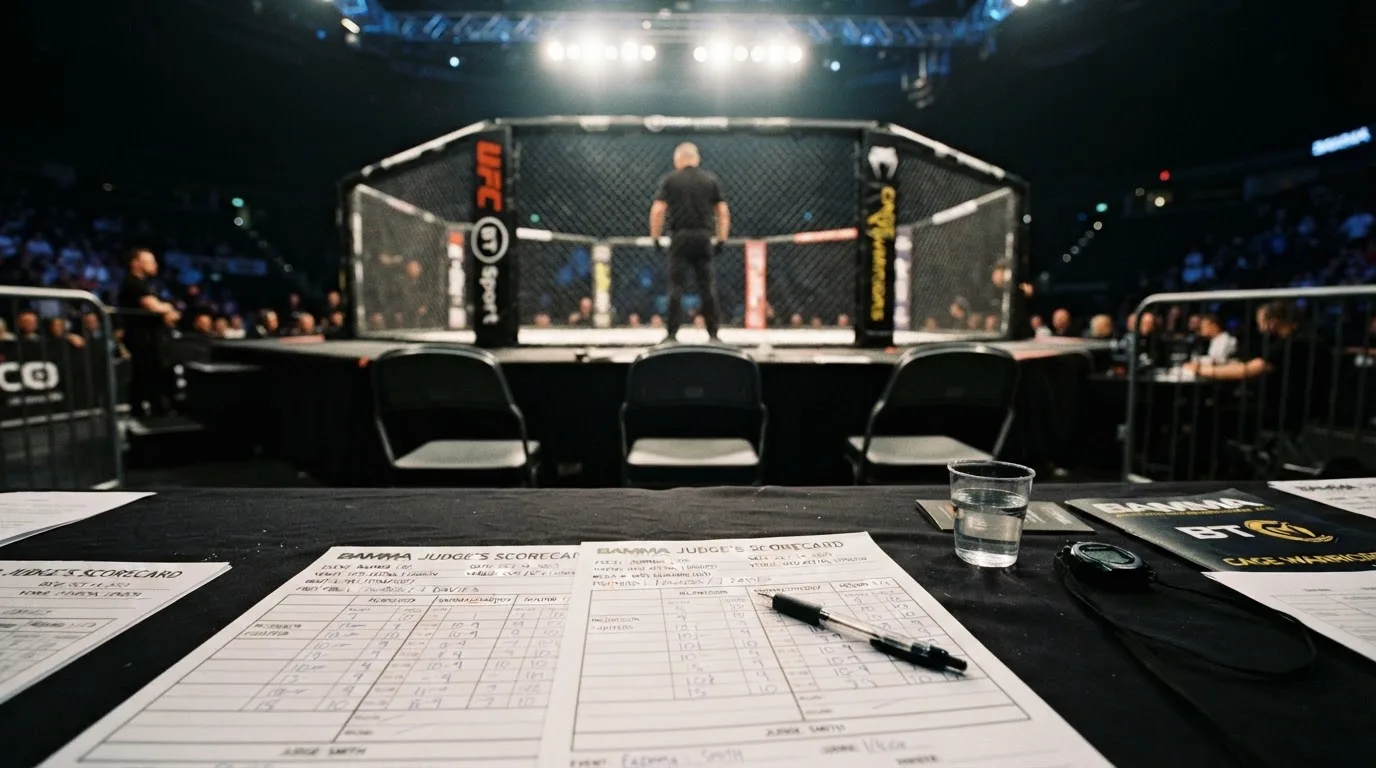
UK MMA promotions are the third tier. Cage Warriors, BCMMA and other UK-based promotions run cards throughout the year, and the markets on these cards are typically limited to the moneyline and the over-under rounds, with method-of-victory markets on selected title fights. The volume of betting on a UK MMA card is much smaller than the volume on a UFC card, which means the prices carry a higher margin and the bettor should expect the prices to move less in-play than on a UFC card.
The structure of an MMA bout is what governs how markets are settled. Under the Unified Rules of Mixed Martial Arts each round lasts five minutes with a one-minute rest between rounds; non-title bouts normally go no more than three rounds, while title bouts can be sanctioned for five rounds. The bet on a “fight to go the distance” is therefore a bet on whether the fight will be settled before the third round in a three-round bout or before the fifth round in a five-round bout, and the over-under lines reflect this structure.
The judging system is the second element that governs settlement. In MMA’s 10-point must system three judges score each round: the round winner gets 10 points, the loser 9 or fewer, and an even round is scored 10-10. Under the Unified Rules a decision can be unanimous, majority or split, and a draw can also be unanimous, majority or split. A bet on “decision” as the method of victory is settled as a win if any of the three decision types is the official result, and a bet on “draw” is settled as a win only if the official result is a draw.
The bout-ending scenarios are settled under the Unified Rules in the same way. A bout ends in disqualification if an intentional foul incapacitates a fighter, and in a no contest if an unintentional foul incapacitates a fighter; a bout ends in a technical knockout if the referee stops the fight on the cage-side doctor’s advice or after a fighter’s corner throws in the towel. A bet on “knockout or technical knockout” is settled as a win on any of these outcomes, and a bet on “submission” is settled as a win only if the fighter taps out or is rendered unconscious by a submission hold.
The unification of these rules across promotions is the reason a bettor can compare prices on a UFC title fight and a Bellator title fight in the same way. The differences are in the roster and the schedule, not in how the fights are scored or how the markets are settled.
A UK MMA bettor’s calendar runs through the UFC’s numbered events, which typically take place on Saturday nights UK time; the “Fight Night” cards that fill the gaps; and the second-tier promotions that run their own schedules. The bettor who plans to bet across the full year should expect to find an MMA card almost every weekend, with the deepest markets on the numbered events and the thinnest on the second-tier promotions.
The Ten UK-Licentred Bookmakers for MMA Betting
The list below is built around ten brands whose names appear on the Gambling Commission’s public register against a licensee holding a remote general betting standard (real events) licence for Great Britain. The list is not a ranking; the order is alphabetical, and each write-up describes what the operator’s own terms state on the subject of MMA, mobile, cash out and bonus structure, before closing on a verdict about who the operator suits.
| Brand | Gambling Commission remote licence number and licence holder | What the operator’s own terms state |
|---|---|---|
| Betfred | 039544-R-319290-010 (Petfre (Gibraltar) Limited) | Betfred’s sports app covers 21 sports and over 2,000 casino-style games; in-play markets and bet builder are available across most sports, including MMA, with cash out on selected markets. |
| BetTom | 064959-R-339314-003 (Bet Tom Limited) | BetTom’s sports welcome offer is 50% back as a free bet of up to £50, with a matching 50% back up to £50 as free slot funds; full terms apply and the betting arm is governed by the 10x wagering cap. |
| BetUK | 039198-R-319450-029 (LeoVegas Gaming PLC) | BetUK’s sports welcome offer is four £10 free bets after a £10 qualifying sports bet within 7 days of registering; two free bets are football accumulators of 4+ selections and two are multiples of 2+, all valid for 7 days with opt-in required. |
| BetVictor | 039576-R-319370-028 (BV Gaming Limited) | BetVictor offers Best Odds Guaranteed on UK and Irish horse racing, enhanced live race streaming and a BetFinder feature for finding racing bets, alongside Smart Stats; in-play MMA and bet builder are available on the same app. |
| DragonBet | 064908-R-339041-003 (DragonBet Ltd) | DragonBet’s app features Welsh football and rugby markets, racing, American football, in-play betting and bet builder markets; MMA is available under the combat sports heading alongside boxing. |
| Fitzdares | 000400-R-103839-030 (Fitzdares Limited) | Fitzdares offers cash out, accumulators, Lucky 15s, specials and antepost markets on horse racing, football, tennis, rugby, cricket, golf and American football, with in-play live odds and live streaming on selected events. |
| Fitzwilliam Sports | 048760-R-335434-009 (SBKI Limited) | Fitzwilliam Sports offers instant deposits, fast withdrawals, timeouts and deposit limits, and links to GambleAware, GamStop and Gamblers Anonymous; the welcome is a “High Stakes Welcome” subject to compliance criteria. |
| Geoff Banks | 054095-R-330366-010 (GB Sports Advisors Limited) | Geoff Banks’ app offers live in-play prices and antepost prices on future events; the product is more focused than the mainstream brands and the customer base is correspondingly smaller. |
| Spreadex | 008835-R-104580-022 (Spreadex Limited) | Spreadex combines fixed-odds and spread betting in one app, with one-click, auto and partial cash out, Bet Builder across fixed odds or spreads, and live streaming of UK and Irish horse racing, greyhounds, tennis, NFL and selected football. |
| Unibet | 045322-R-324275-019 (Platinum Gaming Limited) | Unibet has operated since 1999 and is run by Platinum Gaming Limited, Gibraltar; the sports welcome offer is “Get £40 in Free Bets when you bet £20”, with minimum odds of 2.0 (1/1) and free bets expiring within 7 days, for new GB customers using a debit card or instant bank transfer. |
Betfred is the heritage option on this list and the brand most UK bettors will recognise from the high street. The app carries the broadest sports menu of the ten, with in-play markets and bet builder across most events including MMA, and the welcome offer is the kind of structure that suits a bettor who plans to bet regularly and wants a single app for every sport. The MMA tab is not the deepest, but it is consistent, and the cash-out and bet-builder features are available on the standard markets.
Fitzdares is the premium positioning. The app, the live odds and the antepost markets are aimed at the bettor who treats betting as a serious hobby and who values a quieter interface over a marketing-heavy front page. The MMA tab is solid without being the deepest, and the welcome offer is not the headline number of the larger competitors. The trade-off is interface quality and the premium positioning over headline bonus value.
DragonBet’s Welsh focus does not crowd out MMA, but it does mean the depth of markets on a UFC card is smaller than at Betfred or Unibet. The bet builder and in-play features are present, and the app is functional. The bettor who values a Welsh-focused brand and who bets MMA as one sport among several will find DragonBet a reasonable fit; the bettor whose main interest is MMA will find the depth of markets thinner than at the bigger brands.
BetUK’s app sits inside the LeoVegas Gaming PLC group, and the welcome offer (four £10 free bets after a £10 qualifying bet) is the headline feature. The MMA tab is available under the combat sports heading, and the in-play markets are present. The bettor who plans to use the welcome offer and bet across multiple sports will find BetUK a good fit; the bettor who wants the deepest MMA-specific markets will find bigger brands carry more.
Spreadex is the only brand on this list that combines fixed-odds and spread betting in a single app, and the dual regulation by the FCA (spread) and the Gambling Commission (fixed odds) is reflected in the structure of the product. The cash-out controls are the deepest of the ten, with one-click, auto and partial close on both fixed-odds and spread positions. A bettor who plans to use spread betting on MMA markets will find Spreadex the only option among the ten; a bettor who plans to use only fixed-odds betting will find the app takes more setup than a fixed-odds-only brand.
BetTom’s 50% back as a free bet of up to £50 is the headline offer, with a matching casino arm. The MMA tab is available, and the app is functional rather than feature-rich. The bettor who plans to use the welcome offer and bet across multiple sports will find BetTom a reasonable fit; the bettor who values a broad sports menu will find bigger brands carry more.
BetVictor’s Best Odds Guaranteed on UK and Irish horse racing is the headline feature, with enhanced live race streaming and the BetFinder tool alongside Smart Stats. The MMA tab is solid, and the in-play markets are present. The bettor who treats horse racing as the main sport and MMA as a secondary interest will find BetVictor a good fit; the bettor whose main interest is MMA will find the racing focus reflected in the app’s priorities.
Unibet is the deepest app on this list by feature count, with the £40-in-free-bets welcome as the entry point and a broad sports menu behind it. The MMA tab is among the deepest of the ten, and the in-play and bet-builder features are present. The bettor who wants a single app for every sport and who plans to use the welcome offer will find Unibet a strong fit.
Fitzwilliam Sports’ capped membership and high-stakes welcome reflect its Dublin bookmaker positioning, with the compliance criteria determining who is offered what. The app is uncluttered, and the MMA tab is functional rather than the deepest. The bettor who values a quieter interface and who plans to bet at higher stakes will find Fitzwilliam Sports a change of pace; the bettor who wants a broad sports menu will find bigger brands carry more.
Geoff Banks’ app is the most focused on this list, with live in-play prices and antepost markets on future events. The customer base is smaller than the bigger brands, and the MMA tab reflects that focus. The bettor who values a focused product and who treats betting as a serious hobby will find Geoff Banks a reasonable fit; the bettor who wants a broad sports menu will find bigger brands carry more.
How MMA Betting Works in Great Britain
The British market is one of the most tightly regulated in the world, and the regulation shapes what a UK bettor sees at every reviewed brand. The Gambling Commission licenses the whole commercial market under the Gambling Act 2005, which covers Great Britain (England, Scotland and Wales); Northern Ireland is outside the Act and has its own older law. Since the Gambling (Licensing and Advertising) Act 2014 an operator whose remote facilities are used in Great Britain needs a Commission licence wherever it is based, and a Curaçao, Maltese or Gibraltar licence is not a substitute. The Commission’s public register is the whole test of who holds a licence, and the licence number, the licence holder’s name and the brand’s trading name appear on the register against every reviewed brand on this page.
The minimum age to bet at a UK-licensed operator is 18, and the operator must verify the customer’s name, address and date of birth before the first deposit. The verification includes a free bet or bonus, so a bonus-only account is not anonymous. The verification typically runs through a photo of a passport or driving licence and a proof of address, and the verification is enforced by the operator rather than chosen by the customer.
The credit card ban, in force since 14 April 2020, ends the use of credit cards for gambling in Great Britain, including credit-card-funded payments through an e-wallet. Debit cards and bank-based payments are not covered by the ban, and the standard rail at every reviewed brand is the debit card or the instant bank transfer. A bettor who wants to fund an account with a credit card will not be able to do so at any of the ten reviewed brands.
The bonus rules that took effect on 19 January 2026 have reshaped the welcome offer across the industry. Wagering requirements on bonuses are capped at 10x, and mixed-product promotions that require gambling on two or more product types are banned. Whether the 10x cap applies to free bets with no wagering condition, and any cap on the money value of a bonus, are not established in the Commission’s published material, so the bettor should check the operator’s terms on each welcome offer. The 10x cap is a licence condition, and it is enforced by the Commission.
The advertising rules are enforced by the ASA through the CAP Code (non-broadcast) and the BCAP Code (broadcast), alongside the LCCP marketing conditions. Marketing must be socially responsible, must not be of strong appeal to under-18s, and no one who is or seems to be under 25 may be featured gambling or play a significant role in an advertisement (with an exception for marketing placed where a bet can be made directly). The rule concerns who may appear in the advertisement, not who may bet.
The tax treatment of betting winnings in Great Britain is straightforward: the player pays no tax on betting winnings, and a professional gambler should ask HMRC or an adviser. General Betting Duty is the operator’s tax on gross profits, currently 15%; from 1 April 2027 a new remote betting rate of 25% applies within it, while remote bets on UK horse racing, bets on self-self-service betting terminals in licensed premises, pool betting and in-person betting stay at 15%. Whether operators pass duty on through odds is not established, and a bettor should never assume that the price quoted by the operator is reduced by duty.
The player protection framework is built around GAMSTOP, the national multi-operator online self-exclusion scheme, which has been a mandatory licence condition for online operators since 31 March 2020. Self-exclusion periods are six months, one year, five years, or five years with auto-renewal, and after the minimum period the exclusion stays in place for a further seven years unless the customer asks GAMSTOP to remove it. The scheme covers online sites and apps, and betting shops use a separate service. A bettor who has self-excluded through GAMSTOP cannot place a bet at any reviewed brand on this page.
The financial vulnerability check applies to licensed remote betting when a customer’s deposits minus withdrawals exceed £150 in a rolling 30 days. The check is a public-record check (for example bankruptcy or county court judgments), not an income check and not a credit reference check; it runs against databases of public records to flag markers of financial difficulty. The check was brought into force on 28 February 2025. A bettor who crosses the £150 threshold over a 30-day period can expect to be asked to confirm details that may trigger a flag, and the operator is responsible for deciding how to respond to a flag.
The financial risk assessments (the “affordability checks” of the press) have been announced in a staged plan (Commission article of 7 July 2026), with no start date. The staged plan moves from public-record vulnerability checks (already in force) through to more invasive checks at higher spend, but the start date for the higher-spend checks has not been set. A bettor who reads about “affordability checks” in the press should expect to see them carried through in stages over the next year, and the higher-spend checks will arrive when the Commission announces the start date.
Deposit limits (RTS 12) require operators to offer a gross deposit limit on a fixed time frame, with the first changes applying since 31 October 2025 and a second phase postponed to 30 September 2026. Whether the second phase is live is not established, so a bettor who wants to set a deposit limit should expect to be able to do so at every reviewed brand, and the exact interface varies by operator. The limit is the customer’s choice, and there is no state-set deposit or loss ceiling for betting.
Help is available through GamCare (which runs the National Gambling Helpline), GambleAware, NHS gambling clinics and Gamblers Anonymous. The links to these services appear on the safer-gambling page of every reviewed brand, and a bettor who wants to talk through a problem with gambling can reach the National Gambling Helpline directly.
The offshore market is the alternative to the GB-licensed market. A GB licence is compulsory at the point of consumption, and providing gambling facilities in Great Britain without the licence the Act requires is an offence under section 33 of the Gambling Act 2005. The offence is aimed at the operator, not at the customer; a bettor who places a bet on an unlicensed site does not commit an offence under the Act as published. The loss for the customer is the loss of protection: no GAMSTOP coverage, no Commission complaints route, no approved dispute-resolution body, no British consumer redress if funds are withheld, not bound by the 10x bonus cap or the £150 vulnerability check. The bettor who chooses an offshore site trades the British protections for whatever the offshore site offers, and the bettor who chooses a GB-licensed operator trades anonymity for those protections.
Responsible Gambling at UK MMA Bookmakers
The safer-gambling framework in Great Britain is built on three layers: the operator’s own controls, the multi-operator self-exclusion through GAMSTOP, and the help services that a bettor can reach independently. Each layer has its own role, and a bettor who wants to manage their gambling should know what each layer offers.
The operator’s controls sit on the safer-gambling page of the app or website. The first control is a deposit limit, which lets the customer set a gross deposit cap over a fixed period (daily, weekly or monthly). The cap is enforced by the operator and cannot be raised without a cooling-off period; a bettor who wants to lower the cap can do so immediately. The second control is a timeout, which lets the customer suspend the account for a period between 24 hours and six weeks. The third control is a reality check, which sends a notification during a betting session to remind the customer how long they have been on the app and how much they have staked. The fourth control is self-exclusion, which closes the account for a minimum of six months and which the operator must enforce during that period.
The combination of these controls is the operator-side layer, and the bettor who uses one of them has used a tool that the operator is required by the LCCP to provide. A bettor who wants to set a deposit limit should expect to be able to do so at every reviewed brand on this page; the exact interface varies, but the limit is the customer’s choice, and there is no state-set deposit or loss ceiling for betting.
The multi-operator self-exclusion through GAMSTOP is the cross-operator layer. GAMSTOP is the national multi-operator online self-exclusion scheme and a mandatory licence condition for online operators since 31 March 2020. A bettor who registers with GAMSTOP is excluded from every GB-licensed online operator for the chosen period (six months, one year, five years, or five years with auto-renewal), and the exclusion is enforced by the operator. After the minimum period the exclusion stays in place for a further seven years unless the customer asks GAMSTOP to remove it. The scheme covers online sites and apps; betting shops use a separate service.
A bettor who has self-excluded through GAMSTOP cannot place a bet at any reviewed brand on this page, and the operator is required to check the GAMSTOP database before allowing the customer to deposit or gamble. A bettor who tries to circumvent the exclusion by opening a new account at a different licensed brand will be refused at the verification stage, and the operator is required to refuse.
The help services are the third layer and the one a bettor can reach independently of the operator. GamCare runs the National Gambling Helpline, a free and confidential service that operates 24 hours a day, and the helpline is reachable by phone or live chat. GambleAware funds research, treatment and education on gambling harm in Great Britain and operates a website with information on how to get help. NHS gambling clinics offer specialist treatment for gambling harm and accept referrals from GPs or self-referrals. Gamblers Anonymous runs peer-support meetings across the country. The links to these services appear on the safer-gambling page of every reviewed brand, and a bettor who wants to talk through a problem with gambling can reach the National Gambling Helpline directly.
The safer-gambling framework is not a single tool a bettor can switch on; it is a set of layers that work together. The bettor who sets a deposit limit and a reality check at one operator has used the operator-side layer; the bettor who also registers with GAMSTOP has used the cross-operator layer; the bettor who reaches the National Gambling Helpline has used the help layer. The combination of the three layers is what the framework is built for, and a bettor who feels their gambling is moving beyond what they can afford should use all three.
The signs that a bettor’s gambling may be moving beyond what they can afford are the signs that the framework is built to catch. Chasing losses, betting more than planned, hiding the activity from family or friends, borrowing to fund the account, neglecting work or relationships, feeling anxious or irritable when not betting — these are the signs the help services are designed to address, and the bettor who recognises any of them in their own behaviour should reach the National Gambling Helpline. The helpline is free, confidential and available 24 hours a day, and the call does not commit the bettor to anything.
Worked Example: The Bookmaker’s Margin on a Two-Way Market
The bookmaker’s margin is the constant the bettor pays on every bet, and it is worth one number in plain prose. On a two-way market priced at decimal odds 1.90 and 1.90 — for example a pick’em UFC fight where both fighters are priced the same — the payout share is 1 divided by the sum of the implied probabilities, which is 1 divided by (1/1.90 + 1/1.90). That sum is 1.0526, so the payout share is 95.0%, and the margin is 1 minus 0.95, which is 5.0% (about 5.26% overround). A bettor who stakes £10 on either side at 1.90 and wins receives £19 — £10 stake returned plus £9 profit — which is a 5.0% margin on the fair return of £19.89.
The result is a band, not a single figure. The margin depends on how the operator rounds the prices and how close to even money the prices sit; a market priced at 1.85 and 1.95 carries a margin of about 5.1% (payout share 94.9%), a market priced at 1.80 and 2.00 carries a margin of about 5.3% (payout share 94.7%), and a market priced at 1.95 and 1.95 carries a margin of about 2.5% (payout share 97.5%). The tighter the prices around 2.00, the smaller the margin. The headline band for a two-way MMA market is 2.5% to 5.3% (calculated as overround), and most reviewed brands operate inside that band on the main UFC card moneyline. The bettor who wants the smallest margin should look for the prices closest to even money, and accept that the operator’s rounding always leaves a margin of more than zero.
The bettor who plans to bet across a full UFC card should expect to pay the headline margin on every fight. A bettor who stakes £10 on each of ten fights and wins half of them at the headline margin of 5% loses, on average, the bookmaker’s cut on every unit bet. The expected loss is the stake times the number of fights times the margin, which is £10 × 10 × 0.05 = £5 over the card. That is the cost of betting without an edge, and the bettor who finds a 2% edge over the card has, in expectation, recovered £2 of that cost and lost £3. The bettor who finds a 5% edge has, in expectation, broken even. The bettor who finds no edge has lost the full £5.
The margin is the floor on what a bettor can lose by betting without an edge, and the size of the margin is what separates one operator from another on the same market. A two-way market priced at 1.90 and 1.90 at one operator and at 1.85 and 1.95 at another carries a smaller margin at the first operator, and the bettor who places the same bet at both operators pays the smaller margin at the first. The margin is not a marketing number; it is the arithmetic of the prices, and the bettor who reads the prices and does the arithmetic is the bettor who knows what they are paying.
Frequently Asked Questions
How does MMA betting work?
MMA betting lets a bettor stake money on the outcome of a mixed martial arts bout. The most common market is the moneyline, which is a bet on which fighter wins; other markets include the method of victory (knockout, submission or decision), the round in which the fight ends, and combinations of these. Bets are settled under the operator’s terms using the official result of the bout as judged under the Unified Rules of Mixed Martial Arts, which set out the 10-point must scoring system and the methods by which a bout ends.
Where to bet on MMA fights with high odds?
The odds on a given MMA fight are set by each operator, and the same fight can carry different prices at different brands. A bettor who wants the highest price on a given fighter should compare the prices across two or three operators before placing the bet; the price on a heavy underdog can vary by 0.20 or more in decimal terms between the best and worst quote, which is the difference between a 5.00 price (20% implied probability) and a 4.80 price (20.8% implied probability). All ten brands on the shortlist carry prices on major UFC cards, and the comparison is a few minutes of work at the betting slip.
Is it top value MMA bets for this weekend?
“Value” is the gap between a bettor’s estimate of the probability of an outcome and the price’s implied probability. A bettor who can estimate the probability of a fighter winning at 50% and finds a price that implies 40% has found value, regardless of whether the bet is on the favourite or the underdog. The “top value” framing is usually a marketing label for a tipster, and the bettor who wants to find value should compare the prices across operators, weigh the factors that drive a fighter’s probability of winning, and place the bet at the operator with the smallest margin on the chosen market.
How can it be checked that a bookmaker holds a Gambling Commission licence?
The Gambling Commission’s public register is the whole test. The register can be searched by business name, trading name, domain or account number, and the entry shows the licence number, the categories covered, the licence holder’s name and the trading names operated under the licence. A bettor who sees a brand advertising in Great Britain but cannot find the brand on the register is looking at an unlicensed operator, and the protections that come with a GB licence (GAMSTOP, the 10x bonus cap, the Commission’s complaints route) are not available.
How is the return on a bet worked out from the stake and the odds?
The return on a winning bet is the stake multiplied by the decimal odds. A £10 bet at decimal odds of 2.50 returns £25 (£10 stake plus £15 profit); a £10 bet at decimal odds of 5.00 returns £50 (£10 stake plus £40 profit); a £10 bet at decimal odds of 1.50 returns £15 (£10 stake plus £5 profit). For a combination bet the odds of the legs multiply into one price: three legs at 2.00, 3.00 and 4.00 produce combined odds of 24.00, and a £10 stake returns £240 (£10 stake plus £230 profit).
What is the bookmaker’s margin and how can it be seen in the odds?
The bookmaker’s margin is the cut the operator takes on every unit bet on a market. On a two-way market priced at decimal odds 1.90 and 1.90 the implied probabilities sum to 105.3%, so the overround is 5.3% and the payout share is 95.0%. On a market priced at 1.80 and 2.00 the implied probabilities sum to 105.6%, so the overround is 5.6%. The tighter the prices around even money, the smaller the overround, and the bettor who compares prices across operators is the bettor who finds the smallest overround on the chosen market.
Combat & motorsport – systembetsguide.com
Content created by the «systembetsguide.com» team
