
Goliath bet explained: the 247-line full cover, how the maths actually works, and where the bookmaker's margin hides
 Available in US
A Goliath is a full cover bet on eight selections that turns them into 247 separate bets — every double, every treble, every four-fold, every five-fold, every six-fold, every seven-fold, and one eight-fold accumulator, with no singles and no Lucky-style wagers. That single figure, 247 lines, is the one a punter needs to remember, because it is also the multiplier that turns a £1 unit stake into a £247 total stake, and the figure that decides whether the bet ever pays out at all: a Goliath returns nothing on its own unless at least two of the eight selections win, because the bet is built only from multiples.
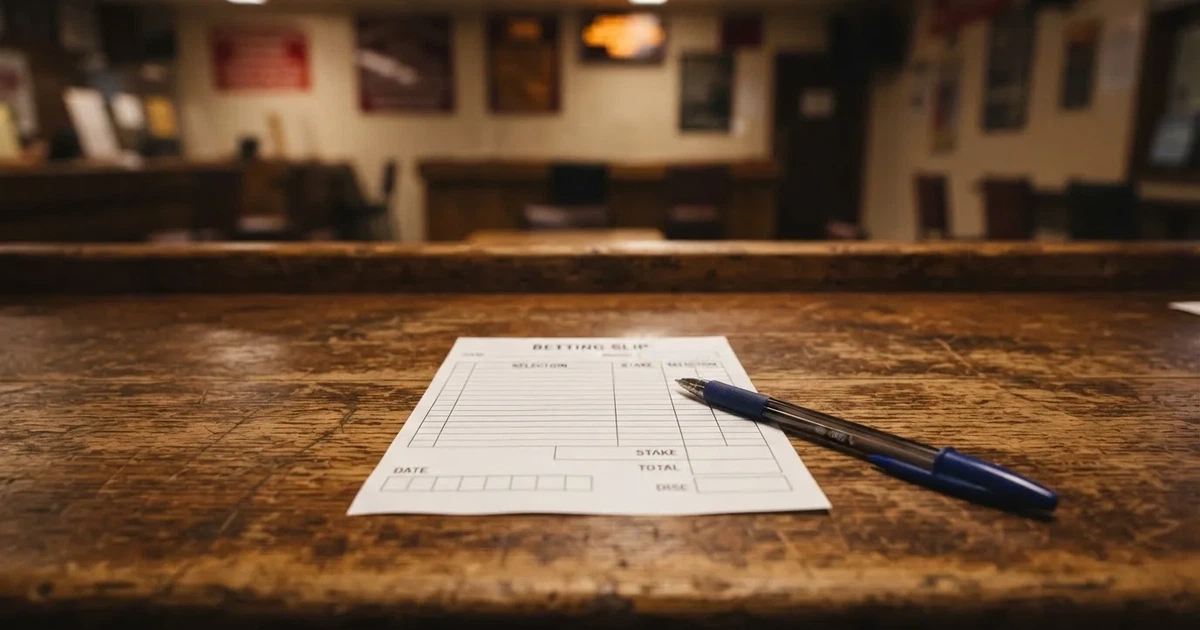
The stake format is the part most first-time players trip over. The bookmaker asks for a “£1 Goliath” or a “50p Goliath” — that is the unit stake per line, and the total outlay is 247 times it. A £1 Goliath costs £247. A 50p Goliath costs £123.50. The bookmaker settles each of the 247 lines independently, and only the lines whose selections all win return a price. The rest are losers whose stake is kept.
This page walks through the construction, the payout rule, the one figure a punter needs to remember (the margin that lives inside every price), and where a Goliath sits in the wider family of full cover bets — Heinz on six selections, Super Heinz on seven, the Lucky 15/31/63 line of singles-and-multiples bets, and the Canadian on five. The named operators at the foot of the page are the GB-licensed bookmakers on the Gambling Commission’s public register that offer full cover multiples on sports, and they are described as their own terms state them.
Data current as of 30 October 2026 and checked against the Gambling Commission’s public register.
The Goliath is the heaviest pre-built multiple most punters will ever see
A full cover bet is the family name for any wager that lists every possible multiple from a given set of selections, without listing the singles. The Goliath is the largest standard member of that family. Eight selections in, the bookmaker produces 28 doubles, 56 trebles, 70 four-folds, 56 five-folds, 28 six-folds, 8 seven-folds, and 1 eight-fold accumulator — 247 lines in total, every possible combination of two-or-more of the eight picks.
The defining rule of any full cover bet is that nothing pays unless the relevant number of selections all win. In a Goliath, that means at least two of the eight selections must win for the bet to return anything at all. Pick eight winners and every single one of the 247 lines pays. Pick seven winners and 247 lines minus the 8 lines that depend on the loser, which is 239 lines, pay — the 8 lines that included the losing pick are dead. Pick six winners and the lines that contain only the losing two picks are dead, and so on.
The bookmaker’s coupon usually shows the count of bets and the total stake for a chosen unit. Change the unit and the whole stake table changes proportionally, while the odds on each selection stay identical. A punter who wants to halve the cost halves the unit; a punter who wants to double the exposure doubles it. There is no version of the Goliath that takes a single combined stake and divides it internally — the bet is built line by line from the start.
The size of the bet, in money terms, is what makes the Goliath impractical for short-priced favourites. Eight selections at odds of 1.50 (a third of the field’s decimal equivalent) cost £247 to put on at a £1 unit and return £1.50 on the rare line that wins. That ratio — stake divided by the price — is the hidden arithmetic of the bet, and it is why a Goliath is built almost exclusively from longer-priced selections. Short-priced favourites produce more winners but smaller returns per line; longer prices produce fewer winners but the rare winner carries the rest of the bet.
Every line settles on its own — what a winning leg actually pays
A great example: a punter picks eight selections, sets a £1 unit stake, and watches the results come in. Six of the eight selections win. The bookmaker’s settling engine treats the Goliath as 247 independent bets. Of those 247, only the lines whose selections are all drawn from the six winners are paid; lines that include either of the two losers are dead. The number of dead lines is the count of combinations that include at least one of the two losers — and that number, worked out combinatorially, is 247 minus the count of combinations drawn only from the six winners. The six winners alone can form 63 multiples in total (6 doubles, 4 trebles, 1 four-fold, and so on down to zero of the larger ones — actually 6 choose 2 = 15 doubles, 6 choose 3 = 20 trebles, 6 choose 4 = 15 four-folds, 6 choose 5 = 6 five-folds, 6 choose 6 = 1 six-fold, totalling 57, the count that defines a Heinz). The remaining 247 minus 57 = 190 lines are dead because they include one or both of the losing selections.

That is the architectural reality of the bet: a Goliath is not one wager, it is a basket of 247 wagers whose chances of all winning are astronomical, and whose chances of paying out at all depend on at least two of the eight picks landing. Punters who treat it as a single bet misunderstand what they have bought.
Where the stake splits and where the return comes back
A £1 Goliath costs £247. A 50p Goliath costs £123.50. The bookmaker displays the total at the coupon and the punter pays it as a single cash outlay; internally, the bet is split 247 ways. The settlement engine pays out only the lines whose picks have all won, at the price set by the bookmaker when the bet was struck. There is no bonus for landing more winners than you need; every line pays independently at its own odds.
For a punter choosing selections, the practical decision is not “which eight selections should I make” but “which combinations of those eight am I willing to pay for”. A Goliath on eight long-shots returns life-changing money on the rare occasion every line wins; on the more common occasion that four or five win, the return is more modest because the dead-line count climbs sharply as the number of losers grows. The combination bet, with all 247 lines in play, magnifies both the upside and the downside of any single pick.
The full cover family the Goliath sits inside
The Goliath is one of a series of standard full cover bets. A Canadian (also called a Super Yankee) is a full cover bet on five selections made up of 26 bets. A Heinz is a full cover bet on six selections made up of 57 bets. A Super Heinz covers seven selections in 120 bets. A Goliath is a full cover bet on eight selections made up of 247 bets.
The Lucky family — Lucky 15, Lucky 31, Lucky 63 — is the same idea but with singles added. Lucky 15 covers 4 selections in 15 bets. Lucky 31 covers 5 selections in 31 bets. Lucky 63 covers 6 selections in 63 bets. The “Lucky” name is the giveaway: those bets pay on any single selection, which full cover bets do not. A Goliath is the largest of the pure full cover bets without singles, and a Lucky 63 is the largest of the singles-and-multiples variants.
The Trixie (4 bets on three selections) and the Yankee (11 bets on four selections) are smaller members of the same family. The Patent (7 bets on three selections, with singles) and the Lucky 15 are the singles-and-multiples alternatives at the lower end. Each bet is a fixed combinatorial object: the same set of selections, fed through the same machine, produces the same number of lines at the same stake.
The margin lives inside every price — what the maths actually says
A bookmaker’s price is never a fair price. Every odds line carries an overround, also called the margin or the book, which is the slice of every pound wagered that the bookmaker keeps on average. The slice is built into the prices themselves: the implied probabilities of the outcomes sum to more than 100%, and the gap between that sum and 100% is the margin.
For a single market with two outcomes priced at decimal odds o₁ and o₂, the bookmaker’s payout share is 1 ÷ (1/o₁ + 1/o₂), and the margin is 1 minus that payout share. For a three-outcome market (1X2 on a football match, say, home win, draw, away win) priced at decimal odds o₁, o₂, o₃, the same rule applies: the payout share is 1 ÷ (1/o₁ + 1/o₂ + 1/o₃), and the margin is 1 minus that share.
A worked example on a two-outcome market: home win at 1.80, away win at 2.10. The implied probabilities are 1/1.80 = 55.6% and 1/2.10 = 47.6%. They sum to 103.2%. The payout share is 1 ÷ 1.032 = 96.9%. The margin is 3.1% — three-point-one pence of every pound wagered on this market stays with the bookmaker on average.
That margin compounds across a Goliath. A Goliath on eight football matches at a margin of 5% per match costs the punter, on average, 5% of turnover on the singles and a similar slice on every multiple. Across 247 lines, the margin is roughly the same per line — the bookmaker does not usually mark up multiples differently from singles — but the turnover is much larger, and that larger turnover magnifies the expected cost.
A punter who wants to see the margin in the prices they are being given does the implied-probability sum and compares it to 100%. The closer to 100%, the smaller the margin. A market with implied probabilities summing to 102% is cheaper than one summing to 108%. The trick is that no market is at 100%, and bookmakers vary their margins by sport, by league and by bet type. Horse racing margins tend to be larger than football margins; in-play margins tend to be larger than pre-match margins; exotic markets tend to be larger than 1X2.
A worked example on three illustrative prices
To make the multiplier visible, take three illustrative selections at decimal odds of 1.50 (a third of the field), 2.00 (evens) and 2.50 (six-to-four). On a single £10 accumulator across the three, the price is 1.50 × 2.00 × 2.50 = 7.50, the return is £10 × 7.50 = £75, and the net profit is £75 − £10 = £65. The stake is paid back as part of the return; the punter is out £10 if any one selection loses, and £75 richer if all three win.
Now build the same three selections as a full cover bet — the closest cousin is a Trixie (3 selections, 4 bets: 3 doubles and 1 treble). At a £2 unit stake per line, the four lines are: double 1/2 at 1.50 × 2.00 = 3.00, double 1/3 at 1.50 × 2.50 = 3.75, double 2/3 at 2.00 × 2.50 = 5.00, and the treble 1/2/3 at 1.50 × 2.00 × 2.50 = 7.50. Total stake: 4 × £2 = £8. If all three selections win, the returns are £6.00, £7.50, £10.00 and £15.00, totalling £38.50 — a net profit of £30.50 on the £8 stake. If only two of the three win, exactly one of the three doubles pays (the one made up of those two selections), and the stake on the other two doubles plus the treble is lost.
The arithmetic shows what a full cover bet really is: a way of paying for insurance on the partial-win cases, at the cost of giving up the singles. The punter pays more in stake to cover more outcomes. The bookmaker’s margin applies to every line independently, so the total expected cost rises with the number of lines.
The same logic extends to the Goliath. The price of any single line is the product of the prices of the selections in that line. The return on that line is the unit stake times the product. The total return on the bet, on the rare occasion every line pays, is the sum of the returns on all 247 lines. The stake, at £1 per line, is £247.
The bookmaker’s spread on a Goliath — what the coupon does not show
The bookmaker’s margin on a Goliath is, in practice, slightly higher than the margin on its constituent singles, because the bookmaker marks up multiples in addition to the singles. A bookmaker quoting 1.80/2.10 on a two-outcome market (a 3.1% margin) might quote the same two selections in a double at 1.80 × 2.10 × 1.05 = 3.97, an extra 5% on top of the fair combination price. Across 247 lines on a Goliath, those extra 5% add up.
This is the part of the bet that the marketing copy never explains. The Goliath is presented as a way to “cover all combinations”, which it does, and the cost is described as £1 per line × 247 lines, which is true. The cost is also the multiplied margin on each line, which the coupon does not show. A Goliath that costs £247 to put on, at an average per-line margin of 8%, has an expected cost of about £19.76 in margin alone — before the punter even considers the chance of winning.
Punters who price-shop the underlying singles — comparing 1.80/2.10 at one bookmaker to 1.85/2.05 at another — find that the same logic applies to multiples, but the comparison is harder because every combination has its own price. The practical move is to compare singles across bookmakers first, then accept that the multiples at the chosen bookmaker will be marked up from those singles.
Staking the Goliath — what the punter actually controls
The unit stake is the only stake control a punter has on a Goliath. The bookmaker offers a coupon with a default unit (often £1 or 50p), and the punter changes it up or down. The total stake is the unit times 247. There is no slider that says “I want to risk only £50” — the punter divides the desired total by 247 and types in that unit, or selects a unit on a dropdown and accepts the resulting total.
The choice of unit is where the punter’s bankroll meets the bet. A punter with a £100 betting bank cannot realistically play a £1 Goliath (£247 stake), and a 25p Goliath (£61.75 stake) is the largest stake the bank can absorb as a single outlay. A punter with a £1,000 bank can play a £1 Goliath and have stake money left over.
The other stake control is the each-way option. Some bookmakers offer each-way on full cover bets the way they offer each-way on horse racing — a separate stake of equal size on the place part of each selection, multiplied through every combination. Each-way on a Goliath doubles the total stake and splits each of the 247 lines into a “win” part and a “place” part, with the place part paying a fraction of the win price (typically a quarter or a fifth, depending on the bookmaker and the number of runners). Each-way is most useful on horse racing, where place terms are well defined; on football and other sports, each-way is rarely offered on full cover bets.
Settlement discipline at the bookmaker
When the bet settles, the bookmaker pays the lines that have won and marks the rest as lost. The punter’s online statement shows 247 line entries, each with its own outcome. On the rare all-eight-win outcome, the statement shows 247 winning entries and a single return figure that is the sum. On the more common partial-win outcomes, the statement shows the count of winning lines and the count of losing lines.
The bookmaker’s settlement engine also applies the standard bookmaker rules: Rule 4 deductions when a horse is withdrawn from a race, non-runner rules when a selection does not start, and any sport-specific voids. A withdrawn runner in a Goliath on horse races voids the runner across every line that contains it, which collapses those lines into smaller multiples — a Goliath on seven remaining runners becomes a Super Heinz on seven selections in 120 bets, and the dead lines are settled as losers with the stake returned. The settlement is mechanical, but the punter should know that voids happen and how the bookmaker treats them in its own rules.
The odds format and the punter’s two ways of reading them
British bookmakers quote odds in fractional form (5/1, 11/4, evens) or decimal form (6.00, 3.75, 2.00), and every price carries the bookmaker’s margin in the implied probability. The conversion from fractional a/b to decimal is a/b + 1. Five-to-one fractional is 6.00 decimal. Eleven-to-four is 3.75 decimal. Evens (1/1) is 2.00 decimal.
The price is what the punter is offered on that selection; the implied probability is what the price says the true chance of winning is. A price of 2.00 decimal implies a 50% chance of winning; a price of 6.00 decimal implies a 16.7% chance; a price of 1.50 decimal implies a 66.7% chance. The bookmaker’s margin is the gap between the sum of those implied probabilities and 100%.
On a Goliath coupon, every selection is priced, every combination has its price worked out from the constituent prices, and the total stake is displayed. The punter reads the prices in whatever format the bookmaker defaults to, and the conversion between formats is the punter’s job if the punter prefers one over the other.
Bankroll, strategy, and the cost of every line
The bookmaker’s margin applies to every line of the Goliath, and the punter’s expected cost is the margin times the turnover. The punter cannot shrink the margin per line by choosing longer-priced selections, because longer prices carry larger margins in many markets — the bookmaker overprices long shots to balance the books. The punter can shrink the unit stake, which shrinks the turnover and therefore the expected cost in money terms, but at the cost of smaller returns.
A punter who plays a Goliath with a clear bankroll limit — say, 2% of the betting bank per Goliath — knows that the expected cost of the bet is roughly 8% of stake on a typical sport with a typical margin, which is about 0.16% of bankroll. That sounds small, but it compounds across many bets, and the punter’s edge has to clear that margin before any profit appears.
The strategy literature around Goliaths tends to focus on the same theme: the bet is a high-variance, high-turnover product that is priced for the bookmaker’s advantage. Punters who play Goliaths regularly play them for the upside of the rare all-eight-win outcome and accept the long-run cost as the price of being in the game.
Picking the eight selections — what the strategy pages actually say
The strategy pages around full cover bets tend to give the same advice: pick selections that are reasonably priced, with realistic chances of winning, and avoid selections whose odds are so short that the return on any line is barely larger than the stake. The advice is mechanical — there is no system for picking eight selections that beats the bookmaker’s margin, because the bookmaker’s margin is built into every line. What the advice does is reduce the variance: shorter-priced selections produce more winners, which produces more paying lines, which produces more returns even at the smaller per-line payoff.
The punter’s edge, if there is one, is in the picks, not the structure. A Goliath is a way of betting on combinations of eight picks; the structure does not turn losing picks into winning picks. A punter who has a model that finds value in individual selections finds value in the singles, and the Goliath structure transmits that value into the multiples at the cost of the multiplied margin.
The other practical piece of advice is diversification across sports and markets. A Goliath on eight Premier League football matches is correlated: if the punter’s model is biased toward home favourites, all eight picks will reflect the same bias, and the lines will reflect it too. A Goliath on a mix of sports — two horse races, two football matches, two tennis matches, two basketball games — spreads the correlation across different markets and different models.
What the bookmaker’s welcome offer does to the bet
British bookmakers offer new-customer welcome offers — free bet tokens, “bet £X get £Y” deals, acca insurance on the first multiple — and the Goliath is the kind of bet those offers are designed for. A punter who has a £10 free bet token and wants to use it on a Goliath can place it as the unit stake across all 247 lines, with the bookmaker settling the bet as if it were a cash bet but keeping the free bet stake on losing lines.
The qualifier on those offers varies. Some require the qualifying bet to be at minimum odds of 2.0 (evens); some require it to be a single; some require it to settle before the free bets are credited. The punter reads the bookmaker’s own terms before claiming the offer. The terms also set the expiry on the free bets (often seven days) and any restriction on the markets the free bet can be used on.
A Goliath is, in practice, an expensive bet to place with a free bet token, because the punter is risking a £10 token on 247 lines at once and the chance of any meaningful return is small. The punter who uses the token on a Goliath is paying £10 for the chance of a large return, and the bookmaker’s expectation of that transaction is the £10 minus the expected return. The arithmetic favours the bookmaker in the same way it does on a cash Goliath.
Cash out and bet builder — what they do and what they don’t
Some bookmakers offer cash out on full cover bets, which is the option to settle the bet early at a price the bookmaker offers. Cash out is not a guaranteed facility: availability is at the bookmaker’s discretion, and the bookmaker states that bets stand if cash out is unavailable. A punter who wants to cash out a Goliath has to wait for the bookmaker to offer a price, and the price will reflect the bookmaker’s expectation of the remaining selections.
Bet builder is the same combination-bet mechanic as a Goliath, applied to a single event: a bookmaker lets the punter combine markets from one match into a same-game multiple, with the price set by the bookmaker. A Goliath is the multi-event version of that mechanic, and the same considerations about margin and correlation apply.
Responsible gambling — what the licence requires of the bookmaker
Every online bookmaker serving customers in Great Britain holds a Gambling Commission remote licence, and the licence carries a set of player-protection duties that are part of the deal. The duties include GAMSTOP membership (the national multi-operator online self-exclusion scheme, mandatory since 31 March 2020), a financial vulnerability check at the point at which deposits minus withdrawals cross £150 in a rolling 30 days (in force since 28 February 2025), affordability assessments announced in a staged plan with no start date, and deposit limits that customers can set for themselves.
The punter who wants help can self-exclude through GAMSTOP for six months, one year, five years, or five years with auto-renewal; after the minimum period the exclusion stays in place for a further seven years unless the customer asks GAMSTOP to remove it. The punter who wants to talk to someone can call the National Gambling Helpline (GamCare), reach GambleAware, contact an NHS gambling clinic, or attend Gamblers Anonymous.
A Goliath is a high-turnover bet that loses most of the time and wins big rarely. The licence framework exists to make sure the punter has the tools to set their own limits, and the punter who plays Goliaths regularly uses those tools — deposit limits, time-outs, self-exclusion — to keep the bet inside the budget they have set for gambling.
Identity verification before the first bet
Licensed bookmakers verify name, address and date of birth before the punter can deposit or gamble, including with a free bet or bonus. The verification is part of the anti-money-laundering regime that the Commission enforces, and it is the reason that no anonymous play exists at a GB-licensed site. The punter who wants to bet on a Goliath has to verify first, and the bookmaker may ask follow-up source-of-funds questions at higher spend.
The verification is also the reason that credit cards are banned for gambling in Great Britain (since 14 April 2020). The ban covers credit-card-funded payments through an e-wallets; debit cards and bank-based payments are not covered. A punter funding a Goliath does so from a debit card, a bank transfer or an e-wallet that has been topped up from a non-credit source.
The Top 10 GB-licensed bookmakers offering full cover multiples
The bookmakers below are ten operators whose domains appear on the Gambling Commission’s public register against licensees holding a remote general betting standard (real events) licence. The licence numbers and account numbers below are taken from the Commission’s public register; the marketing claims are taken from each operator’s own published terms.
| Brand | Gambling Commission remote licence | Licence holder | What the operator’s own terms say |
|---|---|---|---|
| Fafabet | 057385-R-333191-006 (account 57385) | Taichi Tech Limited | Best Odds Guaranteed on UK and Irish horse racing win and each-way bets from 9am on race days; if the starting price is bigger than the original price, the bigger odds are paid |
| Betway | 039372-R-319367-029 (account 39372) | Betway Limited | New UK and Ireland customers receive £40 in free bet tokens (4 × £10) credited on settlement of a first bet of at least £10 at minimum odds of 2.0, with a 7-day expiry and debit card deposits only |
| Bar One Racing | 056516-R-332750-007 (account 56516) | Bar-One Racing Limited | Irish independent bookmaker with shops across Ireland and horse racing sponsorships at Dundalk, Fairyhouse, Navan, The Curragh, Curraheen Park and Cork |
| Unibet | 045322-R-324275-019 (account 45322) | Platinum Gaming Limited | Operated since 1999; new GB customers receive £40 in free bets when they bet £20 (minimum odds 2.0, debit card or instant bank transfer, free bets expire within 7 days of issue) |
| DAZN Bet | 048756-R-327274-019 (account 48756) | DZBT Limited | Cash Out, Bet Builder, daily bet boosts and in-play betting offered; cash out availability not guaranteed and bets stand if it is unavailable |
| Midnite | 101839-R-342850-001 (account 101839) | Midnite Limited | New customers who bet £5 or more on pre-match odds of EVS (2.0) or greater within 14 days of sign-up receive £25 in free bets and 50 free spins, valid for 7 days; site shows in-play events, an acca builder, popular accas and price boosts with maximum-stake limits |
| Sporting Index | 027343-R-308898-011 (account 27343) | Sporting Index Limited | New-customer offer: a £10 fixed odds bet at minimum odds of 1/2 unlocks three £10 fixed odds free bets, three £5 Total Goals spread bets, three £5 Winning Favourites spread bets and a £1 Race Index spread bet; qualifying bet cannot be placed in play or cashed out early |
| BetMGM | 039198-R-319450-029 (account 39198) | LeoVegas Gaming PLC | New UK customers who deposit £10 or more and place a sports bet within 7 days receive four £10 free bets (two football accumulators of 4+ selections and two sports multiples of 2+), valid for 7 days with minimum odds and opt-in required |
| Fitzwilliam Sports | 048760-R-335434-009 (account 48760) | SBKI Limited | Prices are based on Oddschecker’s average price for each selection; Apple and Google mobile apps offered |
| Octobet | 062545-R-337248-006 (account 62545) | Octopus Game Limited | Best Odds Guaranteed on UK and Irish horse racing, up to £150 per customer per race |
Fafabet
Fafabet runs a remote general betting standard (real events) licence under Taichi Tech Limited, with the Gambling Commission account number 57385. The brand’s published terms are clearest on horse racing: Best Odds Guaranteed applies to UK and Irish win and each-way bets from 9am on race days, with the larger of the original price and the starting price paid if the SP is bigger. That BOG commitment matters more on long-priced runners, where the SP can move sharply in the final minutes before the off, and matters less on short-priced favourites whose SP rarely moves through the original. The marketing on the welcome offer rotates; punters who want the current terms check the brand’s own promotions page.
Betway
Betway runs its GB-licensed sportsbook under Betway Limited, account 39372. The welcome offer as published in the GB App Store is £40 in free bet tokens (4 × £10) credited on settlement of a first bet of at least £10 at minimum odds of 2.0, with a 7-day expiry on the free bets and debit card deposits only. The brand has been a fixture of GB sports betting for years, and the welcome offer is one of the larger token packages available — at the cost of a £10 qualifying bet that has to land or the tokens do not credit. The Betway bet builder, acca insurance and price boosts are standard.
Bar One Racing
Bar One Racing runs its licence under Bar-One Racing Limited, account 56516. The brand has rebranded as BAR 1 Betting, an Irish independent bookmaker with shops across Ireland and horse racing sponsorships at Dundalk, Fairyhouse, Navan, The Curragh, Curraheen Park and Cork. The Irish-shop footprint is the differentiator: an Irish independent with a GB-facing online arm is a narrower proposition than the big multinationals, and the brand’s strengths are on Irish racing and the meetings it backs. The GB remote licence covers online customers in Great Britain; Northern Ireland remains outside the Gambling Act 2005, as it does for every operator on this list.
Unibet
Unibet runs its UK site under Platinum Gaming Limited, Gibraltar, account 45322, and the brand states it has operated since 1999. The sports welcome offer as published on the UK homepage is “Get £40 in Free Bets when you bet £20”: a deposit and sports bet of £20 or more at minimum odds of 2.0, with the free bets expiring within 7 days of issue and limited to new GB customers using a debit card or instant bank transfer. Unibet’s GB sportsbook is the largest of the European operators, with deep markets on football, horse racing, tennis and US sports, and the brand’s bet builder, acca insurance and in-play product are all standard. The licence holder being Gibraltar-registered is normal for the major European brands and the GB remote licence is what regulates the GB-facing site.
DAZN Bet
DAZN Bet runs its licence under DZBT Limited, account 48756, and the brand’s published product set is clear on the four main features. Cash Out, Bet Builder, daily bet boosts and in-play betting are all offered; cash out availability is not guaranteed and bets stand if it is unavailable. The cash-out caveat is the one a Goliath punter notices: a full cover bet that cashes out early settles at the bookmaker’s offered price, and the bookmaker’s offered price on a partial-win Goliath is rarely generous, because the bookmaker has to price the remaining selections from its own margin. The bet builder mechanic on DAZN Bet is the same as at every other major brand — combine markets on one event into a same-game multiple — and the daily boosts are price boosts on selected markets.
Midnite
Midnite runs its licence under Midnite Limited, account 101839, and is one of the newer GB-licensed sportsbooks. The sports welcome offer as published in the GB App Store is £25 in free bets and 50 free spins for new customers who bet £5 or more on pre-match odds of EVS (2.0) or greater within 14 days of sign-up, with the free bets valid for 7 days. The site’s homepage shows in-play events, an acca builder, popular accas and price boosts with maximum-stake limits, and the brand has positioned itself as a next-generation sportsbook with a casino attached. The 14-day qualifying window and the relatively low minimum odds make the welcome offer accessible; the maximum-stake limits on price-boosted accas are the kind of detail a Goliath punter reads before playing a boosted bet.
Sporting Index
Sporting Index runs its fixed-odds and spread betting operations under Sporting Index Limited, account 27343. The new-customer offer as published is a hybrid: a £10 fixed odds bet at minimum odds of 1/2 unlocks three £10 fixed odds free bets, three £5 Total Goals spread bets, three £5 Winning Favourites spread bets and a £1 Race Index spread bet. The qualifying bet cannot be placed in play or cashed out early. Sporting Index is one of the few GB-licensed operators offering both fixed odds and spread betting on sports, and the dual-product welcome offer is structured to push the punter into both. The financial-spread betting side is regulated by the Financial Conduct Authority, not the Gambling Commission — the FCA regulates spread betting where it is a financial product, and the Commission regulates fixed-odds betting and any spread betting that is not a financial product.
BetMGM
BetMGM’s GB app is published by LeoVegas Gaming PLC, account 39198, and the brand’s welcome offer for new UK customers is four £10 free bets (two football accumulators of 4+ selections and two sports multiples of 2+) credited on a £10 deposit and a sports bet within 7 days, with the free bets valid for 7 days, minimum odds and opt-in required. The brand’s product set is a full sportsbook-casino combination, with the LeoVegas tech stack underneath. The free bet allocation (two accas, two multis) is unusual: the brand is steering the punter toward multiples, and a Goliath punter can use one of the multis on a smaller full cover bet rather than on a single combination. The LeoVegas Gaming PLC licence holder is a major European operator, and the BetMGM brand is the joint venture with MGM Resorts that the parent group runs in multiple markets.
Fitzwilliam Sports
Fitzwilliam Sports runs its licence under SBKI Limited, account 48760, and the brand’s pricing proposition is the differentiator. The site states that prices are based on Oddschecker’s average price for each selection, which means the brand does not set its own prices from scratch — it tracks the average across the comparison sites and offers something close to it. The Apple and Google mobile apps are standard. The Oddschecker-average pricing is a transparent commitment that puts the brand close to the market mid-price on most selections, and the punter who is price-shopping picks across bookmakers will often find Fitzwilliam within a fraction of a percent of the average. The brand is smaller than the multinationals and the in-play product and market depth are correspondingly thinner.
Octobet
Octobet runs its licence under Octopus Game Limited, account 62545, and the brand’s published terms on horse racing are the clearest feature: Best Odds Guaranteed on UK and Irish racing, up to £150 per customer per race. The £150-per-race cap is the figure that matters on long-priced runners whose SP can move several points; on short-priced favourites the BOG rarely pays the bigger price because the SP rarely moves through the original. Octobet is one of the newer GB-licensed sportsbooks and the product set is full — sportsbook, casino, live in-play — but the brand’s racing terms are the most clearly stated in its published material.
The regulatory frame around the bet
The Gambling Commission is the regulator of the commercial gambling market in Great Britain. The Commission is a non-departmental public body sponsored by the Department for Culture, Media and Sport, and it licenses operators under the Gambling Act 2005. Since the Gambling (Licensing and Advertising) Act 2014, an operator whose remote facilities are used in Great Britain needs a Commission licence wherever it is based; a Curaçao, Maltese or Gibraltar licence alone is not a substitute. The Commission’s public register is the whole test of who holds a licence, and the register can be searched by business name, trading name, domain or account number.
The licensed operators above all appear on that register. The register is the single source of truth on whether a brand holds a GB remote betting licence, and a punter who wants to check a brand that is not on the list above searches the register directly. The Commission’s web address is on every operator’s own terms page, usually in the “About us” or “Licence” footer.
Northern Ireland is outside the Gambling Act 2005 and runs under its own older law. A GB-licensed operator’s licence does not extend to Northern Ireland, and the page should be read as covering Great Britain only.
What the licence requires of the operator
A remote general betting standard (real events) licence carries the Licence Conditions and Codes of Practice (LCCP), which set the player-protection duties. The duties include GAMSTOP membership, age verification (18+), identity verification before the first deposit (in force since 7 May 2019), social responsibility code compliance, and the financial vulnerability check at the £150-in-30-days threshold (in force since 28 February 2025). The financial vulnerability check is a public-record check (for example bankruptcy or county court judgments), not an income check and not a credit reference check.
The LCCP also covers marketing: advertising must be socially responsible, must not be of strong appeal to under-18s, and no one who is or seems to be under 25 may be featured gambling or play a significant role in an advertisement. Wagering requirements on bonuses are capped at 10x since 19 January 2026 (a £10 bonus at 50x requires £500 of bets; under the cap no more than £100), and mixed-product promotions — offers that require gambling on two or more product types, such as “bet on football to get free spins” — are banned.
Advertising and the “whistle-to-whistle” rule
Advertising is not licensed by the Commission. Non-broadcast advertising runs through the CAP Code and broadcast through the BCAP Code, both enforced by the ASA. The “whistle-to-whistle” rule is an industry code, not a law: since 1 August 2019 betting advertisements are not shown on TV from five minutes before a live sporting event to five minutes after it, before the 9pm watershed, with horse and greyhound racing excluded. The Premier League clubs’ withdrawal of gambling sponsorship from the front of matchday shirts from the 2026/27 season is voluntary, not law.
Tax on the punter’s winnings
The punter pays no tax on betting winnings in Great Britain. General Betting Duty is the operator’s tax on gross profits (currently 15%, with a new remote betting rate of 25% from 1 April 2027, while remote bets on UK horse racing, bets on self-service betting terminals in licensed premises, pool betting and in-person betting stay at 15%). The punter’s winning return is paid gross; the operator pays the duty from its own margin. A professional gambler should ask HMRC or an adviser for the position, because the personal-tax treatment of professional gambling income is different.
Offshore brands and the loss of protection
A brand that does not hold a GB remote licence is not regulated by the Commission for GB customers. The punter who uses such a brand has no GAMSTOP coverage, no Commission complaints route, no approved dispute-resolution body, no British consumer redress if funds are withheld, and is not bound by the 10x bonus cap or the £150 vulnerability check. The punter is also outside the LCCP social responsibility code, the identity verification regime, and the credit-card ban. The Commission’s enforcement against unlicensed operators is disruption, not blocking: cease-and-desist notices, search-engine referrals, work with registrars, hosts and payment providers, and court-order DNS blocking powers. A punter who wants the protection of the GB regime uses a GB-licensed brand.
The anatomy of the bet — what a Goliath coupon actually looks like
A bookmaker’s Goliath coupon has eight selection boxes, a unit-stake field, and a total-stake display. The punter fills in the eight boxes with their picks, sets the unit, and the coupon calculates the total. The coupon also displays the price of every selection, the number of bets (247), and the total stake. Some bookmakers also display the maximum payout — the return if all eight selections win, which is the sum of the 247 line prices times the unit stake.
The maximum payout is the figure a punter uses to size the bet. A Goliath with maximum payout of £100,000 at a £1 unit is a bet the punter plays for the upside, while one with a £2,000 maximum payout is for entertainment. The punter’s choice of unit stake shifts both the maximum payout and the total stake proportionally.
How the bookmaker settles the bet
When the eight selections are settled, the bookmaker’s engine marks each of the 247 lines as won or lost. Lines whose selections all won are settled at the product of the selection prices. Lines whose selections include any losing pick are settled as losers. The punter’s online statement shows 247 line entries, each with its own outcome. The total return is the sum of the winning lines’ returns.
The bookmaker also applies the standard bookmaker rules on each line: Rule 4 deductions on horse racing voids, non-runner rules on horse racing voids, and any sport-specific voids. A withdrawal in one of the horse racing selections collapses them across every line that contains the withdrawn runner, and the bookmaker’s settlement engine re-prices the lines accordingly. The punter’s statement shows the voided lines as returns of stake (the unit stake, not the line price).
What “risk-free” and “free bet” really cost
A “free bet” is the bookmaker’s term for a token that pays the winnings of a winning bet but not the original stake. A £10 free bet at odds of 5.00 returns £50 in winnings (the £10 stake is not returned), which is the same as a £10 cash bet at odds of 5.00 returning £60 (£50 winnings + £10 stake). The free bet is, in expected-value terms, worse than the cash bet by the size of the stake that is not returned.
A “risk-free” bet is the bookmaker’s term for a bet whose stake is refunded as a free bet token if the bet loses. A £10 risk-free bet at odds of 5.00 returns £50 if it wins, and a £10 free bet token if it loses. The refunded token is itself a free bet, so the punter is back where they started in token money, not in cash.
The marketing language around free bets and risk-free bets tends to gloss the stake-not-returned detail. The arithmetic is the same: a free bet is worth the winnings, not the return, and the punter who treats a free bet as cash is paying the bookmaker’s stake-not-returned cost on every free bet they place.
Bonus wagering requirements
A bonus with a wagering requirement is a bonus the punter has to bet through before withdrawing. A £10 bonus with a 10x wagering requirement requires £100 of bets at minimum odds before the bonus converts to withdrawable cash. The 10x cap is the maximum the LCCP allows since 19 January 2026, and it applies to cash bonus, not to free bets without a wagering condition.
A Goliath played with bonus money has to clear the wagering requirement on the bonus. The turnover is the total stake (unit × 247) times the number of Goliaths played, and the punter clears the requirement by playing enough Goliaths to reach the turnover. The bookmaker’s terms state the minimum odds for wagering-counted bets, and any Goliath on selections below the minimum odds does not count toward the requirement.
Putting a price on the bet — a worked payout
A punter picks eight selections at decimal odds of 1.50, 2.00, 2.50, 3.00, 4.00, 5.00, 6.00 and 8.00 — a spread from short-priced favourite (1.50) to long-shot (8.00). At a £1 unit stake, the total outlay is £247.
If all eight selections win, the eight-fold accumulator pays 1.50 × 2.00 × 2.50 × 3.00 × 4.00 × 5.00 × 6.00 × 8.00 = 43,200 (the eight-fold price, working out: 1.5 × 2 = 3, × 2.5 = 7.5, × 3 = 22.5, × 4 = 90, × 5 = 450, × 6 = 2,700, × 8 = 21,600). The seven-fold lines pay the eight-fold price divided by the corresponding selection price, and so on down to the doubles.
The total return across all 247 lines, if all eight win, is the sum of the line prices times the unit stake. That figure, on these illustrative prices, runs into the hundreds of thousands of pounds at a £1 unit — the eight-fold alone returns £21,600, and the seven-folds add up to roughly the same order of magnitude on this set of prices.
If only two selections win, only one line pays (the double of those two selections) and the other 246 lines lose. If three selections win, four lines pay (three doubles and one treble); if four win, the count of paying lines is six doubles, four trebles, and one four-fold — eleven lines.
The point of the arithmetic is the visibility it gives to the cost and the variance. The Goliath is a bet where the all-eight-win outcome dominates the return, and the partial-win outcomes return less than the stake. The punter plays the Goliath for the all-eight-win upside and accepts the partial-win and full-loss outcomes as the cost of being in the bet.
The punter’s checklist before placing a Goliath
The punter who places a Goliath checks four things before confirming the bet: the price of every selection (to size the bet against the bankroll), the unit stake (to keep the total inside the budget), the each-way option (to double the stake if it is selected), and the bookmaker’s settlement rules on voids and non-runners (to know what happens if a selection is withdrawn). The punter who has not checked those four things has placed a bet they do not fully understand.
The punter who plays Goliaths regularly also checks the bookmaker’s margin on the underlying selections, because the multiplied margin on the 247 lines is the expected cost. A bookmaker with a 4% margin on singles is cheaper than one with a 6% margin, and the difference across 247 lines is meaningful.
Frequently asked questions
What is a goliath bet?
A Goliath is a full cover bet on eight selections made up of 247 bets, covering every possible combination of two-or-more of those selections. The 247 lines include 28 doubles, 56 trebles, 70 four-folds, 56 five-folds, 28 six-folds, 8 seven-folds and 1 eight-fold accumulator. The stake is the unit stake times 247, and the bet returns nothing unless at least two of the eight selections win.
How many bets in a goliath?
A Goliath has exactly 247 bets: 28 doubles, 56 trebles, 70 four-folds, 56 five-folds, 28 six-folds, 8 seven-folds and 1 eight-fold. The number is fixed by the combinatorial structure of choosing 2-or-more out of 8 selections, and is the same on every bookmaker that offers the bet.
How does a goliath bet work?
The bookmaker treats the Goliath as 247 independent bets. Each line pays at the product of the prices of its constituent selections, multiplied by the unit stake. Lines that include any losing selection are dead. The punter’s total return is the sum of the returns on the winning lines. The bet returns nothing unless at least two of the eight selections win.
How can it be checked that a bookmaker holds a Gambling Commission licence?
The Commission’s public register lists every licensed operator and can be searched by business name, trading name, domain or account number. Every licensed operator in Great Britain appears on the register with a current licence status. The register is the whole test of whether a brand holds a GB remote betting licence.
How is the return on a bet worked out from the stake and the odds?
The return on a single bet is the stake multiplied by the decimal odds. The net profit is the stake multiplied by the decimal odds minus 1. For a combination bet, the decimal odds of the legs multiply into one price, and the return is the stake multiplied by that combined price. On a Goliath, each of the 247 lines pays independently at its own combined price.
What is the bookmaker’s margin and how can it be seen in the odds?
The bookmaker’s margin is the slice of every pound wagered that the bookmaker keeps on average. It is built into the prices: the implied probabilities of the outcomes sum to more than 100%, and the gap between that sum and 100% is the margin. The margin is visible in the prices themselves, by converting each price to its implied probability (1 ÷ decimal odds) and summing the implied probabilities. The larger the sum above 100%, the larger the margin.
Bet types & in-play – systembetsguide.com
Content created by the «systembetsguide.com» team
