
Rugby league betting online in Great Britain
 Available in US
Data current as of 30 October 2026, checked against the Gambling Commission’s public register.

Super League has just hit the back straight of its season and the NRL is past State of Origin. For a bettor in Great Britain this is the stretch of the calendar when rugby league betting is at its busiest: a Friday night kick-off in the North of England, a Saturday afternoon game in Sydney, a Challenge Cup final on a summer afternoon and, every other autumn, a World Cup that pulls in the Pacific nations. None of those fixtures require a special licence to wager on. What they require is a bookmaker that holds a remote operating licence from the Gambling Commission, and the patience to read what a bookmaker’s own market call “rugby league” — because the code has rules a football or a cricket bettor does not.
This guide walks through the choices a Great Britain bettor faces. It opens with how to think about a tip, then the kinds of bets a rugby league price list actually carries, the competitions those bets run on, and the bookmakers that take them seriously. After the overview it covers the licence that lets an operator take a punt from a British account, the safer-gambling tools that licence carries with it, the offers a sportsbook will dangle in front of a new sign-up, and the in-play markets that have changed the way the code is watched. Ten operators close the piece, each with a Gambling Commission licence number a reader can check in two minutes. The arithmetic at the end works out what a bookmaker’s margin costs on a typical two-way market, so the price next to a price has somewhere to sit.
How to think about a rugby league tip
The first thing to clear up: a tip is not a forecast. A forecast is a statement that something will happen. A tip is one writer’s selection, dressed up in the language of analysis, and a betting tipster is paid to keep issuing them. Neither form has a track record that survives a sceptical read of the source. The reason to keep this at the front of a guide on rugby league betting is that search traffic is full of requests for “rugby league betting tips today” and “best bets”, and the honest answer is the same in either direction: the value of a tip is the value of the edge the tipster has over the market, and the market already knows what the tipster knows.
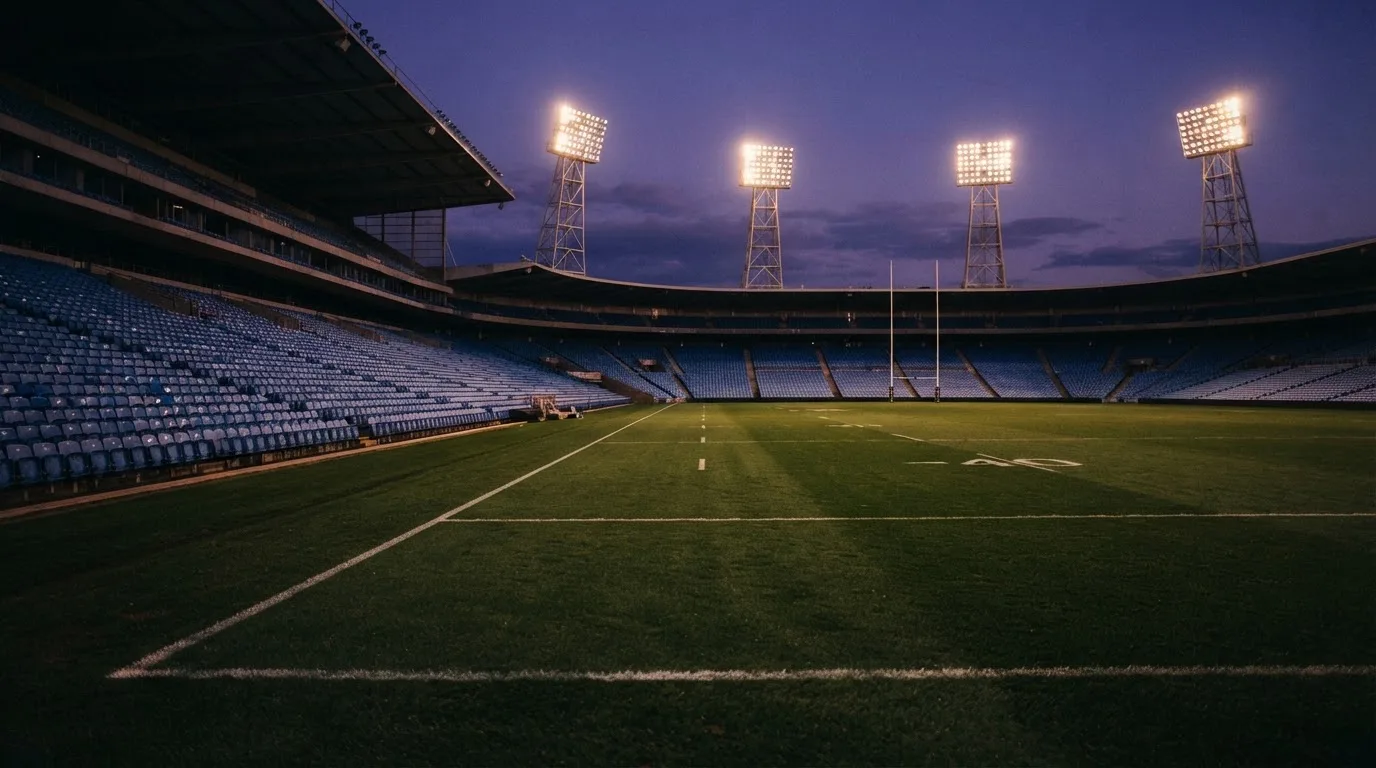
What an edge looks like in practice is narrower than the marketing. A Super League side with three of its first-choice spine missing, a five-day turnaround and a Friday night trip to Perpignan is a price a bettor can sit with and judge. A “best bet of the day” from a site that lists twelve best bets a day is something else: it is a selection offered to keep a reader clicking, and the price that the marker sees on a real bookmaker site is rarely the price the tipster just paid for.
Three habits that cost a tipster nothing and a bettor a great deal:
Reading team sheets late. Rugby league’s six-tackle rule punishes a forward pack that is short, and a half-back injury is a bigger swing than the equivalent change in union. The team sheet lands an hour before kick-off. A selection made on Tuesday does not have it.
Treating the handicap as a safer bet than the head-to-head. A bookmaker’s margin on the handicap line is the same margin it takes on the head-to-head. The handicap moves the risk, not the price.
Betting on the outright market without an each-way book. Outright prices on Super League and the NRL are thin. The favourite pays a fraction of the stake and the long shots are priced for somebody who knows the squad rotation a bookmaker’s traders do not. A small stake on the favourite as a saver is a different bet from chasing a 50/1 outsider because the price looks generous.
That last point is the one that catches most readers. The price looks generous because the probability is low. The bookmaker’s job is to set a price at which it makes money whichever side wins, and it does that by building a margin into every line. A reader who acts on a tip without seeing the margin in the price is acting on half the information.
What a tipster cannot do for a bettor
A tipster can name a side. A tipster cannot price it. The price sits on a betting slip on a bookmaker’s site, and the bookmaker’s margin is built into that price. The arithmetic at the end of this guide shows what that margin looks like on a market priced at even money on both sides. The result generalises: every price on every market on every site carries some margin, and the way to read a price is to read what is missing from it, not what is sitting on top.

What a tip can do when the price is right
A bettor who has watched Wigan’s right-edge defence for two seasons and can name the back-rower who covers for the absent second-rower has information the market may price out. The market will catch up by Saturday morning. The bettor’s job is to find a price before the market finds it, and to do that without paying for a tip that has been syndicated to ten thousand other readers.
A small bankroll and a long season
A bettor who puts a hundred pounds aside for the Super League season has a hundred pounds. The same bettor placing a £10 single on each of ten Friday night games has bet a hundred pounds and watched the bankroll go to zero at a rate the bankroll was always going to. The bankroll survives because a bettor’s stake is a fixed percentage of the bank, and the percentage is small enough that ten losses in a row do not end the season. Anything else is staking, not betting.
Rugby league bets and how they settle
A Super League match bet looks like a rugby union match bet to a reader who has not checked the rule book. It is not. The line that settles most rugby league markets is the 80-minute mark, not the final whistle. If the game goes to extra time the head-to-head and the handicap are settled, the points totals are not. A bettor who treats a Challenge Cup final the way they treat a regular-season Super League fixture will settle one bet they thought they had lost and void three they thought they had won. One bookmaker’s published list makes it plain that “Match Betting and Handicap Betting settle on 80 minutes’ play, while most other markets settle on the official result including extra time” — the rule every other bookmaker follows in broadly the same shape, and the rule a bettor needs to read on the betting slip before they place the bet.
The two-way market: head-to-head and handicap
A Super League fixture at even money each side reads as a coin flip. It is not. The bookmaker’s margin on an even-money two-way market is roughly 5% of the stake — a figure the arithmetic at the end of this guide works out in full. A bettor who wins gets their stake back plus a matching stake as profit; a bettor who loses gives up their stake. Across a season the margin is what the bookmaker keeps of every pound that crosses its counter, and the margin does not change whether the bettor places one bet or one hundred.
The handicap is the same market with a points adjustment. A Wigan side giving Castleford twelve points means a Wigan win by fewer than twelve settles the handicap as a Castleford win, a Wigan win by more than twelve settles it as a Wigan win, and a Wigan win by exactly twelve voids the handicap and returns every stake on that line. The whole-number rule is the trap. A handicap line of 12.5 removes the void, and a handicap line of 11.5 leaves the favourite’s backers exposed to a one-point margin. A bettor who reads the line before they read the price is a step ahead of the bettor who reads only the price.
Points totals: over and under
A bookmaker’s over/under on a Super League game is typically priced in the high 1.8s either side, and the margin built into those prices is broadly the same as the margin on the head-to-head. The bet settles on the official total at full time: tries count, conversions count, penalty goals count, drop goals count. A drop goal kicked from beyond 40 metres is worth two, rather than the one it is worth from inside — a quirk of the scoring that a price list does not adjust for and a bettor who reads the rules will.
Try scorers
The first try scorer market is a bet on who crosses the whitewash first. It is settled on the scorer of the first try in regulation time. If the scorer is a late withdrawal who never takes the field, the bet voids. If the scorer scores twice, the bet wins once — the bet is on first, not most. The price on the favourite is short, the price on the second-row forward who crosses from acting half-back is long, and the margin built into both is the bookmaker’s standard margin, not a smaller one because the market is harder.
Accumulators
An accumulator is a single bet in which every leg must win for the bet to be paid. The price is the product of the prices of the legs. Four legs at even money combine to roughly 16/1, eight legs at even money combine to roughly 256/1, and an accumulator that combines Super League, NRL and the Challenge Cup pays the product of every price. The margin compounds. A bookmaker’s margin on each leg is small; a bookmaker’s margin on a six-leg accumulator built from six legs each at a 5% margin is the same 5%, applied to the combined price. The bettor pays the margin once and the bookmaker keeps it once.
Acca insurance is a refund mechanism. If one leg of an accumulator of a stated size loses, the stake is refunded as a free bet or as cash. The mechanism is not free: it is paid for either in a smaller price on each leg, in a larger qualifying stake, or in a cap on the refund. A bettor who reads “acca insurance” without reading the small print is paying for insurance without seeing the policy.
Each-way bets
An each-way bet is two bets of equal stake: one on the win, one on the place. The win pays the price on the betting slip. The place pays a fraction of that price, typically a quarter at a third of the field in outright rugby league, a fifth at a quarter in larger fields. A £10 each-way bet costs £20. A £10 each-way bet on a 12/1 shot that finishes third at quarter the odds a quarter of the field returns £10 of stake on the place plus £10 of profit on the place. The win leg is lost.
The place terms are not uniform. They depend on the field. A Super League outright with twelve runners pays a quarter the odds a quarter of the field, so the first three home pay. The NRL outright with sixteen sides pays a fifth the odds a quarter of the field in most books. A World Cup outright with ten teams pays a quarter the odds a third of the field. The numbers are not trivia; they are what determines whether an each-way bet pays anything at all.
Same-game multi and bet builder
A bet builder is a same-game multi the bettor constructs from a list of markets on a single fixture. A Super League bettor builds a price from Wigan to win, over 38.5 total points, and Tomkinsburgh to score at any time. The price is the product of the prices of each leg. The margin built into the combined price is the bookmaker’s margin applied to the combination, which is usually slightly larger than the margin on any single leg.
The bookmaker’s bet builder is a useful tool for a bettor with a strong view on a single fixture. It is a less useful tool for a bettor whose view is the same view held by every other reader who watched the team sheet land an hour ago.
Cash out
A cash out is a bookmaker’s offer to settle a bet before the event the bet is on has been settled. The price the bookmaker offers is its own price, derived from the live state of the bet and the live state of the market. The bookmaker’s margin is built into the cash-out price in the same way it is built into the price on the betting slip. A bettor who cashes out a winning accumulator at a smaller price than the final price pays the difference between the cash-out price and the final price to the bookmaker. A bettor who cashes out a losing bet for a partial refund accepts a partial refund on terms the bookmaker has set. Cash out is a tool. It is not a free option.
Rugby league as a betting sport
Rugby league is a thirteen-a-side code with two forty-minute halves, a six-tackle rule, and a points scale that runs from one to four. A try is worth four points, a conversion two, penalty goals five in their modern worth of two, and a drop goal one (or two, if the kicker is standing beyond the forty-metre line). A side that reaches the end of its sixth tackle without scoring or finding touch turns possession over. The shape of a game is built around field position and the speed of the play-the-ball.
The competitions
International Rugby League runs the national teams. The Rugby League World Cup is the international tournament, held in 2026 outside of the men’s cycle (the next men’s World Cup sits in the 2026 calendar window) and contested across the Tier 1 nations — Australia, New Zealand, England, Tonga, Samoa, Fiji, Papua New Guinea, and a rotating European host’s contribution. Super League is the European club competition: twelve sides across England and one in France, with the regular season running from February to September and the play-offs through October. The NRL is the Australian and New Zealand club competition: seventeen sides, an eighteen-round regular season and a finals series that ends in early October. The Challenge Cup runs alongside Super League from January through to a final at Wembley in mid-summer. The Championship and League One sit below Super League, the Queensland Cup below the NRL.
A bettor on Super League and the NRL has a fixture list that runs almost every week from February to October. A bettor on the Championship has a fixture list that runs from February to October at lower visibility. A bettor on the World Cup has the tournament itself — six to eight weeks of high-stakes rugby league in a calendar year that does not include one.
The markets on a Super League fixture
A typical bookmaker’s rugby league list on a Friday night Super League game runs to twenty to thirty markets. The head-to-head, the handicap on a spread of points, the total points over and under a band, the first try scorer, the anytime try scorer, the team to score first, the margin of victory, the winning margin banded into 1-12, 13+ and so on, the half-time result, the half-time/full-time double, the winning margin after twenty minutes, the player to score the first try, the player to score a try at any time, the team to lead at half-time and the team to win. The list goes on. A bettor looking for a price on a specific question checks the list on the bookmaker’s site before placing the bet.
The markets on an NRL fixture
An NRL fixture list on a Saturday morning Australian time is the deepest list rugby league carries. The head-to-head, the line, the total, the first try scorer, the anytime try scorer, the winning margin, the half-time result, the player performance markets — a half-back to score a try, to set up two tries, the metres line, the tackle count. The same shape, plus a deeper bench. An NRL outright market for the premiership pays down through every side. An NRL Wooden Spoon market pays for the side that finishes last.
Markets on a World Cup fixture
A World Cup fixture carries a national team list and a price list that reads like a Super League fixture list, with the addition of the outright market at tournament level. The outright market is settled on the trophy, not the final position. A bet on the World Cup winner is a bet on the side that lifts the trophy. A bet on the World Cup finalist pays on the side that loses the final.
Markets on a Challenge Cup fixture
A Challenge Cup fixture carries the standard list, and a Challenge Cup outright carries the market. The final at Wembley is one of the bigger single-game markets on the British rugby league calendar.
What a bettor can bet on that does not exist
There is no statutory list of permitted bets in Great Britain. The bookmaker chooses the markets it offers. A bettor who wants a market the bookmaker does not offer has three routes: place the bet with a different bookmaker, ask the bookmaker for the market, or accept the absence. A bettor who is told a market is “illegal” has been told something that is not true.
How the ten operators stack up
The ten operators that follow each hold a remote operating licence from the Gambling Commission for fixed-odds betting or as a betting intermediary. The licence number on each card can be checked in the Commission’s public register. None of the operators below is “the only” licensed one. Each review heading carries the name of the platform and what sets it apart in the comparison.
| Brand | Gambling Commission remote licence | What the operator’s own terms state on the subject |
|---|---|---|
| Swifty Sports | 058957-R-334734-006 — Swifty Global (UK) Ltd | Best Odds Guaranteed, Cash Out on markets including horse racing and football, daily price boosts, live streaming and in-play betting; Bet Builder listed as coming soon |
| Ladbrokes | 054743-R-330863-014 — LC International Limited | Published by Entain Operations Limited; 4.66 from 101,255 ratings in the GB App Store |
| Smarkets | 039173-R-319366-011 — Smarkets (Malta) Limited | Open bank transfer deposits instant from £10 to £10,000; withdrawals processed within 6 hours from £10 to £100,000 |
| Midnite | 101839-R-342850-001 — Midnite Limited | In-play events, acca builder, popular accas, price boosts with maximum-stake limits |
| Copybet | 053774-R-330743-010 — Copybet UK Limited | Best Odds Guaranteed all day, every day on all UK and Irish racing; pays first past the post on horse racing even if the winner is later disqualified |
| Betfred | 039544-R-319290-010 — Petfre (Gibraltar) Limited | 21 sports plus over 2,000 casino-style games |
| Fafabet | 057385-R-333191-006 — Taichi Tech Limited | Best Odds Guaranteed on UK and Irish horse racing win and each-way bets from 9am on race days |
| Fitzwilliam Sports | 048760-R-335434-009 — SBKI Limited | Dublin bookmaker with capped membership; “High Stakes Welcome” subject to compliance criteria |
| Bar One Racing | 056516-R-332750-007 — Bar-One Racing Limited | Irish independent with shops across Ireland; horse racing sponsorships at Dundalk, Fairyhouse, Navan, The Curragh, Curraheen Park and Cork |
| BetTom | 064959-R-339314-003 — Bet Tom Limited | 50% back as a free bet of up to £50, with matching 50% back up to £50 as free slot funds for casino play |
The columns are the matters the comparison turns on. A licence number is a binary condition — a brand has one or it does not — and a card with a number on it is checked in two minutes on the Commission’s site. The “what the operator’s own terms state” column is the small print the bettor checks before placing the bet, because the headline feature is rarely the full feature.
What the table cannot show is the rugby league list each operator carries. None of the ten cards above prints the size of its Super League book, the depth of its NRL outright, or the price it offers on tonight’s Wigan game. A bettor comparing two bookmakers for a Friday night punt checks both books before placing the bet. The licence is the price of entry. The book is the reason for the visit.
The basics a bettor needs to know
A rugby league bettor who has not watched the code before this season is not behind the bettor who has. The price list is the price list. The rule book is the rule book. The difference is that a bettor who has watched the code can read a team sheet and know that the absence of the starting hooker is more material than the absence of the starting winger, in a way the odds sheet does not advertise.
The scoring
A try is worth four points. A conversion, kicked after a try, is worth two. A penalty goal is worth two. A drop goal is worth one from inside the forty-metre line and two from beyond. A Grand Final or a Challenge Cup Final that finishes level at the end of eighty minutes goes to extra time, and most markets on the betting slip do not carry over to extra time. A regular-season game that finishes level is a draw, and a draw on the head-to-head market is priced the way the bookmaker prices every draw — at a margin.
The tackle count
The attacking team gets six tackles. The first four tackles are the field-position build; the fifth tackle is usually the kicking play; the sixth is the last play before the ball is turned over. A side on its fifth tackle close to the opposition’s twenty-metre line with a kicker on the field is in the highest-value position the code offers. A side on its fifth tackle in its own half with the full-back standing at dummy-half is in the lowest. The market does not price this directly, but it prices the things that flow from it.
The stoppage
A rugby league game has fewer stoppages than a rugby union game. The ball is in play for longer. A live market on a Super League game moves faster than a live market on a union fixture, and a bettor with a cash-out price open on a rugby league accumulator will see that cash-out price move on every set.
The refereeing
Super League referees award six penalties a game on average. A penalty at the right end of the field is a 95%-plus scoring opportunity. A betting line that takes no account of the referee is missing the referee’s impact on the score.
The weather
A wet Wigan night in February takes the kicking out of the game and takes the scoring down with it. A total points line set for a dry-weather game is a line that settles differently on a wet night. The forecast is on the met office app.
The licence to take a bet from a British account
A bookmaker that takes a bet from a customer in Great Britain needs a remote operating licence from the Gambling Commission wherever the bookmaker is based. The Commission’s public register is the whole test of who holds one. A reader who wants to check whether a brand is licensed goes to the register, searches by name or domain, and reads the licence number.
What the licence covers
A remote general betting standard (real events) licence covers fixed-odds betting on real sporting events. A remote general betting standard (virtual events) licence covers fixed-odds betting on computer-simulated events. A remote betting intermediary licence covers a betting exchange. A remote pool betting licence covers pool betting on horse and greyhound racing. A remote general betting limited licence is the limited-stake version of the general licence.
The ten operators above carry remote general betting standard (real events) licences, with Smarkets carrying a remote betting intermediary licence in addition. The category on the register says what the licence permits. A bookmaker offering markets on the Super League on a remote general betting limited licence is permitted to do so under the limit.
What the licence requires
A licensed operator runs under the Gambling Act 2005 and the Licence Conditions and Codes of Practice. The LCCP carries the conditions an operator must meet on social responsibility, on marketing, on the prevention of money laundering, and on the technical standards that govern the site and the app. The Commission’s enforcement is not an audit of the operator’s accounting; it is a check on the operator’s compliance with the conditions, and a check that the operator is paying the right amount of duty.
What the licence does not cover
A licence does not insure the bettor’s stake. A licence is not a promise the operator will pay out. The Commission’s register carries a list of licence holders, a list of conditions, and a list of enforcement actions. It does not carry a guarantee.
A bookmaker licensed in Curaçao or Malta but not by the Commission is an operator the Act says is not licensed to take a bet from a customer in Great Britain. The Act makes providing gambling facilities in Great Britain without the licence the Act requires an offence. The Commission enforces the Act with cease-and-desist letters, with work with payment providers, and with court orders for DNS blocking. A reader who places a bet with an unlicensed operator does not commit an offence, but loses the protection a licensed operator provides: no GAMSTOP coverage, no Commission complaints route, no approved dispute-resolution body, no British consumer redress if funds are withheld.
The minimum age
The minimum age to bet in Great Britain is 18. The bookmaker verifies the customer’s age before the customer deposits or gambles, including with a free bet or a bonus, and the verification has run in this form since 7 May 2019. A customer who cannot verify their age cannot place a bet. A bookmaker that lets a customer place a bet without verification is breaking the conditions of its licence.
The licence and the price
A bookmaker’s licence does not set the price the bookmaker charges. The Commission does not regulate the margin on a sportsbook. The margin is the bookmaker’s choice, and the bookmaker chooses it to be whatever produces a profitable book over a season. The arithmetic at the end of this guide shows what a typical margin looks like on a typical market, and what the bettor pays it on.
Safer gambling on a rugby league bet
A licensed bookmaker has the duty, the tools, and the budget to look after a customer who is betting beyond what they can afford to lose. The duty is in the LCCP. The tools are in the software the bookmaker runs. The budget is in the licence fee and the levy the operator pays each year.
Deposit limits
The bookmaker offers a gross deposit limit on a fixed time frame. The first changes under RTS 12 have applied since 31 October 2025. A second phase was postponed to 30 September 2026. Whether the second phase is live on a given bookmaker depends on the bookmaker. A bettor who wants to know the limit on the bookmaker they use checks the bookmaker’s safer-gambling page.
The limit is the customer’s choice. There is no state-set ceiling for what a customer can deposit on a sportsbook. A customer who asks the bookmaker for a lower limit gets a lower limit. A customer who asks the bookmaker for a higher limit gets a higher limit, with the question of why the customer wants a higher limit that the bookmaker is now obliged to ask.
Financial vulnerability checks
A financial vulnerability check has applied to licensed remote betting since 30 August 2024 when a customer’s deposits minus withdrawals exceed £150 in a rolling 30 days. The check is in force since 28 February 2025. It is a public-record check — bankruptcy, county court judgments — not an income check and not a credit reference check. The check fires automatically; the bookmaker does not ask the customer to volunteer information.
A financial risk assessment is a different check, on different terms, on a different timetable. The Commission has published the plan: it is announced, staged, with no start date. A bettor reading about “affordability checks” in the press is reading about the financial risk assessment; a bettor reading about a £150 threshold is reading about the financial vulnerability check. The two are not the same.
GAMSTOP
GAMSTOP is the national multi-operator online self-exclusion scheme. A customer registers with GAMSTOP once and is excluded from every online operator licensed by the Commission for the chosen period. The periods are six months, one year, five years, or five years with auto-renewal. After the minimum period the exclusion stays in place for a further seven years unless the customer asks GAMSTOP to remove it.
A customer who is excluded from a licensed online bookmaker through GAMSTOP cannot open an account, cannot place a bet, and cannot collect a winning bet. A customer who has registered with GAMSTOP and is still inside the period who tries to open an account with a different bookmaker is refused. The bookmaker checks GAMSTOP before accepting the first deposit.
Time-outs and reality checks
A licensed bookmaker offers a time-out, a period during which the customer cannot place a bet and cannot deposit. A time-out is shorter than a GAMSTOP exclusion and can be set by the customer without registering with GAMSTOP. A licensed bookmaker also offers a reality check, a pop-up that interrupts the customer’s session at a stated interval and asks whether the customer wants to continue. The reality check is a session-management tool; the time-out is a cooling-off tool.
Help
GamCare runs the National Gambling Helpline. GambleAware funds treatment and research. The NHS runs gambling clinics in parts of the country. Gamblers Anonymous runs group meetings. The bookmaker’s safer-gambling page carries links to each of them. A bettor who is worried about what they are spending on rugby league bets checks the page, picks one of the services, and asks.
The offshore gap
A bookmaker licensed outside the Commission’s framework — in Curaçao, in Malta, in any jurisdiction outside the Act — is not bound by the LCCP, by the £150 threshold, by the 10x bonus cap, by the GAMSTOP requirement. A customer of an unlicensed operator does not have the safer-gambling tools that come with a Commission licence, because the customer is not covered by the Commission’s framework. The Act targets the operator, not the customer. The protection gap is real.
Bonuses and free bets on a rugby league book
A licensed bookmaker offers a welcome package to a new customer. The package can be a deposit match, a free bet, a price boost, an accumulator insurance, a free spins bundle, or a combination. The headline number is what the marketing leads with. The small print is what the bonus actually costs.
What the bonus headline does not say
A £30 free bet headline says £30 free bet. It does not say the stake is not returned with a win. It does not say the free bet expires in seven days. It does not say the maximum winnings from the free bet are capped. It does not say the bet must be placed at minimum odds of EVS (2.0) or the free bet is not awarded. Each of those conditions is normal. Each of them is in the small print. A bettor who reads the small print knows what the bonus is worth. A bettor who reads only the headline knows what the marketing is worth.
The promotion rules in force since 19 January 2026 cap wagering requirements on bonuses at 10x. A £10 bonus with a 50x wagering requirement needs £500 of qualifying bets; under the cap no more than £100. A free bet with no wagering requirement is not bound by the cap, because there is no wagering requirement to cap. The cap is on the rollover, not on the free bet. A bookmaker offering a £30 free bet is offering a £30 free bet, and a bookmaker offering a £10 bonus with a 10x rollover is offering a bonus the bettor clears by placing £100 of bets at minimum odds.
Mixed-product promotions are banned under the same rules. An offer that requires the customer to bet on football to get free spins on a slot is a banned offer. An offer that requires the customer to bet on rugby league to get a free bet is not a mixed-product offer and is permitted, subject to the rest of the rules. A bookmaker offering a rugby league price boost is offering a single-product promotion; the cap and the mixed-product ban do not apply.
The welcome offer on a rugby league book
A licensed bookmaker’s welcome offer to a new sports customer runs in one of four shapes: a matched deposit, a free bet, a first-bet refund, or a price boost on a first bet. A matched deposit of 100% up to £100 means the bookmaker matches the customer’s first deposit up to £100 in bonus money, with a wagering requirement that the customer meets before withdrawing the bonus. A free bet of £30 means the bookmaker credits the customer’s account with £30 of bet credit, with the conditions on use stated in the small print.
A first-bet refund means the bookmaker refunds the customer’s first bet if it loses, usually as a free bet. The mechanism is the same as an accumulator insurance refund: the customer’s losing stake is returned in a form the customer must bet again. The customer does not get cash. The customer gets a free bet, with the conditions on use stated in the small print.
A price boost on a first bet means the bookmaker offers the customer an enhanced price on a single market, with the stake returned at the enhanced price if the bet wins and at the original price if it loses. The mechanism is the bookmaker’s price, with the customer paying the bookmaker’s margin on the difference.
What the bonus is worth
The value of a free bet whose stake is not returned with a win is the free-bet amount times the difference between the odds and one, divided by the odds, multiplied by the bookmaker’s payout share on the market. On a £10 free bet at 3.0 odds on a market with a 95% payout share, the expected value is £10 × (3.0 − 1) ÷ 3.0 × 0.95, which is £6.33. The free bet is not a £10 free bet. The free bet is a £6.33 free bet on average. The headline is the marketing. The arithmetic is what the free bet is worth.
The arithmetic assumes the free bet is wagered once, on a single bet, on the stated market, at the stated odds. A wager on a market with a smaller payout share is a wager with a smaller value. A wager on a market with a larger payout share is a wager with a larger value. A wager across two bets is two wagers, each with its own value. A wager on a free bet that expires before it is used is a wager of zero.
The accumulator insurance on a rugby league book
An accumulator insurance refunds the customer’s stake on an accumulator of a stated size if one leg loses, as a free bet or as cash. The mechanism is the bookmaker’s promise to refund a stake on stated terms. A bookmaker offering accumulator insurance on a four-fold accumulator is offering the refund on a four-fold accumulator. A bookmaker offering accumulator insurance on a five-fold accumulator is offering the refund on a five-fold accumulator. The size of the qualifying accumulator matters.
The free bet or refund is small in kind. A bookmaker that refunds a losing accumulator as a free bet is offering the customer the chance to wager the refund again, on terms the bookmaker sets. A bookmaker that refunds a losing accumulator in cash is offering the customer the chance to withdraw the refund or to bet the part the customer wants to bet. The mechanism is the bookmaker’s, and the customer’s choice between the two is the customer’s.
What the bettor checks before claiming
The minimum odds on the qualifying bet. The expiry of the free bet. The cap on winnings from the free bet. The wagering requirement on the bonus. The market on which the wagering requirement can be cleared. The maximum stake on a single wagering bet. The list of payment methods excluded from the offer. The list of bet types excluded from the offer. Each is in the small print. Each is the question a reader answers before claiming.
Live betting and cash out on a rugby league book
A rugby league bookkeeper in 2026 takes bets after the kick-off, and pays out the bet — at a cash-out price the bookkeeper sets — before the final whistle. The mechanism is the in-play market and the cash-out button, and both are part of the same bookkeeper’s offer.
In-play markets
A rugby league in-play market runs from the first tackle to the final whistle. The bookkeeper takes bets on the head-to-head, the handicap, the total points, the next scoring play, the next try scorer, the team to score the next try, the team to lead at half-time and the team to win, the winning margin, the winning margin banded, the half-time result, the half-time/full-time double. The list mirrors the pre-match list with the addition of the markets that only exist in play. A bettor with a pre-match view can keep the view, can update it, or can hedge it on the in-play list.
The in-play list on a Super League game is shorter than the pre-match list. The in-play list on an NRL game is broader because the NRL fixture sits in a Saturday morning Australian time slot where the bookkeeper’s trading team is at full strength. The in-play list on a Challenge Cup tie in February is shorter again, because the Challenge Cup ties in February sit in the early rounds with smaller trading desks.
How cash out settles
A cash-out is a bookkeeper’s offer to settle a bet before the event the bet is on has been settled. The price the bookkeeper offers is its own price, derived from the live state of the bet and the live state of the market. A pre-match accumulator of four legs, all of which have won at half-time on the fifth leg, has a cash-out price close to the value of the four winning legs less the bookkeeper’s margin on the cash-out. A bettor who cashes out at that price locks in a profit smaller than the profit on the eventual payout, and pays the difference to the bookkeeper.
A cash-out on a single in-play bet is a hedge. A bettor who backed Wigan at half-time and wants to lock in a smaller profit rather than wait for the second half can cash out. The cash-out price is the bookkeeper’s, with the warrant to cut it if Wigan concede early in the second half.
A cash-out on a losing single bet is a partial recovery. The bookkeeper offers a fraction of the stake back, depending on the live state of the bet. A £10 bet on Wigan at half-time when Wigan are losing 20-0 has a cash-out price close to zero. A £10 bet on Wigan at half-time when Wigan are losing 6-4 has a cash-out price of roughly £4-£5, depending on the bookkeeper.
Live streaming
A licensed bookkeeper offers live streaming of events the bookkeeper has the rights to stream. Rugby league streaming is not a universal right. The bookkeeper pays for the feed from the rights holder, and the rights holder controls which events the bookkeeper can show and where. A bettor in Great Britain watching a Super League game on a bookkeeper’s app usually has the stream; a bettor watching an NRL game on the same app sometimes has the stream and sometimes does not, depending on the rights deal.
Live streaming is bundled with in-play betting because a customer who can watch the game is a customer who can place an in-play bet. The two are not the same product. The customer can place an in-play bet without a live stream. The customer cannot watch a live stream without being logged in to a funded account.
The risk in an in-play bet
An in-play bet settles faster than a pre-match bet, which means a bookkeeper’s margin on an in-play bet has to be larger to compensate for the speed at which the price has to be set. A bettor who has not watched the code notices the in-play price move and reads it as a mistake. Conversely, an experienced bettor identifies the same movement as a bookkeeper’s reaction to a fact on the field the customer has not yet seen.
The same hazard applies to cash out. A cash-out price that has not moved for ten seconds has usually moved because the bookkeeper has updated its view, and the customer who clicks the cash-out button a second after the price has moved has paid the bookkeeper’s margin twice.
Rugby league is a live sport
A rugby league game has fewer stoppages than a rugby union game, and the ball is in play for longer. A live market on a Super League game moves faster than a live market on a union fixture. A bettor who wants to trade in-play on rugby league needs a faster connection and a quicker reading of the field than a bettor who trades in-play on union. A bettor who has the connection and the reading has an edge the bookkeeper’s algorithm does not. A bettor who does not is paying the bookkeeper’s margin on every tick.
The ten operators reviewed
Each of the ten operators below holds a remote operating licence from the Gambling Commission for fixed-odds betting on real sporting events or as a betting intermediary. The licence number on each card can be checked in the Commission’s public register. The reviews cover what each operator’s own terms say, what the operator’s licence covers, and what a reader betting on rugby league might use the operator for.
Swifty Sports — Best Odds Guaranteed with Cash Out
Swifty Sports operates under Gambling Commission account 58957, held by Swifty Global (UK) Ltd. The brand’s terms state Best Odds Guaranteed, Cash Out on markets including horse racing and football, daily price boosts, live streaming and in-play betting. Bet Builder is listed as coming soon, which means the brand’s same-site rugby view is not yet a fully integrated product. A rugby league punter who wants Best Odds Guaranteed on the head-to-head gets Best Odds Guaranteed on the head-to-head, with the small print on minimum runners and on the price the BOG pays on the stated terms.
A reader looking at Swifty’s rugby league book checks the depth of the book before signing up. The brand is new enough that the depth is the question, and the licence is the entry.
Ladbrokes — the high-street name
Ladbrokes operates under Gambling Commission account 54743, held by LC International Limited and published by Entain Operations Limited. The GB App Store rating is 4.66 from 101,255 ratings — the largest single rating set on the list. The brand’s history on the British high street is the longest, and the corporate depth of Entain is the largest single backer of any brand on the list. A reader looking for the deepest rugby league book on a British sportsbook has the deepest rugby league book on a British sportsbook.
The price on the deepest book is the price on the deepest book. The brand’s margin is the brand’s margin, and the brand’s trading team is the brand’s trading team. A reader who wants the price the deepest book produces uses Ladbrokes. A reader who wants a brand with a tighter book uses Ladbrokes.
Smarkets — the betting exchange
Smarkets operates under Gambling Commission account 39173, held by Smarkets (Malta) Limited, and is licensed as a remote betting intermediary. The brand’s open bank transfer deposits are instant from £10 to £10,000, and withdrawals are processed within 6 hours from £10 to £100,000. UK debit card deposits are instant from £10 to £15,000. A betting exchange takes back bets and lays bets, and a reader looking for a price on a rugby league game that the bookmakers have priced out finds that price on Smarkets, with the commission on the winning side as the cost.
The commission on Smarkets is the price of the depth on the exchange. A reader who has read a back-and-lay price on a rugby league game and has a view on where the price should sit uses Smarkets to take the other side. A reader who has not read a back-and-lay price uses a bookmaker.
Midnite — in-play and price boosts
Midnite operates under Gambling Commission account 101839, held by Midnite Limited. The brand’s site cites in-play events, an acca builder, popular accas and price boosts with maximum-stake limits. The price boosts have caps — the size of the cap is the bookkeeper’s, and a reader taking out the maximum stake on a price boost is taking out the maximum stake on a price boost.
A reader looking at Midnite’s rugby league book checks the size of the book, the depth of the in-play list, and the cap on the price boosts. The welcome offer is a separate question, and is settled separately.
Copybet — Best Odds Guaranteed on racing
Copybet operates under Gambling Commission account 53774, held by Copybet UK Limited. The brand offers Best Odds Guaranteed all day, every day on all UK and Irish racing, and pays first past the post on horse racing even if the winner is later disqualified. A reader looking at Copybet for a Super League punt checks the rugby league list; for a horse-racing punt uses Copybet with the first-past-the-post feature.
A reader looking at Copybet for a price boost on a rugby league game checks the price boost page. The brand is a racing-led bookkeeper, and the racing features are the racing features.
Betfred — the Done Brothers brand
Betfred operates under Gambling Commission account 39544, held by Petfre (Gibraltar) Limited and published by Done Brothers (Cash Betting) Ltd. The app covers 21 sports plus over 2,000 casino-style games. The brand’s history on the British high street is the second longest on the list. A reader looking for a brand with a deep casino offering alongside the sportsbook has a brand with a deep casino offering alongside the sportsbook. The rugby league book is the rugby league book.
Fafabet — Best Odds Guaranteed from 9am
Fafabet operates under Gambling Commission account 57385, held by Taichi Tech Limited. The brand pays Best Odds Guaranteed on UK and Irish horse racing win and each-way bets from 9am on race days: if the starting price is bigger than the original price, the bigger odds are paid. A reader looking at Fafabet for a Super League game checks the rugby league list. A reader looking at Fafabet for a horse-racing bet uses the BOG from 9am.
The brand’s name is the brand’s name. A reader who has heard of Fafabet has heard of Fafabet. A reader who has not has not.
Fitzwilliam Sports — Dublin bookmaker with capped membership
Fitzwilliam Sports operates under Gambling Commission account 48760, held by SBKI Limited. The brand describes itself as a Dublin bookmaker with capped membership, and the welcome is a “High Stakes Welcome” subject to compliance criteria. A reader who wants to open an account with Fitzwilliam Sports fills in the application and waits for the compliance team to approve it. A reader who is approved opens the account and places a stake at the higher-stakes level the welcome offers.
The capped membership is the brand’s choice. A reader who wants an open-door sign-up instead chooses a different bookmaker.
Bar One Racing — Irish independent
Bar One Racing operates under Gambling Commission account 56516, held by Bar-One Racing Limited. The brand has rebranded as BAR 1 Betting, an Irish independent with shops across Ireland and horse racing sponsorships at Dundalk, Fairyhouse, Navan, The Curragh, Curraheen Park and Cork. A reader looking at Bar One for a Super League game checks the rugby league list. A reader looking at Bar One for a horse-racing bet checks the Irish racing list.
The Irish focus is reflected in the Irish sponsorships. A reader who wants a brand with an Irish-racing focus uses Bar One.
BetTom — 50% back as a free bet
BetTom operates under Gambling Commission account 64959, held by Bet Tom Limited. The brand’s sports welcome offer is 50% back as a free bet of up to £50, with a matching 50% back up to £50 as free slot funds for casino play. Full terms apply. The free bet is the free bet, and the slot funds are the slot funds, and the terms on each are the terms on each. A reader who wants a free bet on a first Super League bet places the first Super League bet at the minimum qualifying odds.
A reader looking at BetTom for the depth of the rugby league book checks the depth of the rugby league book. The welcome offer is the welcome offer. The book is the book.
What the bookkeeper keeps on a two-way market
The bookkeeper’s margin is the share of every pound bet on a market the bookkeeper keeps on average across the outcomes of the market. The way to see the margin is to read the prices on the market the way a bookmaker reads them: back to a payout share, then take the share from one. A market priced at decimal odds of 1.90 and 1.90 is a market with two outcomes priced at the same number. The payout share for that market is one over the sum of one over the price on each outcome. With both outcomes at 1.90, the sum is one over 1.90 plus one over 1.90, which is two over 1.90, which is 1.053. One over 1.053 is roughly 0.95. The margin is one minus 0.95, which is roughly 0.05, or 5%. The bookkeeper keeps about 5% of every pound bet on this market.
A market priced at decimal odds of 1.85 and 1.95 is a market with two outcomes priced at slightly different numbers. The payout share for that market is one over one over 1.85 plus one over 1.95. One over 1.85 is roughly 0.5405. One over 1.95 is roughly 0.5128. The sum is roughly 1.0533. One over 1.0533 is roughly 0.9494. The margin is roughly 0.0506, or about 5.06%. The bookkeeper keeps about 5% of every pound bet on this market.
A market priced at decimal odds of 1.80 and 2.00 — a market with one favourite and one outsider — has a payout share of one over one over 1.80 plus one over 2.00, which is one over 0.5556 plus 0.5000, which is one over 1.0556, which is roughly 0.9473. The margin is roughly 0.0527, or about 5.27%. The bookkeeper keeps about 5.3% of every pound bet on this market.
The three examples illustrate what a bookkeeper’s margin looks like across the shapes a market takes. The margin is in a band around 5% for rugby league markets priced as they would, with the exact figure depending on the shape of the market and the trading team’s view of how the bets will balance. The point is the same in each case: the margin is what the bookkeeper keeps, and the margin is built into the price the bettor sees.
A bettor who has read this section will read a price and see the margin in the price. A bettor who has not will read a price and see the price. The price is the price. The margin is the price the bettor pays on top of the price.
Frequently asked questions
How does a bettor place a bet on rugby league?
A bettor picks a bookmaker licensed by the Gambling Commission, opens an account, verifies their age and identity, deposits by debit card or bank transfer, picks a Super League, NRL or World Cup fixture from the rugby league list, picks a market from the list of markets on that fixture, enters a stake on the betting slip, and confirms the bet. The bet is settled after the event on the rule that the market settles under. The bookmaker’s terms page on rugby league carries the rule that the market settles under.
How can a bettor check that a bookmaker holds a Gambling Commission licence?
The Commission’s public register is searchable by business name, trading name, domain or account number. A bettor opens the register, types the name of the brand, reads the licence number on the register, and confirms the number matches the licence number the bank advertised to the customer. The licence number is the licence number on the register, and the categories on the register are the categories the licence covers. A brand on the register is licensed. A brand not on the register is not licensed.
How is the return on a bet worked out from the stake and the odds?
The return on a winning single bet is the stake multiplied by the decimal odds. A £10 bet at decimal odds of 3.00 returns £30. The profit is the return minus the stake, so £30 minus £10, which is £20. A £10 bet at decimal odds of 1.50 returns £15. The profit is £5. A £10 bet at decimal odds of 6.00 returns £60. The profit is £50. The arithmetic generalises: a winning single bet pays the stake times the odds, and the profit is the stake times the odds minus one.
What is the bookmaker’s margin and how can it be seen in the odds?
The bookmaker’s margin is the share of every pound bet on a market the bookmaker keeps on average across the outcomes. The way to see the margin is to back-calculate the payout share from the prices and take the share from one. On an even-money two-way market priced at decimal odds of 1.90 each side, the payout share is about 95% and the margin is about 5%. The margin is built into every price the bookmaker offers, on every market, on every event.
How do fractional odds such as 5/1 convert to decimal odds such as 6.00?
Fractional odds of a to b convert to decimal odds of a divided by b plus one. 5/1 is 5 divided by 1 plus 1, which is 6.00. 11/4 is 11 divided by 4 plus 1, which is 2.75 plus 1, which is 3.75. Evens, written as 1/1 or EVS, is 1.00 plus 1.00, which is 2.00. A price written as 5/1 in fractional form is the same price written as 6.00 in decimal form, and a bettor who has read the price in one form has read the price in the other. The bookmaker’s site shows the price in the form the bettor has set on the bettor’s account.
Which tools for controlling play does a licensed bookmaker have to offer?
A licensed bookmaker offers deposit limits, time-outs, reality checks, GAMSTOP self-exclusion, the financial vulnerability check at the £150 rolling-30-days threshold, and links to GamCare, GambleAware, the NHS gambling clinics and Gamblers Anonymous. The deposit limit is the customer’s choice and can be set lower or higher with the bookkeeper’s question on the reason. The time-out is the customer’s choice and can be set for hours, days or weeks. The GAMSTOP exclusion is the customer’s choice and runs for six months, one year, five years or five years with auto-renewal.
Rugby, cricket & Gaelic – systembetsguide.com
Content created by the «systembetsguide.com» team
