
Sports betting apps in the UK: a comparison for 2026
 Available in US
The choice of a UK betting app is wider than it looks, and the differences are not where the marketing points. Two apps at the top of an App Store chart can sit on the same Premier League menu, take the same debit-card deposit, and still ask different questions of your bankroll. The first job of any review is to know which questions a bookmaker will ask. The second is to know what the answers cost.
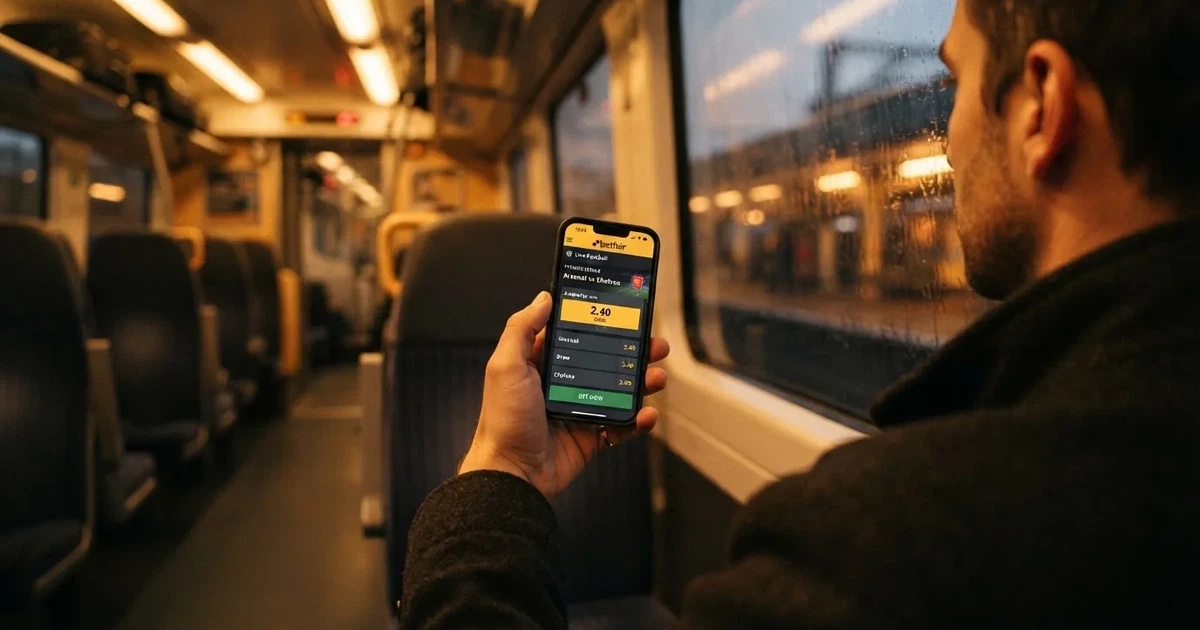
This page is built for the bettor who already accepts that any “free” offer has a price tag and who would rather read the small print here than re-read it on a phone in a queue. It covers ten apps that hold a Gambling Commission remote licence — the legal floor for serving customers in Great Britain — and compares them on the things that matter once the welcome offer has expired: how money moves in and out, what the app actually lets you do, what happens when a withdrawal is slow, and which safer-gambling tools are wired in. No offshore brands are reviewed, and no recommendation is made about who will win a given match — that is not a question a page can answer.
The data was checked against the Gambling Commission’s public register and against each operator’s own terms as of 30 October 2026.
The cashier — deposits, withdrawals and the speed of money
A betting app is only as good as its worst withdrawal. The five-minute deposit becomes a three-day wait when the funds leave, and the wait is where the small print of an offer tends to surface.

The ten apps reviewed all run on the standard UK cashier: debit card is universal, and Apple Pay or PayPal sit alongside it on the bigger names. The minimums range from a single pound on a couple of the smaller books to £5 or £20 on the bigger ones — DAZN Bet, for example, takes £5 by debit card, Apple Pay, Paysafecard, Trustly or Skrill and £20 by PayPal, with no processing fee on either. Below that floor, the offer and the value diverge sharply. A £1 minimum is a real product for someone who wants to follow a price without staking a fiver; it is not a route to clearing a rollover.
The withdrawal side is where the apps split. “Instant” means different things in different cashier windows: some brand it as “instant” because the request is acknowledged, not because the money has cleared. The honest test is how long a normal bank transfer takes on a working day, not the word on the button. Several apps support Faster Payments to a UK bank, which lands within minutes during banking hours; a few still settle by the older BACS rail, where a day or two is the norm. E-wallets (PayPal, Skrill, Trustly) are the middle ground: usually same-day, but with their own limits and the e-wallet’s verification step on the other side.
Two points the marketing rarely covers. First, most licensed apps verify the customer’s identity before the first deposit, so a brand advertising a quick sign-up still has to ask for a photo of a document somewhere in the journey — the only honest framing is “fast” against a second-window check, not “anonymous” against none. Second, almost every app reserves the right to do a source-of-funds check once a customer’s deposits net of withdrawals pass a threshold — currently a £500 rolling-30-day trigger on several brands, lower elsewhere — and to slow the next withdrawal while the check runs. That is the moment “instant” turns into “in review”. The safest assumption is that any withdrawal can be paused once a customer moves past a few hundred pounds in a month.
The table below sets out the cashier story for each operator, against the licensed entity the Commission’s register names. Where the table is silent on a number, the operator’s own terms do not give one the page can quote.
| Operator | Gambling Commission remote licence (operator) | What the operator’s own terms say on payments |
|---|---|---|
| Kwiff | 044448-R-323408-017 — Eaton Gate Gaming Limited | App Store listing 17+; UKGC-licensed via Spryme Ltd; specific deposit floors and withdrawal timings not stated on the page. |
| Fitzwilliam Sports | 048760-R-335434-009 — SBKI Limited | “Instant deposits, fast withdrawals”; timeouts and deposit limits set on the customer side. |
| DAZN Bet | 048756-R-327274-019 — DZBT Limited | Debit card, Apple Pay, Paysafecard, Trustly and Skrill from £5; PayPal from £20; no processing fees. |
| Geoff Banks | 054095-R-330366-010 — GB Sports Advisors Limited | Live in-play and ante-post prices listed on the app page; the cashier policy is not in the listing. |
| Tote | 054779-R-331321-008 — TDCO Limited | Pool-betting product (Placepot, Jackpot, Scoop6, Quadpot) plus international pools; cashier is part of the wider UK tote account. |
| VBet | 044662-R-324273-022 — SCGO Limited | Pre-match, in-play, bet builder, live streaming and a results calendar; cashier details are not in the page’s source. |
| Unibet | 045322-R-324275-019 — Platinum Gaming Limited (Gibraltar) | “Operated since 1999”; standard UK cashier and the safer-gambling suite covered in the section below. |
| Coral | 054743-R-330863-014 — LC International Limited | Welcome offer funds a free-bet balance; cash-out and partial cash-out on selected markets; cashier not detailed on the landing page. |
| Midnite | 101839-R-342850-001 — Midnite Limited | In-play, acca builder, popular accas and price boosts; “rapid payouts” claimed but not given a figure. |
| BetMGM UK | 039198-R-319450-029 — LeoVegas Gaming PLC | The app listing cites the UKGC account number; cashier specifics sit in the in-app help, not the App Store text. |
The honest read: a high-street bookmaker like Coral, Unibet or BetMGM UK inherits a Faster Payments-grade cashier that the smaller sportsbooks often match in marketing copy but not always in delivery. The fastest route to a known number is the operator’s own help page, not the App Store description.
The touchscreen — what an app is and what the platform lets it do
A UK sports betting app is a native client on iOS or Android that connects to a remote betting platform licensed by the Gambling Commission. The same licence covers the website, so the choice between browser and app is a choice about ergonomics, not regulation. Age verification runs the same way; GAMSTOP enrolment runs the same way; the LCCP marketing rules apply to both. A bettor who has self-excluded through GAMSTOP cannot open an account on the app any more than on the desktop site, and the operator’s own system is meant to block the attempt at the door.

What the app adds over a mobile browser is three things. First, biometric login — Face ID or Touch ID on iOS, fingerprint on Android — and most of the bigger books have it. Second, push notifications for price changes, settled bets and in-play events; the volume of these is the single biggest complaint in app reviews, and a bettor who turns them down loses the live-alert side of in-play. Third, a tighter integration with the phone’s payment wallet: Apple Pay at the cashier, Apple Pay at the bet slip on many of the iOS apps, and Google Pay on the Android versions where the operator has bothered to wire it in.
A few of the ten apps go further. Betfair, William Hill and Spreadex have a streaming tab inside the app for events the operator has paid to show — UK and Irish horse racing, selected football, greyhounds and tennis, with Spreadex adding NFL. VBet’s listing claims a results-and-stats calendar alongside its live stream. Coral, Unibet and BetMGM UK run a casino tab inside the sports app; for a bettor who only wants the sportsbook that is bloat, and the bloat is what slows the app on older phones. The smaller books — Tote, Fitzwilliam, Kwiff — tend to be lighter, with the sports product front and centre.
The bettor’s trade is between breadth and weight. A heavier app does more; a lighter app starts faster on a cold connection and uses less battery during a long in-play session. The App Store size and the average review for the most recent version are the quickest tells, and both are visible before the download.
The fixtures — markets, tournaments and how deep a price book runs
The Premier League, the Champions League, the Grand National, the Ashes and the Masters — every UK-licensed sportsbook has a price on each. The depth underneath is what separates a Betfair from a Geoff Banks. A full Premier League match on a high-street book can run to two hundred markets: 1X2, both teams to score, over/under goal lines in half-goal steps, Asian handicaps, player shots, player shots on target, player fouls, corners, cards, throw-ins, and the named combinations a bet builder can stitch together. The same match on a smaller sportsbook can run to thirty. Both satisfy a casual bettor; neither covers what the bet builder tries to.
In-play is the other depth test. The mainstream apps all run a live in-play tab; the size of the in-play tab and the number of markets per live event is what divides them. Betfair and bet365 have made in-play the product, with thousands of live events on a Saturday and an in-play market list that updates every few seconds. Coral and Unibet sit one rung down. Spreadex’s edge is that it offers spread betting alongside fixed odds, which the others do not — a different way to price, with losses that can run past the original stake and that the operator flags in its own risk warnings.
Esports, MMA, snooker, darts and table tennis are routine on the larger apps; novelty markets — politics, TV — appear on most. Virtual sports, where the events are computer-generated and run every couple of minutes, are a separate licence category in Great Britain and are offered by some of the apps here and not by others. Where the choice sits, it sits on the operator’s product page.
Horse racing is a special case. The Tote app is built around pool betting on UK and Irish racing — Placepot, Jackpot, Scoop6 and Quadpot — with World Pool, French PMU, US and Hong Kong pools layered on. That is a different kind of price: not a bookmaker’s margin, but a pool that pays a share of the pool to the winners after a deduction. The bettor who wants fixed-odds racing does better on Coral, bet365 or William Hill; the bettor who wants a place in a national pool does better on Tote.
The comparison — ten apps and what each is best at
Any “best” list is a choice about what matters most. The list below keeps the order research gives and judges each operator on the thing that sets it apart in the comparison. A brand the page’s own subject cuts against — say, a heavy casino inside a sports app — is still here, with the mismatch named in one line.
Kwiff — a surprise-priced app for the bettor who likes the unexpected
Kwiff is a sportsbook under the trademark of Spryme Ltd, licensed by the Gambling Commission and rated 17+ in the App Store. Its pitch is “surprise” — the operator can boost a price after the bet is placed, applying a multiplier that turns an evens shot into something much longer. That makes Kwiff a fit for the bettor who is happy to take the bonus where it lands, and a poor fit for the bettor who likes to know the price before the bet is confirmed. The cashier and the in-play depth are not the differentiators, and the welcome offer is a separate question that sits below the surface.
Fitzwilliam Sports — a small sportsbook with the standard toolset
Fitzwilliam Sports, run by SBKI Limited, leans on the basics: instant deposits, fast withdrawals, timeouts and deposit limits, with the safer-gambling signposts — GambleAware, GamStop, Gamblers Anonymous — linked from the footer. The app does what a small UK sportsbook is meant to do, and the price book is built around the mainstream sports rather than the long tail. A bettor who wants a tidy app without the casino side will feel at home; a bettor who wants hundreds of in-play markets per match will not.
DAZN Bet — a sport-first brand behind a familiar broadcast name
DAZN Bet, run by DZBT Limited, opens the door at £5 for most methods and £20 by PayPal. The brand sits next to a sports broadcaster, and the app’s product leans the same way — live streaming of selected events, a price book weighted to boxing, MMA and the football leagues DAZN already carries. A bettor who already pays for DAZN can fold the betting app into the same account. A bettor who doesn’t is choosing on the cashier and the welcome offer, not the brand.
Geoff Banks — an ante-post and in-play bookmaker with a small audience
Geoff Banks’ app is published by GB Sports Advisors Limited, and the listing points to two products the brand is known for: live in-play prices and ante-post prices on future events. Ante-post is the long-term price on a tournament, a championship or a season outright, taken well in advance; it pays more than the day-of-event price, with a non-runner-no-bet rule (a stake is returned if the selection does not take part) on selected markets. For the bettor who likes to back a horse in February for the Grand National or a football side before the season opens, Geoff Banks is built for that habit.
Tote — pool betting for the racing fan
The Tote app, run by TDCO Limited, is the digital home of UK pool betting. The product is Placepot, Jackpot, Scoop6 and Quadpot, plus World Pool and the international pools with the French PMU, US and Hong Kong operators. A pool bet is not a bookmaker’s price: every stake goes into a pot, the operator takes a deduction, and the rest is split among the winners. The bettor who wants fixed-odds racing uses a different app; the bettor who wants a share in a national pool uses Tote.
VBet — pre-match, in-play and a live calendar
VBet, run by SCGO Limited, lists four things on its app page: pre-match, in-play, bet builder and live streaming, with a live calendar of results and statistics. The pitch is a single screen that holds the day’s fixtures, the in-play markets and the stats behind the price, without forcing the bettor to leave the app. For a bettor who plans an evening around a Champions League night, that is the right shape.
Unibet — a high-street bookmaker that has run since 1999
Unibet’s UK site is run by Platinum Gaming Limited, Gibraltar, under Gambling Commission account 45322, and the brand has been operating since 1999. The sportsbook sits beside a casino, a poker room and a bingo tab; the safer-gambling suite runs to deposit limits, a Player Profile test, product restrictions and self-exclusion, with live chat, BeGambleAware, GamCare, GAMSTOP, Gambling Therapy and the Betting and Gaming Council all linked from the footer. The bettor who wants one app that does most things and has done them for a long time is the kind of reader Unibet is built for.
Coral — a £40 free-bet welcome and the Ladbrokes sibling
Coral’s sports welcome offer is the headline: a £20 sports bet at minimum odds of 2.0 (1/1) earns £40 in free bets, issued within seven days and expiring seven days after issue, for new GB customers who opt in. The free bet stake is not returned with a win — only the profit lands in the cash balance. Coral and Ladbrokes run under the same parent licence (LC International Limited), so the two apps share much of the platform behind the scenes, and the bettor who likes one tends to land on the other. The depth is high-street size: a full Premier League price book, in-play across the major sports, a casino tab the bettor can hide.
Midnite — in-play, acca builder and weekly rewards
Midnite’s app, run by Midnite Limited, shows in-play events, an acca builder, popular accas and price boosts with maximum-stake limits, and runs a weekly rewards club for regular customers. The product is built around the bettor who places several accas a week rather than the bettor who plays a single long-odds single. “Rapid payouts” is a claim rather than a number, and the cashier’s actual performance is in the in-app help rather than the listing.
BetMGM UK — a casino-heavy sportsbook with the right licence behind it
The BetMGM UK app, published by LeoVegas Gaming PLC, lists Gambling Commission account 39198. The brand is the UK face of a US name, and the app leans toward the casino side — slots, live dealer, jackpots — with a sportsbook that does the standard jobs and no extra. The bettor who wants a casino-with-a-sportsbook in a single app has the right address; the bettor who wants a sports-pure product will look elsewhere.
What “licensed” means in Great Britain
A bookmaker serving customers in Great Britain needs a Gambling Commission remote licence wherever it is based. The Commission’s public register is the whole test of who holds one, and the register can be searched by business name, trading name, domain or account number. Since the Gambling (Licensing and Advertising) Act 2014, the licence follows the customer, not the head office — a Curaçao, Maltese or Gibraltar operator must hold a GB licence to take a bet from a customer in England, Scotland or Wales. Northern Ireland is outside the Gambling Act 2005 and has its own older framework, so the page writes “GB-licensed” rather than “UK-licensed”.
Betting licences come in five types. The “remote general betting standard (real events)” licence covers the ordinary sportsbook; “remote general betting standard (virtual events)” covers computer-generated events run by software; “remote general betting limited” is a smaller category; “remote pool betting” covers the Tote-style product; “remote betting intermediary” is the licence a betting exchange runs under. The type on the licence is the type of bet the operator may take. Several brands can run under one licence — Ladbrokes and Coral, Paddy Power and Betfair, for example — and the register names the licence holder rather than the brand.
A few things the licence requires. The customer must be eighteen or over. Identity, address and date of birth are verified before the first deposit or bet, and a free-bet offer does not get around that check. Since 31 March 2020, online operators must take part in GAMSTOP, the national self-exclusion scheme, with exclusion periods from six months to five years. A financial vulnerability check has applied since 30 August 2024 to customers whose deposits net of withdrawals pass £150 in a rolling 30 days (the threshold has been in force since 28 February 2025), and it is a public-record check rather than an income or credit check. The 10x wagering cap on bonuses and the ban on mixed-product promotions have applied since 19 January 2026; the second phase of deposit-limit rules was postponed to 30 September 2026 and the live status is not settled.
There is no statutory cap on stakes in sports betting. Operators set their own maximum stakes, and the limit that matters at the bettor’s end is the one the operator posts on the bet slip. Spread betting is regulated by the Financial Conduct Authority when the underlying market is financial, and by the Gambling Commission otherwise; the FCA route carries its own risk warnings, and the operator’s own terms say losses on a financial spread can exceed the original deposit.
The player pays no tax on betting winnings in Great Britain. General Betting Duty is the operator’s tax on gross profits, currently 15% on most remote bets, with a new 25% remote rate coming in on 1 April 2027 for the non-racing, non-pool, non-betting-shop side of the business. Whether operators pass duty on through their odds is not established, and the page does not write that the customer is charged duty.
How an operator is checked against the register
A licence number on a website is a claim; a licence number on the Commission’s public register is a fact. The register is the only place a fact about a licence lives, and the audit the page runs is short.
Open the register and search by the brand’s trading name, by the licence holder’s company name, or by the licence account number. The result gives the licence type, the licence holder, the trading names that operate under the licence, and the date the licence was issued. The ten operators on this page sit in the register against the licence numbers the table above gives, and a reader who wants to re-check can do so in a couple of minutes. Anything that does not appear — a number on an app listing that is not on the register, a brand that does not appear at all — is not a licensed brand, and the only safe framing is to use a different one.
The Commission itself does not maintain a “shortlist” of recommended apps. Any page that names a single brand as “the only licensed one” is wrong by construction, because the register lists many more licensed brands than any article can feature, and the licence itself is the threshold, not the comparison.
Safer gambling — what an app is required to offer
Every licensed remote betting operator must offer a set of safer-gambling tools and must take part in GAMSTOP. The minimum is a deposit limit, a time-out, a self-exclusion and access to information about the help services. The bigger books run a longer list: Unibet, for example, lists deposit limits, a Player Profile test, product restrictions and self-exclusion, with live chat support and links to BeGambleAware, GamCare, GAMSTOP, Gambling Therapy and the Betting and Gaming Council. Fitzwilliam’s page covers timeouts, deposit limits, and the same three signpost organisations. William Hill’s app offers time reminders, time-outs and deposit limits, and the customer-service team is available around the clock through in-site messaging. Coral, bet365 and Spreadex run a similar set.
The GamCare National Gambling Helpline is the front door for anyone whose own gambling has started to bite. The NHS runs gambling clinics across England, with self-referral in most areas. Gamblers Anonymous runs local meetings. The Gambling Commission’s own LCCP code names the help services an operator must link to, and a page that lists the help services does the same job a fraction of the time.
A useful test before opening an account: open the app, open the safer-gambling page from the footer, count the controls on offer, and read the time-out and self-exclusion rules before any deposit. A bookmaker that hides the page is a bookmaker to walk away from; a bookmaker that publishes the page plainly is one the regulator can also see, and the regulator’s view is what keeps the rules honest.
Crypto, anonymity and the credit-card ban
Three things the marketing sometimes glosses over. The first is the credit-card ban: since 14 April 2020 no licensed GB operator has been allowed to take a credit-card payment for gambling, including a credit-card-funded top-up through an e-wallet. The ban covers the bet itself and the deposit that funds it. A debit card, a bank transfer, Apple Pay and PayPal are all unaffected. A bettor who tries to use a credit card at a licensed cashier is stopped at the front door.
The second is the identity check. A licensed operator verifies name, address and date of birth before the first deposit, and a free-bet offer does not get around it. There is no anonymous play at a GB-licensed app, and the bettor who wants anonymity has to leave the licensed market — which, in turn, loses the protection of the regulator. The trade is the same one the offshore market asks for in cash: no verification, no GAMSTOP, no Commission complaints route, no British dispute-resolution body, and no certainty that funds are returned if a dispute is opened. The Commission’s enforcement is disruption, not blocking, and the bet is on the operator’s good faith.
The third is crypto. A licensed GB operator’s payment policy is its own; the register does not list cryptocurrency as a permitted or prohibited method, and the high-street books do not offer it. The market for crypto-funded sportsbooks is offshore, and the protection argument above runs in the same direction. A bettor who wants to bet with Bitcoin or USDT is betting with an unlicensed operator, and the consequences — slow withdrawals, withheld funds, no British redress — are the bettor’s to carry.
Bonuses and free bets — what an offer is actually worth
The licensed market is governed by the 10x bonus cap, in force since 19 January 2026. A £10 bonus can no longer require more than £100 of qualifying bets, and the cap applies to the wagering requirement rather than the bonus value. Mixed-product promotions — an offer that asks the customer to bet on football to get free spins, or to play casino to clear a sports bonus — are banned outright. The Commission has not capped the headline value of a bonus or the money value of a free bet, and the cap on free bets with no wagering condition is not established.
A few patterns repeat. The Coral welcome is the cleanest: a £20 sports bet at minimum odds of 2.0 (1/1) earns £40 in free bets, issued within seven days, expiring seven days after issue. The free-bet stake is not returned with a win — only the profit — so a winning £40 free bet at 3.0 pays £80 of profit, not £120. The Bet600 welcome is the workmanlike version: five single bets of £10 or more at evens or greater within the first seven days, after which one £10 free bet is credited. The Midnite, BetVictor and William Hill free-bet numbers are smaller and run on a similar shape; the Lottoland UK offer is casino-based, with 100 free spins on Fishin’ Frenzy Even Bigger Fish on a £20 slots stake, no wagering, 30 days to use, running to 14 February 2027.
The offer is worth what the free bet returns on average, and the page does not run a calculation. The honest test is the wagering multiple, the minimum price, the expiry, and the markets the free bet is allowed on. An offer with no wagering, a 7-day expiry and a market the bettor would have played anyway is a real offer. An offer that asks for a 10x rollover at minimum odds of 2.0 on markets the bettor does not follow is a marketing line the bettor pays for in time.
A separate caveat. Boosted odds and price boosts — Coral, BetVictor, Midnite, bet365 all run them — are not bonuses. A boost replaces the price on a single bet for a window, and the bet is placed at the new price with no rollover. An accumulator insurance that refunds a losing acca as a free bet when one leg lets it down is a partial refund, not a refund in money. “Risk-free” bets, where the operator refunds a losing stake as a free bet, are not risk-free in cash; the stake has gone out and the refund is in bet credit. Read the term the operator uses, and read the place where the term is defined.
Offshore — what the unlicensed market costs the bettor
The point of the comparison is not that offshore brands are bad and licensed brands are good. The point is that the two operate under different rules, and the difference is not in the price book.
A licensed operator is checked by the regulator: identity, source of funds, marketing, customer complaints, the safer-gambling toolset. An unlicensed operator is not, and the bettor has no British route to complain if funds are withheld. The Commission’s enforcement is disruption rather than blocking — cease-and-desist notices, search-engine referrals, work with registrars, hosts and payment providers — and the Commission has been given, or is about to receive, court-order DNS blocking powers; ISP blocking is not in operation. The licensed-versus-unlicensed framing is honest, not moral.
The bettor’s two questions. Is the brand on the register? Is the offer worth taking, given the rule? The first is a one-minute check; the second is a question the rest of this page tries to answer.
What to read before opening an account
Four things, in order. The Commission’s public register entry for the licence holder. The operator’s safer-gambling page, where the deposit limit, the time-out and the self-exclusion controls sit. The full terms of the welcome offer, not the marketing line. And the operator’s payment policy, with the minimum deposit, the minimum withdrawal, the time to a UK bank account, and the source-of-funds trigger that pauses withdrawals above a threshold. A bettor who has those four pages open has the comparison in front of them; the rest is price.
A small bettor’s check: open the app, place a £5 single at minimum odds, withdraw to a UK bank, and time the round trip. A round trip that takes a working day is normal. A round trip that takes three working days is the cashier telling the bettor something about the brand. A round trip that takes a week is the cashier telling the bettor the rest of the brand.
Frequently asked questions
What sports betting apps are legal in the UK?
A sports betting app is legal in Great Britain when the operator that runs it holds a Gambling Commission remote licence, whatever country the operator is based in. The Commission’s public register is the only place that licence is recorded. Northern Ireland is outside the Gambling Act 2005, so a “GB-licensed” app is the right framing; a “UK-licensed” claim can mislead on that point.
How do sports betting apps work?
A licensed app is a native client on iOS or Android that connects to a remote betting platform licensed by the Gambling Commission. The same licence covers the website, so the same age check, GAMSTOP enrolment and LCCP marketing rules apply in both places. A bet is placed, the bet is held on the operator’s platform, and a withdrawal is paid back to the deposit method or a Faster Payments bank transfer, with a source-of-funds check on higher net deposits.
Are sports betting apps safe?
A licensed app is regulated: identity and age are verified, GAMSTOP is enforced, safer-gambling tools are wired in, and complaints can be raised with the Commission. The same is not true of an offshore brand. The trade is between a regulated product with checks at the front door, and an unregulated one without them. Neither is “the safe choice” by default; the bettor’s job is to know which one is in front of them.
How can it be checked that a bookmaker holds a Gambling Commission licence?
Open the Commission’s public register and search by the brand’s trading name, the licence holder’s company name, the domain, or the account number on the app’s terms page. A result that gives the licence type, the licence holder, the trading names and the issue date is a result; a no-result is a no-licensed. The register is the only place a fact about a licence lives.
How is the return on a bet worked out from the stake and the odds?
For decimal odds, the return is the stake multiplied by the odds, and the net profit is the stake multiplied by the odds minus one. A £10 single at 3.0 returns £30 in cash, with £20 of profit on top of the £10 stake. For an accumulator, the legs’ odds are multiplied into one price before the stake is applied. Fractional odds of 5/1 are the same price as decimal odds of 6.00, with the same return for the same stake.
Payments & apps – systembetsguide.com
Content created by the «systembetsguide.com» team
