
Volleyball betting in 2026 — markets, odds and what a tip is actually worth
 Available in US
Data current as of 30 October 2026; every licence below was checked against the Gambling Commission’s public register.
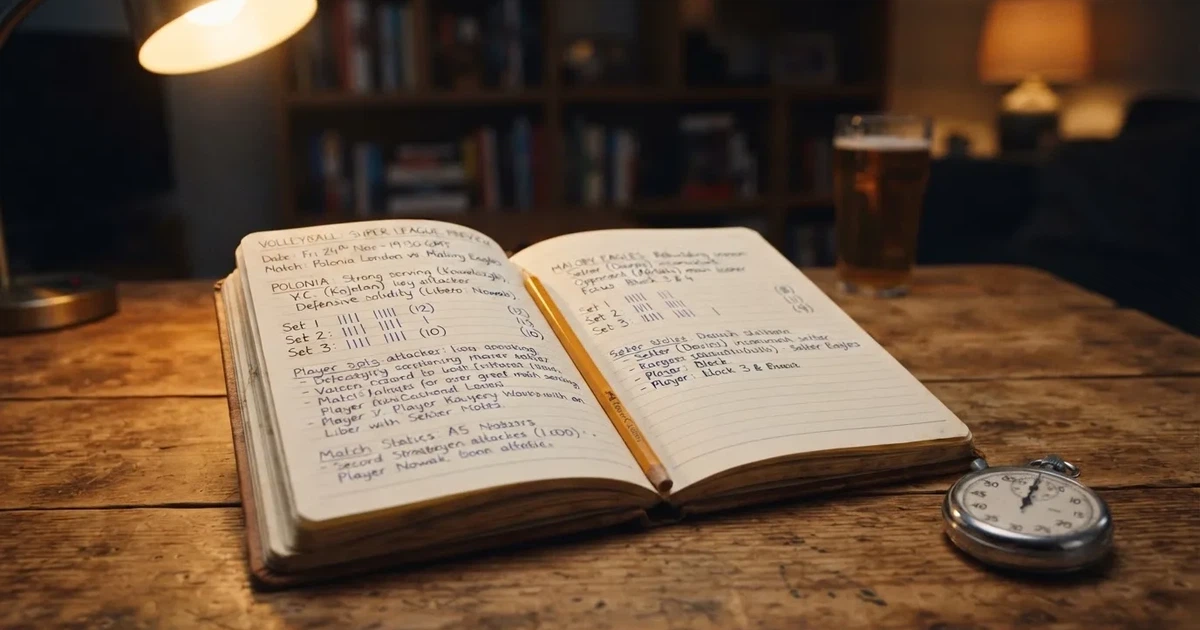
Volleyball is one of the smaller sports on a UK bookmaker’s site. That is partly a marketing fact (the Premier League takes the front page) and partly a market fact (the in-play feeds and outright lists are thinner than for football). It does not change what a tip is: a view that a price on the site is larger than the chance of the thing happening. Everything on this page is built around that single idea. The bookmaker is the other side of the trade; the margin is what it charges for being there; the tip is the bettor’s claim that the price is wrong in their favour.
This is a guide, not a tip sheet. Nothing here names a winner, a match, a set score or a price for a specific fixture, because nobody can know those in advance and a reader who acts on a predicted one loses real money on this page’s word. What follows is how a tip is built (form, line-ups, stats, the price the market has already set), what a value bet looks like once the margin is taken out, how the return on a winning bet is worked out, and the safety net of licences, limits and GAMSTOP that a GB-licensed bookmaker sits inside.
What a volleyball betting tip actually is, and why no tip is certain
A tip is a forecast. A tip in the betting sense is a forecast with a price attached, and the bet is the claim that the forecast is more likely than the price implies. The price the bookmaker offers is the only number that matters: it converts a probability into pounds, and a price of 2.00 (1/1) means the bookmaker is offering even money, which a fair market would price at a 50% chance of landing. The bookmaker’s margin sits inside that price, which is why the implied probabilities of all outcomes add up to more than 100% — the extra is the bookmaker’s edge. A value bet is a price where the bettor’s own estimate of the chance is larger than the implied probability inside the price, once the margin is removed.

No tip is ever certain. Volleyball sets can turn on a single net-touch or a challenge call; an injury to a key player between warm-up and first serve does not always appear on the team sheet; a five-set match exposes a lead in a way a three-set match does not. A tip is a probability statement dressed as a forecast. A punter who treats it as a certainty will eventually meet a price that loses, and the size of that loss is the stake they put down. Bankroll discipline — staking a fixed small percentage of a set bank on each tip rather than chasing losses — is what keeps a series of tips from becoming one bad week.
How a volleyball match is built, because the markets hang off the form
A volleyball team has six players on court and a match is the best of five sets; regular sets go to 25 points with a two-point lead and the deciding set to 15. A volleyball court measures 9 m × 18 m, with the net at 2.43 m for men and 2.24 m for women. Those numbers matter because they shape the markets a bookmaker prices: total points lines in a men’s match sit at a different band from a women’s match, the deciding set exists in the scoreline rather than the points, and a handicap on a set score works differently from a handicap on a single game. A punter who skips the sport’s structure ends up reading a price without the context that says whether the price is sensible.

The FIVB (Fédération Internationale de Volleyball) is the governing body of the sport and runs the international calendar that most bookmakers price off. Volleyball has been part of the Summer Olympics since 1964 (Tokyo), and beach volleyball was added in 1996 (Atlanta). The Olympics sit inside the four-year cycle that shapes beach-volleyball outright markets; the FIVB world championships and continental leagues shape the indoor calendar. A bookmaker’s volleyball offering in any given week is a function of where on that calendar the season happens to be.
Bonuses and free bets on volleyball — what the marketing line really costs
A welcome offer is the first thing a bookmaker puts in front of a new customer, and the marketing line is built to sound like a gain. It is worth reading the small print before claiming it, because the small print is where the cost lives.
Hollywoodbets’ sports welcome offer, as stated in the operator’s own terms, returns the stake as a free bet of up to £30 on the first qualifying losing accumulator for new players who deposit £10 or more by card. The qualifying accumulator has 3+ legs at odds of 4/1 or greater, settled within 7 days; one free bet per customer. The “free bet” is the qualifier — the stake is not paid back with a win, so a winning £30 free bet at odds of 4/1 pays £120 in profit, not £150. That is the standard arithmetic of a free-bet offer, and it is what the marketing line does not show.
Unibet’s sports welcome offer is “Get £40 in Free Bets when you bet £20”: a deposit and sports bet of £20 or more at minimum odds of 2.0 (1/1), with free bets expiring within 7 days of issue, for new GB customers using a debit card or instant bank transfer. The 7-day expiry is the constraint that bites first — a free bet left in the account past day seven is gone.
BetMGM’s sports welcome offer for new UK customers who deposit £10 or more and place a sports bet within 7 days is four £10 free bets (two football accumulators of 4+ selections and two sports multiples of 2+), valid for 7 days with minimum odds and opt-in required. The split into four small bets, each tied to a specific format, is the kind of structure a punter needs to weigh before opting in: one large free bet at the punter’s choice is a different offer from four small ones tied to accumulators the punter may not have wanted to place.
Spreadex’s new customer offer is £60 in free bets for a £10 fixed-odds bet, with the free bets usable across fixed odds and spread betting; the qualifying bet must be placed within 28 days of opening the account. Spreadex is regulated by the FCA for spread betting and by the Gambling Commission for fixed-odds betting, and spread-betting losses can exceed the deposit — a one-line caveat that matters more than the headline.
Across every offer here, the common shape is the same: a small qualifying bet, a free-bet reward whose stake is not returned, an expiry window in days, and a constraint on what market the free bet can be placed on. Reading those four lines is what separates a £40 headline from a £20 effective value. The free bet is the offer; the qualifier is the cost.
Live volleyball betting and cash out — momentum markets that move fast
Live betting on volleyball runs off the same engine as pre-match: a margin inside every line and an in-play feed that refreshes on every point. The difference is the cadence. A volleyball set ends in roughly half an hour, scores change on every rally, and a price that was 2.10 two points ago can be 1.80 now. That is what makes in-play attractive — a punter who reads momentum can sometimes beat the model — and what makes it expensive, because the bookmaker’s margin is often wider in-play than pre-match and the spread between back and lay prices on an exchange is widest when the action is fastest.
Cash out is the bookmaker’s offer to settle a bet before the match is over, at a price the bookmaker itself sets. Midnite’s site shows in-play markets alongside an acca builder, popular accas and price boosts with maximum-stake limits, and the cash-out button appears inside the bet slip on the same in-play feed. The mechanic looks like flexibility and is, on paper: a punter can lock in profit on a winning accumulator before the last leg, or cut a loss on one that has gone wrong. The cost is that the cash-out price is set by the bookmaker, not the market, and a margin sits inside that price too. A punter who routinely takes cash-out on winners is paying for the privilege of not watching the last leg.
In-play betting is legal in Great Britain under a GB licence, and the controls are the operator’s licence conditions and customer-protection duties rather than a statutory list. Some bookmakers run a thinner volleyball in-play offering than others; the brand that streams the match and runs a deep market on every set is the brand worth opening an account with for this sport alone.
Building a tip from form, line-ups and the price the market has already set
A tip that beats the market is built from three inputs the punter controls: form, line-ups, and the price. Form is recent results, ideally with the scoreline rather than the win/loss: a 3-1 win against a top-eight side is a different form line from a 3-2 win against a bottom-four side. Line-ups are who actually takes the court, not the squad list on the league site; in volleyball, the rotation of six is what shapes the match, and a missing setter or opposite is a different match from the same fixture with the full side. The price is the third input and the one the punter cannot influence. A punter who has done the form and the line-ups has a probability estimate; if the price on the site implies a smaller chance than that estimate, the bet is a value bet; if it implies a larger chance, the bet is not worth placing.
Stats software for beach volleyball exists; the kind of package a punter opens to look at side-out percentages, service points won and block effectiveness is the same kind a coach uses to set a rotation. The output is a probability per point, which a punter converts into a probability per set and a probability per match. The conversion is where the margin enters the picture: a probability converted into a price must round to a number the bookmaker would offer, and the gap between the punter’s fair price and the bookmaker’s offered price is the value.
Staking is the discipline. A punter who stakes a fixed percentage of the bank on each tip — 1% or 2% is the standard range — survives a losing streak because the bank is large enough to absorb it. A punter who doubles the stake after a loss, or “chases” with a larger bet to recover one, is not running a tip service; they are running a recovery strategy, and the recovery strategy is what empties the bank.
Bet types and odds — single, accumulator, handicap and the live line
Volleyball markets at a UK bookmaker come in a familiar shape: match winner (the most basic), set betting (predicting the exact 3-0, 3-1 or 3-2 scoreline), handicap (giving one side a set or a points start), total points (over/under a line the bookmaker sets), and in-play equivalents of all of the above. Beach-volleyball markets follow the same shape but run to two sets out of three, with a third set to 15.
A single is one selection. An accumulator — an “acca” in the British register — multiplies the odds of each leg into one price, and a four-leg acca at 2.00, 2.00, 2.00 and 2.00 returns roughly 16 times the stake if all four win. The catch is that all four must win, and the bookmaker’s margin compounds across the legs — a four-leg acca at fair odds would carry a smaller payout than the offered odds imply, because each leg carries its own margin. A bet builder, where the bookmaker lets the punter combine markets from one match into one price, works the same way: the combined price is built from each leg’s implied probability, and the margin sits inside the combination.
Each-way betting, the structure most punters meet on horse racing, splits a stake into a win part and a place part; the place part pays at a fraction of the win odds if the selection finishes in the place positions. Volleyball outrights (tournament winner) and season-long markets occasionally support each-way at the bookmaker’s discretion.
The odds are quoted in two forms on a UK site: fractional (5/1, 11/4, evens) and decimal (6.00, 3.75). The conversion is straightforward: a/b in fractional form is a ÷ b + 1 in decimal form, so 5/1 is 6.00 and 11/4 is 3.75. The decimal form is the easier one to read once the punter has done it a few times, because the return per £1 staked is the decimal number: £1 at 6.00 returns £6, of which £5 is profit.
The return on a winning bet is stake × odds in decimal form, and the net profit is stake × (odds − 1). A £10 single at 3.75 returns £37.50, of which £27.50 is profit. A £10 accumulator at 2.00 × 2.00 × 2.00 × 2.00 returns £160, of which £150 is profit, if all four legs win. The arithmetic is the same on every bet type; what changes is the odds.
Where the bookmaker’s margin sits — and what it looks like in the odds
The bookmaker’s margin is the cut the bookmaker keeps of every unit staked on a market, and it lives inside the prices. The way to see it is to convert the odds on every outcome of a market into implied probabilities and add them up. A two-way market at decimal odds of 1.90 / 1.90 (fractional 9/10) is the cleanest illustration.
The implied probability of one outcome at odds of 1.90 is 1 ÷ 1.90 = 0.5263, or 52.63%. Two such outcomes add up to 105.26%. The extra 5.26% above 100% is the margin — the slice of every pound staked that the bookmaker expects to keep. The payout share — what the bookmaker expects to pay back to customers across all outcomes — is the inverse: 100% − 5.26% = 94.74%, or 1 ÷ (1/1.90 + 1/1.90).
The wider the margin, the less of every pound comes back to the punter over a large number of bets. A 5% margin and a 10% margin look like a small gap in a single price; over a season of betting the difference is the difference between a bank that survives and one that does not. Three things drive the margin up: a market the bookmaker knows less about (a smaller sport, an exotic league), an in-play feed where the bookmaker’s algorithm is less sure, and a price boost that the marketing line advertises as a gain but the maths says is still inside the margin.
The point of doing the arithmetic is to see the margin. A punter who reads a price of 1.90 / 1.90 and knows the implied probability is 52.63% per side, not 50%, is the punter who can ask whether their own estimate of the chance is large enough to beat that. A punter who reads a price without converting it is reading a number, not a probability.
Sports, tournaments and the calendar that drives the markets
Volleyball has two disciplines and one calendar each. Indoor volleyball runs the FIVB world championship, the continental championships, the national leagues (Italy’s SuperLega, Russia’s Superliga, Turkey’s Sultanlar Ligi, Brazil’s Superliga, Poland’s PlusLiga and the domestic leagues of the countries whose clubs reach the Champions League), and the Olympics every four years. Beach volleyball runs the FIVB world tour, the continental tours, and the Olympics every four years since 1996.
The UK bookmaker’s volleyball list is the international calendar filtered by what the bookmaker’s trading team has priced. Premier events through the season are the ones with the deepest markets: the Italian league, the Turkish league, the Polish league, the Brazilian league, the Champions League, the FIVB world championship in the year it runs, and the Olympics in the year they run. Smaller-market events — a domestic cup, a lower division, a beach-volleyball qualifier outside the world-tour stops — appear on some sites and not others, and the price depth follows.
Outright markets on the tournament winner are the longest-running markets and the most volatile: a price set six months before the event moves sharply on every result through the group stage. Ante-post betting — backing an outcome before the event has started — pays the bigger prices because the uncertainty is larger; the cost is that the bet runs for months and the team the punter backed may not even qualify.
Futures markets on volleyball are thin at most brands, and the choice of bookmaker is the choice of whose market depth the punter wants. A brand that lists twenty outrights with prices that move on results is a different proposition from a brand that lists three outrights and stops updating them after the group stage.
The top ten volleyball betting sites for UK punters in 2026
The set below is not a ranking and not a recommendation. Every brand holds a Gambling Commission remote licence for Great Britain, every licence was checked against the Commission’s public register, and each review is built around what the operator’s own terms and site state. The order is the order of the table that follows.
1. Hollywoodbets — wide acca focus with a losing-bet safety net
Hollywoodbets holds a remote general betting standard licence (real events) with the Gambling Commission (account number 53028), held by Hollywoodbets International UK Limited. The brand’s sports welcome offer, as stated on its app store listing, returns the stake as a free bet of up to £30 on the first qualifying losing accumulator for new players who deposit £10 or more by card; the qualifying accumulator has 3+ legs at odds of 4/1 or greater, settled within 7 days. One free bet per customer.
The offer is built for the punter who places accumulators as a habit. A losing first acca of £10+ at the qualifying odds returns up to £30 in free bets, and the free bet stake is not paid back with a win. For a punter who already backs 3+ leg accas, the offer is a soft landing on a loss. For the single-stake punter, the offer is academic.
Verdict: worth opening for the punter who backs accas already and wants a downside cushion; not worth opening for a punter whose volleyball book is built on singles.
2. Unibet — long-established platform with deep in-play and safer-gambling tools
Unibet is licensed for remote general betting (real events) by the Gambling Commission (account 45322), held by Platinum Gaming Limited, Gibraltar; the UK site states the brand has operated since 1999. The sports welcome offer is “Get £40 in Free Bets when you bet £20”: a deposit and sports bet of £20 or more at minimum odds of 2.0 (1/1), with free bets expiring within 7 days, for new GB customers using a debit card or instant bank transfer.
The safer-gambling tools are the section of the site worth reading first: deposit limits, a Player Profile test, product restrictions and self-exclusion, with live chat support and links to BeGambleAware, GamCare, GAMSTOP, Gambling Therapy and the BGC. The 7-day expiry on free bets is the constraint.
Verdict: a reliable GB-licensed choice featuring a solid safer-gambling toolkit and a generous free-bet sign-up; an excellent option for punters seeking a unified platform for sports and racing with established support channels readily available.
3. Betfred — bet builder, sub switch and a Racing Post data layer
Betfred maintains a remote general betting standard licence (real events) as registered with Gambling Commission account 39544, held by Petfre (Gibraltar) Limited. The app features Bet Builder, Sub Switch, Racing Post data, Extra Places, live casino and bingo. The Racing Post data layer is a horse-racing feature; the Bet Builder and Sub Switch are the in-match tools a volleyball punter would actually use.
Verdict: a strong recommendation for those prioritizing Bet Builder features and in-play options; the detailed racing data is an extra resource for bettors who frequently switch between sports and horse racing.
4. Kalooki Sportsbook — instant withdrawals, BOG on racing and a smaller catalogue
Kalooki Sportsbook is operated by Kalooki Sports Book Ltd (company number 12938274), licensed by the Gambling Commission under account 57730, and is a GAMSTOP member. The brand advertises instant withdrawals by bank transfer within minutes, Best Odds Guaranteed on UK and Irish horse racing, in-play betting, daily boosts and extra place races.
Verdict: a compact and responsive choice for focused bettors; the BOG offer is exclusive to horse racing, so check your specific volleyball markets against the odds before wagering.
5. QuinnBet — clear free-bet terms and a maximum-odds cap
QuinnBet is authorized by a remote general betting standard licence (real events) via Gambling Commission account 61011, held by QuinnBet (Gibraltar) Limited. Free bets are valid for 7 days from credit and can be used on any market at odds of 1/2 (1.5) or greater, with maximum odds of 50/1; straight accumulators are allowed but Trixies, Patents and Yankees are not.
The free-bet terms are unusually clearly written. The minimum price of 1/2 (1.5) excludes the short-odds markets; the maximum odds of 50/1 caps the upside; the exclusion of Trixies, Patents and Yankees narrows the multi-bet formats a punter can place. A punter who reads the small print and plans around it gets the full value of the offer.
Verdict: an appealing pick for strategy-minded bettors; however, consider other platforms if your primary betting style involves high-frequency, short-odds singles or complex full-cover systems.
6. BetMGM — four free bets tied to specific bet formats
BetMGM is covered by a remote general betting standard licence (real events) registered with the Gambling Commission (account 39198), held by LeoVegas Gaming PLC. The sports welcome offer for new UK customers who deposit £10 or more and place a sports bet within 7 days is four £10 free bets (two football accumulators of 4+ selections and two sports multiples of 2+), valid for 7 days with minimum odds and opt-in required.
The four-bet split is the part to weigh. A punter who would have placed a £40 accumulator on football anyway gets value from two of the four; a punter whose sports book is built on volleyball singles gets less. The 7-day window and minimum-odds requirement apply to each of the four free bets separately.
Verdict: an ideal platform for football accumulators; less optimized for those whose main focus is solely on volleyball singles.
7. Spreadex — fixed odds plus spread betting under one licence
Spreadex operates under a remote general betting standard licence (real events) for fixed-odds betting, with Gambling Commission account 8835, held by Spreadex Limited. The brand is regulated by the FCA for spread betting and by the Gambling Commission for fixed-odds betting, and spread-betting losses can exceed the deposit — a one-line caveat that matters more than the headline.
The new customer offer is £60 in free bets for a £10 fixed-odds bet, with the free bets usable across fixed odds and spread betting; the qualifying bet must be placed within 28 days of opening the account. The 28-day window is generous against the 7-day standard elsewhere; the spread-betting caveat is the price of the larger headline.
Verdict: a versatile dual-platform choice for punters who appreciate combining fixed-odds and spread betting; ensure you are fully versed in spread-betting mechanics and terms before starting.
8. Swifty Sports — BOG, Cash Out and live streaming with Bet Builder on the way
Swifty Sports is licensed for remote general betting (real events) by the Gambling Commission (account 58957), held by Swifty Global (UK) Ltd. The brand offers Best Odds Guaranteed, Cash Out on markets including horse racing and football, daily price boosts, live streaming and in-play betting; Bet Builder is listed as coming soon.
Verdict: a solid all-rounder for BOG and Cash Out enthusiasts, though the Bet Builder feature is still evolving; always compare the current volleyball odds against other fixtures before finalizing your selections.
9. BetVictor — BOG, enhanced live race streaming and Smart Stats
BetVictor is covered by a remote general betting standard licence (real events) via Gambling Commission account 39576, held by BV Gaming Limited. The brand offers Best Odds Guaranteed on UK and Irish horse racing, enhanced live race streaming and a BetFinder feature for finding racing bets, alongside Smart Stats.
Verdict: an excellent research-led choice for bettors active in both horse racing and volleyball, especially those who rely on smart stats; note that BetFinder is specialized for racing.
10. Fafabet — BOG from 9am on race days
Fafabet is authorized for remote general betting (real events) with Gambling Commission account 57385, held by Taichi Tech Limited. Fafabet pays Best Odds Guaranteed on UK and Irish horse racing win and each-way bets from 9am on race days: if the starting price is bigger than the original price, the bigger odds are paid.
Verdict: a fit for the punter whose racing book matters and whose volleyball book is a smaller part of the overall activity; the BOG terms are clearly written.
How the licence picture looks across the ten
The table below shows the Gambling Commission remote licence number, the licence holder as the register names it, and what the operator’s own terms state on volleyball markets. The licence numbers and holders are taken from the Commission’s public register; the volleyball-market line is from each operator’s site or app listing.
| Brand | Gambling Commission remote licence and holder | What the operator’s own terms state on volleyball |
|---|---|---|
| Hollywoodbets | 053028-R-330019-013 · Hollywoodbets International UK Limited | Sports welcome offer returns stake as free bet of up to £30 on first qualifying losing accumulator (3+ legs, 4/1+, settled within 7 days); one free bet per customer |
| Unibet | 045322-R-324275-019 · Platinum Gaming Limited | “Get £40 in Free Bets when you bet £20” with min odds 2.0, free bets expire within 7 days; safer-gambling suite includes deposit limits, Player Profile test, GAMSTOP and links to BeGambleAware, GamCare, Gambling Therapy and the BGC |
| Betfred | 039544-R-319290-010 · Petfre (Gibraltar) Limited | App features Bet Builder, Sub Switch, Racing Post data, Extra Places, live casino and bingo |
| Kalooki Sportsbook | 057730-R-333396-005 · Kalooki Sportsbook Limited | Instant withdrawals by bank transfer within minutes; Best Odds Guaranteed on UK and Irish horse racing; in-play betting, daily boosts, extra place races; GAMSTOP member |
| QuinnBet | 061011-R-335683-004 · QuinnBet (Gibraltar) Limited | Free bets valid 7 days from credit, usable on any market at odds of 1/2 (1.5) or greater, maximum odds 50/1; Trixies, Patents and Yankees not permitted |
| BetMGM | 039198-R-319450-029 · LeoVegas Gaming PLC | Four £10 free bets (two football accas of 4+ legs, two sports multiples of 2+), valid 7 days, minimum odds apply, opt-in required |
| Spreadex | 008835-R-104580-022 · Spreadex Limited | £60 in free bets for a £10 fixed-odds bet, usable across fixed odds and spread betting, qualifying bet within 28 days; FCA-regulated for spread betting |
| Swifty Sports | 058957-R-334734-006 · Swifty Global (UK) Ltd | Best Odds Guaranteed, Cash Out, daily price boosts, live streaming and in-play betting; Bet Builder listed as coming soon |
| BetVictor | 039576-R-319370-028 · BV Gaming Limited | Best Odds Guaranteed on UK and Irish horse racing, enhanced live race streaming, BetFinder, Smart Stats |
| Fafabet | 057385-R-333191-006 · Taichi Tech Limited | Best Odds Guaranteed on UK and Irish horse racing win and each-way bets from 9am on race days |
Several brands can run under one licensee. The register lists the trading names and domains against each licence, and a single account number can carry more than one brand. A licence is not a ranking; it is a permission to take bets from customers in Great Britain under the Gambling Act 2005.
Where volleyball betting stands in the UK — the legal frame
The Gambling Commission is the regulator. The Commission licenses the whole commercial market under the Gambling Act 2005, which covers Great Britain — England, Scotland and Wales. Northern Ireland is outside the Act and runs on its own older legislation; a GB-licensed bookmaker is licensed for Great Britain and not for Northern Ireland as a matter of statutory wording, even where it accepts customers from a UK postcode.
The Gambling (Licensing and Advertising) Act 2014 brought remote operators into the point-of-consumption regime: any operator whose remote facilities are used in Great Britain needs a Commission licence wherever it is based. A Curaçao, Maltese or Gibraltar licence is not a substitute, and a brand based in Gibraltar that takes bets from a customer in London needs the GB licence on top of any other it holds. The Commission’s public register is the test of who holds one, and every brand in the table above was checked against it.
Identity verification is the first practical consequence of a GB licence. Since 7 May 2019, name, address and date of birth are verified before a customer can deposit or gamble — including with a free bet or bonus. No anonymous play exists at a licensed site, and source-of-funds requests at higher spend are normal under the money-laundering rules.
A GB licence has separate categories: remote general betting standard (real events), remote general betting standard (virtual events), remote general betting limited, remote pool betting and remote betting intermediary (the licence for betting exchanges). Volleyball markets at the brands above sit under the remote general betting standard (real events) category. Betting exchanges run under the betting intermediary licence, and their rates and rules are stated only from each exchange’s own terms.
No statutory cap on stakes in sports betting exists. Operators set their own maximum stakes and may restrict customers; the cap is commercial. No statutory list of permitted bets or markets exists either — an operator offers markets under its own rules and the Licence Conditions and Codes of Practice.
The safety net — GAMSTOP, limits, the £150 check and the help lines
GAMSTOP is the national multi-operator online self-exclusion scheme and a mandatory licence condition for online operators since 31 March 2020. Periods are six months, one year, five years, or five years with auto-renewal; after the minimum period the exclusion stays in place for a further seven years unless the customer asks GAMSTOP to remove it. GAMSTOP covers online sites and apps; betting shops use a separate service.
A financial vulnerability check (LCCP condition 3.4.4, in force since 30 August 2024) applies to licensed remote betting when a customer’s deposits minus withdrawals exceed £150 in a rolling 30 days (since 28 February 2025). It is a public-record check — bankruptcy or county court judgments, for example — not an income check and not a credit reference check. Financial risk assessments (the “affordability checks” of the press) are announced in a staged plan (Commission article of 7 July 2026), with no start date. The £150 trigger is the floor; above it, the operator asks the questions the regulation requires.
Deposit limits are an RTS-level requirement (RTS 12): operators must offer a gross deposit limit on a fixed time frame. The first changes have applied since 31 October 2025, a second phase was postponed to 30 September 2026, and whether it is live is not established. There is no state-set deposit or loss ceiling for betting — limits are the customer’s choice.
Help is outside the licence. GamCare runs the National Gambling Helpline; GambleAware funds treatment and education; NHS gambling clinics run in person and online; Gamblers Anonymous runs meetings. A punter who finds the betting taking more than the bank can afford has a list of named places to call.
Bonuses under the new rules — the 10x cap and the mixed-product ban
Promotion rules in force since 19 January 2026 cap wagering requirements on bonuses at 10x: a £10 bonus at 50x needed £500 of bets, and under the cap no more than £100. Whether the cap applies to free bets with no wagering condition, and any cap on the money value of a bonus, are not established.
Mixed-product promotions are banned: an offer that requires gambling on two or more product types — betting, casino, bingo and lottery in the same promotion, for example “bet on football to get free spins” — is not a permitted offer at a GB-licensed operator. The ban is a ban on the structure, not on the products; a punter can still place bets and play casino on the same account.
Advertising is not licensed by the Commission. Marketing runs through the CAP Code (non-broadcast) and BCAP Code (broadcast), enforced by the ASA, alongside the LCCP marketing conditions. CAP Code section 16 sets the social-responsibility tone: marketing must not be of strong appeal to under-18s, and no one who is or seems to be under 25 may be featured gambling or play a significant role. The “whistle-to-whistle” rule — betting ads not on TV from five minutes before a live sporting event to five minutes after it, before the 9pm watershed — is an industry code rather than statute, in force since 1 August 2019, with horse and greyhound racing excluded.
The Premier League clubs’ withdrawal of gambling sponsorship from the front of matchday shirts from 2026/27 is voluntary, not law; sleeves and hoardings remain. The operators are responsible for marketing by their affiliates.
Tax — what the punter pays and what the operator pays
The punter pays no tax on betting winnings in Great Britain. General Betting Duty is the operator’s tax on gross profits, currently 15%; from 1 April 2027 a new remote betting rate of 25% applies within it, while remote bets on UK horse racing, bets on self-service betting terminals in licensed premises, pool betting and in-person betting stay at 15% (HM Government policy paper of 26 November 2025). Until 1 April 2027 the remote rate stays at 15%, and whether operators pass duty on through odds is not established. Spread betting has its own rates (3% financial, 10% other).
A professional gambler should ask HMRC or an adviser. The line between a punter and a professional is the line HMRC draws, not the line a betting site draws.
Offshore — what a non-GB brand costs the punter
A GB licence is compulsory at the point of consumption. Providing gambling facilities in Great Britain without the licence the Act requires is an offence under section 33 of the Gambling Act 2005 — aimed at the operator, with penalties on summary conviction up to 51 weeks’ imprisonment, a fine up to level 5, or both; six months in Scotland. No offence aimed at a customer who merely bets on an unlicensed site was found.
The cost to a customer is the loss of protection. No GAMSTOP coverage. No Commission complaints route. No approved dispute-resolution body. No British consumer redress if funds are withheld. Not bound by the 10x bonus cap. Not bound by the £150 vulnerability check. Enforcement is disruption rather than blocking: cease-and-desist notices, search-engine referrals, work with registrars, hosts and payment providers; the Commission has been given, or is about to receive, court-order DNS blocking powers — never write that ISP blocking is in operation.
The honest framing: a licensed site means checks, limits, GAMSTOP and the 10x bonus cap, but also verification before the first bet. An unlicensed site means none of those protections and the possibility of funds being held without recourse. Neither is “the safe choice” by default.
Crypto and anonymity — what a UK punter can and cannot do
A British named-account rule, a state list of permitted payment methods and any rule for or against cryptocurrency deposits at licensed operators are not established. The structural fact is that identity verification before the first deposit is a GB licence condition, and a licensed operator cannot take a deposit from a customer whose name, address and date of birth have not been verified. Cryptocurrency deposits at a licensed site are not impossible — some brands list them — but they sit inside the same verification regime as any other payment method, and a wallet address does not stand in for a verified identity.
Pseudonymous play, where the punter’s identity is a wallet address and nothing else, is not available at a GB-licensed operator. It is available at unlicensed sites; the price is the loss of protection listed in the offshore section above. The trade is real, and a punter who makes it on purpose has decided which side of it they are on.
The ledger transparency of a public blockchain — every transaction visible to anyone with the block explorer — sits oddly next to the licensed-operator requirement to verify the customer’s identity. The two regimes are not designed to fit together, and a punter who wants both is asking for one or the other to give way.
Payment methods at a glance — debit cards, bank transfers, e-wallets and the credit-card ban
Credit cards are banned for gambling in Great Britain (since 14 April 2020, LCCP condition 6.1.2), including credit-card-funded payments through an e-wallet. A punter who tries to fund a deposit with a credit card at a GB-licensed site will be declined; a punter who funds an e-wallet with a credit card and then deposits from the e-wallet will also be declined. Debit cards and bank-based payments are not covered by the ban.
E-wallets, instant bank transfer and the standard debit-card rails are the common methods at the brands above. Spreadex, the spread-betting brand, takes a £10 fixed-odds bet to unlock £60 in free bets usable across fixed odds and spread betting. The payment method is the customer’s choice within the licensed-operator rails, and a punter who values withdrawal speed will see that Kalooki Sportsbook advertises instant withdrawals by bank transfer.
The punt who sets a deposit limit at a licensed site has set the limit against the same payment method the operator uses for withdrawals, and the punter who withdraws by bank transfer is the punter whose withdrawals are fastest at brands that support it.
The bookmaker’s margin — the worked example
The cleanest illustration of the margin is a two-way market at decimal odds of 1.90 / 1.90 (fractional 9/10). The implied probability of one outcome is 1 ÷ 1.90, which is 0.5263, or 52.63%. Two such outcomes add up to 105.26%. The margin is the 5.26% above 100% — the slice of every pound staked that the bookmaker expects to keep across all outcomes of the market. The payout share, the inverse, is 100% − 5.26% = 94.74%.
The margin shows up as a band, not a single figure. A two-way market at 1.90 / 1.90 carries a margin of about 5.26%; the same shape of market at 1.85 / 1.85 carries a margin of about 8.11%; a three-way market (1X2) on a volleyball match winner at typical prices carries a margin in the 7–10% band; a same-game acca or bet builder built from three selections typically carries a compounded margin in the 15–25% band, because each leg’s margin multiplies into the combination. The condition that drives the band is the number of outcomes and the type of market: a two-way match winner is the cheapest to bet on; an exotic outright or a deep same-game acca is the most expensive.
The point of the band is that the margin is not a property of one brand; it is a property of the market and the price. A punter who reads the price and converts it to a probability is the punter who knows what the margin is on the bet they are about to place.
What a winning bet returns, in plain sentences
A £10 single at decimal odds of 3.75 returns £37.50, of which £27.50 is profit. A £10 single at decimal odds of 2.50 returns £25, of which £15 is profit. A £10 single at decimal odds of 1.50 returns £15, of which £5 is profit. The return is stake × odds; the profit is stake × (odds − 1).
A £10 accumulator at 2.00 × 2.00 × 2.00 × 2.00 returns £160 if all four legs win, of which £150 is profit. The accumulator’s odds are the product of the legs’ odds, and the bookmaker’s margin is compounded across the legs.
A £10 each-way bet splits into a £5 win part and a £5 place part. The place part pays at a fraction of the win odds — typically a quarter or a fifth — if the selection finishes in the place positions. The total stake is £10, and the total return can be the win part alone, the place part alone, both, or neither.
The arithmetic is the same on every bet type. What changes is the odds. The punter who knows the return before placing the bet is the punter who knows what the bet is worth.
Where the page’s guide ends, and where the punter’s work starts
A guide sets out the shape of the question and the tools that answer it. The shape of the question is: is the price on the site larger than the chance of the thing happening, once the margin is taken out? The tools are form, line-ups, stats, the price, and a staking plan that survives a losing streak. The punter’s work is the form-reading, the price-reading and the staking; the bookmaker’s work is the margin and the in-play feed.
No tip is ever certain. A punter who bets as if any tip were certain eventually meets a price that loses, and the size of that loss is the stake. The licensed-operator safety net — GAMSTOP, deposit limits, the £150 vulnerability check, the help lines — sits behind every account at every brand above. The offshore option sits outside it. A punter who has decided which side they are on has decided most of what this page has to say.
Frequently asked questions
How do you bet on volleyball?
A bet on volleyball is a stake on an outcome the bookmaker has priced: match winner, set score, handicap, total points or an in-play equivalent. Pick the market, pick the outcome, set the stake, confirm the bet on the slip. The return on a win is stake × the decimal odds; the profit is stake × (odds − 1). At a GB-licensed site, identity is verified before the first deposit and the bet settles through the bookmaker’s own system; the Commission’s public register is the test of who holds the licence.
What is a value bet and why is no tip ever certain?
A value bet is a price whose implied probability is smaller than the bettor’s own estimate of the chance of the outcome, once the margin is removed. The test is the bettor’s estimate against the price, not the price alone. No tip is ever certain because the model — form, line-ups, stats — never captures everything that happens on the day, and the bookmaker’s margin sits inside the price to begin with. A tip is a probability statement, and a probability statement is not a certainty.
What is the bookmaker’s margin and how can it be seen in the odds?
The margin is the slice of every pound staked that the bookmaker keeps across all outcomes of a market. To see it, convert each outcome’s odds to an implied probability (1 ÷ decimal odds) and add them up. A two-way market at 1.90 / 1.90 has implied probabilities of 52.63% each side, adding to 105.26%. This total (105.26%) is the overround. The margin, which represents the bookmaker’s theoretical take, is 5.0%. The payout share is 95.0%. The wider the margin, the more of every pound the bookmaker keeps over a large number of bets.
How is the return on a bet worked out from the stake and the odds?
The return on a winning single is stake × decimal odds; the profit is stake × (odds − 1). A £10 bet at 3.75 returns £37.50, of which £27.50 is profit. For a combination bet the odds of the legs multiply into one price; a £10 acca at 2.00 × 2.00 × 2.00 × 2.00 returns £160 if all four legs win, of which £150 is profit. The arithmetic is the same on every bet type; what changes is the odds.
Can you bet on volleyball from Great Britain, and which bookmakers are licensed?
Yes. Any operator taking bets from customers in Great Britain needs a Gambling Commission remote licence under the Gambling (Licensing and Advertising) Act 2014. The brands covered on this page — Hollywoodbets, Unibet, Betfred, Kalooki Sportsbook, QuinnBet, BetMGM, Spreadex, Swifty Sports, BetVictor and Fafabet — hold such a licence, each verified against the Commission’s public register. A licence is not a recommendation and not a ranking; it is permission to take bets under the Act.
US & other team sports – systembetsguide.com
Content created by the «systembetsguide.com» team
