
What is a Super Heinz bet and how does it pay out
 Available in US
A Super Heinz is a fixed-structure bet that takes seven selections and splits them into every possible combination of two or more. There are 120 bets in a Super Heinz, ranging from 21 doubles at the bottom to one seven-fold accumulator at the top, with 35 trebles, 35 four-folds, 21 five-folds and 7 six-folds in between. The whole point of the bet is breadth: a punter wins something as long as at least two of the seven selections win, and a single loser does not sink the whole stake, the way a straight accumulator would.
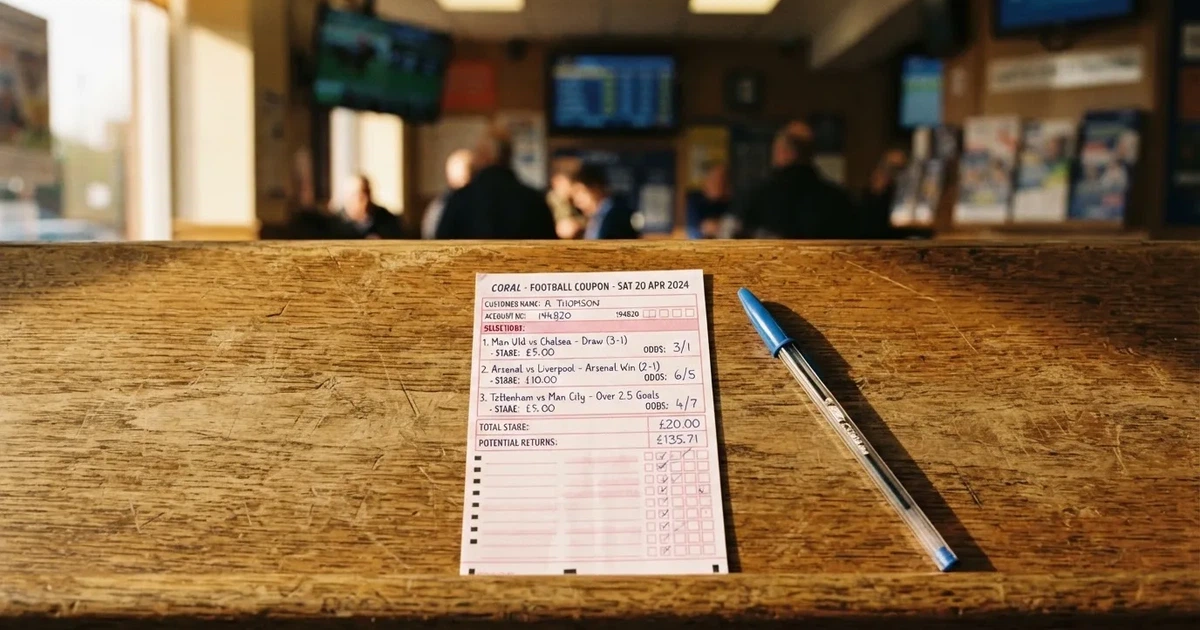
This page sets out what a Super Heinz actually is, how it is settled when a selection is void, how the return is worked out from the stake and the decimal odds, and which Gambling Commission-licensed bookmakers offer it. The numbers below are worked from illustrative odds and a stated stake, not from a quoted price. They show the shape of the payout, not a prediction. Currency figures use £. As of 30 October 2026, the figures and operator entries were checked against the Gambling Commission’s public register.
Why a Super Heinz is a breadth bet
A Super Heinz covers seven outcomes and asks whether, on a given afternoon, enough of them win for the multiple bet to clear a threshold. It is one of a family of “full-cover” bets that an accumulator-style punter moves up and down depending on how many selections they have settled on: a Trixie over three selections, a Patent over three, a Yankee over four, a Lucky 15 over four, a Canadian over five, a Heinz over six, a Super Heinz over seven and a Goliath over eight. The number of bets grows quickly with each step.

| System | Selections | Total bets |
|---|---|---|
| Trixie | 3 | 4 |
| Patent | 3 | 7 |
| Yankee | 4 | 11 |
| Lucky 15 | 4 | 15 |
| Canadian | 5 | 26 |
| Heinz | 6 | 57 |
| Super Heinz | 7 | 120 |
| Goliath | 8 | 247 |
A Super Heinz sits one rung above the Heinz and one rung below the Goliath. A punter who likes the structure but wants an extra leg of cover drops down to a Heinz; a punter with an eighth selection and a larger bank moves up to a Goliath. The structure itself does not change: every combination of two or more selections is bet on, and every combination including at least one loser loses in full.
The key word is “full-cover”. A full-cover bet is, in the British bookmaking definition, every available multiple over a given number of selections. The word “available” is doing real work: it excludes singles, which means a Super Heinz does not pay out if only one of the seven selections wins. With one winner from seven and 120 bets on the board, every one of those 120 bets includes at least one loser, and the whole stake is lost. Two winners from seven starts the payout, because the 21 doubles each contain two selections and a double with both winners pays.
What a Super Heinz actually contains
The 120 bets break down by size as follows:

| Bet size | Number of bets |
|---|---|
| Doubles | 21 |
| Trebles | 35 |
| Four-folds | 35 |
| Five-folds | 21 |
| Six-folds | 7 |
| Seven-fold | 1 |
| Total | 120 |
The shape is a Pascal-triangle distribution, which is why the count peaks in the middle at 35 and tapers at both ends. There are no singles, by construction. The single biggest bet is the seven-fold accumulator at the bottom of the structure: all seven selections must win, in any order, for that one bet to pay.
A unit stake of £2 per line, which is the typical minimum on a full-cover bet at a licensed UK bookmaker, puts £240 of stake on the seven selections. A £1 unit stake halves that to £120. The choice between the two is a bankroll decision, not a structure decision, and the return scales linearly with the unit stake for any given set of odds.
How a Super Heinz is settled when a selection is void
Void rules are the part of a full-cover bet that catches out first-time users. A non-runner, a postponed match, a player withdrawal in tennis, an abandoned horse race that is not rescheduled: each of these voids the affected selection rather than losing it. Sky Bet’s rules, which match the industry wording most licensed UK bookmakers use, state that when a selection in a multiple bet is void the bet drops to the next lowest multiple: a treble becomes a double, an accumulator settles on the remaining selections.
Applied to a Super Heinz, the rule has two visible effects. First, the total number of live bets in the slip reduces by the count that included the void selection. If one of the seven legs is void, every multiple that contained it is dead. Second, the surviving bets keep their original structure at the next rung down, which means a bet that was a four-fold with seven live selections may now be a three-fold treble. A punter does not have to do the arithmetic by hand: the bookmaker’s bet slip recalculates the slip in real time when a selection goes non-runner, and the new structure is the one the bet settles on.
A withdrawn selection is not a lost one, but it does shrink the slip. A Super Heinz with one void leg becomes effectively a 57-bet Heinz on six selections, with the same unit stake producing a smaller total outlay. A Super Heinz with two void legs collapses further, into a 26-bet Canadian on five. Three voids and the structure drops to a Lucky 15 on four. By the time four selections have been voided, only a handful of bets survive.
How the return is worked out from the stake and the odds
A Super Heinz return, like any accumulator return, is the unit stake multiplied by the odds of the bet that wins. For a double on selections A and B at decimal odds of 1.50 and 2.00, the price of the double is 1.50 × 2.00 = 3.00, and a £10 stake returns £30, of which £20 is profit. For a treble on A, B and C at 1.50, 2.00 and 2.50, the price is 1.50 × 2.00 × 2.50 = 7.50, and £10 returns £75, of which £65 is profit. The same rule applies whether the bet is two legs or seven, and it applies separately to every one of the 120 lines in a Super Heinz.
Two consequences follow. The return on a Super Heinz is the sum of the returns on the surviving bets, not the average of them. A punter who has two winners from seven does not win one 21st of the maximum: they win whatever the 21 doubles happen to return, and nothing from any larger multiple. Second, the variance is large. A straight accumulator over seven selections either pays a large multiple or pays nothing; a Super Heinz pays smaller amounts more often, and a single seven-fold win delivers a return that dwarfs every other line on the slip.
A worked example with illustrative odds makes the shape clearer. Consider seven selections priced at 1.50, 2.00, and 2.50 in varying distributions, assuming £10 per line on every bet. If all seven win, the seven-fold alone returns £10 multiplied by the product of all seven prices, resulting in a return well into the thousands. If five of seven win, only the doubles, trebles and the single five-fold among the surviving combinations pay. If two of seven win, only one of the 21 doubles pays, and the slip returns the price of that double on the £10 stake.
The arithmetic is straightforward; the discipline is reading the slip correctly. The bookmaker’s bet slip shows both the unit stake and the total stake, and a punter who clicks £2 per line on a Super Heinz commits £240, not £10. That is the figure to check before confirming.
What the bookmaker’s margin costs inside the odds
Every decimal price carries a margin, and the margin is the cut the bookmaker takes of every pound bet on the market. For a two-outcome market at odds 1.50 and 4.00, the payout share is 1 ÷ (1 ÷ 1.50 + 1 ÷ 4.00) = 1 ÷ (0.6667 + 0.25) = 1 ÷ 0.9167 = 1.0909, or 109.09%. The margin is 1 − 1.0909 = −0.0909, which means a margin of about 9.09%. A three-outcome 1X2 market at decimal odds 2.10, 3.40 and 3.60 pays out 1 ÷ (1 ÷ 2.10 + 1 ÷ 3.40 + 1 ÷ 3.60) = 1 ÷ (0.4762 + 0.2941 + 0.2778) = 1 ÷ 1.0481 = 0.9541, or 95.41%, and the margin is 4.59%. The lower the margin, the more the punter keeps of every pound staked.
A Super Heinz compounds the margin on every leg, which is part of why the headline seven-fold return is so large. The seven-fold price is the product of the seven individual prices, and so is the margin on the seven-fold. A market with a 5% margin on each leg, multiplied together seven times, lifts the effective margin on the seven-fold to around 30%, before the bookmaker’s own commission on the multiple leg. The punter is paid on the upside of the seven-fold accumulator and pays the bookmaker’s margin on every leg, and both happen on the same bet.
The practical reading is simple. A Super Heinz is a structure, not an edge: the structure decides how many bets are on the slip, while the odds of each selection decide the shape of the payout. A punter who wants the structure to do real work chooses selections whose margin is tight, where each leg pays close to its true odds, and accepts that a high-margin leg on the seven-fold costs more than it looks.
Where a Super Heinz sits in a UK punter’s toolkit
A Super Heinz is a higher-stakes structure than the more familiar Lucky 15 or Yankee. At £10 per line, the total stake on 120 bets is £1,200, which is a meaningful chunk of a recreational bankroll. The smaller structures – the Patent, the Lucky 15, the Heinz – are entry points to the same idea: every multiple, no singles. A Super Heinz rewards a punter who is confident enough in five, six or seven of their selections to want exposure across the whole matrix.
The structure suits the punter who treats a Saturday of football or a day’s racing as a portfolio, not a series of single bets. A punter who backs one match a week has no reason to use a Super Heinz; a punter who backs a dozen has every reason. A Super Heinz also suits the punter who wants the long-tail upside of a seven-fold without giving up the consolation of a working double on a bad day.
It does not suit the punter who wants every selection to win. With seven selections on a Super Heinz, the realistic base rate of all seven winning on an independent bet is the product of the seven individual win probabilities, and at average odds that product is small. The structure is, by design, a portfolio that pays a meaningful return when several legs win and pays the full headline only when all seven win.
Who can place a Super Heinz in Great Britain
A Super Heinz is offered by every major licensed UK bookmaker; it is a standard structure on the bet slip and does not require a separate request. The legal question is not the bet but the bookmaker: in Great Britain, a bookmaker serving customers in this country needs a Gambling Commission licence, regardless of where the operator is based. The relevant law is the Gambling Act 2005, which covers England, Scotland and Wales, amended by the Gambling (Licensing and Advertising) Act 2014 to make the licence a point-of-consumption requirement. Northern Ireland is outside the 2005 Act and runs on a different regime, so a “GB licence” means England, Scotland and Wales only.
The Commission’s public register, hosted on the Commission’s own site, is the whole test of whether a brand holds a licence. It can be searched by business name, trading name, domain or account number, and the entry shows the licence categories the operator is permitted to operate under, plus the operating company behind the brand. A licensed operator may use either a .com or a .co.uk domain, so the domain itself is not the proof; the register entry is.
Each featured operator in the comparison below is listed on that register, in the category “remote general betting standard (real events)”, which is the standard licence category for fixed-odds online sports betting in Great Britain. Several brands run under a single licence holder: Ladbrokes and Coral, for example, sit with LC International Limited; Paddy Power and Betfair share a parent. A brand in a comparison is not necessarily its own licence holder, and the comparison writes the operator and the licence holder as two distinct entries.
The minimum age to bet is 18, in person or online. Since 7 May 2019, licensed remote operators verify a customer’s name, address and date of birth before the first deposit or first bet, including a free bet or bonus; no anonymous play is offered at a licensed site.
What the licence does and does not guarantee
A Gambling Commission licence is the operator’s permission to take bets in Great Britain under the Act. It is not a guarantee of payouts and not a kitemark on the operator’s odds. The Commission enforces the Licence Conditions and Codes of Practice, which set out the rules on social responsibility, anti-money-laundering checks, financial vulnerability checks, marketing and the technical standards for remote gambling. A breach of those conditions is a regulatory matter, not a consumer complaint.
For a punter, the practical effect of the licence is four things. First, the operator’s site is on the Commission’s public register, so its existence and licence categories can be checked. Second, the operator is part of GAMSTOP, the national self-exclusion scheme, so a punter who has self-excluded can stay excluded across every licensed operator with one registration. Third, the operator is bound by the Commission’s complaint and dispute-resolution rules: an unresolved dispute can be taken to an approved alternative dispute resolution provider. Fourth, the operator is subject to the marketing and bonus rules the Commission enforces, including the 10x cap on bonus wagering requirements and the ban on mixed-product promotions that took effect on 19 January 2026.
The licence does not set the odds, the margin, the stake limit or the settlement rules; those are the operator’s own decisions under its licence conditions. A punter who wants to compare those reads each operator’s terms page, not the Commission’s register.
Why the Commission’s register is the place to check a bookmaker
The Commission’s public register is searchable by name, trading name, domain or licence number, and the entry shows the operating company, the licence categories and the licence status. A bookmaker that holds a current entry on the register for “remote general betting standard (real events)” is licensed for fixed-odds sports betting in Great Britain. A bookmaker that is not on the register, or is on it only for a different category, is not. The register is the whole test because the Act is built around it: operating without the licence is an offence under section 33 of the 2005 Act, aimed at the operator, with a sentence of up to 51 weeks’ imprisonment, a fine up to level 5, or both (six months in Scotland).
The register is also the place to check the operating name. “BetMGM” appears in app stores as the brand name; the operating company on the register is LeoVegas Gaming PLC. “Ladbrokes” appears as the brand; the operating company is LC International Limited. Both are licensed; the brand is the trading name, the operating company is the licence holder. A punter who sees only the brand has the information that matters at the betting desk; a punter who wants to check the licence has the operating company and account number.
What a non-licensed bookmaker costs the punter
A bookmaker that serves customers in Great Britain without a Commission licence is operating illegally under section 33 of the 2005 Act. The Commission treats it as a matter for the operator, not the customer: there is no offence aimed at a customer who simply places a bet on an unlicensed site. What the customer loses is the protection the licence provides. A non-licensed site is not part of GAMSTOP, so a self-exclusion does not apply. It is not bound by the Commission’s approved alternative dispute resolution route, so an unresolved dispute has no British escalation. The 10x bonus cap, the £150 financial vulnerability check, the credit-card ban, the identity-verification rules and the source-of-funds rules all apply only at licensed sites. None of those protections is automatic offshore.
Enforcement against unlicensed operators runs through cease-and-desist notices, search-engine referrals, work with domain registrars, hosts and payment-service providers, and (announced) court-order DNS blocking powers. It does not run through ISP-level blocking of customers. A punter who chooses an unlicensed site chooses that gap in protection.
The honest framing is the right one. A licensed site means verification before the first bet, GAMSTOP coverage, the bonus cap, the vulnerability checks, and a Commission complaint route. An unlicensed site means none of those, and a real risk that funds are withheld without recourse. Neither is “the safe choice” by default; the licensed site is the regulated one.
Responsible gambling: the practical limits
Responsible gambling is not a sentence at the bottom of a betting guide. In Great Britain it is a set of licence conditions that operators must meet, and the conditions have sharpened over the last two years in ways that change the punter’s experience.
GAMSTOP is the national multi-operator self-exclusion scheme. Registration is free and runs for six months, one year, five years, or five years with auto-renewal; after the minimum period the exclusion stays in place for a further seven years unless the punter asks GAMSTOP to remove it. GAMSTOP covers online sites and apps; betting shops use a separate service. Online registration with a licensed operator requires the operator to check GAMSTOP before the first deposit, so a self-excluded punter cannot simply move to a different licensed brand. The scheme is mandatory for online operators since 31 March 2020.
A financial vulnerability check applies to licensed remote betting when a customer’s deposits minus withdrawals cross £150 in a rolling 30 days. The check has been in force since 28 February 2025 and runs against public records – bankruptcy registers, county court judgments – not a credit reference. It is not an income check. A financial risk assessment (the “affordability check” in the press) is at a higher threshold and was announced on 7 July 2026 with no start date; the description in current terms is “announced, staged, no start date”. Deposit limits are the punter’s choice: operators offer gross deposit limits on a fixed time frame, with the first regulatory changes live since 31 October 2025 and a second phase postponed to 30 September 2026.
The help lines exist. GamCare runs the National Gambling Helpline; GambleAware signposts treatment; Gamblers Anonymous runs peer support meetings. NHS gambling clinics offer treatment in several regions. A punter who feels the betting has moved from entertainment to something else has somewhere to call.
Marketing and bonus rules since 19 January 2026
The Commission’s bonus and marketing rules, in force since 19 January 2026, are the most concrete limit on what an operator can offer. Wagering requirements on a bonus are capped at 10x: a £10 bonus at 50x wagering – meaning £500 of qualifying bets – is no longer permitted; under the cap, no more than £100 of qualifying bets is required to clear the bonus. Mixed-product promotions – an offer that requires gambling on two or more product types (betting and casino, betting and bingo, betting and lottery) – are banned. “Bet on football to get free spins” is the textbook example of what is no longer allowed.
The cap on wagering does not address every offer. A free bet whose stake is not returned – the standard “free bet” structure – has no wagering requirement in the same sense, and whether it falls under the cap is not established. A price boost or enhanced odds has no wagering requirement either. The cap does not set a ceiling on the money value of a bonus: a £500 bonus at 10x is £5,000 of qualifying bets, which is allowed under the cap. The Commission is enforcing the multiplier and the mixing rule, not the size of the headline.
The advertising rules are separate. The CAP Code (non-broadcast) and BCAP Code (broadcast), enforced by the ASA, set the standards for marketing content. Section 16: marketing must be socially responsible, must not be of strong appeal to under-18s, and no one who is or seems to be under 25 may feature gambling or take a significant role (with an exception for marketing placed where a bet can be made directly). That rule is about who may appear in an advert, not who may bet.
Tax on a Super Heinz win
A punter in Great Britain pays no tax on betting winnings. The tax is paid by the operator. General Betting Duty is the operator’s tax on gross profits from betting, currently 15% on most bets. From 1 April 2027, a new remote betting rate of 25% applies within that duty for remote bets other than on UK horse racing, self-service betting-terminal bets in licensed premises, pool betting and in-person betting, which stay at 15%. Until 1 April 2027 the remote rate stays at 15%. The rate is the operator’s problem; the punter’s return is the return on the bet slip.
Whether operators pass the duty on through tighter odds is not established, and the framing here is the safe one: the duty is paid by the operator, the punter sees the published odds, and the punter keeps the return. A professional gambler is a different case and should ask HMRC or an adviser, because tax treatment depends on whether the activity is treated as a trade. This page is not tax advice.
Spread betting, where the customer bets per-unit movement of a price rather than on the outcome, sits outside General Betting Duty and has its own rates (3% financial, 10% other). A punter who uses a spread-betting firm is on a different product and a different tax base.
Payment rules at a licensed UK bookmaker
Credit cards are banned for gambling in Great Britain. The rule, in force since 14 April 2020 and set out in LCCP condition 6.1.2, covers direct credit-card payments and credit-card-funded payments through an e-wallet: a punter who tops up an e-wallet from a credit card and then deposits from the wallet is still using a credit card to gamble. Debit cards and bank-based payments are not covered by the ban. The ban is at licensed operators only; an unlicensed site is not subject to it.
Identity verification before the first deposit means no anonymous play at a licensed site. The check covers name, address and date of birth. A punter who is asked for source-of-funds documents at a higher spend is being asked under the anti-money-laundering rules, not on a whim; the rules apply to remote operators the way they apply to banks.
There is no state list of permitted payment methods and no rule for or against cryptocurrency deposits at licensed operators. The Commission’s regime does not list methods, and each operator publishes the methods it accepts in its own banking page. A punter who needs a specific method reads the operator’s terms.
Strategy: does the structure help the punter?
A Super Heinz is a structure, not an edge. The structure decides how many bets are on the slip; the edge lives in the odds of each selection, not in the multiplication. A punter who picks seven selections at true odds of 2.00 each, with no margin, faces a fair game on each leg and a compounding fair game on the seven-fold; the same punter at a 5% margin on each leg sees a 5% margin on each double, treble and four-fold as well, multiplied through. The structure does not erase the margin; it scales it.
What the structure does is widen the win distribution. A straight accumulator pays either a large multiple or zero; a Super Heinz pays smaller amounts on more outcomes. A punter whose model finds 1.80 true odds on a horse race and 4% margin in the market is not better served by a Super Heinz than by seven singles: in fact, seven singles at a £10 stake cost £70, and the Super Heinz at £2 per line costs £240 for a smaller payout on the same selections. The structure pays for the breadth in extra stake.
The strategy question a punter should ask is whether seven selections are correlated. A Super Heinz on seven horses from seven different races is approximately independent; a Super Heinz on seven football teams in seven different matches is approximately independent. A Super Heinz on seven matches from the same league, on a day when one team wins the title and every other match is dead rubber, is correlated, and the structure pays more for an outcome that is more likely to wipe out the slip. The punter’s edge depends on the independence of the legs, not on the structure of the bet.
What a Super Heinz looks like with a £2 unit stake
At £2 per line, a Super Heinz costs £240 in total stake. The breakdown remains consistent regardless of the unit stake. The choice between £1 per line and £2 per line is a bankroll consideration, and a £2 unit stake on a £240 slip is typical for a recreational punter with a multi-leg day planned.
The illustrative calculation here takes three reference prices: 1/2 (decimal 1.50), evens (decimal 2.00) and 6/4 (decimal 2.50). These are not quoted prices for any specific event; they are reference points to show the arithmetic. With seven selections distributed across these prices, the price of the seven-fold is the product of the seven decimal odds; the price of any smaller multiple is the product of the odds of the selections that make it up. The return on each line is the unit stake multiplied by that price.
A worked band for the seven-fold is illustrative. With seven selections at the reference prices (1.50, 1.50, 2.00, 2.00, 2.50, 2.50, 2.50), the seven-fold price is 28.125, so the seven-fold return on £2 is £56.25. At a £10 unit stake the seven-fold returns £281.25. The band depends on the unit stake and the price distribution; the figure is illustrative, not a quoted payout.
The point of the arithmetic is not the number. The arithmetic shows what a Super Heinz costs and what shape the return takes, and a punter who understands both can decide whether the structure is right for their day.
Tips for reading a Super Heinz slip
Three small habits catch the most common mistakes. First, read the unit stake, not just the total stake. A £2 per line slip at 120 lines costs £240; a £10 per line slip at 120 lines costs £1,200. The two are different products and the total stake is the figure that lands on the bank. Second, read the price of each selection before confirming. A Super Heinz on seven short-priced favourites at decimal odds of 1.20 each compounds to a seven-fold price of 1.20 to the power of 7, which is 3.583, and the headline return at £10 per line is £358.30 – a tenth of what the same structure would pay on longer-priced selections. The price matters more than the structure on a long accumulator leg.
Third, check the void rule on the operator’s terms page before placing. Most licensed UK bookmakers use the “drops to the next lowest multiple” rule, but the wording differs; Sky Bet’s terms state it explicitly, and other operators vary. A punter whose slip has a non-runner wants to know in advance how the slip recalculates.
A Super Heinz is also a bet that punishes a lazy staking plan. A punter who goes in at £10 per line without thinking about the bankroll has committed £1,200 on 120 bets; a single losing day without any return is a tenth of a recreational bank. The structure rewards a punter who plans the unit stake to the bank.
Top 10 UK bookmakers for a Super Heinz
The ten operators below are listed on the Gambling Commission’s public register under “remote general betting standard (real events)” and offer the Super Heinz as a standard structure on the bet slip. The comparison covers each operator’s licence, the headline feature relevant to a Super Heinz punter and what the operator’s own terms page states on bonuses and betting conditions. The order is not a ranking by odds or margin.
Ladbrokes – odds boosts and Best Odds Guaranteed
Ladbrokes is operated by LC International Limited under Gambling Commission account 54743 (remote licence 054743-R-330863-014), with categories covering remote general betting standard (real events) and remote betting intermediary. The brand offers odds boosts on horse and greyhound bets, Best Odds Guaranteed on UK and Irish horse races, in-play betting and acca boosts on multiples – relevant to a Super Heinz punter who wants the upside on the longer legs and the BOG concession on the racing legs. The Acca Boost feature applies to multiples and compounds on winning accas, which is the same mechanism a Super Heinz sits inside, though the boost is normally on straight accumulators rather than on the full-cover structure.
A Super Heinz at Ladbrokes follows standard multiple-bet rules: void selections drop to the next lowest multiple. The benefit here includes the BOG concession on racing and Acca Boosts on accumulator legs, while the risk remains consistent with standard operator margins.
BetMGM – four £10 free bets on a £10 deposit
BetMGM is published by LeoVegas Gaming PLC under Gambling Commission account 39198 (remote licence 039198-R-319450-029). The app’s stated sports welcome offer for new UK customers who deposit £10 or more and place a sports bet within 7 days is four £10 free bets – two football accumulators of 4+ selections and two sports multiples of 2+. The free bets are valid for 7 days, minimum-odds terms apply, and opt-in is required. The welcome offer is a credit-led structure, not a cash bonus, and the £10 × 4 = £40 of free bets is the headline. The free bets themselves sit on accumulator and multiple structures, which is where a Super Heinz punter will use them.
The four free bets are not all the same shape. Two are 4+ football accumulators, which means four or more football selections on a single accumulator; two are 2+ sports multiples, which means any two or more selections on a multiple. A Super Heinz punter who has the four free bets can place them on a four-fold football acca, a Super Heinz-style multiple, or a smaller structure – the choice is the punter’s. The 7-day expiry is the constraint: a punter who takes the welcome offer has a week to use the credit.
NetBet – daily boosts and bet builder with dynamic odds
NetBet is operated by Netbet Enterprises Limited under Gambling Commission account 39170 (remote licence 039170-R-319343-032). The brand’s app lists Daily Boosts, Profit Boosts and free bet offers, a Bet Builder with instant dynamic odds and sports stats for the major leagues. The Bet Builder is the relevant feature for a Super Heinz punter who wants to combine multiple markets from the same match into a single selection – a feature that fits a leg of a multiple bet, though Bet Builder selections are usually treated as one leg rather than as several.
A Super Heinz at NetBet uses the brand’s standard full-cover pricing. The Daily Boosts and Profit Boosts are the headline marketing; the punter’s edge is whether the boosted price beats the price the operator would offer anyway. A “boost” on odds the operator was already pricing tightly is a marketing word rather than a price change.
Fitzwilliam Sports – prices tied to Oddschecker’s average
Fitzwilliam Sports is operated by SBKI Limited under Gambling Commission account 48760 (remote licence 048760-R-335434-009). The brand states that its prices are based on Oddschecker’s average price for each selection, and provides Apple and Google mobile apps. The Oddschecker tie is the relevant feature: a punter who uses Oddschecker to compare prices will see Fitzwilliam Sports tracking the market average, which is a useful baseline for a Super Heinz punter who is choosing selections across different bookmakers.
A Super Heinz at Fitzwilliam Sports uses the brand’s standard multiple-bet rules. The primary advantage is the price discipline provided by the Oddschecker comparison, though punters should remember that matching an average does not guarantee beating the house.
Fitzdares – cash out on multiples and antepost markets
Fitzdares is operated by Fitzdares Limited under Gambling Commission account 400 (remote licence 000400-R-103839-030), which is one of the older accounts on the Commission’s register. The Fitzdares app offers cash out, accumulators, Lucky 15s, specials and antepost markets on horse racing, football, tennis, rugby, cricket, golf and American football, with in-play live odds. The cash-out feature is the relevant point for a Super Heinz punter who wants to lock in a partial return mid-event or mid-day; cash out is at the operator’s quoted price, which is its own margin on top of the underlying market.
A Super Heinz at Fitzdares uses standard multiple-bet rules with the option to cash out on active multiples. The benefit is the wide range of antepost and special markets, though locking in early via cash out involves paying the brand’s applied margin.
Kwiff – Supercharge random odds boosts
Kwiff is operated by Eaton Gate Gaming Limited under Gambling Commission account 44448 (remote licence 044448-R-323408-017). The brand describes itself as a trademark operated by Spryme Ltd. The Supercharge feature can instantly boost the odds on a bet, for example from 2/1 to 20/1, and it can apply to single or multi bets on any sport. The boost is the headline: a 2/1 selection boosted to 20/1 is a 10× price change, and on a Super Heinz leg that compounds through the structure. The boost is a random feature rather than a scheduled one, which is the marketing shape of it.
A Super Heinz at Kwiff uses standard multiple-bet rules. The potential reward is the Supercharge boost when it applies to a leg, although Kwiff’s base margins apply regardless of the boost outcome.
Octobet – Best Odds Guaranteed on UK and Irish racing
Octobet is operated by Octopus Game Limited under Gambling Commission account 62545 (remote licence 062545-R-337248-006). The Octobet app offers Best Odds Guaranteed on UK and Irish horse racing, up to £150 per customer per race. The BOG concession pays the bigger of the price at bet time and the starting price, which matters on a racing leg of a Super Heinz where the morning price drifts in by post time. The £150-per-customer-per-race cap is the limit on the concession; a Super Heinz punter whose winning leg is in a race where the SP pays more than £150 above the bet price is capped at £150 of the upside.
A Super Heinz at Octobet uses the brand’s standard multiple-bet rules, with BOG applied to the racing legs. The punter’s edge is the BOG concession on racing legs; however, the punter should note that the payout is subject to the stated caps.
Matchbook – betting exchange with Bet Builder and live streaming
Matchbook is operated by Triplebet Limited under Gambling Commission account 39504 (remote licence 039504-R-319407-024), with categories covering remote general betting standard (real events) and remote betting intermediary. Matchbook is a betting exchange, which means customers bet against each other rather than against the bookmaker; the operator takes a commission on net winnings. The Matchbook app lists Bet Builder, multiples, in-play betting and live streaming of horse racing and greyhounds. The exchange structure is the relevant point: a Super Heinz at Matchbook is a series of multiple bets on the exchange, and the price is set by other customers, not by the operator.
The exchange structure changes the cost. A traditional bookmaker builds its margin into the price; an exchange charges commission on net winnings. The punter’s edge is the lower margin on the price, in exchange for the commission. The live streaming of horse racing and greyhounds is a separate feature on the app.
Betfred – Bet Builder, Sub Switch and Extra Places
Betfred is operated by Petfre (Gibraltar) Limited under Gambling Commission account 39544 (remote licence 039544-R-319290-010). The Betfred app features Bet Builder, Sub Switch, Racing Post data, Extra Places, live casino and bingo. The Sub Switch feature on horse racing – allowing the punter to switch a non-runner to a substitute selection in a multiple – is the relevant feature for a Super Heinz punter with racing legs, alongside Racing Post data for form and Extra Places on each-way multiples. Bet Builder is the same-game-multi feature used to combine markets on one match.
A Super Heinz at Betfred uses the brand’s standard multiple-bet rules, with Sub Switch on racing legs where the feature applies. The punter’s edge is the substitute-selection feature on non-runners; otherwise, the risk profile is standard.
QuinnBet – 7-day free bets with 1/2 minimum odds
QuinnBet is operated by QuinnBet (Gibraltar) Limited under Gambling Commission account 61011 (remote licence 061011-R-335683-004). The brand’s terms state that QuinnBet free bets are valid for 7 days from credit and can be used on any market at odds of 1/2 (1.50) or greater, with maximum odds of 50/1; straight accumulators are allowed but Trixies, Patents and Yankees are not. The terms also state that the brand is licensed by the UK Gambling Commission.
The terms exclude the smaller full-cover bets – Trixie, Patent and Yankee – but do not name the Super Heinz specifically. A Super Heinz punter who has QuinnBet free bets and wants to use them on a full-cover bet needs to check the operator’s current terms; the headline is that the smaller structures are excluded. The 1/2 minimum odds and 50/1 maximum odds bound the price of any selection the free bet is used on, which constrains the structure of any multiple.
Comparison table of licensed UK Super Heinz bookmakers
| Brand | Licence account | Licence holder | Brand’s own terms on multiple bets |
|---|---|---|---|
| Ladbrokes | 54743 | LC International Limited | Acca Boosts on multiples, BOG on UK and Irish racing |
| BetMGM | 39198 | LeoVegas Gaming PLC | Four £10 free bets (2 football accas, 2 multiples), 7-day expiry |
| NetBet | 39170 | Netbet Enterprises Limited | Daily Boosts, Profit Boosts, Bet Builder with dynamic odds |
| Fitzwilliam Sports | 48760 | SBKI Limited | Prices tied to Oddschecker average per selection |
| Fitzdares | 400 | Fitzdares Limited | Cash out on multiples, antepost markets across major sports |
| Kwiff | 44448 | Eaton Gate Gaming Limited | Supercharge random odds boosts on any bet type |
| Octobet | 62545 | Octopus Game Limited | BOG on UK and Irish racing, up to £150 per customer per race |
| Matchbook | 39504 | Triplebet Limited | Betting exchange; commission on net winnings; Bet Builder and streaming |
| Betfred | 39544 | Petfre (Gibraltar) Limited | Bet Builder, Racing Post data, Sub Switch on racing |
| QuinnBet | 61011 | QuinnBet (Gibraltar) Limited | Free bets 7 days, 1/2 minimum odds, 50/1 max, Trixie/Patent/Yankee excluded |
The licence account is the number on the Commission’s public register; the licence holder is the operating company behind the brand. Several operators are licensed in Gibraltar and run their UK customer base through a UK-facing entity, which is permitted under the post-2014 point-of-consumption regime as long as the operating company holds the Commission licence. The “own terms” column summarises the headline marketing on multiple bets; full terms are on each operator’s terms page.
How to read the table
The table is sorted by the order the brands appear on this page, not by margin or odds. The licence account is the key a punter uses on the Commission’s public register to confirm the licence. The licence holder is the company whose name is on the Commission’s entry, which may differ from the brand name. The “own terms” column is the headline feature on multiple bets, which is the most relevant point for a Super Heinz punter.
A punter who wants to bet a Super Heinz picks the brand whose multiple-bet features match the legs they want to back. A Super Heinz punter with several racing legs chooses a brand with Best Odds Guaranteed (Ladbrokes, Octobet); a punter who wants cash out on the slip mid-day chooses a brand with cash out on multiples (Fitzdares); a punter who wants the price discipline of an exchange chooses Matchbook. The structure is the same on every brand; the extras differ.
A Super Heinz in a betting app
The bet slip on a licensed UK app handles a Super Heinz automatically. Adding seven selections to a slip and selecting “Super Heinz” sets the bet type, shows the unit stake as the only stake field, calculates the total stake as 120 × unit, and shows the price of each line as the product of the relevant odds. The punter confirms with one tap.
A Super Heinz punter on the BetMGM app uses the same flow; the only difference is the brand’s specific app interface and the marketing carousel around the bet slip. The Betfred app adds Sub Switch as a feature on racing legs, which is a feature visible in the bet slip; the Matchbook app is an exchange interface rather than a traditional bookmaker interface, so the price-setting is by other customers and the commission is shown separately. Every other brand in the comparison uses the traditional bookmaker interface with the operator’s margin in the price.
The punter’s discipline is the same across brands. Read the unit stake, read the total stake, read the price of each selection, check the void rule. The app does the arithmetic; the punter does the structure decision.
Other multiple-bet names a Super Heinz punter will meet
The family of full-cover bets is broader than the eight names in the comparison table above. A Trixie over three selections has 4 bets (3 doubles and 1 treble); a Patent over three has 7 (3 singles, 3 doubles and 1 treble); a Yankee over four has 11; a Lucky 15 over four has 15 (with singles); a Canadian over five has 26; a Heinz over six has 57; a Super Heinz over seven has 120; a Goliath over eight has 247. A Lucky 15 is the only one of the common structures to include singles; the rest are doubles-and-up.
A Super Heinz punter who likes the structure but has fewer than seven selections drops to the next rung down. A punter with five selections uses a Canadian; a punter with six uses a Heinz. The mechanics of voiding and the discipline of reading the slip are the same on each structure; what changes is the number of bets and the total outlay.
A Lucky 15 punter is in a different place. The Lucky 15 includes four singles, which means it pays out on any single winner; the Super Heinz does not. A punter who values the consolation of a single-winner return chooses a Lucky 15 over a Super Heinz and accepts a smaller payout on the bigger combinations. A punter who values the upside of the seven-fold and is happy to lose on a one-winner day chooses a Super Heinz.
What the Super Heinz is not
A Super Heinz is not a hedging structure. It does not reduce variance; it widens the win distribution but increases the total stake. A punter who wants to hedge a single bet should use a betting exchange and lay the selection, not a Super Heinz on a basket of other bets.
A Super Heinz is not an edge. The structure scales the margin on each leg, and the seven-fold compounds the per-leg margin into a meaningful figure. The punter’s edge lives in the selection of the legs, not in the multiplication of them.
A Super Heinz is not a substitute for responsible gambling. A Super Heinz at £10 per line is £1,200 of stake, which is the kind of stake that needs a bankroll decision, a unit-stake limit, and a clear “stop” point before the slip is placed. The licence conditions a UK bookmaker operates under include the responsible-gambling tools described earlier in this guide, and those tools apply whether the bet is a single or a Super Heinz.
A Super Heinz and free bets
A free bet whose stake is not returned – the standard “free bet” structure – has a real value that is lower than its face value. A £10 free bet at decimal odds of 3.00 returns £30 of which the £10 stake is not paid back; the value is £20 of profit on a £10 face value, or 2/3 of the face value. At odds of 5.00 the value is £40 of profit on £10 of face value, or 4/5 of the face value; at odds of 10.00 it is £90 of profit on £10 of face value, or 9/10. The free bet is worth more at higher odds, and is worth less at lower odds, which is the opposite of how a stake-with-return bet behaves.
A Super Heinz punter using a free bet places the free bet on a single leg of the structure, not on the whole structure. The free bet is a stake credit, not a return-on-slip product, and it sits on one selection. The other legs are paid in cash. The total stake on the slip is the cash stake plus the free bet, and the return is calculated on each line in the usual way.
The free-bet rules vary by brand. QuinnBet’s terms, set out earlier in this guide, state that the brand’s free bets are valid for 7 days from credit, can be used on any market at odds of 1/2 (1.50) or greater, with maximum odds of 50/1, and that straight accumulators are allowed but Trixies, Patents and Yankees are not. A Super Heinz punter on QuinnBet needs to read the operator’s full terms before using a free bet on a full-cover structure, because the headline rules exclude the smaller structures and the Super Heinz is not named.
Glossary for a Super Heinz punter
A short list of the British bookmaking terms a Super Heinz punter will meet on a slip or a terms document.
Each-way: two bets of equal stake, one on the win and one on the place. The stake doubles. Place terms vary by race and operator.
Void: a selection that is declared void rather than lost, usually because of a non-runner or a postponement. A void selection drops out of the multiple, and the multiple drops to the next lowest rung.
Rule 4 deduction: a deduction from a winning bet on a race where a horse withdraws after the betting market has formed. The deduction depends on the withdrawn horse’s odds.
SP (starting price): the official price of a horse at the start of a race, set by the bookmakers’ SP system. Best Odds Guaranteed pays the bigger of the bet price and the SP.
BOG (Best Odds Guaranteed): the concession that pays the bigger of the price at bet time and the SP, on UK and Irish racing. Capped at some operators (Octobet: £150 per customer per race).
Margin (overround): the cut the bookmaker takes of every pound bet on the market. Calculated as 1 minus the payout share. A 5% margin on a market means the punter keeps 95p of every £1 staked on that market.
Payout share: the proportion of every pound staked on a market that is paid back to winning punters in aggregate. 1 ÷ (sum of 1/odds across all outcomes). A 95% payout share is the same market as a 5% margin.
Return: stake + winnings. A £10 bet at decimal odds 3.00 returns £30, of which £20 is profit.
Profit: return minus stake. A £10 bet at decimal odds 3.00 returns £30 of which the £20 is profit.
Accumulator (acca): a multiple bet where every selection must win, in any order, for the bet to pay. A seven-fold accumulator is the longest leg of a Super Heinz.
Cash out: the operator’s quoted price to settle a bet early, before all selections have been decided. The price is the operator’s margin on the underlying market.
Bet Builder / same-game multi: a feature that lets the punter combine markets from the same match into a single selection. Counts as one leg of a multiple bet.
Ante-post: a bet placed before the final declarations for a race or tournament, typically at larger odds but with no refund on a non-runner.
Betting exchange: a platform where customers bet against each other rather than against the bookmaker. Matchbook is the example in the comparison. Commission is on net winnings, not on the price.
Frequently asked questions
What is a Super Heinz bet?
A Super Heinz is a fixed-structure multiple bet on seven selections that includes every possible combination of two or more, excluding singles. The payout potential begins with two winning selections, as the doubles provide the first return. It is a full-cover system with 120 individual lines of bets.
What is a Heinz bet?
A Heinz is the same kind of full-cover bet on six selections, with 57 bets in total: 15 doubles, 20 trebles, 15 four-folds, 6 five-folds and 1 six-fold. There are no singles. The Heinz sits one rung below the Super Heinz in the family; the Super Heinz adds one more selection and almost doubles the count of bets, from 57 to 120.
How many bets in a Super Heinz?
The structure contains 120 individual wagers. These consist of 21 doubles, 35 trebles, 35 four-folds, 21 five-folds, 7 six-folds, and a single seven-fold accumulator. This Pascal-triangle distribution ensures the count of combinations peaks at 35, while avoiding single-selection bets entirely.
How can it be checked that a bookmaker holds a Gambling Commission licence?
Search the Gambling Commission’s public register by business name, trading name, domain or account number. The entry shows the operating company, the licence categories and the licence status. A bookmaker that holds an entry under “remote general betting standard (real events)” is licensed for fixed-odds online sports betting in Great Britain; one that does not is not licensed for that activity.
How is the return on a bet worked out from the stake and the odds?
Multiply the decimal odds together for the selections in the bet to get the price, then multiply the price by the stake. A £10 double at decimal odds 1.50 and 2.00 has a price of 1.50 × 2.00 = 3.00, and returns £30, of which £20 is profit. The same rule applies whether the bet is two legs or seven, and the same rule applies separately to every one of the 120 bets in a Super Heinz.
What is the bookmaker’s margin and how can it be seen in the odds?
The margin is the cut the bookmaker takes of every pound bet on a market. For a market with decimal odds 2.10, 3.40 and 3.60, the payout share is 1 ÷ (1 ÷ 2.10 + 1 ÷ 3.40 + 1 ÷ 3.60) = 95.41%, and the margin is 1 – 95.41% = 4.59%. A lower margin means the punter keeps more of every pound staked on that market; a higher margin means the punter keeps less.
Bet types & in-play – systembetsguide.com
Content created by the «systembetsguide.com» team
