
Best Crypto Betting Sites in Great Britain for 2026
 Available in US
Cryptocurrency in British online betting sits inside a contradiction worth naming before any brand is reviewed. The currency is pseudonymous by design; the licence is not. A Gambling Commission remote licence demands name, address and date of birth before the first deposit, and a verified account is the price of entry to every operator named on the Commission’s public register. So “crypto betting” in Great Britain, done the way the licence asks it to be done, looks like this: a punter funds a fully verified account from a personal wallet, never from a mixer, and settles a session in pounds or euros, with the blockchain sitting on either side of the licence as a funding rail rather than a way to disappear.
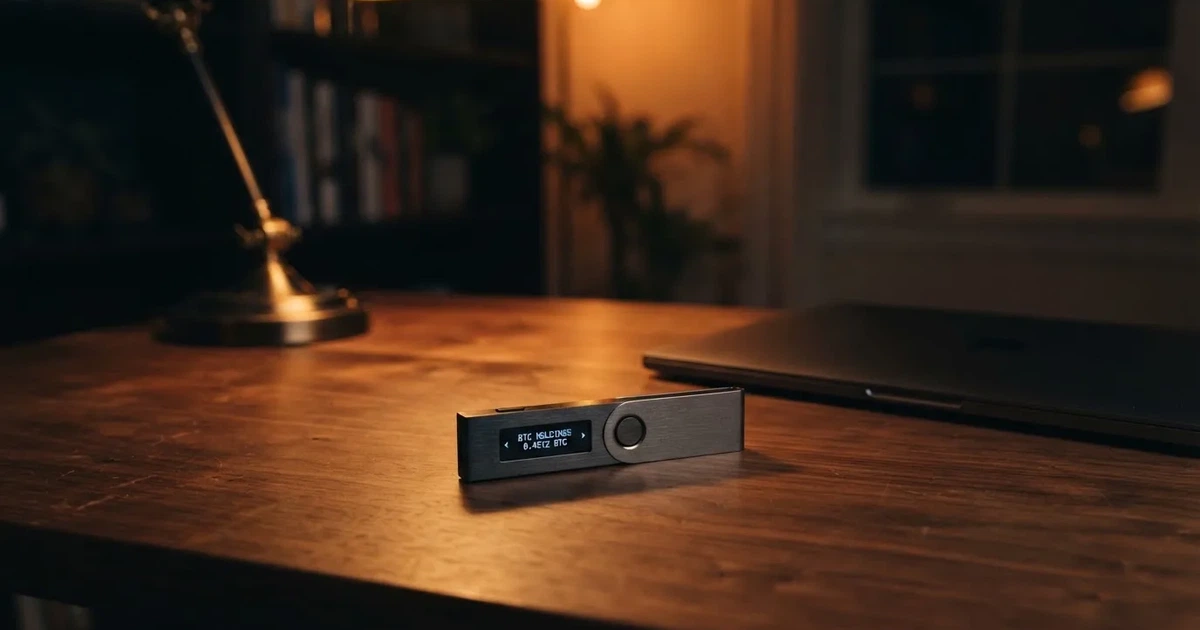
That framing is the whole point of this page. The set below is small on purpose: four operators, each on the Commission’s register, each accepting some form of crypto from a verified customer. Outside the register, the offer of “anonymous crypto betting” exists; it also exists without GAMSTOP, without a Commission complaints route, and without recourse when an exchange-rate line on a withdrawal slip is quietly widened. The opening ranking is followed by what the law actually requires, what safer gambling looks like under that regime, and how the funding rail itself works.
This page reflects data current as of 30 October 2026 and the Gambling Commission’s public register.
The Short Ranking of GB-Licensed Crypto-Friendly Bookmakers
Four operators, one each with a different angle on the same problem. Swifty Sports is the smaller, racing-led book that lists crypto among its deposit methods and rounds out its welcome with Best Odds Guaranteed. Coral is the high-street name with the strongest football coverage and the most familiar free-bet mechanic. Betway is the international sportsbook whose UK offer is built around a four-token free bet. Matchbook is the betting exchange, where the price is set between punters and the house takes commission rather than a margin. None is the only licensed brand accepting crypto, none is recommended over the others in any abstract sense, and the verdict at the foot of each block is the page’s own read of where the operator earns its place.

| Brand | Gambling Commission licence | Terms on crypto |
|---|---|---|
| Swifty Sports | Remote licence 058957-R-334734-006, held by Swifty Global (UK) Ltd | Lists crypto among accepted deposit methods; withdrawals are subject to its standard KYC review |
| Coral | Remote licence 054743-R-330863-014, held by LC International Limited | Standard payment-method lineup published on the site; crypto acceptance is not the headline of its banking page |
| Betway | Remote licence 039372-R-319367-029, held by Betway Limited | Lists crypto among deposit options for UK and Ireland customers; debit-card deposits are required for the welcome free bet |
| Matchbook | Remote licence 039504-R-319407-024, held by Triplebet Limited | Exchange; funding and withdrawal methods are set out in the wallet section and follow standard verification |
Swifty Sports — racing-led book with crypto on the deposit page
Swifty Sports is the youngest brand in the shortlist, and it leans on the racing product first: Best Odds Guaranteed on UK and Irish racing, Cash Out on horse racing and football, daily price boosts, live streaming, in-play betting, and a Bet Builder advertised as coming soon. The Commission’s register lists the operator as Swifty Global (UK) Ltd under account 58957, with a remote general betting standard (real events) category. The site’s banking page sets crypto among the accepted deposit methods, and the verification flow before the first bet is the same one the licence demands of every brand on this list.
The wagering conditions on the welcome free bet, the maximum-stake limits on price-boosted prices, and the in-play market depth on lower leagues are the points a regular punter checks first. None of those figures are particularly out of line with the rest of the British market; none is uniquely generous either. The verdict is honest rather than enthusiastic: this is a competent British bookmaker with a racing heart and a crypto deposit button. A punter who wants a smaller brand, a strong racing product and the option to fund from a personal wallet without an offshore detour will not feel short-changed.

Coral — high-street familiarity, football depth, the standard free-bet shape
Coral’s name does most of the work before the punter reads a single line of its terms. The Commission licence (account 54743) sits in the LC International Limited group, the same family that runs Ladbrokes, and the site carries the spread of markets a high-street name is expected to carry: a full Premier League and Champions League card, racing, a working in-play product, and a welcome offer structured as £40 in free bets for a £20 opening sports bet at minimum odds of 2.0 (1/1), with the free bets issued within seven days and expiring seven days after issue. New GB customers opt in; the seven-day clock is the part that bites.
Crypto is part of the published payment-method lineup rather than a flagship feature. Coral is not the place a punter comes for an exchange rate, a Bitcoin Lightning rail, or a particularly low house edge — that is the exchange’s job. Coral is the place a punter comes because the football markets are deep, the app behaves the way a British punter expects a British app to behave, and the welcome free bet converts predictably into a small starting bank if the £20 qualifying bet lands. The verdict: the strongest high-street option on this list for a crypto-funded football punter, provided the seven-day expiry on the free bets is treated as a real deadline rather than a courtesy.
Betway — the international sportsbook and its four-token welcome
Betway’s UK welcome offer is the standard shape of a sportsbook free bet: £40 in free bet tokens, four of £10 each, credited on settlement of a first bet of at least £10 at minimum odds of 2.0, with a seven-day expiry. The Commission licence (account 39372) is held by Betway Limited, and the UK site is the British face of a brand that runs in several regulated markets. Crypto sits on the published deposit-method page for UK and Ireland customers; the welcome free bet, however, is debited-card deposits only, which means a punter funding the qualifying bet from a personal crypto wallet will need a debit-card leg in the funding chain to claim the offer.
The product is the kind of mid-market international sportsbook a punter either likes or does not: a competent Premier League and Champions League card, an acca builder, in-play, a casino vertical attached. There is no single market depth figure that separates Betway from the rest of the British field; the brand earns its place by being consistent rather than by being best at any one thing. The verdict: the right pick for a punter who wants a known international bookmaker with a crypto deposit option, and who is willing to use a debit card for the £10 qualifying bet. A punter planning to fund the entire session from crypto alone will be told, at the cashier, that the welcome free bet is not for them.
Matchbook — the betting exchange, where the price is between punters
Matchbook is structurally different from the other three. It runs as a betting exchange under the Commission’s betting intermediary licence (account 39504), held by Triplebet Limited, the same group that now owns the Betdaq brand. On an exchange, the price is set between a backer and a layer; the operator’s cut is commission on net winnings rather than a margin built into every price, and the result, where liquidity is good, is a thinner overround than a traditional bookmaker can offer. The same Tripletbet group has explicitly said Betdaq accounts will not transfer to Matchbook, so the two brands sit as separate products under one operator.
Crypto acceptance is set out in the wallet section rather than as a marketing headline. The exchange product is harder for a casual punter to use than a traditional sportsbook: liquidity is uneven across markets, the back-and-lay mechanic is one more thing to learn, and commission rates apply in tiers that are worth reading before the first bet. The verdict: the right pick for a punter who already knows what an exchange is and wants the thinnest overround in the British licensed market. The wrong pick for a punter whose first session would otherwise be on a traditional sportsbook. Matchbook is its own product category, not a substitute for Coral.
What the British Licence Actually Requires
The Gambling Commission is a non-departmental public body sponsored by the Department for Culture, Media and Sport, and it licenses the whole commercial market under the Gambling Act 2005. That Act covers Great Britain — England, Scotland and Wales. Northern Ireland runs on its own older law, so the correct phrase is “Great Britain licence” or “GB-licensed”, and a GB licence does not regulate Northern Ireland. Since the Gambling (Licensing and Advertising) Act 2014, an operator whose remote facilities are used in Great Britain needs a Commission licence wherever it is based; a Curaçao, Maltese or Gibraltar licence is not a substitute, however well-known the regulator. There is no state monopoly and no cap on the number of licences.
The Commission’s public register can be searched by business name, trading name, domain or account number, and it is the whole test of whether a brand holds a licence. Four shortlists in a row on this subject have, between them, named zero brands that hold no Commission licence but accepted British customers; the register filters those brands out by definition. Domains tell a punter nothing on their own: licensed operators use .com as well as .co.uk, and the suffix is not the test. The register is the test. The punter who wants a one-minute check searches the operator’s trading name and reads off the licence number, the licensee, the licence categories and any conditions attached to that specific licence.
Identity verification before the first deposit has applied since 7 May 2019: name, address and date of birth, including when the bet is a free bet or bonus. The verification happens regardless of which funding method the punter plans to use, and a brand that markets itself as a “no-ID” crypto book is marketing something the licence does not let it sell. The minimum age is 18, and a deposit that clears the verification hurdle is a deposit the licence has agreed to take — the punter is in the system, the operator is on the register, and the safer-gambling code that sits below the licence is now in force.
A note on what the licence does not do: there is no statutory list of permitted bets or markets. An operator holds a licence for a category — remote general betting standard (real events), remote general betting standard (virtual events), remote general betting limited, remote pool betting, or remote betting intermediary — and offers markets under its own rules and the Licence Conditions and Codes of Practice (LCCP). In-play betting is offered by GB bookmakers and is controlled by licence conditions and customer-protection duties, not by a separate statute. Esports are treated like any other event; virtual events are a separate licence category. The Commission has not been found to prohibit bets on politics, TV shows or novelty markets, and British bookmakers offer all three. There is no statutory cap on stakes in sports betting, and operators set their own maximum stakes, which means a brand can refuse a stake without the licence demanding it.
The payments shape under a GB licence
Credit cards are banned for gambling in Great Britain — since 14 April 2020, under LCCP condition 6.1.2 — and the ban extends to credit-card-funded payments through an e-wallet, which closes the obvious workarounds. Debit cards and bank-based payments are not covered by that ban. Crypto is not separately banned, but it is not separately endorsed either; the Commission’s position has been to name digital currencies’ anonymity, price volatility and history of hacking and theft as risks for licensed operators, and the practical effect is that each operator’s terms decide whether crypto is on the cashier page at all.
Identity verification before the first deposit means no anonymous play at a licensed site, which is the structural reason “anonymous crypto betting” is a market that exists offshore rather than under the GB licence. Source-of-funds questions at higher spend are normal under the money-laundering rules. A state list of permitted payment methods has not been found, so the page describes payments only from each operator’s published terms, and where the terms name crypto, the terms are where the punter checks the specifics — minimum deposit, conversion rate, withdrawal time.
The tax frame for a British punter
The punter pays no tax on betting winnings in Great Britain, and that is general information rather than tax advice; a professional gambler should ask HMRC or an adviser. General Betting Duty is the operator’s tax on gross profits, currently 15%; from 1 April 2027 a new remote betting rate of 25% applies within it, while remote bets on UK horse racing, bets on self-self-service betting terminals in licensed premises, pool betting and in-person betting stay at 15%. The remote rate stays at 15% until that date. Whether operators pass duty on through odds is not established, and the page does not say the punter is charged duty. The Commission’s statutory levy is a separate charge, not a tax.
Advertising and the bonus cap
Advertising is not licensed by the Commission. It runs through the CAP Code (non-broadcast) and BCAP Code (broadcast), enforced by the ASA, alongside the LCCP marketing conditions. CAP Code section 16 says marketing must be socially responsible, must not be of strong appeal to under-18s, and no one who is or seems to be under 25 may be featured gambling or play a significant role in an advertisement (with an exception for marketing placed where a bet can be made directly). That rule concerns who may appear in the advertisement, not who may bet — the minimum age for betting is 18 in either case.
The promotion rules that matter for a punter reading this page are in force since 19 January 2026: wagering requirements on bonuses are capped at 10x, so a £10 bonus at 50x is no longer legal at a GB-licensed operator, and the maximum wagering requirement any offer can carry is £100 in cleared bets per £10 of bonus. Mixed-product promotions — an offer that requires gambling on two or more product types such as betting, casino, bingo and lottery, for example “bet on football to get free spins” — are banned at GB-licensed operators. Whether the cap applies to free bets with no wagering condition, and any cap on the money value of a bonus, are not established, so a punter reads the offer terms.
“Whistle-to-whistle” is an industry code rather than law. Since 1 August 2019, betting advertisements are not shown on TV from five minutes before a live sporting event to five minutes after it, before the 9pm watershed, with horse and greyhound racing excluded. The Premier League clubs’ withdrawal of gambling sponsorship from the front of matchday shirts, from the 2026/27 season, is voluntary rather than law; sleeves and hoardings remain. Operators are responsible for marketing by their affiliates.
What the licence does for a punter who never reads the small print
The licence is the reason a punter who has a problem has somewhere to go. The Commission’s complaints process sits behind every brand in this shortlist, the dispute-resolution route is approved by the Commission rather than invented by the operator, and the money a punter loses to a brand that goes into administration has at least a partial backstop in the Commission’s rules. None of that exists outside the register. A Curaçao-licensed brand has a Curaçao dispute route, which works in the way Curaçao routes work; a GB-licensed brand has a British route that works in the British way, and that is the entire difference between the two offers in this market.
Safer Gambling Under the British Licence
GAMSTOP is the national multi-operator online self-exclusion scheme, and it has been a mandatory licence condition for online operators since 31 March 2020. A punter who self-excludes through GAMSTOP is excluded from every GB-licensed online operator for the period they choose — six months, one year, five years, or five years with auto-renewal — and after the minimum period the exclusion stays in place for a further seven years unless the punter asks GAMSTOP to remove it. GAMSTOP covers online sites and apps; betting shops run a separate in-premises self-exclusion service.
A financial vulnerability check has applied under LCCP condition 3.4.4 since 30 August 2024. It triggers when a customer’s deposits minus withdrawals exceed £150 in a rolling 30 days, a threshold that has been in force since 28 February 2025. The check is a public-record check (bankruptcy, county court judgments) rather than an income check or a credit reference check, and it runs without the punter noticing on most accounts until the trigger is hit. Financial risk assessments — the affordability checks of the press — are announced in a staged plan, and the Commission article of 7 July 2026 sets out the timetable without a start date. The correct framing is “announced, staged, no start date”, and the page does not write “in force” for a check that has no published start date.
Deposit limits are a separate lever, set by the customer rather than by the regulator. The first changes under the Remote Technical Standards (RTS 12) have applied since 31 October 2025, a second phase was postponed to 30 September 2026, and whether that second phase is live is not established. There is no state-set deposit or loss ceiling for betting; limits are the customer’s choice, and the operator is required to offer the tools that make the choice stick. The right starting point for a punter who wants a hard ceiling is the deposit-limit page on the operator’s account section, set before the first deposit, raised or lowered only on a deliberate visit to the page.
Help lines and clinics sit outside the licence but are part of the same network. GamCare runs the National Gambling Helpline. GambleAware funds treatment and research. The NHS runs gambling clinics. Gamblers Anonymous runs group meetings. Every GB-licensed operator publishes links to these services in its safer-gambling section; the Commission’s LCCP requires it. A punter who is reading this page because a session has stopped being fun finds those links at the foot of every brand in this shortlist, and the same links work whether the punter bets on a licensed site, an unlicensed site, or has not bet at all.
The two sides of the British frame are easy to miss in a single read. The licensed side gives GAMSTOP, the bonus cap, the vulnerability check, the dispute route and the Commission register. The licensed side also gives verification before the first bet, source-of-funds questions at higher spend, and a deposit-limit regime the operator is required to surface. The unlicensed side gives none of the protection and, in most cases, none of the friction — and a punter reading a market comparison is reading about a trade the licence asks them to think about, not a binary choice between safe and unsafe.
Anonymous betting under a British licence is the wrong question
The phrase “anonymous crypto betting” is the most common search in this cluster, and it is also the phrase the British licence does not let a brand answer with a yes. Verification before the first deposit is the price of the licence, and the deposit itself does not change the verification. A punter funding a verified account from a personal Bitcoin wallet is buying a faster funding rail and a wider choice of bookmakers, not a way to bet without a name. The anonymous offer exists; it sits offshore; it accepts crypto precisely because the operator has decided not to verify customers, and that is the same decision that takes the operator off the Commission’s register.
The honest framing for a punter weighing the two: the licensed operator verifies, the offshore operator does not, and the punter is choosing between protection that runs through the British state and friction that the British state requires. The crypto leg of the transaction is the same in both cases — funds move from a personal wallet to a bookmaker’s wallet — and the difference sits in what happens at the bookmaker’s end.
How Crypto Funding Actually Works for a GB-Licensed Bookmaker
A licensed bookmaker that accepts crypto takes deposits in Bitcoin, Ethereum or another supported token and credits the punter’s account in pounds, with the conversion done at the operator’s published rate or at the rate of a named exchange feed. The punter is asked to send from a personal wallet rather than from a mixer, because the operator’s source-of-funds work and the British anti-money-laundering regime treat anonymous-tumbler funds as a red flag rather than as a feature. Withdrawals are paid back to the same wallet, in the same token, at the same conversion rate the operator uses for deposits — minus any withdrawal fee the operator’s terms name.
The blockchain side is set by the protocol rather than by the bookmaker. Bitcoin’s genesis block was mined on 3 January 2009 by the pseudonymous creator known as Satoshi Nakamoto, and the protocol’s design caps total issuance at 21 million coins, with the final fraction expected to be mined around the year 2140. Bitcoin’s ledger is secured by proof-of-work, in which miners compete to find a block hash below a network-set difficulty target — a long, expensive computational race whose difficulty is reset every two weeks. The same protocol that locks the supply at 21 million sets the difficulty that makes a 51% attack impractical at the scale the network now operates at, and that is the technical reason a Bitcoin deposit from a verified wallet to a verified bookmaker clears the way a pound deposit from a verified bank account does.
The legal side is set by the British regulator. The FCA became the anti-money-laundering supervisor of UK cryptoasset businesses on 10 January 2020, under the amended Money Laundering, Terrorist Financing and Transfer of Funds Regulations 2017. The FCA will open applications for authorisation of cryptoasset firms under a new FSMA-based regime on 30 September 2026, with the regime due to start on 25 October 2027. The new regime covers cryptoasset firms in their own right; the bookmaker side is unchanged by it, because the bookmaker’s licence is the Commission’s rather than the FCA’s. HMRC published its first cryptoassets tax guidance for individuals on 19 December 2018, since expanded into a dedicated Cryptoassets Manual, and the treatment of disposal — including selling, swapping for another token, or spending crypto on goods and services — is a chargeable event for Capital Gains Tax in the punter’s hands.
The way the three layers stack is the practical answer to the search “is betting with crypto legal”. The bet is legal under a Commission licence. The funding rail is legal under the FCA’s anti-money-laundering regime. The tax treatment in the punter’s hands is capital gains, calculated per disposal and reported through the punter’s self-assessment. None of the three layers cares whether the punter thinks of the operation as “crypto betting” or “betting funded from a personal wallet”; the layers care about whether the operator is licensed, whether the funds have a clean source, and whether the gain is reported.
A punter’s-eye view of a crypto-funded deposit
The session runs the way a session on a pound deposit runs, with three additions. The first is the conversion step: the punter sends a number of coins, the operator quotes a rate, the operator credits the account in pounds, and the rate is locked for the deposit at the time the operator sees the transaction. The second is the confirmation wait: Bitcoin’s block time is roughly ten minutes, and a deposit that is broadcast during a low-fee period is confirmed at the speed the network produces blocks rather than at the speed a debit card clears. The third is the volatility line: the punter’s pound balance does not move with the coin’s price between deposit and withdrawal, but the value of the punter’s off-site wallet does, and that is a bet the punter is making on the side, on top of the bets on the slip.
The two operational facts a punter should know before the first crypto deposit: minimum deposits are set by the operator and read on the banking page rather than guessed at, and the conversion rate the operator offers is rarely the rate on a public exchange at the same moment. The gap between the two is the operator’s cut on the funding rail, and a punter who deposits and withdraws in the same session at the same nominal stake is paying the gap twice. The fix is the punter’s own discipline: fund the account at the stake the slip needs, treat the account balance as pounds from the moment the conversion locks, and do not treat the off-site wallet as a piggy bank for the next session.
The Other Side of the Trade: What an Unlicensed Brand Costs the Punter
A GB licence is compulsory at the point of consumption. Providing gambling facilities in Great Britain without the licence the Act requires is an offence under section 33 of the Gambling Act 2005 — on summary conviction up to 51 weeks’ imprisonment, a fine up to level 5, or both; six months in Scotland — and the offence is aimed at the operator rather than the customer. A punter who merely bets on an unlicensed site is not the person the statute names, and the page does not write that using an unlicensed site is “illegal” in the customer’s hands. The right framing is the loss of protection, because the loss of protection is the whole difference between a Commission-licensed brand and an offshore one.
A brand outside the Commission’s register has no GAMSTOP, no Commission complaints route and no approved dispute-resolution body. The punter who has a problem with a withdrawal slip has the brand’s own customer service, the brand’s own terms, and the regulator in the jurisdiction where the brand is licensed — which is usually Curaçao, Anjouan or another small-island regime, and the route through that regulator is rarely fast. A punter who has a problem with a brand that simply disappears has no route at all, and the records of the Commission’s enforcement action over the last decade are a long list of brands that have done exactly that.
The protection that is missing runs in both directions. The punter loses the £150 vulnerability-check threshold, the 10x bonus cap, the safer-gambling code that requires the operator to publish the help-line links, and the deposit-limit regime that requires the operator to surface the tools. The punter also loses the verification friction the licence requires, and a market that promises no verification is a market that will not ask where the funds came from, which is the same market that the British anti-money-laundering regime was set up to interrupt. The trade is real on both sides, and a punter reading this page is reading about it.
Enforcement against unlicensed brands is disruption rather than blocking. The Commission issues cease-and-desist notices, refers brands to search engines, works with registrars, hosting providers and payment providers, and has been given or is about to receive court-order DNS blocking powers. The page does not write that ISP blocking is in operation, because that is not what the Commission’s public position says. The honest framing: licensed equals checks, limits, GAMSTOP, bonus cap, verification before the first bet; unlicensed equals none of those protections and a real risk of loss of funds. Neither is “the safe choice” by default, and the page is not in the business of telling a punter which trade to make.
Frequently Asked Questions
Can you bet against crypto?
Yes, by placing a back bet at a traditional bookmaker, or a lay bet at an exchange, on the asset’s price. Crypto is the funding rail, not the bet itself, and the punter’s liability remains in pounds. The price bet against is the price of the bet, not the coin’s value.
Can you lose on crypto betting?
Yes. The bookmaker’s margin is in every price, and most sessions run at a long-run loss. Crypto does not change the math; it only changes the funding rail and conversion rate. The punter’s off-site wallet can also lose value while the bet is open, a secondary risk.
Can you use crypto in betting shops?
No. British betting shops are cash-and-card businesses that operate in pounds. A punter can convert crypto to pounds through an exchange and walk the cash into a shop, but the shop’s cashier does not accept coin transfers. Online crypto acceptance does not extend to the counter.
What does a punter lose by betting on a site without a Gambling Commission licence?
GAMSTOP, the Commission complaints route, the approved dispute-resolution body, the British consumer-protection backstop, the 10x bonus cap, the £150 vulnerability-check threshold, and mandatory safer-gambling links. The licence also mandates identity verification, the friction a punter gives up to use an unlicensed site. The trade is real on both sides.
How can it be checked that a bookmaker holds a Gambling Commission licence?
Search the Commission’s public register by business name, trading name, domain or account number. The register is the test of whether a brand holds a licence. Results show the licence number, licensee, categories and any attached conditions. It is not a recommendation, just the test of legal operation.
Payments & apps – systembetsguide.com
Content created by the «systembetsguide.com» team
