
Betting on corners in Great Britain — a choice guide for 2026
 Available in US
The corner kick is the oldest set piece the rule book still recognises, awarded when the ball wholly crosses the goal line outside the frame after last touching a defending player, and the legal definition has been stable since the Sheffield Association wrote it into the Football Association’s code in 1872. It is also one of the most heavily priced secondary markets a British bookmaker lists. Every televised Premier League match carries an over/under corners line, a handicap, a race-to-X and several team totals, all updated in-play, all carrying the same margin that lives inside every other price on the betting slip. This page is the working guide for a punter comparing those markets — how a corner bet is built, how it is settled, how the bookmaker’s margin is read off a price, and which of ten GB-licensed operators are worth the time of a bettor whose interest is corners.
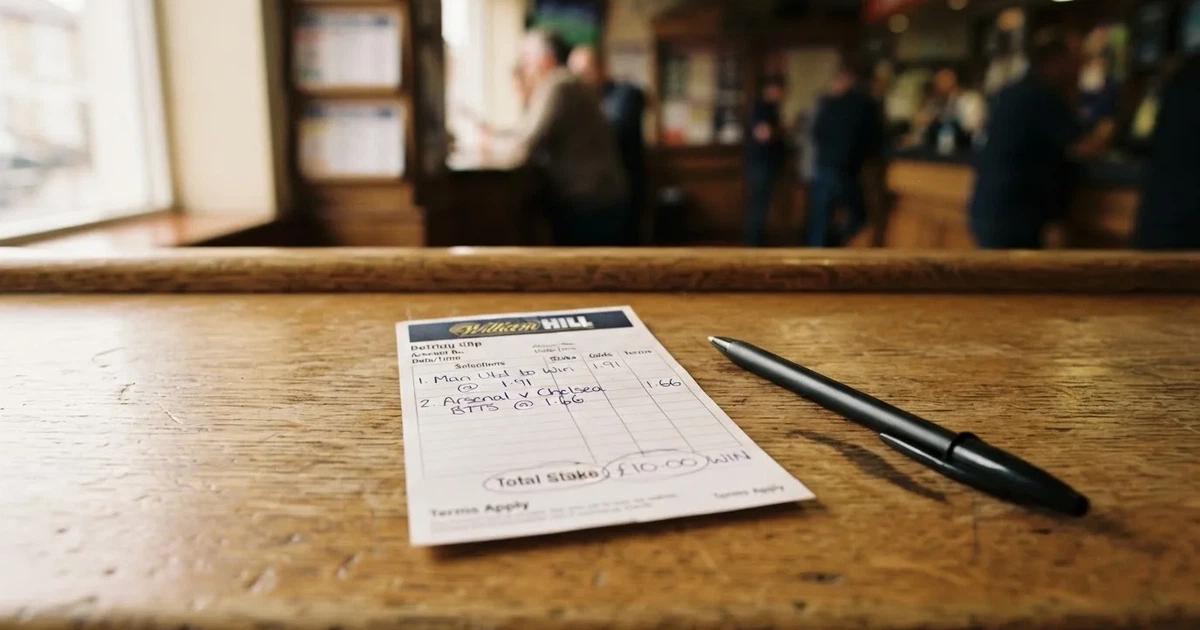
Data current as of 30 October 2026. Operator licences verified against the Gambling Commission’s public register; settlement rules and terms cited from each operator’s own pages.
Selecting a corner bet: the types, definitions and how a price is built
A corner bet is a wager on a count of corner kicks within a stated period of a football match. The market is one of the “secondary” lines that sits next to the 1X2 on a British betting slip, alongside shots, cards, fouls and throw-ins, and it is priced by the same method — an overround built across the possible outcomes, with the surplus kept by the bookmaker. What changes from one corner market to another is which counts the bookmaker has chosen to pay out on, and how the price on each count relates to the next.

What “over 1.5 corners” actually means
The most common lines are totals: over/under a stated number of corners in the match, in one half, or by a named team. Over 1.5 corners means the bet wins if the match sees two or more corners, and loses if the match sees zero or one. A whole-number line such as over 2.5 works the same way — over 3.5 settles at four corners or more, under 3.5 at three or fewer. British bookmakers also offer Asian-style lines: a quarter-ball line such as over 2.25 splits the stake between over 2 and over 2.5, returning half the stake at the better line if the count lands between the two. The Asian quarter lines exist because they let the bookmaker quote a price closer to its true probability without the gap that a whole-number line leaves, and they exist for the punter for the same reason — a lower margin on each price. LiveScore Bet’s Bet Builder, for instance, takes corners as one of its component markets alongside match result, both teams to score, total goals, player scoring and cards, and the same construction carries across to the standalone corners line.
Corners match bet: which team wins the count
The match bet on corners is a two-way or three-way market on which team takes more corners, with the draw as a third outcome in the three-way form. The match-bet structure is the same as the 1X2 on the full-time result — two or three outcomes, priced individually — and the same margin lives inside each price. Settling is mechanical: the team with the higher count wins the home or away selection, an equal count returns the draw stake in the three-way form, and a corner awarded but not taken does not count; a corner ordered to be retaken counts once. A corner kicked out of play is still a corner. These are not exotic edges — they are the rules that decide a winning slip in the disputed minute.

Asian corners: the line that splits a stake
An Asian corner line uses the same quarter and half-ball construction as Asian handicap on the 1X2, applied to a corner count. Over 10.5 corners means eleven or more. Over 10.25 means the stake is split: half on over 10, half on over 10.5, and a ten-corner match leaves the over-10 half refunded as a push while the over-10.5 half loses. Over 10.75 means three quarters on over 10.5 and one quarter on over 11. The point of the split is not mathematical elegance — it is that the bookmaker can quote a sharper price against a known liability, and a punter who has a strong view on the count can move closer to even money than the integer line offers. A market this granular is also the easiest place to see the margin, because the price spread between the half-ball line above and below the true probability is the bookmaker’s edge made visible.
Multi-corner bets: combining markets on one match
A multi-corner bet — sometimes a “bet builder” or same-game multi — combines several corners markets on one match into a single price. Paddy Power’s Bet Builder+, the LiveScore Bet builder and the Midnite acca builder all accept corners among the legs. The legs multiply into one combined price, and each leg must land for the bet to pay out. The combined price looks generous, because each leg carries its own margin and the margins compound: a market that is 5% overround on its own becomes measurably more after multiplication, and the price is fair only when each leg’s true probability is exactly what the punter has priced. Most British bookmakers cap the builder at a fixed number of legs — LiveScore Bet at ten — and several disable some markets inside the builder, so the legs on offer are not always the legs a punter would choose.
How the margin sits inside the price
A price is the bookmaker’s view of the chance an outcome will happen, minus the margin. In a two-way market priced 1.90 / 1.90 in decimals (9/10 in fractions each way), the implied probabilities are 1/1.90 and 1/1.90 — about 52.6% on each side — which together add up to 105.3%. The 5.3% above 100% is the bookmaker’s margin on this market: for every pound bet across the two outcomes in the right proportions, the bookmaker keeps 5.3 pence and returns 94.7 pence in winnings. A three-way market at 2.10 / 3.40 / 3.60 (about 47.6%, 29.4%, 27.8%) sums to 104.8%, and the same principle applies. The margin is the price of taking the bet, and it is the only honest way to compare one bookmaker’s corners line to another’s on the same match. The closer to 100% the sum of implied probabilities lands, the fairer the price; the further above, the more the bookmaker keeps.
Reading the margin off a price takes a few seconds and is the most useful habit a punter can pick up. Take the two prices on a two-way market, take the reciprocals, sum them, and the surplus over 100% is the margin. A 1.85 / 1.95 line implies 54.1% and 51.3%, summing to 105.4% — a 5.4% margin. A 1.95 / 1.95 line implies 51.3% on each side, summing to 102.6% — a 2.6% margin, closer to a sharper bookmaker on a high-liquidity market. The decimal form is the easier of the two to do this with, and every British bookmaker offers a decimal toggle in the account settings.
A worked margin on a two-way corners market
Take an illustrative two-way market at decimal odds 1.90 on each side — the example does not quote a real price from any match. The implied probability on each side is 1 ÷ 1.90 = 0.5263, or 52.63%. The two probabilities sum to 1.0526, or 105.26% — this sum is the overround, and the 5.26% above 100% is the overround percentage. The bookmaker’s margin is 1 minus the payout share (1 ÷ 1.0526 = 0.9500), which results in a 5.0% margin. The payout share is 95.00%, meaning the bookmaker returns 95 pence of every pound wagered in the long run. A margin in the 5–6% band is ordinary for a British bookmaker on a corners line, and a margin under 4% is what a sharp bookmaker looks like.
Football corner markets and the tournaments that price them
Corners are a football market. The market exists because football generates corners — by the laws of the game, an attacking play that crosses the goal line outside the frame produces one — and the competitions that generate the most corners are the ones whose betting volume supports the deepest in-play markets. A punter who watches leagues rather than cups will see a different corners-per-match distribution from a punter who watches only knockout football.
League football and cup football: where the count comes from
Premier League and Championship matches routinely produce ten to fourteen corners combined, with the home side typically taking more because attacking set pieces are staged at the end of the pitch nearest the home stand. La Liga and Serie A matches produce similar totals in fixtures between sides of comparable quality, with a tilt upward when a strong favourite plays a deep defensive block — the trailing side concedes corners as the favourite builds from the back. Bundesliga averages sit higher still, and the Eredivisie in the Netherlands produces some of the highest counts in European football because of the open style of play.
Cup competitions are a different market. A Champions League knockout leg between two cautious sides can finish with five or six corners combined, well below a league average, because both sides are unwilling to commit to the wide areas. A World Cup group match between two attack-minded sides can produce fifteen. The corners market does not run on a single average — it runs on the league table, the fixture congestion, and the playing style of each side, and a punter who backs corners without watching the fixture type is gambling on a number rather than reading the match.
Tournaments and the in-play book
World Cup corner betting draws the deepest in-play book of any tournament in the calendar. The 2026 World Cup is being staged across the United States, Canada and Mexico with an expanded format, and every group match carries a full corners menu — match total, team totals, race to three, race to five, handicap, exact count in the standard ranges. Euro 2028 is the next senior men’s tournament after that, hosted by the United Kingdom and Ireland, and the corners markets at major tournaments are typically priced three or four weeks before kick-off once the groups are confirmed.
The corners markets at club tournaments — Champions League, Europa League, Conference League — are priced throughout the season, with the depth of the in-play book tied to the volume of money the bookmaker expects on the match. A Tuesday-night Champions League fixture between a Premier League side and a Spanish side is a higher-volume event than a Thursday-night Conference League fixture between a Portuguese side and a Danish side, and the price on the corners line is sharper on the Tuesday match for that reason.
Pre-match and in-play: where the price moves
The pre-match corners price is set early in the week, sometimes ten days before kick-off, and moves as team news reaches the market. A confirmed starting eleven, a manager’s preferred shape, a returning centre-back, a suspended striker — each moves the line by half a corner or a tick of the handicap, and the move is the bookmaker’s read on how the count will land. The in-play price moves faster. The first corner shifts the over line immediately; a goal in the first ten minutes shifts the line by a corner and a half as the trailing side opens up; a wet pitch and a windy afternoon push the line up because the conditions favour set pieces. In-play corner markets settle at the final whistle, with the half-time markets settled at the interval and the team-total markets settled on the count attributed to each side.
How a corner bet works: the walkthrough from price to payout
Placing a corner bet is the same mechanical action as placing any other selection on a British bookmaker’s slip. The difference is in the market depth and the speed at which the in-play price moves. A seasoned punter learns to anticipate those movements, ensuring they avoid the common traps found in a market that rarely mirrors the linear logic of a match-result bet.
The selection
Corners lines appear on the match page of every Premier League, EFL, Champions League, Europa League and Conference League fixture on a British bookmaker’s site, and on most La Liga, Serie A, Bundesliga, Eredisie and Ligue 1 fixtures. The line opens days before kick-off and runs in-play until the final whistle. A punter selects a market — match total, team total, handicap, race to a count, exact count — and adds the selection to the slip. The price shown on the slip is the price the bet is placed at, and the price is locked at the moment the bet is confirmed.
The stake and the return
The stake is the amount the punter is willing to lose if the bet loses. On a single corner selection at decimal odds of 1.90 with a £10 stake, the return on a winning bet is £10 × 1.90 = £19.00, made up of the £10 stake and £9.00 of profit. The stake is returned on a winning bet, and the profit is the return minus the stake. On a free bet whose stake is not paid back, the calculation is different: a £10 free bet at 1.90 returns £10 × (1.90 − 1) = £9.00 of profit, because the £10 stake comes from the bookmaker and is not returned. A free bet is worth the odds minus one, multiplied by the stake, on a winning selection.
Combination bets multiply the prices into one number. A double on two corners selections at 1.90 and 2.20 returns a £10 stake times 1.90 × 2.20 = £41.80 on a winning bet, made up of the £10 stake and £31.80 of profit. A treble at 1.90, 2.20 and 3.00 returns a £10 stake times 1.90 × 2.20 × 3.00 = £125.40 on a winning bet. Each leg must land, and each leg carries its own margin; the compounded margin on a five-leg builder is the single most important number a punter can read off a same-game-multi price, because it is what the builder’s apparent generosity is actually buying.
Settlement
Settlement is automatic on most markets once the match ends. The count of corners is taken from the official match data, the bet is settled at the price the punter took, and the return — stake plus profit on a real-money bet, profit only on a free bet whose stake is not returned — is credited to the cash balance within minutes. Some markets, including player-attributed corners and exact-count markets, can take longer to settle if the official data is contested. British bookmakers publish settlement rules on each market, and a punter who disagrees with a settlement can take the dispute through the operator’s complaints process, then to an approved alternative dispute resolution body if the complaint is not resolved — a route an unlicensed site does not offer.
Cash out and the in-play close
Cash out is the bookmaker’s offer to settle a bet before the match ends, at a price the bookmaker calculates from the current state of play and the price the punter took. A £10 bet on over 4.5 corners at 1.90 becomes available to cash out once the match reaches four corners, and the cash-out price reflects the chance the fifth corner will land before the final whistle. The cash-out price is the bookmaker’s price, with the bookmaker’s margin inside it, and a punter who takes cash out at every opportunity is paying a margin twice — once on the entry price, once on the exit price. A punter who cashes out selectively, when the in-play price on the same selection would be worse than the cash-out offer, is using the feature as it is meant to be used.
The ten UK-licensed bookmakers reviewed for corner betting
Every brand below holds a remote general betting standard (real events) licence on the Gambling Commission’s public register, which is the whole test of who is licensed to take a corner bet from a customer in Great Britain. The table that follows is a comparison of what each operator’s own terms state on the corner market and on the bookmaker-wide rules a punter meets before placing a bet. None of these is the only licensed brand; several of them are run by the same parent company, and the Commission’s register carries far more licensed operators than any comparison can feature. The angle is choice — which operator suits which kind of punter — and the verdict at the end of each entry closes on the specific feature the block above it established, not on a generic suitability line.
Landscape at a glance: how the ten operators compare
| Brand | Gambling Commission remote licence (account number) | What the operator’s own terms state on corners |
|---|---|---|
| Dabble | 065677-R-340363-005 — Dabble Sports UK Ltd | Welcome offer described as a fixed-odds free bet; minimum odds apply; stake not returned; seven-day expiry. |
| Coral | 054743-R-330863-014 — LC International Limited | Sports welcome offer issues free bets on a first settled sports bet; stake not returned; seven-day issue, seven-day expiry. |
| 10bet | 043173-R-322899-023 — Blue Star Planet Limited | Sportsbook covers football with Cash out, Bet Builder and Live Streaming listed as core features. |
| Geoff Banks | 054095-R-330366-010 — GB Sports Advisors Limited | App offers live in-play prices and ante-post prices on future events. |
| Paddy Power | 039439-R-319330-013 — PPB Counterparty Services Limited | Bet Builder+, Popular Bet Builders, Super Sub and expanded Win More markets offered in the app. |
| Bet Ahoy | 100094-R-341742-003 — Bet Ahoy Ltd | Welcome offer splits a free-bet amount across a sports bet and an accumulator. |
| LiveScore Bet | 056859-R-332720-005 — LiveScore Betting and Gaming (Gibraltar) Limited | Bet Builder accepts up to ten selections and lists corners as a component market. |
| BetTom | 064959-R-339314-003 — Bet Tom Limited | Sports welcome offer is a percentage-back-as-free-bet structure with full terms applying. |
| Betfred | 039544-R-319290-010 — Petfre (Gibraltar) Limited | App features Bet Builder, Sub Switch, Racing Post data, Extra Places and live casino. |
| DragonBet | 064908-R-339041-003 — DragonBet Ltd | App features Welsh football and rugby markets, racing, American football, in-play betting and a bet builder. |
The table reads top to bottom as the order of the review blocks below. The licence numbers are the Commission’s account numbers — the six-digit identifier a punter uses on the Commission’s public register to confirm the licence is current. The third column is what each operator publishes about the corner market and the offer that surrounds it, and the rest of this page works through each brand on what those terms actually mean for a bettor.
Dabble
Dabble is the smallest bookmaker in this comparison by trading history, and the licence is held by Dabble Sports UK Ltd against Commission account 65677. The welcome offer, as Dabble’s terms state it, is a fixed-odds free bet on a first deposit for new customers, with a minimum price applying to the qualifying bet, a seven-day expiry on the free bet and the stake not returned. The “stake not returned” line is the part that decides what the free bet is worth: a £10 free bet on a 1.90 selection returns £9.00 of profit, not £19.00, because the £10 is the bookmaker’s stake, not the punter’s. A punter who reads the offer as “£10 to bet with” reads it correctly; a punter who reads it as “£10 in cash if my bet wins” reads it wrong, and that gap is the offer’s cost. The corners market sits inside the standard sports menu and accepts the same bet-builder construction as the rest of the British market.
The verdict is on the offer, because that is what the block above it established: a free bet at this bookmaker is the same shape as a free bet elsewhere, and the seven-day expiry is the condition a punter should check against the fixture list before claiming. For a punter who already has a sharp price on a Saturday corners line elsewhere, the offer adds nothing that the same stake on a real-money bet would not add.
Coral
Coral sits under LC International Limited against Commission account 54743, and the licence covers both remote general betting standard (real events) and remote betting intermediary, which means Coral runs both a sportsbook and a betting exchange under the same umbrella. The sports welcome offer, as Coral’s terms state it, is a free-bet bundle issued on a first settled sports bet of £20 or more at minimum odds of 2.0 (1/1), with the free bets credited within seven days and expiring seven days after issue. The qualifying odds of 2.0 are a real barrier: a bet at 1.95 does not qualify, and a punter who places the qualifying bet on a short-priced favourite is gambling on a near-cert that the bookmaker has priced without much margin to spare. The free bets themselves are the standard stake-not-returned shape, and the seven-day issue window plus seven-day expiry is a tight clock that asks the punter to have a market in mind before claiming. The corners line is priced across the full Premier League and EFL fixture list, and the in-play book on televised matches is among the deeper in the British market.
The verdict sits on the qualifying price: 2.0 is the line a punter clears to get the free bets, and that line is also the line at which the qualifying bet’s expected value starts to come under pressure from the bookmaker’s margin. A punter who treats the qualifying bet as a bet, and picks a corner selection they would have taken anyway, comes out ahead of a punter who picks the shortest-priced favourite to clear the threshold.
10bet
10bet is held by Blue Star Planet Limited against Commission account 43173, and the app description lists Cash out, Bet Builder and Live Streaming as the core features around a sportsbook that covers football, tennis and horse racing. The corners market at 10bet is built around the standard match-total, team-total and handicap lines, and the bet builder accepts corners as one of its component markets alongside match result, both teams to score and player markets. Live Streaming on football corners markets is the detail worth flagging — the feature exists where the bookmaker has the rights, and on football it most often means selected European leagues and the lower English divisions rather than the Premier League, which is restricted by the rights holders.
The verdict sits on the feature stack: Cash out, a builder and live pictures in one app is the kind of combination a punter who trades in-play wants, and the corners market inside that combination is the price a bettor reads against the same line elsewhere. For an in-play trader, the speed of the line is critical; for a pre-match punter, the primary concern is identifying the most competitive margin available for their chosen selection.
Geoff Banks
Geoff Banks is run by GB Sports Advisors Limited against Commission account 54095, and the app description names live in-play prices and ante-post prices on future events as the features. The shopfront is smaller than the major chains, and the depth of the corners menu is narrower than the bookmakers with a full sportsbook — the Premier League and the major European leagues are covered, the lower English divisions are not always priced. Ante-post pricing is the part that distinguishes Geoff Banks from the bigger chains: the bookmaker will price a corner market on a tournament outright before the tournament begins, where the chains typically price only the group matches and the early knockout rounds.
The verdict is on the depth of the menu: a smaller bookmaker is a sharper price on the markets it prices, because the overround is built around a thinner book and the margin can sit lower, and the cost is that the menu is shorter. A punter who has a strong view on a specific corner selection on a Premier League match is well served here; a punter who wants a builder across six markets on a Championship match is not.
Paddy Power
Paddy Power runs under PPB Counterparty Services Limited against Commission account 39439, and the app’s feature stack lists Bet Builder+, Popular Bet Builders, Super Sub (a bet that rolls over to the replacement if a selected player is substituted), expanded Win More markets and player and acca statistics. The corners market is built around the standard match-total and team-total lines, the bet builder accepts corners as a leg, and the in-play book on televised Premier League matches is among the deepest in the British market. Super Sub is the specific feature worth noting for a corners punter: a player-attributed leg that would otherwise void on a substitution rolls to the named replacement, which protects a builder that combines a player shot with a corner on the same match.
The verdict sits on the feature stack, and on the price: a bookmaker with a full builder, a substitution fallback and a deep in-play book is the bookmaker a bettor compares every other bookmaker against on the televised matches, because the feature gap is what a punter pays for if the bookmaker is missing one. For a Premier League in-play trader, Paddy Power competes on price and on feature depth together; for a Championship pre-match punter the relevant comparison is the margin on the same line at a smaller bookmaker.
Bet Ahoy
Bet Ahoy is held by Bet Ahoy Ltd against Commission account 100094, and the welcome offer, as the operator’s terms state it, splits a free-bet amount across a £5 sports bet and a £5 accumulator. The split is the structure a punter should read carefully: a £10 free bet that must be used as two £5 bets is not the same as a £10 free bet that can be used as one £10 bet, because the two bets cannot be combined and the accumulator leg carries its own compounded margin. The qualifying bet, the minimum odds and the expiry window sit in the full terms. The corners market sits inside the standard sports menu and accepts the same bet-builder construction as the rest of the British market.
The verdict sits on the structure of the offer: a split free bet is two bets, not one, and a punter who treats it as one bet places one of the two legs without thinking. For a punter who already uses a bet builder on a single football match, the offer adds the kind of constraint that the offer’s headline number hides.
LiveScore Bet
LiveScore Bet is held by LiveScore Betting and Gaming (Gibraltar) Limited against Commission account 56859, and the Bet Builder accepts up to ten selections with corners listed as a component market alongside match result, both teams to score, total goals, player scoring and cards. The cap of ten is the generous end of the British market — most builders cap at six or eight — and the price on a ten-leg builder is the margin compounded ten times, which is the one calculation a punter should run before placing a multi. The bookmaker’s live scores product is the foundation of the in-play product, and the corners in-play book is built on the same data feed.
The verdict sits on the builder’s leg cap: a higher leg cap means more room to compound a view, and a higher leg cap also means a compounded margin that erodes the price faster than a six-leg builder would. A punter who reads the ten-leg cap as free upside reads the offer wrong; a punter who reads it as ten chances to be wrong by a margin reads it right.
BetTom
BetTom is held by Bet Tom Limited against Commission account 64959, and the sports welcome offer, as the operator’s terms state it, is a percentage-back-as-free-bet structure of up to £50 with a matching percentage-back-as-free-slot-funds structure for casino play. The “50% back” line is the part a punter should read carefully: a £50 qualifying bet that returns £25 as a free bet is not the same as a £50 free bet on signup, and the full terms sit behind that headline. The corners market sits inside the standard sports menu and accepts the same bet-builder construction as the rest of the British market. The dual sports-plus-casino structure of the welcome package is the one feature that distinguishes BetTom in this comparison, and a punter whose interest is corners and who does not play casino leaves half the offer on the table.
The verdict sits on the offer structure: a percentage-back free bet with a matching casino leg is an offer built for a punter who uses both products, and a punter who bets only on football corners should weigh the qualifying stake against the sportsbook’s actual margin before claiming. For a corners-only punter, the real value lies in the sportsbook’s underlying margin, regardless of any attached casino bonuses.
Betfred
Betfred runs under Petfre (Gibraltar) Limited against Commission account 39544, and the app’s feature stack lists Bet Builder, Sub Switch, Racing Post data, Extra Places and live casino. Betfred’s heritage is the high-street bookmaker, and the online product carries the same depth on football that the shops carry on horse racing — Premier League, EFL and the major European leagues are priced, and the in-play book on televised matches is among the deeper in the British market. Extra Places is a horse-racing feature and does not apply to corners, but the rest of the feature stack — Bet Builder, Sub Switch, the live pictures where the rights allow — competes with the rest of this list on equal terms.
The verdict sits on the heritage and the price: a long-established British bookmaker competes on the same margins as the newer chains on football corners, and the difference a punter feels is in the in-play book and in the bet-builder construction. For a punter who wants a full feature stack and the price on a Premier League corners line, Betfred competes with Paddy Power and 10bet on the same fixtures.
DragonBet
DragonBet is held by DragonBet Ltd against Commission account 64908, and the app’s feature stack lists Welsh football and rugby markets, racing, American football, in-play betting and a bet builder. The Welsh football and rugby emphasis is the feature that distinguishes DragonBet in this comparison, and the corners market is built around the standard Premier League and Championship lines with the in-play book on televised matches priced alongside. The bet builder accepts corners as one of its component markets.
The verdict sits on the niche: a bookmaker whose home market is Welsh football and rugby is also a bookmaker that prices the Premier League and the Championship, and the comparison is the same as every other bookmaker on this list on those fixtures. For a punter who wants Welsh football and rugby priced alongside the Premier League, DragonBet competes; for a punter whose interest is corners only, the comparison is the margin on the same line elsewhere in this list.
What a corner bet looks like under British law
A bookmaker taking a corner bet from a customer in Great Britain needs a Gambling Commission licence, and the Commission’s public register is the whole test of who holds one. The licence number on the register, the trading name, the domain and the account number are the four fields a punter checks before depositing, and the licence is current only if the register confirms it on the day the punter checks. The register can be searched by business name, trading name, domain or account number, and the access date on the search is part of the punter’s own record. A licence that is current at signup can be suspended later; the punter’s protection is the live entry on the register, not a screenshot at signup.
The licence does not constrain what markets the bookmaker prices. There is no statutory list of permitted bets or markets in Great Britain — an operator holds a licence for a category (remote general betting standard (real events) for the operators in this comparison) and offers markets under its own rules and the Licence Conditions and Codes of Practice. Corners, throw-ins, shots, cards, time-based and player-attributed markets all sit under the same “real events” licence. The bookmaker’s own house rules decide what counts as a corner, how a corner awarded but not taken is treated, how a corner ordered to be retaken is treated, and how the count is allocated when a match is abandoned or postponed. The punter’s protection is the operator’s terms, which are themselves a licence condition.
Identity, age and the rules that decide who can bet
The minimum age for betting in Great Britain is 18. Identity verification — name, address and date of birth — has been a precondition for the first deposit and the first bet at a licensed site since 7 May 2019, including a bet placed with a free bet or a bonus. There is no anonymous play at a licensed British bookmaker, and the verification is the operator’s licence condition, not the punter’s choice. The corner bet itself is unremarkable under the Act; what the Act constrains is the customer’s status, the operator’s licence, the marketing of the offer and the protection regime that sits behind the bet.
Tax: what the player pays, what the operator pays
A punter in Great Britain pays no tax on betting winnings. The tax is the operator’s: General Betting Duty is the operator’s tax on gross profits from betting, currently 15% across most betting duty bands. From 1 April 2027 a new remote betting rate of 25% applies within General Betting Duty on most remote bets, while remote bets on UK horse racing, self-service betting terminal bets, pool betting and in-person betting stay at 15%. The change is the operator’s tax, not the punter’s, and the question of whether any operator passes the higher rate on through shorter prices is not established in the public record. The punter’s stake, the punter’s return and the punter’s profit are not reduced by General Betting Duty.
Off-course and in-play: what the Act does not stop
In-play betting is legal in Great Britain under the Gambling Act 2005, and every bookmaker in this comparison offers it on football, with corners among the markets priced tick by tick. The Act does not constrain the in-play product beyond the operator’s licence conditions and the social responsibility code, and the bookmaker sets its own maximum stake and its own margin on each in-play tick. Esports, virtual events, novelty markets and politics are all priced by GB bookmakers under the same licence framework, and none of them is prohibited by statute.
Responsible gambling: the protections that come with the licence
The licence is the entry ticket, and the protections are the seat belt. Every operator in this comparison is bound by the same set of player-protection duties under the Licence Conditions and Codes of Practice, and a punter who appreciates these conditions is better equipped to manage their play without relying on external interventions.
GAMSTOP and the multi-operator self-exclusion
GAMSTOP is the national multi-operator online self-exclusion scheme, mandatory for every online operator licensed in Great Britain since 31 March 2020. A punter who registers with GAMSTOP is excluded from every GB-licensed online bookmaker for the period they select: six months, one year, five years, or five years with auto-renewal. After the minimum period the exclusion stays in place for a further seven years unless the customer asks GAMSTOP to remove it. The exclusion covers online sites and apps; betting shops use a separate scheme. A corner bet cannot be placed at any operator in this comparison by a customer whose GAMSTOP registration is active, and the registration is the customer’s choice, not the bookmaker’s.
The vulnerability check and the affordability framework
The financial vulnerability check (LCCP condition 3.4.4, in force since 30 August 2024) applies when a customer’s deposits minus withdrawals exceed £150 in a rolling 30 days. Since 28 February 2025 the check is a public-record check — bankruptcy, county court judgments, similar — not an income check and not a credit reference check. The financial risk assessments that the press calls “affordability checks” are announced in a staged plan, with no start date. A punter whose deposits exceed the £150 threshold should expect a public-record check and should know that further checks have been announced, staged, with no start date.
The deposit limit
Operators must offer a gross deposit limit on a fixed time frame, under the Remote Technical Standards. The first changes have applied since 31 October 2025; a second phase was postponed to 30 September 2026, and whether the second phase is live on the day a punter checks is not established. There is no state-set ceiling on deposits or losses — the limit is the customer’s choice, and the operator must offer the limit and must apply it when the customer sets it. A punter who sets a £100 weekly deposit limit and then asks the operator to lift the limit is asked to wait at least 24 hours for the change to take effect, and the cooling-off is the customer’s protection against an impulse change.
Help
GamCare runs the National Gambling Helpline. GambleAware funds treatment and research. The NHS runs gambling clinics in several regions. Gamblers Anonymous runs local meetings. A punter who finds that the corner bet has stopped being a market analysis problem and become a money problem has a list of services to call, and the list is on every licensed bookmaker’s safer-gambling page.
The unlicensed comparison
A bookmaker licensed outside Great Britain does not offer the protections above. No GAMSTOP coverage, no Commission complaints route, no approved dispute-resolution body, no British consumer redress if funds are withheld, no binding by the £150 vulnerability check or the bonus-wagering cap. The Act makes it an offence for an operator to provide gambling facilities in Great Britain without the licence the Act requires — a summary offence under section 33 of the Gambling Act 2005, with up to 51 weeks’ imprisonment, a fine up to level 5, or both (six months in Scotland). The offence is the operator’s, not the customer’s, and a customer who bets on an unlicensed site is not committing an offence; the customer is losing the protection regime. The Commission’s enforcement is disruption — cease-and-desist notices, search-engine referrals, work with registrars, hosts and payment providers — not blocking. A punter who chooses a licensed site is choosing the regime; a punter who chooses an unlicensed site is choosing the absence of the regime.
Live corner betting: the in-play market and cash out
In-play corner betting is the market that pays a punter for reading the match as it unfolds, and the price is set tick by tick from the moment the match kicks off until the final whistle. The margin inside the price is the same as on the pre-match line, but the price moves faster and the in-play book is thinner — a market that punishes hesitation and rewards a punter who already knows the line they want before the price comes to it.
The in-play corners market
The corners in-play market runs on three inputs: the count so far, the time remaining and the bookmaker’s read on the pace of the remaining play. A 1-0 scoreline at half-time and a corner count of seven shifts the over/under line by a corner and a half, because the trailing side is expected to push for an equaliser and the leading side is expected to sit back; a 3-0 scoreline at half-time shifts the line by a corner or less, because the trailing side has given up. The bookmaker’s price on the next corner is the corner market’s equivalent of the next-goal market, and the price is set by the bookmaker’s model of the chance the next corner lands in the next minute.
The in-play book is deepest at televised matches and thinnest at lower-league and youth fixtures. A punter who trades in-play corners at the Premier League level has a dozen bookmakers competing on the price; a punter who trades in-play corners at National League level has three or four. The price is sharper at the deeper books, because the overround is built across more bets and the bookmaker’s edge per pound bet is smaller.
Strategy: the in-play read
In-play corner strategy is the application of a pre-match view to a live situation. A punter who has read that Team B concedes more corners in the second half than the first half because the manager pushes the wingers higher has a view that lands at 60 minutes, when Team B trails by a goal and the winger is on the touchline. The in-play price at that moment reflects the bookmaker’s read on the same situation, and the bet is on whether the punter’s read is sharper than the bookmaker’s.
The most useful single habit in-play is to have a pre-match view on the count before the match begins, and to compare the in-play price against the pre-match price at the moment a corner lands. The difference is the bookmaker’s adjustment to the in-play information, and the difference is the margin of the punter’s edge.
Cash out: the offer to settle early
Cash out is the bookmaker’s offer to settle a bet before the match ends, at a price calculated from the current state of play and the price the punter took. The price is the bookmaker’s, and the bookmaker’s margin sits inside it. A punter who has a £10 bet on over 4.5 corners at 1.90 sees a cash-out price as the match approaches the fourth corner, and the price rises as the count approaches the line. The cash-out price at four corners is below the full return because the fifth corner is not yet landed; the cash-out price after the fifth corner is the full return less the bookmaker’s margin on the cash-out feature.
The most useful single habit on cash out is to read the in-play price on the same selection against the cash-out offer at every available moment. If the in-play price is below the cash-out offer, the offer is the better exit. If the in-play price is above the cash-out offer, the offer is the worse exit and the bet should ride. A punter who treats cash out as a convenience pays the bookmaker’s margin twice; a punter who treats cash out as a price to compare against the in-play line uses it as it is meant to be used.
Predictions, tips and the honest framing
A corner-betting tip is a prediction about a count of set pieces in a match that has not yet been played. The tip is a view about how the match will unfold — which side will press higher, which side will sit deeper, how the manager will react to a goal — translated into a count. The tip is a view; the view is not a forecast, and the difference matters.
What a tip is and what it is not
A tip is one punter’s read of the match, expressed as a selection and a price. The tip is not a guarantee of outcome, not a system that wins, not a route to a corner-count arbitrage. A punter who follows tips without reading the match is paying the tipster’s view of the margin, the tipster’s view of the team news, and the tipster’s view of the playing style, and the punter is also paying the bookmaker’s margin on top. A punter who reads the match and uses tips as one input among several is using the tip as a sanity check on their own view.
What a system is and what it is not
A “corners betting system” is a structured set of rules that decides what to bet on, when to bet and how much to stake. The structure is the value: a system that prices every Premier League match, takes a view on the count and stakes a fixed percentage of the bankroll is a discipline, and the discipline is the only edge a system can offer, because the underlying predictions are still predictions. A system that promises a winning record is a system that has not been tested across enough matches to lose; a system that loses on a sample of fifty matches is a system that may still win on a sample of five hundred, and a punter who treats a system as a certainty is treating a sample as a population. The bankroll management is the part that survives the sample; the predictions do not.
Where the honest framing starts
The honest framing starts with the margin. Every price carries the bookmaker’s edge, the edge is the same edge whether the punter wins or loses, and the edge is the only number that is constant across every bet. A punter who reads the margin before the selection is a punter who knows what the bet costs; a punter who reads the selection without the margin is a punter who knows what they want to back without knowing what the back is worth. The honest framing ends with the same point: the bookmaker’s edge is the cost, the punter’s edge is the read, and a bettor who has neither a sharper read than the bookmaker nor a discipline to manage the bankroll through losing runs is paying the bookmaker’s edge without earning against it.
Corners bet types and odds: the full menu
The full menu on a Premier League match at a major British bookmaker runs to around fifteen corners markets. Some are pre-match only, some are in-play only, some are both. A punter who explores the full menu gains the insight required to identify the most efficient price for their specific forecast.
Pre-match markets
Match total over/under, with lines from 7.5 to 13.5 in half-ball steps. Team totals, with lines from 3.5 to 8.5. Asian totals, with quarter-ball and half-ball lines from 8.25 to 12.75. Handicap, with the favoured team giving a corner handicap of 1.5 to 4.5 and the underdog receiving the same. Race to three, race to five, race to seven corners — which team reaches the stated count first. Exact count, in single-corner steps from 6 to 16, with the long-tail counts priced as novelty markets. Corners match bet, with home, away and draw in the three-way form. Each-way on the exact-count markets, paying a fraction of the win price on the count nearest the result.
In-play markets
The in-play menu is a subset of the pre-match menu, with the lines adjusted for the count so far and the time remaining. Match total and team totals continue in-play, with the line moving with each corner. Race to markets settle at the moment the count is reached, and a bet on race to five that the home side reaches first settles as soon as the fifth home corner lands. The handicap markets settle at the final count, and the in-play handicap price moves with the count.
The same-game multi
The same-game multi combines several corners markets on the same match — total, team total, race to a count, exact count in the band — into a single price. The legs multiply into one number, each leg carries its own margin, the compounded margin is the price of the apparent generosity, and a punter who reads the compounded margin before placing the multi knows what the multi costs. Most British bookmakers cap the multi at six or eight legs; LiveScore Bet at ten. The cap is the operator’s protection against an unbounded compounding; the punter’s protection is to read the compounded margin before adding the next leg.
Corner betting in football: a final read
The corner bet is a count of set pieces in a match, priced by the same method as every other market on the slip. The price carries the bookmaker’s margin, the in-play price moves tick by tick, and the menu is wide enough that a punter with a view on the count has multiple ways to express it. The British bookmaker offers the corner bet under a Gambling Commission licence, with the protections that come with the licence and the constraints that come with the licence’s age and identity rules. The unlicensed bookmaker offers the corner bet under a different regime, and the difference is the protection regime, not the bet.
A punter who reads the margin, the licence and the menu in that order has the comparison they need. The ten operators reviewed above are the comparison, and the verdict at the end of each block is the answer to which operator suits which kind of punter. The bookmaker’s edge is the constant; the punter’s edge is the read.
Frequently asked questions about betting on corners
How do you place a bet on corners?
Open a betting account at a GB-licensed bookmaker, find the football fixture, select the corners market (match total, team total, handicap or race to a count), add the selection to the slip, enter the stake and confirm. The price shown on the slip is the price the bet is placed at, and the bet settles automatically when the match ends. Identity and age verification are completed before the first deposit at any licensed British bookmaker.
What is an Asian corner bet?
An Asian corner bet uses quarter-ball and half-ball lines on a corner count, the same construction as Asian handicap on the 1X2. Over 10.25 splits the stake between over 10 and over 10.5, returning half the stake as a push if the count lands on ten. The point of the split is that the bookmaker can quote a sharper price against a known liability, and the punter moves closer to even money than the integer line offers. The compounded margin is the price of the apparent generosity.
What is a corners match bet?
A corners match bet is a two-way or three-way market on which team takes more corners, with the draw as a third outcome in the three-way form. Settling is mechanical: the team with the higher count wins the home or away selection, an equal count returns the draw stake in the three-way form, and a corner awarded but not taken does not count. The margin inside the price is the same as on every other two-way or three-way market.
How can it be checked that a bookmaker holds a Gambling Commission licence?
Search the Gambling Commission’s public register by business name, trading name, domain or account number. The licence must be current on the day the check is run, not at the date of signup — a licence can be suspended later. A licence that covers the relevant category (remote general betting standard for sports betting) is the licence that authorises the operator to take a sports bet from a customer in Great Britain.
How is the return on a bet worked out from the stake and the odds?
For a real-money bet, return = stake × odds, and profit = stake × (odds − 1). A £10 bet at decimal odds of 1.90 returns £19.00, made up of the £10 stake and £9.00 of profit. For a free bet whose stake is not returned, only the profit is paid back, so a £10 free bet at 1.90 returns £9.00 of profit. Combination bets multiply the prices into one number, and each leg must land for the bet to win.
What is the bookmaker’s margin and how can it be seen in the odds?
The margin is the percentage of the pool the bookmaker keeps. Take the reciprocal of each decimal price and sum them to find the overround (the sum of 1/odds). For a two-way market at 1.90 / 1.90, the overround is 1.0526, or 105.26%. This is not the margin; the margin is calculated as 1 minus the payout share (1 / 1.0526 = 0.95), which is 5.0%. The lower the margin, the fairer the price.
Bet types & in-play – systembetsguide.com
Content created by the «systembetsguide.com» team
