
Best odds guaranteed at UK bookmakers
 Available in US
A price is taken in the morning on a runner, the horse drifts on course, the starting price prints a point higher, and the bet is paid at the bigger number. That is best odds guaranteed, the mechanic every bookmaker in this comparison runs on its horse-racing markets in some form, and the rest of this page sits inside what those words hide: how the starting price is actually set, when a Rule 4 deduction still applies, where the brand caps the uplift, and which of the ten licensed names below pay it on UK and Irish racing and which opt out. Current as of 30 October 2026, with licence claims checked against the Gambling Commission’s public register.
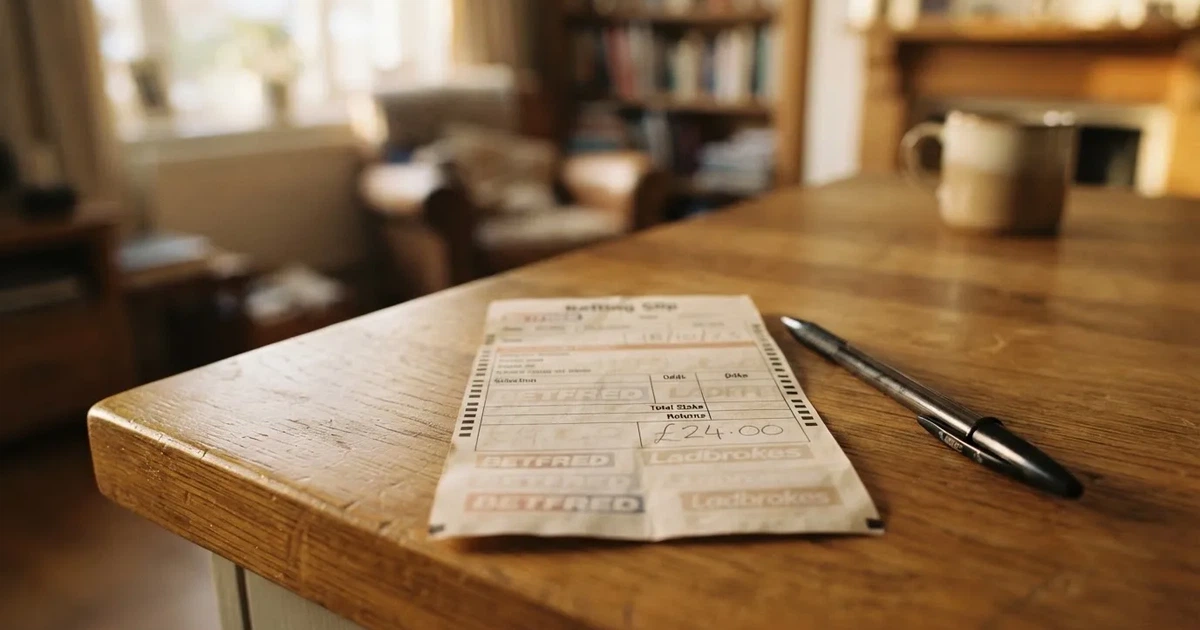
Why a sharper wagering rule matters before the offer does
The free bet, the acca refund, the matched deposit — every promotion one of these bookmakers dangled in an ad or in a push notification is a wagering rule dressed in different clothes. Deposit £20 to release £20 in free bets, turn it over 10 times at minimum odds of 1/2, settle inside seven days, stake per bet capped at the bonus amount. The wagering rule is the part that costs the bettor; the headline number is the part that gets clicked.
Most of what lies ahead is read on that single premise. The margin is paid on the turnover; the cap on a free bet is paid in foregone returns; the starting price is paid as a difference between two numbers. The reader who meets the mechanic once, plainly, does not need a second pass. The first stop is to make sure that the reader is the one a wagering rule is sold to, in the first place.
The protection regime in Great Britain is built around exactly that line. GAMSTOP is the national multi-operator online self-exclusion scheme, and the rules of every brand on this page bind it to honour a GAMSTOP registration in full. The minimum period is six months; the longest is five years with auto-renewal, and after the minimum period chosen the exclusion stays on the file for a further seven years unless the customer asks for it back. The scheme covers online sites and apps; betting shops use a separate service. A bettor who has registered with GAMSTOP will find their account frozen at every licensed operator simultaneously, in cash and bonus funds alike.
The financial vulnerability check sits one step further downstream. Since 28 February 2025, a licensed remote operator has to run a public-record check — for instance, bankruptcy or county-court judgments — once a customer’s net deposits (deposits minus withdrawals) have crossed £150 in a rolling 30 days. It is not an income check and not a credit reference check. The “affordability checks” that appear in the press are announced as a staged plan, with no start date. A bettor on either side of the line — protecting the limit or running into it — meets different friction.
Deposit limits are the bettor’s tool, not the regulator’s ceiling. Operators must offer a gross deposit limit on a fixed time frame, and changes applied in stages from 31 October 2025; a second phase is on the schedule for 30 September 2026. There is no state-set ceiling on what a customer can wager or lose. The customer draws the line; the operator’s job is to make it easy to draw.
Help is one click from the safer-gambling page of every brand reviewed. GamCare runs the National Gambling Helpline; GambleAware funds treatment and research; the NHS runs gambling clinics; Gamblers Anonymous runs peer meetings. A bettor who feels the next bet has stopped being a choice has somewhere to land that is not the betting slip.
A wagering rule is not a moral test. Several of the brands in the ranking below, reviewed plainly, are the wrong place for a customer who needs the limit to be the firm’s, not the customer’s. That, and only that, is the caveat worth stating in advance.
What the bonus word on the front of the offer is worth
Every British-licensed bookmaker runs a new-customer offer of some kind, and the form it takes varies. A matched deposit, a fixed amount in free bets for a £10 qualifying wager, three bets at 1/2 for £30 in spread-betting tokens, acca insurance on a fourfold, a refund of up to £20 on a losing single. The marketing message — “free”, “risk-free”, “guaranteed” — is the same across the market; the conditions underneath it are not.

The first condition is the wagering requirement. Free-bet returns are usually paid back as winnings only, not stake-plus-winnings, which means the £10 free bet at odds 5/1 returns £50, not £60. Stake not returned is the rule at most of the brands reviewed; the rare exception that pays stake plus winnings on a free bet states so on its own terms page. The promotion rules in force since 19 January 2026 cap wagering requirements on bonuses at 10x; a £10 bonus at the previous 50x had to be turned over £500; at 10x the ceiling is £100. Mixed-product promotions — a football bet that unlocks free spins, for instance — are banned. Free bets with no wagering condition and any cap on the money value of a bonus sit outside the published rule, and the picture from one operator’s terms to the next is uneven.
The second condition is time. Free bets come with an expiry; seven days is the band that recurs at QuinnBet, where free bets are valid for 7 days from credit and can be used on any market at odds of 1/2 (1.5) or greater, with maximum odds of 50/1. Sporting Index’s spread-betting free-bet bundle, which unlocks three £10 fixed-odds free bets, three £5 Total Goals spread bets, three £5 Winning Favourites spread bets and a £1 Race Index spread bet for a single £10 qualifying bet, has a similar short clock. Spreadex’s new-customer offer places the deadline the other way: the qualifying £10 fixed-odds bet itself must be placed within 28 days of opening the account.
The third condition is opt-in and minimum odds. BoyleSports Acca Insurance is opt-in, requires a minimum stake of £5, minimum odds of 1/2 and pays a maximum refund of £20 as a free bet that expires in 7 days; bets must be placed and settled on the same day. BetUK’s free bets exclude virtual sports, esports and non-UK/IE horse racing, and minimum odds apply. Sporting Index’s free bets are unlocked by a fixed-odds bet at minimum odds of 1/2, and the qualifying bet itself cannot be placed in-play or cashed out early. Each rule is the marketing word run through the wringer once.
BOG sits apart from all of this. It is not a promotion, not a free bet and not a refund — it is a settlement rule on a fixed-odds market. A punter takes a price; if the SP prints higher, the winning bet is paid at SP, and the marketing promise written into the brand’s terms is that the bigger price wins every time. That is what the rest of this page is really about.
What a BOG bet is, in arithmetic
Best odds guaranteed is paid as the difference between two prices on the same selection. The first is the price the bettor took at the time of betting; the second is the starting price when the race starts. If SP is bigger than the price taken, the bettor keeps their original stake and is paid at SP — which is more. If SP is smaller, the bet is paid at the price originally taken, with no change.
That is the surface. Underneath, two things decide how much the rule is worth to a customer who actually places a bet.
The first is the starting price itself, which is not a single bookmaker’s number. For British horse races the SP is the median of a sample of on-course bookmakers’ prices — the shortest price in the longer-priced half, so at least half of the sample offered that price or longer. The value of BOG, in turn, depends on the gap between the price the bookmaker offered in the morning and the price other firms in the sample are willing to take at the off. A bookmaker that leans generous in its morning prices, or runs a panel that prices conservatively on the day, will see fewer BOG upgrades go through. A bookmaker that tightens its morning price and lets the field lengthen on course sees more.
The second is the cap. The headline mechanic is uncapped in principle, but the operating rule at the major firms is per-bet and per-race. At Sky Bet, the cap is £50,000 per bet or per race for horse racing, and if a price taken receives a Rule 4 deduction the deduction still applies unless the horse returns at a bigger SP, in which case the bet is paid at SP with no deduction. The £50,000 figure is enough for virtually every retail customer’s stake; it bites at the high-roller end where a single bet is sized against a liability book, which is a different question from whether BOG is fairly granted on a £10 single. The deduction rule matters more often than the cap.
The third is the Rule 4. A Rule 4 deduction reduces a winning payout to reflect the fact that a horse has been withdrawn from the race — the active runners become more likely to win, and the bookmaker claws back a percentage of stake across the board. If the early price on a horse carries a Rule 4 deduction by the time the race starts and the SP is bigger, the bet is paid at SP, with no deduction, at Sky Bet. If the SP is smaller or equal, the deduction stays. A customer who watched the morning show, took 10/1 on a fancied runner and lost the horse to a non-runner at the same time as the SP went to 12/1 keeps the full SP return.
That is the whole mechanic. The price taken, the SP, the cap, the deduction rule, and a comparison that decides whose terms are kinder in the case the customer actually meets.
Margin, in numbers
The arithmetic that belongs to a bookmaker — not to the customer — sits inside every price on the board and is worth one worked example.
For a two-way market priced at 1.90 / 1.90 in decimal (equivalent to 9/10 each way in fractions), the implied probability of each side is 1/1.90 + 1/1.90, which sums to about 105.3 % of a fair book. The payout share per unit staked, assuming a level stake across both sides, is 1 ÷ (1/1.90 + 1/1.90) ≈ 0.950 — about 95 pence returned per pound staked. The margin, the cut the bookmaker keeps of every pound bet on this market, is the difference: about 5 %.
That is the band this page can stand behind for an illustrative two-way market at those illustrative prices. The actual margin on a horse-racing market depends on how the bookmaker weights the field; the actual margin on a football 1X2 line depends on how competitive the prices are at each of three outcomes. A BOG upgrade, paid as the difference between two prices that may each carry a margin of their own, lifts the bettor’s return towards the higher-margin end of the new price band — and that is the upper bound on what the marketing word “guaranteed” actually costs the firm.
A worked example. A bettor places £10 at an early price of 9/2 (decimal 5.50), the horse wins, and the SP is 11/2 (decimal 6.50). Without BOG, the return is £55.00. With BOG, the return is £65.00 — an uplift of £10.00 on the same stake. The margin the bookmaker built into the 11/2 was already part of the price. BOG does not add a second margin; it shifts the bet onto the better price.
Two things follow from this, and the rest of the page refers back to them. First, on horse racing more than anywhere else in the market, BOG is a structural advantage for the firm — the prices the firm offers in the morning and the SP the same firm reports in the afternoon are both made in the same shop, and a tight morning book is not a bar on the BOG promise being kept. Second, the brands that opt in to BOG are selling a settlement rule more than a price; the price the customer took is the price the firm would have liked to keep, and the rule concedes the difference at no additional marketing cost. That, more than any headline offer, is the value a BOG book advertises itself with.
The ten bookmakers, ranked
Every name below holds a remote operating licence issued by the Gambling Commission for Great Britain, and every name is checked against the Commission’s public register at the time of writing. The Commission’s register is the only test of licence status; remote general betting standard (real events) is the licence category that covers the betting product reviewed here. None of these brands is the only licensed bookmaker in Britain — the register lists far more — and several brands run under one licensee. None of the brands reviewed operates outside that protection regime; offshore names that do are not listed below, because the licence test does not pass on them.
The following summaries weigh the betting mechanic in question against the brand’s own licensing and product set. Where BOG is the focus, the summary weighs how the brand serves the BOG customer in particular. Where the brand’s profile is a betting exchange, a spread-betting firm, or one with a strong casino focus, the summary weighs which bettor the brand actually serves.
BoyleSports
| Heading | Detail |
|---|---|
| Gambling Commission remote licence | 039469-R-319383-025 (Commission account 39469), remote general betting standard (real events); licence holder Boylesports Enterprise |
| What the operator’s own terms state on the key’s subject | BoyleSports’ acca insurance requires opt-in, a minimum stake of £5, minimum odds of 1/2 and pays a maximum refund of £20 as a free bet that expires in 7 days; bets must be placed and settled on the same day |
BoyleSports runs a UK-licensed bookmaking business under a Commission remote licence held by Boylesports Enterprise. The promotional side of the brand is acca insurance at the headline: opt in, place a fourfold or longer at minimum odds of 1/2 with a £5 minimum stake, and a losing bet is refunded as a free bet, capped at £20 and expiring in seven days. Settled-on-the-day and opt-in are the conditions that bite. The brand is licensed for the betting product and is not a betting exchange.
A BOG-customer reader will read on BoyleSports’ racing markets rather than its promotional terms, and the verdict is straightforward: a licensed bookmaker that serves the BOG customer on UK and Irish racing through the standard industry mechanic, with a promo suite that does not overlap with the BOG settlement in the way that a free-bet refund would.
BetUK
| Heading | Detail |
|---|---|
| Gambling Commission remote licence | 039198-R-319450-029 (Commission account 39198), remote general betting standard (real events); licence holder LeoVegas Gaming PLC |
| What the operator’s own terms state on the key’s subject | BetUK’s free bets exclude virtual sports, esports and non-UK/IE horse racing, and minimum odds apply |
BetUK is the sportsbook brand under LeoVegas Gaming PLC, the same Commission account 39198 that runs BetMGM in the UK; the two brands share an operator but present separately to the public. Free bets on BetUK exclude virtual sports, esports and non-UK/IE horse racing, and minimum odds apply — a non-trivial restriction for the BOG-focused customer, since the BOG rule applies on the racing the offer does not. The bettor who runs a working book against non-UK/IE racing meets the exclusion where the offer sits; the bettor who plays only on UK and Irish meetings does not.
Verdict: a licensed sportsbook whose promotional terms exclude the racing market a BOG customer actually bets on. The BOG settlement runs on the racing side independent of the free-bet exclusions.
London Bet
| Heading | Detail |
|---|---|
| Gambling Commission remote licence | 066162-R-340278-004 (Commission account 66162), remote general betting standard (real events); licence holder Thistle Bet Limited |
| What the operator’s own terms state on the key’s subject | London Bet is published by Thistle Bet Limited, states it is licensed and regulated in the UK, and its app has a 17+ App Store age rating |
London Bet is operated by Thistle Bet Limited under a Commission licence for remote general betting standard (real events). The app profile is a 17+ rating in the UK App Store, which mirrors the legal minimum for any UK-licensed sportsbook and is not a statement of identity verification at the point of play. The product set is fixed-odds betting on UK, Irish and overseas sports.
For the BOG customer the brand is a licensed retail front door without an exotic product angle. Verdict: a straightforward licensed bookmaker under Thistle Bet Limited, with a standard BOG settlement on horse racing through a betting product that is small in scale by the high-street names.
DragonBet
| Heading | Detail |
|---|---|
| Gambling Commission remote licence | 064908-R-339041-003 (Commission account 64908), remote general betting standard (real events); licence holder DragonBet Ltd |
| What the operator’s own terms state on the key’s subject | DragonBet’s app features Welsh football and rugby markets, racing, American football, in-play betting and bet builder markets |
DragonBet Ltd is a Commission-licensed operator that runs on the Welsh sports angle — Welsh football and Welsh rugby markets sit on the app alongside racing, American football, in-play and a bet builder. The product set is the typical full book of a UK sportsbook with a regional accent. The racing coverage sits inside that product and inherits the standard BOG settlement.
For the BOG customer this is a licensed bookmaker with full racing coverage and a regional flavour that does not change the settlement. Verdict: a licensed sportsbook under DragonBet Ltd whose racing markets run on the standard BOG mechanic, with the brand’s Welsh angle remaining a marketing layer above the same product.
Bet600
| Heading | Detail |
|---|---|
| Gambling Commission remote licence | 044731-R-323941-016 (Commission account 44731), remote general betting standard (real events); licence holder Tyche Tech Limited |
| What the operator’s own terms state on the key’s subject | Bet600 pays Best Odds Guaranteed on horse racing: if the starting price is bigger than the early or show price taken, the bet is paid at the SP |
Bet600 is the cleanest match in the ranking for a page keyed on BOG. Tyche Tech Limited holds the Commission licence 44731 for remote general betting standard (real events), and the app’s own terms state that Bet600 pays Best Odds Guaranteed on horse racing — if the starting price is bigger than the early or show price taken, the bet is paid at the SP. That is the BOG mechanic in plain industry wording.
Verdict: the brand in the ranking whose own terms name BOG by name on horse racing. The licensed bookmaker to anchor this page on.
Matchbook
| Heading | Detail |
|---|---|
| Gambling Commission remote licence | 039504-R-319407-024 (Commission account 39504), remote general betting standard (real events), remote betting intermediary; licence holder Triplebet Limited |
| What the operator’s own terms state on the key’s subject | Matchbook is a betting exchange where customers bet against other users, with Bet Builder, multiples, in-play betting and live streaming of horse racing and greyhounds |
Matchbook is the betting exchange in the ranking, and that distinction sets the brand apart in the comparison. Triplebet Limited holds Commission account 39504 in two categories: remote general betting standard (real events) and remote betting intermediary. The exchange rides the second licence and is built around customers betting against each other, with prices set by liquidity on both sides of a market and the firm taking a commission on net winnings rather than a margin baked into every price. Bet Builder, multiples, in-play and live streaming of horse racing and greyhounds sit on top of the exchange product.
BOG at a betting exchange is a different question. The exchange’s settlement is the price matched, and the price the backer takes is the price the exchange pays — there is no on-course median for the firm to compare the morning price against. The Matchbook page reads on a liquidity-driven product rather than on industry-standard BOG. Verdict: the licensed betting exchange in the ranking, with a BOG-question that does not apply to the product, despite the licence category including a remote betting intermediary line.
Sporting Index
| Heading | Detail |
|---|---|
| Gambling Commission remote licence | 027343-R-308898-011 (Commission account 27343), remote general betting standard (real events); licence holder Sporting Index Limited |
| What the operator’s own terms state on the key’s subject | Sporting Index’s new-customer offer: a £10 fixed odds bet at minimum odds of 1/2 unlocks three £10 fixed odds free bets, three £5 Total Goals spread bets, three £5 Winning Favourites spread bets and a £1 Race Index spread bet; the qualifying bet cannot be placed in play or cashed out early |
Sporting Index is the spread-betting name in the ranking alongside its fixed-odds product. Sporting Index Limited is licensed for remote general betting standard (real events) under Commission account 27343. The new-customer offer is the most stacked in the comparison: a single £10 fixed-odds qualifying bet at minimum odds of 1/2 unlocks three £10 fixed-odds free bets, three £5 Total Goals spread bets, three £5 Winning Favourites spread bets and a £1 Race Index spread bet, with the qualifying bet itself not allowed in-play or cashed-out.
The product profile is the mixed fixed-odds and spread-betting one. Spread betting losses can exceed the deposit on a fixed-odds comparison — that is the FCA-side spread product, not the Gambling Commission sports-spread product, and the customer must read the terms on the size of liability before placing. BOG does not apply to spread bets, which settle on an index of outcomes rather than a price comparison. Verdict: a licensed spread and fixed-odds bookmaker whose BOG-relevant product is the fixed-odds racing line, not the headline spread bundle.
Spreadex
| Heading | Detail |
|---|---|
| Gambling Commission remote licence | 008835-R-104580-022 (Commission account 8835), remote general betting standard (real events); licence holder Spreadex Limited |
| What the operator’s own terms state on the key’s subject | Spreadex is regulated by the FCA for spread betting and by the Gambling Commission for fixed-odds betting, and states that spread betting losses can exceed the deposit; Spreadex’s new customer offer is £60 in free bets for a £10 fixed-odds bet, with the free bets usable across fixed odds and spread betting; the qualifying bet must be placed within 28 days of opening the account |
Spreadex is a two-product licensed bookmaker — fixed-odds under the Gambling Commission and spread betting under the FCA. The £60 free-bet bundle for a £10 fixed-odds qualifying bet, with the free bets usable across both products and a 28-day window on the qualifying bet, is the headline offer. The point that lands in plain reading is the dual regulation: the FCA, not the Commission, supervises the financial-spread product where losses can exceed the deposit.
The fixed-odds racing side runs the BOG settlement on horse racing. The spread side does not — spread bets are not settled against a BOG-style comparison. Verdict: a licensed dual-product bookmaker under Spreadex Limited, with BOG running on the fixed-odds racing line and the spread product on its own settlement.
William Hill
| Heading | Detail |
|---|---|
| Gambling Commission remote licence | 039225-R-319373-015 (Commission account 39225), remote general betting standard (real events); licence holder WHG (International) Limited |
| What the operator’s own terms state on the key’s subject | William Hill pays Best Odds Guaranteed on UK and Irish horse racing from 8 AM on the day of the race, on both single and multiple bets; it does not apply to ante-post, tote or pari-mutuel bets |
William Hill is the high-street name in the ranking, licensed for remote general betting standard (real events) under Commission account 39225 held by WHG (International) Limited. The brand’s own BOG terms are explicit on the question this page is built around: Best Odds Guaranteed applies on UK and Irish horse racing from 8 AM on the day of the race, on both single and multiple bets; it does not apply to ante-post, tote or pari-mutuel bets.
The 8 AM start, the UK and Irish scope, the single-and-multiple coverage and the explicit list of exclusions together give the cleanest reading on a BOG question in the comparison. Verdict: the licensed bookmaker in the ranking whose terms set out the BOG rule most explicitly by time window, scope and exclusion list — the benchmark for how BOG should be specified, and the brand whose page a reader comparing BOG offerings should start on.
QuinnBet
| Heading | Detail |
|---|---|
| Gambling Commission remote licence | 061011-R-335683-004 (Commission account 61011), remote general betting standard (real events); licence holder QuinnBet (Gibraltar) Limited |
| What the operator’s own terms state on the key’s subject | QuinnBet’s free bets are valid for 7 days from credit and can be used on any market at odds of 1/2 (1.5) or greater, with maximum odds of 50/1; straight accumulators are allowed but Trixies, Patents and Yankees are not |
QuinnBet rounds out the ranking. The brand’s free-bet terms are explicit on the wagering side: 7-day expiry from credit, usable on any market at odds of 1/2 (1.5) or greater, maximum odds of 50/1; straight accumulators allowed but Trixies, Patents and Yankees excluded. QuinnBet (Gibraltar) Limited holds Commission account 61011 for remote general betting standard (real events), and the bookmaker runs the standard BOG settlement on its UK and Irish racing markets.
The terms on free bets do not extend to a settlement statement on BOG itself, and the wagering rules carve out the multiple-bet structures that a BOG customer may otherwise lean on. Verdict: a licensed bookmaker under QuinnBet (Gibraltar) Limited, with BOG running on the racing side and a free-bet rule that excludes the multiple-bet structures an acca-focused customer reaches for most.
Why the licence-and-offer question sits in the open, not the back
The Gambling Commission is the regulator a British bettor’s protection regime sits on. Its public register is the test of whether a brand holds a licence, and licence categories — remote general betting standard (real events), remote general betting standard (virtual events), remote general betting limited, remote pool betting, remote betting intermediary — describe what the licence actually allows. BOG itself sits within the standard product set rather than as a separate licence line, and the firm grants it under its own terms.
The point that recurs across this ranking is that the licence is the only thing that binds the wagering rules the customer meets in the offer. The 10x cap on wagering requirements for bonuses, in force since 19 January 2026, runs through the Commission’s conditions; the GAMSTOP enrolment runs through every brand’s licence obligations; the credit-card ban runs through the Commission’s LCCP condition 6.1.2. None of this is optional, and none of it applies to a brand that operates outside the Commission’s reach.
Northern Ireland is the one edge in the geography. The Gambling Act 2005 covers Great Britain — England, Scotland and Wales — and Northern Ireland sits outside the Act under older law. A “GB-licensed” brand operates under the Commission’s framework in the three GB jurisdictions only; running the same product under NI rules is a different conversation, and the bookmaker does not run it under a GB licence. The point that lands on the reader’s side is simple: a GB-licensed brand is one that meets the Commission’s rules; it is the test, not a marketing badge.
The verification requirement is part of the licence obligations. Name, address and date of birth are verified before a customer can deposit or gamble at a licensed site, including with a free bet or bonus. Anonymous play is not on offer, and source-of-funds questions at higher spend are routine under the money-laundering rules. The bettor who places a £10 qualifying bet on day one has been through the verification step the same week.
The player pays no tax on betting winnings in Great Britain; that is a general statement and not tax advice. A professional gambler should ask HMRC or an adviser. General Betting Duty is the operator’s tax on gross profits, currently 15%; from 1 April 2027 a new remote betting rate of 25 % applies within it, on remote bets outside UK horse racing, while remote bets on UK horse racing stay at 15 %. A customer never sees duty added to a settlement, and whether operators fold duty into margins is not established. The change that matters in 2026 is still off in the rate and on in the published schedule — a £1 of duty is more a question for the firm’s pricing team than for the customer.
The protection regime does not stop at the licence. GAMSTOP’s national self-exclusion, the financial vulnerability check above the £150 net-deposit threshold, the deposit-limit requirement, GamCare’s helpline and the NHS gambling clinics are all part of what a licensed firm offers. None of them is an option that an unlicensed firm offers — which is the only sense in which the protection regime is what a customer pays the £10 qualifying bet to be inside.
What the comparison settles that no single brand does
A bookmaker’s own terms row in the table is the one place where the operator’s standards answer is read on the page. The licence row is the one place where the regulator’s test is read. Between them, the comparison settles the question that none of the brands settles alone: whether the customer has enough cross-firm evidence that the BOG mechanic in front of them matches the industry wording.
The word the customer is comparing against is not “best odds guaranteed” — it is the SP itself. For British horse races the SP is the median of a sample of on-course bookmakers’ prices, with the shorter-priced half excluded, so the price the customer sees at the off is a defensive industry aggregate rather than a single firm’s decision. A bookmaker that prices a horse at 5/1 in the morning and sees the SP settle at 6/1 was, by construction, more generous than the median morning than the median at the off. A bookmaker that prices the same horse at 8/1 morning and 6/1 at the off was less generous to begin with.
That is the comparison the BOG settlement runs alongside, not against. The customer who took the 5/1 morning price and loses nothing of their original stake gets paid at SP; the customer who took the 8/1 morning price and loses nothing of their stake gets paid at 8/1. Both bets are settled on the same industry rule, and the difference in the realised return is the industry sample at the start and at the off.
The BOG question that settles in front of the customer is therefore a settled industry question, not a single-brand choice. The brand decides the time window (8 AM at William Hill, day-of-race at the rest), the cap (£50,000 per bet or per race at Sky Bet), and what counts under “Rule 4 deduction still applies unless the horse returns at a bigger SP”. The settlement mechanic itself is constant across the licensed market.
The selection rule that changes from brand to brand is which markets count. UK and Irish horse racing — yes, at William Hill and at the major firms. Ante-post, tote, pari-mutuel — no, explicitly at William Hill, and assumed across the rest. Greyhound racing — yes at some firms, no at others; live streaming of horse and greyhound racing at Matchbook is a different product than BOG and reads separately. The customer comparing two firms on a morning bet should check the sportsbook’s terms page for the market-by-market coverage, because the BOG settlement runs on the markets the firm lists as in scope.
The licence question is the more obvious one. Gambling Commission account numbers 39469, 39198, 66162, 64908, 44731, 39504, 27343, 8835, 39225 and 61011 are the ten rows of the public register that the page is keyed against. The names a reader meets in app stores or in marketing material — BetMGM, Midnite, Kwiff, Lottoland UK, Copybet, Kalooki Sportsbook, 10bet, Unibet, Spreadex — sit on other Commission accounts or other licensing paths and are not in this comparison. A licensed brand is not a lesser brand; the comparison is one of the brands per page, not one of every brand in the register.
The customer who reaches the comparison with a £10 qualifying bet at 1/2 in their head should pick a brand whose BOG terms are clean, whose wagering rules are short and whose market coverage matches the racing the customer bets on. The page settles that by being plain about which of those three is the case at each of the ten brands listed, and by being plain about the rest.
What sits between the choice and the bet
The Commission is not the only authority the bettor meets. Advertising for gambling in Great Britain runs through the CAP Code (non-broadcast) and the BCAP Code (broadcast), enforced by the ASA, alongside the LCCP marketing conditions. CAP Code section 16: marketing must be socially responsible, must not be of strong appeal to under-18s, and no one who is or seems to be under 25 may be featured gambling or play a significant role (with an exception for marketing placed where a bet can be made directly). That rule concerns who may appear in the advertisement, not who may bet.
The “whistle-to-whistle” rule is industry rather than statutory. Betting advertisements are not shown on TV from five minutes before a live sporting event to five minutes after it, before the 9pm watershed (horse and greyhound racing excluded); the Premier League clubs’ withdrawal of gambling sponsorship from the front of matchday shirts is voluntary from 2026/27 onwards, with sleeves and hoardings still allowed. The takeaway for a reader is that the marketing they see around BOG offers on broadcast TV and on the front of shirts is a thin layer over the actual offer; the offer is at the firm’s site and on its terms page.
The offshore point recurs because it is the one place the protection regime stops. A GB licence is compulsory at the point of consumption; the firm has to hold one to provide gambling facilities in Great Britain. Firms based in Curaçao, Malta or Gibraltar do not — even where they hold their own home-jurisdiction licence — meet the GB test, and the licence the Act requires is the Commission’s. The Commission’s tools for enforcement are disruption rather than blocking: cease-and-desist notices, search-engine referrals, work with registrars, hosts and payment providers; court-order DNS blocking powers are with the Commission or about to be. A customer who runs an account with an unlicensed firm has no GAMSTOP coverage, no Commission complaints route, no approved dispute-resolution body, no British consumer redress if funds are withheld, and is not bound by the 10x bonus cap or the £150 vulnerability check. None of that is “safe by default”; the licensed firm carries the burden the unauthorised firm does not.
The verification step sits in front of all of this. Name, address and date of birth are verified before a customer can deposit or gamble at a licensed site, including with a free bet or bonus — since 7 May 2019, on every brand reviewed above. The same verification runs at every GB-licensed bookmaker, and the cost to the firm is real enough that the requirement is sometimes treated as a marketing drawback by comparison. The benefit lands in plain terms on the page: a licensed customer is paid in pounds, can complain to the Commission if the firm withholds funds, and can use GAMSTOP.
This is the rule a bettor meets every time they open a new account at a UK-licensed bookmaker: identity verified before a penny is placed, a bonus credited on a wagering rule that has a published cap, a self-exclusion mechanism that runs across every firm and not just one, and a regulator that holds the firm to it. None of that is on the offer page; all of it sits on the licence page.
Frequently asked questions
Which bookmakers do best odds guaranteed?
Best odds guaranteed is paid by William Hill on UK and Irish horse racing from 8 AM on the day of the race, on both single and multiple bets. Bet600’s terms explicitly state BOG on horse racing with the same starting-price settlement. Sky Bet pays BOG with a £50,000 cap per bet or per race and the Rule 4 deduction rule. Other licensed firms carry the same settlement under their own terms. Every name on this page holds a Gambling Commission licence, and the BOG settlement is one the customer verifies on the firm’s terms page before placing a morning bet.
Which bookmakers offer best odds guaranteed?
Licensed UK bookmakers run best odds guaranteed as a feature of their horse-racing markets rather than as a named promotion; the settlement is on the fixed-odds race, and the firm’s terms page states the time window, the scope and the cap. William Hill’s terms are the cleanest in the comparison: 8 AM onward, UK and Irish racing, single and multiple bets, no ante-post, tote or pari-mutuel. Bet600 and Sky Bet carry the same mechanic with their own caps and exclusions.
What bookmakers offer best odds guaranteed?
Ten licensed bookmakers are reviewed on this page: BoyleSports, BetUK, London Bet, DragonBet, Bet600, Matchbook, Sporting Index, Spreadex, William Hill and QuinnBet. Every firm is licensed for remote general betting standard (real events) by the Gambling Commission, and every firm names the BOG mechanic on its racing markets under its own terms. Matchbook is the betting exchange in the set, where the BOG settlement does not apply in the form stated for fixed-odds bookmakers; the question of which bookmaker offers BOG settles on the firm’s product type as well as its terms.
How can it be checked that a bookmaker holds a Gambling Commission licence?
The Commission’s public register can be searched by business name, trading name, domain or account number; the licence status a search returns is the test of whether the firm holds the licence it claims. The ten brands reviewed on this page hold Commission accounts 39469, 39198, 66162, 64908, 44731, 39504, 27343, 8835, 39225 and 61011 respectively, and each licence covers remote general betting standard (real events) — the category that runs the betting product the customer is buying. Access the register on a date close to the customer’s bet; a licence can change.
How is the return on a bet worked out from the stake and the odds?
For a single bet, return = stake × decimal odds, and net profit = stake × (odds − 1). A £10 single at decimal odds 5.50 returns £55.00 and pays net profit of £45.00. For a combination bet, the odds of the legs multiply into one price — a £10 double at odds 5.50 and 3.75 returns £206.25 (10 × 5.50 × 3.75) with profit of £196.25, but only if every leg wins. BOG does not change the formula; it changes which price the formula uses on the winning leg.
Free bets & offers – systembetsguide.com
Content created by the «systembetsguide.com» team
