
Both Teams To Score Betting 2026: How BTTS Works And Where To Place It
 Available in US
A both teams to score bet — BTTS to regulars — is one of the simplest football markets to name and one of the easiest to misread. The wager is whether each side scores at least once inside the 90 minutes of play. The mechanics behind that single sentence, however, decide whether a winning ticket is paid, voided or quietly settled at a price the punter never saw quoted.
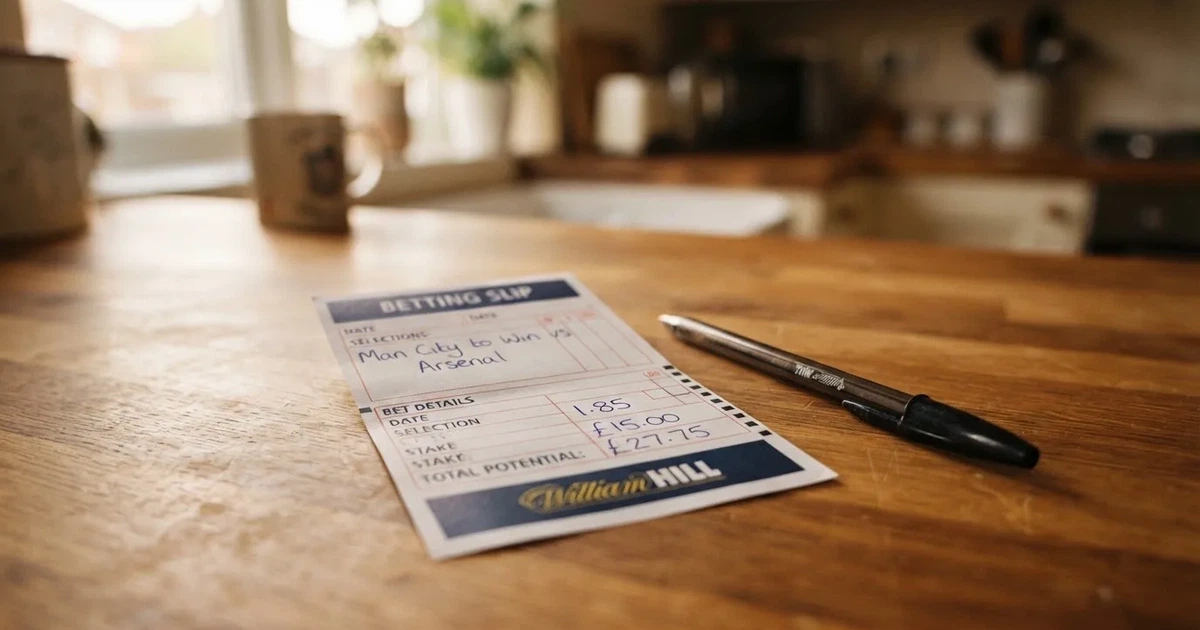
This page walks through what BTTS actually is, how the bookmaker builds a price for it, where the licence to offer it in Great Britain sits, and which licensed operators carry it as part of a wider pre-match and in-play menu. The angle throughout is consequence — what each rule, number and licence condition means for the punter who reaches for the betting slip.
The data is current as of 30 October 2026, checked against the Gambling Commission’s public register for Great Britain.
Staying in control when the market asks for a stake
A both teams to score selection looks like entertainment, but it is paid for out of a bankroll that has a ceiling. Punters who treat that ceiling as a feature rather than an afterthought keep their betting under control in a way that no selection system can guarantee.

The first line of defence in Great Britain is GAMSTOP, the national multi-operator self-exclusion scheme that every licensed remote operator joins. Excluding yourself from one licensed brand excludes you from them all for the chosen period, and the minimum stay is six months. After the chosen minimum the exclusion runs on for a further seven years unless the customer asks GAMSTOP to remove it. That is a long tail: the bet stays here long after the impulse that asked for it.
A punter who has not excluded themselves still meets identity checks before the first deposit. Since 7 May 2019, every Gambling Commission-licensed operator verifies name, address and date of birth before the customer can deposit or gamble, including with a free bet. There is no anonymous play at a licensed site.
Above £150 of net deposits in a rolling 30 days — that is deposits minus withdrawals — the operator runs a financial vulnerability check, a public-record lookup for things like bankruptcy orders or county court judgments. It is not an income check and not a credit reference check, but it does introduce a formal moment of friction into the betting flow. Staged affordability checks have been published with no start date; they are announced, not yet in force, and the rules around them may move before they land.
Customer-set deposit limits are the tool the punter controls directly. Operators must offer a gross deposit limit on a fixed time frame; the first changes have applied since 31 October 2025, a second phase was postponed to 30 September 2026, and whether it is live on every site is not established. State-set deposit or loss ceilings do not exist: any ceiling on what the punter can stake is the punter’s own.
Outside the licensed market, an offshore brand offers none of this. There is no GAMSTOP coverage, no Commission complaints route, no approved dispute-resolution body, no British consumer redress if funds are withheld, and the operator is not bound by the bonus cap or the £150 vulnerability check. None of that makes using such a site a criminal offence for the customer — the offence under section 33 of the Gambling Act 2005 is aimed at the operator — but it does mean the protections the punter may rely on elsewhere are simply not there.
For a punter who feels the bet is no longer entertainment, GamCare runs the National Gambling Helpline, GambleAware signposts treatment, NHS gambling clinics work on referral, and Gamblers Anonymous runs peer-led groups across the country. The first call is usually the hardest. It is also the cheapest.
What a BTTS tip actually is, and what it cannot tell the punter
Search traffic around BTTS breaks into two camps: punters asking what the market is, and punters asking which side to back. The second camp is much larger and much less answerable.

A tip — “BTTS in the Manchester derby” — is somebody’s read of how the match will shape up. It might be backed by expected goals, by recent form, by the absence of a key centre-back, by a long lens at how both managers set up. It is still a forecast of a future event. The bookmaker’s price reflects a probability and a margin, and the tip is somebody’s argument that the price is wrong, or at least more wrong on one side than the other. Whether that argument is correct, the bet does not know. The bookmaker does not know either. Nobody does.
That is not a counsel of despair: betting markets exist because prices can be slightly mispriced often enough that discipline and a sound bankroll can outlast them. It is a counsel of honesty. A reader who pays for a “sure bet” pays for a promise nobody can keep, and the punter who acts on it loses real money on that promise.
A sound BTTS strategy looks less like a tip sheet and more like a checklist. It asks, before the bet is placed: which markets the punter has read; whether the price is shorter or longer than the implied probability the punter has worked out; whether a BTTS selection stacks well with another selection in a bet builder, and at what cost; whether the punter’s bankroll can carry the loss without recourse to a deposit the punter has not budgeted for. The arithmetic behind those questions lives in the next two sections.
Free BTTS tips float across tipster sites, social channels and tipster apps. Some are honest forecasts that lose more often than they win. Some are affiliate funnels. The punter who cannot tell which is which should treat every tip the same way: as one input among many, never as a substitute for the punter’s own reading.
How BTTS is priced, settled and combined
What a BTTS bet actually asks the bookmaker to settle
A BTTS market is a two-outcome market on a single match: yes, both teams will score at least once in 90 minutes; or no, they will not. Both outcomes are mutually exclusive and exhaustive, which is the property that lets the punter read a margin out of the two prices side by side.
Three things decide what a winning BTTS ticket looks like at settlement:
- The match has run 90 minutes. Most football bets — and BTTS is one of them — are settled on 90 minutes of play including stoppage time added by the referee. Extra time and penalties are a different competition phase and are not counted unless the market says so. A market labelled “to qualify” or “to win in extra time” is settled on the wider match, and the punter should treat it as a separate market.
- The match has finished. A match abandoned after kick-off is treated by most operators as void for unsettled markets: bets already decided stand (for instance, first-goalscorer if the scorer has scored), and the rest are made void, unless the operator’s own rules say otherwise. Sky Bet’s football rules illustrate the pattern: an abandoned match leaves already-decided bets standing and voids all others, unless the restart is announced within three hours of kick-off and occurs within three days of abandonment. A punter should check the operator’s own rules before relying on what another bookmaker does.
- The selection matched the result. BTTS yes pays out if both sides have scored by the end of 90 minutes regardless of who wins the match. BTTS no pays out if either side has failed to score. A 1-1 draw pays BTTS yes. A 2-0 win pays BTTS no. The result does not have to be the match result; it only has to be the score profile.
How the price becomes a return
A BTTS price is quoted in fractional or decimal form. In Great Britain fractional odds remain the everyday notation — 4/6, evens, 11/4 — with decimal odds as the international standard. The two are equivalent. A fractional price of 4/6 means a stake of £6 wins £4 and returns £10. The same selection at decimal odds 1.67 means a stake of £1 returns £1.67, of which £0.67 is profit and £1.00 is the stake returned.
The arithmetic at settlement is straightforward. A winning £10 single at decimal odds 1.80 returns £18 — £10 stake plus £8 profit. A winning £10 free bet at 12/5 (decimal 3.40) returns £34, of which all £24 is profit, because the stake on a free bet is usually not returned with a win. That distinction is the difference between a £30 free bet credit and a £30 stake in cash, and it is the first place a marketing word parts company with what the punter actually receives.
Combining selections turns the arithmetic into multiplication. A double on two BTTS yes selections at 1.80 and 2.10 prices up to 3.78: a £10 double returns £37.80 if both legs win. A treble multiplies the three prices into one. A Lucky 15, a Trixie, a Patent, a Yankee, a Super Yankee, a Heinz and a Goliath all multiply their legs into a single combined price; the unit stake is multiplied by the number of bets in the system, so a Lucky 15 at £1 unit stake costs £15 in total, not £1. The bet builder on most operators does the same multiplication across its legs.
What the margin looks like inside two prices
Every price carries the bookmaker’s margin. The margin is the cut the bookmaker keeps out of every pound wagered on the market; the payout share is the proportion of that pound returned to winning punters in the long run. The two add up to 100%.
The arithmetic is straightforward on a two-outcome market. For BTTS yes at decimal odds 1.80 and BTTS no at decimal odds 2.10, the implied probabilities are 1 ÷ 1.80 = 0.5556 and 1 ÷ 2.10 = 0.4762. Add them and the book is 1.0318, or 103.18% — a margin of about 3.18%. That is a typical football margin and a reasonable place to start a price comparison.
What a fair price would look like at a 5% margin: at 1.95 and 1.95, the implied probabilities are 1 ÷ 1.95 = 0.5128 each, summing to 1.0256 — a margin of about 2.56%. The margin is what sits between the fair book of 100% and the real book the bookmaker offers. A higher margin is a worse price for the punter; a lower margin is a better one. A BTTS market with a 6% margin is paying 94p in the long run for every £1 wagered across both outcomes.
Two consequences follow. The first is that a short-priced favourite at 1.20 carries a thinner margin in absolute terms than a long-priced outsider at 6.00, but the punter still pays the margin on the bet placed. The second is that a price comparison across bookmakers, on the same selection in the same match at the same time, is a margin comparison in disguise. The bookmaker offering the highest combined payout share on BTTS — that is, the lowest margin — is offering the punter the best deal in the long run.
The example above is illustrative, not a quoted price. A specific BTTS price is only as current as the moment the bookmaker refreshed it, and a price quoted earlier in the week may sit two or three ticks away from the price on kick-off.
How a margin becomes an expected cost on a free bet or a bonus
The margin matters most when the bet is being paid for with house money. A free bet worth £30 at odds of 3.00 on a BTTS selection has an expected value of roughly £30 × (3.00 − 1) ÷ 3.00 × (1 − margin of the market). At a 5% margin that comes to about £24 in expected value before settlement; the punter will receive less than that on average because the margin cuts into the payout share. The free bet is not a £30 credit. It is a £24 credit at a 5% margin, less at a thicker one.
That is the calculation behind the marketing. “Free £30 in bets” is a £24 expected credit on a typical BTTS market; on a market with a 10% margin it falls to about £18. A punter choosing where to deploy a free bet — BTTS, a bet builder, an accumulator — is choosing which market pays out the most of that credit, and the answer is the market with the lowest margin at the highest odds the free bet allows.
How BTTS stacks into a bet builder
Bet builders on licensed operators let the punter combine BTTS yes with another selection from the same match — over 2.5 goals, a player to score, a specific result — into one price. The same multiplication holds across the legs, and the same margin sits inside each leg. The combined price on a four-leg bet builder is rarely a fair multiplication of four fair prices; the bookmaker has priced the combination, not the legs separately, and the margin on the combination is usually thicker than the margin on any single leg.
That is the structural reason a bet builder looks generous. The legs are familiar, the price is multiplied in front of the punter, and the margin is harder to read off than it is on a two-outcome market. A punter who wants to know what the bet builder is really offering multiplies the implied probabilities of the four legs (in decimal form, that is 1 ÷ odds on each leg) and checks the sum. A sum of 1.05 is a thin book; a sum of 1.20 is a 20% margin. The punter decides whether the price is worth the read.
What a price boost really moves
A price boost takes a single selection — usually an accumulator or a featured match — and offers a higher price than the same selection would price to unaided. The headline reads “Was 5/1, now 10/1 for new customers only”. The boost is real money on a single bet, but it is paid for out of the margin on the rest of the betting the boost is designed to encourage. A punter who reads the boost as a gift is reading it as the bookmaker meant it to be read.
Cash out, in-play, and the price that moves
Cash out lets the bookmaker settle a bet early at a price the bookmaker itself sets. The price is not a market price; it is the bookmaker’s read of what the bet is worth now, and it usually carries a wider margin than the pre-match price. A punter who cashes out at the published cash-out value takes that price and processes it; the bet stops there.
In-play BTTS adds a moving price into the mix. A 1-0 lead at half-time prices BTTS no shorter than at kick-off, because both sides now need to score within 45 minutes and one of them has already done so. The price moves as the match moves; the margin sits inside each new price; the punter decides whether the new price is worth the new read.
The ten licensed operators carrying BTTS
Every operator named here is on the Gambling Commission’s public register as holding a remote general betting standard (real events) licence for Great Britain. A licence is not a recommendation. The list is alphabetical by brand, and the slot under the heading carries what each brand’s own terms say about its BTTS-shaped offering. All operate GAMSTOP.
| Brand | Gambling Commission licence | What the operator’s terms state |
|---|---|---|
| BetUK | 039198-R-319450-029 (LeoVegas Gaming PLC) | Free bets exclude virtual sports, esports and non-UK/IE horse racing; minimum odds apply |
| Betway | 039372-R-319367-029 (Betway Limited) | Welcome offer: £40 in free bet tokens (4 × £10) on settlement of a first £10+ bet at minimum odds of 2.0; 7-day expiry; debit card deposits only |
| Midnite | 101839-R-342850-001 (Midnite Limited) | Site cites in-play events, acca builder, popular accas and price boosts with maximum-stake limits |
| DAZN Bet | 048756-R-327274-019 (DZBT Limited) | Cash Out, Bet Builder, daily bet boosts and in-play offered; cash-out availability not guaranteed and bets stand if unavailable |
| Betboro | 044181-R-324363-007 (Webmedia Development N.V.) | In-play and cash-out on football, racing and tennis; boosted odds on selected singles from £10 stakes; deposit limits, reality checks, self-exclusion |
| DragonBet | 064908-R-339041-003 (DragonBet Ltd) | Welsh football and rugby markets, racing, American football, in-play and bet builder |
| Bet600 | 044731-R-323941-016 (Tyche Tech Limited) | Best Odds Guaranteed on horse racing — bets paid at the SP if bigger than the price taken |
| Geoff Banks | 054095-R-330366-010 (GB Sports Advisors Limited) | Live in-play and ante-post prices on future events |
| Sky Bet | 067370-R-341330-005 (SBG Sports Limited) | Football settled on 90 minutes including injury time; abandoned matches handled according to the settlement rules; BTTS priced as part of the standard football menu |
| Copybet | 053774-R-330743-010 (Copybet UK Limited) | Best Odds Guaranteed all day every day on UK and Irish racing; first past the post paid on racing even if the winner is later disqualified |
BetUK
BetUK sits inside the LeoVegas Gaming PLC licence, the same group that runs BetMGM UK on a related Gambling Commission account. The site’s welcome mechanics leave no surprise on the headline: free bets exclude virtual sports, esports and non-UK or Irish horse racing, and minimum odds apply. That is a familiar shape across the market and a useful one to read because it tells the punter which legs of a bet builder will not qualify for a free-bet stake at the minimum price.
For BTTS, the relevant check is the football menu itself, where BetUK carries the market across the major European leagues and into the lower divisions. The welcome terms shape which selections a free bet can be deployed on; the price comparison is a separate exercise against the rest of this list.
Verdict: a competent menu for BTTS punters who already have a LeoVegas or BetMGM relationship and want to keep their betting inside one group.
Betway
Betway is one of the older brand names in the UK market and one of the clearer welcome structures: a £40 free bet package (4 × £10) credited on settlement of a first bet of at least £10 at minimum odds of 2.0, with a 7-day expiry and debit card deposits only. The credit card ban in Great Britain makes “debit card deposits only” a non-issue for most punters, but the minimum price of 2.0 is a real constraint: a BTTS favourite at 1.67 will not qualify.
For a punter with a £10 stake to deploy against the welcome offer, the welcome offer prices up at BTTS selections priced at 2.0 or longer. The punter who wants a shorter BTTS favourite for the qualifying bet is paying for the welcome credit with a bet that would not otherwise qualify.
Verdict: a sound pick for a BTTS punter who reads the market at longer prices and can place a £10 qualifying bet within seven days of opening the account.
Midnite
Midnite is the newer name on the list and the one with the most explicit BTTS-friendly infrastructure: in-play events, an acca builder, popular accas and price boosts, each with maximum-stake limits published alongside. The site’s welcome offer is a £5 qualifying bet on pre-match odds of EVS (2.0) or greater within 14 days of sign-up, returning £25 in free bets and 50 free spins valid for 7 days.
The maximum-stake limits on the price boosts are the relevant detail for the BTTS punter: a price boost that looks generous may carry a small maximum stake that caps the upside. The punter reads the limit before reading the boost.
Verdict: the most bet-builder-shaped brand in the list and a clean fit for a BTTS punter who builds rather than singles.
DAZN Bet
DAZN Bet runs a cash-out, bet builder, daily bet boosts and in-play product set, with the operator’s own caveat that cash-out availability is not guaranteed and bets stand if it is unavailable. The caveat matters because a punter who has planned to cash out on a BTTS selection at 1-0 may find the cash-out button grey at the moment it would have mattered.
For the BTTS punter the lesson is the same as on every site that carries cash out: the cash-out value is the bookmaker’s read, not a market read, and the bet stands at the original stake if cash out is not offered. The daily bet boosts are worth a look for the headline matches.
Verdict: a cash-out-first BTTS experience with the standard caveat that cash out is the bookmaker’s privilege, not the punter’s right.
Betboro
Betboro carries in-play and cash-out on football, racing and tennis, plus boosted odds on selected singles from £10 stakes, plus the full safer-gambling toolset — deposit limits, reality checks, self-exclusion. The mention of £10 minimum stake on boosted odds is a useful pointer for a BTTS punter chasing a price boost.
The site is operated by Webmedia Development N.V., a Curaçao-incorporated operator running under a Great Britain licence — the Gambling (Licensing and Advertising) Act 2014 made the GB licence compulsory at the point of consumption, regardless of where the operator is based.
Verdict: a clear BTTS menu for the punter who wants in-play and cash out on the same brand and reads the boosted-odds stake limit before chasing the headline.
DragonBet
DragonBet is a Welsh-flavoured brand: Welsh football and rugby markets, racing, American football, in-play and bet builder. The narrower focus is its strength and its limit — Welsh football and rugby are the markets where the price is most likely to be competitive, because the brand’s pricing model is built around them.
For a BTTS punter outside the Welsh angle, the brand offers the standard Premier League, Eredivisie and Champions League menus. The bet builder carries BTTS into its combination.
Verdict: a good fit for the BTTS punter with a Welsh-football interest and an in-play habit.
Bet600
Bet600 pays Best Odds Guaranteed on horse racing: where the starting price is bigger than the early or show price taken, the bet is paid at the SP. That is a horse-racing product and does not touch BTTS directly. For BTTS the brand carries the standard football menu and the standard market mechanics.
The BOG is a useful marker of the brand’s market position: a small operator willing to pay the SP difference on racing is competing on price, not on splash. A BTTS punter should expect a competitive price on the headline matches.
Verdict: a competitive BTTS price for the punter who also bets horse racing and will benefit from the BOG.
Geoff Banks
Geoff Banks is the smallest brand on the list and the one with the simplest offering: live in-play prices and ante-post prices on future events. The ante-post angle is unusual in a BTTS context — ante-post means a price on a future event, settled on the result of that event — and gives the brand a niche in long-run BTTS markets like “to score in both halves of the tournament”.
For the punter used to a Betfair or a Sky Bet menu, Geoff Banks reads thin. For the punter looking for a price on an outside event the bigger books have not priced, the brand is worth a look.
Verdict: a niche BTTS fit for the ante-post punter with a tournament in mind.
Sky Bet
Sky Bet is the brand whose rules are easiest to read on the page: football bets are settled on 90 minutes of play including injury time; abandoned matches are handled with a 3-hour/3-day restart rule; first-goalscorer bets are settled on the 90-minute result unless extra-time betting is specifically offered. Those rules are the rules most licensed operators work to, but Sky Bet publishes them clearly and the punter who reads them once has read them for the rest of the market.
The welcome offer is £30 in free bets as three £10 tokens, credited after a £5 deposit and a first single or each-way bet of at least 5p at odds of 1/1 or greater. The minimum stake of 5p is unusual: a punter can clear the qualifying bet for a penny’s worth of risk at evens or longer, leaving the £30 free bet as the meaningful part of the package.
Verdict: the standard-bearer for BTTS settlement rules and a clean fit for the punter who wants the welcome credit without risking the qualifying stake.
Copybet
Copybet is the BOG-all-day operator: Best Odds Guaranteed on all UK and Irish racing, every day, plus first past the post paid on horse racing even if the winner is later disqualified. The Copybet UK Limited licence sits behind the brand, and the racing product is the brand’s centre of gravity.
For BTTS the menu is standard, but the racing product next to it is unusually generous — a useful tag for the punter whose betting straddles the two sports.
Verdict: a BTTS plus racing combination for the punter who wants BOG as a default rather than a feature.
What a BTTS market looks like inside the licence
The Gambling Commission and the public register
The Gambling Commission, the UKGC, is a non-departmental public body sponsored by the Department for Culture, Media and Sport. It licenses the whole commercial market under the Gambling Act 2005, which covers Great Britain: England, Scotland and Wales. Northern Ireland is outside the Act and operates under older law; a GB licence does not regulate Northern Ireland.
The Commission’s public register can be searched by business name, trading name, domain or account number. The register is the whole test of who holds a licence. The licences themselves come in five categories for remote betting: general betting standard (real events), general betting standard (virtual events), general betting limited, pool betting, and betting intermediary (the licence for betting exchanges). BTTS sits inside general betting standard (real events). Every operator on this list holds that category.
Since the Gambling (Licensing and Advertising) Act 2014, an operator whose remote facilities are used in Great Britain needs a Commission licence wherever it is based. A Curaçao, Maltese or Gibraltar licence is not a substitute. Sections 33 and 36 of the 2005 Act, as amended, set out the offence: on summary conviction up to 51 weeks’ imprisonment, a fine up to level 5, or both — six months in Scotland. The offence is aimed at the operator. No offence aimed at a customer who merely bets on an unlicensed site was found.
What may be bet on
There is no statutory list of permitted bets or markets in Great Britain. An operator holds a licence for a category and offers markets under its own rules and the Licence Conditions and Codes of Practice (LCCP). In-play betting is offered by GB bookmakers and the controls are the operator’s licence conditions and customer-protection duties; it is not a legal conclusion to call in-play “unrestricted”.
Esports are treated like any other event. Virtual events are a separate licence category. Politics, TV shows and novelty markets are offered by GB bookmakers and no statutory prohibition was found. Betting exchanges run under a betting intermediary licence; rates and rules specific to exchanges are stated from each exchange’s own terms.
Spread betting, financial and otherwise
Financial spread betting is regulated by the Financial Conduct Authority, not the Commission. Spread bets on sports that are not financial products sit inside General Betting Duty. Spreadex carries both licences: regulated by the FCA for spread betting and by the Gambling Commission for fixed-odds betting. The FCA-regulated product is one the punter should be aware of carries losses that can exceed the deposit.
Payments
Credit cards have been banned for gambling in Great Britain since 14 April 2020, including credit-card-funded payments through an e-wallet. Debit cards and bank-based payments are not covered by that ban. Identity verification before the first deposit means no anonymous play at a licensed site, and source-of-funds questions at higher spend are normal under the money-laundering rules.
A British named-account rule, a state list of permitted payment methods, and any rule for or against cryptocurrency deposits at licensed operators are not established in the public record. Payments are described qualitatively, from each operator’s terms.
Bonuses and the 10x cap
Promotion rules in force since 19 January 2026 cap wagering requirements on bonuses at 10x: a £10 bonus at 50x would have required £500 of qualifying bets; under the cap no more than £100. Mixed-product promotions — an offer that requires gambling on two or more product types such as betting, casino, bingo and lottery, for example “bet on football to get free spins” — are banned.
The cap applies to bonuses. Whether it applies to free bets with no wagering condition, and any cap on the money value of a bonus, are not established in the public record. The punter reads the welcome offer terms before claiming it.
Advertising
Advertising is not licensed by the Commission. It runs through the CAP Code (non-broadcast) and BCAP Code (broadcast), enforced by the ASA, alongside the LCCP marketing conditions. CAP Code section 16: marketing must be socially responsible, must not be of strong appeal to under-18s, and no one who is or seems to be under 25 may be featured gambling or play a significant role (with an exception for marketing placed where a bet can be made directly). That rule concerns who may appear in the advertisement, not who may bet.
“Whistle-to-whistle” is an industry code rather than law: since 1 August 2019 betting advertisements are not shown on TV from five minutes before a live sporting event to five minutes after it, before the 9pm watershed, with horse and greyhound racing excluded. The Premier League clubs’ withdrawal of gambling sponsorship from the front of matchday shirts from 2026/27 (sleeves and hoardings remain) is voluntary, not law.
Tax
The player pays no tax on betting winnings in Great Britain. General Betting Duty is the operator’s tax on gross profits, currently 15%; from 1 April 2027 a new remote betting rate of 25% applies within it, while remote bets on UK horse racing, bets on self-service betting terminals in licensed premises, pool betting and in-person betting stay at 15%. Until 1 April 2027 the remote rate stays at 15%. Whether operators pass duty on through odds is not established, and the customer is never charged duty. Spread betting has its own rates (3% financial, 10% other).
The protected vs the unprotected
A GB licence brings a package the punter does not see unless something goes wrong: GAMSTOP coverage, a Commission complaints route, an approved dispute-resolution body, British consumer redress if funds are withheld, the 10x bonus cap, the £150 vulnerability check, and source-of-funds questions at higher spend. An offshore brand offers none of those. The punter does not pay for the protection in money; the punter pays for it in verification, in deposit limits and in the absence of anonymity. That is a different trade than the offshore brand is offering.
Enforcement against unlicensed operators offering facilities in Great Britain is disruption rather than blocking: cease-and-desist notices, search-engine referrals, work with registrars, hosts and payment providers, and court-order DNS blocking powers given or about to be given to the Commission. None of that makes the unlicensed site legally usable, and none of it makes the licensed site the only safe choice by default — it makes the licensed site the only one on which the protections the punter may rely on are present.
How a margin becomes a number the punter can read
A worked example, illustrative rather than quoted. Two BTTS outcomes at decimal odds of 1.95 and 1.95, the kind of balanced book the bookmaker might offer on a match priced close to 50/50.
The implied probabilities are 1 ÷ 1.95 and 1 ÷ 1.95, both about 0.5128. Added, the sum is about 1.0256. That is 102.56% of a fair book — a margin of about 2.56% on this market.
A punter betting £10 on BTTS yes at 1.95 returns £19.50 if it wins: £10 stake plus £9.50 profit. A punter betting £10 on BTTS no at 1.95 returns the same £19.50 if it wins. The two bets are mutually exclusive: only one can win. Across the two bets at the same stake, the bookmaker takes £20 in and pays out £19.50 — a 50p hold on a £20 book, a margin of 2.5%.
The 2.5% margin is the bookmaker’s long-run average take on this market. On a market priced 1.80 and 2.10 the overround is closer to 3.2%. On a market priced 1.67 and 2.50 the overround is closer to 5.0%. The punter reads the margin off the sum of the implied probabilities and compares markets across bookmakers on that sum.
The margin is a band rather than a single figure. A bookmaker’s margin on BTTS moves with the match, the time to kick-off and the operator’s own risk position. A punter watching the prices narrow 30 minutes before kick-off is watching the bookmaker cut its own risk; a punter watching the prices widen in the hours after the team news is watching the bookmaker reprice for the new information.
The arithmetic is a guide, not a guarantee. A 2.5% margin does not mean a 2.5% loss on every £1 wagered across the market; it means a 2.5% loss over many bets at those prices. The punter who places one bet at a 2.5% margin can win it; the punter who places a thousand bets at the same margin will, on average, give back about 2.5% of stake.
Frequently asked questions
Where can I bet on both teams to score?
Every Gambling Commission-licensed operator offering football carries both teams to score as a standard market, and the ten brands above are an alphabetical sample of that licensed set. A price comparison across the brands is the simplest read on which bookmaker is offering the best deal on the day’s BTTS cards.
What does “to score in both halves” mean?
“To score in both halves” is a separate market from BTTS: it asks whether a named team scores at least once in each of the two 45-minute halves. A team can win 3-0 with all goals in one half and fail the market; a team can lose 1-2 and pass it if it scored once in each half. BTTS, by contrast, asks only whether each side scores at least once across the 90 minutes, regardless of when.
What is a both teams to score bet?
A both teams to score bet — BTTS — is a wager that each side scores at least once inside 90 minutes of play including stoppage time. BTTS yes wins if both teams score, whatever the final score; BTTS no wins if either side fails to score, whatever the final score. The match result does not decide the bet; only the score profile does.
How can I check that a bookmaker holds a Gambling Commission licence?
The Commission’s public register can be searched by business name, trading name, domain or account number. Every operator named on this page is on the register against the licence number given above. A licence for general betting standard (real events) is the relevant category for BTTS.
How is the return on a bet worked out from the stake and the odds?
For decimal odds, return = stake × odds. For a £10 stake at 1.80, the return is £18. For a £10 stake at 3.40, the return is £34. In fractional form, a £10 stake at 4/6 returns £10 + £10 × (4 ÷ 6) = £16.67. The stake is returned on a cash wager; on a free bet, the stake is usually not returned with a win, so a £10 free bet at 3.40 returns £24, not £34.
What is the bookmaker’s margin and how can it be seen in the odds?
The margin is the cut the bookmaker keeps out of every pound wagered on a market. On a two-outcome market at decimal odds a and b, the implied probabilities are 1/a and 1/b, and the margin is the sum minus 1. At 1.80 and 2.10, the margin is about 3.1%. A lower margin is a better price for the punter; a higher margin is a worse one.
Bet types & in-play – systembetsguide.com
Content created by the «systembetsguide.com» team
