
How to Turn Darts Form Into a Betting Decision — Without Becoming a Tipster
 Available in US
Most “darts tips” pages sell certainty. This one does not, because the subject will not allow it. Nobody — no pundit, no model, no insider — knows who will hit a double 16 under the Ally Pally lights three Saturdays from now. What is knowable, and what a working punter actually uses, is the machinery around the bet: the form and head-to-head record that narrow the field, the price the bookmaker posts and the gap between that price and a fair one, the stake size that keeps a losing run survivable, and the rules of the offer attached to the bet. Get those right and the tip takes care of itself. Get them wrong and the hottest selection in the bracket becomes an expensive way to donate to the firm.
That is the spine of this guide. The angle is choice: which paths exist, who each one fits, and what each one costs. The plan below works from the prediction question outward — what a tip actually is, what the odds around it mean, what the sport itself looks like to a bookmaker, and which of ten licensed bookmakers serves the kind of bettor you are. By the end you should be able to read a market, judge an offer, and decide whether betting on darts in 2026 is something you want to do at all.
Current as of 30 October 2026. Verified against the Gambling Commission’s public register of remote operating licences.
What a Darts “Tip” Really Is — and What It Never Can Be
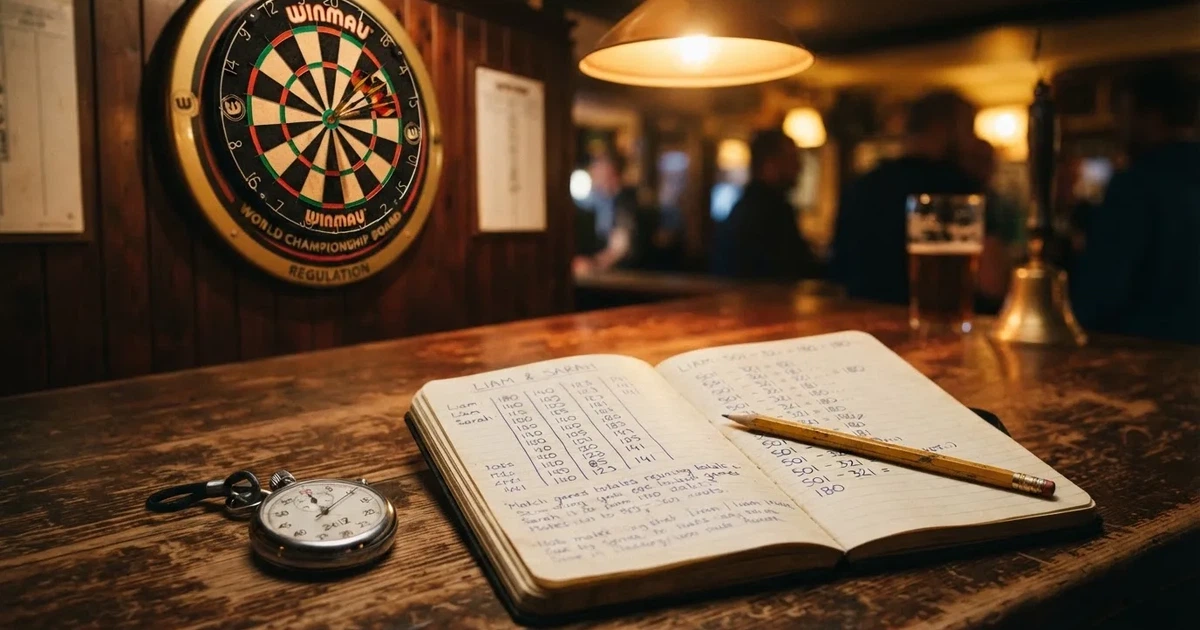
A tip is the meeting of three things a punter can actually hold. The first is information: a player’s recent results on the relevant stage, a head-to-head, an average, a checkout percentage, the conditions under which a leg tends to close quickly. The second is a probability derived from that information — usually through a model, sometimes through a long look at the form table. The third is a price the bookmaker posts, expressed either as a fraction (5/2, evens, 1/2) or its decimal form (3.50, 2.00, 1.50). Where the punter’s probability exceeds the implied probability of the price, after the bookmaker’s margin is taken out, the bet has an edge. That edge — small, often two or three percentage points over the long run — is what a tip finally names.
It never becomes a guarantee. Three reasons in particular. Form turns; sample sizes on a televised tour are small enough that a 55% win rate over six months is barely distinguishable from noise. Pressure changes players, and the players who reach the later rounds at Alexandra Palace or in the Premier League are the ones whose temperament holds; the form model cannot see that. And the bookmaker’s margin — the slice of every pound bet the firm keeps on average — is built into every price before the punter ever looks at it, so the price the tipster publishes is not a fair reflection of true chance even on a perfect day.
The honest consequence is that a tip is a reason to look at a bet, not a reason to place one. A working bankroll absorbs losing runs. A working staking plan sizes each bet as a small percentage of that bank so a single upset does not matter. A working record tracks decisions, prices and outcomes, so the punter can see over a quarter or a year whether the edge is real or imagined. None of that is glamorous, and none of it shows up in a headline. It is also the entire content of being a long-term punter rather than a weekend guesser.
A tip is a reason to look at a bet. A record tells you whether the tip was worth listening to.
Form, Head-to-Head, and Why Both Lie Sometimes
Form on the televised PDC circuit compresses quickly. A player who reaches a semi-final one month can be out in round two the next, especially on the ProTour ladder where minor changes in finishing concentration carry through. Head-to-heads help — two players with twenty meetings and a clear pattern are telling you something — but the sample against a single opponent can be thin, the conditions varied, and the betting format of each match different.
What does survive, and what good punters lean on, are the boring aggregates: three-dart average over the last six to twelve months, percentage of doubles hit, percentage on the primary scoring bed. These do not predict legs. They narrow the field in a way that survives the variance, and a market of forty or fifty players becomes a market of perhaps ten once a reasonable form window is applied. From ten to one is still a long walk, and odds help with it.
Value, Defined as a Gap Between Two Probabilities
Value is not a feeling. It is a number. If a player has, on the model, a 40% chance of winning a match and the bookmaker’s price implies 33%, the difference is value. Place the bet at a sensible stake and repeat the exercise thousands of times, and the value shows up as profit. Miss the value — back at 28% when the model says 30% — and the absence of value shows up as loss over the same sample.
This is the only reading of “value bet” the page uses. The phrase is often debased in marketing into a vague recommendation, sometimes into a claim of a certain win. A value bet, in the sense that matters, is a price the punter judges generous. The punter may be wrong; the definition makes the wrong judgement falsifiable by the record.
The Record That Beats the Tipster
A spreadsheet costs nothing. So does a notepad. Every bet written down with date, match, selection, price, stake and reason is a data point in the punter’s own audit. After fifty such entries the question answers itself. If the punter is beating the closing line — the last price the bookmaker shows before the match starts — by a margin worth the time spent, the hobby is paying for itself in probability. If not, the time is better spent on something else. Either way the answer is one a tipster can never give, because the tipster’s record is not the punter’s record.
Reading Darts Markets Without Trusting Them
A darts match offers more markets than the obvious match-winner, and a working punter picks the market by what the price actually reflects, not by what feels interesting. Match winner for the outright pick. Correct score in sets, especially in longer-format matches, where the price is built from leg-by-leg probabilities. Handicap, where one player starts the match “down” a set or a leg in the eyes of the market and the price reflects the adjustment. Most 180s, highest checkout, race to N legs — player-prop markets that the bigger firms support well, the smaller ones thinly.
Behind each market sits the bookmaker’s margin. This is the figure the marketing copy never states plainly. Two quotes can sum to 1.92 and look like an even contest, when the true probabilities are 53/47 or 54/46; the bit missing between 100% and the implied total is the margin. Add the implied probabilities of every outcome in a market and the sum exceeds 100% — sometimes by a few percent, often by more on niche markets and outrights. That excess is the bookmaker’s built-in edge on that market, distributed across every selection equally.
A 1.90 / 1.90 market, used throughout this guide as an illustrative example, sums to an implied 105.3% — each side priced as a 52.6% shot when the bookmaker’s view of the match is closer to 50/50. The gap is the margin. State the result as a band: a typical two-way darts market runs at 5% to 10% overround depending on the firm, with bigger prices, longer-shot markets and outrights sitting higher.
What does this do to a tip? The tipster publishes a pick at 3.50 (decimal) or 5/2 (fractional). If the tipster’s true probability for the pick is 30%, the implied probability of the price is 28.6% — a value gap of 1.4 points. The bookmaker’s margin, on top of any wrongness in the model, eats into that. The edge that looked obvious becomes a thin walk. This is why betting only at short prices (anything odds-on, anything evens or shorter) sounds like discipline and is in fact a path to giving the firm a steady percentage of stake over time.
Markets to be careful with, as a rule of thumb. Outright tournament winner markets run with large margins at the long end of the bracket — a player quoted at 150/1 is being asked to beat 150 others over many rounds, and the implied probability is well under 1%. Player-prop markets on a single match (most 180s, highest checkout) trade thinner liquidity than the match winner, and the margin pads out. Accumulator legs compound margins. A four-fold accumulator is not four markets added; it is four markets multiplied, and the overround compounds with them.
The Market Margin, in Plain Numbers
The calculation behind every price is straightforward once stated. For a market with implied probabilities of A%, B%, C%, … , the margin is (A + B + C + …) – 100%. The payout share is 100% minus the margin. For the illustrative 1.90 / 1.90 example, the implied probabilities are 1/1.90 each, or 52.63%, summing to 105.26%. The overround is 5.26%, the payout share is 95.0%, and the margin is 5.0%. The further the price runs from evens, the wider the individual margin per selection; the lower the overround on a market, the better the deal across the board — but lower overround markets are not always available on the events a punter wants to back.
Settling and Staking — the Mechanics
A back bet’s return is stake × odds (decimal). Net profit is stake × (odds – 1). A £10 single at 5/2 (3.50 decimal) returns £35 — £10 stake returned, £25 profit. A £10 each-way bet at 5/2 doubles the stake (£20 total) and pays on the win portion at full price and on the place portion at a reduced fraction of the price, with the place fraction set by the bookmaker and the sport; each-way does not double the profit on a win. An accumulator carries the same maths leg by leg, with each leg’s potential return becoming the next leg’s effective stake; a four-fold at 2.00, 2.00, 2.00 and 2.00 is one bet at 16.00, and a £5 stake pays £80 if all four win.
Cash out, where offered, lets the punter settle the bet early at a price the firm quotes at that moment — usually worse than a fair mid-price between the original and the eventual settling price, with the gap being the firm’s live margin. Each-way, accumulators, bet builders, cash out: each of these has a price the firm is quoting, and each price carries the firm’s margin in it. The punter who notices this pays less of the bankroll to the firm, which is the only repeatable form of edge available outside of an honest model.
What a Bookmaker Sees When It Looks at Darts
Darts is, from a bookmaker’s point of view, an unusual sport. The action is concentrated — a televised tournament is a long sequence of short matches, all of them decided by doubles, all of them switching on a single visit. Liquidity is uneven: a televised final draws thousands of bets in minutes, a first-round ProTour match draws handfuls. The outright market on a World Championship is, for a few weeks in December and January, one of the largest outright books in the calendar — which is why the margin on the long shots is wide and why a patient punter waits for the outright book before the tournament begins.
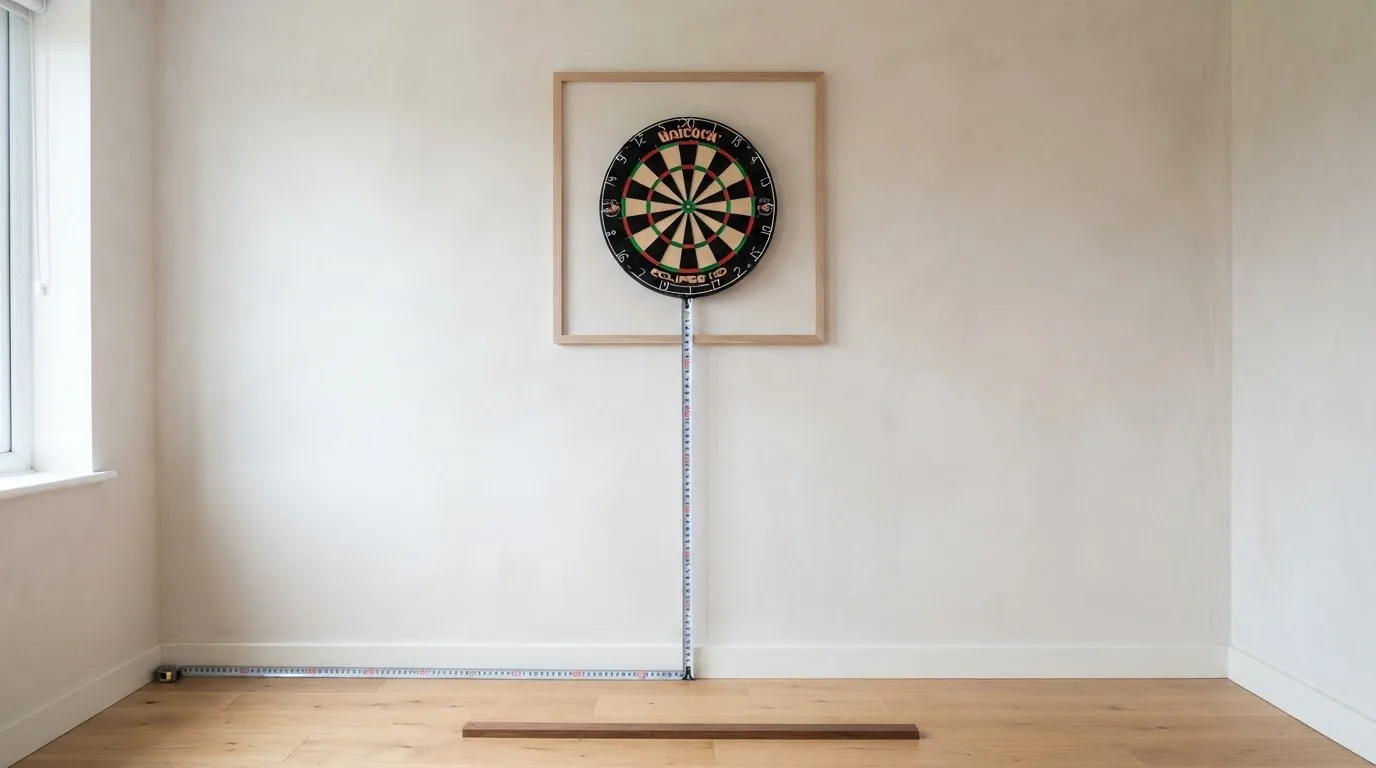
The sport itself, on a standard dartboard, splits into 20 numbered segments, each with a single, a double and a treble; the bullseye is worth 50 and the outer bull 25. In 501 darts — by far the most common professional format — players start at 501 and must finish on a double or on the bull, which is why a checkout is the climax of every leg. The highest possible three-dart finish is 170 (triple 20, triple 20, bullseye), and the minimum possible leg is nine darts. The standard throw distance is 2.37 metres (7 ft 9 in), with the bullseye 1.73 metres above the floor — fixed across the professional game. None of this predicts a winner, but the structure shapes what markets exist and what a reasonable price looks like.
Match formats at the top of the PDC ladder run to a set distance. The 2026 PDC World Darts Championship — which ran from 11 December 2025 to 3 January 2026 at Alexandra Palace, with 128 players — used a format of first-to-three sets in rounds one and two, first-to-four in rounds three and four, first-to-five in the quarter-finals, first-to-six in the semi-finals, and first-to-seven in the final; the eventual champion, Luke Littler, beat Gian van Veen 7–1 in the final, on a £5,000,000 prize fund with £1,000,000 to the winner. Format length matters to a market: the more sets, the closer the result converges to true ability and the less upset variance the bookmaker has to absorb.
The governing landscape is split between two bodies. The PDC runs the televised tour, the World Championship, the Premier League and the bulk of what a UK punter sees on screen; the World Darts Federation oversees the amateur and international game, including the BDO lineage and separate world championships. A UK bookmaker’s darts product is, in practice, a PDC product with the WDF events folded in for completeness at the margins of the calendar. Two products, not one, and most UK books do not price the WDF markets tightly.
Where the Bookmaker’s Edge Is Thinnest — and Where It Is Not
The match-winner market on a televised match, in the hours before the first dart is thrown, runs the tightest overround a bookmaker offers on the event — partly because liquidity is highest there, partly because the price has had a chance to settle against sharp money earlier in the week. Correct score, set betting and handicap markets run wider, in the 7% to 10% band. Outright winner markets, on the day the tournament is announced, can run well over 30% overround on the longer end of the bracket. Player props — most 180s, highest checkout — vary by firm; the larger books price these to a few percent overround on high-profile matches and pack them out at smaller meetings.
This is the answer to “where to bet on darts” in the literal sense. The licensed UK bookmakers carry darts; the larger ones carry it well; the smaller ones carry it as an accessory. None of this licences a tip — only the punter’s own record does.
Ten Licensed Bookmakers for Darts in 2026 — How They Differ
The table below is built from what each operator states on its own pages, the licence conditions attached to it on the Gambling Commission’s public register, and the offer as worded by the operator — not from editorial opinion and not from any third-party league table. A licence number on the Commission’s register is the working definition of “licensed to serve customers in Great Britain”; a row in this list is not. The angles the table picks out are the licence holder and what the operator’s own terms say on the subject most relevant to a darts punter; everything else about the brand reads in the sections that follow.
| Brand | Licence holder (Gambling Commission account) | What the operator’s own terms state on the relevant subject |
|---|---|---|
| Paddy Power | PPB Counterparty Services Limited (39439) | App offers Bet Builder+, Super Sub (a bet rolls over to the replacement if the player named is substituted), expanded Win More markets, and player and ACCA stats |
| Betmaster | BM Solutions GB Ltd (65699) | States it holds a UK remote gambling licence and verifies customers before play |
| BetGoodwin | Goodwin Racing Limited (2927) | Pays Best Odds Guaranteed on all UK and Irish horse and greyhound racing, up to £1,000 |
| Sporting Index | Sporting Index Limited (27343) | New-customer offer is a £10 fixed-odds qualifying bet at minimum odds of 1/2 unlocking free fixed-odds and spread bets; qualifying bet cannot be placed in-play or cashed out early |
| LiveScore Bet | LiveScore Betting and Gaming (Gibraltar) Limited (56859) | Accepts debit cards (Visa, Mastercard), Apple Pay, PayPal, Pay by Bank (Open Banking) and Revolut Pay |
| Midnite | Midnite Limited (101839) | Welcome offer: £5+ on pre-match odds of EVS (2.0) or greater within 14 days unlocks £25 in free bets and 50 free spins, valid for 7 days |
| DAZN Bet | DZBT Limited (48756) | Deposits start at £5 by debit card, Apple Pay, Paysafecard, Trustly and Skrill; £20 by PayPal; no processing fees stated |
| Lottoland | EU Lotto Limited (38991) | App combines casino, lottery betting, sports betting and scratchcards under a UK licence |
| Fitzwilliam Sports | SBKI Limited (48760) | Phone and live chat with the office open 09:00 to 21:00, Monday to Sunday; messenger replies typically within 90 seconds |
| William Hill | WHG (International) Limited (39225) | Best Odds Guaranteed on UK and Irish horse racing from 08:00 on the day of the race, on singles and multiples; not on ante-post, tote or pari-mutuel bets |
Paddy Power — a Built-Out Product, With the Usual Hidden Edges
Paddy Power’s app carries the menus a punt-shop regular expects — Bet Builder+, a Popular Bet Builders rail, Super Sub where the bet rolls over to the replacement if a player you named withdraws, expanded Win More markets, plus player and acca stats laid alongside the betting slip. The product is built out, which is what carries over to darts: most televised matches have player-prop markets (most 180s, highest checkout) priced to a tighter margin than the outright bracket, and an acca builder is useful when a Premier League night has enough fixtures for a small multi. The licence is held by PPB Counterparty Services Limited under Commission account 39439, in the category of remote general betting standard (real events); the firm has been around long enough that the trading patterns are well-worn.
The verdict: best for the punter who treats darts as a weekly feature of a wider betting book, where the platform’s tools — Super Sub, the builder rails — earn their place across several sports at once. Less suited to the model-driven outsider, whose edge sits in prices no platform can show.
Betmaster — a Smaller Name With the Right Paperwork
Betmaster sits on a Commission account held by BM Solutions GB Ltd (account 65699), licensed in Malta and registered to trade in Great Britain under the Commission’s remote betting licence. The brand’s marketing footprint is lighter than the big firms; the account range is narrower; the depth of the darts price book is shallower than a Paddy Power or a William Hill. What is on the page is the documentation: states it holds a UK remote gambling licence and runs the verification checks before a customer can place a bet.
The verdict: a workable option for the punter who is comfortable with a smaller menu and wants to know the licensing line is clean — which it is, on the Commission’s register. Less suited to a darts punter who runs the outright book weekly and wants the deepest tournament coverage.
BetGoodwin — the Racing-First Shop With a Darts Footnote
Goodwin Racing Limited, under Commission account 2927, runs BetGoodwin as a brand aimed first and foremost at UK and Irish racing. The headline offer is Best Odds Guaranteed on all UK and Irish horse and greyhound racing, up to £1,000 — which tells you where the trading desk’s attention goes. Darts is present in the product but the depth is the depth of a racing book with darts added, not the depth of a sportsbook that happens to also have racing.
The verdict: useful as a second account for a punter whose primary interest is racing, with a darts side-bet on major televised nights. Less suited as a primary darts book for a punter whose calendar is set by the PDC.
Sporting Index — the Spread-Betting Lens on Darts
Sporting Index holds a Commission account under Sporting Index Limited (account 27343) and combines a fixed-odds sportsbook with a spread-betting product that quotes buy and sell prices on totals, favourites and race indexes. The new-customer offer is structured: place a £10 fixed-odds bet at minimum odds of 1/2, and three £10 fixed-odds free bets, three £5 Total Goals spread bets, three £5 Winning Favourites spread bets and a £1 Race Index spread bet become available — with the disqualifying rule that the qualifying bet cannot be placed in-play or cashed out early. Spread betting carries its own accounting: losses on a spread position can exceed the deposit, and a losing spread on a darts Total 180s market can cost more than the stake that opened it.
The verdict: right for a punt-shop regular who already trades spreads on football or racing and wants the same market mechanics on darts. Less suited to a first-time darts punter; the cost of being wrong on a spread is steeper than on a fixed-odds single.
LiveScore Bet — a Payments Menu That Suits the Mobile Punter
LiveScore Bet, run by LiveScore Betting and Gaming (Gibraltar) Limited under Commission account 56859, leans on the LiveScore scores product for traffic and converts that traffic into a sportsbook. The payments menu is the practical point: debit cards (Visa and Mastercard), Apple Pay, PayPal, Pay by Bank via Open Banking, and Revolut Pay — all the major mobile rails, no processing-fee wording in the deposit help page. For a punter whose bank is the phone, the deposit and withdrawal paths are short.
The verdict: a good fit for the mobile-first punter who wants to fund and pull out without leaving the app. The lack of broader trading depth on niche events makes it a secondary choice for the punter who keeps a serious long-term record.
Midnite — Sharp Product, Stiff Welcome Maths
Midnite Limited holds Commission account 101839, the licence line behind a site that publishes in-play events, an acca builder, popular accas and price boosts with published maximum-stake limits. The welcome offer: new customers who bet £5 or more on pre-match odds of EVS (2.0) or greater within 14 days of sign-up receive £25 in free bets and 50 free spins, valid for 7 days. The structure is typical — a small qualifying bet, a free-bet bundle, a casino add-on — and the terms on the free bet (a 7-day clock, a minimum price floor for the qualifying bet) are the kind of marketing window that loses casual readers more time than it gains them value.
The verdict: built for the punter who wants a tight in-play product on the televised darts nights and reads the small print on bonuses. It is not the right choice for the punter who wants to avoid mixed-product marketing altogether.
DAZN Bet — the Streaming Brand With a Book
DAZN Bet, run by DZBT Limited under Commission account 48756, sits on top of the DAZN streaming brand and offers the betting product as a complement. Deposits start at £5 across debit card, Apple Pay, Paysafecard, Trustly and Skrill, and at £20 by PayPal — no processing fees stated on the help page. The deposit floor sits below many competing brands, which suits the smaller-stake punter; the £20 PayPal floor above it suits nobody trying to test the rails.
The verdict: a workable bet-and-watch pairing for a punter already on DAZN for the streaming. Less suited to the punter after a full-feature sportsbook first and a streaming product second.
Lottoland — a Lottery House With a Sportsbook Added
Lottoland, under EU Lotto Limited as Commission account 38991, made its name in lottery betting and added a sportsbook to keep customers within the app. The app combines casino, lottery betting, sports betting and scratchcards under one licence and one wallet. Darts is a line item in the sports product, not the centre of it; outright coverage on a World Championship is present, week-on-week tour coverage is thinner.
The verdict: a clean fit for the punter who already plays the lotteries and wants a wallet-level add-on rather than a fresh account. Less suited to a punter whose darts calendar is the principal reason for the account.
Fitzwilliam Sports — the Phone-Trade Shop
Fitzwilliam Sports, operated by SBKI Limited under Commission account 48760, is one of the few firms that still keeps a phone room open — 09:00 to 21:00, Monday to Sunday, with live chat alongside and messenger replies generally within 90 seconds. The trading approach is hands-on: the staff know a customer by the second call, and the price book leans on relationships the platform builds with regulars. Darts coverage is present without being broad; the pitch is the trade desk itself.
The verdict: a fit for the punter who wants to call a person and have the bet on in a few minutes rather than fight with a betting slip. Less suited to the mobile-only punter whose entire betting life is on the app.
William Hill — the Long-Memory Brand on Horse Racing, and a Stiff Shop on Darts
William Hill, run by WHG (International) Limited under Commission account 39225, keeps Best Odds Guaranteed on UK and Irish horse racing from 08:00 on the day of the race, on singles and multiples; the rule does not extend to ante-post, tote or pari-mutuel bets. The darts book is broader than BetGoodwin’s, narrower than the platform-only firms, and the trading depth on a televised final is comparable to anyone in the market. The shop footprint and the long customer memory still pull weight for the punter who can place a bet over the counter as well as on the app.
The verdict: the natural shop for a punter whose primary interest is horse racing with a weekly darts side-bet on the televised nights. Less suited as the only account for a punter whose season runs from World Championship to Premier League to World Matchplay and back.
The Legal Frame Around a Darts Bet in Great Britain
The whole commercial market is licensed under the Gambling Act 2005, which covers Great Britain — England, Scotland and Wales. Northern Ireland sits outside the Act under its own older law, so a “Great Britain licence” is the term to use, never a UK licence that purports to cover Northern Ireland. The Act’s requirement, since the Gambling (Licensing and Advertising) Act 2014, is that an operator whose remote facilities are used by customers in Great Britain needs a Commission licence wherever the operator itself is based — a Curaçao, Maltese or Gibraltar licence, where the operator has one, does not stand in for the Commission licence, and a GB licence is compulsory at the point of consumption. Providing gambling facilities in Great Britain without the licence the Act requires is an offence aimed at the operator under section 33 of the 2005 Act — not at the customer who merely bets on an unlicensed site.
The Commission is a non-departmental public body sponsored by the Department for Culture, Media and Sport, and its public register can be searched by business name, trading name, domain or account number; that register is the working answer to “is this brand licensed?”. Never call a single brand “the only” licensed one — the register lists more licensed operators than any article features, and what makes a brand licensed is the line on the register, not a place in a comparison list. Financial spread betting is regulated by the Financial Conduct Authority, not the Commission, and is a separate regime with its own costs: spread-betting losses can exceed the deposit.
Licence categories are worth knowing by name, because a row on the register will quote one. Remote general betting standard (real events) is the category that covers a darts book; remote general betting standard (virtual events) is its simulated-events sibling; remote general betting limited is a smaller menu; remote pool betting covers pool products on horse and dog racing; remote betting intermediary is the licence for a betting exchange. A row on the register names its categories.
Minimum age 18, with name, address and date of birth verified before a customer can deposit or gamble (in force since 7 May 2019), including with a free bet or a bonus — anonymous play is not a feature of a GB-licensed site, and any sign-up flow that asks for these details before the first deposit is following the rule, not inventing a barrier. From 30 August 2024 the financial vulnerability check (LCCP condition 3.4.4) applies once a customer’s deposits minus withdrawals exceed £150 in a rolling 30 days, in force since 28 February 2025; the check looks at public records such as bankruptcy or county court judgments, and is not an affordability check. Financial risk assessments (the affordability checks of the press) were announced in a Commission article of 7 July 2026 in a staged plan with no start date — “announced, staged, no start date” is the line to write. Operators must offer a gross deposit limit under RTS 12, with the first changes in force since 31 October 2025 and a second phase postponed to 30 September 2026; whether the second phase is live is not established.
GAMSTOP is the national multi-operator online self-exclusion scheme and a mandatory licence condition for online operators since 31 March 2020. Periods are six months, one year, five years, or five years with auto-renewal; after the minimum period, the exclusion stays in place for a further seven years unless the customer asks GAMSTOP to remove it. The scheme covers online sites and apps; betting shops run a separate off-line service. GAMSTOP is a strong reason to stick to licensed brands: an unlicensed site does not sit inside GAMSTOP, and a self-excluded customer who walks into one has no UK-level protection to fall back on. Help for gambling-related harm runs through GamCare (the National Gambling Helpline), GambleAware, NHS gambling clinics and Gamblers Anonymous — all named and none of them a substitute for stopping the betting.
What may be bet on is not set out by statute. An operator holds a licence for a category and offers markets under its own rules and the LCCP. In-play betting is allowed under GB licences, with the controls living in the operator’s licence conditions and in its customer-protection duties — never write that in-play is “unrestricted” as a legal conclusion. Esports sit inside the standard events regime; virtual events are a separate category; bets on politics, TV shows and novelty markets are offered by GB bookmakers and no statutory prohibition was found. There is no state-set stake ceiling for sports betting, and limits are the customer’s choice, with operators free to set their own maximums and to restrict individual customers.
Bonuses, Marketing, and the Wagering Cap
Advertising is not licensed by the Commission; the non-broadcast route runs through the CAP Code and the broadcast route through the BCAP Code, enforced by the ASA, alongside the LCCP marketing conditions. CAP Code section 16 requires gambling marketing to be socially responsible, not of strong appeal to under-18s, and not to feature anyone who is or seems to be under 25 in a significant role (with an exception for marketing placed where a bet can be made directly); the rule governs who may appear in the advertisement, not who may place a bet. Since 19 January 2026 the wagering requirement on bonuses is capped at 10x — a £10 bonus at 50x wagering needs £500 of bets; under the cap no more than £100 of wagering. Mixed-product promotions, an offer that requires gambling on two or more product types such as betting and casino, are banned. Whether the cap applies to free bets with no wagering condition, and any cap on the money value of a bonus, are not established.
The “whistle-to-whistle” rule is an industry code, not a statute: since 1 August 2019 betting advertisements are not broadcast on UK TV from five minutes before a live sporting event to five minutes after it, before the 9pm watershed — horse and greyhound racing excluded. The Premier League clubs’ withdrawal of gambling sponsorship from the front of matchday shirts from the 2026/27 season is voluntary, not law; sleeves and hoardings remain. Operators carry responsibility for marketing run by their affiliates. The “free bet” the operator names as a generous offer is rarely generous once the wagering condition is read; the value calculation in this guide explains that.
Tax on the Bet — and on the Bookmaker
The player pays no tax on betting winnings in Great Britain. General Betting Duty is the operator’s tax on its gross profits, currently 15%; from 1 April 2027 a remote betting rate of 25% applies within it, while remote bets on UK horse racing, bets on self-machine terminals in licensed premises, pool betting and in-person betting stay at 15% — these are a UK government policy paper’s published lines. Whether operators pass duty on through their odds is not established, and the player is not charged duty; the duty is the operator’s cost, factored into the margin. Spread betting carries its own rates (3% financial, 10% other). The Commission’s statutory levy is a separate charge, again on the operator’s side, not a tax on the punter.
Offshore — What a Punter Forfeits by Betting Outside GB
A GB licence is the right line to read. An unlicensed site, by contrast, takes none of the British protections with it. No GAMSTOP coverage means a self-excluded customer is not blocked at the door; no Commission complaints route exists; no approved dispute-resolution body hears a complaint about a withheld withdrawal; no British consumer redress kicks in if funds are missing; the 10x wagering cap and the £150 vulnerability check do not apply, and the operator’s own rules — whatever those are — are the only rules that govern the account. Enforcement against unlicensed sites runs through cease-and-desist notices, search-engine referrals and work with registrars, hosts and payment providers; the Commission has been given, or is about to receive, court-order DNS blocking powers — never write that ISP blocking is in operation. The honest framing for a British punter comparing a licensed bookmaker to an unlicensed one: licensed equals checks, limits, GAMSTOP and the bonus cap, but also verification before the first bet; unlicensed equals none of those protections and a real possibility of the firm keeping the funds. Neither side is “the safe choice” by default.
Safer Gambling for a Punter Who Plans to Stay One
GAMSTOP is the front-line tool for online self-exclusion and is the route to take if a punter has decided the betting has to stop. A GB-licensed bookmaker offers deposit limits — the customer’s choice, with a fixed time frame — and product restrictions; the LCCP framework asks the operator to interact with a customer showing signs of harm. A financial vulnerability check fires when deposits minus withdrawals cross £150 in a rolling 30 days, and a financial risk assessment, when staged, may ask the punter for evidence of income or savings at higher spend. None of that is a sanction on a punter who bets within their means; it is the regime a licensed site runs because the licence requires it.
Outside the operator’s controls, GamCare’s National Gambling Helpline, GambleAware, the NHS gambling clinics and Gamblers Anonymous all work with people who want to stop, take a break or talk to a counsellor. A punter who recognises a pattern should use them.
What a Bonus Is Actually Worth — and Why “Free” Means Almost Nothing
Three numbers matter on any bookmaker’s offer: the bonus value, the wagering multiple and the time clock. The bonus value is the headline; the wagering multiple says how many times the bonus must be turned over in qualifying bets before any profit can be withdrawn; the time clock says how many days that turnover must happen in. A £10 bonus at 10x wagering, the cap in force since 19 January 2026, needs £100 of qualifying bets — typically at a minimum price floor of 1/2 (1.50 decimal) or higher, and the bonus stake itself is not usually returned when a free bet wins.
Worked against the darts book, the typical structure reads like this. A £10 free bet on a darts match-winner at 3.00 (2/1) pays £30 if it wins — but the stake was a free bet, so the punter keeps the £20 profit, not the £30 return. The £20 looks like £20 of value; the value calculation asks what the free bet is worth on average over many bets, which is the offer size times the odds-minus-one divided by the odds, times the payout share of the market being bet on. At 3.00 on a market with a 95% payout share, a £10 free bet is worth roughly £10 × 2/3 × 0.95 = £6.33 — a long way short of the £10 the marketing copy calls it.
The wagering-requirement math runs the same way. Required turnover is the bonus base (the bonus, or bonus plus deposit, as the operator states) times the wagering factor; the number of bets is turnover divided by the stake per bet; only bets at or above the minimum price count, and the market margin sits inside every qualifying bet. A £100 turnover at a market margin of 6% costs the punter, in expectation, £6. The bonus pays less than the headline; the turnover costs more than it looks. Net result: the bonus is a discount on the firm’s terms, not a gift. The punter who reads the small print and only claims offers they would take anyway does better than the punter who chases the headline.
A accumulator insurance — the firm’s refund of a stake if one leg of a multiple loses — costs the firm only the worst case, which is one losing leg on a multi where the other legs have already won. The price of an accumulator insurance bundle is in the price the firm quotes on the multi itself, which already runs with a compounded overround. A price boost — a single price raised above the firm’s normal line — is, in the moments after it goes live, the most genuinely competitive offer a bookmaker runs; the boost window is short and the stake limit tight on purpose.
A bet builder — a multi assembled leg-by-leg from one match — also compounds margins, even when the firm publishes a generous headline price. The way to read the offer is the way to read the price: with the overround visible. The market margin tells the story the marketing copy does not.
In-Play on Darts, and How Cash Out Sits Next to It
Darts has an unusual live-betting shape: matches are short, the breaks are long, and the scoring is visible on screen. The televised nights — Premier League floors, World Championship nights at Ally Pally — draw serious in-play liquidity; the firm offers next-leg winner, race to N legs, handicap markets that adjust set-by-set, and (on the larger books) player-prop markets that are in-play throughout. The mid-leg markets move quickly; price spikes correspond to breaks of throw; the model-driven punter trades the in-play price against their pre-match view.
Cash out, where offered, lets the punter settle the bet at a live price the firm quotes. The price the firm quotes is rarely fair — the spread between cash-out and the live market on an exchange (where one exists) is wider than the spread on a normal live market, with the gap being the firm’s margin in real time. For the punter who wants to bank a certain return on an acca that has nearly landed, cash out is the only path; the cost is in the price. A punter who places a small multi for entertainment value and treats cash out as part of the experience loses the natural edge of letting the bet run to the whistle.
The model-driven punter trades in-play against pre-match, not against cash-out.
Picking the Right Bookmaker for the Kind of Punter You Are
A punter whose interest in darts is one fixture among many in a wider book — racing, football, the Premier League golfing events — wants a platform that treats darts as a complement and runs the full menu. A punter whose interest is darts primarily wants the televised-night depth and the outright coverage on a World Championship or a Premier League season. A punter who trades by phone wants a desk. A punter who funds entirely from a phone wants a payments menu that suits the rails. None of these is right for everybody; each of them rewards a particular punter and underwhelms another.
The licence line is the floor: every brand in the table above holds a Gambling Commission remote licence, and every one of them is a GAMSTOP member. The line is not the ceiling — the depth of the trading book, the generosity of the offer, the speed of the payments, the quality of the in-play are where these brands separate, and the section above names each one in its own terms.
Frequently asked questions
How do you bet on darts?
Pick a licensed bookmaker, register an account and verify the basics (name, address, date of birth — required at GB-licensed sites since 2019). Open the darts tab, choose a match or tournament and pick a market (match winner, correct score in sets, handicap, most 180s). Enter the stake, confirm the odds shown, and the bet is placed. In-play markets are settled at the price shown at the moment a meaningful event occurs, not at the price shown when the bet was placed.
What is darts betting?
Darts betting is wagering on the outcome of a darts match or tournament — who wins, the score, the handicap, player props like most 180s, and outright tournament winner markets over many rounds. The bets are priced by the bookmaker; the price carries the firm’s margin inside it; the bet settles at the price the punter took, irrespective of later price moves. A bettor in Great Britain places those bets through a bookmaker licensed by the Gambling Commission.
How does darts handicap betting work?
A handicap gives one player a notional head start or deficit in sets or legs, with the price adjusted to reflect it. A player quoted at -1.5 set handicap must win by two sets or more for the bet to land; a player at +1.5 can lose by one set and still win the bet. The handicap absorbs the favourite’s perceived edge into the line, which is why short-odds favourites are commonly priced this side of a match rather than at 1.20 on the moneyline.
What is a value bet, and why is no tip ever certain?
A value bet is a price the punter judges to imply a lower probability than the punter’s own estimate of the chance — the gap being the punter’s edge. No tip is ever certain because form turns on small samples, the headline margin pads the price, and a single visit at the oche can flip a leg the form model never saw coming. A value bet is a reason to look at a selection; the record, kept across many bets, is the only test of whether the value was real.
What is the bookmaker’s margin, and how is it visible in the odds?
The margin is the slice of every pound bet the firm keeps on average across a market, expressed as the gap between the implied probabilities of all outcomes and 100%. For an illustrative two-way darts market priced at 1.90 / 1.90, the implied probabilities are 52.63% on each side, summing to 105.26% — which means an overround of 5.26%, a payout share (Quotenschlüssel) of 95.0%, and a margin of 5.0%. Real-world darts markets typically run with margins of 5% to 10% on a match winner, higher on outrights and player props. The margin is why no price is a fair reflection of true chance.
How is the return on a bet worked out from the stake and the odds?
The return is stake × decimal odds. A £10 single at decimal odds 3.50 returns £35 — the £10 stake back and £25 of profit. The decimal odds and the fractional form are the same price: 5/2 in fractional terms is 3.50 decimal, since 5 divided by 2 plus 1. A combination bet multiplies the legs together; a four-fold accumulator at 2.00, 2.00, 2.00 and 2.00 is a single bet at 16.00, with a £5 stake returning £80 if all four legs win. Net profit is stake × (odds − 1); the margin sits inside the price and is not deducted again at settlement.
Tennis, darts & cue sports – systembetsguide.com
Content created by the «systembetsguide.com» team
