
£5 deposit betting sites in Great Britain — the honest lowdown on minimum deposits from £5
 Available in US
Current as of 30 October 2026 · verified against the Gambling Commission’s public register and each operator’s own published terms.
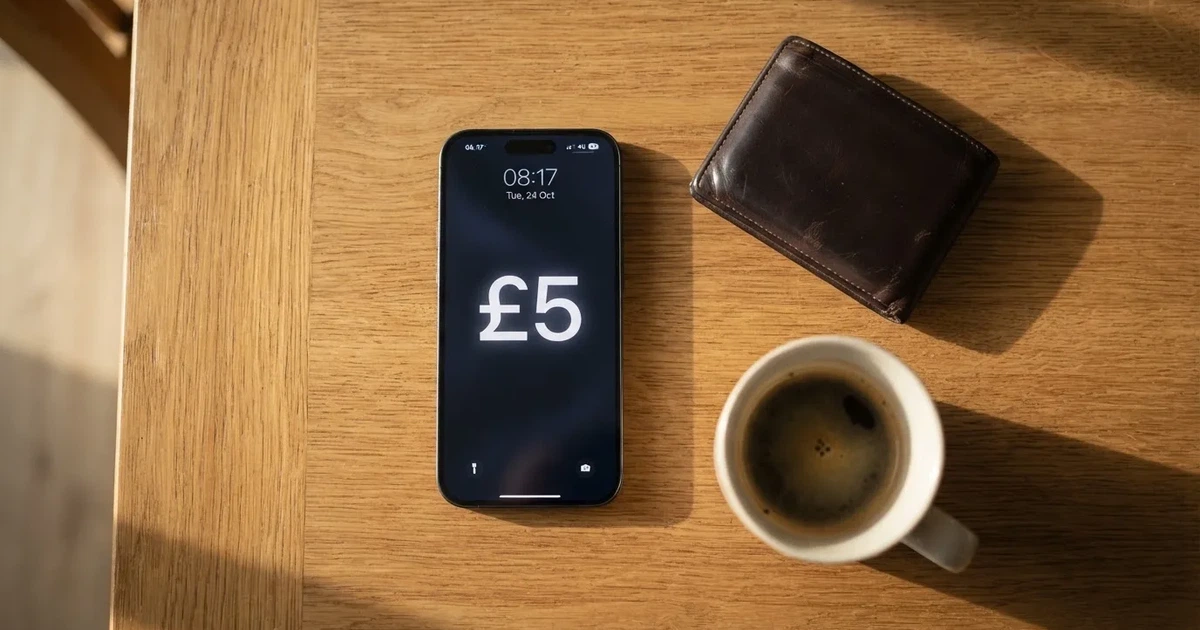
A fiver still opens a betting account in Great Britain, but the cost of using one is not the deposit itself. It is the house margin inside every price, the verification check before the first deposit goes through, the bonus term that turns a free £5 into several hours of qualifying bets, and the slow channel back to a bank account when a small balance eventually needs to come out. The honest lead on a £5 minimum is that no British rule forces any bookmaker to set it that low, that credit cards have been off the table since 14 April 2020, and that the Gambling Commission’s register is the only test of who actually holds a remote licence to take that £5. This page works through that: which operators take £5, what they take it on, what they give back, what they keep, and what a low-stake punter is giving up by sitting just above the floor.
Safer gambling tools come before the deposit, not after
The single most useful number for a small-budget punter is £150. That is the rolling 30-day net deposit threshold (deposits minus withdrawals) above which a licensed operator must run a financial vulnerability check — a public-record check such as bankruptcy or county court judgments, not a credit reference and not an income audit. The check has been in force since 28 February 2025 under Licence Conditions and Codes of Practice (LCCP) condition 3.4.4. Anyone staking five pounds at a time does not approach it for months of weekend betting. The rule matters for this page because it places a hard floor on what “small” means to a regulator: below the threshold, the controls are time-out, self-exclusion, deposit limits set by the customer, and GAMSTOP, not the operator peering over each slip.

GAMSTOP itself is the first safeguard to set, before any deposit at any GB-licensed brand. It is the multi-operator self-exclusion scheme and a mandatory licence condition for online operators since 31 March 2020. Exclusion periods run six months, one year, five years, or five years with auto-renewal, and after the minimum period the exclusion stays in force for a further seven years unless the customer asks GAMSTOP to remove it. Because the condition is mandatory for every brand this page reviews, GAMSTOP is what binds them together from a player’s point of view — one registration blocks every site in the comparison at once, which is the design. Betting shops use a separate offline scheme and are not covered.
Deposit limits sit alongside GAMSTOP rather than below it. Operators must offer a gross deposit limit on a fixed time frame, and a phased tightening of those rules has applied since 31 October 2025, with a second phase postponed to 30 September 2026. There is no state-set ceiling on deposits or losses; the customer chooses the limit and the operator has to honour it across the products it offers. A punter who sets a weekly £20 limit is choosing to lose access to most of the offers in this comparison the moment an attractive promotion arrives — that is the trade-off, not a flaw.
Identity checks sit just behind deposits. Since 7 May 2019, name, address and date of birth are verified before a customer can deposit or gamble, including with a free bet or bonus. A punter with a £5 limit cannot be anonymous, even on a free-bet promotion, which is the point of the rule. It is the single biggest reason a low-stake account takes longer to open than it used to: the customer waits on a document check rather than a deposit confirmation. The upside is that the same bookmaker, when the day comes to withdraw £20, has already done the work and pays out without further friction.
What the safer-gambling layer cannot do is soften the math. Every price carries an overround; every promotion carries a wagering requirement or a minimum odds line; every stake has a stake return if it wins. A punter on a five-pound budget is paying the same margin per unit as anyone else, and that is where the actual cost of betting sits. Safer-gambling tools are the brakes; the margin is the engine.
The help lines matter even at a £5 spend. GamCare runs the National Gambling Helpline, GambleAware funds treatment, the NHS runs gambling clinics across the regions, and Gamblers Anonymous runs local meetings. A punter who is at the floor because the floor is what they can afford is using the product as designed; a punter at the floor because the floor is what is left after a bad run is using the product beyond its design, and the difference is the kind of thing these services exist to make visible.
Bonuses and free bets, read in the way they cost
A free £5 bet with no deposit is a real product in the British market: small, frequent, almost always tied to a single sport, and almost always followed by a wagering condition the size of the free bet itself. The reader who searches for it tends to picture a banknote handed over. The actual product is closer to a voucher that pays the winnings only, on a market the operator has chosen, with an expiry measured in days.

The mechanics of an offer are not the marketing. Take a £5 free bet at minimum odds 1.60, with a wagering requirement of 1x the free bet amount, a 7-day expiry, and a stake-not-returned clause. Place it on a single selection at the minimum price, win. The return is the winnings only: £5 × (1.60 − 1) = £3.00. Place it at a longer price, say 5.00, and the return is £5 × (5.00 − 1) = £20.00, again winnings only, because the £5 stake is what the operator gave and is not paid back on a win. The punt the reader is being asked to evaluate is not “is the offer generous” but “is the expected value of a free £5 on the markets I actually bet on higher than zero once the expiry and the minimum price are accounted for.”
A matched-deposit bonus is the second shape a £5 deposit meets. The matched-deposit welcome bonus usually arrives as a percentage of the first deposit in free bet tokens, with a separate minimum odds line and an expiry. The £5 deposit then becomes the qualifying bet, the first of several required bets the operator sets, and the bonus arrives only after settlement. The crucial number is the wagering factor and the base it is taken from. Where the wagering factor is the bonus amount, a £25 bonus at 5x means £125 of qualifying bets before withdrawal. Where the base is bonus plus deposit, the same offer means £150 of qualifying bets. The label on the offer is identical in both cases; the cost is not.
Then there is the cap on bonus winnings, where one exists, and the 10x wagering cap in force since 19 January 2026. A £10 bonus at 50x wagering is no longer a permissible promotion in Great Britain — the maximum wagering requirement on any bonus is now ten times the qualifying amount, so a £10 bonus can ask for at most £100 of qualifying bets. Mixed-product promotions are banned outright, so an offer that asks a punter to bet on football to claim free spins on slots, or vice versa, is off the table. These are real changes to the offer landscape and they matter more to a £5 budget than to a £500 budget, because the capped offer removes the worst-paying tier of bonus design and a small account is exactly where a worst-paying tier used to land.
What to look at, in order, on any promotion that crosses this page:
- The wagering factor and what it is taken from. A 5x bonus is half the cost of a 10x bonus; a 5x bonus-plus-deposit is roughly twice the cost of a 5x bonus.
- The minimum odds on each qualifying selection. A 1.60 minimum is half as restrictive as a 2.00 minimum on the same fixture list, because the set of qualifying markets roughly doubles.
- The expiry window. A 7-day expiry on a bonus that needs ten qualifying bets is one bet every sixteen waking hours, which is the wrong way to spend a working week. A 30-day expiry is forgiving.
- The stake-not-returned clause. Where the stake is not returned on a free bet win, the headline odds overstate the value of the offer by the size of the stake; where the stake is returned, the offer is closer to a cash bonus.
- The market restriction. A free bet on any football match is wider than a free bet on the 3pm Saturday television games; a free bet on any horse race is wider than a free bet on the Champion Hurdle.
- The maximum-stake limit, where one is published, on boosted odds and acca insurance. A boosted price on a £5 maximum stake is a different offer from a boosted price on a £50 maximum stake, and the marketing rarely states which it is.
The honest comparison is that no welcome bonus pays for itself in expected terms. The offer exists because the operator expects the wagering, the minimum odds and the expiry to do enough work that the bonus amount, on average, is kept. A punter who reads an offer in this way has not lost; a punter who reads an offer as a gift is the offer’s target customer.
Payments, the minimum deposit, and what comes back
The headline answer on payments is a short one: the £5 minimum deposit is set by each operator, in its own terms, and the only legal payment rule a British punter needs to know is the one that has been in force since 14 April 2020 — credit cards, including credit-card-funded e-wallet payments, are banned for gambling. Beyond that, the methods available and the floors that apply to each are what each operator publishes, and the variation across the comparison is wide.
Sky Bet’s terms state that the minimum deposit for every payment method is £5, with a footnote that the operator may change that minimum without prior notice, acting reasonably. Pay by Bank at Sky Bet is an exception: the help pages state that Pay by Bank has no minimum deposit amount at all, while entering an amount below the minimum on the other methods produces an error. That single inconsistency is the kind of detail that decides whether a five-pound punt is even possible on a given morning. Midnite accepts Visa, Mastercard, Apple Pay, Google Pay and Trustly; Betmaster takes Visa, Mastercard, Maestro and V PAY; bet365 takes debit card, PayPal and Apple Pay and supports Face ID on devices that allow it. Each bookmaker takes a slightly different set of methods, and the £5 floor applies per method as the operator sets it, not across the cashier as a whole.
William Hill’s terms are the most specific on a single transaction. Debit card deposits and withdrawals can be made from £5, with a maximum deposit of £99,000 and a maximum withdrawal of £33,000 per transaction, and William Hill charges no fee on debit card transactions. For a punter whose question is “what is the smallest amount I can put in and the smallest amount I can take out”, the answer for William Hill is five pounds in each direction, free. That £5 floor on withdrawals is a more interesting number than the £5 floor on deposits, because most operators set the withdrawal floor higher than the deposit floor and a punter who wins £7.50 on a £5 free bet at 2.50 discovers the gap on payout day.
The other rule that decides what a £5 deposit is worth is the cap on the number of payment methods per account. Sky Bet’s terms allow up to three debit cards to be linked to a single account; Apple Pay is not counted against that limit. The reason that limit exists is anti-money-laundering and source-of-funds, not customer convenience, and a punter who tries to fund a small account from three different bank cards will meet the ceiling long before the third card is needed.
The time a withdrawal takes is the part of the payment stack most often sold. The honest reading is that a verified account at a GB-licensed bookmaker typically pays debit-card withdrawals back to the same card within one to three working days, that PayPal and Trustly withdrawals are faster on most operators, and that the time on a first withdrawal is longer than the time on a second withdrawal because the identity check is the same check the operator has already done. A punter betting with £5 stakes is not in a hurry for the money in absolute terms, but the withdrawal window is also the test of whether a bookmaker treats a small balance with the same respect as a large one. Midnite’s app store listing advertises rapid payouts without giving a number; the operators that publish a number are the ones worth comparing.
What the cashier cannot do, and what no payment method in this comparison can do, is move at the speed of a free bet. The free £5 promotion is granted in seconds, and the verification, deposit and wagering are scheduled around it. A punter who plans a £5 free bet around a Saturday fixture needs the deposit to clear on Friday and the verification to be done by then, which is why a Friday morning registration on a fresh site is a different proposition from a Wednesday evening registration on a familiar one. The math is small, the timing is tight, and the cashier is where the timing lives.
How the ten operators compare on a £5 floor
A £5 minimum deposit is not, on its own, a recommendation. It is a floor. What sits above the floor — the wagering terms, the markets, the verification, the withdrawal window, the safer-gambling tools in working order — is the comparison, and the table below is a £5-punter’s view of it. Four columns matter: which Gambling Commission account number is on the register, who the licence holder is, and what the operator’s own terms say about the £5 subject — minimum deposit, free bet terms, payment methods or withdrawal rules. Everything in the operator column is a real licence on the Commission’s public register; the licence column is the test of it, not a marketing claim.
| Brand | Gambling Commission licence | Licence holder | What the operator’s own terms say |
|---|---|---|---|
| 888sport | 39028 | 888 UK Limited | Pre-match and in-play betting, Cash Out, Bet Builder, racing streams, BetFinder form tools, live bet feed and daily boosted odds |
| Betfred | 39544 | Petfre (Gibraltar) Limited | Sports, casino and games app covering 21 sports plus over 2,000 casino-style games |
| Midnite | 101839 | Midnite Limited | Accepts Visa, Mastercard, Apple Pay, Google Pay and Trustly; shows in-play events, an acca builder, popular accas and price boosts with maximum-stake limits |
| BetVictor | 39576 | BV Gaming Limited | Best Odds Guaranteed on UK and Irish horse racing, enhanced live race streaming, BetFinder for racing and Smart Stats |
| Matchbook | 39504 | Triplebet Limited | A betting exchange offering 110 days of commission-free betting for new customers, with standard commission afterwards |
| Betboro | 44181 | Webmedia Development N.V. | Sports welcome offer is a 100% matched free bet of up to £25, requiring a debit card deposit of at least £10 and a first bet of £5 to £25 with at least three selections each at minimum odds 1.60 |
| VBet | 44662 | SCGO Limited | Sports welcome offer is a £10 free bet if a new, verified customer stakes £10 or more on a first-ever bet that loses |
| BoyleSports | 39469 | Boylesports Enterprise | Early payouts on selected sports: football at 2 goals ahead, basketball at 20 points ahead, rugby and NFL at 16 points ahead, boxing after a knockdown |
| Betway | 39372 | Betway Limited | Welcome offer for new UK and Ireland customers is £40 in free bet tokens (4 × £10) on settlement of a first bet of at least £10 at minimum odds 2.0, with a 7-day expiry and debit card deposits only |
| Fafabet | 57385 | Taichi Tech Limited | Best Odds Guaranteed on UK and Irish horse racing win and each-way bets from 9am on race days, paying the bigger of the original price and the starting price |
Every row in the table is a brand listed against a Gambling Commission remote licence, with a real account number and a real licence holder, and every one of them is therefore GAMSTOP-covered. The verification before the first deposit, the 18+ age rule and the bonus cap on wagering requirements apply across the table. What differs is what the operator is actually selling: a sports-only product at BoyleSports and BetVictor, an exchange at Matchbook, a casino plus sports package at Betfred and VBet, a price-boost-driven product at 888sport and Fafabet, a free-bet-driven welcome at Betway and Betboro. The £5 floor on the deposit is the same across this set; the £5 floor on the offer is not.
The practical reading is that a £5 punter choosing between these ten is choosing between the welcome offer (where one applies and where the wagering terms are tolerable) and the in-life product (where the £5 deposit becomes a regular stake). Matchbook is in a different category as an exchange, with commission rather than margin and with 110 days of zero commission for new registrants; BoyleSports is a stronger fit for a punter who settles into football accumulators, because the early-payout rules turn a multi-leg acca into a single-leg decision once the trigger goes; Fafabet and BetVictor are the racing-led choices, with Best Odds Guaranteed paid from 9am on race days; Betway’s welcome is the most structured of the free-bet packages, with four £10 tokens rather than one larger token and a minimum-odds line at 2.0.
888sport
888sport takes its place on the back of two things: a deep in-play product, with a live bet feed the app updates through a match, and a Bet Builder that works on the same fixtures the live feed carries. The remote general betting standard licence sits with 888 UK Limited under account 39028. Daily boosted odds, Cash Out and racing streams are the features the app store listing names, and BetFinder is the form tool the punter sees when looking for a horse. For a £5 punter, the live bet feed is the most useful feature on the list, because a £5 stake on an in-play price is the kind of small bet the product was designed around. The welcome offer is the standard matched-deposit shape, with the standard wagering condition; the in-life product is where 888sport earns its keep.
Worth it for the punter who already bets in-play and wants a feed and a Bet Builder on the same fixture; less suited to a punter who has only a £5 free-bet voucher and no plan beyond it.
Betfred
Betfred’s app carries a sports, casino and games product under one roof, with 21 sports on the sports side and over 2,000 casino-style games on the casino side. The licence is held by Petfre (Gibraltar) Limited under account 39544, which makes it one of the more established holders in the table. For a £5 punter, the relevant question is whether the casino product widens or narrows the offer. From the point of view of safer gambling it narrows it: a single £5 deposit to a sports and casino account can be consumed on either side, and the player’s deposit limit applies across the account. From the point of view of a £5 free bet, it does nothing — the bonus is sport-specific, and the casino product is a separate product. Betfred is the brand for a punter who wants the sports product to be the main event, with the casino as a second string, and who accepts that the second string is part of the licence the operator has signed up to.
Worth it for the punter who values the depth of the sports product and accepts the casino as a second screen; less suited to a punter who wants a sports-only licence holder.
Midnite
Midnite is one of the newer brands in the table, holding account 101839 against Midnite Limited, and its app store listing names rapid payouts and weekly rewards clubs as the two points of difference. The cashier takes Visa, Mastercard, Apple Pay, Google Pay and Trustly, which is the widest open-banking-friendly set in the comparison, and the safer-gambling footer links to GambleAware, GamCare, GamStop and BetBlocker. The acca builder and the price boosts with maximum-stake limits are the parts of the product that have to be read carefully at the £5 end: a price boost on a £5 maximum stake is a £5 maximum boost, and the rest of the offer is normal market odds. The first bet a punter places is also the bet that funds the welcome, and the welcome has its own wagering condition and expiry. The combination of rapid payouts and Trustly is the in-life test of the brand, and that test has to be passed by every punter individually.
Worth it for the punter who wants an open-banking-friendly cashier and a rewards club on top of the sportsbook; less suited to a punter looking for an established racing product, where Midnite is thinner.
BetVictor
BetVictor’s licence sits with BV Gaming Limited under account 39576, and the brand is one of the two racing-led choices in the comparison. Best Odds Guaranteed on UK and Irish horse racing, enhanced live race streaming, BetFinder for racing and Smart Stats are the four features the app store listing names, and each of them is a punter-facing tool rather than a marketing claim. For a £5 punter, Best Odds Guaranteed is the most relevant, because it pays the bigger of the original price and the starting price on win and each-way bets, and a £5 each-way at a long price can swing more than the stake itself on a non-favourite. BetFinder is the form tool, and Smart Stats is the statistical layer the punter sees when comparing runners. The racing-led product is a different proposition from a sports-only product, and the punter whose interest is football accumulators will find BetVictor’s in-play product thinner than the racing one.
Worth it for the racing punter with a £5 bankroll who wants BOG and live streams; less suited to a punter whose main interest is in-play football.
Matchbook
Matchbook is a betting exchange, not a traditional sportsbook, and the licence sits with Triplebet Limited under account 39504 across the remote general betting standard and remote betting intermediary categories. The welcome offer is 110 days of commission-free betting for new customers, with standard commission applying afterwards, and the offer is closer in shape to a long rebate than to a free bet. For a £5 punter, an exchange is a different product in two ways. First, prices are set by other punters rather than by the bookmaker, so the overround is the gap between the best back and lay prices rather than a margin the bookmaker has built in. Second, commission is charged on net winnings, so a losing punter pays nothing on the commission side and a winning punter pays on what they keep. A £5 stake at Matchbook can sit on a price better than a comparable bookmaker price; the trade-off is that the bet does not always get matched, and a small stake on a long price is the kind of bet exchanges struggle to fill. The 110-day commission-free window is the part of the offer that compensates for the matching risk, and the comparison with the rest of the table has to take that into account.
Worth it for the punter willing to learn a betting exchange and to sit on a price until it matches; less suited to a punter who wants an immediate match at any price.
Betboro
Betboro’s licence sits with Webmedia Development N.V. under account 44181, and the welcome offer is the most detailed on the page. A 100% matched free bet of up to £25 on the first qualifying wager, requiring a debit card deposit of at least £10 and a first bet of £5 to £25 with at least three selections each at minimum odds 1.60. The £10 minimum deposit is the part of the offer that cuts against this page’s subject, because it is above the £5 floor and a punter planning a £5 bankroll has to find a way to £10 to claim the welcome. The structure of the welcome — three selections at a minimum of 1.60 — is a recognisable accumulator shape, and a treble at 1.60, 1.60, 1.60 prices to roughly 4.10, which is the kind of combination the welcome is designed around. The free bet is the welcome, the qualifying bet is the first deposit, and the difference between the two is the part of the offer the marketing is not selling.
Worth it for the punter who can stretch to a £10 first deposit and wants a structured accumulator welcome; less suited to a punter who is firmly at the £5 floor.
VBet
VBet’s licence sits with SCGO Limited under account 44662, and the welcome offer is a £10 free bet if a new, verified customer stakes £10 or more on a first-ever bet that loses. The shape of the offer is a risk-free bet in the marketing language, but the free bet is the refund, not a refund in cash, and the stake on the free bet is not returned on a win. For a £5 punter the offer is constrained in two ways: the qualifying bet is £10 or more, and the free bet is £10 — both above the £5 floor. The offer is closer to a backstop than to a headline, and the product behind it is what the punter keeps. VBet’s app is a sports and casino product, and the casino product is a separate product with its own rules under the same licence. The safer-gambling footer links to the standard set of help services, and the licence is current.
Worth it for the punter who is willing to risk £10 on a first bet and treat the £10 free bet as the welcome; less suited to a punter at a £5 floor.
BoyleSports
BoyleSports’ licence sits with Boylesports Enterprise under account 39469, and the app store listing names the early-payout rules as the point of difference. Football bets are paid out if the team goes 2 goals ahead; basketball at 20 points ahead; rugby and NFL at 16 points ahead; boxing after a knockdown. For a £5 accumulator punter, the football rule is the most relevant: a treble on three short-priced favourites becomes a single when one of them goes 2-0 up, and the third leg does not have to win. The early-payout feature sits on top of the standard product, which covers the major UK and Irish sports and a deep horse racing section. BoyleSports is the brand for a punter who builds accumulators and wants the leg to settle early when the result is functionally decided, which is the design. The £5 floor sits at the deposit level and the offer level is shaped around the accumulator punter, so the brand is a poor fit for a punter looking for a single-bet welcome.
Worth it for the accumulator punter with a small bankroll who values the early-payout rules; less suited to a punter who bets singles and wants a single-bet welcome.
Betway
Betway’s licence sits with Betway Limited under account 39372, and the welcome offer is the most structured free-bet package in the comparison. £40 in free bet tokens (4 × £10) credited on settlement of a first bet of at least £10 at minimum odds 2.0, with a 7-day expiry and debit card deposits only. The 4 × £10 structure is the part of the offer a £5 punter has to plan around: the four tokens arrive together, each has its own 7-day expiry, and the minimum odds on the qualifying bet is 2.0, which is more restrictive than the 1.60 line other brands in the table use. The debit card deposit restriction cuts e-wallet users out of the welcome, which is a real constraint at the small-stake end where PayPal and Trustly are the most common deposit methods. The product behind the welcome is a full sportsbook with a deep football and racing offering, and the brand is one of the most established in the comparison.
Worth it for the punter willing to use a debit card and to find four £10 selections at minimum odds 2.0 within seven days; less suited to a punter who wants an e-wallet welcome.
Fafabet
Fafabet’s licence sits with Taichi Tech Limited under account 57385, and the racing offer is the brand’s point of difference. Best Odds Guaranteed is paid on UK and Irish horse racing win and each-way bets from 9am on race days, with the bigger of the original price and the starting price paid if the starting price is bigger. The 9am trigger is earlier than several competitors, and on the major race days the price shift between 9am and the off is where the value sits. For a £5 punter, an each-way bet at a long price with BOG is the highest-variance use of a small bankroll on the page, because a £5 each-way at 16.0 with a place at a quarter the odds is two bets of £5, and the place part of the bet can settle the stake. Fafabet is a racing-led product with a smaller sportsbook, and the punter whose interest is football will find the in-play product thinner than the racing one.
Worth it for the racing punter with a small bankroll who values early BOG; less suited to a punter looking for a deep in-play sportsbook.
What the £5 floor actually costs a punter
A punter who bets £5 at a time is paying the same margin per unit as a punter who bets £500 at a time, and the bookmaker does not adjust the overround for stake size. That is the first cost. The second cost is the wagering requirement on a bonus, where the offer’s qualifying turnover is a multiple of the bonus amount rather than a percentage of the punter’s bankroll. A punter with a £20 weekly limit and a 5x bonus-on-bonus offer has to find £100 of qualifying bets to clear the bonus, which is roughly five weeks of normal play, and the 7-day expiry on most welcome offers is shorter than that. The third cost is the withdrawal fee or the withdrawal floor, where one applies, and the gap between a £5 deposit and a £10 withdrawal floor is a real deduction on a winning day. The fourth cost is the verification check, which is the same wait for a £5 punter as for a £5,000 punter, and which slows the first deposit on a fresh site. None of these is a defect; they are the cost of the product, and the comparison above sets them out brand by brand.
The honest answer on whether a £5 minimum deposit is worth using is that it is worth using at a brand where the welcome offer’s wagering requirement and minimum odds line are tolerable to a small bankroll, where the verification check is already done, where the withdrawal method matches the deposit method, and where the in-life product is one the punter will actually use rather than leave. The £5 floor is a door. The product behind it is the house.
Regulation, the public register, and the line between licensed and unlicensed
Every brand in the table above holds a remote general betting standard licence from the Gambling Commission, the non-departmental public body that regulates commercial gambling in Great Britain under the Gambling Act 2005. Since the Gambling (Licensing and Advertising) Act 2014, an operator whose remote facilities are used in Great Britain needs a Commission licence wherever it is based — a Curaçao, Maltese or Gibraltar licence is not a substitute. The Commission’s public register, searchable by business name, trading name, domain or account number, is the whole test of who holds a licence, and the account numbers in the table are the entries to look up. Operators use both .com and .co.uk domains, so the domain alone does not prove a licence; the register does.
What the licence gives a punter is a single, defined set of protections. Identity is verified before the first deposit, since 7 May 2019, including on free bets and bonuses. GAMSTOP is in place across every licensed brand, so a self-exclusion extends to all of them at once. The 10x cap on bonus wagering requirements, in force since 19 January 2026, removes the worst-paying tier of bonus design. The £150 rolling 30-day net deposit threshold for a financial vulnerability check is in force since 28 February 2025, and the customer’s deposit limit is the customer’s choice rather than a state-set ceiling. The financial risk assessment that has been the subject of industry coverage is announced, staged and has no start date — the press shorthand “affordability checks” refers to the planned next phase, not a current rule.
The financial frame sits alongside the gambling frame. General Betting Duty is the operator’s tax on gross profits, currently 15%, and from 1 April 2027 a new remote betting rate of 25% applies within it, while remote bets on UK horse racing, pool betting and in-person betting stay at 15%. The player pays no tax on betting winnings in Great Britain, although a professional gambler should ask HMRC or an adviser. The remote rate of duty is not the player’s tax, and there is no established answer to whether operators pass the duty on through odds — never write that the player is charged duty.
The age rule is 18, and it is enforced before the first deposit at every licensed site. Northern Ireland is outside the Gambling Act 2005 and has its own older law, so a GB licence does not regulate Northern Ireland; a brand licensed for Great Britain is licensed for Great Britain, and a punter in Northern Ireland is on a different footing. The bet itself, once placed, sits under the operator’s licence conditions and codes of practice; the customer sits under the consumer-protection regime the Act and the LCCP create.
What an unlicensed site cannot offer, and what a punter on an unlicensed site gives up, is the whole list. No GAMSTOP coverage. No Commission complaints route. No approved dispute-resolution body. No British consumer redress if funds are withheld. Not bound by the 10x bonus cap, the £150 vulnerability check or the safer-gambling code. Enforcement is disruption rather than blocking: cease-and-desist notices, search-engine referrals, work with registrars, hosts and payment providers, and a court-order DNS blocking power the Commission has been given or is about to receive. The honest framing is that a licensed site offers checks, limits, GAMSTOP and the bonus cap, and also verification before the first bet; an unlicensed site offers none of those protections and the real risk of loss of funds. Neither is “the safe choice” by default.
The register is the test, and the test is the licence. A punter who places a £5 bet at a licensed site has bought the protections the Act sets out; a punter who places the same bet at an unlicensed site has bought nothing of the kind.
Frequently asked questions
Can I deposit £5 at a betting site?
Yes. Several Gambling Commission-licensed bookmakers set £5 as the minimum deposit across all payment methods, and Sky Bet’s terms are explicit that the minimum is £5 for all methods with the operator able to change it without notice. William Hill allows debit card deposits and withdrawals from £5. Some sites set a higher minimum on the welcome offer’s qualifying deposit — Betway, Betboro and VBet ask for £10 or more on the first deposit — so the £5 deposit and the £5 welcome are not always the same number.
What betting apps can I deposit less than £5 with?
Most licensed bookmakers set the minimum deposit between £5 and £10, and very few sit below £5. Sky Bet’s help page states that Pay by Bank has no minimum deposit amount at all, which is one route below £5, and a small number of operators publish a £5 floor on individual methods such as debit card or Trustly. Below £5, the options narrow sharply and the only consistent way to test a brand is its own deposit page.
Which payment methods do GB-licensed bookmakers accept, and are credit cards allowed?
Methods vary by operator. Sky Bet takes debit cards, Apple Pay, Pay by Bank and Revolut Pay in pounds. Midnite takes Visa, Mastercard, Apple Pay, Google Pay and Trustly. Betmaster takes Visa, Mastercard, Maestro and V PAY. bet365 takes debit card, PayPal and Apple Pay. Credit cards have been banned for gambling in Great Britain since 14 April 2020, including credit-card-funded payments through an e-wallet, and the ban is enforced at the cashier of every licensed site.
From what age can bets be placed in Great Britain, and when is identity verified?
The minimum age is 18. Identity — name, address and date of birth — is verified before a customer can deposit or gamble, and the rule has been in force since 7 May 2019. The check applies to free bets and bonuses as well as to cash deposits, so a free-bet promotion cannot be claimed anonymously. The same check is what makes the first withdrawal on a small-stake account faster than it would otherwise be.
How can I check that a bookmaker holds a Gambling Commission licence?
The Commission’s public register is searchable by business name, trading name, domain or account number, and the entries in the operator table on this page are the records to look up. A brand using a .com domain is not licensed by virtue of the domain; the domain is just an address. The register is the test, and the licence categories — remote general betting standard, remote betting intermediary and the rest — tell the punter what the licence covers.
What do I lose by betting on a site without a Gambling Commission licence?
The list is the same as the protections the Act sets out. No GAMSTOP coverage, no Commission complaints route, no approved dispute-resolution body, no British consumer redress if funds are withheld, and not bound by the 10x bonus cap or the £150 vulnerability check. Enforcement against unlicensed operators is disruption rather than blocking, and the real risk is loss of funds with no British route to recover them. A GB-licensed brand offers the protections in full, and the same licence is the test of it.
Payments & apps – systembetsguide.com
Content created by the «systembetsguide.com» team
