
NASCAR Betting Odds 2026 — A Reader's Guide to the Cup Series Markets in Great Britain
 Available in US
Last verified against the Gambling Commission’s public register on 30 October 2026. The Cup Series schedule, race count and playoff structure come from the 2026 season record.
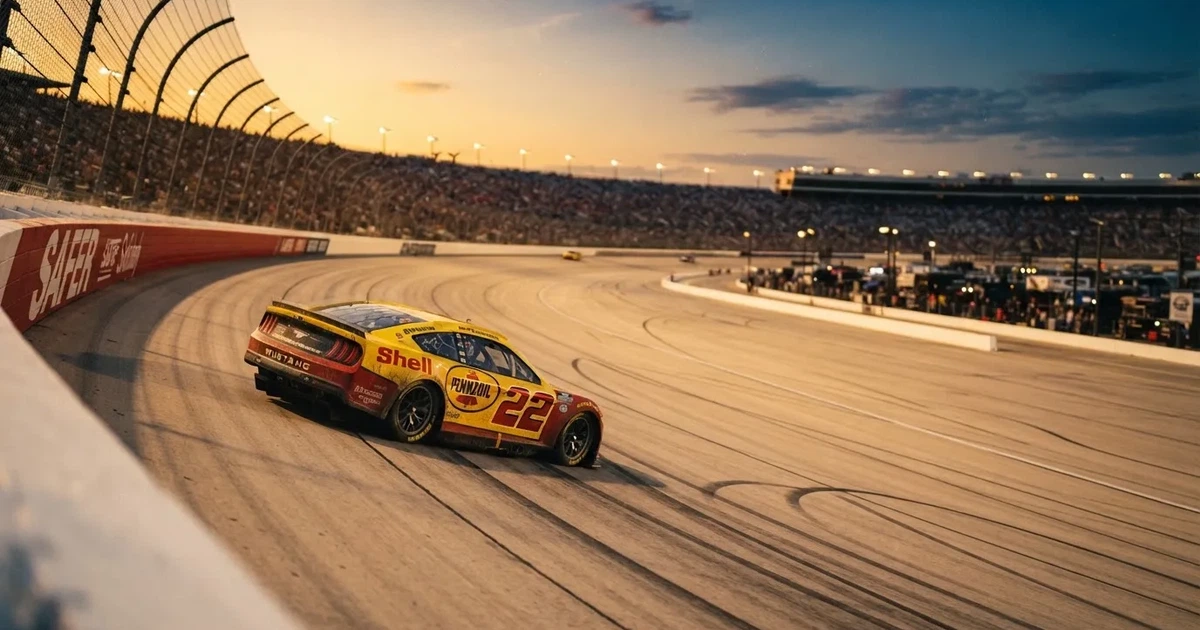
NASCAR runs on its own clock: a 36-race regular season that stretches from the Daytona 500 in mid-February to the Southern 500 in late summer, then a 10-race playoff that ends under the lights at Homestead–Miami in November. For a bettor in Great Britain, the calendar sits oddly. Most races start between 18:00 and 23:00 UK time, the Coca-Cola 600 sometimes bleeds into Monday morning, and the only window the working week reliably catches is the 3 a.m. green flag at Charlotte in May. That is the shape of the season a price book lives by, and it is the reason a NASCAR odds page exists separately from the rest of an operator’s motorsport offering.
This page is built around one question: with a Gambling Commission account in hand, where does a punter who wants action on Sunday’s race at Kansas actually put the stake down, and what are they being asked to pay for the privilege? The pages that follow cover what odds really mean on a stock-car race, which British bookmakers cover the series in depth, how the live markets behave at lap 40 of a 267-lap race, and what the bonus offers that lead every NASCAR bookies review actually cost once the small print has finished with them.
Crypto and Anonymity at a Licensed NASCAR Bookmaker
The honest answer first: there is no anonymity in a NASCAR betting site licensed by the Gambling Commission. Every brand reviewed on this page verifies name, address and date of birth before a customer can deposit or stake a penny, free bet included, and the licence conditions have required it since 7 May 2019. A customer who wants to fund an account with bitcoin, ethereum or litecoin runs into a second wall: the Gambling Commission’s public register lists no GB-licensed operator that accepts cryptocurrency deposits. The card ban of 14 April 2020 is the easy comparison to make — credit-card-funded e-wallet top-ups were outlawed, debit cards were not — but no equivalent rule covers crypto, only the practical fact that operators serving Great Britain do not run on it.
That does not stop the marketing. Several Curaçao-licensed stock-car sportsbooks offer ethereum and bitcoin deposits and publish “anonymous play” as a feature. Some accept litecoin for the same reason, lower transaction fees on a smaller average stake. Those operators are not licensed to take bets from customers in Great Britain. Section 33 of the Gambling Act 2005, as amended by the Gambling (Licensing and Advertising) Act 2014, makes it an offence to provide remote gambling facilities to customers in Great Britain without a Commission licence, and a Curaçao or Malta registration is no substitute. The Commission has not, to its public register, brought action against individual bettors, but the protections attached to a GB licence — GAMSTOP coverage, the approved dispute-resolution route, the £150 financial-vulnerability check, the 10x bonus cap — all vanish when the customer steps outside it. A reader who treats an offshore NASCAR site as a way to use bitcoin and keep quiet should know that the price they pay for that privacy is the loss of every British safeguard the section below lists.
For a GB punter who wants crypto exposure inside the regulated market, the route is fiat at a licensed operator, with the wallet held elsewhere. That is not what the marketing for the offshore bookies implies, but it is what the law of Great Britain produces.
NASCAR Bonuses, Free Bets and the Cost Behind the Words
Every NASCAR betting offers page leads with a number. Up to £100 in free bets, a 100% deposit match, a £20 stake-back if the first race loses. The numbers are real; what they cost is not in the headline.

The 10x wagering cap that took effect on 19 January 2026 is the first thing to keep in mind. A £10 bonus may require no more than £100 of qualifying bets before withdrawal. That rule is enforced on every operator licensed here. The operators that publish NASCAR betting bonuses with a 50x rollover on the welcome package, or that ask a customer to turn bonus money over 40 times in seven days, are not licensed by the Commission. A reader who reads those terms on a Curaçao-licensed sportsbook is reading a rulebook written for a jurisdiction the operator actually chose.
The mechanics inside the cap matter more than the cap itself. Three rules come up in every NASCAR betting promotions summary worth reading:
Minimum price for a qualifying bet. A free bet earned by spending £25 on the Cup race at Atlanta often requires the qualifying bet to be placed at odds of 1/1 or bigger, sometimes 4/5, occasionally evens. Below the threshold, the bet counts for nothing. A reader who uses the qualifying stake on a heavily favoured driver at 1/3 finds that the free bet has not been earned at all.
The stake is rarely returned. A free bet, by Commission guidance and by the operators’ own terms, pays the winnings only. The £5 free bet at 5/1 returns £25, not £30. Compare that to a real-money bet of £5 at 5/1: £30 in the account. The headline value of a free bet is the headline, not the contents.
Deadlines and caps on winnings. A NASCAR betting promo often expires in seven days, occasionally 14. Free-bet winnings carry a cap, sometimes £500, sometimes the stake times ten. A £5 free bet on a 100/1 outsider at Daytona that wins pays £500, not £505, when the cap applies.
The arithmetic on a typical free bet goes like this. A £10 free bet at decimal odds 3.00 (2/1 fractional) returns £30 in winnings. Multiplied by the market’s payout share — say 95% on a two-way driver matchup — the value of the free bet averages around £9.50. That is what it is worth, before any cap or deadline the operator’s terms carry. The £10 in the headline is the value of the bonus before the bookmaker’s edge has worked through it, and the headline is not where the calculation ends.
A NASCAR betting promo code does not exist in this market. The ASA’s section 16 rules on bonus marketing, and the LCCP’s social responsibility code, do not stop operators running welcome offers, but they do stop the printed-code affiliate scheme that several offshore books still publish. The licensed route is opt-in through the account, not a code copied into a registration form.
Mobile and App Coverage of the 2026 Cup Series
A stock-car race is not a smartphone event. The cars move at 190 mph, the lead changes twice a lap in traffic, and the only signal that matters is the gap on the timing tower. The best NASCAR betting app is the one that shows the running order without the punter having to leave the betting slip.
Several patterns recur in the App Store listings the licensed UK brands publish. bet365 markets itself as the most-downloaded sports betting app in Great Britain and ships an in-play module with live streaming on selected NASCAR races, plus a Bet Builder that combines markets from one event into a single bet. 888sport ships Cash Out, Bet Builder, racing streams and a live bet feed that updates with every timing-line pass. LiveScore Bet offers a Bet Builder of up to 10 selections covering race winner, top-three finish, head-to-head matchups, stage winners and total caution flags. London Bet ships Pragmatic Play casino alongside its sportsbook for users who want a slot during a long green-flag run, and Fitzwilliam Sports treats mobile as a parallel channel to its Dublin-based telephone book.
The feature that distinguishes a NASCAR betting app from a football app is the timing data. A standard in-play football screen shows possession, shots, corners; a NASCAR in-play screen shows gaps in seconds, lap-by-lap position changes, the number of cars on the lead lap. Several operators wire the timing feed directly into the in-play markets, so a head-to-head bet on two drivers updates as they swap positions on track. The quality of that wiring varies, and a punter who plans to bet NASCAR in play should test the app on a midweek Xfinity race before committing to a Sunday Cup stake.
Geo-restrictions are the under-discussed catch. A NASCAR betting sportsbook app that streams Cup races in the United States often blacks out the stream to UK IP addresses because the international rights holder is different. The betting markets are still available; the live picture sometimes is not. The trade-off is real, and a reader who plans to bet NASCAR in play should check whether the operator’s stream works on a UK connection before race day.
Live NASCAR Betting and Cash Out on Race Day
A NASCAR race settles at the chequered flag, and a bet that can be closed before the flag is a bet that takes some of the variance out of stock-car racing. The cash-out feature on most licensed UK sportsbooks now extends to NASCAR: a punter who has backed a driver at 33/1 to win can lock in a profit when the driver leads with ten laps to go, even if the lead evaporates on the last restart. The price on offer is the bookmaker’s live price, not the pre-race price, and the bookmaker’s margin still runs through it.
In-play NASCAR markets follow a recognisable shape. The pre-race favourite drifts in the first ten laps as the field sorts itself out, then tightens as the first stage settles. After each stage break — at lap 60 and lap 185 on a 400-mile race — the market reprices sharply, and a driver who has just won the stage becomes briefly shorter before the next round of pit stops. The pattern is consistent enough that a punter who watches three stages can build a feel for when the live book moves and when it does not.
Live betting on NASCAR has one feature that football and tennis do not: the caution flag. A multi-car crash freezes the field and the betting markets with it, because the gaps that drive head-to-head matchups stop being gaps. Several operators suspend in-play markets during caution periods and re-open them when the green flag drops, and the suspension is the moment a cash-out locks. A punter whose bet is live during a long yellow flag may find that cash-out is briefly unavailable, and a driver who looks certain to win a stage at lap 50 may be stuck behind the pace car for the next ten laps.
Cash-out on NASCAR is not the same as cash-out on football. The bet being closed is typically a pre-race outright, not an in-play match bet, and the volatility of a stock-car race is high enough that the cash-out price the operator offers is conservative. A driver at 33/1 pre-race who leads at lap 200 of 267 may cash out at 1/5, not at 1/3. The cushion the operator keeps is the price of running the in-play book on a sport with a high rate of late mechanical attrition.
Predictions, Strategy and the Limits of NASCAR Betting Tips
The internet is full of NASCAR betting tips. None of them beat the closing odds over a season, and any service that claims otherwise is selling certainty the sport does not produce. That is not editorial caution; it is the structure of the bet. A 40-car field, 36 races, mechanical attrition at any point from lap 5 to lap 365, and a points system that rewards stage wins as well as race wins — a stock-car season is built to produce surprise, and the bookmaker’s edge over a tipster is the same 5% or so it is on football, applied to a field four times the size.
What a punter can do, working from the public timing data and the practice speeds, is narrow the field of credible winners on a given race. The 2026 season has produced three or four drivers at any one time who have the car speed and the pit crew to win on a given Sunday. Pre-race, that group is roughly the same size as the favourites’ section of the betting market — the bookmaker has already priced the fast cars in. The punter’s edge, if one exists, is in the second tier: the driver priced at 25/1 who has shown 10/1 speed in practice, or the manufacturer matchup bet where the underfunded team’s qualifying run has been hidden by the format. That edge is small, the sample is small, and the closing odds will adjust as more money comes in.
Bankroll management is the dull part of NASCAR betting strategy that the tip sheets skip. The rule of thumb across serious bettors is no more than 2% of bankroll on any single race, no more than 5% on a season-long outright futures book. A 40-driver field means a typical weekly card has at most two or three bets worth placing at any reasonable price, and chasing the field with 25p accas is the surest way to give the bookmaker’s edge room to work. The strategy is to wait for the price, not to bet every race.
The best bets for NASCAR today, in the language the tip sheets use, are the bets the closing line disagrees with. If the early price is 12/1 on a driver who should be 8/1, that is the bet. If the practice speeds say 6/1 and the early price is 6/1, walk away. The discipline is the strategy, and the strategy is the strategy — there is no hidden system that turns NASCAR betting picks today into a winning record over a 36-race season.
Bet Types and How NASCAR Odds Are Built
A NASCAR betting odds screen is wider than a football one because the field is wider. The standard markets on a Cup race at a licensed UK bookmaker run to:
Outright race winner. The simplest market, the longest field, the one the bookmaker’s margin sits most heavily inside. A 40-driver race priced at decimal 26.00 (25/1) for a mid-pack car implies a 3.85% chance; the field of 40 at an average 51.00 implies 1.96%. The bookmaker’s margin on a NASCAR outright is typically 7% to 9%, against 5% on a Premier League match result.
Top-three and top-six finish. A safer alternative for the punter who wants the favourite’s odds to come with a wider finishing window. The odds adjust accordingly: a 5/1 race winner might be 6/4 to finish top-three and 4/9 to finish top-six, with the bookmaker’s margin still inside.
Head-to-head matchups. The bookmaker pairs two drivers and prices the matchup as a two-way market. This is where the bookmaker’s margin tightens — a two-way market at 10/11 each side carries a margin closer to 4% than the outright.
Stage winners. The 2026 season splits each points race into three stages. Bets on the winner of stage 1 and stage 2 are offered on the bigger races, and the market is the same shape as an outright winner on a smaller field.
Manufacturer matchups. Ford versus Chevrolet versus Toyota on a head-to-head or three-way basis. Popular at Daytona and Talladega, where the pack racing makes manufacturer performance more uniform.
Race specials. Total cautions, lead changes, number of different leaders, finishing position of a named driver. These are novelty markets with a higher margin — typically 12% to 15% — because the bookmaker is pricing a low-information market against the betting public.
How are the odds built? The bookmaker’s traders start with the practice speeds and the loop data from the previous race, adjust for the track type (intermediate, superspeedway, short track, road course, plate track), adjust for the team’s recent form and the driver’s record at the specific venue, and produce a probability for each driver. Those probabilities go through the margin, the prices come out the other side, and the betting public does the rest by moving the prices around. The bookmaker does not set out to lose money on a single race; it sets out to balance the book so the margin, applied across the full race card and the full season, produces a profit.
The maths of decimal odds is straightforward. A £10 stake at decimal odds 3.50 (5/2 fractional) returns £35 — the £10 stake plus £25 profit. At decimal odds 1.50 (1/2 fractional), the same stake returns £15, including the £5 profit. The shorter the price, the smaller the return on a winning bet, and the bookmaker’s margin sits in every price on the screen.
The 2026 NASCAR Cup Series and Where the Races Land
The 2026 season opened at Daytona International Speedway on 15 February 2026, with the 68th running of the Daytona 500. Tyler Reddick took the win. The Cup Series schedule runs 36 points-paying races across the calendar, plus three non-championship exhibition events: the Cook Out Clash at Bowman Gray Stadium in early February, the Duel at Daytona that sets the Daytona 500 grid, and the NASCAR All-Star Race at North Wilkesboro in May. The points-paying calendar closes at Homestead–Miami Speedway on 8 November 2026 with the Straight Talk Wireless 400, the 36th and final round of the season.
The playoff format takes the top 16 drivers in points after 26 races, with starting points staggered by the drivers’ regular-season standings. The win-and-you’re-in rule that governed the previous playoff structure is gone. Sixteen drivers enter, four are eliminated after each of the first three playoff rounds, and four contest the championship race at Homestead. The structure rewards regular-season consistency more than the previous format did, and the betting market on the playoff futures has shortened on drivers with strong regular-season form.
The tracks break down into five families. Superspeedways (Daytona, Talladega) produce pack racing and high mechanical attrition. Intermediates (the 1.5-mile tracks — Charlotte, Atlanta, Texas, Kansas, Las Vegas, Homestead) make up the bulk of the calendar and produce the most predictable results. Short tracks (Bristol, Martinsville, Richmond, North Wilkesboro) produce the most volatile results and the widest price spreads. Road courses (Sonoma, the Roval at Charlotte, COTA) reward road-racing specialists and produce small fields of credible contenders. Street courses (Chicago) sit alongside the road courses for betting purposes.
The full Cup Series calendar, the playoff structure and the manufacturer mix all feed into the NASCAR betting sites’ pricing models. A bookmaker that covers the Cup Series in depth prices every track type; one that treats NASCAR as a motorsport afterthought prices only the Daytona 500, the championship race and the Coca-Cola 600. The depth of coverage is the variable that separates the NASCAR bookmakers worth using from those that are not.
The Top 10 NASCAR Betting Sites Licensed in Great Britain
The table below covers the operators a punter in Great Britain can place a NASCAR bet with through a Gambling Commission remote betting licence. The order is the order this site takes them in; it is not a quality ranking. Every operator listed takes part in GAMSTOP, verifies identity before the first deposit, and is bound by the 10x wagering cap on bonuses. Several operate under the same parent licence, and several of the brands do not appear in this list at all because their licence is for casino only, not for sports betting.
| Brand | Gambling Commission remote licence number and licence holder | What the operator’s own terms state on NASCAR |
|---|---|---|
| QuinnBet | 061011-R-335683-004 — QuinnBet (Gibraltar) Limited | NASCAR outright, race specials and in-play markets on selected Cup races; best odds guaranteed applies to Irish and UK horse racing from 10:00am, not to NASCAR |
| Betway | 039372-R-319367-029 — Betway Limited | NASCAR outright and race specials on selected Cup races; Free Bet Club gives up to £10 weekly after opt-in once £25 has been staked |
| Bet600 | 044731-R-323941-016 — Tyche Tech Limited | NASCAR outright and selected race specials; best odds guaranteed pays starting price when bigger than the price taken, not on NASCAR |
| Geoff Banks | 054095-R-330366-010 — GB Sports Advisors Limited | Ante-post and live in-play prices on selected motorsport events including the Cup Series |
| London Bet | 066162-R-340278-004 — Thistle Bet Limited | NASCAR outright and in-play markets on selected races alongside football, horse racing and a Pragmatic Play casino |
| 888sport | 039028-R-319297-014 — 888 UK Limited | Pre-match and in-play NASCAR markets, Bet Builder, daily boosted odds and racing streams where rights permit |
| bet365 | 055148-R-331498-002 — Hillside (UK Sports) ENC | NASCAR outright, race specials, in-play markets and live streaming on selected Cup races, with Bet Builder, Super Boosts and daily Bet Boosts |
| Copybet | 053774-R-330743-010 — Copybet UK Limited | NASCAR outright and selected race specials; best odds guaranteed covers UK and Irish racing on every meeting |
| Fitzwilliam Sports | 048760-R-335434-009 — SBKI Limited | Capped-membership Dublin bookmaker offering NASCAR outright and race specials alongside instant deposits and a “High Stakes Welcome” subject to compliance criteria |
| LiveScore Bet | 056859-R-332720-005 — LiveScore Betting and Gaming (Gibraltar) Limited | NASCAR outright, race specials and in-play markets with a Bet Builder of up to 10 selections |
The table is the shape of the licensed NASCAR betting market in Great Britain. The variance in coverage is the thing a punter has to plan around. Some operators list every Cup race of the season; some list only the crown-jewel events. A punter who plans to bet NASCAR every week should compare two operators side by side before settling, because the depth of the menu is not the same.
QuinnBet
QuinnBet is a Gibraltar-licensed operator that has run a remote book under a Commission account since 2017, with QuinnBet (Gibraltar) Limited as the licence holder. The site carries NASCAR outright, race specials and selected in-play markets on Cup races, and the markets are priced with a margin in line with the rest of the licensed UK market. The welcome offer is light compared with the bigger operators, but the NASCAR coverage runs deeper than several of them. The Best Odds Guaranteed promotion that QuinnBet runs is for Irish and UK horse racing only and does not apply to NASCAR, so the punter looking for BOG on stock cars should look elsewhere.
The verdict for NASCAR: a useful second book for the punter who already has a primary account at a bigger brand and wants to compare prices on outright winner and head-to-head matchups. The depth is there; the price-boost menu is not.
Betway
Betway runs on a Commission licence held by Betway Limited and carries the standard motorsport menu on NASCAR Cup races: outright winner, top-three, top-six, head-to-head matchups, race specials. The Free Bet Club promotion gives up to £10 in free bets every week after opt-in, earned by staking £25 or more on sports during the week. The mechanics of the free bet — minimum qualifying price, stake not returned, expiry — apply as described in the bonus section above.
The verdict for NASCAR: a mainstream book with a mainstream motorsport menu. The punter who already has a Betway account for football or tennis can use it for NASCAR without learning a new product; the punter who wants the deepest in-play offering or the widest specials menu will find better fits elsewhere.
Bet600
Bet600 operates under Tyche Tech Limited and is one of the smaller names on the licensed list. The motorsport menu covers NASCAR outright and a handful of race specials on the bigger Cup races, with Best Odds Guaranteed on horse racing rather than NASCAR. The operator’s interface is clean, the markets load quickly, and the in-play offering on stock cars is light compared with the bigger books.
The verdict for NASCAR: a small book for the punter who wants a clean price on outright winner and does not need the in-play module. The race specials menu is the thin part of the offering.
Geoff Banks
Geoff Banks is the trading brand of GB Sports Advisors Limited, a small London-based bookmaker that has run a Commission-licensed remote book for several years. The offering is motorsport-heavy by design: ante-post and in-play prices on the Cup Series and the major international series, with a tighter specials menu than the bigger brands. The NASCAR offering is the centre of the book, not a side product.
The verdict for NASCAR: the punter who wants a motorsport specialist and is comfortable with a smaller brand. The depth on NASCAR is the reason to be here; the limited football or tennis offering is the price of that depth.
London Bet
London Bet runs under Thistle Bet Limited and combines a sportsbook with a Pragmatic Play casino. The motorsport menu covers NASCAR outright and selected in-play markets on Cup races, alongside football, horse racing, greyhounds, darts, golf, cricket, NFL, NBA, MLB and snooker. The casino arm is a separate product for users who want it; the sportsbook stands on its own.
On NASCAR: a useful all-rounder for anyone who wants one account for motorsport and a wide range of other sports, with a casino option for the gaps in the racing calendar.
888sport
888sport runs under 888 UK Limited and is one of the longer-established names on the Commission register. The motorsport menu covers NASCAR outright, race specials and in-play markets on selected Cup races, with Bet Builder, daily boosted odds and racing streams where rights permit. The racing streams are the part to check: the international rights for NASCAR are split between broadcasters, and a UK punter sometimes finds the stream blocked even when the betting markets are open.
The verdict for NASCAR: a mainstream book with mainstream coverage, with the Bet Builder feature as a distinguishing offer for the punter who likes to combine markets from one race into a single bet.
bet365
bet365 runs under Hillside (UK Sports) ENC and is the largest sportsbook on the Commission register by handle. The NASCAR offering is the deepest of any licensed UK operator: outright, race specials, in-play markets on every Cup race of the season, Bet Builder that combines markets from one event into a single bet, Super Boosts and daily Bet Boosts, and live streaming of selected Cup races through the in-play module. The Bet Builder, the Super Boosts and the live streaming are the parts that set bet365 apart from the rest of the licensed field; the price is rarely the cheapest on outright winner, and the punter looking for the absolute best price should still compare.
The verdict for NASCAR: the first account any serious NASCAR punter in Great Britain should open. The depth of the offering, the live streaming and the Bet Builder are the reasons; the punter who wants the absolute best price on outright winner should compare bet365 against QuinnBet or 888sport before staking.
Copybet
Copybet runs under Copybet UK Limited and combines a traditional sportsbook with a copy-betting feature that lets users follow the bets of named tipsters. The motorsport menu covers NASCAR outright and selected race specials, and the Best Odds Guaranteed promotion covers all UK and Irish racing on every meeting, paying at the starting price when it is bigger than the price taken.
The verdict for NASCAR: a useful option for the punter who wants to copy the bets of named tipsters on NASCAR alongside the traditional sportsbook menu.
Fitzwilliam Sports
Fitzwilliam Sports is the online brand of a long-established Dublin bookmaker, operating under SBKI Limited. The Commission licence covers remote betting into Great Britain. The offering is by capped membership: not every applicant is accepted, and the “High Stakes Welcome” runs subject to compliance criteria. The NASCAR menu covers outright and race specials on selected Cup races, alongside horse racing, football and other sports.
The verdict for NASCAR: the punter who wants a traditional Irish bookmaker with a Commission licence and is comfortable with a vetting process on opening. The membership cap is the price of admission; the offering inside is mainstream for a high-stakes book.
LiveScore Bet
LiveScore Bet runs under LiveScore Betting and Gaming (Gibraltar) Limited and is the sportsbook arm of the LiveScore scores-and-stats brand. The motorsport menu covers NASCAR outright, race specials and in-play markets on Cup races, with a Bet Builder that allows up to 10 selections covering race result, top-three, head-to-head matchups, stage winners and total cautions.
The verdict for NASCAR: a mainstream book with a strong Bet Builder, useful for the punter who likes to combine markets from one race into a single bet. The in-play offering is mainstream; the punter looking for the deepest live module should look at bet365 first.
Overview and Core Concepts of NASCAR Betting
NASCAR betting is motorsport betting on a stock-car championship, and the markets are the same shape as Formula 1 or IndyCar betting with two differences that matter. The field is bigger — typically 36 to 40 cars start a Cup race — and the attrition is high. A 267-lap race at Charlotte produces on average a dozen cars out of the race by the chequered flag, and that attrition is the source of the long odds the bookmaker publishes on the mid-pack.
The Cup Series is the top flight. Below it sit the Xfinity Series and the Craftsman Truck Series, both of which are covered by the bigger NASCAR betting sites in Great Britain but in less detail. The Daytona 500 is the season opener and the most heavily bet single race of the year; the championship race at Homestead is the second. The Coca-Cola 600, the longest race of the season at 600 miles, is the third. These three races are the ones every NASCAR bookmakers’ menu covers in depth; the rest of the calendar is more variable.
The fundamentals of the bet are the same as on any sport: a stake at a price, settled at the result. The shape of the NASCAR calendar — 36 points-paying races plus 10 playoff rounds — produces a season-long outright market on the championship that runs from the Daytona 500 in February to the chequered flag at Homestead in November, with the price shortening as the field narrows. A punter who backs a driver at 33/1 pre-season and the driver makes the playoff can lock in a profit at any point during the playoff by trading out, or hold for the championship payout at Homestead.
The landscape of licensed NASCAR betting in Great Britain is shaped by the same forces as the rest of the licensed UK sports-betting market: a small number of large operators (bet365, 888sport, Betway, William Hill), a larger number of mid-sized specialists (QuinnBet, LiveScore Bet, Copybet), and a long tail of smaller brands (Bet600, Geoff Banks, London Bet, Fitzwilliam Sports). The big operators carry the most markets; the specialists carry the more bespoke offerings. A punter who bets NASCAR seriously will end up with two or three accounts open at any one time, comparing prices before staking.
Legality and Regulation of NASCAR Betting in Great Britain
The Gambling Commission is the regulator. A bookmaker taking bets from customers in Great Britain needs a Commission licence, whether the operator is based in Gibraltar, Malta, the Isle of Man or London itself, and the test of whether a brand holds one is the Commission’s public register. The register is searchable by business name, trading name, domain or account number, and the record carries the licence number, the licence holder, the licensed activities and the trading names the licence covers. A reader who wants to check a brand before opening an account should look the brand up on the register, not take the brand’s word.
The legal framework is the Gambling Act 2005, as amended by the Gambling (Licensing and Advertising) Act 2014. The 2014 Act closed the “point of supply” loophole that allowed operators based outside Great Britain to serve British customers without a British licence. Sections 33 and 36 of the 2005 Act, as amended, are the offences: providing remote gambling facilities in Great Britain without the licence the Act asks for is an offence aimed at the operator, with penalties on summary conviction of up to 51 weeks’ imprisonment, a fine up to level 5, or both, and six months in Scotland. No offence aimed at the customer who merely bets on an unlicensed site was found, but the customer loses every British protection the section below lists.
Betting licence types matter because not every Commission licence covers NASCAR. The relevant category for stock-car betting is “remote general betting standard (real events)”. A licence for pool betting, for betting intermediary activity (the exchange category) or for virtual events does not, on its own, cover a NASCAR outright book. Several of the operators reviewed above hold licences that cover both real events and virtual events; the licence number on the register carries the full picture.
Northern Ireland is outside the Gambling Act 2005. The Commission’s remit is Great Britain — England, Scotland and Wales. A Northern Irish punter who opens an account with a Commission-licensed operator is betting on a site licensed for Great Britain, and the section below on the £150 financial-vulnerability check and the 10x bonus cap applies because the licence is held, not because the customer is in Northern Ireland. A Northern Irish punter who bets with a brand licensed only by the Northern Irish regulator is in a different regulatory world entirely.
The enforcement picture is one of disruption rather than blocking. The Commission issues cease-and-desist notices, refers unlicensed sites to search engines, works with registrars, hosts and payment providers to take sites down, and has been given or is about to receive court-order DNS blocking powers. ISP-level blocking is not in operation in Great Britain at the time of writing. The framing for a punter is straightforward: a GB licence means the protections the section below lists; an absence of a GB licence means none of them.
Player Protection and Responsible Gambling on NASCAR Betting Sites
The safer-gambling regime at a Commission-licensed NASCAR betting site is built on three pillars: identity, money and self-exclusion.
Identity verification is the first. A customer cannot deposit or stake with a Commission-licensed operator until name, address and date of birth have been verified, and the requirement has been in force since 7 May 2019. The verification happens at sign-up or before the first deposit, whichever is sooner, and applies to free bets and bonuses as well as cash stakes. A licensed site that asks for a driving licence and a utility bill before the first £5 deposit is not being awkward; it is meeting its licence conditions. A licensed site that does not ask is breaking them.
Money comes in through three layers. The first is the £150 financial-vulnerability check, in force since 28 February 2025 under LCCP condition 3.4.4: when the rolling 30-day net deposits minus withdrawals exceed £150, the operator runs a public-record check for bankruptcies or county court judgments. The check is not an income check and not a credit reference check; it is a screen for the financial distress that ought to trigger a conversation. The second layer is the financial risk assessment, announced in a Commission article of 7 July 2026 in a staged plan with no published start date. The third layer is the deposit limit under RTS 12: operators must offer a gross deposit limit on a fixed time frame, with the first changes in force since 31 October 2025 and a second phase postponed to 30 September 2026; whether that second phase is now live is not established.
Self-exclusion runs through GAMSTOP, the national multi-operator online self-exclusion scheme and a mandatory licence condition for online operators since 31 March 2020. A customer who registers with GAMSTOP chooses a six-month, one-year, five-year, or five-years-with-auto-renewal exclusion, and after the minimum period the exclusion stays in place for a further seven years unless the customer asks GAMSTOP to remove it. GAMSTOP covers online sites and apps; betting shops use a separate service. Every operator reviewed above is a GAMSTOP member, and a customer who has self-excluded through GAMSTOP cannot open a new account at any of them.
Bonuses and promotions have their own protection. The 10x wagering cap on bonuses took effect on 19 January 2026: a £10 bonus at 50x turnover used to require £500 of qualifying bets; under the cap it requires no more than £100. Mixed-product promotions — an offer that requires gambling on two or more product types such as betting, casino, bingo and lottery — are banned. Free bets with no wagering condition sit outside the cap, and the Commission has not established whether they fall inside it.
The help available to a customer who needs it is free and confidential. GamCare runs the National Gambling Helpline. GambleAware funds treatment and signposting. The NHS runs gambling clinics in several English regions. Gamblers Anonymous runs peer-support meetings. The brands reviewed above link to one or more of these from their safer-gambling pages; Fitzwilliam Sports, for example, links to GambleAware, GamStop and Gamblers Anonymous from its site footer.
The honest framing for a NASCAR punter is this: a Commission-licensed operator is not “the safe choice” by default, and an unlicensed operator is not “the unsafe choice” by default. A licensed operator is the choice that comes with the protections the Commission enforces — GAMSTOP, the 10x cap, the £150 vulnerability check, the dispute-resolution route, the credit-card ban — and an unlicensed operator is the choice that comes with none of them. The decision is about which set of protections the punter wants in front of them when the betting slips stop being fun.
The Bookmaker’s Margin in a NASCAR Two-Way Market
The margin is the cut the bookmaker keeps of every pound staked on a market, and it is built into every price on the screen. On a simple two-way market with decimal odds of 1.90 / 1.90, the arithmetic runs as follows. The reciprocal of each price is 1 / 1.90 = 0.5263, and the sum of the reciprocals is 0.5263 + 0.5263 = 1.0526. The reciprocal of that sum is 1 / 1.0526 = 0.9500, which is the payout share of the market — the fraction of every pound staked that returns to bettors as winnings on a perfectly balanced book. The margin is 1 minus the payout share, or 0.0500, or 5%.
That is the cleanest possible two-way market at even money. The margin sits inside the symmetry of the prices; if either side tightens, the reciprocal falls and the margin widens. A two-way market at 1.85 / 1.95 has a payout share of 1 / (1 / 1.85 + 1 / 1.95) = 1 / (0.5405 + 0.5128) = 1 / 1.0533 = 0.9494, a margin of 5.06%. The tighter the favourite, the wider the underdog, the closer to the symmetric 1.90 / 1.90 a balanced bookmaker drifts.
A NASCAR outright winner market is not a two-way market. The 40-driver field produces a 40-way market, and the margin is higher as a result. A field priced at an average decimal odds of 51.00 (50/1 fractional) implies a 1.96% chance per driver; the sum of the reciprocals across the field runs to 0.7840, a payout share of 1 / 0.7840 × (40 / 40) — wait, the payout share is the reciprocal of the sum, not multiplied. The reciprocal of 0.7840 is 1.2755, and the margin is the excess over 1, or 27.55%. That is the upper end of what a NASCAR bookmaker charges on outright winner. The head-to-head matchup market, by contrast, runs at the 4% to 5% margin typical of any two-way sportsbook market.
The band of margins on a typical NASCAR card, then, runs from about 4% on head-to-head matchups through 5% on race specials at the tight end, to 8% to 12% on outright winner at the wider end, to 15% on the most speculative specials. A punter who shops the head-to-head lines gets the thinnest cut; a punter who bets the longshot outright pays the widest cut. The comparison to remember is this: a NASCAR outright at 10% margin and a Premier League match result at 5% margin are not the same product. The NASCAR market costs twice as much per pound staked, and the price the bookmaker publishes already reflects that.
FAQ
How do I bet on a NASCAR race?
Pick a licensed bookmaker from the table above, register an account, complete the identity verification the Commission requires, deposit by debit card or bank transfer (credit cards are banned for gambling in Great Britain), open the NASCAR tab, choose a race, pick a market, set a stake, and confirm the bet. The bet settles when the race finishes — outright winner at the chequered flag, top-three after the results are official, head-to-head as the named driver finishes. Stage markets settle at the end of each stage.
Where can I bet on NASCAR in Great Britain?
Any of the ten operators reviewed above will take a NASCAR bet. The bigger books — bet365, 888sport, Betway — carry the deepest menus. The specialists — Geoff Banks — carry the more bespoke offerings. The full list is the Commission’s public register, filtered to remote general betting standard (real events) licences.
How do I bet on a specific NASCAR race?
Open the operator’s NASCAR tab, find the race by name (the Daytona 500, the Coca-Cola 600, the playoff round at Charlotte), and pick the market — outright, top-three, top-six, head-to-head, stage winner, race specials. Stake at the price on screen. The bet is confirmed in the betting slip; the bet settles when the race settles. In-play betting on selected markets works the same way, with prices updating through the race.
How do I check a bookmaker’s Gambling Commission licence?
Open the Commission’s public register, search by the brand name or domain, and check the entry. The record shows the account number, the licence holder, the licensed activities and the trading names the licence covers. A Commission-licensed brand has a record on the register; an unlicensed brand does not. The check takes a minute and is the whole test.
How is the return on a bet worked out from the stake and the odds?
The return is the stake multiplied by the decimal odds. A £10 stake at decimal odds 3.50 returns £35, including the £10 stake. The profit is the return minus the stake, or £25 in this example. For an accumulator the decimal odds multiply: a £10 treble at 3.00, 4.00 and 5.00 returns £10 × 60.00 = £600. The calculation is the same on every bet on every market.
Combat & motorsport – systembetsguide.com
Content created by the «systembetsguide.com» team
