
Where darts can be bet on, what the odds actually mean, and what a bonus really costs
 Available in US
*Current as of 30 October 2026 and checked against the Gambling Commission’s public register.*
Darts is built for betting. Each leg lasts seconds, every throw is on the wire, and the calendar runs nearly every week from January through December. That density is what this page leans on: what a bookmaker’s darts section actually contains, how the prices are put together, where the licence stands, and where the marketing quietly puts a thumb on the scale.
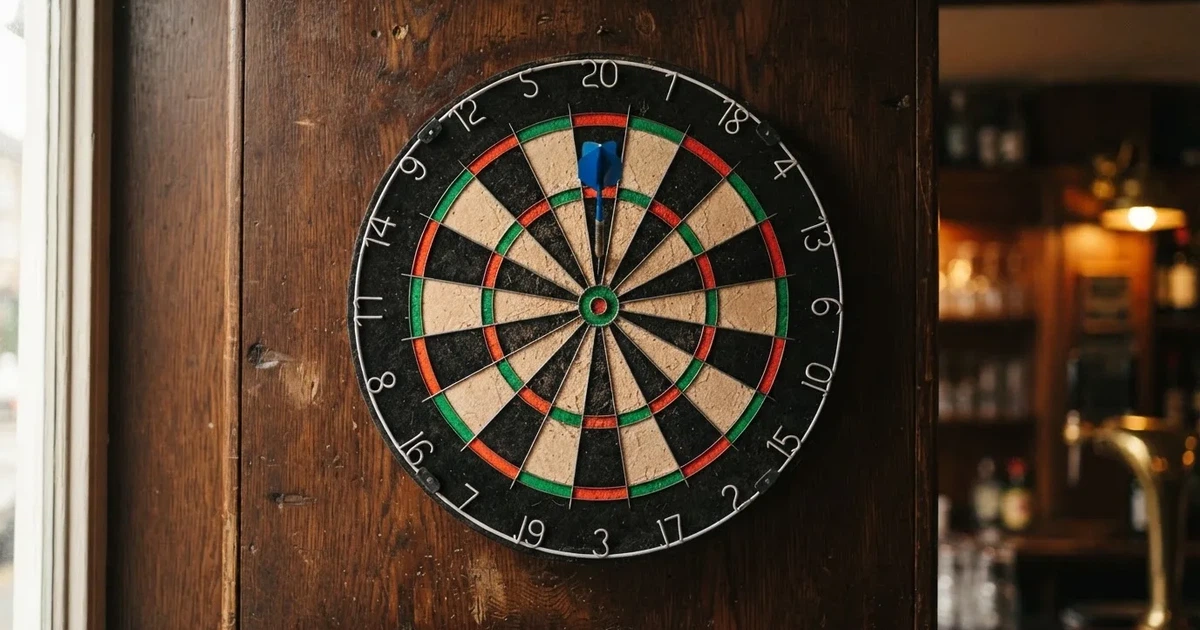
The market is also narrower than football or horse racing. A licensed bookmaker may offer football, racing and a dozen other sports with confidence because the major leagues set fixture lists months in advance; darts events appear almost weekly, but the field is small and the same handful of players meet again and again. The result is a sport with deep outright markets for the World Championship and Premier League, thinner week-to-week coverage on the floor tours, and very short in-play lines once a match is on stage. Anyone who has shopped between bookmakers for football will recognise the pattern. Anyone who has only bet on darts will be surprised how much the same fixture can pay at different sites.
Predictions, tips and what “a tip” can and cannot do
The search world is full of pages promising a “sure thing” for tonight’s quarter-final. Take them as entertainment. The market prices a darts match better than any tipster, because the market is the only place where the house is forced to put a number against each player and risk losing if it is wrong. A tip that names a winner is a story. A price is a price.
What a tipster actually offers
Most free darts tips pages are written by a single author who follows a handful of tournaments, watches the form and posts a pick. The useful question is what their record looks like over hundreds of bets, not whether their last three went in. A tipster who publishes a verified P&L — a stake-weighted log of every selection with the closing odds at which it was placed — has skin in the game; one who simply says “back Player A at 2.20” and never shows the losing weeks behind it is selling confidence, not analysis.
The second meaning of “tip” is the one sportsbooks use: a short price boost, an enhanced odds offer on a single player to win a tournament. Those are marketing tools — a headline price tied to a stake ceiling that returns as a free bet rather than cash. They sit in the bonus block of this page, not in the tip block.
Bankroll, not brilliance
The most useful thing a tip does is force discipline: name the stake before the match starts, write it down, and stop when the bank is gone. Bankroll management is dull and unglamorous, and it is what separates a bettor who finishes the year up from one who finishes it down with the same set of tips. A unit — one per cent of the bank on a confident selection, half a per cent on a speculative one — is the figure to start from, not the headline.
Why the closing line matters
The price at the moment the match starts is the most informative one, because every bookmaker has had the chance to react to team news, scratchings and weight-of-money moves in the morning market. A bet placed at 2.20 that closes at 1.90 is a bet that beat the market; a bet placed at 2.20 that closes at 2.50 is one the market disagreed with. Tracking this is the single biggest improvement a recreational bettor can make: not a new system, just a notebook with the price taken, the price at the off, and the result.
Forecasts in a sport with no draws
Darts has no draws, and that simplifies the model. In a three-way football market (home, draw, away) the bookmaker must price all three outcomes and inflate the margin across them; in a two-way darts match (Player A, Player B) only two numbers have to be set, and the margin is split between them. That is why the overround looks smaller in the headline price of a darts match than in the headline price of a Premier League fixture. It does not mean the price is fairer — it means the tax on the market is collected in two places rather than three.
Strategy in a sport without form cycles
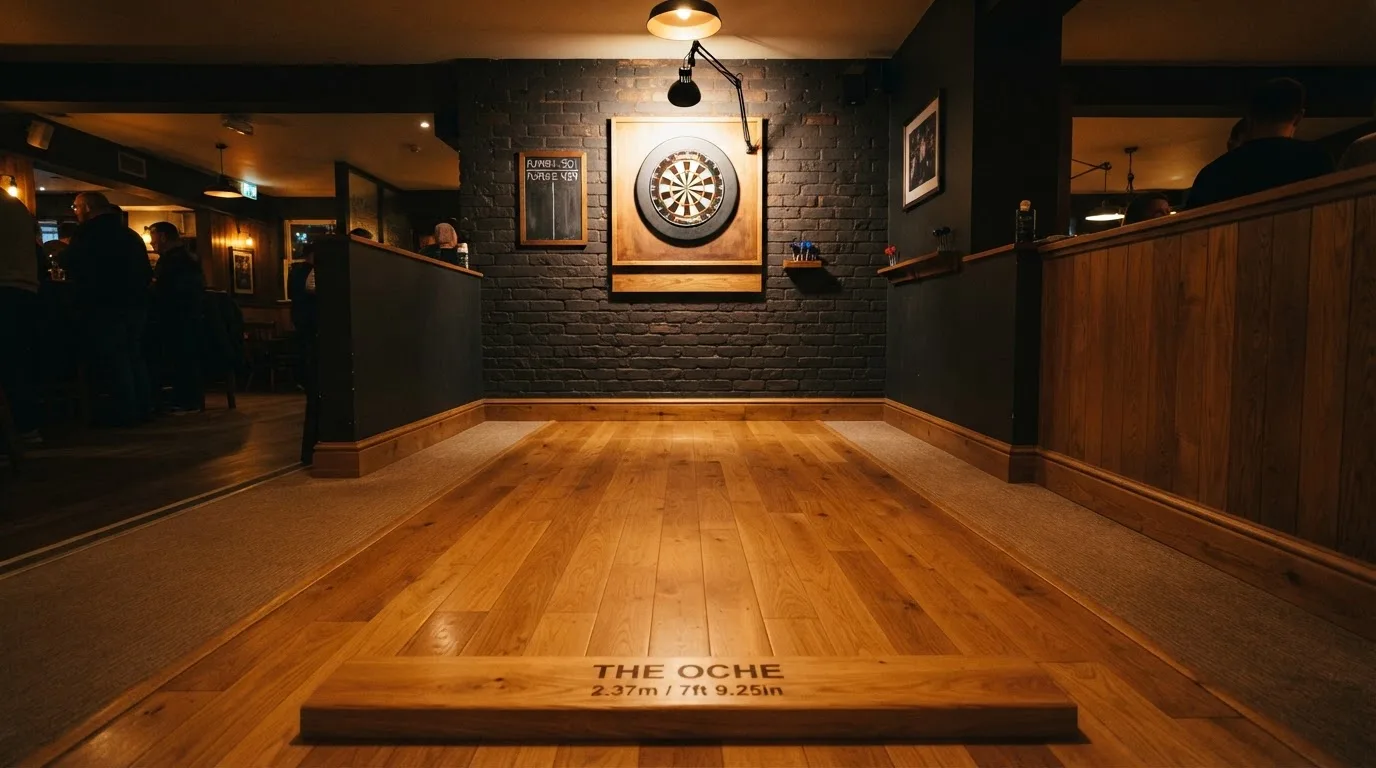
Football has home and away form, fixture congestion, injuries and weather. Darts has only the player in it and the opponent across the oche. A punt has nothing to do with crowd noise or pitch state; it has to do with double-out percentage, first-nine average and checkout conversion under pressure. The data on these is published by the PDC after every televised event and by the smaller tours on their own pages. A reader who learns the difference between a 100 average and a 96 average — and what that means against a 95-average opponent — will read a darts betting market more sharply than one who learns another tipster’s name.
Bet types and odds in darts
Darts pricing is short on exotic markets and long on outrights. The match-winner market is the entry point, the handicap and totals lines are where the betting moves once the cards are out, and the outright winner market is what holds the page open between Christmas and May.
Match winner
The simplest bet in the sport. Player A is priced at 1.91, Player B at 1.91, the margin is in the price. There is no draw, no extra-time market, no Asian handicap default. In a best-of-X-sets match, the shorter price wins most of the time because the better player wins more legs than the worse one across a longer format; in a best-of-five legs short format the variance is much higher.
Handicap
Handicap in darts is a leg start: Player A minus 1.5 legs means Player A must win by two clear legs on the handicap line; Player B plus 1.5 means Player B can lose by one and still win the bet. The price moves from near-evens on the favourite to roughly evens on the outsider with the line in place, and the bookmaker’s margin is hidden inside the prices the same way it is in the match market.
Total legs
A line of 5.5 legs on a best-of-seven-sets match, over or under. The bookmaker offers 1.91 on over 5.5 and 1.91 on under 5.5, with the margin in the difference between those prices and 2.00. Darts totals tend to be tighter than football totals because the match format is fixed, but the same caveat applies: the price is what pays, not what looks fair.
Correct score
The exact score in sets: 4-0, 4-1, 4-2, 4-3 in a best-of-seven, with each line priced separately. This is where the margin is at its widest, because the bookmaker is pricing eight or nine distinct outcomes that nobody trades efficiently. A reader who wants exposure to a specific scoreline gets a long price; a reader who wants to back the favourite at the shortest possible price should not be in this market at all.
Outright winner
The market that runs for weeks. The PDC World Championship outright winner is priced twelve months out — the bookmaker lists a field of 128 players, takes a view on every one of them, and runs the page until the final is over. The same mechanics apply to the Premier League Darts and the World Matchplay. A small stake at a long price on a player outside the top eight is the standard way to take a position on a darts tournament without naming the winner.
Each-way in darts tournaments
Tournaments that finish with a final, not a league, may have an each-way market: half the stake on the player to win, half on the player to reach the final or the semi-final at a quarter or a third of the win odds. Place terms are set by the bookmaker and differ between events; read them before staking. Each-way doubles the stake: a £10 each-way bet is £20 in the bookmaker’s books.
Price and how it is shown
British bookmakers show fractional odds by default — 5/1, 11/4, evens (1/1). The same price in decimal is the fractional price plus one: 5/1 is 6.00, 11/4 is 3.75, evens is 2.00. The decimal form is what the calculation in this page uses, because decimal odds multiplied by the stake give the return directly. A reader who bets in fractions and thinks in fractions should note the conversion, because the two forms disagree at the short end of the market — 4/6 is 1.67 in decimal, not 1.50 — and that disagreement is where most misreads happen.
What the bookmaker’s margin does to the price
The margin is the cut the bookmaker takes from every market that is on the page, expressed as a percentage of turnover. On a two-way market at 1.91 / 1.91, the payout share — one divided by one over the odds, summed across both outcomes — is about 1.0476 ÷ 2, or roughly 95.24 per cent. The other 4.76 per cent is the margin. That is what the bookmaker keeps, on average, of every pound bet on this market. It is not a fee, it is not a charge, and it is not negotiable; it is built into the price before the page goes live.
The illustrative calculation in this guide takes a 1.90 / 1.90 two-way market. The payout share on that pair of prices is one divided by the sum of one over each price — 1 ÷ (1/1.90 + 1/1.90), which is 1 ÷ (0.5263 + 0.5263) = 1 ÷ 1.0526, or about 95.00 per cent. The margin is the difference between 100 per cent and that payout share — about 5.00 per cent. Move one price to 1.80 and the other to 2.00, and the margin widens because the bookmaker’s view of the match is less confident; keep the price symmetrical and the margin stays in a tight band.
A reader who sees two darts matches, identical in form, priced with different overround has spotted the bookmaker’s confidence in the line. A reader who sees the same match priced at 1.85 / 1.95 at one bookmaker and 1.91 / 1.91 at another can do the simple sum and pick the cheaper side. That is the only use of the margin a recreational bettor needs.
Sports and tournaments: the darts calendar
The darts calendar runs almost year-round, but it has a clear shape. January closes the PDC World Championship at Alexandra Palace; February through April carries the Premier League around UK and European arenas; May is the Players Championship finals; June and July bring the World Matchplay at Blackpool and the World Cup in the German city that hosts it that year; August and September run the European Tour; November opens the Grand Slam and the Players Championship Finals; December starts the World Championship again. The BDO and WDF run their own calendars around this; they sit on the same sportsbook pages under their own headings.
PDC World Darts Championship
The Christmas tournament, played at Alexandra Palace in London over the holiday fortnight. The 2026 PDC World Darts Championship ran from 11 December 2025 to 3 January 2026, with the field expanded to 128 players from 96 — a structure change the bookmakers had to absorb into their outright markets well before the first set was thrown. Luke Littler beat Gian van Veen 7–1 in the final; the prize fund was £5,000,000, of which £1,000,000 went to the winner. Round formats in 2026 were first to three sets in rounds one and two, first to four in rounds three and four, first to five in the quarter-finals, first to six in the semi-finals and first to seven in the final.
A field of 128 is generous for the outright market — the standard favourite in the early prices sits around 5/1 (6.00), with a handful of names in the 7/1 to 14/1 (8.00 to 15.00) band and the rest of the field from 20/1 (21.00) outward. The bookmaker’s margin on this market is wider than on the Premier League outright because the field is larger and the longshots are priced less confidently.
Premier League Darts
The roadshow. Eight players, eight weeks of Thursday-night arena fixtures in the UK and Europe, a league table that puts the top four into the play-offs. The format is short — best of 11 legs in the league phase, longer in the play-offs — and the matches start weekly from February. The outright market opens in November and stays open until the play-off night in May; the weekly match markets are priced at shorter overround because the player list is small and the form is recent.
World Matchplay
The Blackpool summer tournament. Best of 19 sets in the first round up to best of 31 in the final, which makes it the longest format on the standard tour and the cleanest test of a player’s stamina over two weeks. The outright market tends to compress the favourites because the format rewards consistency over flash.
World Grand Prix and Grand Slam
Both held at Wolverhampton, both ranked majors, both with their own format twists — the Grand Prix requires sets to be won by a double-in as well as a double-out, the Grand Slam has a round-robin group stage that rewards early form. Bookmakers price them as separate events with their own outright fields, and the prices move sharply after the group stage settles.
Players Championship, European Tour and the floor
The PDC runs nearly fifty Players Championship events a year, plus a European Tour of weekend events at smaller halls across the continent. These are the bread and butter of the tour: the same sixty or seventy players meet week in, week out, the fields are deep, and the betting interest is in the individual match markets more than the outright winner market, which the bookmakers often do not price because the field is too large.
The BDO and the WDF
The BDO folded its professional tour in 2024; its events continue under new banners. The WDF runs the World Championship and a calendar of amateur and semi-professional events. Licensed bookmakers cover the headline WDF tournaments; the long tail of amateur events is rarely priced at all.
Outright winner betting across the calendar
A bettor who follows the darts calendar picks outright positions, not match positions, for most of the year. The reason is straightforward: there are too many floor events to bet each one in isolation, and the outright market lets the bettor name the player they think will win the World Championship or the Premier League and let the bookmaker run the variance. The risk is concentration — one player carries a small stake and the field is large — but the upside is that the longshots that come in pay at twenty or thirty times the stake and make the year.
Licensed operators for darts in Great Britain
| Brand | Licence and holder | Darts focus |
|---|---|---|
| 10bet | 043173-R-322899-023 (Blue Star Planet Limited) | Televised PDC match markets |
| Sky Bet | 067370-R-341330-005 (SBG Sports Limited) | Televised match markets and outrights |
| DragonBet | 064908-R-339041-003 (DragonBet Ltd) | Televised match markets and outrights |
| 888sport | 039028-R-319297-014 (888 UK Limited) | Pre-match and in-play betting |
| Fafabet | 057385-R-333191-006 (Taichi Tech Limited) | Televised PDC match markets |
| Star Sports | 009177-R-104555-019 (Star Racing Limited) | Telephone support; televised match markets |
| Coral | 054743-R-330863-014 (LC International Limited) | Televised match markets |
| Betfair | 039439-R-319330-013 (PPB Counterparty Services Limited) | Sportsbook and Exchange markets |
| DAZN Bet | 048756-R-327274-019 (DZBT Limited) | Televised PDC match markets |
| Kalooki Sportsbook | 057730-R-333396-005 (Kalooki Sportsbook Limited) | Televised PDC match markets |
What the comparison is built on
Each entry below states three things: the Gambling Commission remote licence and the licence holder named on the public register, the support for darts and the in-play product the brand lists, and a closing judgement of what the brand suits. The licence line is the same shape for every brand because it is the same register; the verdict at the end is where this page takes a position.
1. 10bet
10bet’s UK sportsbook covers football, tennis and horse racing at the headline level, with Cash out, Bet Builder and Live Streaming on selected events. The brand’s darts pricing is not separately published; the bookmaker lists match markets on televised PDC events during the World Championship and Premier League weeks and runs an outright market on the majors. Best suited to a bettor who already has a 10bet account from football and wants to keep darts on the same slip.
Licence: Gambling Commission account 43173; remote general betting standard (real events); licence holder Blue Star Planet Limited. The brand’s own terms on darts markets are the place to read the in-play rules before placing a live bet.
2. Sky Bet
Sky Bet free bets expire 30 days after they land on the account, can be used on singles and each-way markets only (multiples are excluded), are non-withdrawable, and the stake is not returned with any winnings. That is the standard free-bet shape in British sports betting and a reader who treats it as cash will be disappointed when the returns come back at £36 on a £20 free bet at 2.80 instead of £56. Sky Bet’s darts coverage sits on the same page as its football and racing offering, with match markets on televised events and a Premier League outright that opens in November.
Licence: Gambling Commission account 67370; remote general betting standard (real events); licence holder SBG Sports Limited. Sky Bet’s terms on free bets are explicit on the point above and worth reading once before the first offer.
3. DragonBet
DragonBet’s app is published by DragonBet Ltd and carries Welsh football and rugby markets at the front of the page, with racing, American football, in-play betting and bet builder markets behind. The darts pricing is match markets on televised events and outrights on the majors. The brand sits in the niche of UK and Irish sports with a Welsh focus; a reader whose interest is the Premier League Darts will find the page less cluttered than at the larger bookmakers.
Licence: Gambling Commission account 64908; remote general betting standard (real events); licence holder DragonBet Ltd. Darts in-play availability is in the brand’s app and is the place to check before staking.
5. Fafabet
Fafabet pays Best Odds Guaranteed on UK and Irish horse racing win and each-way bets from 9am on race days: if the starting price is bigger than the price taken, the bigger odds are paid. The same brand runs darts match markets on televised PDC events with the standard outright book on the World Championship and Premier League. A reader who wants the racing side of the bookmaker as well as darts will find Best Odds Guaranteed does the work of refunding the difference when the SP drifts.
Licence: Gambling Commission account 57385; remote general betting standard (real events); licence holder Taichi Tech Limited. Fafabet’s terms on BOG apply to racing; check the darts-specific terms for in-play limits before staking on a live leg.
6. Star Sports
Star Sports runs the trader line at 08000 521 321 for opening an account, placing a bet over the phone and chasing a query, alongside the email support at the address listed on the app store page. That phone-first approach is the brand’s distinguishing feature in a market that has moved most of the customer journey onto apps and websites. A reader who wants to talk to a person before placing a stake, or who has a query that needs a voice at the end of it, will find the option. The darts pricing sits on the same page as racing and football with match markets on televised events.
Licence: Gambling Commission account 9177; remote general betting standard (real events); licence holder Star Racing Limited. Darts coverage is reported in standard listings; the in-play availability on a given event is the kind of detail a reader checks in the betting slip before staking.
7. Coral
Coral’s sports welcome offer at the time of writing is “Get £40 in Free Bets when you bet £20”: a deposit and a sports bet of £20 or more at minimum odds of 2.0 (1/1) in fractional form, with £40 in free bets issued within seven days and expiring seven days after issue, for new GB customers who opt in. The offer is the standard shape for a UK sports welcome: the qualifying bet must be at evens or longer, the free bets arrive quickly, and they expire in a week. A reader who treats the qualifying bet as a separate stake from the free bets — £20 on a darts match at 2.10, then the £40 in free bets on a different fixture later — has read the offer correctly.
Licence: Gambling Commission account 54743; remote general betting standard (real events), remote betting intermediary; licence holder LC International Limited. Coral’s terms on the welcome offer are explicit on the minimum odds and the expiry; check the qualifying-market list before staking the £20.
8. Betfair
Betfair runs in-play betting, Bet Builder, free live streaming of UK and Irish horse racing and football inside the app, and a 90 Minute Payout market on football. The Sportsbook side of the brand — distinct from the Exchange — covers darts with match markets on televised events and outrights on the majors. A reader who wants both the Sportsbook and the Exchange on the same account has both here; the Exchange is the place to lay a player to lose, the Sportsbook is the place to back them to win.
Licence: Gambling Commission account 39439; remote general betting standard (real events); licence holder PPB Counterparty Services Limited. Betfair’s terms on the Sportsbook are the right reference for the welcome offer and the in-play rules on darts; the Exchange has its own commission structure and is a different product.
9. DAZN Bet
DAZN Bet’s deposits start at £5 by debit card, Apple Pay, Paysafecard, Trustly and Skrill and at £20 by PayPal, with no processing fees. The brand sits behind a paywall for the streaming product and offers its sportsbook alongside it; darts match markets on televised events are priced through the World Championship and Premier League weeks. A reader who already pays for DAZN’s streaming and wants the betting product on the same bill will find the integration clean; a reader who does not should weigh the deposit minimums against the rest of the market.
Licence: Gambling Commission account 48756; remote general betting standard (real events); licence holder DZBT Limited. DAZN Bet’s terms on deposits and withdrawals are the place to read the payment-method list before opening the account.
10. Kalooki Sportsbook
Kalooki Sportsbook is operated by Kalooki Sports Book Ltd (company number 12938274), is licensed by the Gambling Commission under account 57730, and is a GAMSTOP member. The brand runs a smaller sportsbook than the names above; darts coverage is match markets on televised events and outrights on the headline PDC majors. The differentiator is the brand’s name and its position in the niche market; a reader who wants a smaller bookmaker with a familiar UK-licensed wrapper has it.
Licence: Gambling Commission account 57730; remote general betting standard (real events); licence holder Kalooki Sportsbook Limited. Kalooki’s terms on darts markets and the welcome offer are the place to read the specific stake and price limits.
How darts betting actually works
The mechanics of a darts bet are simple once the format is clear. A bet is a contract between the customer and the bookmaker: the customer stakes an amount, the bookmaker offers a price, and the contract settles when the match is over. If the selection wins at the price offered, the bookmaker pays the return; if it loses, the stake is gone. There is no partial settlement in the match-winner market, no Asian line, no cash-out mechanic that the customer is forced to use.
Stake, return, profit
The stake is the money the customer puts on the bet. The return is what the bookmaker pays back if the bet wins — stake plus winnings, or stake multiplied by odds in decimal form. The profit is the return minus the stake, which is the figure a recreational bettor usually thinks in. A £10 stake at 2.50 returns £25 (£10 × 2.50), with profit of £15 (£25 minus £10, or £10 × 1.50). The stake is what the customer risked; the profit is what was made on top.
Settling the bet
Settlement is the bookmaker’s confirmation of the result. In darts the result is unambiguous — Player A won 4–1 in sets, the match is over, the bet settles. The bookmaker’s settlement times vary; a televised match settles within minutes of the last dart, a floor event on the Players Championship may take longer because the live feed has to confirm the result. The customer does not need to do anything for a winning bet to settle; the bookmaker credits the account automatically.
Cash out
A cash out is the bookmaker’s offer to buy the bet back before the match is over. The price is set by the bookmaker and is always worse than the theoretical fair value, because the bookmaker keeps a slice of the spread. A cash out used to lock in profit on a winning bet costs the customer the expected value of letting the bet run; a cash out used to cut a loss on a losing bet costs the customer the chance of a comeback. The brand-by-brand comparison later in this page shows which bookmakers offer cash out and which let the bet run.
Each-way
An each-way bet is two bets of equal stake: one on the player to win, one on the player to place (typically to reach the final or the semi-final at a fraction of the win odds). The total stake is double the unit stake — a £10 each-way bet is £20 in the bookmaker’s books. The win portion settles at the win price; the place portion settles at the place price if the player reaches the place stage. If the player wins outright, both portions pay; if the player reaches the place stage but not the win, only the place portion pays.
Combination bets
A combination bet (a multiple, an accumulator, an “acca”) is one bet on two or more selections, all of which must win for the bet to pay. The odds multiply — two selections at 2.0 each give a combined price of 4.0; three at 2.0 give 8.0; and so on. The bookmaker’s margin is paid on every leg, which is why a six-fold accumulator has a much wider margin than a single. A £10 stake at a combined price of 10.0 returns £100 if all six legs win, with profit of £90; one losing leg means the whole bet loses and the stake is gone.
What a winning bet pays
The formula is direct. Stake times the decimal odds gives the return — what the bookmaker pays back into the account — and stake times the decimal odds minus the stake gives the profit. A £20 stake at 3.75 returns £75 (£20 × 3.75), with profit of £55. A £100 stake at 1.91 returns £191, with profit of £91. A combination bet at 12.50 with a £5 stake returns £62.50 if every leg wins; the loss of any leg drops the return to zero.
Legality and regulation in Great Britain
The whole regulatory frame for online betting in Great Britain is built on one statute and one regulator. The Gambling Act 2005 covers England, Scotland and Wales; Northern Ireland sits outside it under older legislation and is a different conversation. The regulator is the Gambling Commission, a non-departmental public body sponsored by the Department for Culture, Media and Sport, and the public register it maintains is the only test of whether a brand holds a GB licence.
What a GB licence means
A bookmaker that takes bets from customers in Great Britain needs a Commission licence under sections 33 and 36 of the Gambling Act 2005, since the Gambling (Licensing and Advertising) Act 2014 brought the point of consumption into the frame. That is true whether the brand is based in the UK, in Gibraltar, in Malta or anywhere else: the customer is in Great Britain, so the licence has to be a GB one. A Curaçao or Maltese licence alone is not enough. The Commission’s public register lists every licence holder by business name, trading name, domain and account number, and a customer can search it for free.
Categories of licence
There are five remote betting categories the Commission issues: remote general betting standard (real events), remote general betting standard (virtual events), remote general betting limited, remote pool betting and remote betting intermediary. The first covers the bulk of online sports betting — fixed-odds betting on real events including darts, football, racing and tennis. The last covers betting exchanges. Every brand in the comparison block of this page holds a remote general betting standard (real events) licence; Coral additionally holds a remote betting intermediary licence because the parent group runs a betting exchange.
Financial spread betting
Financial spread betting is regulated by the Financial Conduct Authority, not the Commission, because it is a financial product rather than a betting one. The risk profile is different: Spreadex, for example, is regulated by the FCA for spread betting and by the Gambling Commission for fixed-odds betting, and the spread betting product is structured so that losses can exceed the deposit. A reader who uses a spread-betting product on darts should read the FCA’s risk warning before staking; a reader who sticks to fixed-odds betting is inside the Commission’s frame and the protection that goes with it.
Verification and the minimum age
The minimum age for any gambling product in Great Britain is 18. Since 7 May 2019 the customer has to verify name, address and date of birth before the first deposit, and the check applies even when the first product on the account is a free bet or a bonus. That means there is no anonymous play at a licensed site; an email address and a verified identity are the entry point. Source-of-funds questions at higher spend are normal under the money-laundering rules and are not optional.
In-play and what may be bet on
There is no statutory list of permitted bets or markets in Great Britain. A bookmaker holds a licence for a category and offers markets under its own rules and the Licence Conditions and Codes of Practice. In-play betting is offered by GB bookmakers and is not prohibited; the controls are the licence conditions and the customer-protection duties that go with them. Esports are inside the same frame; virtual events sit on a separate licence category. Bets on politics, TV shows and novelty markets are offered by GB bookmakers and no statutory ban was found.
What a customer gets at a licensed site
A licensed site gives the customer the Commission’s complaint route if funds are withheld or a bet is not settled correctly, GAMSTOP coverage for self-exclusion, the bonus cap in force since 19 January 2026 (a 10x cap on wagering requirements; mixed-product promotions banned), the financial vulnerability check in force at £150 of net deposits over a rolling 30 days, the deposit-limit regime under the Remote Technical Standards, and access to GamCare, GambleAware and the NHS gambling clinics if gambling stops being fun. The frame is not perfect and it is not cheap for the operator to comply with, but it is the frame that exists.
What an unlicensed site does not give
A site that does not hold a GB licence is not bound by the LCCP, by the 10x bonus cap, by GAMSTOP or by the £150 vulnerability check. It also does not give the customer the Commission’s complaints route if the operator decides not to pay out. A bettor who uses an unlicensed site has no British consumer redress if funds are withheld and no approved dispute-resolution body to escalate to. The Commission’s enforcement powers are disruption-oriented — cease-and-desist notices, search-engine referrals, work with registrars, hosts and payment providers — and have been augmented with court-order DNS blocking powers; ISP-level blocking is not in operation as a permanent feature. A reader who sees “we are licensed in Curaçao” on the home page has read the whole story.
Responsible gambling
The safer-gambling frame in Great Britain is built around self-exclusion, the financial vulnerability check, the affordability screen and a public-health network. The frame is partly the regulator’s, partly the operator’s and partly the customer’s. A reader who knows how it works can use it; a reader who does not can lose more than they meant to.
GAMSTOP
GAMSTOP is the national multi-operator online self-exclusion scheme. It is a mandatory licence condition for online operators since 31 March 2020. A customer can register to exclude themselves for six months, one year, five years, or five years with auto-renewal; after the minimum period the registration stays active for a further seven years unless the customer asks GAMSTOP to remove it. GAMSTOP covers online sites and apps; betting shops sit on a separate multi-operator self-exclusion scheme. The registration is free, the exclusion is enforced at the operator’s site by a check before login, and there is no way to lift it early. A reader who registers and then tries to open a new account at a GB-licensed site is blocked at the door.
Financial vulnerability check
Since 30 August 2024 the Commission’s social responsibility code (condition 3.4.4) has required licensed remote betting operators to run a financial vulnerability check when a customer’s deposits minus withdrawals exceed £150 in a rolling 30 days. Since 28 February 2025 the check is on a public-record basis — bankruptcy, county court judgments — not on an income check and not on a credit reference check. A reader whose net spending crosses £150 in a month should expect the operator to ask a question; refusing to answer is the customer’s right, and the operator is bound by what the customer tells them. Financial risk assessments (the “affordability checks” in the press) are announced in a staged plan, with no start date; they are not in force.
Deposit limits
Operators must offer a gross deposit limit on a fixed time frame under the Remote Technical Standards (RTS 12). The first phase has applied since 31 October 2025; a second phase was postponed to 30 September 2026 and whether it is live is not established. There is no state-set deposit or loss ceiling for betting: limits are the customer’s choice. A reader who wants to set a deposit limit can do so at every GB-licensed site, and the limit applies across the operator’s products unless the customer opts in to a higher one. The categories and the time frames differ between operators; the principle does not.
Help
GamCare runs the National Gambling Helpline and is the front door for anyone whose gambling has stopped being fun. GambleAware funds treatment and research. The NHS runs gambling clinics in several cities. Gamblers Anonymous runs peer-led meetings. A reader who needs help can find a route in; a reader who wants to help someone else can point them at the same front door.
What an operator does
A licensed operator is required to offer self-exclusion via GAMSTOP, to set deposit limits on request, to intervene when the financial vulnerability check triggers, and to direct customers to help organisations. The operator’s own terms page is the place to find the deposit-limit controls and the time-out options; the safer-gambling page is the place to find the help lines.
Bonuses, free bets and what they cost
The British bonus market changed on 19 January 2026. Wagering requirements on bonuses are now capped at 10x (a £10 bonus at 50x wagering used to need £500 of bets; under the cap no more than £100 is required), and mixed-product promotions — an offer that requires gambling on two or more product types such as betting, casino, bingo and lottery, for example “bet on football to get free spins” — are banned. Whether the cap applies to free bets with no wagering condition, and any cap on the money value of a bonus, are not established. The shape of an offer at a licensed site is now closer to what the offer says than it used to be.
What a free bet is
A free bet is a stake the operator credits to the customer’s account. The stake is not returned with any winnings: a £20 free bet at 3.00 returns £40 in profit, not £60. That is the shape at every GB-licensed bookmaker; the size of the free bet, the qualifying bet to unlock it and the expiry are what differ. Sky Bet’s free bets, for example, expire 30 days after they land, can be used only on single or each-way markets (not multiples, virtuals excluded), and are non-withdrawable. Coral’s welcome offer is “Get £40 in Free Bets when you bet £20”: a deposit and sports bet of £20 or more at minimum odds of 2.0 (1/1), with £40 in free bets issued within seven days and expiring seven days after issue.
What a free bet is worth
The value of a free bet is what the offer says, minus what the wagering and expiry take out. A £20 free bet at minimum odds of 2.0 has a raw expected value of about £10 if the bet is at a market with a 5 per cent margin — the bet wins about half the time, the return is the stake times the odds minus one because the stake is not paid back, and the margin takes its cut on both sides. The free bet does not double the deposit; it offers a near miss at the option of taking it. The proper use is on a price the customer would have taken anyway, not on a longshot drawn in by the headline.
What a bonus is
A bonus at a betting site is a cash credit with a wagering requirement. The customer has to turn over the bonus amount a number of times before it becomes withdrawable; under the cap that number is at most 10. A £50 bonus at 5x wagering requires £250 of qualifying bets; at 10x it requires £500. Bets at minimum odds (typically 1.5 or 2.0 depending on the operator) are the only ones that count; bets below the minimum do not. The expected cost of clearing the bonus is the turnover times the margin of the market the qualifying bets are placed on. A £250 turnover on a 5 per cent market costs the customer about £12.50 of expected value, which is the cost of unlocking the £50 bonus.
What “risk-free” usually means
A “risk-free” bet is a free bet credited if the qualifying bet loses. It is not a refund in cash; it is a free bet that behaves like every other free bet, with the stake not returned with any winnings. A reader who reads “risk-free” as “no risk” reads the wrong word. The qualifying bet still costs the customer the stake if it loses; the free bet that arrives afterwards has the same shape as any other free bet.
Price boosts and enhanced odds
A price boost is a temporary increase on a single price, usually tied to a stake ceiling. A £10 stake on a player boosted from 3.0 to 5.0 returns £50 if it wins, but the stake ceiling means a stake above £10 does not get the boost. The marketing headline reads like a margin cut on a single bet; the small print says the bet is on a single selection at a fixed stake. Enhanced odds on the outright winner of a tournament work the same way, with the stake often returned as a free bet rather than cash.
Accumulator insurance
Accumulator insurance refunds the stake as a free bet if one leg of a multiple lets the bet down. The free bet has the usual shape — stake not returned, expiry, eligible markets — and the cost of the insurance is built into the rest of the price. A reader who treats the insurance as a guaranteed fallback reads the wrong word.
Cashback
Cashback is a percentage of net losses returned over a period. The percentage is small, the period is usually weekly, and the returned amount is often a free bet rather than cash. The expected value of cashback is the percentage times the margin on the markets played; it is not free money, and it is not a refund in the way the marketing suggests.
What the customer should read
Three lines are worth reading on every offer. First, the wagering requirement and what counts as a qualifying bet. Second, the minimum odds on the qualifying bet and on the wagering bets. Third, the expiry on the free bet or bonus and the eligible markets. Those three lines tell the customer whether the offer is worth taking; the marketing on the home page does not.
Live betting and cash out
Live betting on darts is a different product from pre-match. The match starts, the bookmaker takes a feed from the live stream or a scoring partner, and the price updates leg by leg. The window between a leg ending and the next price being set is short — often seconds — and the price moves sharply when a player breaks throw. Cash out sits on top of the live market and lets the customer close the bet at the bookmaker’s price.
How live darts works
A darts match settles on the third dart of every visit. The bookmaker’s model takes the score, the player at the oche, the checkout percentage and the momentum and updates the price. The market is two-way with a margin in the same shape as the pre-match market, although the overround tends to widen as the match progresses because the bookmaker has less time to manage the book. The in-play product is offered by every GB bookmaker on televised PDC events; the depth of the product — set betting, leg betting, next-leg winner, total legs — varies between brands.
What the in-play price misses
The bookmaker’s live model is fast but not perfect. It cannot read body language, cannot see the crowd, cannot know whether a player is struggling with a specific double. A reader who watches the match and sees the favourite miss four darts at double-top will spot the moment the price is wrong before the bookmaker does. The edge is small and it does not last; the bookmaker updates within a leg. A reader who treats live darts as an information advantage rather than a betting opportunity has read it correctly.
Cash out as a feature
Cash out is the bookmaker’s offer to buy the bet back at a price the bookmaker sets. The price is always worse than the fair value, because the bookmaker keeps a slice. A cash out used to lock in profit on a winning bet costs the customer the expected value of letting the bet run; a cash out used to cut a loss on a losing bet costs the customer the chance of a comeback. The brands that offer cash out on darts include 10bet, 888sport, Betfair and others; the brand-by-brand comparison block above notes where the feature is offered.
Where live darts is strongest
Live darts is strongest at the televised events where the bookmaker has a feed and the live data is settled quickly. The PDC World Championship, the Premier League, the World Matchplay and the World Grand Prix are the events where every licensed bookmaker offers the full live product. The floor events on the Players Championship are covered by some bookmakers and not others; the reader who wants to bet live on the floor needs to check the brand’s in-play product before staking.
Where live darts is weakest
Live darts is weakest at the start of a match, when the bookmaker’s model has had no legs to update from, and at the end of a tight match, when the price moves sharply and the bookmaker widens the spread to manage risk. The reader who uses cash out at the end of a tight match takes the worst price the bookmaker offers; the reader who lets the bet run takes the result on the last dart.
How the calculation lands
The bookmaker’s margin is the cut the operator takes from every market, expressed as a percentage of turnover. The illustrative two-way market at 1.90 / 1.90 in decimal odds (9/10 in fractional form) carries a payout share of about 95.00 per cent — one divided by the sum of the reciprocals of the two prices — and a margin of about 5.00 per cent. That is what the bookmaker keeps, on average, of every pound staked across both outcomes of this market. The figure is an average across many bets at this margin and assumes the bookmaker’s view of the match is balanced; in practice the margin can widen on one side if the bookmaker wants to lay a particular outcome.
The condition on the band is the symmetry of the price. The two-way market at 1.90 / 1.90 is the cleanest expression of a balanced book; an asymmetric price (1.80 / 2.00, for example) carries a wider margin because the bookmaker is less balanced on the favourite. A reader who sees the same match priced at 1.85 / 1.95 at one bookmaker and 1.91 / 1.91 at another has the choice: the more symmetric pair carries the narrower margin, and the £5 stake on the 1.91 side keeps a small but real fraction of a pound more on a winning bet.
The calculation is a statistical estimate: an average across many bets at the stated margin, not a guaranteed outcome for any single bet. It promises no win, no payout and no return; what it shows is what the price is hiding.
Frequently asked questions about darts betting
How do I bet on darts?
Open an account at a GB-licensed bookmaker, deposit with a debit card or another non-credit method, verify your identity, find the darts section under the sport menu, choose the match and the market, enter the stake, and place the bet. The bet settles when the match is over; the bookmaker credits the account on a winning selection.
What is darts betting?
Darts betting is the practice of placing a stake against a price offered by a licensed bookmaker on a darts match, tournament or market. The bookmaker sets a price for each outcome; the customer stakes an amount; if the selection wins, the bookmaker pays the return. The bookmaker’s margin is built into the price.
How does darts handicap betting work?
A handicap bet gives one player a leg start or a leg deficit on the line. Player A minus 1.5 legs must win by two clear legs on the handicap for the bet to pay; Player B plus 1.5 legs can lose by one and still win. The price on each side reflects the handicap and the bookmaker’s margin.
How can I check that a bookmaker holds a Gambling Commission licence?
Search the Commission’s public register by business name, trading name, domain or account number. The register lists every licence holder, the category of licence and the trading names the licence covers. A match on the register is a licensed operator; no match means the brand is not licensed and the customer protections that go with a GB licence do not apply.
How is the return on a bet worked out from the stake and the odds?
Multiply the stake by the decimal odds to get the return, which is what the bookmaker pays back if the bet wins. Subtract the stake from the return to get the profit. A £20 stake at 3.75 returns £75, with profit of £55. A combination bet’s combined price is the product of the legs’ prices.
What is the bookmaker’s margin and how can I see it in the odds?
The margin is the cut the bookmaker keeps of every pound bet on a market, expressed as a percentage of turnover. It is hidden inside the prices. On a two-way market at 1.90 / 1.90 the margin is about 5 per cent; on an asymmetric price (1.80 / 2.00) the margin is wider. The margin is the difference between 100 per cent and the payout share — one divided by the sum of the reciprocals of all outcomes.
Tennis, darts & cue sports – systembetsguide.com
Content created by the «systembetsguide.com» team
